The first time I added up what I’d spent on a day in Aruba, I winced. A beach palapa rental here, a “sunset cruise” there, a $14 cocktail with a plastic flamingo in it. Then I spent my next day doing almost nothing but free stuff, and it was the better day. Honestly, it wasn’t close.
There are loads of genuinely free things to do in Aruba: every public beach, the rock formations at Casibari and Ayo, the grounds of the California Lighthouse, the 1750 Alto Vista Chapel, the open-air street art in San Nicolas, the Bubali Bird Sanctuary, the Donkey Sanctuary (by donation), shore snorkeling, hiking, and the best sunsets in the Caribbean. The island sells itself as expensive. The island lies a little.
This guide is for anyone who wants Aruba without the resort markup — budget travelers, families counting every dollar, cruise passengers with a few hours and no tour booked, and frankly anyone who just likes a good free thing. I’ll tell you what’s actually free, what’s cheap-not-free, what to skip, and how to string it all into days that don’t cost much more than gas and a roti. This is a cluster in our larger guide to things to do in Aruba, zoomed in on the parts that won’t touch your card.
Free things to do in Aruba at a glance
Here’s the honest shortlist — what it is, who it’s best for, and roughly how long to budget. “Free” below means free to enter and enjoy; you’ll still pay for transport (a rental car or bus fare) to reach most of it.
Beaches are the best free thing on the island, and the quieter ones cost nothing but a drive — see Aruba’s lesser-known beaches.
| Free thing to do | Best for | Where on the island | Time to budget |
|---|---|---|---|
| Eagle & Palm Beach | Everyone; first-timers | West coast (low-rise/high-rise) | Half day+ |
| Baby Beach | Families, nervous swimmers | Far southeast, near San Nicolas | Half day |
| Shore snorkeling (Malmok, Mangel Halto, Tres Trapi) | Snorkelers; turtle hopefuls | Northwest & southeast | 1–2 hrs each |
| Casibari & Ayo rock formations | Families, photographers, light hikers | Center of the island | 45–90 min |
| California Lighthouse grounds | Couples, sunset chasers | Far northwest tip | 30–45 min |
| Alto Vista Chapel | Quiet moments, history lovers | North coast above Noord | 30 min |
| San Nicolas street art | Art lovers, teens, walkers | San Nicolas (south) | 1–2 hrs |
| Bubali Bird Sanctuary | Birders, kids, early risers | Behind Palm Beach (Noord) | 30–60 min |
| Donkey Sanctuary (donation) | Families, animal lovers | Bringamosa, near Santa Cruz | 45–60 min |
| Oranjestad stroll + free streetcar | Cruise days, browsers | Capital, west coast | 1–3 hrs |
| Sunset on the beach | Literally everyone | Any west-facing beach | Nightly, ~45 min |
The short version (read this if nothing else): the single most valuable free thing in Aruba is the beach — all of them are public — closely followed by shore snorkeling and the nightly sunset. Add the central rock formations and the north-coast trio of California Lighthouse, Alto Vista Chapel, and the gold-mill ruins, and you’ve got a full, beautiful, nearly $0 itinerary. Everything below just fills in the details.
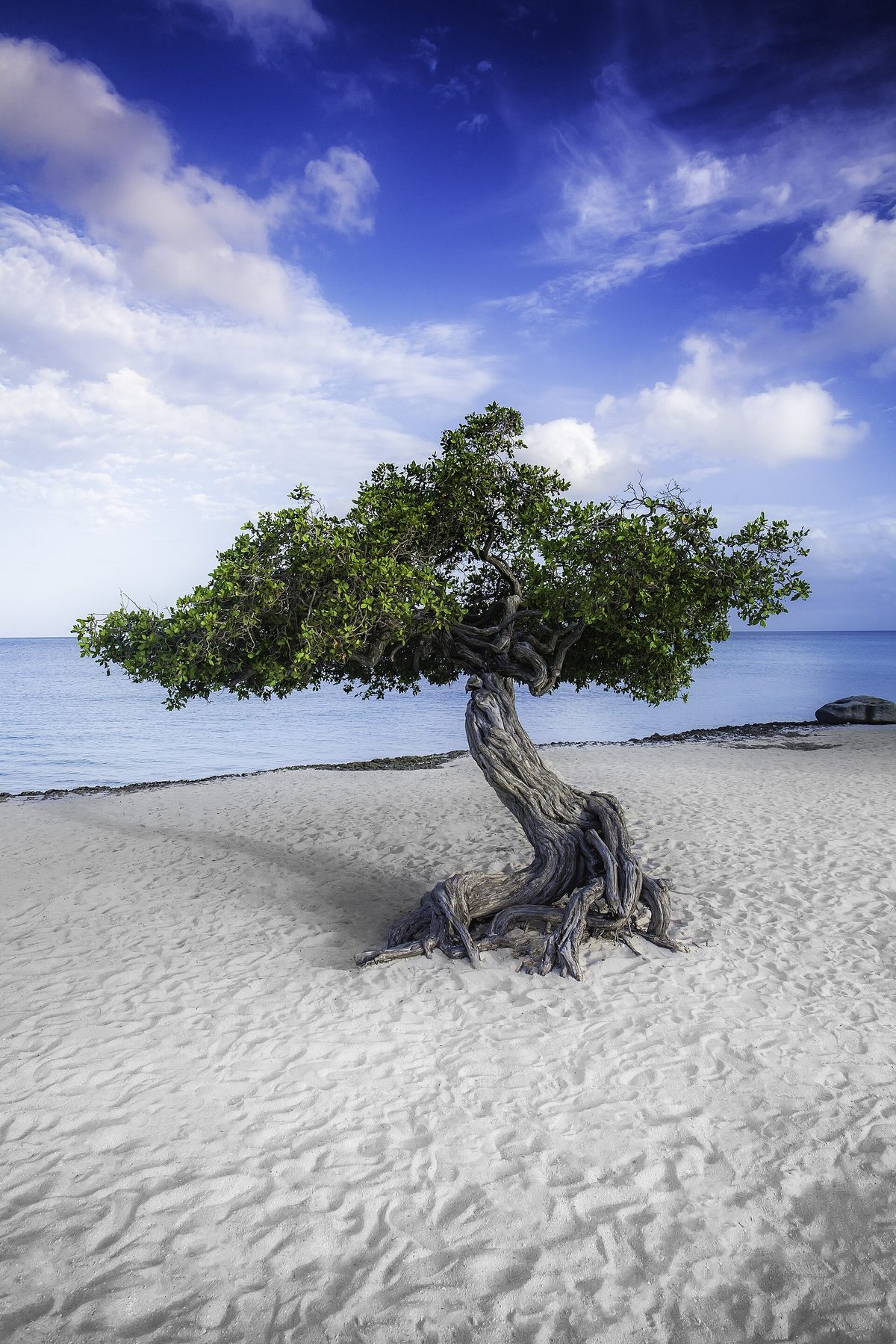
Every beach in Aruba is free (yes, every one)
This is the big one, so let’s be clear about it: all of Aruba’s beaches are public and free. There’s no gated resort coastline, no entry booth, no wristband. You can walk straight onto the sand in front of the fanciest high-rise on Palm Beach and lay your towel down, and nobody will stop you. The Caribbean Sea does not belong to the Marriott.
The one catch worth knowing: the palapas (those palm-thatched shade huts) and beach loungers usually belong to the resorts, and they’ll politely shoo non-guests off them. The sand and water are yours; the furniture isn’t. So bring your own shade — a pop-up tent, a big umbrella, or a rented one — because Aruba’s sun is relentless and natural shade is sparse. I burned the back of my neck to a crisp learning this. Don’t be me.
Eagle Beach — the famous free one
If you do one beach, make it Eagle Beach. It’s a wide, almost absurdly white ribbon of sand on the low-rise side, regularly ranked among the best beaches on earth, and it costs nothing. This is where the two gnarled fofoti trees lean over the sand — the most photographed trees in Aruba, and the picture you’ve definitely seen on a postcard. Get there early-ish for parking and elbow room, post up, and you’ve got a world-class beach day for the price of a towel. For the full rundown of every shoreline, our guide to Aruba’s beaches goes coast by coast.
Palm Beach — lively, free, and full of people-watching
Palm Beach is the high-rise strip: calmer, busier, and lined with hotels, bars, and water-sports stands. You’ll pay for the jet ski and the pina colada, but the beach itself is free, the swimming is gentle, and the people-watching is elite. Walk its full length at sunset and it’s basically a free show.
Baby Beach — the free family pick
Down on the far southeast tip past San Nicolas, Baby Beach is a shallow, horseshoe-shaped lagoon where the water barely reaches your knees for a long way out. It’s the spot I send families with little kids and anyone who’s a nervous swimmer. There’s a small fee if you rent chairs or use certain facilities, but walking on and swimming is free. Bring snacks; it’s remote.
Druif, Arashi, and the quieter free strands
Druif Beach near the low-rise hotels is calm and uncrowded. Arashi, up near the lighthouse, is a local favorite with good swimming and decent shore snorkeling. None of them charge a cent. Half the fun of a free Aruba is just driving the coast and stopping wherever the water looks best.
Snorkel straight from the shore — no boat, no fee
Here’s a thing the cruise excursions don’t advertise: some of Aruba’s best snorkeling is reachable on foot from a public beach, for free. If you pack your own mask and fins (worth doing — rentals add up fast), the reef is right there.
Malmok and Arashi
Along the rocky northwest stretch near Malmok, calm clear water and shallow reef make for easy free shore snorkels. Arashi Beach a little further up has patches of reef close in too. Go in the morning before the wind picks up — Aruba is windy by afternoon and the surface gets choppy.
Mangel Halto
On the quieter southeast coast, Mangel Halto is my favorite free snorkel on the island. You wade out through a mangrove channel and the bottom drops into a little reef wall with surprising amounts of life. It’s calm, sheltered, and far less crowded than the west side. Bring water shoes; the entry is a bit rocky.
Tres Trapi and the turtle lottery
Tres Trapi (“three steps,” named for the steps down to the water) is the spot people whisper about for swimming with sea turtles. Some mornings you’ll share the cove with several green turtles grazing on the bottom; other days you’ll see none. That’s nature — it’s a lottery, not a guarantee, and please keep your distance and never touch them. Either way you’re snorkeling clear Caribbean water for free. For more on getting in the water, see our Aruba water sports guide.
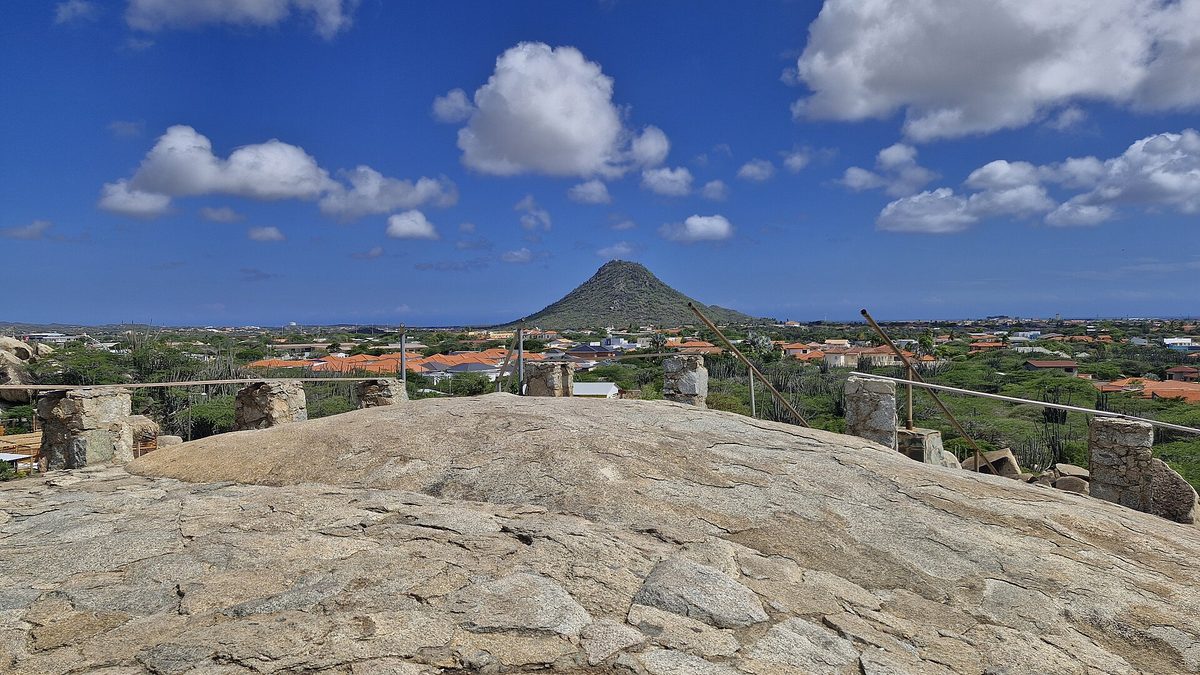
The rock formations: Aruba’s free natural playground
In the dry, cactus-studded center of the island sit two clusters of giant boulders that look like they were dropped there by a careless giant. Both are free, both are fun, and together they make a great hour off the beach.
Casibari Rock Formations
Casibari is the more developed of the two, with a marked path and steps carved between and over the boulders leading to a little viewpoint up top. From there you can see clear across the island to Hooiberg, the haystack-shaped hill, and out to both coasts. Kids love scrambling here. There’s no entry fee, just a small parking area and usually a vendor or two. Wear real shoes — flip-flops and warm rock don’t mix.
Ayo Rock Formations
A short drive away, Ayo is wilder and quieter, with ancient Arawak petroglyphs (rock drawings) tucked among the boulders and trails winding through them. It feels older and a little mysterious. Also free. If you only have time for one, Casibari has the better climb-up views; Ayo has the better atmosphere.
Hooiberg (“The Haystack”)
If you want to actually earn a view, the Hooiberg is a 165-meter volcanic cone in the middle of the island with a concrete staircase — around 560-some steps — running straight up it. It’s free, it’s a real cardio workout in the heat, and on a clear day the panorama from the top stretches toward Venezuela. Go early, bring water, and don’t underestimate the sun.
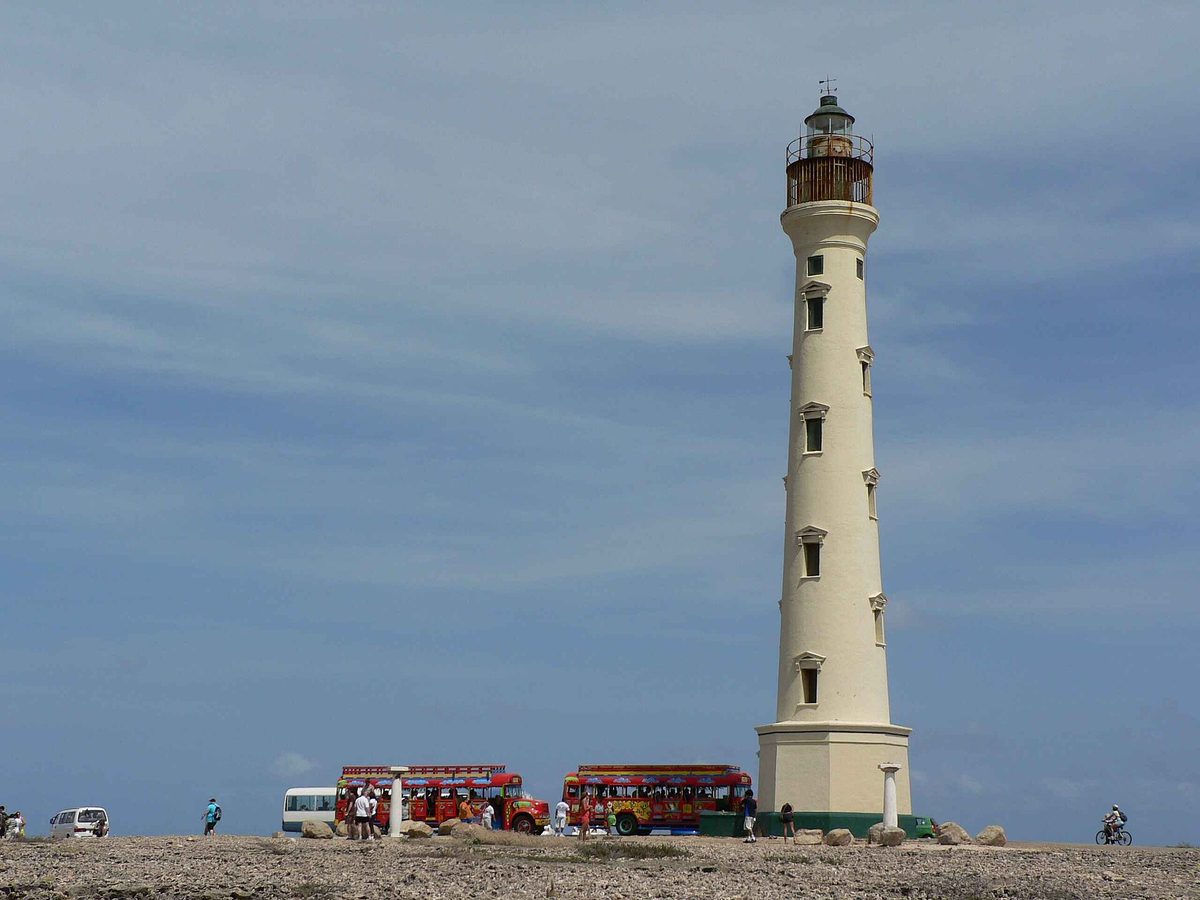
The free north-coast loop: lighthouse, chapel, and gold-mill ruins
The rugged north end of Aruba strings together three of the island’s best free landmarks into one easy half-day drive. Rent a car for the day, point it northwest, and you’ve got a self-guided tour that costs nothing but fuel.
California Lighthouse grounds
Up on the breezy northwest tip stands the California Lighthouse, named after a steamship that wrecked offshore. Wandering the grounds, climbing around the rocky bluffs, and soaking up the wide coastal views is completely free. There’s a small fee (around $5, last I checked — verify on site) if you want to climb the tower itself, but honestly the free view from the base at sunset is the postcard. This is one of the best free sunset perches on the island.
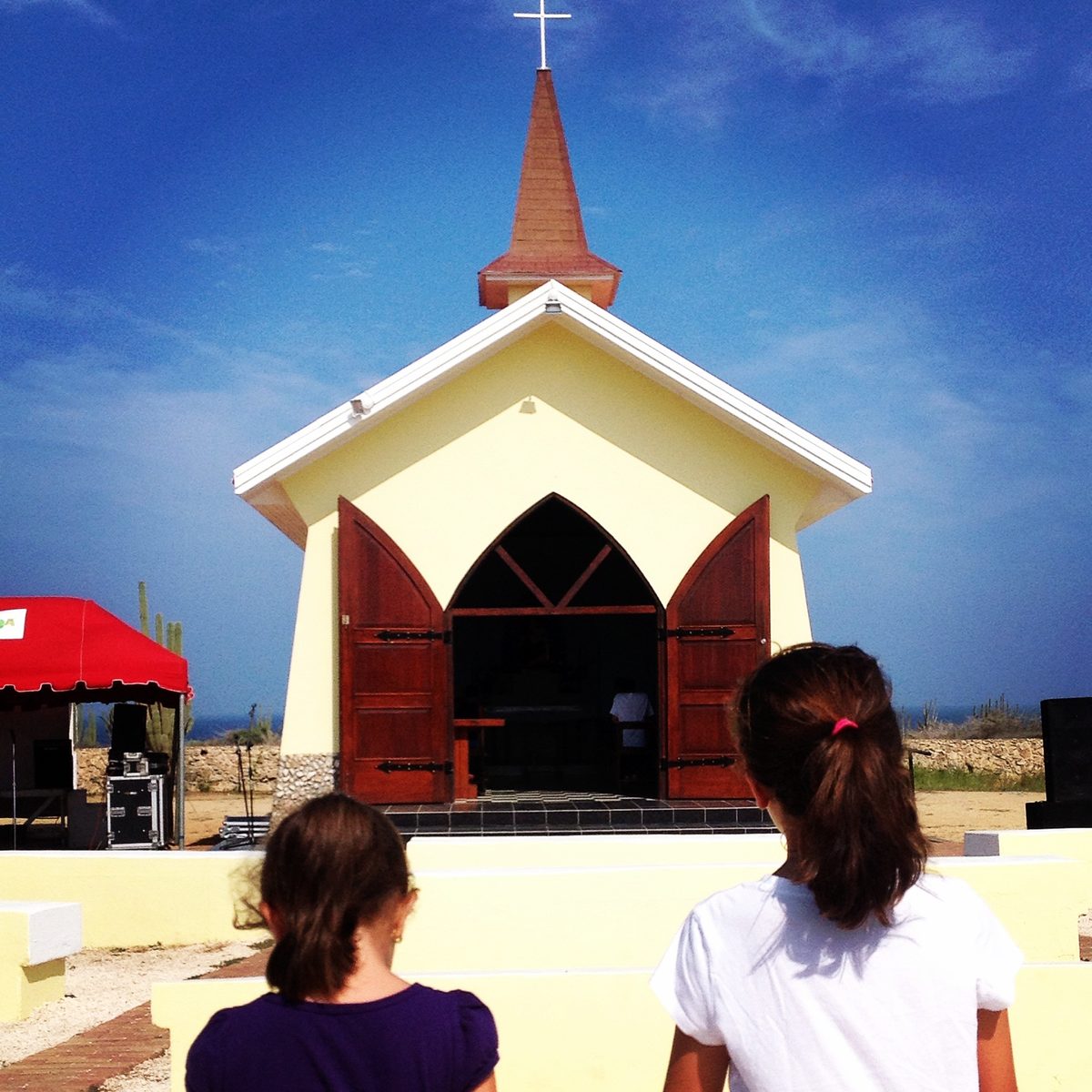
Alto Vista Chapel
A little east, alone on a hill above the north coast, sits the bright-yellow Alto Vista Chapel. The current chapel dates to the 1950s, but a church has stood on this spot since 1750, making it the island’s oldest place of worship. It’s free to visit, still in use, and genuinely peaceful — a row of white crosses marks the pilgrimage road up to it. Stand out back, listen to the wind and the surf, and you’ll see why people come here to think. Be respectful; it’s an active chapel, not a photo prop.
Bushiribana Gold Mill Ruins
Further along the wild north coast, the Bushiribana ruins are the crumbling stone shell of a 19th-century gold smelter from Aruba’s brief gold rush. Yes — there was gold in Aruba. Today it’s a free, atmospheric stop where you can climb through the old walls and watch waves smash the rocky shore below. The photos here are ridiculous and it costs nothing. The road out is rough, so a higher-clearance car (or a 4×4 tour, if you’d rather not drive it) helps. If the natural landscapes here hook you, our Arikok National Park guide covers the protected wilderness next door — that one has a small entry fee, but it’s the best cheap-not-free day on the island.

San Nicolas street art: a free open-air gallery
If you’ve written off San Nicolas as “the old refinery town,” go back. Aruba’s second city has been transformed into one of the Caribbean’s best street-art districts, and wandering it is completely free. Giant, museum-quality murals cover entire building walls — faces, birds, surreal scenes, splashes of color — many of them painted during the annual Aruba Art Fair and the Aruba Mural Tour project.
Park near Main Street (Caya Betico Croes) and just walk. You’ll turn a corner and find a three-story portrait staring back at you. Bring a camera and comfortable shoes; an hour or two here is one of the most underrated free things to do in Aruba, and it’s a completely different side of the island from the resort strip. There’s good cheap food down here too, if you get hungry — our Aruba food and restaurants guide has the local spots.
Free (and nearly free) wildlife encounters
Bubali Bird Sanctuary
Tucked behind the Palm Beach hotels, the Bubali Bird Sanctuary is a free protected wetland of two old salt-pan lakes that now host dozens of bird species — herons, egrets, cormorants, and migratory visitors. There’s an observation tower (currently it can be closed for repairs, so check) but even from ground level, early morning or late afternoon, the birdlife is excellent. It’s free, quiet, and a lovely contrast to the beach. Bring bug spray.
Donkey Sanctuary Aruba (by donation)
Out near Santa Cruz, the Donkey Sanctuary is a volunteer-run refuge for the island’s wild donkeys that can no longer fend for themselves. Admission is technically free — it runs on donations — so toss something in the box, because they earn it. You can wander among dozens of friendly donkeys, feed them, and get thoroughly nuzzled. It’s a genuine highlight for families and one of the most wholesome free things to do in Aruba. With kids in tow, our Aruba with kids guide has more ideas like this.
The flamingos — the famous one that isn’t free
Let’s clear this up, because everyone asks: the Instagram-famous pink flamingos are on Renaissance Island, a private island you can only reach as a hotel guest or by buying a limited day pass. So the flamingos are not a free thing to do in Aruba. You can sometimes spot wild flamingos for free near the salt flats around the south end, but the postcard beach with the flamingos at your feet costs money. I’d rather tell you that now than have you drive around looking for a free way in. There isn’t one.
Oranjestad: free streetcar, free museum, free strolling
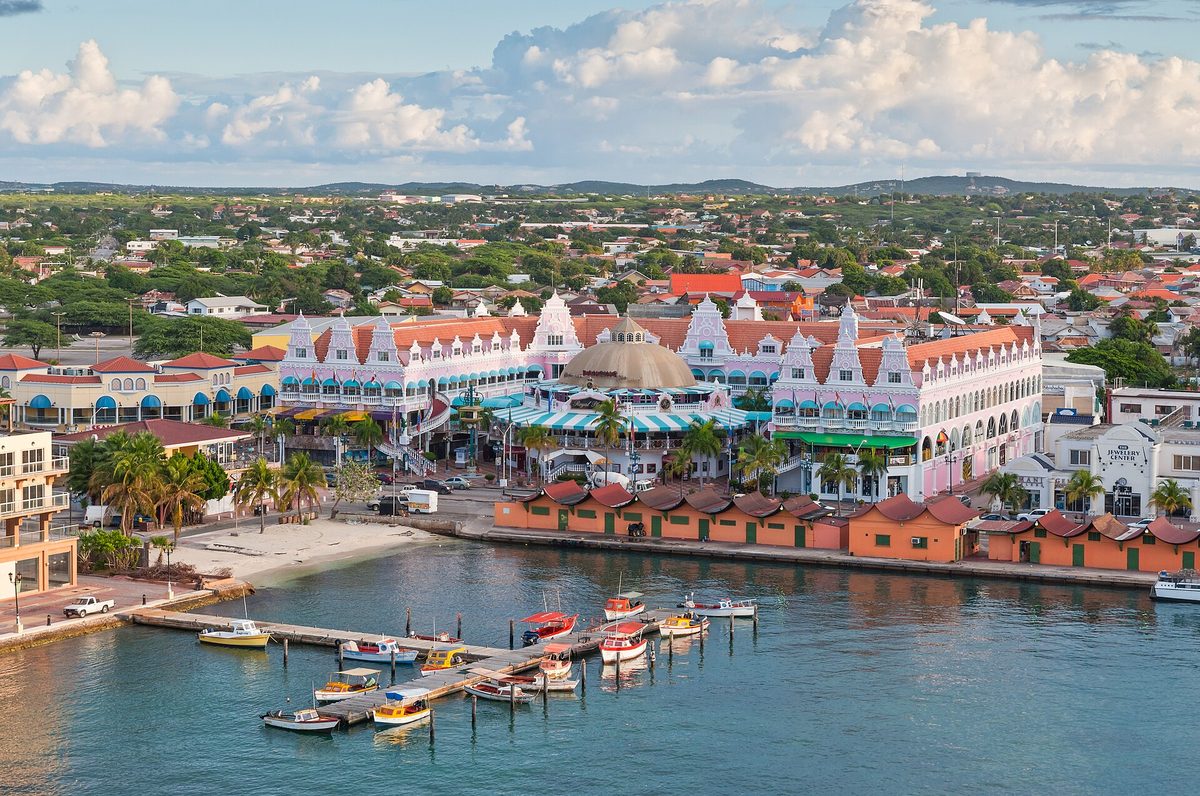
Aruba’s capital is made for a free afternoon, which makes it perfect for cruise days when you don’t want to book an excursion.
Ride the free streetcar
A genuinely free, genuinely charming open-air streetcar (trolley) loops through downtown Oranjestad, from near the cruise terminal up Main Street and back. It costs nothing to hop on, the cars are vintage-style and double-decker, and it’s a fun, shaded way to get the lay of the land. Cruise passengers: this is your easy, free, no-planning move the moment you step off the ship.
The National Archaeological Museum
The National Archaeological Museum of Aruba (in a restored historic building downtown) has free admission and modern, air-conditioned exhibits on the island’s Amerindian history. On a hot day, a free, cool, genuinely interesting museum is a gift. It’s small enough to do in under an hour.
Wander the colorful waterfront
Even if you buy nothing, strolling Oranjestad’s pastel Dutch-colonial streets, the harbor, and the marina is a free pleasure. Window-shop the malls, watch the boats, grab a cheap snack from a local stand. The architecture alone — all those candy-colored gabled facades — is worth the walk. Planning to base yourself nearby? Our where to stay in Aruba guide breaks down the areas.
Sunsets, stars, and free nights out
The free sunset (do this every single night)
I’ll say it plainly: Aruba has some of the best sunsets I’ve ever seen, and watching one is free, every night, from any west-facing beach. Eagle, Palm, Arashi, Druif, or the bluffs by the California Lighthouse — pick one, bring a cheap drink from the supermarket, and watch the sky do something ridiculous. The parking is usually free too. If you do one free thing a day in Aruba, make it this.
Stargazing
Away from the resort lights — out past Arikok, or anywhere on the dark north coast — Aruba’s dry, clear skies are great for stargazing. Lie back on a warm rock and look up. Free.
Free live music and festivals
Aruba throws a lot of free public events. The biggest is Carnival (roughly January into February), when the streets fill with parades, music, and costumes you can watch for free. Year-round, the Bon Bini Festival, beachfront bars with live bands, and weekly local markets offer free or near-free entertainment. The light-and-water shows at the Paseo Herencia mall in Palm Beach are also free to watch. Check what’s on while you’re there — our Aruba nightlife guide and best time to visit Aruba page can help you time it.
Cheap things to do in Aruba (when “free” isn’t quite enough)
Some of the best value on the island isn’t free but is close to it — a few dollars for a lot of experience. If you’ve exhausted the free list, here are the cheap things to do in Aruba I’d spend a little on without hesitation:
- Arikok National Park — entry runs around $11–15 per person and buys you a whole day of wild coastline, caves, the Natural Pool area, and hiking. Best cheap day on the island, hands down.
- The Aloe Factory & Museum — free guided tours of Aruba’s 150-year-old aloe industry, and you only pay if you buy the (genuinely good) products.
- California Lighthouse tower climb — around $5 to go up, if the free view from the base left you wanting more.
- Public bus (Arubus) — a few dollars gets you between Oranjestad and the resort beaches, so you can skip a rental car entirely on a beach-only trip.
- Local food — a pastechi (fried pastry) for breakfast or a roti for lunch from a local spot costs a fraction of resort dining and tastes better.
- The Butterfly Farm — not free, but inexpensive, and your ticket often lets you return all week.
For the bigger budget picture — what a day, a meal, and a week actually cost — see our Aruba vacation cost guide. It pairs perfectly with this page if you’re trying to keep the whole trip lean.
Free things to do in Aruba by type of traveler
Cruise passengers (a few free hours)
You step off the ship right into Oranjestad. Ride the free streetcar, walk the colorful waterfront, duck into the free Archaeological Museum, and if you have time, taxi or bus to Eagle Beach for a swim. Zero excursion fees, a full morning. Easy.
Families with kids
Baby Beach for shallow safe water, the Donkey Sanctuary for animal cuddles, Casibari rocks for scrambling, and the Bubali sanctuary for birds — all free or by donation, all kid-approved. Sunset on the beach with ice cream is the perfect free nightcap.
Couples
The California Lighthouse bluffs at sunset, a quiet moment at Alto Vista Chapel, a slow walk down Palm Beach, then stargazing on the north coast. Romantic, memorable, and free.
Adventurers and hikers
Climb Hooiberg’s stairs, scramble Ayo and Casibari, snorkel Mangel Halto and Tres Trapi from shore, and explore the Bushiribana ruins. Pair it with a paid Arikok day and you’ve got a low-cost active week. Our broader Aruba itinerary guide can help you sequence it.
How to actually do Aruba for (almost) free
A few practical things I wish I’d known sooner, because doing Aruba cheaply is as much about logistics as attractions:
- Pick your transport on purpose. A rental car (split between a few people) unlocks the free north coast, the rock formations, and San Nicolas. If you’re staying put on the beach, the cheap Arubus is plenty. Both beat taxis, which add up fast. See our getting around Aruba guide.
- Bring your own gear. A mask and snorkel, a pop-up sunshade, a reusable water bottle, and a cooler turn a dozen free attractions from “fine” into “great” — and save you rental fees at every stop.
- Drink the tap water. Aruba’s tap water is desalinated, safe, and excellent. Refill your bottle instead of buying plastic. Small thing, real savings over a week.
- Hit a supermarket. Grab drinks and snacks from a grocery store rather than the beach bar. A sunset toast costs a couple of dollars instead of twenty.
- Go in the morning. Free outdoor stuff — snorkeling, hiking, the rock formations — is far better before the afternoon wind and heat. It’s also when the turtles and birds are most active.
- Time your trip. Visiting in the low season can slash hotel and flight prices; our best time to visit Aruba guide covers the trade-offs. And skim our budget trip playbook for the rest of the money-savers.
If the classic checklist feels too well-trodden, I keep a separate guide to the most offbeat experiences in Aruba — the caves, secret coves, and local haunts most first-timers never hear about.
If you want the shortlist instead of the deep dive, start with my ranked guide to the best things to do in Aruba.
Frequently asked questions
What are the best free things to do in Aruba?
The best free things to do in Aruba are visiting the public beaches (Eagle, Palm, Baby Beach), snorkeling from shore at Mangel Halto or Tres Trapi, climbing the Casibari and Ayo rock formations, exploring the California Lighthouse grounds and Alto Vista Chapel, seeing San Nicolas street art, riding the free Oranjestad streetcar, and watching the sunset. Most cost nothing but transport.
Is Aruba expensive to visit?
Aruba has a reputation as a pricey Caribbean island, and hotels, flights, and restaurant dining can be expensive. But the island itself is full of free and cheap things to do — every beach is free, and most natural attractions cost nothing. With a rental car split between friends, your own snorkel gear, and supermarket snacks, you can have a wonderful trip on a modest budget.
Are Aruba’s beaches free?
Yes. Every public beach in Aruba is free and open to everyone, including the sand and water in front of the big resorts. There are no entry fees and no gated coastline. You’ll only pay if you rent a resort palapa or lounger, so bring your own shade and you’re set for a free beach day.
Can you see the Aruba flamingos for free?
Not really. The famous flamingos live on private Renaissance Island, reachable only as a hotel guest or with a paid day pass, so they’re not a free thing to do in Aruba. You can occasionally spot wild flamingos near the southern salt flats for free, but the postcard flamingo beach costs money.
What’s free to do in Aruba on a cruise day?
Plenty. Step off the ship in Oranjestad, ride the free streetcar, walk the colorful waterfront, and visit the free National Archaeological Museum. If you want beach time, Eagle Beach is a short, cheap bus or taxi ride away and costs nothing once you’re there. You can fill a whole port day without booking a single excursion.
How many days do you need in Aruba?
Three days is enough to enjoy a couple of beaches and see Oranjestad. To work through the free attractions across the island — the north coast, the rock formations, San Nicolas, and shore snorkeling spots — give yourself about a week. A rental car for even one or two of those days opens up most of the free things on this list.
Final thoughts: the island that doesn’t have to cost much
That second day I mentioned at the top — the nearly-free one — ended on the bluffs by the California Lighthouse with a $3 supermarket beer, watching the sun melt into the sea. It beat every paid excursion I took that week, and it cost about the price of the parking, which is to say nothing.
Aruba will happily take your money if you let it. But the best of the island — the beaches, the water, the rocks, the art, the light — is free or close to it. Pack a snorkel and a sunshade, rent a car for a day, and go find it. For everything else worth doing on the island, head back to our complete guide to things to do in Aruba.
Photo credits
All images via Wikimedia Commons. Eagle Beach fofoti tree by Jason Boldero (CC BY 2.0); Alto Vista Chapel by Em erasmus (CC BY-SA 3.0); California Lighthouse by David Stanley (CC BY 2.0); Casibari Rock Formations by Rarends297 (CC0); San Nicolas mural by Ginelly.Q (CC0); Oranjestad waterfront by Navigator334 (CC BY-SA 4.0).