The first time I tried getting around Aruba, I made the classic mistake: I’d pre-booked a rental car for the entire week because a forum told me to, then spent the first three days parked at the beach in front of my hotel, watching the meter on a car I wasn’t driving. By day four I’d figured out the rhythm of the island, and by the end of the trip I could have told you exactly which days are worth a car, which are better by bus, and when to just call a taxi and not think about it.
Getting around Aruba is genuinely easy — the island is tiny, the roads are good, the signs are in English, and you have more options than almost anywhere else in the Caribbean. The short version: rent a car if you want to explore, use the cheap public bus along the Palm Beach–Oranjestad strip, and call a fixed-rate taxi when you just need a quick lift. There is no Uber.
This guide is the one I wish I’d had on that first trip. I’ll walk you through every realistic way to get to the island and move around it — flights and the airport, airport transfers, car rental, driving, taxis, the Arubus public bus, the free downtown trolley, and the adventurous stuff like Jeeps and ATVs — with current costs, honest trade-offs, and specific advice by the kind of trip you’re taking. Last updated: June 2026.
Getting around Aruba at a glance
Here’s the whole island’s transport menu in one place. I’ve put rough 2026 prices in U.S. dollars (Aruba quotes most tourist prices in USD), but always treat them as “about” and confirm when you book.
| Option | Roughly what it costs | Best for | My honest take |
|---|---|---|---|
| Rental car | $35–$70/day + gas | Explorers, families, multi-beach days | The best all-rounder if you want to see the real island |
| Taxi | $10 minimum; ~$30–$41 airport to hotels | Quick hops, nights out, no-stress arrivals | Fixed rates, no haggling — but it adds up fast |
| Arubus public bus | $2.60 single / ~$5 return / $10 day pass | Budget travelers on the hotel-to-town corridor | Fantastic value; limited once you leave the strip |
| Free downtown trolley | Free | Cruise passengers, downtown Oranjestad | Charming, but it only loops the town center |
| Private transfer | ~$40–$120 per group | Families and groups arriving together | Worth it for 4+ people with luggage |
| 4×4 / Jeep / ATV tour | $90–$180 per person | Reaching Arikok, the natural pool, north coast | The only easy way to the wild side without your own 4×4 |
| Bike / e-bike / scooter | $25–$75/day | Short coastal hops near the resorts | Fun for an afternoon; the wind and heat are real |

First, the lay of the land
Before we get into modes of transport, it helps to picture the island, because the geography is what makes getting around Aruba so painless. Aruba is about 20 miles long and 6 miles wide. From the airport in the south to the California Lighthouse at the northern tip is roughly 45 minutes of driving — and that’s if you hit every light. Most of what visitors actually do happens in a compact band along the calm, leeward west coast.
Here’s the mental map I use. Oranjestad is the capital and transport hub, with the cruise port, the main bus station and the free trolley. Just north of town are the two big resort zones: Eagle Beach (the “low-rise” area) and then Palm Beach (the “high-rise” hotel strip). South and east of the airport, the road runs down to San Nicolas, the second city. And the entire rugged eastern and northern interior — the part with the natural pool, the dunes and the wild surf — is Arikok National Park, which is a different animal entirely and the one place you genuinely need the right vehicle.
A few things that make driving and navigating simple: Arubans drive on the right (same as the U.S.), road signs are in Papiamento and English, the main coastal roads are well paved, and the island is flat. The local currency is the Aruban florin (about 1.80 to the U.S. dollar), but dollars are accepted almost everywhere, including by taxi drivers and bus drivers. If you’re still mapping out the shape of your trip, our Aruba itinerary guide pairs nicely with this one — it’ll tell you how many days you need, and this guide tells you how to move between everything on the list.
Getting to Aruba: flights and the airport
Half of “getting around Aruba” is just getting to Aruba, and the good news is that it’s one of the most accessible islands in the Caribbean from North America. Queen Beatrix International Airport (airport code AUA) sits right on the south coast, a 10-minute drive from Oranjestad and about 20 minutes from Palm Beach.
How long is the flight to Aruba?
Flight times depend entirely on where you start. From Miami it’s about 2.5 hours; from Atlanta roughly 3.5; from New York or Newark about 4.5; and from Dallas or Houston around 5 hours. Aruba sits just 17 miles off the coast of Venezuela, well south of most of the Caribbean, so it’s a touch farther than islands like the Bahamas — but it’s still an easy non-stop day of travel from most of the eastern U.S.
Which cities have non-stop flights to Aruba?
You’ll find direct flights to Aruba from a long list of U.S. gateways — Miami, Fort Lauderdale, Atlanta, Charlotte, New York (JFK), Newark, Boston, Houston and Dallas among them — on American, Delta, United and JetBlue, with seasonal routes from more cities in the busy winter months. There are also non-stops from Toronto and Montreal, and from Amsterdam on KLM (Aruba is part of the Kingdom of the Netherlands). Winter is peak season with the most routes and the highest fares.
Finding cheap flights to Aruba
The single biggest lever on airfare is when you go. Fares spike from mid-December through March and around U.S. holiday weekends, and they drop noticeably in the late spring and through the fall. If your dates are flexible, shifting a trip from March to May or September can save hundreds of dollars per ticket. It’s worth reading our guide to the best time to visit Aruba before you lock in dates — the cheapest weeks to fly are also some of the nicest weather-wise, since Aruba sits below the main hurricane belt. Flights are usually the biggest single line in your trip budget, so it’s the first number I plug into our Aruba vacation cost breakdown.
Queen Beatrix International Airport (AUA): what to expect
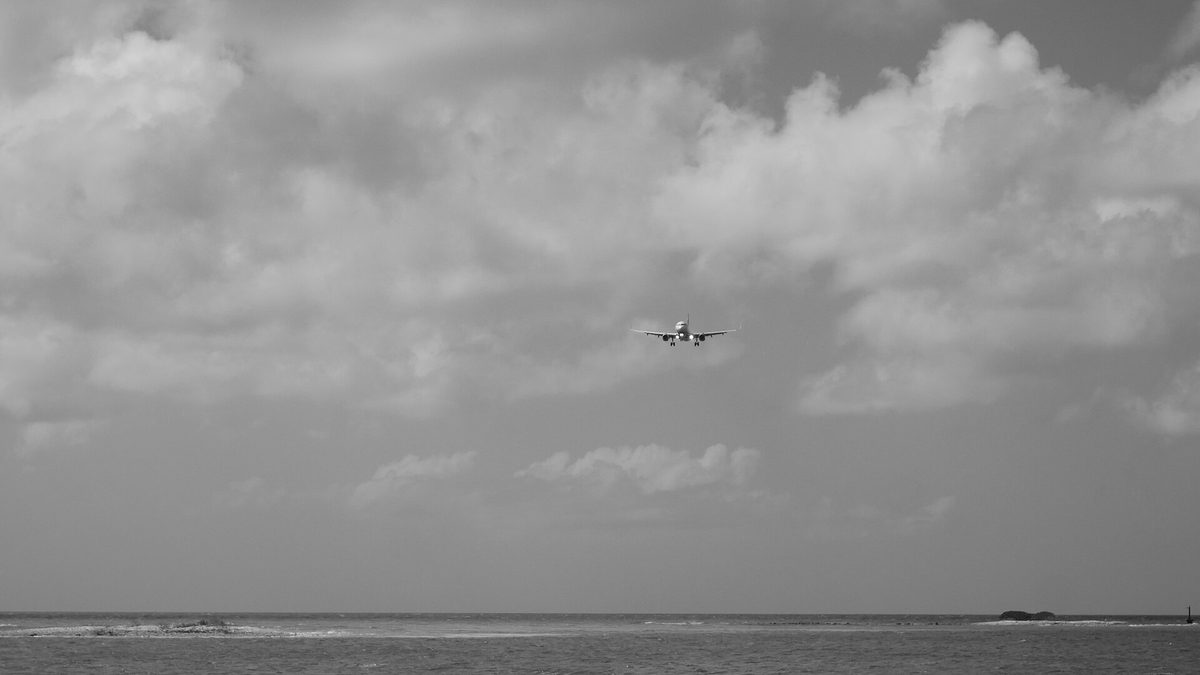
AUA is modern, walkable and easy to navigate. The one thing that trips up first-timers is the U.S. departure process: Aruba has a U.S. Customs and Border Protection pre-clearance facility, which means you clear U.S. immigration and customs in Aruba before you fly home, then arrive in the States as a domestic passenger. It’s a wonderful perk on the U.S. end, but it makes the airport busy on departure — give yourself a solid 3 hours before a flight back to the U.S., especially on weekend mornings in high season. Car rental desks, taxis and the bus stops are all just outside the arrivals hall.
From the airport to your hotel
This is the very first transport decision you’ll actually make, usually while jet-lagged and clutching a passport, so let’s make it simple. You have three realistic ways to get from AUA to the resort zones.
Taxi from the airport
The easiest option, and what most first-timers do. Aruba’s taxis run on fixed, government-set fares by zone — no meters, no negotiating. From the airport, expect roughly $30–$37 to Eagle Beach, about $41 to the Palm Beach high-rise hotels, and around $21–$25 to downtown Oranjestad (these are the 2026 matrix rates for up to four passengers, before any surcharges). The ride to Palm Beach takes about 20 minutes. There’s a surcharge of a few dollars per extra passenger beyond four, and a roughly $5 add-on late at night, on Sundays, and over the Christmas–New Year holidays. Drivers take U.S. dollars; bring small bills.
Pre-booked private transfer
If you’re a family or a group arriving together, a pre-arranged transfer is often the better deal and the lower-stress choice. A private van that seats up to about 15 people will be waiting with your name on a sign, and the per-group price (commonly $40–$120 depending on vehicle size and destination) can undercut two or three separate taxis. I always book one of these when I’m traveling with my parents and a pile of luggage — no scramble at the curb, and they’ll usually do the return pickup too.
Can you take the bus from the airport?
Yes, but read the fine print. Arubus lines 1, 2, 2A and 8 stop near the airport — at a stop behind the car park on the main road, not directly in front of the terminal — and run into Oranjestad in about 15 minutes. From the downtown station you then change to the Line 10 “hotel bus” for Eagle or Palm Beach. A two-trip return card is about $5 total. Honestly? I’ve done it solo with a single carry-on and it was fine and cheap. With checked bags, kids, or after a long travel day, the bus is more hassle than it’s worth — take a taxi or a transfer and save the bus for getting around once you’ve settled in.

Renting a car in Aruba
If you want my one-line opinion: a rental car is the best way of getting around Aruba for anyone who plans to do more than lie on a single beach. It turns the whole island into your playground — you can chase a sunrise at the lighthouse, hop between five beaches in a day, drive out to the natural bridge ruins, and never look at a bus schedule. Here’s what to know.
What a rental car costs
Daily rates swing with the season and how far ahead you book, but as a 2026 guide: economy cars run about $35–$50/day, compact and mid-size around $45–$65, SUVs and crossovers roughly $60–$90, and a Jeep Wrangler or other true 4×4 anywhere from $90–$140/day. The single most important tip I can give you: book online and book ahead. Walk-up rates at the airport are typically 30–60% higher than pre-booked prices, and in high season the affordable cars sell out completely. Budget for a refundable security deposit too — usually $300–$700 held on a credit card.
Do you need an international driver’s license?
For most visitors, no. If your home license is in English or Dutch — which covers U.S., Canadian, U.K. and many other travelers — you can rent and drive on it directly. An International Driving Permit isn’t required, though it’s a cheap, harmless backup if your license is in another language. Most companies ask that you’ve held your license for at least two years, set a minimum age of 21–25, and may add a young-driver fee under 25 or cap rentals around age 70.
Driving in Aruba: what it’s actually like
Driving here is low-stress by Caribbean standards. You drive on the right, the main west-coast roads are smooth and well signed, and traffic only really bunches up around Oranjestad at rush hour and near the Palm Beach strip in the evenings. A few local realities: roundabouts are everywhere, so know how to yield to traffic already in the circle; gas costs roughly $1.10–$1.30 per liter (about $4.20–$4.90 a gallon), and stations are common in the north but sparse toward San Nicolas and Arikok, so fill up in or near Oranjestad before any trip east. You’ll occasionally meet a goat, a donkey or a stray dog on rural roads, so don’t drive the back country after dark. Aruba is one of the safest islands in the region, but follow the usual rule and never leave anything visible in a parked car at a trailhead or beach lot.
Jeep vs. regular car: which do you need?
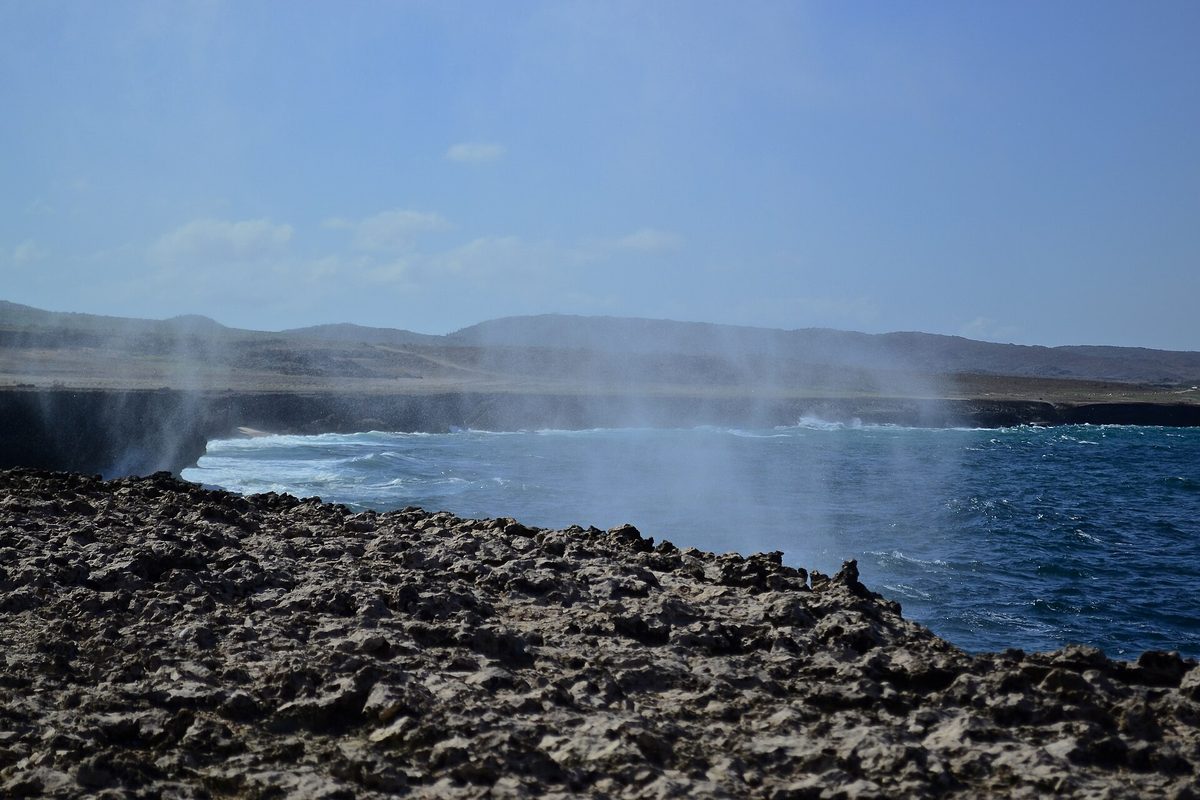
For 90% of trips — beaches, restaurants, Oranjestad, the lighthouse, the resort strip — a normal economy or compact car is perfectly fine, and cheaper on gas. You only need a 4×4 if you intend to drive the unpaved interior routes of Arikok National Park yourself, including the rough track to the Conchi natural pool. Those roads are genuinely rugged — jagged limestone, washboard dirt, deep ruts — and a regular rental car’s insurance specifically excludes off-road driving. If Arikok’s wild side is on your list, either rent an actual Jeep and confirm the off-road clause in writing, or skip the self-drive and take a guided 4×4 tour (more on that below).
So, should you rent a car at all?
Rent one if you’re staying three or more days, want to explore beyond your resort, are traveling as a family, or simply value the freedom to go when and where you want. Skip it if you’re on a short stay glued to one beach, here on a cruise day, or booked into an all-inclusive resort where you plan to barely leave the property. A common sweet spot I recommend to friends: skip the car most of the week and rent it for just one or two days of island exploring — you get the freedom without paying for a vehicle that sits in the hotel lot while you snorkel.
Taxis in Aruba
Taxis are the workhorse of getting around Aruba for visitors who don’t rent a car, and the system is refreshingly honest once you understand it. There are no meters. Instead, the government sets fixed fares between zones, so the price is the price — you’ll never be taken on a scenic detour to run up a fare.
A few rules that surprised me at first. You generally don’t hail a taxi off the street the way you would in New York; instead you grab one from a hotel or restaurant taxi stand, or you (or the front desk) phone for one. The minimum fare for any trip is about $10, and the standard fare covers up to four passengers — so taxis are far better value for a couple or a family of four than for a solo traveler. Expect a surcharge of around $3 per person for parties of five to seven, and an extra ~$5 late at night (11 p.m.–7 a.m.), on Sundays, and over the Christmas–New Year holidays.
To give you a feel for real costs: Palm Beach to Oranjestad runs about $11–$15, Palm Beach to Eagle Beach a few dollars, and a longer haul down to San Nicolas can be $40 or more one way. Drivers take both U.S. dollars and florins (converted at the fixed 1.80 rate), and while more are starting to accept cards, you should assume cash and carry small bills. You can look up the official rates ahead of time on the government taxi price list — handy for budgeting, and for deciding whether a string of taxi rides will cost more than just renting a car for the day.
Are taxis safe in Aruba? Yes. They’re regulated and licensed, drivers are professional, and Aruba is consistently rated one of the safest destinations in the Caribbean. Solo travelers and families alike can use them without worry.
Is there Uber in Aruba?
No — there is no Uber or Lyft in Aruba, and there hasn’t been. Ride-hailing apps have been kept off the island, in large part because the established, government-regulated taxi co-ops have resisted them. So if you’re used to opening an app and watching a little car drive toward you, you’ll need to adjust your expectations here.
What do you do instead? Three things. First, use the fixed-rate taxis described above — your hotel or restaurant will happily call one, and you can ask the driver for a card to arrange your return or future rides. Second, some local taxi companies have their own dispatch numbers and WhatsApp booking, which your hotel concierge can point you to. Third — and this is the real takeaway — if the lack of Uber bothers you, that’s one more argument for renting a car so you’re never waiting on a ride. For most people, though, the taxi-and-occasional-bus combination works just fine.
The Arubus public bus: the budget hero
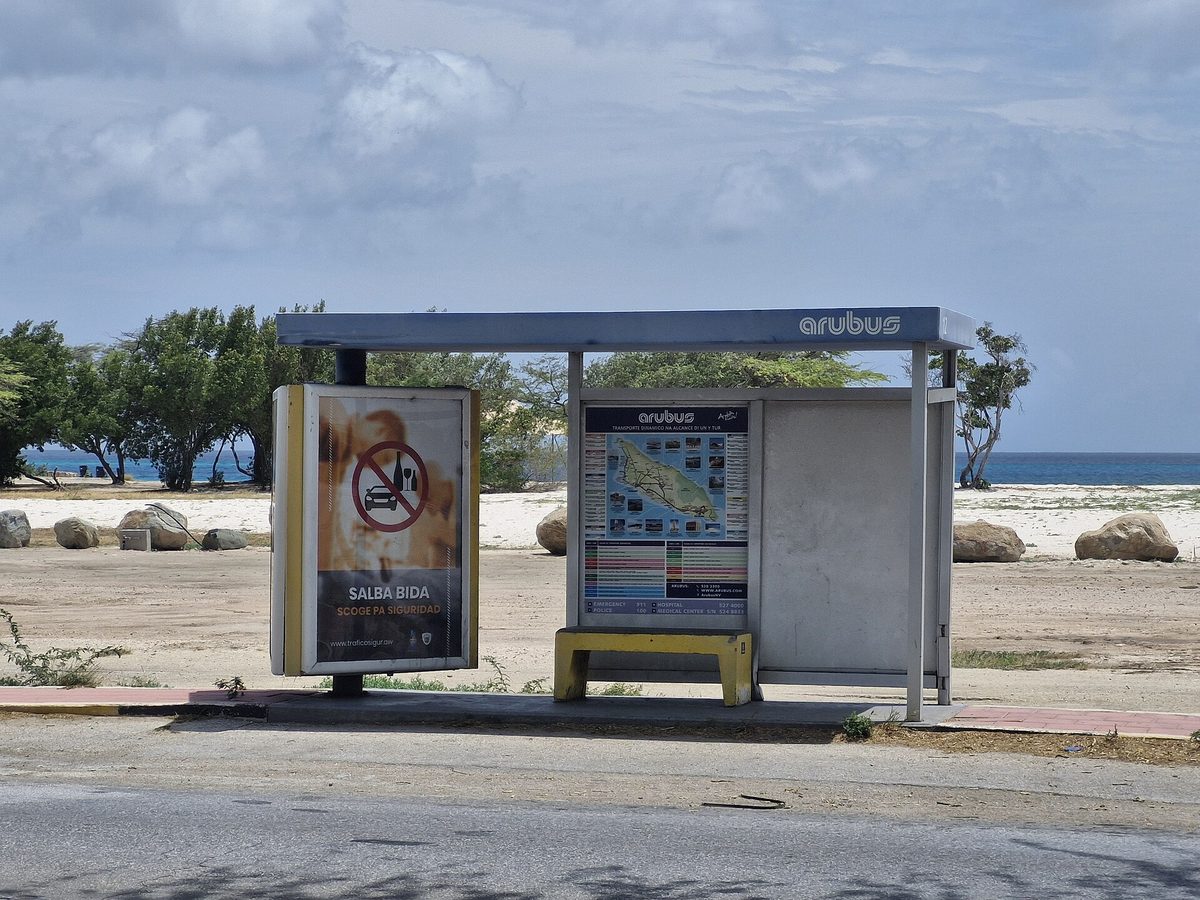
For getting around Aruba on a budget, nothing beats the public bus. The national bus company is called Arubus (yes, really — it’s hard to forget), and along the main tourist corridor it’s clean, reliable and absurdly cheap. A single ride is about $2.60, a two-trip return card is around $5, and an all-day pass is roughly $10. You pay the driver as you board; have small bills or coins ready.
The route you’ll care about most is Line 10 (and its 10A/10B variants), the “hotel bus” that connects the downtown Oranjestad station with Eagle Beach and the Palm Beach high-rise hotels, stopping right in front of the big resorts. During the day it runs frequently — roughly every 15–20 minutes in peak hours — then less often in the evening, with service stretching from around 5:45 a.m. until about 11:30 p.m. The main station sits in downtown Oranjestad next to the cruise terminal and Royal Plaza, and from there other lines (like L1 and L2) run south to San Nicolas. To go from the airport to the beaches you’ll change buses in Oranjestad.
My honest take: the bus is brilliant for the Oranjestad–Eagle Beach–Palm Beach axis, which is exactly where most visitors spend most of their time. It’s also a nice slice of local life. Where it falls short is the rest of the island — service to Arikok, the lighthouse and the far north is minimal to nonexistent, so the bus pairs best with the occasional taxi or a one-day car rental for exploring. If you’re staying on the strip and mostly bouncing between your hotel, the beach and town, you can get around Aruba for a week on bus fare alone.
The free downtown trolley
One option that delights people who didn’t know it existed: Oranjestad has a free streetcar trolley. These restored double-decker tram cars loop along the main street through downtown, from near the cruise port up Caya Betico Croes and back, with several hop-on/hop-off stops past the shops, plazas and museums. It runs through the day at roughly 25–45 minute intervals and costs nothing.
It’s genuinely charming and perfect if you’re a cruise passenger walking off the ship for a few hours, or if you’ve driven into town and want to leave the car parked while you wander. Just be clear about what it is: the trolley is a way to get around downtown Oranjestad, not a way to get around the island. It won’t take you to your hotel or the beach. For that, you’re back to the bus, a taxi, or your own wheels.

Adventurous ways to get around Aruba
Beyond the practical stuff, half the fun of Aruba’s wild interior is the way you get there. These aren’t really “commuting” options — they’re experiences that double as transport to the parts of the island regular cars can’t reach.
Jeep, 4×4 and ATV/UTV tours
If you want to see the rugged north and east coast — the Conchi natural pool, the Bushiribana gold-mill ruins, the natural bridge, Alto Vista chapel, the dunes — but you don’t want to risk your rental car (or your own driving) on those tracks, a guided off-road tour is the answer. A full-day 4×4 Jeep safari typically runs $90–$180 per person and bundles in several of these landmarks plus a snorkel stop, often with lunch. It’s one of the most popular day trips on the island for good reason.
You’ll also see ATV and UTV (side-by-side) rentals and tours everywhere. They’re a blast, but I’ll pass along a local sensitivity: many Arubans dislike the heavy ATV/UTV traffic through fragile desert and Arikok terrain because of the erosion and noise it causes. If that matters to you, a guided Jeep tour treads more lightly and still gets you everywhere worth seeing. Whichever you choose, slather on sunblock — most of these vehicles are open-topped and the Aruba sun is no joke.
Scooters and motorcycles
You can rent scooters and motorcycles, and they’re a breezy way to zip along the flat coastal roads between the resorts and town. Just respect two things: the trade winds, which are strong and constant and can shove a light scooter around, and the fact that you’ll have far less protection than in a car. I’d only recommend two wheels for confident riders sticking to the paved west side.
Biking and e-bikes
Aruba is flat, which makes it tempting cycling country, and a number of shops rent cruiser bikes and e-bikes for roughly $25–$75 a day. There’s even a dedicated coastal path in stretches. For a short, scenic hop — say, riding from a Palm Beach hotel down to Eagle Beach or out toward the lighthouse on an e-bike — it’s lovely. For actual island transport in the midday heat and wind, it’s a workout most vacationers tap out of after one ride. Treat it as a fun half-day, not your main plan.
Walking
Don’t overlook your own two feet for the short stuff. The Palm Beach high-rise strip is very walkable — hotels, restaurants, the beach and shopping are all strung along a compact stretch — and downtown Oranjestad is best seen on foot (with the free trolley to save your legs). Between regions, though, distances and the lack of sidewalks make walking impractical; you won’t be strolling from Palm Beach to the lighthouse.
Getting around Aruba by type of traveler
The “best” way to get around isn’t the same for everyone. Here’s how I’d advise different travelers, based on the trips I’ve taken and the ones I’ve helped plan.
First-timers staying at a resort
Keep it simple. Use taxis for your airport arrival and any nights out, ride the Line 10 bus along the strip when you feel like saving money, and consider renting a car for just one or two days to explore. You do not need a car for your whole stay if your days are mostly beach-and-pool. This is the combination I recommend most often.
Families
I lean toward a rental car or a pre-booked private transfer for families. With kids, car seats and beach gear, the freedom to load up and go on your own schedule is worth a lot, and a single taxi only legally covers four people before surcharges kick in. If you’re not driving, arrange a transfer with car seats in advance.
Couples and honeymooners
A car unlocks the romantic side of the island — sunset at the California Lighthouse, a quiet cove away from the crowds, dinner in a different town. If you’d rather not drive at all, taxis to a handful of nice restaurants plus the occasional tour will cover a relaxed, romance-focused week. It depends on how much you want to roam.
Budget travelers
The Arubus is your best friend. Base yourself near the Line 10 route, buy day passes, and walk the short distances. Reserve taxis only for late nights when the bus has stopped running. You can keep your transport costs to a handful of dollars a day this way.
Cruise passengers
You’ve got one day, and you’ll dock right in Oranjestad. Don’t rent a car. Walk off the ship, ride the free trolley around downtown, and either take fixed-rate taxis to a nearby beach (Eagle and Palm are close) or book a ship-sanctioned tour so you’re guaranteed back before sail-away. Simple and low-risk.
Adventurers
If your trip is built around Arikok, the natural pool and the wild coast, get a proper 4×4 — either rent a Jeep and self-drive (insurance confirmed for off-road), or join guided Jeep tours. Pair it with a regular car or the bus for the easy west-side days so you’re not paying Jeep rates all week.
How much does getting around Aruba cost?
Transport is one of the easier line items to estimate once you’ve picked a style. Here’s roughly what a week of getting around Aruba costs three different ways, so you can slot a realistic number into your planning.
- Bus-and-walk budget trip: about $5–$10 a day. A day pass is $10, and many days you’ll spend even less. Call it $40–$60 for the week, plus a couple of taxis.
- Taxi-reliant trip (no car): realistically $40–$80 a day once you add up airport transfers, beach runs and dinners out — taxis are fair but they add up fast, which is the classic case for renting instead.
- Rental car trip: roughly $45–$70 a day for the car, plus maybe $10–$20 of gas across the whole week (the island is tiny) and free or cheap parking at most beaches and hotels.
Notice how the taxi-only and rental-car numbers converge: that’s exactly why I tell most people that if they’re taking more than two or three taxi trips a day, a car is probably cheaper and more convenient. For the full picture — flights, hotels, food and activities alongside transport — work through our Aruba vacation cost guide, and map your driving days against our day-by-day Aruba itinerary.
One more planning note: where you stay shapes how much getting around even matters. Base yourself on the Palm Beach or Eagle Beach strip and the bus, walking and short taxi hops cover most of your needs; stay somewhere more remote and you’ll lean harder on a car. Our where to stay in Aruba guide breaks the neighborhoods down, and if beach-hopping is the whole point of your trip, the Aruba beaches guide will tell you which ones are worth the drive.
My recommended plan
If you want me to just tell you what I’d do, here it is. For a typical week-long beach trip, I’d take a taxi or private transfer from the airport, settle in, and spend the first few days getting around by bus, on foot and with the odd taxi — cheap and easy. Then I’d rent a car for two days in the middle of the trip to do the big island loop: the lighthouse, a string of beaches, Oranjestad, and a guided 4×4 outing into Arikok and the natural pool rather than risking the rental on those tracks. That mix gives you freedom where it counts and savings where it doesn’t, and it’s almost always less than renting a car you’ll leave parked half the week.
Frequently asked questions
What is the best way to get around Aruba?
For most visitors, a mix is best: ride the cheap Arubus along the Palm Beach–Oranjestad strip, take fixed-rate taxis for quick or late trips, and rent a car for a day or two to explore the wider island. If you plan to roam a lot or travel as a family, a rental car for the whole stay is the most convenient single option.
Do I need to rent a car in Aruba?
No, you don’t need one. Aruba has reliable buses and taxis that reach all the main tourist areas, so you can have a great trip without driving. That said, a car is the easiest way to explore beyond the resorts and reach quieter beaches, so it comes down to how much you want to roam versus relax.
Is there Uber in Aruba?
No. Aruba has no Uber or Lyft. Instead, the island uses fixed-rate, government-regulated taxis that you book through your hotel, grab at a taxi stand, or call directly. The fares are set by zone, so there’s no surge pricing and no haggling.
How much is a taxi from the airport to Palm Beach?
About $41 for up to four passengers under the 2026 fixed rates, before any late-night, Sunday or holiday surcharges. Eagle Beach is a touch less, and downtown Oranjestad is roughly $21–$25. The ride to Palm Beach takes around 20 minutes. Pay in U.S. dollars and carry small bills.
How long is the flight to Aruba?
It depends on your departure city: about 2.5 hours from Miami, 3.5 from Atlanta, 4.5 from New York or Newark, and around 5 hours from Dallas or Houston. Aruba sits in the far southern Caribbean off Venezuela, with non-stop service from many U.S. and Canadian cities and from Amsterdam.
Is it easy to get around Aruba without a car?
Yes, very. The island is small, the bus along the hotel corridor is cheap and frequent, and taxis fill the gaps. The only real limitation is the rugged interior and far north, where buses don’t go — and you can cover those on a guided tour instead of driving yourself.
Are taxis expensive in Aruba?
By Caribbean standards they’re reasonable and, crucially, predictable thanks to fixed rates. A single trip across the tourist area is modest, but because there’s a $10 minimum and costs are per-trip, multiple rides a day add up quickly. Heavy taxi users often find a rental car cheaper.
Can you use the bus to get around Aruba?
Absolutely, along the main corridor. The Arubus Line 10 connects Oranjestad with Eagle Beach and the Palm Beach hotels frequently through the day, for about $2.60 a ride. It’s one of the best public-transport values in the Caribbean. Service to Arikok and the far north, however, is minimal.
Is it safe to drive in Aruba?
Yes. Aruba is one of the safest islands in the region, roads are well maintained and signed in English, and you drive on the right as in the U.S. Watch for roundabouts, the occasional roaming goat or donkey on rural roads, and avoid unlit back roads after dark. Don’t leave valuables visible in a parked car.
How do I get from Palm Beach to Oranjestad?
Easily. The Line 10 bus runs between them frequently for about $2.60, a taxi is roughly $11–$15, and if you’ve rented a car it’s a 10–15 minute drive with parking available in town. The bus is the budget pick; a taxi is the no-fuss one.
Final thoughts
That over-booked rental car on my first trip taught me the real lesson about getting around Aruba: the island gives you options, and the smart move is to match the option to the day rather than committing to one for the whole week. Lazy beach day on the strip? Bus or walk. Night out in town? Fixed-rate taxi. Itching to see the lighthouse, the wild coast and five beaches in a row? That’s your car day. Get that rhythm right and you’ll spend less, stress less, and see far more of this little island than the people who never leave their hotel driveway. Have a wonderful trip — and say hi to the goats on the road to Arikok for me.
Photo credits
All images via Wikimedia Commons. The road to the California Lighthouse — David Stanley (CC BY 2.0). Jet on final approach to Queen Beatrix International Airport — Ginelly.Q (CC0). High-rise hotels at Palm Beach — Kwihi (CC BY 4.0). Rugged limestone coast in Arikok National Park — Misty Johnson (CC BY 2.0). Colorful street in Oranjestad — Ginelly.Q (CC0). Arubus bus shelter near the beach — Ginelly.Q (CC0). Free downtown streetcar trolleys in Oranjestad — Rennboot (CC BY-SA 3.0).