The first time I helped a friend book Aruba, she called me in a mild panic three weeks before her trip: “Every hotel looks the same and they’re all on a beach — does it even matter where I stay?” It matters more than almost any other decision you’ll make. Figuring out where to stay in Aruba shapes how your mornings feel, how far you walk for dinner, how much you spend, and whether you spend the week in flip-flops or fighting for a beach chair. Aruba is small — about 20 miles end to end — but its hotel areas have genuinely different personalities, and picking the wrong one for your trip is the difference between “best vacation ever” and “nice, but I’d do it differently.”
I’ve stayed on both the high-rise and low-rise strips, talked my way through most of the lobbies in between, and sent more friends to this island than I can count. This guide is the version I wish my friend had had: every area that’s actually worth considering, who each one suits, the specific hotels I’d point you to, honest trade-offs, and roughly what you’ll pay.
The short answer: most first-time visitors should stay on Palm Beach (high-rise hotels, walkable restaurants, nightlife, calm swimming) or Eagle Beach (low-rise, wider and quieter, the island’s prettiest sand). Choose Palm Beach for energy and convenience, Eagle Beach for space and romance, Oranjestad for cruise access and lower prices, and the quieter north or southeast coasts if you want a car and seclusion.

Where to stay in Aruba at a glance
Here’s the whole island boiled down to one screen. I rank “price” relative to the rest of Aruba, which is an expensive Caribbean island overall — even the “budget” zones aren’t cheap in peak season. Walkability means how easily you can reach restaurants, bars, and shops on foot without a car.
| Area | Vibe | Best for | Beach | Walk to dining/nightlife | Relative price |
|---|---|---|---|---|---|
| Palm Beach (high-rise) | Lively, resort-y, busy | First-timers, families, nightlife, no car | Calm, shallow, crowded | Excellent | $$$–$$$$ |
| Eagle Beach (low-rise) | Relaxed, spacious, scenic | Couples, romance, photographers | Widest, prettiest, can be wavy | Moderate | $$$–$$$$ |
| Manchebo & Druif | Quiet, low-key, low-rise | Wellness, calm seekers, repeat visitors | Wide and peaceful | Limited | $$–$$$ |
| Oranjestad | Urban, colorful, walkable downtown | Cruise days, shoppers, budget, culture | Man-made/harbor; beach is offshore | Excellent (city, not beach) | $$–$$$ |
| Noord | Residential, local-feeling | Rentals, longer stays, value near Palm Beach | None (inland); short drive to beaches | Limited | $–$$ |
| Malmok & Arashi (north) | Calm, upscale-residential | Snorkelers, divers, villa renters | Rocky-to-sandy; great snorkeling | Poor (need a car) | $$–$$$$ |
| Savaneta & southeast | Sleepy, authentic, remote | Seclusion, repeat visitors, divers | Calm coves; Baby Beach nearby | Poor (need a car) | $$–$$$$ |
If you only remember one thing: the northwest corner — Palm Beach, Eagle Beach, and the low-rise strip between them — is where the overwhelming majority of visitors stay, and for good reason. It packs the best swimming beaches, the most hotels, and nearly all the restaurants and nightlife into a few walkable miles. Everything else on this list is a deliberate trade of convenience for either savings, seclusion, or character. For more on the beaches themselves, our complete guide to Aruba’s beaches breaks down every stretch of sand by water conditions and crowd levels.
How to choose where to stay in Aruba
Before we get into specific areas, it helps to understand how the island is laid out, because two pieces of local shorthand explain almost everything: the “hotel zone” and the “high-rise versus low-rise” split.
If you want the areas compared side by side rather than described one at a time, my breakdown of the best area to stay in Aruba does exactly that.
The hotel zone and the high-rise vs low-rise divide
Almost all of Aruba’s tourism is concentrated on the calm, leeward (western) coast, northwest of the capital, Oranjestad. Locals call this strip the hotel zone. Within it, the accommodations split into two informal districts that you’ll see referenced everywhere:
The high-rise hotels sit on Palm Beach. These are the tall, internationally branded towers — Marriott, Hilton, Hyatt, Ritz-Carlton, RIU, Holiday Inn — stacked close together along a single busy beach. Think energy, density, convenience, and a Las-Vegas-meets-the-Caribbean feel.
The low-rise hotels sit on Eagle Beach and the adjoining Manchebo and Druif beaches, just south. Buildings here are capped at a few stories, spread out, and interspersed with condos and smaller resorts. The result is a calmer, more residential, more spacious feel with a lot more sand per guest.
Neither is objectively better — they serve different travelers. As a rough rule I give people: if your ideal vacation is busy, social, and walkable, go high-rise; if it’s quiet, spacious, and scenic, go low-rise. You can always walk or take the cheap public bus between the two in 15–20 minutes, so wherever you land you can sample the other.
Five questions that decide it for you
When friends are stuck, I ask these five questions and the answer usually becomes obvious:
- Do you want a car? If no, you’re choosing Palm Beach (most walkable) or Oranjestad. If yes, the whole island opens up, including the quiet coasts.
- What’s the trip for? Romance and rest point to Eagle Beach or the low-rise strip. Nightlife, shopping, and “lots going on” point to Palm Beach.
- Who’s coming? Young kids do best with the calm, shallow water and big pools of Palm Beach; couples and adults often prefer Eagle Beach’s calm.
- What’s your budget per night? Beachfront on either main strip runs high; Noord, Oranjestad, and vacation rentals stretch your money further.
- When are you going? Prices swing dramatically by season — the same room can double in winter. Check our month-by-month guide to the best time to visit Aruba before you lock in dates, because when you go affects where you can afford to stay.
Aruba sits outside the main hurricane belt and stays sunny and dry most of the year, which is exactly why its room rates hold up better than much of the Caribbean — you’re rarely gambling on weather, so demand (and price) stays high. Keep that in mind as we talk costs.
Palm Beach: the high-rise hotel zone
Palm Beach is the engine room of Aruba tourism and, for most first-timers, the right call. It’s a two-mile ribbon of soft sand backed by a near-continuous wall of resorts, and just behind them, a strip packed with restaurants, beach bars, casinos, a big shopping mall or two, and the island’s nightlife. The water is calm, clear, and shallow a long way out, which is why families and nervous swimmers love it. You can roll out of bed, be on a snorkel catamaran by nine, eat lunch at a swim-up bar, shop in the afternoon, and walk to dinner and a casino without ever starting a car.

Who Palm Beach is for
Stay here if you want maximum convenience, a social atmosphere, reliable swimming for kids, and the comfort of big-brand hotels where you can earn or burn points. It’s the obvious base if you’re not renting a car, because everything you need is within a 10-minute walk. It’s also the most reliable choice if you’re traveling with a group that wants different things — there’s enough variety that everyone finds their lane. On a two- or three-night trip it’s also the least fussy base: you land, drop the bag and you’re in the water inside half an hour.
The trade-offs
The same density that makes Palm Beach convenient also makes it busy. In high season the beach fills early — the infamous “towel on the palapa at 7 a.m.” routine is real — and the strip can feel more generic-international than distinctly Aruban. You’ll find the same chains and similar menus you’d see in any U.S. resort town, and prices for both rooms and restaurant meals run at the top of the island’s range. If your dream is an empty beach at sunset, this isn’t it.
Palm Beach hotels worth knowing
These are the Palm Beach properties I steer people toward, grouped by what they do best. Treat the prices as ballpark high-season nightly rates and always confirm current numbers when you book.
- Ritz-Carlton Aruba — the most polished luxury option, at the quieter north end of the strip. Excellent service and spa; expect roughly $600+ a night in winter.
- Hyatt Regency Aruba Resort, Spa & Casino — my favorite all-rounder here. Great central location, a layered pool complex with a waterslide and an adults-only pool, and a casino on site. Around $500–$700 in peak season.
- Aruba Marriott Resort & Stellaris Casino — large, dependable, with an adults-only pool (the Tradewinds Club is a worthwhile upgrade). Strong for couples and points collectors.
- Hilton Aruba Caribbean Resort — lush gardens, two pools, central beach position; a solid mid-luxury pick around $450–$650.
- RIU Palace Aruba / RIU Palace Antillas — the main all-inclusive players on Palm Beach (the Antillas is adults-only). Good value if you want to prepay food and drinks; more on the all-inclusive question below.
- Holiday Inn Resort Aruba — one of the better-value high-rises, family-friendly, frequently the cheapest beachfront brand on the strip.
- Embassy Suites / Courtyard / La Quinta (across the road) — the second row, a 3–5 minute walk from sand, trades a beachfront view for noticeably lower rates and often more space.
One money-saving tip locals know: the hotels set back across the main road can cost a third less than beachfront, and the walk to the water is genuinely short. If you’re going to be off snorkeling and sightseeing anyway, “across the street” is an easy way to stay in the Palm Beach action for less. While you’re plotting, our roundup of the best things to do in Aruba will show you just how much sits within reach of this strip.
Eagle Beach: the low-rise strip
If Palm Beach is the island’s living room, Eagle Beach is its quiet garden. Regularly ranked among the best beaches in the world, it’s wider than Palm Beach by a long way — a vast apron of powder-white sand dotted with the gnarled, wind-bent fofoti trees that show up on every Aruba postcard. The hotels here are low-rise, set back, and broken up by condos and smaller resorts, so the whole stretch breathes. You get more sand to yourself, softer light at sunset, and a markedly calmer pace.

Who Eagle Beach is for
This is my default recommendation for couples, honeymooners, photographers, and anyone whose priority is the beach itself rather than the scene behind it. It’s also a smart pick for travelers who want a beautiful base but plan to rent a car and explore, since you trade a little walkability for a lot more tranquility. Families do well here too, as long as you’re comfortable with water that can be a touch deeper and occasionally wavier than Palm Beach.
The trade-offs
Eagle Beach has fewer restaurants and almost no nightlife within stumbling distance — dinner often means a short drive or taxi, and the dining that is here tends to be pricier and more romantic than casual. There are no international chain towers, so points collectors have fewer options. And on windy days (Aruba has many) the surf and the steeper drop-off can make swimming feel different from Palm Beach’s bathtub calm. If you want energy and endless dining steps from your door, you’ll find Eagle Beach a little sleepy.
Eagle Beach hotels worth knowing
- Bucuti & Tara Beach Resort — adults-only, eco-certified, and consistently rated one of the most romantic hotels in the Caribbean. Honeymoon central. Note the minimum-stay requirements in high season and book early. Roughly $500–$800 a night.
- Amsterdam Manor Beach Resort — a charming Dutch-colonial-style low-rise across the road from the sand, with kitchenettes and a great-value reputation. A long-time repeat-visitor favorite.
- La Cabana Beach Resort & Casino — big, family-friendly, with suites, kitchenettes, pools, and a small casino; one of the better value-for-space options on this strip.
- MVC Eagle Beach — a small, simple, well-priced hotel right on the sand; light on amenities but unbeatable for location near Eagle Beach’s best restaurants.
- Pearl Aruba Condos / Blue Residences — condo-style stays with kitchens and living space, excellent for families and longer trips that want to self-cater.
People constantly ask me to settle the Palm Beach versus Eagle Beach debate, so here it is in one line: Palm Beach if you want everything within walking distance and a buzzy atmosphere; Eagle Beach if you want the prettier, calmer beach and don’t mind driving for dinner. Both sit on the same gorgeous coast, and you can sample each — many people stay on one and spend an afternoon on the other.
These are the highlights — I cover the full low-rise line-up, including the condo and boutique options, in my guide to Eagle Beach hotels.
Manchebo and Druif: the quiet low-rise extension most guides skip
Just south of Eagle Beach, the sand continues into Manchebo and Druif beaches — an area a lot of write-ups lump in with Eagle Beach but that deserves its own mention. This is the calmest, most low-key corner of the main hotel zone: still wide, beautiful, low-rise sand, but even quieter than Eagle Beach, with a cluster of wellness-focused and adults-leaning resorts.
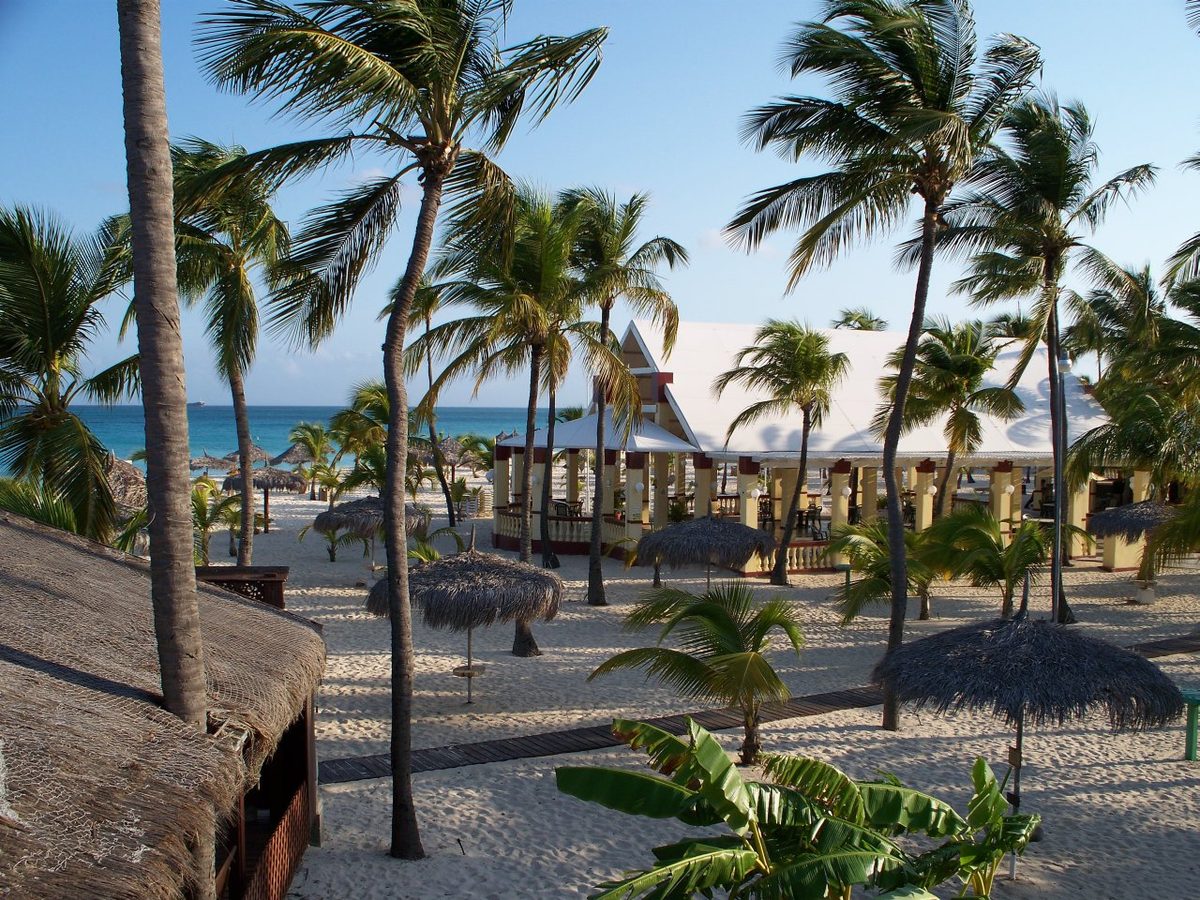
It’s where I send people who want the low-rise beauty of Eagle Beach turned down another notch — think yoga on the beach, early nights, and serious relaxation. Standouts include the Manchebo Beach Resort & Spa (a boutique wellness property with one of the widest beaches on the island) and the Divi and Tamarijn resorts on adjacent Druif Beach, which are among the island’s better-known beachfront all-inclusives. The trade-off is the same as Eagle Beach, only more so: lovely and serene, but you’ll want a car or taxi for variety in dining and nightlife.
Where to stay in Oranjestad, Aruba’s capital
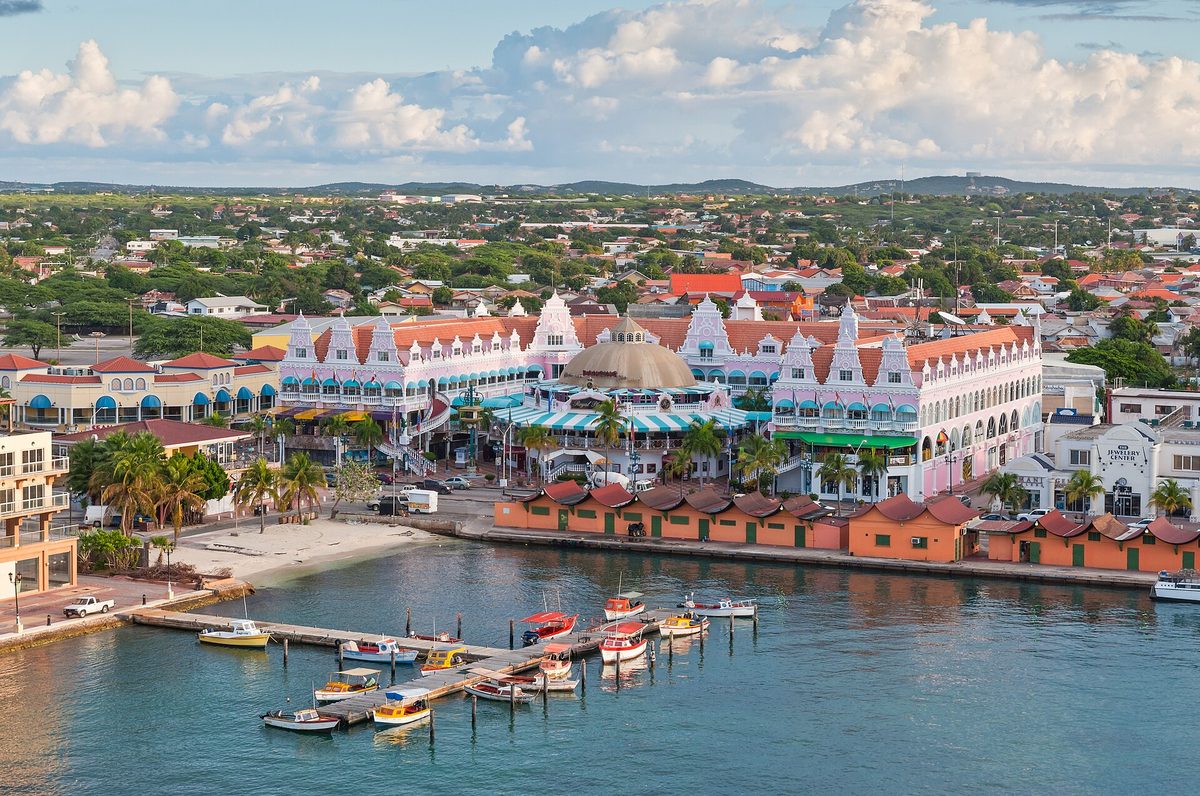
Oranjestad surprises people. It’s the colorful Dutch-colonial capital — pastel facades, a free streetcar, duty-free shopping, museums, and the cruise terminal — and while it isn’t a classic beach base, it’s an underrated place to stay for the right traveler. Rooms here generally cost less than on the beach strips, you’re walking distance from the island’s best concentration of shops and historic sights, and you’re closest to the airport and cruise port.
Who Oranjestad is for
I recommend it for cruise passengers spending a night before or after sailing, for budget-minded travelers who’d rather spend on experiences than a beachfront view, for shoppers, and for anyone who values being in a real town with local life rather than a resort bubble. The cleverest part: the marquee hotel here solves the “no beach” problem entirely.
Oranjestad hotels worth knowing
The Renaissance Wind Creek Aruba Resort dominates downtown and is genuinely unique — it’s split between a marina tower and an adults-only ocean-suites building, with a casino, a private shopping promenade, and its own offshore private island reached by a short boat ride from the lobby. That island is home to Aruba’s famous flamingos, and staying here is one of the few ways to access that beach. It’s the best of both worlds: downtown convenience plus a private beach escape. Beyond the Renaissance, you’ll find smaller boutique hotels, guesthouses, and a growing number of apartments that offer some of the better-value stays on the island. Downtown also puts you minutes from the restaurants and attractions in our things-to-do guide, and a quick drive from the beaches covered in our Aruba beaches guide.
The trade-off is obvious: you’re not stepping straight onto a swimming beach from your room (the Renaissance aside), and downtown is quieter at night than the Palm Beach strip once the cruise crowds leave. For many travelers, the savings and the sense of place are worth it.
Noord: residential value near the beaches
Noord is the district that sprawls inland behind Palm Beach and Eagle Beach, and it’s where a lot of Aruba’s smarter-value stays hide. This is a real residential area — neighborhoods, the big supermarkets, local snack bars (snacks), and the landmark Hooiberg hill — rather than a beach strip, but it sits a short drive or longish walk from the sand, and prices drop noticeably the moment you step back from the water.
Who Noord is for
Noord is ideal if you’re renting a car, want more space for your money, and like the idea of living a little more like a local — shopping at the grocery store, cooking some meals, and driving five minutes to either main beach. It’s especially good for longer stays, families wanting a full kitchen and multiple bedrooms, and travelers who don’t mind trading walkability for value. There’s a strong supply of vacation rentals, apartments, and a few boutique hotels here, including the well-regarded Boardwalk Boutique Hotel, a low-key garden retreat a short stroll from Palm Beach. The catch is simple: you’ll almost certainly want a rental car, because Noord is built for people with wheels.
Malmok and Arashi: the calm north coast
Keep driving northwest past Palm Beach and the development thins into Malmok and Arashi — an upscale-residential stretch of villas and apartments along a rockier, snorkel-friendly coastline that ends at Arashi Beach, a quieter sandy cove near the island’s lighthouse. The famous Antilla shipwreck and some of Aruba’s best shore snorkeling are right offshore here.
Who the north coast is for
This is where I send divers, snorkelers, and people who want a private villa or a calmer, more exclusive base away from the resort crowds. You won’t have restaurants or nightlife at your doorstep — this area is firmly car-required — but you’ll trade that for seclusion, excellent water access, and sunsets without a crowd. It suits independent travelers, small groups renting a house, and repeat visitors who’ve already “done” the strips and want something more residential. Accommodation skews toward vacation rentals and condos rather than big hotels.
Savaneta, San Nicolas, and the southeast
The far southeast is the Aruba most tourists never see — and a few travelers stay there on purpose. Savaneta is a sleepy former fishing village (and the island’s original capital) with calm, shallow water and a famously good local seafood scene. Further south, San Nicolas has reinvented itself as Aruba’s colorful street-art town, and at the island’s southern tip, Baby Beach offers some of the calmest, most kid-friendly swimming anywhere on the island.
Who the southeast is for
Stay down here only if seclusion is the whole point — you’ll be 30–40 minutes from the airport and the main beaches, and a car is non-negotiable. The reward is authenticity, quiet, and standout properties like the over-water bungalows at Aruba Ocean Villas in Savaneta, which give you a Maldives-style experience without leaving the Caribbean. It’s a niche choice, but for honeymooners and repeat visitors craving something different, it’s memorable. If sheltered, shallow swimming is your priority, read how Baby Beach stacks up against the rest in our guide to Aruba’s beaches.
Where to stay in Aruba by traveler type
Areas are half the puzzle; the other half is matching the place to you. Here’s how I’d point different travelers, pulling together everything above.
First-time visitors
Stay on Palm Beach. It removes nearly every “what do we do now?” friction point — calm swimming, walkable dining, easy tours, and big familiar hotels — so you can relax into the island without a learning curve. If you already know you want quiet over convenience, Eagle Beach is a fine first-timer pick too, just plan on a rental car.
Couples and honeymooners
Eagle Beach and the low-rise strip win for romance: wider beaches, prettier sunsets, adults-only and boutique options, and a slower pace. Bucuti & Tara is the honeymoon classic; Manchebo is the wellness-minded alternative. If you want romance and walkable dinners, the adults-only towers on Palm Beach (like the Marriott’s Tradewinds Club or RIU Palace Antillas) are a good compromise.
If you’d rather have the meals and drinks handled too, I shortlist the romance-first properties in my guide to the best all-inclusive resorts in Aruba for couples.
Families with kids
Palm Beach is the family default for a reason: the shallow, calm water, the big pools with slides, the kids’ clubs, and the ability to walk to dinner with tired children. Condo-style stays on Eagle Beach (La Cabana, the condos) also work well when you want a kitchen and more bedrooms. Our things-to-do guide has the family-friendly activities to fill the days.
Budget travelers
Look at Noord, Oranjestad, and the “across the road” hotels behind Palm Beach, plus vacation rentals where you can self-cater. Aruba is never truly cheap, but staying a few minutes from the sand instead of on it — and cooking some meals — is the single biggest lever on your budget. Traveling in the lower-demand months helps even more; see the best time to visit Aruba for when rates dip.
Luxury seekers
The Ritz-Carlton on Palm Beach and Bucuti & Tara on Eagle Beach anchor the top end, with the Renaissance’s private island and the over-water villas in Savaneta offering something more distinctive. Aruba’s luxury is more “polished resort” than “ultra-exclusive hideaway,” but the service and beaches are first-rate.
I compare the top-end properties — and what you actually get for the money — in my guide to Aruba’s luxury resorts.
Adults-only and groups who want nightlife
For an adults-only vibe, Bucuti & Tara, RIU Palace Antillas, and the adults-only pools at the Marriott and Hyatt deliver. For nightlife, you want to be on or near Palm Beach, where the bars, casinos, and clubs cluster — you can walk home, which matters.
Travelers without a car
Base yourself on Palm Beach (or, for a city stay, Oranjestad). Both let you reach restaurants, shops, and tours on foot, and Aruba’s Arubus public buses run a cheap, reliable route along the hotel zone into Oranjestad if you want to roam. Everywhere else on this list effectively requires a rental car or regular taxis.
Types of places to stay (and which to pick)
Aruba’s “where” question is also a “what kind” question. Here’s how the main accommodation types compare.
Within the all-inclusive category the tiers matter more than people expect — compare cheap all-inclusive, family all-inclusive, and luxury all-inclusive before you assume they are interchangeable.
- Big-brand resorts — mostly on Palm Beach. Reliable, full-service, points-friendly, pricey. Best for first-timers and brand loyalists.
- All-inclusive resorts — a smaller slice of the market than in, say, the Dominican Republic, but growing (RIU, Barceló, Divi, Tamarijn). They make the most sense if you’ll drink and eat mostly on property; less so if you want to explore Aruba’s strong restaurant scene. I cover the all-inclusive question in depth in our Aruba all-inclusive resorts guide.
- Low-rise and boutique hotels — concentrated on Eagle, Manchebo, and Druif. More character, more space, calmer. Best for couples and repeat visitors.
- Condos and vacation rentals — everywhere, but especially Noord, Eagle Beach, and the north coast. Kitchens and extra bedrooms make these the value champions for families and longer stays.
- Timeshare resorts — Aruba has a big timeshare culture (Marriott, Divi, La Cabana and others), and you can often rent these units directly from owners for less than the hotel rate. Worth a look for spacious, apartment-style stays.
What it costs by area and season
Aruba is one of the pricier Caribbean islands to sleep on, and the number that matters most isn’t the area — it’s the season. The same room can swing 40–60% between the December–April high season and the quieter late-summer and fall months. With that giant caveat, here’s a realistic feel for nightly rates:
| Style of stay | Rough high-season rate (per night) | Where to find it |
|---|---|---|
| Budget hotel / guesthouse / small Airbnb | $90–$180 | Oranjestad, Noord |
| Mid-range, near (not on) the beach | $180–$320 | Across-the-road Palm Beach, Eagle Beach condos, Noord rentals |
| Beachfront resort (4-star) | $350–$550 | Palm Beach high-rises, Eagle Beach low-rises |
| Luxury / adults-only / honeymoon | $600–$1,000+ | Ritz-Carlton, Bucuti & Tara, over-water villas |
Two budgeting notes locals will tell you. First, watch for resort fees and parking charges on the high-rise strip — they can add $30–$50 a night that isn’t in the headline rate. Second, the cheapest way to enjoy an expensive area is to stay just behind it: a rental a few minutes’ walk from Palm Beach or Eagle Beach gets you the same days on the same sand for materially less. To time your trip around the best rates, cross-reference the month-by-month weather and pricing guide — the shoulder months are the sweet spot for value without much weather risk.
Practical planning: cars, safety, and what to book ahead
Do you need a rental car?
This is the question that quietly decides your whole stay. If you base on Palm Beach (or Oranjestad) and mostly want beach, pool, dining, and the odd tour, you don’t need a car — walking plus the cheap public bus and occasional taxis cover it. If you choose Eagle Beach, Noord, the north coast, or the southeast, or you want to explore Arikok National Park, the natural pool, and the wild windward side, rent a car (ideally with some clearance for the unpaved interior roads). Many people split the difference: stay walkable and rent a car for just a day or two of exploring.
Is Aruba safe, and which areas are safest?
Aruba is one of the safest islands in the Caribbean, and all the tourist areas — Palm Beach, Eagle Beach, the low-rise strip, and the Oranjestad waterfront — are well-patrolled and comfortable to walk at night. Use the same common sense you would anywhere (lock the car, don’t leave valuables on the sand), but there’s no “bad” hotel zone to avoid. Safety is rarely a reason to pick one area over another here.
Where do most tourists actually stay?
The clear majority stay on Palm Beach, followed by Eagle Beach. Together those two strips hold most of the island’s hotel rooms and the bulk of its visitors. That popularity is a feature, not a bug — it’s why the area has the best beaches, the most dining, and the easiest logistics — but it’s also why booking early matters in high season.
What to book ahead
In Aruba’s December-to-April high season, the best-value beachfront rooms and the small romantic properties (Bucuti & Tara, the over-water villas) sell out months in advance, so book your hotel as early as you can. A rental car is worth reserving ahead in peak weeks too. Restaurants and tours you can usually sort once you arrive, with the exception of marquee dinner spots on holidays.
Where to stay in Aruba: frequently asked questions
Where do most tourists stay in Aruba?
Most tourists stay on Palm Beach, the high-rise hotel strip on the calm northwest coast, followed by neighboring Eagle Beach. Together these two areas hold the bulk of the island’s hotel rooms, restaurants, and nightlife, and they offer the easiest logistics for first-time visitors — which is exactly why they’re so popular.
What is the best area to stay in Aruba for first-timers?
Palm Beach. It packs calm swimming, walkable dining, big-brand hotels, and easy tour access into one convenient strip, so you don’t need a car or much planning. If you’d rather have a quieter, prettier beach and don’t mind renting a car for dinners out, Eagle Beach is an excellent first-timer alternative.
Is Palm Beach or Eagle Beach better?
Neither is better — they suit different trips. Choose Palm Beach for energy, convenience, walkable restaurants, nightlife, and calm water for kids. Choose Eagle Beach for a wider, quieter, more scenic beach, a relaxed pace, and romance. They’re a 15-minute walk apart, so you can stay on one and easily visit the other.
Where should couples stay in Aruba?
Eagle Beach and the low-rise strip are the most romantic, with wide beaches, gorgeous sunsets, and adults-only options like Bucuti & Tara. Couples who also want walkable dinners and a livelier scene can pick an adults-only section of a Palm Beach resort instead. For pure seclusion, consider the over-water villas in Savaneta.
Where should families stay in Aruba?
Palm Beach is the family favorite thanks to its shallow, calm water, big pools with slides, kids’ clubs, and walkable dining. Families wanting kitchens and extra bedrooms often choose condo-style stays on Eagle Beach or vacation rentals in Noord, driving the few minutes to the sand.
Where can I stay in Aruba without a car?
Base yourself on Palm Beach, where restaurants, shops, casinos, and tours are all within walking distance, or in Oranjestad for a walkable city stay. Aruba’s cheap Arubus public buses also connect the hotel zone to downtown. Eagle Beach, Noord, and the quieter coasts effectively require a rental car or regular taxis.
How much does it cost to stay in Aruba?
Expect roughly $90–$180 a night for budget hotels and small rentals, $180–$320 near (not on) the beach, $350–$550 for beachfront resorts, and $600+ for luxury or adults-only properties. Rates are highest December through April and can fall 40–60% in the quieter months, so timing matters as much as area.
Which side of Aruba has the best hotels?
The calm, sheltered northwest (leeward) coast — Palm Beach, Eagle Beach, and the low-rise strip — has nearly all the hotels and the best swimming beaches. The wild windward (northeast) side is beautiful but rough and largely undeveloped, so you visit it on day trips rather than stay there.
Is it better to stay all-inclusive in Aruba?
All-inclusive makes sense if you plan to eat and drink mostly on property and want predictable costs; RIU, Barceló, Divi, and Tamarijn are the main options. But Aruba has a strong, varied restaurant scene, so many travelers prefer a regular hotel and dining out. I’ll cover the all-inclusive trade-offs in a dedicated guide.
If you decide all-inclusive is your model, compare the properties in my roundup of the best all-inclusive resorts in Aruba before you book.
Where is the safest area to stay in Aruba?
Aruba is among the safest Caribbean islands, and all the main tourist areas — Palm Beach, Eagle Beach, the low-rise strip, and the Oranjestad waterfront — are well-patrolled and comfortable day or night. Use normal precautions with valuables, but safety isn’t a reason to favor one hotel area over another.
Final thoughts: my honest recommendation
If you take nothing else from this guide, take this: decide first whether you want a car and what your trip is for, and the right area falls out almost automatically. First-timers and families who want everything easy and walkable should book Palm Beach. Couples and beach purists who’ll happily drive for dinner should book Eagle Beach or the low-rise strip. Budget travelers and culture-seekers should look hard at Oranjestad and Noord, and anyone chasing seclusion should head for the north or southeast coasts with a rental car.
Whatever you choose, you’re picking between shades of very good — this is a small, sunny, friendly island where the worst-case scenario is a slightly busier beach or a short drive to dinner. Book early for the high season, stay a step back from the water if you’re watching your budget, and you’ll do well. Once you’ve sorted where to sleep, build out your days with our guide to the best things to do in Aruba and our complete Aruba beaches guide. Bon bini — welcome to Aruba.
Photo credits
All images are used under their respective Creative Commons licenses. Thank you to the photographers who share their work. Manchebo Beach by Set1536 (CC BY-SA 3.0).
- Palm Beach high-rise hotel zone at night: Photo: Rarends297 (CC0) via Wikimedia Commons.
- The fofoti tree on Eagle Beach: Photo: Jason Boldero from UK / CC BY 2.0 via Wikimedia Commons.
- Low-rise beach resort on the Manchebo strip: Photo: Set1536 / CC BY-SA 3.0 via Wikimedia Commons.
- Colorful downtown Oranjestad and its harbor: Photo: Navigator334 / CC BY-SA 4.0 via Wikimedia Commons.