Answer the comparison head-on and the choice gets simple, because the best area to stay in Aruba isn’t one place — it’s the one that matches your trip. Pick Palm Beach if you want buzz, watersports off the sand and a walk-everywhere strip of restaurants, casinos and bars. Pick Eagle Beach if you want a wider, calmer, postcard beach with low-rise resorts and a romantic, spread-out feel. Pick Oranjestad, the capital, if you care about price, food and culture over a beach-out-your-door resort. And pick a quieter spot — the low-rise Manchebo stretch, Noord’s villas, or sleepy Savaneta in the south — if your idea of a vacation is fewer people and more silence. After a dozen-plus trips I’m convinced there’s no single winner; there’s only the area that fits the trip you are taking.
The short version: the best area to stay in Aruba for most first-timers is Palm Beach, because everything — beach, dining, nightlife, tours — is walkable and you don’t need a car. Couples and repeat visitors usually prefer Eagle Beach for its wider, quieter sand. Budget and culture-minded travelers do well in or near Oranjestad. Match the area to your travel style and you’ll love wherever you land.
This guide is for anyone staring at a map of Aruba’s west coast wondering which patch of white sand to book. I’ll walk through every area honestly — the vibe, who it suits, rough nightly price bands, the beach itself and the catch nobody mentions — then help you choose by traveler type, sort out getting around, and answer the questions people actually ask. For the bigger-picture rundown of neighborhoods and resort types, our pillar guide on where to stay in Aruba is the companion piece to bookmark alongside this one.

Aruba’s Areas at a Glance
Aruba is small — about 20 miles end to end — and nearly all the tourism hugs the calm, leeward west coast. Here’s the quick comparison I wish I’d had on my first trip. Prices are rough high-season ranges for a mid-tier room; shoulder and low season (roughly mid-April to early December) run noticeably cheaper.
| Area | Vibe | Best for | Nightly price band (high season) | The beach |
|---|---|---|---|---|
| Palm Beach (high-rise) | Lively, walkable, resort-and-casino energy | First-timers, families, nightlife, no-car trips | ~$300–$700+ | Calm, shallow, busy; watersports galore |
| Eagle Beach (low-rise) | Wide, calm, upscale-relaxed | Couples, honeymooners, repeat visitors | ~$300–$650 | Very wide white sand; the island’s prettiest |
| Manchebo / low-rise | Quiet, boutique, barefoot | Wellness seekers, couples wanting calm + walkable | ~$250–$500 | Broad, tranquil, fewer crowds |
| Oranjestad (downtown) | Urban, local, colorful capital | Budget, foodies, culture, cruise add-ons | ~$150–$400 | Small/man-made; you’ll travel to the good sand |
| Noord | Residential, spread-out | Villas, groups, longer stays | ~$120–$350 (rentals) | None on your doorstep; drive to Palm/Eagle |
| Savaneta / south | Sleepy, local, off the strip | Quiet escapes, romance, snorkeling | ~$150–$400 | Small coves; Baby Beach is nearby-ish |
If you read nothing else: the high-rise/low-rise split is the decision that matters most. “High-rise” means Palm Beach’s tall resort towers and the most action. “Low-rise” means Eagle and Manchebo, where a local height limit keeps buildings short and the beaches feel open. Everything else is a variation on how far from that strip you’re willing to sleep.
Palm Beach: The Best Area to Stay in Aruba for First-Timers
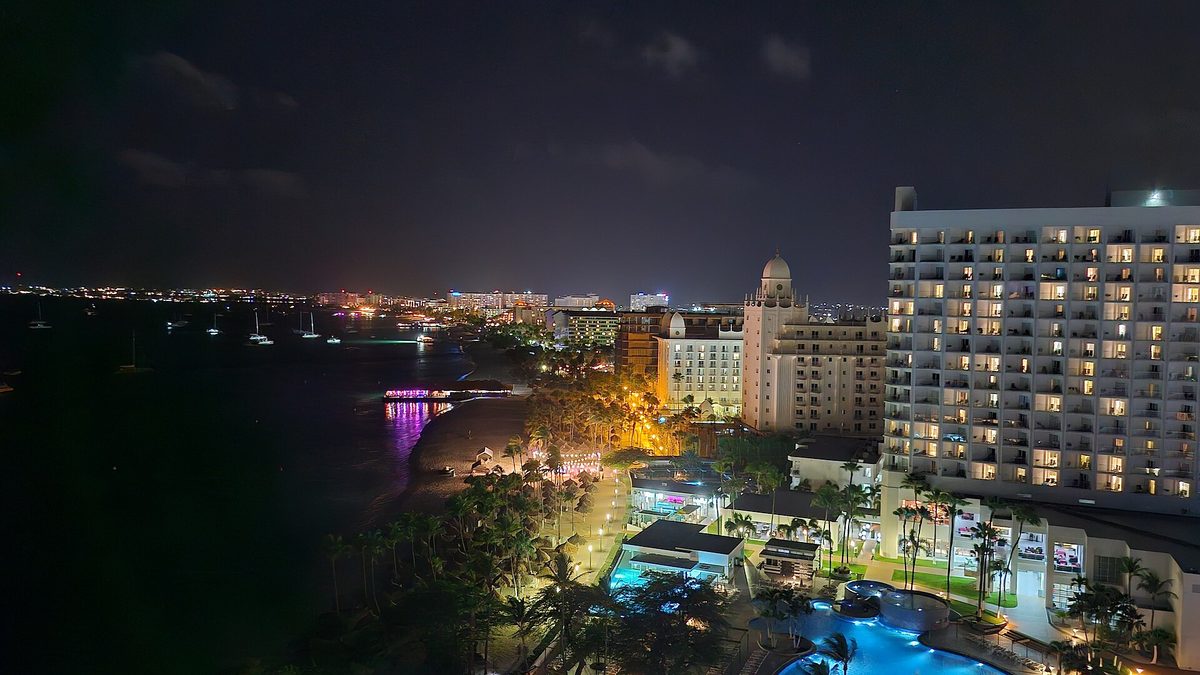
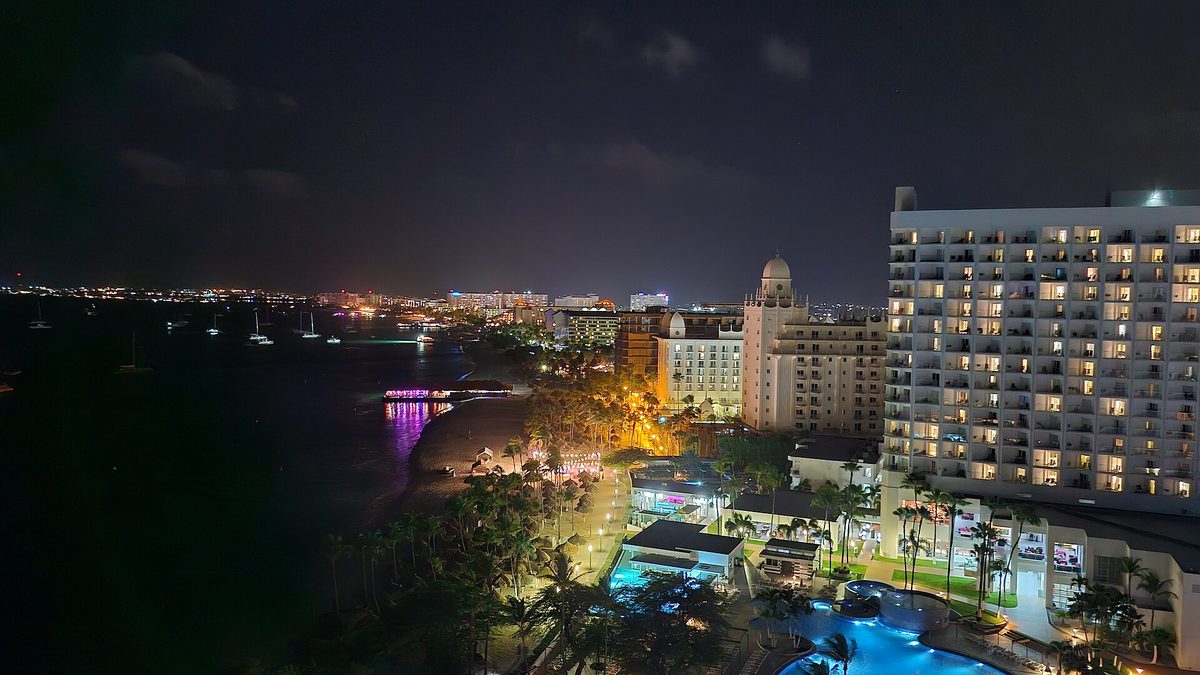
If it’s your first trip and you want the safe, fun, no-overthinking choice, this is it. Palm Beach is the two-mile high-rise strip where most of the big names live — Marriott, Hilton, Hyatt Regency, the Ritz-Carlton at the north end, RIU and Barceló for all-inclusive — lined up behind a calm, shallow, swimmable beach. The water here is bathtub-gentle, which is exactly why families gravitate to it.
What sells Palm Beach is convenience. You can walk out of your lobby, rent a clamshell or grab a free resort lounger, and within a few minutes be at a restaurant, a beach bar, a shopping plaza (Palm Beach Plaza, Paseo Herencia) or a casino. Watersports leave straight off the sand — parasailing, jet skis, banana boats, snorkel trips and sunset catamarans — so you can join a tour on a whim. You genuinely do not need a rental car here, which saves money and the mild stress of island driving. For the full menu of what’s on offer, our guides to Aruba water sports and Aruba nightlife map out the best of both, most of it within a short stroll of a Palm Beach room.
Who Palm Beach is perfect for
- First-time visitors who want everything in one walkable place.
- Families — calm water, kids’ clubs, pools with slides, and dinner options that please picky eaters.
- Groups and nightlife seekers — casinos, bars and live music are all here.
- No-car travelers — you can have a great week without ever renting wheels.
The honest downsides
Palm Beach is the priciest and most crowded strip in high season, and the loungers fill early — people stake out front-row palapas not long after sunrise. It also feels the least “Aruban” part of the island; the shopping and chain restaurants could be in any sunny U.S. resort town, and a lot of the beachfront dining is mediocre for the price. If feeling like you’ve truly left home matters to you, Palm Beach can underwhelm. For value, lean on resorts that include extras, or consider an all-inclusive — our roundup of Aruba all-inclusive resorts explains when
Eagle Beach: The Wide, Calm, Couples’ Favorite
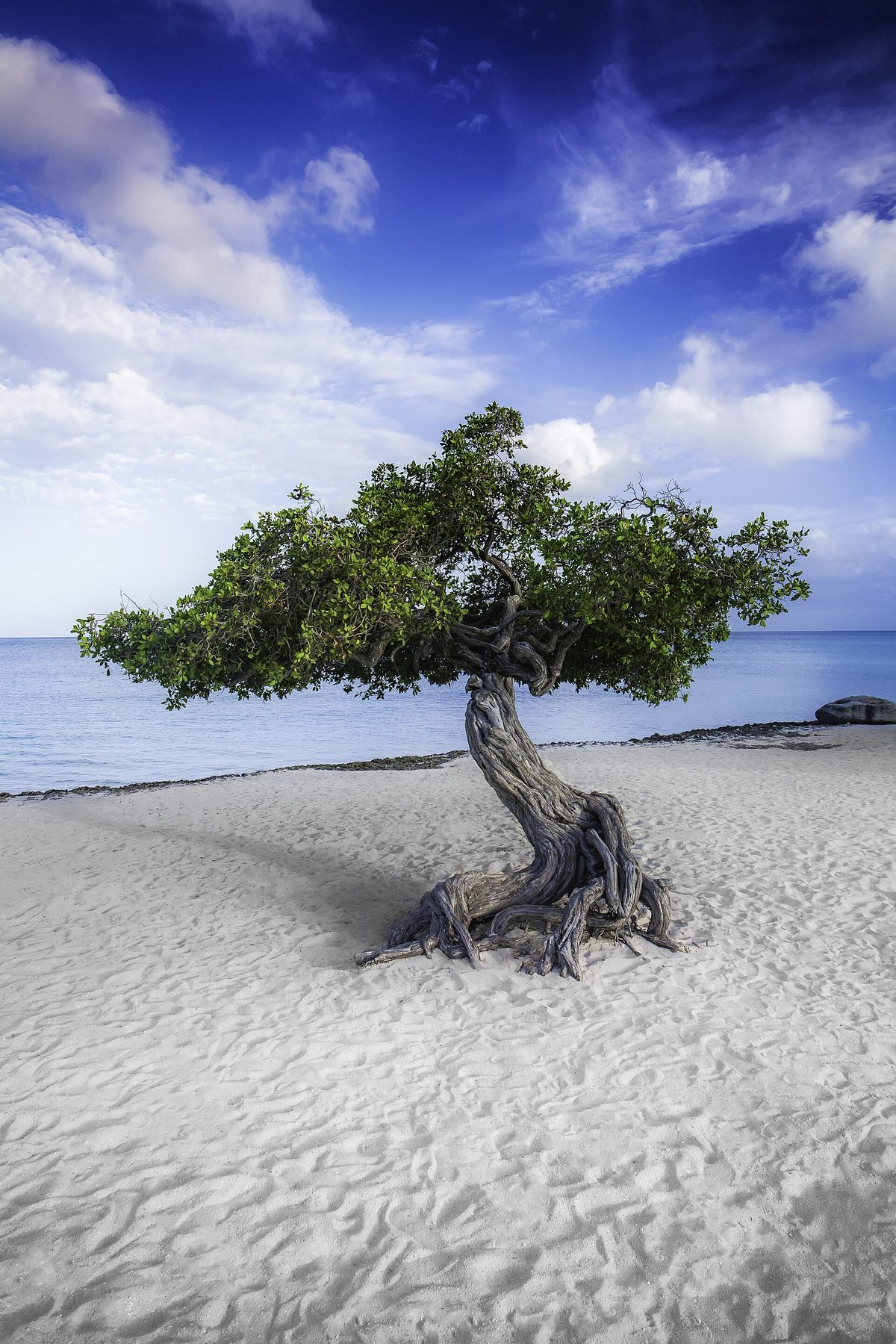
Ask ten regulars which is Aruba’s prettiest beach and most will say Eagle. The sand here is genuinely one of the widest in the Caribbean, so even on a busy day there’s room to spread a towel far from anyone else. A local building-height limit caps the resorts at a few stories, which keeps the whole area low-slung, breezy and open — no wall of towers throwing afternoon shade over the sand. This is where you’ll find the famous wind-bent fofoti trees that end up on every Aruba postcard.
The mood is calmer and more grown-up than Palm Beach. Instead of a packed strip of chains, you get boutique and condo-style properties, low-rise resorts like Amsterdam Manor and the adults-only Bucuti & Tara (consistently rated among the Caribbean’s best), and a handful of excellent beachfront restaurants that come alive at sunset. There’s less staked out in front of you and fewer big tour operations, so it feels more like a beach and less like a marketplace. The trade-off: the water has a steeper drop-off and more wave action on windy days — lovely for adults, occasionally a bit much for toddlers.
I send couples and honeymooners here without hesitation. If you’re planning a romantic trip, pair this section with our Aruba honeymoon guide for the resorts and dinners that earn their reputation. And because Eagle’s sand is the star, it’s worth reading up on the island’s wider coast in our Aruba beaches guide before you commit — you may want to base here and day-trip to others.
Who Eagle Beach is perfect for
- Couples and honeymooners who want romance over a party scene.
- Repeat visitors who already “did” Palm Beach and want something calmer.
- Beach purists — if the sand itself is your priority, this is the one.
- Photographers chasing those fofoti-tree-and-turquoise shots.
The honest downsides
There’s less within stumbling distance — fewer shops, fewer casual eats, no real nightlife — so some evenings you’ll taxi or drive over to Palm Beach for variety. International chain hotels are essentially nonexistent here, which matters if you’re chasing loyalty points. And the higher-end restaurants, while good, aren’t cheap. Eagle rewards people who came to slow down, not people who want options buzzing around them at all hours.
Manchebo and the Low-Rise Strip: Quiet, Boutique, Still Walkable
Just south of Eagle, the beach widens even more into the Manchebo area, and this is my quiet little secret for travelers who want calm without needing a car. It blends seamlessly into Eagle Beach — you often can’t tell where one ends and the other begins — but the properties here (Manchebo Beach Resort, Costa Linda, Divi’s low-rise cluster) skew toward wellness, yoga-on-the-sand mornings and a barefoot, boutique feel. The beach is enormous and tends to be the most peaceful stretch of the whole resort coast.
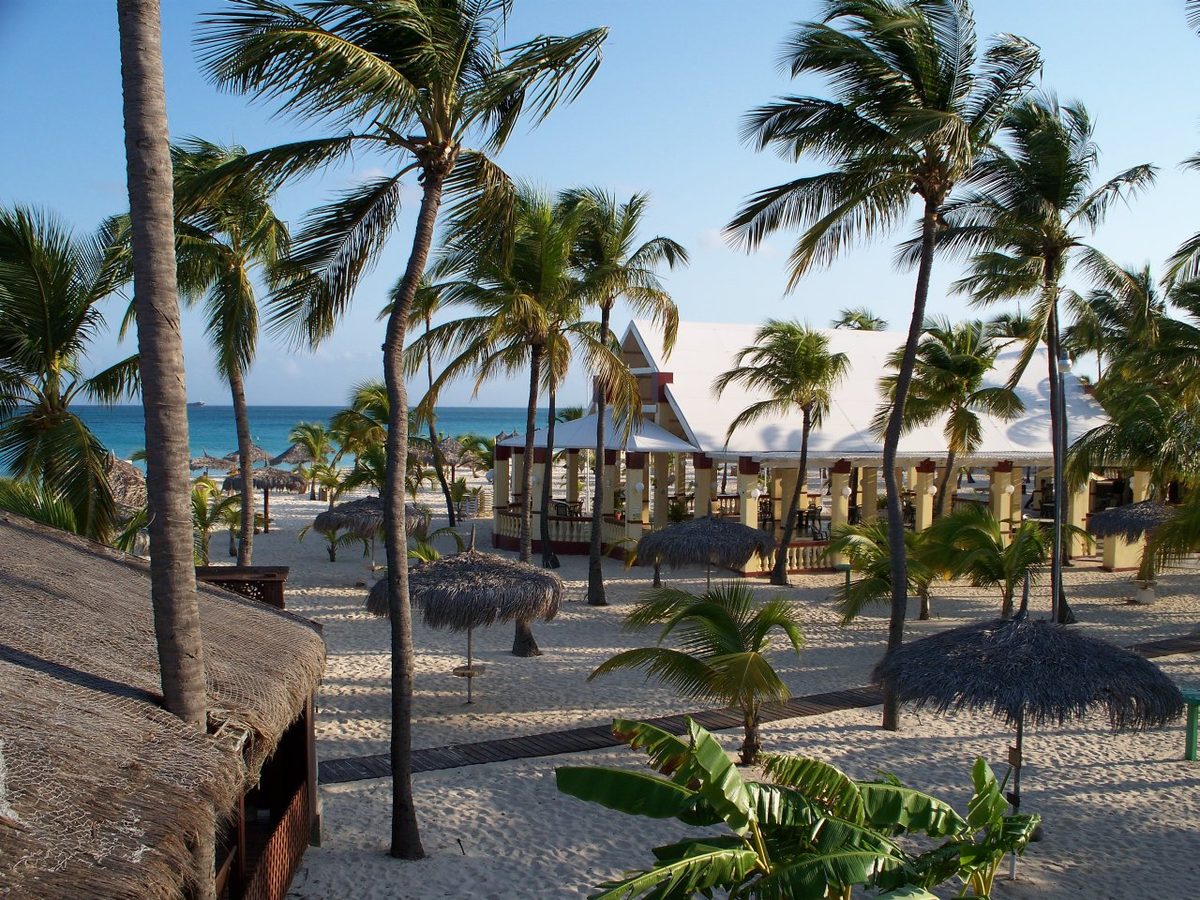
What I love about basing here: you get Eagle Beach’s wide-open serenity, you’re still a flat 15–20 minute walk or a couple-dollar bus ride from Palm Beach’s restaurants and action, and you usually pay a touch less than prime Eagle. It’s the “best of both” compromise a lot of second-time visitors land on once they know the island. Families with calm-water needs should note the same steeper drop-off as Eagle, so wade in before you let little ones loose.
Who the low-rise strip is perfect for
- Wellness and yoga travelers who want spa-and-sand mornings.
- Couples wanting calm but walkable — quiet base, action a stroll away.
- Anyone who finds Palm Beach too much and Eagle too sleepy — this is the middle.
Oranjestad and Downtown: Best Area to Stay in Aruba on a Budget
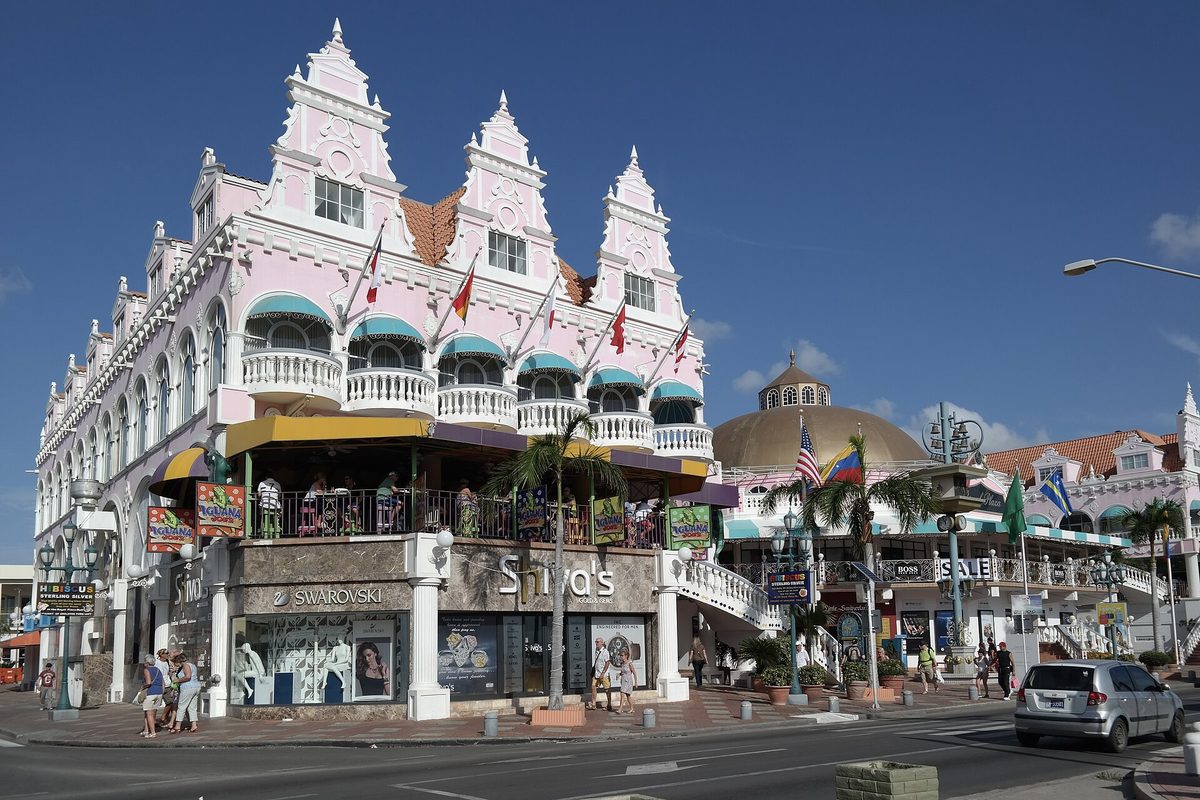
Aruba’s capital is its most underrated base — not for the beach (the in-town sand is small or man-made), but for everything else. Staying in or just outside Oranjestad gets you the island’s most colorful, walkable streets, the widest range of local restaurants and bars, the cruise-port shopping, the free downtown tram, and the marina where the Renaissance’s flamingo island sits. Hotel prices skew lower here than on the resort strip, which makes downtown the natural pick for budget travelers and anyone who’d rather spend money on food and tours than on a beachfront markup.
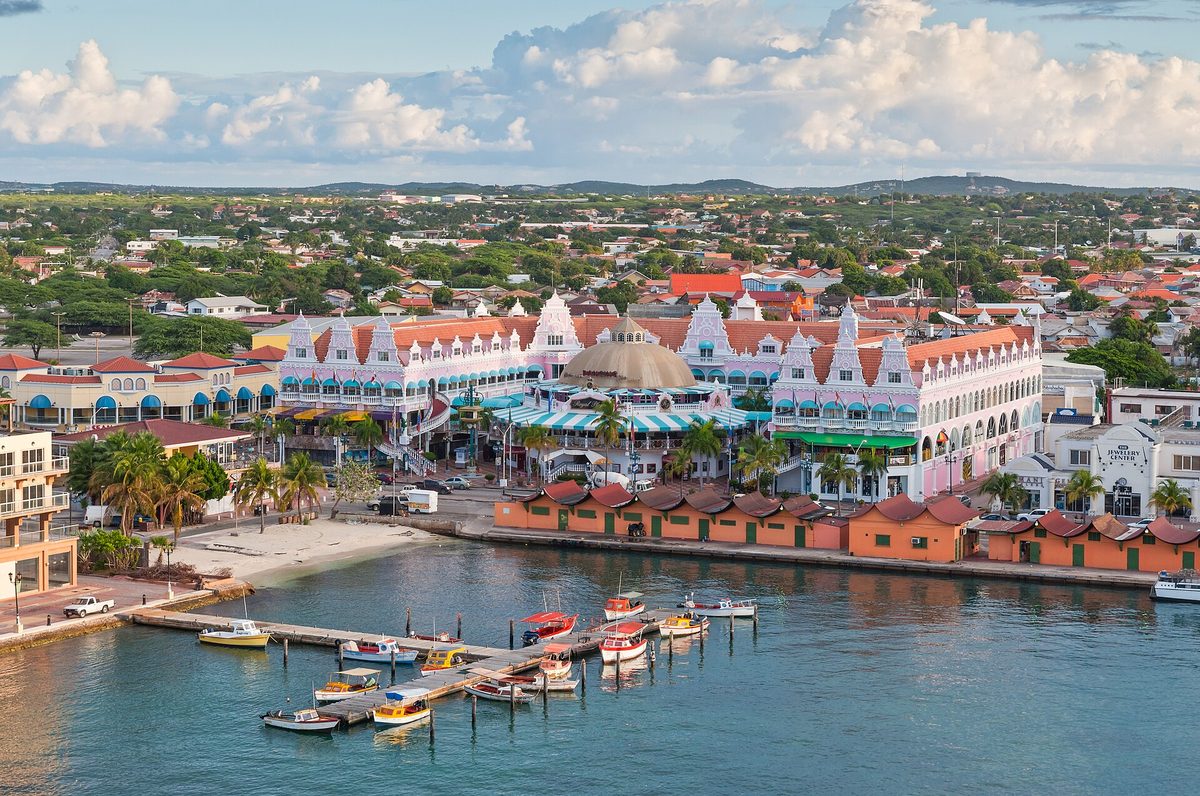
This is the area for travelers who want Aruba to feel like a real place, not just a beach resort. You’re centrally located for driving anywhere on the island, you’re surrounded by the kind of casual cafes and bars our Aruba restaurants guide raves about, and you’re a short hop from the beaches when you want them. The catch is obvious: you trade beach-out-your-door convenience for value and culture. If your dream is rolling straight from bed onto white sand, downtown will frustrate you. If you’ll happily drive or bus 10–15 minutes to Eagle or Palm Beach and pocket the savings, it’s a smart, characterful choice. To keep that budget tight across the whole trip, our Aruba vacation cost breakdown is the number-cruncher to read next.
Who Oranjestad is perfect for
- Budget travelers who want the lowest nightly rates near the action.
- Foodies and culture-seekers who prioritize local life over a private beach.
- Cruise passengers adding a night or two before or after a sailing.
- Independent explorers renting a car to roam the whole island.
Noord: Villas, Space and Longer Stays
Noord is the broad residential district wrapped around Palm and Eagle Beaches, and it’s where you go for square footage. Most of Aruba’s vacation rentals, villas, condos and apartment complexes sit here, often with private pools and full kitchens, a 5–10 minute drive from the sand. For families who want separate bedrooms, groups splitting a house, or anyone staying a week-plus who’d rather cook some meals than eat out every night, Noord stretches your budget further than a single resort room ever could.
You’ll want a rental car in Noord — it’s residential, so restaurants and beaches mean a short drive rather than a walk, though there are excellent local eateries (and the famous Friday-night cluster of casual spots) scattered throughout. Think of Noord as “near the action but not in it,” trading walkability for space and a more lived-in, local feel. If a kitchen and elbow room rank above a lobby and a concierge, this is your area.
Savaneta and the Quiet South: Off the Strip Entirely
Want to disappear? Head southeast. Savaneta — Aruba’s original capital and now a sleepy fishing village — along with the southern reaches toward San Nicolas and Baby Beach, is about as far from the resort buzz as the island gets. The pace is slow, the crowds thin, and the appeal is a handful of intimate boutique stays, terrific waterfront seafood (Flying Fishbone and Zeerover are local legends), and shallow, calm coves perfect for snorkeling. San Nicolas itself rewards a visit for its open-air street-art murals.
This is a deliberate choice, not a default one. You’ll need a car, you’ll be 25–35 minutes from Palm Beach, and “nightlife” means a quiet dinner under the stars. But for honeymooners craving privacy, snorkelers, or repeat visitors who’ve seen the strip and want the other Aruba, the south is a revelation. Pair it with a day in Arikok National Park, which covers much of the island’s wild eastern side, and you’ve got a very different, very local trip.
How to Choose Your Area by Traveler Type
Areas are easier to pick once you know which version of you is traveling. Here’s how I’d steer each type.
First-timers
Stay on Palm Beach. You get the gentlest learning curve: walkable everything, calm water, easy tours, no car needed. You’ll see the most of Aruba’s “greatest hits” with the least friction. Build your days around our things to do in Aruba guide and you’ll never run out of options within reach.
Couples and honeymooners
Choose Eagle Beach or the Manchebo low-rise for romance and wide, quiet sand — or Savaneta if you want true seclusion. Skip the high-rise crowds; you came to slow down together, and these areas are built for exactly that.
Families
Palm Beach wins for the calm, shallow water, kids’ clubs, pools with slides and walkable dinners. A Noord villa is the runner-up if you need space and a kitchen. Our Aruba with kids guide digs into the family-friendliest resorts and beaches.
Budget travelers
Base in or near Oranjestad for the lowest rates, or grab a Noord rental and self-cater. You’ll spend a little on buses or a car to reach the best beaches, but you’ll save far more on the room and on meals. Squeeze the rest with our list of free things to do in Aruba.
No-car travelers
Stay on Palm Beach, full stop — it’s the one area where you can have a complete vacation entirely on foot, with the occasional cheap bus or taxi. Eagle and Manchebo are doable car-free too, but you’ll lean on the bus more for variety.
So, What’s the Best Area to Stay in Aruba for You?
Here’s the verdict distilled. If you want one easy answer: the best area to stay in Aruba is Palm Beach for first-timers, families and anyone car-free, because it packs beach, food, nightlife and tours into one walkable strip. Pick Eagle Beach or the Manchebo low-rise for couples and calm, Oranjestad for budget and culture, Noord for villa space, and Savaneta or the south for genuine quiet. There’s no wrong answer on an island this small and this safe — only a best-fit answer for the trip you’re planning. When in doubt, base on Palm or Eagle and day-trip everywhere else; the whole west coast is within a short, easy hop.
Getting Around and Location Logistics
Aruba’s geography makes this easy. The airport (AUA) sits just south of Oranjestad. From there it’s roughly a 10–15 minute drive (about 6–7 miles) up the coast to Eagle Beach, and 15–20 minutes to Palm Beach. Savaneta and the south are 25–35 minutes the other direction. Taxis from the airport run on fixed government rates — budget around $25–$35 to the Eagle/Palm strip for up to a few passengers, a little more after midnight.
The public bus — Arubus — is the budget traveler’s best friend and genuinely useful. Line 10 runs frequently between Oranjestad and the Palm Beach hotels along the coast, passing Eagle and Manchebo, for just a couple of US dollars each way (have small bills; exact-ish change helps). That means even if you stay downtown or on the low-rise strip, you can reach Palm Beach’s restaurants and back for pocket change. Within Palm Beach itself you won’t need any transport — it’s all walkable — which is a big part of why it’s the easiest base.
Do you need a rental car? Only if you plan to explore independently — multiple beaches, Arikok, far-flung restaurants, or a stay in Noord or the south. If you’re basing on Palm or Eagle and mostly relaxing (tours usually include hotel pickup), skip the car and save the daily rate plus parking hassle. If you’re the road-trip type, our getting to and around Aruba guide covers rentals, driving and the bus in detail, and the Aruba itinerary guide helps you turn those wheels into a plan.
Money-Saving Tips by Area
- Travel in shoulder or low season. Roughly mid-April through early December, the same rooms drop dramatically — often 30–40%. Our best time to visit Aruba guide breaks down the price-versus-weather trade-offs (and yes, Aruba sits below the hurricane belt).
- Stay one street back from the beach. On Palm Beach especially, properties across the road from the sand cost noticeably less and are still a 3–5 minute walk to the water.
- Use the bus instead of a car if you’re staying on the strip — Line 10 covers the touristy coast for a couple of dollars.
- Consider all-inclusive on Palm Beach where restaurant prices are steep; do the math against eating out for your group size.
- Self-cater in Noord or Oranjestad. A rental with a kitchen plus a Super Foods grocery run cuts the biggest hidden cost of an Aruba trip: dining.
What to Skip
A few honest “don’t bother” notes. Don’t pay a premium for a high-floor “ocean view” room you’ll barely use — you’ll be on the beach or by the pool, not on the balcony. Don’t assume you must rent a car: if you’re a Palm Beach relaxer, it’s wasted money. Be wary of the most generic beachfront tourist-trap restaurants on the Palm Beach strip; the better, better-value food is a block inland or over in Eagle, Oranjestad and Noord. And don’t over-optimize the area choice itself — Aruba is so compact that wherever you sleep, the whole west coast is a short hop away. Book the vibe you want for evenings, and visit the rest by day.
Frequently Asked Questions
What is the best area to stay in Aruba for first-time visitors?
Palm Beach. For a first trip it’s the easiest, most rewarding base: a calm, swimmable beach with watersports off the sand, plus restaurants, bars, casinos and shopping all within an easy walk, so you don’t need a rental car. Couples after something quieter should look at Eagle Beach instead, but Palm Beach is the safe, fun default.
Is Palm Beach or Eagle Beach better?
Neither is universally better — they suit different trips. Palm Beach is livelier and walkable with calm water, nightlife and big resorts, ideal for families and first-timers. Eagle Beach is wider, quieter and more upscale-relaxed, ideal for couples and beach purists. They’re close enough that you can base at one and easily visit the other by day.
Where do most tourists stay in Aruba?
Most visitors stay on Palm Beach, the high-rise strip with the greatest concentration of beachfront resorts, restaurants, casinos and nightlife. Eagle Beach is the popular runner-up for travelers wanting a calmer, wider beach. Together these two adjacent areas account for the large majority of Aruba’s hotel stays.
What is the nicest part of Aruba to stay in?
For sheer beach beauty, Eagle Beach is usually crowned the nicest — its wide, soft white sand, low-rise resorts and romantic, uncrowded feel are hard to beat. If “nicest” means most convenient and lively rather than most beautiful, Palm Beach takes it. Couples lean Eagle; first-timers and families lean Palm.
Do you need a car in Aruba?
Not if you stay on Palm Beach and mainly relax — everything’s walkable and most tours include hotel pickup, with cheap buses and taxis for the rest. You’ll want a rental car if you plan to explore multiple beaches, visit Arikok National Park, eat around the island, or stay in Noord or the quieter south.
What is the safest area to stay in Aruba?
Aruba is one of the safest Caribbean islands overall, and the main tourist areas — Palm Beach, Eagle Beach and the low-rise strip — are very safe and well-trafficked day and night. As anywhere, use normal sense with valuables on the beach and in rental cars. Check current official guidance from your government before you travel.
Is Aruba walkable?
Palm Beach is highly walkable — beach, dining, shopping and nightlife all connect on foot, which is why no-car travelers love it. Eagle and Manchebo are walkable along the beach but have fewer shops, so you’ll bus or drive for variety. Noord, Oranjestad’s outskirts and the south generally need a car to get around comfortably.
Final Thoughts
After enough trips, I’ve stopped looking for the single “best” base and started matching the area to the mood of the trip. A first vacation or a family week? I book Palm Beach and never regret the convenience. A honeymoon or a slow couples’ escape? Eagle or the Manchebo low-rise, every time. Watching the budget or craving real local life? Oranjestad, with a bus pass and a rental car for the beaches. The beauty of an island this small is that you’re never far from any of it — pick the vibe that fits your evenings, and let Aruba’s compact west coast take care of the rest. For the wider picture and every neighborhood in depth, circle back to our complete where to stay in Aruba guide, and skim our Aruba travel tips before you fly.
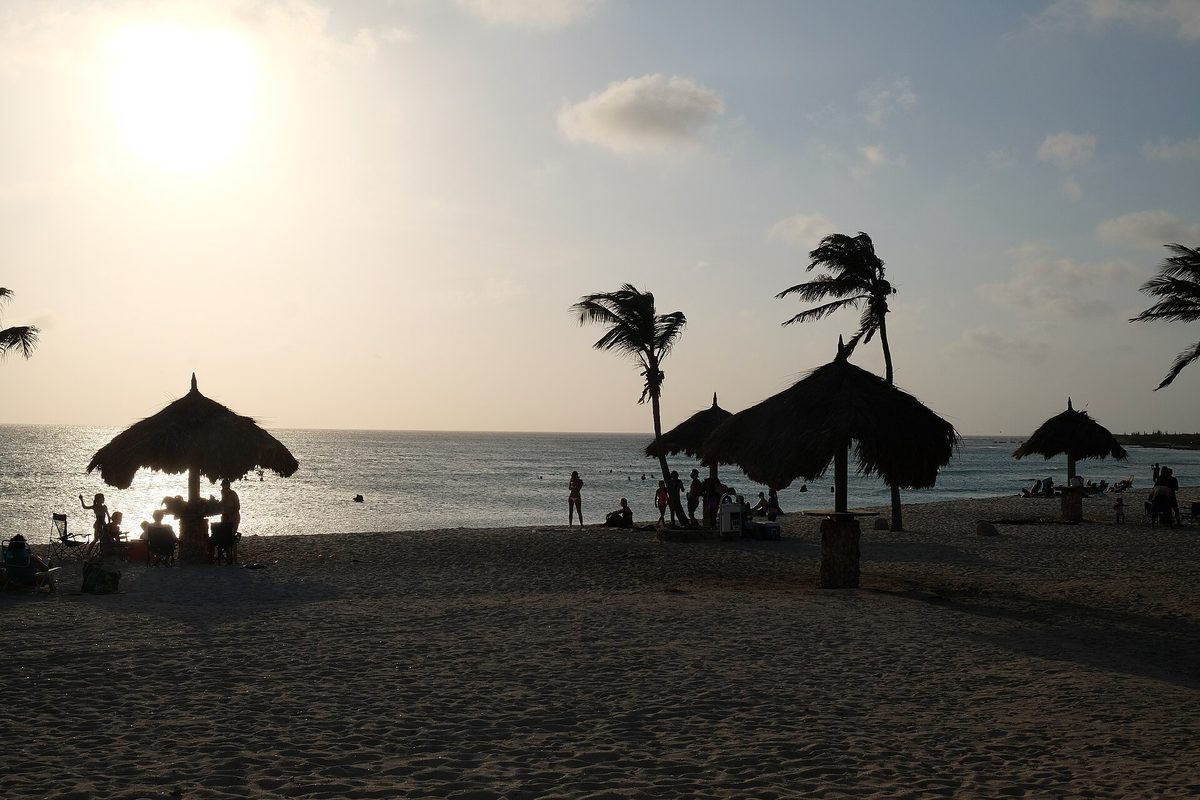
Photo Credits
- High-rise hotels lining Palm Beach at night — Photo: Rarends297 (CC0) via Wikimedia Commons.
- Fofoti tree on Eagle Beach — Photo: Jason Boldero / CC BY 2.0 via Wikimedia Commons.
- Colorful Dutch colonial buildings in Oranjestad — Photo: Navigator334 / CC BY-SA 4.0 via Wikimedia Commons.
- Palapas on the low-rise Manchebo Beach — Photo: Set1536 / CC BY-SA 3.0 via Wikimedia Commons.
- Sunset over Aruba’s west coast — Photo: Roman Boed / CC BY-SA 4.0 via Wikimedia Commons.