I’ll be honest: for years I quietly judged parents who booked all-inclusive resorts. I pictured beige buffets, wristbands, and watered-down everything, and I was certain that traveling with kids meant experiencing a place, not hiding behind a resort gate. Then I actually took two kids (a sandcastle-obsessed five-year-old and a perpetually-hungry pre-teen) to a family all inclusive Aruba resort, and I ate every one of those words somewhere around the swim-up bar on day two. It turns out that when the food, the kids’ club, the snorkel gear, and the bottomless smoothies are all paid for in advance, a vacation with children stops feeling like a logistics exercise and starts feeling like an actual break.
This guide is the candid version I wish I’d had: which resorts genuinely earn the “family-friendly” label, what’s actually included for kids, which beaches are calm enough for toddlers, and where the money-saving “kids stay free” deals are real versus marketing. I’ve leaned on first-hand impressions, current resort information, and a healthy dose of skepticism. Prices and policies change constantly in Aruba, so treat every number here as a starting point and confirm current rates and kids’ policies before you book. And if you are still working out what to actually do with the days, our day-by-day plan for families covers the beach-morning, rest-window, one-adventure rhythm that keeps everyone happy.
Short answer: The best family all-inclusive resorts in Aruba are the connected Divi Aruba and Tamarijn Aruba on calm Druif Beach (where up to two kids 12 and under stay, play, and eat free), plus the Holiday Inn Resort and Barcelo on lively Palm Beach. Choose Druif/Eagle for toddlers and quiet, and Palm Beach for teens, energy, and walkable nightlife.
Aruba isn’t a budget Caribbean island. Most of its food is imported, restaurant tabs add up fast, and a week of à la carte dining for four can quietly rival the cost of the flights. That economics is exactly why all-inclusive makes more sense here than in many destinations, and why the parent-and-kids math so often tips in its favor. For the bigger picture on planning a trip with children, our Aruba with kids guide covers everything from car seats to the best family beaches, and this article zooms in on the resorts themselves. You’ll also want our overview of all-inclusive resorts in Aruba for how the all-inclusive concept works island-wide.
Family all-inclusive resorts in Aruba at a glance
Here’s the quick comparison I always wish these guides led with. Use it to shortlist two or three properties, then read the detailed sections below. Nightly prices are rough, per-room, peak-ish estimates for a family and move a lot by season, so confirm current rates directly.
Not travelling with kids? The wider ranking of the island’s best all-inclusive resorts covers every traveller type.
| Resort | Beach | Kids’ club? | Ages | Vibe | Rough nightly price |
|---|---|---|---|---|---|
| Divi Aruba All Inclusive | Druif Beach | Yes (Sea Turtles) | 4–12 | Calm, low-rise, classic | ~$450–$700 |
| Tamarijn Aruba All Inclusive | Druif Beach | Yes (Sea Turtles) | 4–12 | Oceanfront, relaxed | ~$450–$700 |
| Holiday Inn Resort Aruba | Palm Beach | Activity center | All ages | Lively, central, value | ~$400–$650 |
| Barcelo Aruba | Palm Beach | Yes | 4–12 | High-rise, polished | ~$500–$800 |
| Riu Palace Aruba | Palm Beach | Yes (RiuLand) | ~4–11 | Big, buzzy (reopening 2026) | ~$550–$850 |
| Divi Village Golf & Beach | Near Druif Beach | Shared kids’ club | 4–12 | Suites, water slide | ~$400–$650 |
Prices are rough estimates only and exclude taxes and fees. Always confirm current rates, kids’ policies, and what’s actually included before booking.
The best family all inclusive Aruba resorts
Aruba’s all-inclusive scene is smaller than, say, the Dominican Republic’s, and that’s actually good news for families: there are a handful of properties that genuinely commit to the model, rather than a sprawl of look-alikes. Here are the ones I’d send my own relatives to, with the honest caveats included.
Divi Aruba & Tamarijn Aruba All Inclusive (Druif Beach) — best all-rounder for families
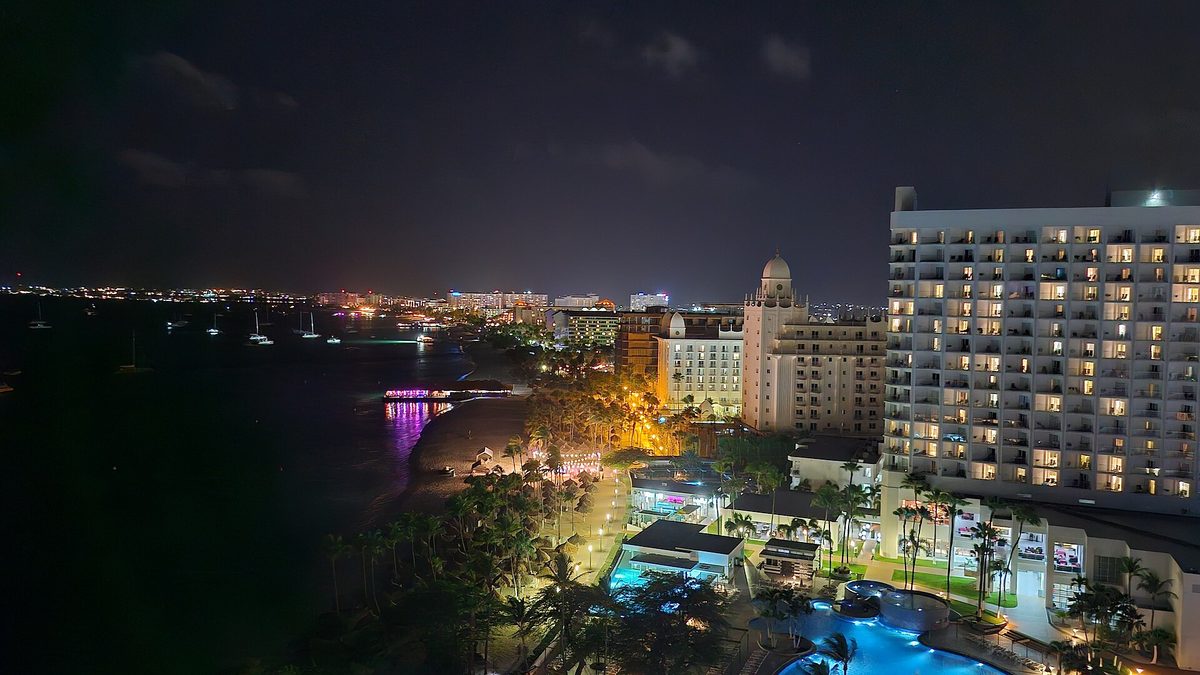
If you only look at one option, make it this pair. The Divi Aruba All Inclusive and its sister property, the Tamarijn Aruba All Inclusive, sit side by side on Druif Beach (sometimes called Divi Beach), a quiet stretch of sand just south of the busier Eagle and Palm beaches. Book either resort and you get full run of both: a shuttle and a short beachfront walk connect them, which roughly doubles your restaurants, bars, and pools without doubling the price.
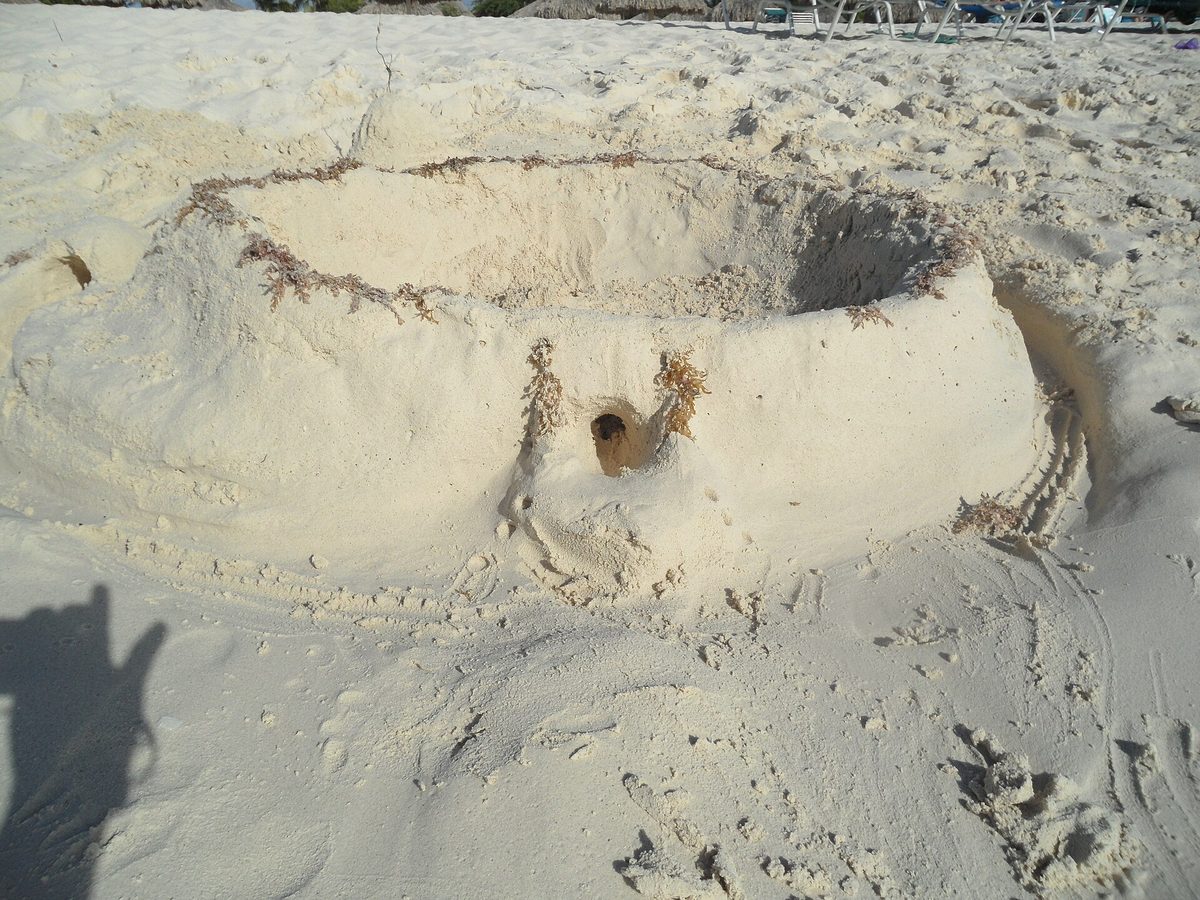
For families, the headline is the math. Up to two children ages 12 and under can stay, play, and eat free when sharing a room with two paying adults on the all-inclusive plan. That single policy can knock a meaningful chunk off a week’s bill, which is why I keep steering budget-conscious families here. The kids themselves get the Sea Turtles Club (roughly ages 4–12) with beach scavenger hunts, sandcastle contests, arts and crafts, and movie nights, plus a genuinely fun 30-foot rock-climbing wall right on the sand at the Divi Winds Sports Center.
The vibe is unpretentious and a little old-school in the best way: low-rise buildings, oceanfront rooms at the Tamarijn, mature palms, and a beach that’s calm and shallow enough for nervous swimmers. Between the two resorts you’ll find around nine dining options and seven bars, several freshwater pools, non-motorized water sports, tennis, and nightly entertainment. Rough nightly rates for a family tend to land in the ~$450–$700 range depending on season and room, but confirm current rates and the kids-free terms directly, because the fine print (number of kids, room category, blackout dates) is where these deals live or die.
Holiday Inn Resort Aruba (Palm Beach) — best value on the busy beach
The Holiday Inn Resort Aruba surprised me, and judging by how many families pack it, I’m not alone. It sits right in the thick of Palm Beach, steps from shops, restaurants, and the high-rise nightlife strip, which is exactly what you want with teens who’d rather not be marooned. Children under 12 generally stay and eat free when sharing a room with adults, and the all-inclusive plan covers around five dining options, including a casual pizza spot that my pre-teen treated as a personal achievement to visit daily.
The family secret weapon here is the supervised kids’ activity center stocked with crafts, board games, ping-pong, air hockey, and video games, plus babysitting and nanny services if you want an adults-only dinner on the strip. There’s a Caribbean-facing pool, watersports, bike rentals, and tennis. The honest downside: Palm Beach itself is narrower in front of the high-rises and can feel crowded at peak times, so claim your palapa early. Expect rough nightly rates around ~$400–$650 for a family, and confirm the current kids-eat-free policy when you book because it has terms.
Barcelo Aruba (Palm Beach) — polished high-rise with a real kids’ club
If you want a more resort-y, higher-rise experience with a properly supervised kids’ club, Barcelo Aruba is the Palm Beach pick. Every room has a balcony, the suites and connecting rooms can sleep up to seven (a genuine perk for bigger families and multi-generational trips), and you’re greeted with a welcome drink that sets the tone. The all-inclusive plan spans roughly seven restaurants and three bars, a natural-style swimming pool with daily activities, a casino for the grown-ups, and a sports program that includes tennis, water polo, water aerobics, snorkeling, and diving classes.
The supervised kids’ club covers ages 4–12, freeing you up for that adults-only dinner or a quiet hour by the pool. It skews a bit pricier than the Holiday Inn, with rough nightly rates often in the ~$500–$800 range for a family, but the trade is a more polished product and more space per room. As always, confirm current rates and exactly what the all-inclusive tier covers, since premium restaurants and some activities can carry surcharges.
Riu Palace Aruba (Palm Beach) — big, buzzy, and freshly renovated
The Riu Palace Aruba is the choice for families who want the classic big-resort, everything-everywhere energy: multiple pools including a dedicated kids’ pool, an ice-cream parlor, several restaurants (Italian, a steakhouse, Asian options), swim-up bar, and family-friendly shows. RiuLand-style kids’ programming targets roughly ages 4–11. It’s right on Palm Beach and walkable to the whole strip.
Important timing note: Riu Palace Aruba has been undergoing a phased, top-to-bottom renovation, and the property is expected to be fully closed for the final phase through about early August 2026, reopening around August 2, 2026. If you’re traveling in mid-2026, double-check the resort’s status before you get your heart set on it, because dates can shift. The upside is that anyone booking after the reopening gets brand-new rooms and refreshed public spaces. Rough nightly rates for a family run higher here, often in the ~$550–$850 range, so confirm current rates and the reopening date directly.
Divi Village Golf & Beach Resort — suites, a water slide, and four resorts in one
Not fully all-inclusive on its own, the Divi Village Golf & Beach Resort offers all-inclusive packages that unlock four connected Divi properties (Divi Village, Divi Dutch Village, Divi Aruba, and Tamarijn) with a complimentary shuttle between them. For families that’s a buffet of choice: more restaurants, more pools, and, crucially for kids, a water slide that the high-rises mostly lack. Spacious suites (some with kitchenettes, and three-bedroom layouts for big groups) make this a strong pick for families of five or more, and there’s a shared kids’ club. Rough nightly rates tend to land around ~$400–$650 with the all-inclusive package, but read the package terms carefully since the base resort is condo-style.
A note on “all-inclusive” in Aruba: Several beloved family resorts here (the Renaissance Wind Creek, Hyatt Regency, and Marriott properties) are not truly all-inclusive, though some offer optional meal-inclusive upgrades. They’re wonderful, but if a paid-in-advance, no-surprises bill is your goal, stick to the dedicated all-inclusives above and read our deeper dive on Aruba’s neighborhoods and hotel types for the non-AI options.
What’s actually included for kids at an Aruba all-inclusive
This is the part I most misunderstood before my first trip. “All-inclusive” varies more than the label suggests, and for families the details that matter aren’t the cocktails (you knew those were included) but the kid-specific stuff that quietly determines whether you relax or referee all week.
Kids’ clubs and supervised programming
The dedicated all-inclusives generally run a supervised kids’ club for roughly ages 4–12, with a typical day of arts and crafts, beach games, sandcastle competitions, scavenger hunts, and movie afternoons. The Divi and Tamarijn share the Sea Turtles Club; Barcelo and Riu run their own. These are usually included at no extra charge during posted hours, and they’re the thing that buys you a quiet lunch or an actual conversation. Two honest caveats: most clubs start at age 4 (toddlers aren’t dropped off), and evening or extended hours often shift to paid babysitting, which the Holiday Inn and several others offer for an extra fee.
Meals, snacks, and the all-day food question
For families, the food inclusion is the budget hero. Imported groceries make Aruba pricey, so unlimited buffets, à la carte dinners, kid-friendly staples (pizza, pasta, burgers, ice cream), and all-day snacks genuinely add up to real savings. The “kids stay, play, and eat free” deals at the Divi/Tamarijn and the kids-eat-free policy at the Holiday Inn extend that inclusion to the children’s meals too, which is where the math gets compelling. Just confirm whether premium or specialty restaurants carry a surcharge, and whether reservations are required, because the nicer dinners often book up.
Activities, watersports, and entertainment
Most family all-inclusives bundle non-motorized watersports (kayaks, paddleboards, sometimes snorkel gear and windsurfing lessons), pool activities, tennis, beach volleyball, bike rentals, and nightly entertainment that’s usually family-friendly early before turning more adult later. Motorized watersports, scuba certification, spa treatments, and off-site tours are almost always extra. If your kids are water-obsessed, our guide to Aruba water sports covers what’s worth paying for beyond the resort, and things to do in Aruba rounds up the off-resort adventures that break up a beach week.
Best beaches for families at Aruba’s all-inclusives
Aruba’s leeward (west and south) coast is where the calm, swimmable, postcard sand lives, and happily that’s where the family resorts cluster. The windward side is dramatic but rough, so don’t book a place there expecting toddler-friendly water. Our full Aruba beaches guide ranks them all; here’s the family-relevant short version.
Druif Beach — calmest for toddlers and timid swimmers
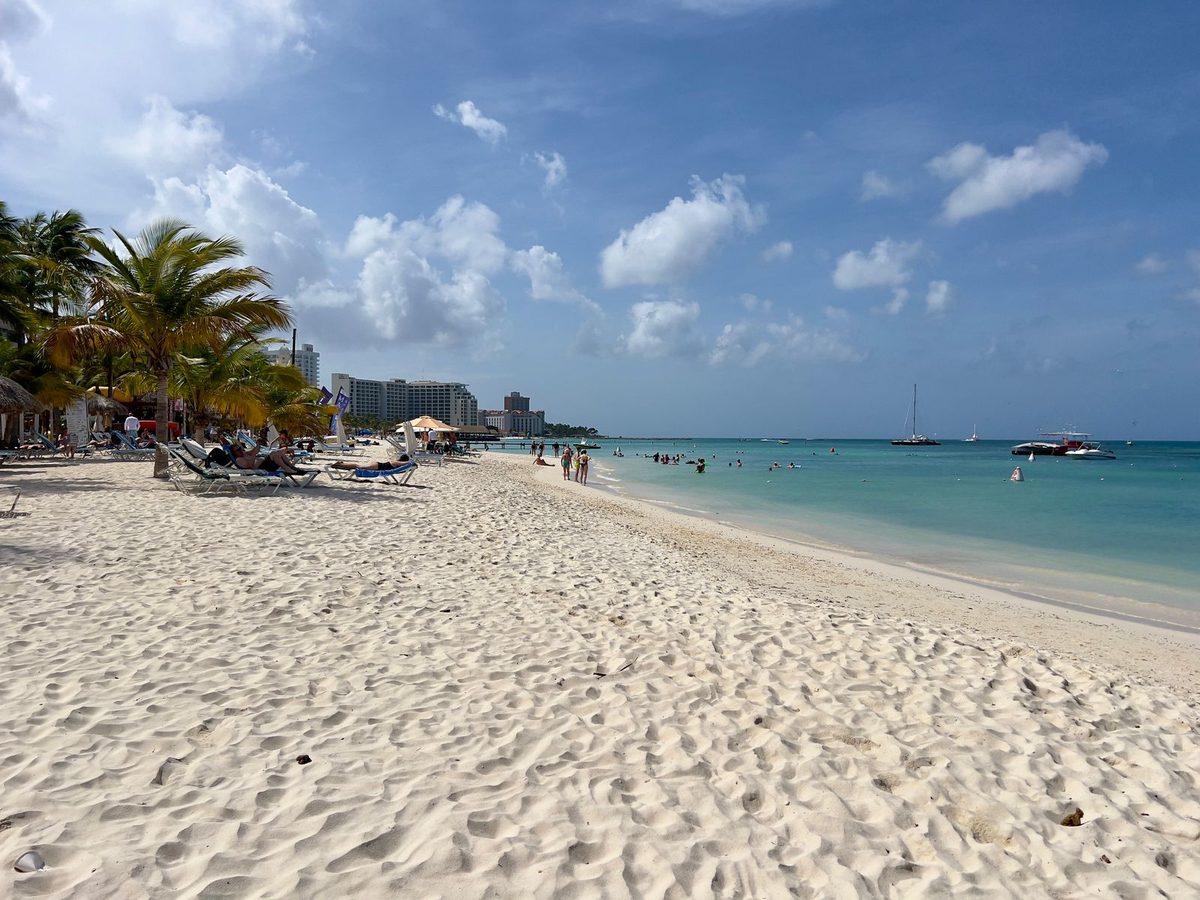
Home to the Divi and Tamarijn, Druif Beach is wide, soft, and notably calm, with gently shelving water that’s reassuring for little kids learning to swim. It’s less crowded than Palm Beach and has fewer vendors, which suits the relax-with-a-baby crowd. If your priority is a stress-free shoreline where a four-year-old can paddle while you actually sit down, this is the one.
Eagle Beach — wide, gorgeous, and great for all ages
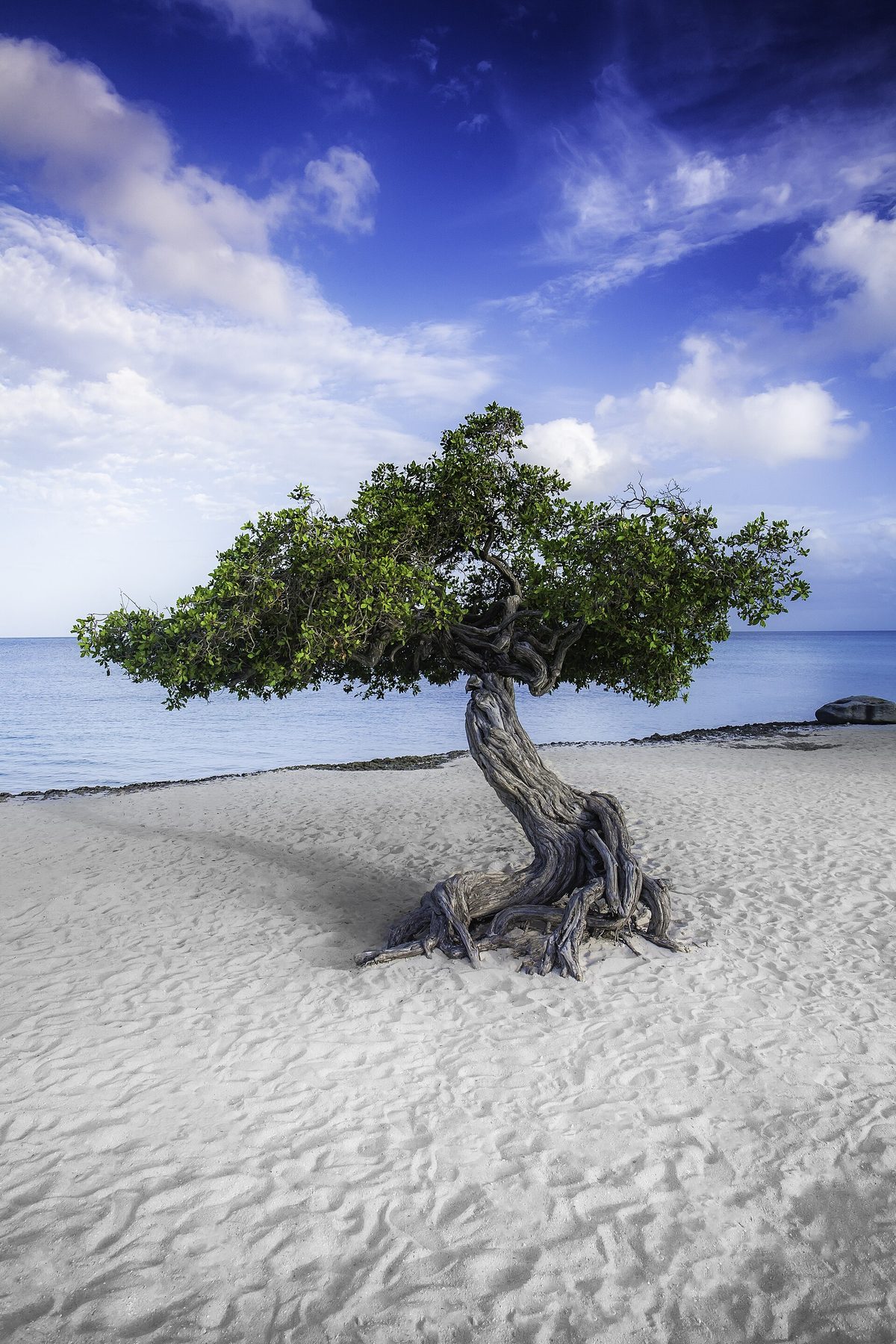
Just north of Druif, Eagle Beach is regularly ranked among the best beaches in the world, and it’s blissfully broad, so even on busy days there’s room to spread out. The water is calm, the famous fofoti trees make for iconic photos, and it’s an easy add-on from the Druif-area resorts. There are no high-rises directly on it, so it feels more open and serene than Palm.
Palm Beach — lively, walkable, best for teens
Palm Beach is where the Holiday Inn, Barcelo, and Riu sit, and it’s the energetic, see-and-be-seen strip: watersports kiosks, beach bars, restaurants, and shops within a stroll. The water is calm and swimmable, but the sand directly in front of the high-rises is narrower and fills up fast, so stake your claim early. For families with teens who want buzz, nightlife within walking distance, and plenty to do, Palm Beach wins.
Rooms: connecting rooms, suites, and sleeping a whole family
The single biggest rookie mistake I see is cramming four people into one standard room and spending the week tripping over each other. Aruba’s family all-inclusives have better options if you plan ahead.
Connecting rooms are the sanity-saver for families with school-age kids: two standard rooms with an internal door, so everyone has space and you keep an ear out. Barcelo, the Holiday Inn, and the Divi properties all offer them, but they’re limited and book early, so request one at the time of booking rather than hoping at check-in. Suites and multi-bedroom layouts are the move for bigger or multi-generational groups: Barcelo’s suites sleep up to seven, and Divi Village offers two- and three-bedroom condo-style units with kitchenettes, which also let you stash snacks and warm a bottle. For toddlers, ask specifically about cribs and rollaways, since availability and fees vary by property. Whatever you book, confirm the maximum occupancy and exactly how the kids-stay-free policy interacts with room category, because that combination is where surprises happen.
Toddlers vs teens: matching the resort to your kids’ ages
The “best” family all-inclusive in Aruba genuinely depends on how old your kids are. What thrills a teenager bores a toddler, and what soothes a parent of a two-year-old would frustrate a family of teens. Here’s how I’d split it.
Babies and toddlers (0–4)
Prioritize calm water, quiet, and space over flashy amenities, because the kids’ clubs typically won’t take under-4s anyway. The Divi and Tamarijn on Druif Beach are my default: shallow, gentle shoreline, low-rise and easy to navigate with a stroller, and a relaxed pace. Ask about cribs, request a ground-floor or pool-view room to cut down on elevator-and-stroller gymnastics, and consider a unit with a kitchenette (Divi Village) for bottles and early dinners. Babysitting rather than a kids’ club will be your childcare route at this age, so check it’s available and at what cost.
School-age kids (5–12)
This is the sweet spot for Aruba’s all-inclusives, because the kids’ clubs are built for exactly this range. Any of the dedicated AIs work, but the Divi/Tamarijn (Sea Turtles Club plus that beachfront rock wall), Barcelo (polished supervised club), and the Holiday Inn (activity center plus a central, walkable base) are standouts. Connecting rooms come into their own here. This is also the age where the kids-eat-free deals deliver the most value, since school-age appetites are real but the kids are still young enough to qualify.
Teens (13–17)
Teens want energy, food on demand, and the freedom to wander a little. Palm Beach is your zone: the Holiday Inn, Barcelo, and Riu put shops, watersports, and a walkable strip at their door, plus pools with swim-up bars and plenty of activity. Note that many “kids free” policies cap at age 12, so teens usually price as adults, which nudges the all-inclusive value calculation. The upside is teens eat and drink (sodas, smoothies, snacks) constantly, and an all-inclusive absorbs that beautifully. For ideas to keep them off their phones, our best things to do in Aruba and unique things to do in Aruba guides have teen-approved adventures like ATV tours and snorkeling.
Pools, water slides, and water activities
Let’s be honest: for a lot of kids, the pool matters more than the ocean. Aruba’s all-inclusives mostly do pools well, but they’re not Cancun-scale water parks, so calibrate expectations. The Divi and Tamarijn share several freshwater pools across the two properties; the Holiday Inn, Barcelo, and Riu each have large pools, and Riu includes a dedicated kids’ pool. The closest thing to a proper water slide in this group is at Divi Village, which is one reason families with slide-obsessed kids gravitate there.
On the water side, included non-motorized options (kayaks, paddleboards, snorkel gear at some resorts) keep older kids busy for free, and the Druif/Eagle/Palm beaches are all calm enough for supervised swimming. The 30-foot beachfront rock-climbing wall at the Divi Winds Sports Center is a genuine highlight that’s hard to find elsewhere. For bigger aquatic adventures, snorkeling trips and the famous catamaran sails are off-resort add-ons, and our Aruba water sports guide covers which are kid-appropriate.
Pros and cons of a family all-inclusive in Aruba
I came around to all-inclusive for families, but I’m not a zealot. Here’s the balanced view.
The pros
- Predictable cost. In a pricey, import-dependent destination, paying upfront tames the single scariest part of the bill: food for hungry kids.
- Kids stay/eat free deals. Where they apply (Divi/Tamarijn, Holiday Inn), they meaningfully lower the per-person cost for families.
- Built-in childcare and activities. Supervised kids’ clubs and packed activity schedules buy parents real downtime.
- Less decision fatigue. No nightly “where do we eat” negotiation with tired kids; everything’s right there.
- Calm, safe beaches. The leeward-coast locations are about as toddler-friendly as the Caribbean gets.
The cons
- You can over-cocoon. It’s easy to never leave, and Aruba’s off-resort sights (Arikok, the lighthouse, downtown) are worth it.
- Food fatigue is real. Even good buffets get repetitive over a week; budget a couple of off-resort meals.
- Not always cheaper. For light eaters, older teens (who price as adults), or short stays, room-only plus à la carte can win.
- Crowds and surcharges. Palm Beach gets busy, premium restaurants may cost extra, and “all-inclusive” rarely means everything.
If you’re weighing whether the model pays off for your family specifically, our breakdown of overall Aruba vacation cost helps you run the numbers honestly.
Money-saving tips: making a family all-inclusive in Aruba pay off
Aruba is not cheap, but a few moves consistently shave the bill without shrinking the fun.
- Chase the “kids stay, play, and eat free” deals. The Divi/Tamarijn (up to two kids 12 and under free with two paying adults) and the Holiday Inn (kids under 12 stay and eat free) are the clearest wins. Read the terms: number of kids, room category, and date restrictions all apply, so confirm current policies before booking.
- Travel in the value windows. Rates swing hard by season. Late spring through early fall (outside the holidays) is generally cheaper, and Aruba sits below the main hurricane belt, so weather risk is low. See our best time to visit Aruba guide to line up price and weather.
- Book connecting rooms over a bigger suite if it’s cheaper. Two connecting standard rooms sometimes cost less than one large suite and give you more space, so price both ways.
- Use the shared-resort access. If you book a connected property (the Divi cluster), you effectively get several resorts’ restaurants and pools for one price, which stretches value and fights food fatigue.
- Skip the airport taxi math. Transfers and rental cars vary; our getting to and around Aruba guide lays out the cheapest sensible way to and from the resorts.
- Don’t pay twice for food. If you’ve gone all-inclusive, plan off-resort meals deliberately (a couple of memorable dinners) rather than drifting into paying for food you’ve already bought. Our Aruba restaurants guide picks the ones worth the splurge.
- Sketch a loose plan. A day or two of off-resort adventure prevents the “we never left the gate” regret; the Aruba itinerary guide has family-friendly day plans.
Beyond the resort: making the most of Aruba with kids
The resorts are the easy part; the memories often come from the day you ventured out. Aruba is compact and very safe, which makes it forgiving for family day trips. A few favorites that pair well with a resort base: the butterfly farm near Palm Beach (toddler-friendly and shady), the gentle side of Arikok National Park and the natural pool for older kids and teens, the California Lighthouse, and a calm-water snorkel trip. For the full menu of options sorted by energy level and age, lean on our Aruba with kids guide, the deeper Arikok National Park guide, and the budget-minded free things to do in Aruba for days you want to spend nothing beyond what’s already paid for.
Frequently asked questions
What is the best family all-inclusive resort in Aruba?
For most families, the connected Divi Aruba and Tamarijn Aruba on Druif Beach are the best all-around choice: up to two kids 12 and under stay, play, and eat free with two paying adults, the Sea Turtles Club covers ages 4–12, and the calm, shallow beach suits younger kids. Families who want a livelier, walkable base with teens often prefer the Holiday Inn or Barcelo on Palm Beach.
Do kids stay free at all-inclusive resorts in Aruba?
At some, yes. The Divi and Tamarijn let up to two children 12 and under stay, play, and eat free when sharing a room with two paying adults, and the Holiday Inn Resort Aruba offers a kids-under-12 stay-and-eat-free policy. These deals carry terms (number of children, room type, and dates), and not every resort offers them, so always confirm the current policy directly before booking.
How much does a family all-inclusive vacation in Aruba cost?
As a rough guide, family-friendly all-inclusive rooms often run somewhere around $400–$800 per night for a family of four, swinging widely by resort, season, and room type, before taxes and fees. “Kids free” deals can lower the effective per-person cost. Treat these as ballpark figures and confirm current rates, since Aruba pricing changes frequently and peak holidays cost considerably more.
Which Aruba beach is best for young kids?
Druif Beach, home to the Divi and Tamarijn, is the calmest and most toddler-friendly, with soft sand and gently shelving water. Nearby Eagle Beach is wide, beautiful, and also calm, great for all ages. Palm Beach (the Holiday Inn, Barcelo, Riu) is swimmable and lively but narrower and busier in front of the high-rises, so it suits older kids and teens better.
Are Aruba all-inclusives good for toddlers and babies?
They can be, with the right pick. Most kids’ clubs start at age 4, so for babies and toddlers you’ll rely on babysitting and on calm beaches and pools rather than supervised programs. The low-rise, shallow-water Divi and Tamarijn are easiest to navigate with a stroller, and a unit with a kitchenette (such as at Divi Village) helps with bottles and early meals. Confirm crib availability and any fees when you book.
Is all-inclusive worth it for families in Aruba?
Often, yes, because Aruba imports most of its food and dining out for a family adds up fast, so prepaid meals tame the budget’s scariest line item, especially with kids-eat-free deals. It’s less of a slam dunk for families with light eaters, older teens who price as adults, or short stays, where room-only plus a la carte can compete. Run your own numbers against our family-of-four Aruba budget before deciding.
By the ArubaTourism.org team — Last updated June 2026
Photo credits
- High-rise all-inclusive resorts on Palm Beach, Aruba — Photo: Rarends297 (CC0) via Wikimedia Commons.
- Resort pool, Aruba — Photo: Kwihi / CC BY 4.0 via Wikimedia Commons.
- Eagle Beach shoreline, Aruba — Photo: EgorovaSvetlana / CC BY-SA 4.0 via Wikimedia Commons.
- Calm, shallow family beach, Aruba — Photo: Kwihi / CC BY 4.0 via Wikimedia Commons.