Picture the scene at your kitchen table the night you start planning. Your five-year-old has already decided the only thing that matters is sand and a bucket. Your thirteen-year-old is scrolling reels of someone backflipping off a catamaran and wants that. Grandma, who is graciously coming along, has two non-negotiables: a shaded chair and dinner before the sun gets too low. And you, somewhere in the middle, just want everyone to be reasonably happy at the same time for more than twenty minutes. The good news is that an Aruba family itinerary is one of the rare trips that can actually deliver that. This island is small, calm, and shockingly easy with kids, and you can hand each person their thing without anyone melting down in the rental car.
I have planned this trip for families with toddlers in arm floaties and families with teenagers who text from the next palapa, and the same framework works for both. Below is a full day-by-day plan, the beaches that are genuinely safe for little swimmers, the activities that hold a kid’s attention, where to base yourselves, what it all costs, and the honest “skip this with young kids” notes nobody tells you before you book.
The short answer: what a great Aruba family trip looks like
A great family Aruba itinerary runs five to seven days, anchors mornings at calm, swimmable beaches like Baby Beach, Palm Beach, and Eagle Beach, builds in a midday rest window, and saves one or two paid adventures (snorkel sail, animal garden, gentle Jeep tour) for the week. It suits every age, from toddlers to teens, because the water is shallow and forgiving and almost nothing is far away.
Your family week at a glance
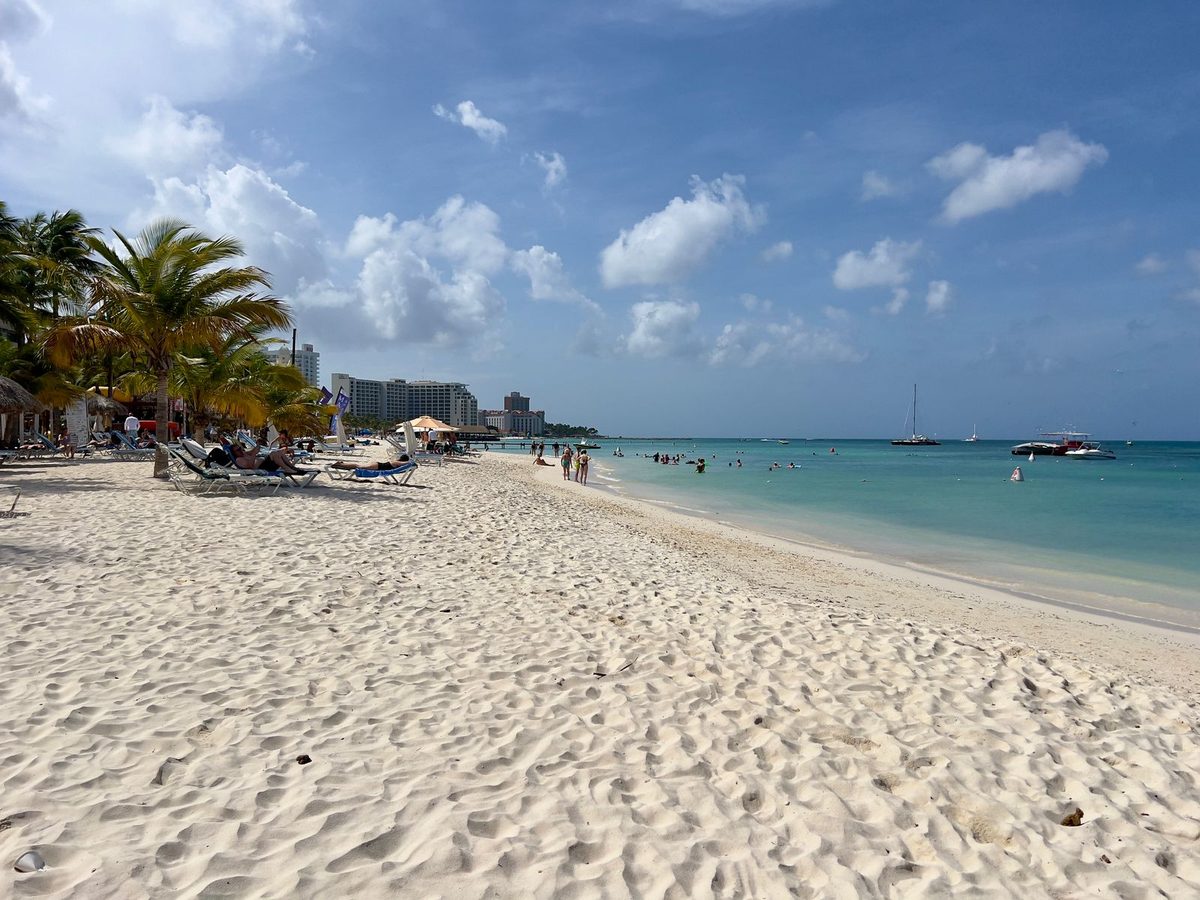
Here is the whole plan on one screen so you can see the rhythm before we get into detail. Notice that every single day has a built-in rest window in the early afternoon, when the sun is harshest and small kids fall apart anyway. That nap-or-pool break is the secret to not hating your vacation by day three.
| Day | Morning | Rest window (approx. 1–3:30pm) | Afternoon / Evening |
|---|---|---|---|
| Day 1 – Arrive & settle | Land, pick up car/seats, grab groceries | Pool float & unpack | Easy Palm Beach sunset, casual dinner steps from the resort |
| Day 2 – Eagle Beach | Wide, shallow Eagle Beach; sandcastles & shells | Back to room for nap/screen time | Paddleboard for big kids; Divi Divi tree photo; toes-in-sand dinner |
| Day 3 – Animals & butterflies | Philip’s Animal Garden + Butterfly Farm (shaded, slow) | Lunch & pool downtime | Paseo Herencia: kiddie train, carousel, free fountain show |
| Day 4 – Baby Beach | Drive south to Baby Beach lagoon; toddler heaven | Shade nap under a palapa or drive back | San Nicolas street-art stroll; early dinner |
| Day 5 – On the water | Morning snorkel sail or De Palm Island | Quiet pool afternoon (you’ll be salty and tired) | Ice cream walk; pack-up dinner in |
| Day 6 – Choose your own | Gentle Arikok Jeep tour or lazy Palm Beach day | Nap / shade / snack | Final-night dinner out; sunset photos |
| Day 7 – Slow goodbye | One last beach swim, easy souvenirs | Pack & checkout | Fly home happy and sun-tired |
Doing a shorter trip? Run Days 1–5 and you still hit every highlight. For a deeper look at how many nights actually make sense for your family, our complete Aruba itinerary guide breaks down trip lengths side by side, and our dedicated Aruba with kids guide goes even deeper on the toddler logistics.
Day 1: Arrive, settle in, and let everyone decompress
Resist the urge to schedule anything real on arrival day. Flights with kids are their own marathon, and Aruba rewards a soft landing. Queen Beatrix International Airport is small and the drive to the Palm Beach and Eagle Beach hotel strip is only around 15 minutes, so you can be in your swimsuit fast.
My one piece of arrival-day advice: stop for groceries before you check in. There is a large supermarket near the high-rise strip, and stocking your room with water, juice boxes, fruit, yogurt, and a few breakfast things saves you a fortune and a lot of “I’m hungry NOW” misery. Resort breakfasts for a family of four can run $60–80; a box of cereal and some bananas in the room runs a few dollars.
Day 1 timing and costs
- Car seats: reserve them with your rental in advance (around $5–10 per seat per day). They are not always plentiful, so book ahead.
- Groceries: budget around $80–120 for a week of in-room breakfasts and snacks for four.
- Evening: Walk to the beach for the sunset, then eat somewhere with a sand floor and a kids’ menu. Nothing fancy. Everyone is tired.
Swap this with toddlers: aim your flight to land before naptime so the airport-to-pool stretch happens while they’re fresh, then do an early bedtime. Swap this with teens: let them scope out the strip’s shops and the catamaran booking desks tonight so they have something to look forward to.
Day 2: Eagle Beach, the gentlest start to the week
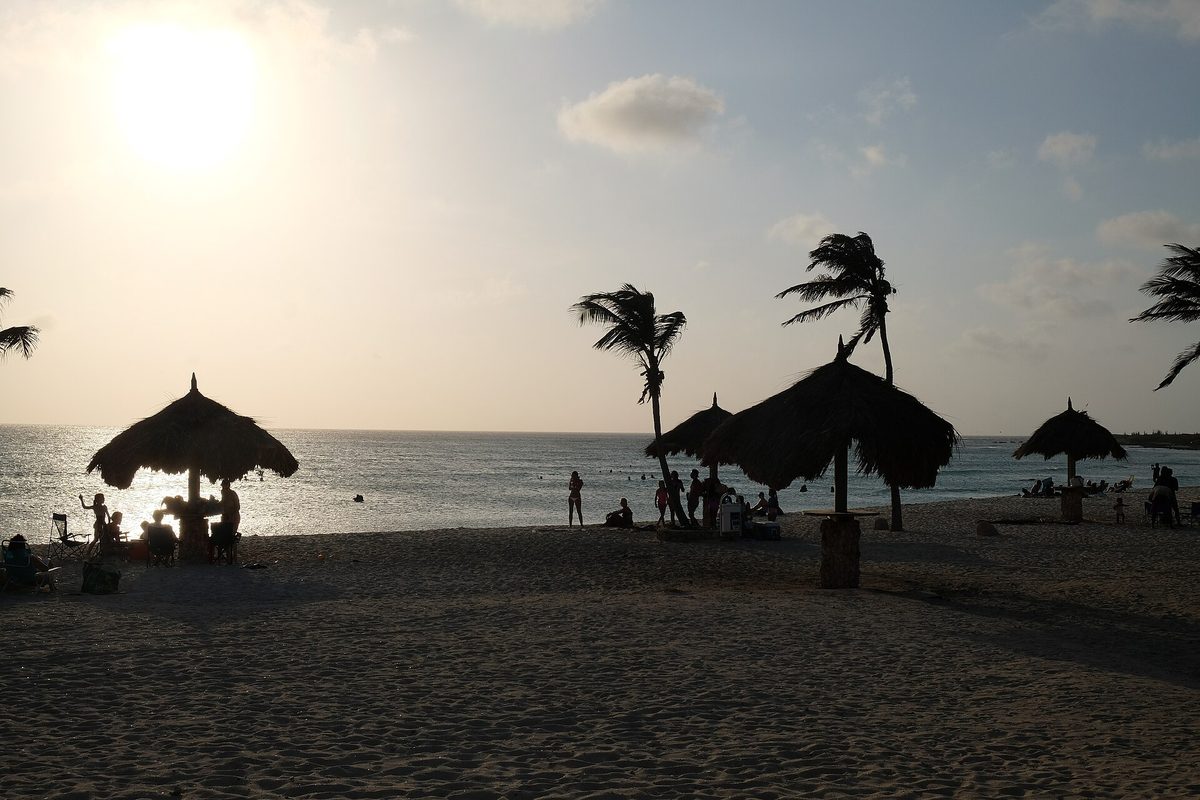
Eagle Beach is, to my mind, the perfect first full beach day with a family. The sand is famously wide and powder-soft, the water shelves out gently so little kids can wade a long way before it gets deep, and there is room to spread out without feeling crammed against a wall of high-rises. It’s also home to the two leaning Divi Divi trees, the photo your relatives will recognize instantly.
Get there in the morning, around 9am, before the midday heat. Rent a shaded palapa or a couple of chairs and an umbrella (roughly $20–30 for the set) so Grandma has her shade and you have a basecamp. Build sandcastles, hunt for shells, and let the toddlers do their thing in ankle-deep water while someone always has eyes on them.
Keeping every age happy at Eagle Beach
For older kids and teens, on-beach vendors rent stand-up paddleboards and kayaks for around $20–30 an hour, and Eagle’s calm surface is ideal for a first try. For the youngest, this is purely a bucket-and-shovel morning. For Grandma, it’s a book and a breeze.
Break for lunch around noon and then head back to the room for the rest window. This is non-negotiable with small kids: the 1–3:30pm stretch is brutally sunny, and a nap or a quiet movie resets everyone for a second wind. Come back out late afternoon if you like, or save your energy and do an easy dinner. Eagle Beach has gorgeous sunsets, so a toes-in-the-sand meal nearby is a lovely, low-effort way to close the day. For more on which stretches of coast suit which mood, our full guide to Aruba’s beaches is worth a skim.
Swap this with toddlers: bring an inflatable baby float and a pop-up sun tent; the shade tent buys you an extra hour before anyone gets cranky. Swap this with teens: book them onto a late-afternoon paddleboard lesson so the “boring beach day” has an adventure tacked on.
Day 3: Animals, butterflies, and a magical evening plaza
By day three the kids have had two beach days and could use a change of scenery that doesn’t involve sunscreen battles. Aruba’s animal attractions are the answer, and they’re mercifully shaded and slow-paced.
Philip’s Animal Garden
This rescue sanctuary near Noord lets kids get close to everything from kangaroos to monkeys to a very photogenic camel, and most days you can pay a little extra for a hands-on feeding or animal encounter. Entry runs around $10 for adults and $5 for kids. Go right when it opens, around 10am, to beat the heat. Plan on an hour and a half to two hours.
The Butterfly Farm
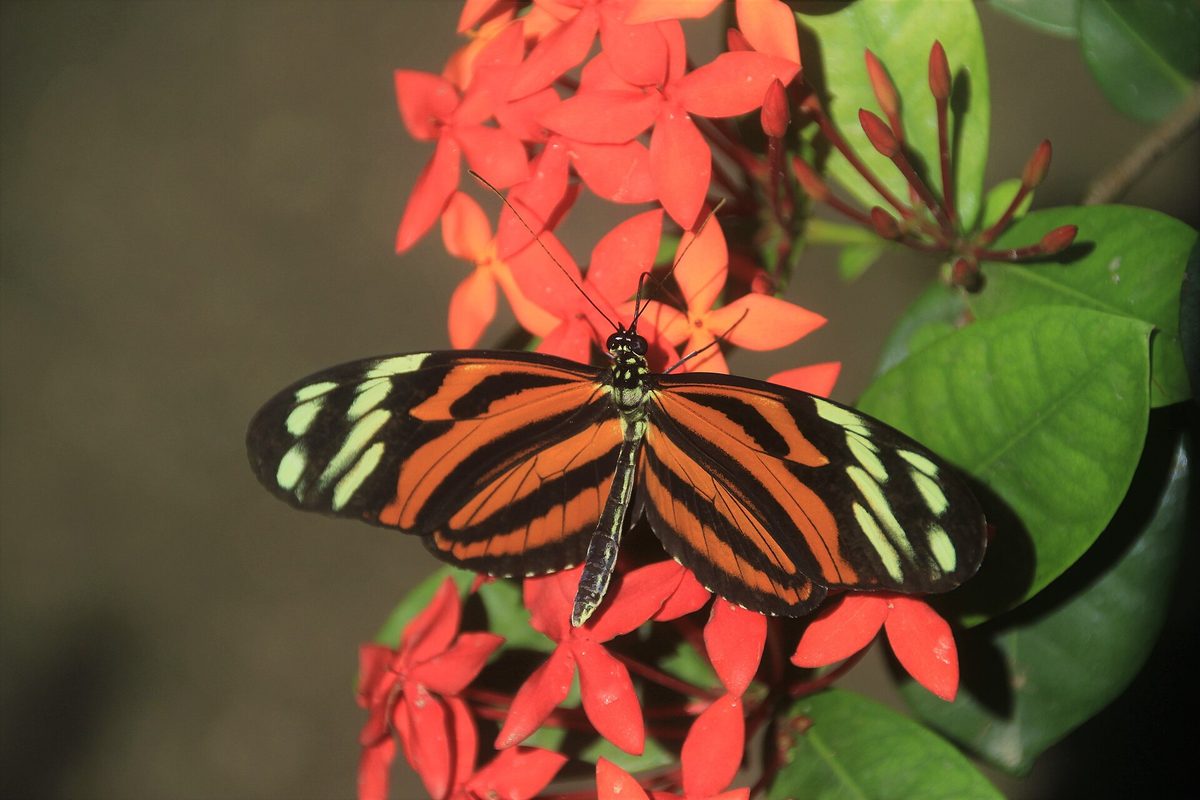
A short drive away near Palm Beach, the Butterfly Farm is a netted tropical garden where butterflies land on you while a guide explains the life cycle. It’s genuinely calming, works for every age, and tickets (around $19 adults, $10 kids, free for the littlest) include a free return pass for the rest of your stay. It’s the kind of low-stimulation, high-delight stop that toddlers and grandparents both love.
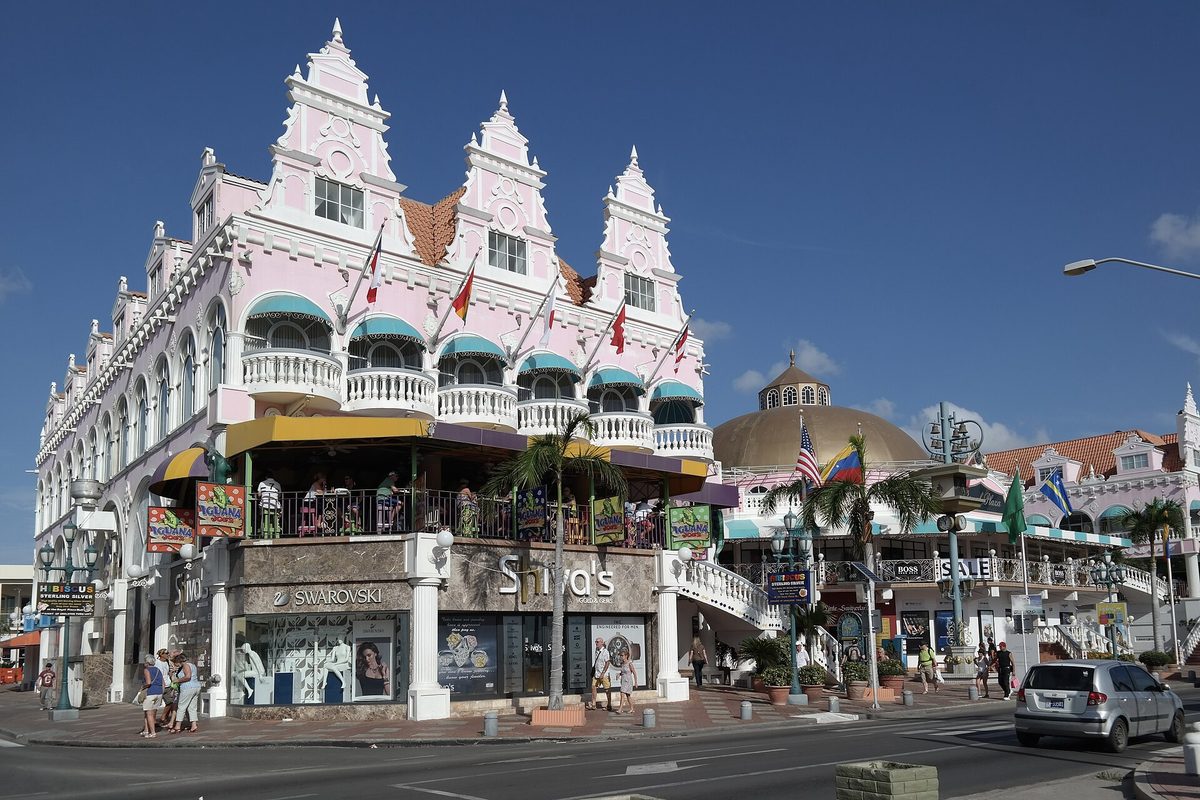
Have lunch, then take your rest window. In the evening, walk to the Paseo Herencia entertainment center in Palm Beach. The little train and carousel start running around 6pm (about $3 a ride), and the free “Waltzing Waters” fountain-and-light show kicks off around 7:30pm in the central plaza. You can watch it from a restaurant table, which means dinner and a show with zero planning. For a fuller list of family outings beyond the beach, see our roundup of things to do in Aruba.
Swap this with toddlers: the Butterfly Farm alone may be plenty; skip the second stop and protect the nap. Swap this with teens: add the Ostrich Farm or Donkey Sanctuary, where they can feed the animals and get the funnier photos.
Day 4: Baby Beach, the toddler swimming pool of the Caribbean
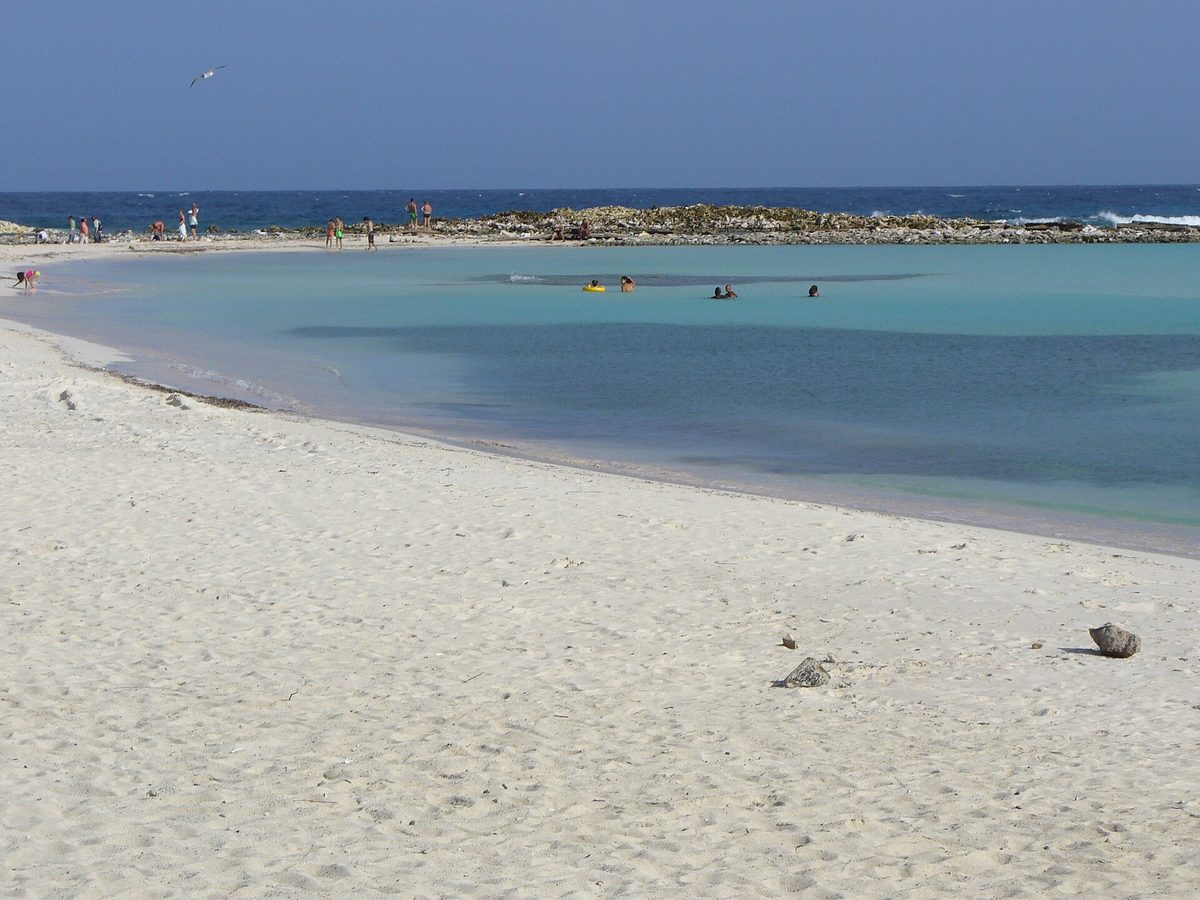
If you only do one beach day with little kids, make it Baby Beach. It sits at the island’s southern tip, about a 45-minute drive from the high-rise hotels, and it is exactly what its name promises: a wide, shallow, half-moon lagoon protected by a reef, where the water stays knee- to waist-deep for an absurdly long way out. There are no real waves. A toddler can splash for hours and you can breathe.
Make it a proper outing. Leave after breakfast, around 9am, to beat the strongest sun, and pack water and snacks because amenities are limited compared with the hotel strip. There are palapas and chairs to rent (roughly $10–20), a casual grill nearby for lunch, and a snorkel rental hut for the bigger kids who want to drift along the rocky edges and spot fish.
Making the long drive worth it
Because it’s a haul, build the day around it. The lagoon is genuinely the calmest swimmable water on the island, so even nervous parents of two-year-olds can relax. Take your rest window right there under a palapa if the kids will nap on a towel, or drive back mid-afternoon during the rest window so they sleep in the car.
On the way back, the town of San Nicolas is worth a slow walk for its enormous, colorful street murals; kids love spotting them like a scavenger hunt, and it’s a nice non-beach stretch of legs. Aim for an early dinner so nobody’s overtired. Note that there’s a separate, deeper “rough” side near Baby Beach, so keep everyone on the calm lagoon side.
Swap this with toddlers: this is their best day; bring the full kit (float, tent, extra snacks) and don’t rush. Swap this with teens: rent snorkel gear and point them at the reef edge, or they may find the lagoon a little tame.
Day 5: One real day on the water
Every family trip needs one bucket-list water day, and Aruba gives you two great options depending on your kids’ ages and nerve.
Option A: A morning snorkel sail
A half-day catamaran cruise with snorkel stops (often along the calm west coast and over the Antilla shipwreck) is the classic. Morning departures are calmer and cooler than afternoon ones, and most boats hand out gear, snacks, and drinks. Expect around $65 per adult and $45–55 per child for a three-hour trip. Confirm the minimum age and ask whether they provide kid-sized flotation; the good operators do.
Option B: De Palm Island
If your crew skews younger or you want a no-planning all-inclusive day, De Palm Island is a private island a short boat ride from shore with a kids’ water park, gentle slides, a shallow swim area, snorkeling with friendly parrotfish, and unlimited food and drinks. It runs around $129 for adults and teens and about $105 for children 3–9, with the littlest free, transport included. It is a splurge, but it’s the single easiest “everyone is entertained” day on the island.
Whichever you choose, you’ll come back salty and tired, so keep the afternoon completely empty. Pool, shower, an ice-cream walk, and dinner in the room is a perfect low-key evening. If your family loves being on the water, our guide to water sports in Aruba covers the gentler, kid-appropriate options too.
Day 6: Choose your own adventure
By day six, you know your family’s energy. Pick the lane that fits.
The adventure lane: a gentle Arikok Jeep tour
Arikok National Park covers nearly a fifth of the island with cactus desert, caves, and dramatic windward coastline. The honest truth is that the terrain is rough and some tours are genuinely bumpy, so this is better for kids roughly 6 and up. A guided half-day Jeep safari (around $85–110 for adults, $50–85 for kids, often including park entry and snacks) handles the driving for you and hits the highlights: the naturally lit Quadirikiri Cave, the Fontein Cave, and a beach stop. If the famous Natural Pool swim looks rough that day, skip the swim and enjoy the coastline instead. For the full rundown of trails and conditions, see our Arikok National Park guide.
The slow lane: a do-nothing Palm Beach day
There is zero shame in this, and with toddlers it’s often the smarter call. Palm Beach has calm water, soft sand, every rental you could want, ice-cream vendors, and your resort’s pool steps away. Reserve a cabana or palapa, rotate the kids between sand and pool, and let the day be easy. This is also a great day to let teens try a jet ski or banana boat while the little ones nap.
Swap this with toddlers: always take the slow lane; Arikok’s heat and bumps aren’t worth it under age 5 or 6. Swap this with teens: the Jeep tour is the trip highlight for them, so lean in and let them do the caves and the off-roading.
Day 7: A slow, sentimental goodbye
Don’t waste your last morning on logistics. Do one final swim at whichever beach became the family favorite, grab any souvenirs, and let the kids have a last sandcastle. Most checkouts are late morning, so a 9am beach hour fits easily. Then it’s pack-up, a casual lunch, and the short hop back to the airport. The beauty of how compact Aruba is: you’re rarely more than 20 minutes from where you need to be, even on departure day.
The best calm, swimmable beaches for kids in Aruba
Aruba’s whole reputation rests on calm water, and that’s exactly why it’s so good for families. Here are the beaches I’d actually take young children to, ranked by how forgiving the water is.
- Baby Beach — The gold standard for toddlers. A protected, shallow lagoon at the southern tip with barely any waves. Worth the 45-minute drive.
- Palm Beach — Calm, soft, and convenient, with every amenity and rental right there. The easy default when you’re staying on the high-rise strip and don’t want to drive.
- Eagle Beach — Wide, gently shelving, less crowded, and stunning. A little more space to roam than Palm Beach.
- Arashi Beach — Calm and small near the California Lighthouse, with easy reef snorkeling on the left side for bigger kids.
- Mangel Halto — Mangrove-fringed and protected; lovely for confident swimmers and gentle kayaking, less ideal for true beginners.
- Surfside / Druif — Quiet, shallow, low-key beaches handy to the airport and downtown, good for a mellow first or last morning.
A universal note: the sand gets hot, so pack water shoes for the kids. And no matter how calm the water looks, the cardinal rule with little ones never changes: one adult always has eyes on the water.
Kid-friendly activities beyond the beach
When you need a break from sand, Aruba has a tidy lineup of attractions that genuinely entertain kids without exhausting them.
- Philip’s Animal Garden — Rescue animals you can get close to and feed (around $10 adults, $5 kids).
- The Butterfly Farm — A netted garden where butterflies land on you; calm and magical for all ages (around $19/$10, free return pass).
- Ostrich Farm & Donkey Sanctuary — Feeding stops that older kids find hilarious; the Donkey Sanctuary is free with donations welcome.
- De Palm Island — An all-inclusive water-park island; the easiest “everyone’s happy” day for younger families.
- Glass-bottom boat or snorkel sail — See fish without anyone having to be a strong swimmer; great for nervous little ones.
- Paseo Herencia evenings — Free fountain show, a kiddie train, and a carousel in Palm Beach, no driving required.
For inspiration beyond this list, our guides to free things to do in Aruba and unique things to do in Aruba both have plenty that works with kids in tow.

Where to stay in Aruba with a family
Where you base yourselves shapes the whole trip, and the big decision is high-rise versus low-rise.
Palm Beach high-rise area
This is the lively zone: the tall resorts (Hilton, Hyatt, Marriott, Holiday Inn, RIU and friends), the calm Palm Beach water out front, and walkable shops, restaurants, and the Paseo Herencia evening fun. It’s the most convenient choice for families who want everything within a stroller push. The Holiday Inn here is one of the island’s few all-inclusives, which many parents find a sanity-saver, meals are handled and there’s a kiddie pool, cribs, and evening entertainment.
Eagle Beach low-rise area
A little quieter and lower-key, the low-rise resorts (think Amsterdam Manor, Eagle Aruba, La Cabana, and the Divi properties) sit on the gorgeous, roomier Eagle Beach. It’s a gentler pace, often a touch more affordable, and lovely for families who don’t need nightlife at the doorstep.
Condos and vacation rentals
For bigger families or longer stays, a condo or rental with a kitchen and a washer is a game-changer. You can do laundry mid-trip (a lifesaver with messy kids), cook breakfast, and have actual bedrooms instead of cramming everyone into one room.
Whichever you pick, ask specifically for cribs, a fridge and microwave, and a room near the quieter pool if you have nappers. Our full Aruba lodging guide compares the neighborhoods in detail, and if all-inclusive appeals, the Aruba all-inclusive resorts guide is the place to start.
Getting around with car seats and small kids
Aruba is tiny, only about 20 miles long, so nothing is far. You have three realistic ways to get around with kids.
Rent a car. This is what I recommend for most families, because it lets you go on your kids’ schedule, not a tour’s. Roads to the main beaches and attractions are easy and parking is free almost everywhere. The catch: rental agencies don’t always stock car seats, and your own toddler seat is what you trust anyway. Reserve seats in advance (around $5–10 per seat per day) or, honestly, consider bringing your own; gate-checking a car seat is usually free on the flight.
Book tours with hotel pickup. Many excursions include door-to-door transport, which neatly sidesteps the car-seat question for that day. Great for the snorkel sail or animal tours.
Taxis and the strip. Taxis are plentiful but metered by zone and don’t carry car seats, so they’re fine for short hops with bigger kids but not ideal for daily toddler transport. If you stay on the Palm Beach high-rise strip, you can walk to a surprising amount and barely need wheels at all. Our getting to and around Aruba guide has the full transport breakdown.
The best time to go to Aruba with kids
Here’s the relaxing part: Aruba sits below the hurricane belt and has remarkably steady weather, sunny, breezy, and warm essentially year-round, so there’s no truly bad time to bring a family. That said, a few seasonal notes help you plan.
The busiest, priciest stretch is mid-December through mid-April, when North Americans flee the cold. Prices and crowds peak around the holidays and over spring break. The shoulder and low seasons (roughly late April through early December) bring noticeably lower hotel rates and quieter beaches, with only a small uptick in brief passing showers, never the washout you’d fear elsewhere in the Caribbean. The constant trade winds keep things comfortable even in summer heat. If you can travel outside school holidays, you’ll save real money and have more room on the sand. For the month-by-month detail, see our best time to visit Aruba guide.
A sample family budget for Aruba
Aruba isn’t a budget destination, but you can control costs by stocking your room and choosing your splurges. Here’s a realistic week for a family of four (two adults, two kids), excluding flights, in U.S. dollars. Treat every figure as “around,” since prices shift.
| Category | Budget-conscious (week, family of 4) | Comfortable (week, family of 4) |
|---|---|---|
| Lodging (7 nights) | $1,400 (low-rise / condo, off-season) | $3,500+ (high-rise or all-inclusive) |
| Rental car + car seats (7 days) | $420 | $560 |
| Groceries (in-room breakfasts/snacks) | $120 | $180 |
| Restaurant meals | $700 | $1,400 |
| Paid activities & excursions | $400 (1–2 outings) | $1,000 (snorkel sail + De Palm + animals) |
| Beach chairs, gear, incidentals | $150 | $300 |
| Approx. total (excl. flights) | ~$3,190 | ~$6,940+ |
The biggest levers are lodging and how many paid excursions you book; the beaches themselves are free, which keeps a lot of the trip cheap. Most families land somewhere in the middle. For a deeper breakdown, our Aruba vacation cost guide runs the numbers by trip style.
What to skip with young kids
A few popular Aruba experiences just don’t pay off with toddlers and young children, and skipping them protects your sanity.
- The rough Arikok terrain under age 5–6. The off-road bumps, heat, and the powerful surf at the Natural Pool aren’t toddler-friendly. Save it for a future trip.
- Long catamaran party cruises. Sunset booze cruises are for the grown-ups; pick a short, family-marketed morning snorkel sail instead.
- The windward (east) beaches for swimming. Spots like Boca Grandi and the open Atlantic side have dangerous currents. Beautiful to look at, not to swim.
- Over-scheduling. The single most common mistake. One outing a day plus beach plus pool is the sweet spot; cramming three activities into a day guarantees a meltdown.
- The Natural Bridge as a “must.” The original collapsed years ago; it’s a quick photo stop at best, not worth a long detour with restless kids.
For more practical, on-the-ground advice, our Aruba travel tips guide is full of the small things that make a family trip smoother.
Aruba family itinerary FAQ: your questions answered
Is Aruba good for families with kids?
Yes, Aruba is one of the easiest Caribbean islands for families. The water is calm and shallow at the main beaches, the island is small so nothing is a long drive, tap water is safe to drink, crime is low, and locals are famously warm toward children. Add steady, sunny weather and you get a relaxed trip that works from toddlers right through to teenagers.
What is there to do in Aruba with kids?
Plenty beyond the sand. Kids love Baby Beach’s shallow lagoon, snorkeling and glass-bottom boats, Philip’s Animal Garden, the Butterfly Farm, the Ostrich Farm and Donkey Sanctuary, and De Palm Island’s water park. Evenings, the Paseo Herencia plaza has a free fountain show, a train, and a carousel. Older kids enjoy paddleboarding, jet skis, and a gentle Arikok Jeep tour.
What is the best beach in Aruba for toddlers?
Baby Beach, at the island’s southern tip, is the best for toddlers and young children. It’s a protected, half-moon lagoon where the water stays shallow and calm for a long way out, with almost no waves. Palm Beach and Eagle Beach are the next-best picks and far more convenient if you’re staying on the hotel strip and don’t want the 45-minute drive south.
How many days do you need in Aruba with kids?
Five to seven days is the sweet spot for a family. That gives you enough time for several relaxed beach days, one or two paid adventures, and the all-important rest windows without rushing. A shorter four- or five-day trip still hits the highlights if you keep the pace gentle and skip the longer excursions.
Is Aruba expensive for a family vacation?
Aruba leans pricey, but you control it. Lodging and excursions are the big costs; the beaches are free. A week for a family of four typically runs roughly $3,200 on a budget-conscious plan to $7,000 or more comfortably, excluding flights. Stocking your room with breakfasts and snacks and choosing one or two key excursions keeps it manageable.
Do you need a car in Aruba with kids?
It helps a lot. A rental car lets you travel on your kids’ schedule and reach beaches like Baby Beach, and parking is free almost everywhere. Reserve car seats in advance or bring your own, since agencies don’t always stock them. If you stay on the Palm Beach strip, you can walk to a lot and rely on tour pickups for excursion days instead.
What should I pack for Aruba with young kids?
Reef-safe sunscreen, water shoes (the sand gets hot), hats, an inflatable baby float, a pop-up sun tent for shade, and plenty of snacks. A lightweight stroller helps on the flat strip, and your own car seat saves stress. Pack for sun protection above all; the trade winds hide how strong the sun is, and little ones burn fast.
Make it your own happy island week
The reason this plan works for every family is that Aruba does the hard part for you. The water is calm enough for the smallest swimmer, there’s enough adventure for a restless teen, and there’s always shade and an early dinner for the grandparents. Build in the rest windows, pick a beach base that fits your pace, choose one or two splurge days, and let the rest stay loose. Do that, and the kitchen-table negotiation that started all this planning ends with the rarest outcome of all: everybody happy at the same time. For the bigger picture on planning your trip, circle back to our complete Aruba itinerary guide, and start dreaming on the ArubaTourism.org homepage.
By the ArubaTourism.org team — Last updated June 2026.
Photo credits
All images are sourced from Wikimedia Commons and used under their respective Creative Commons or public-domain licenses. Specific photographer and license details for each photo accompany the published images.