The first time I tried to add up what an Aruba trip would actually cost, I did what most people do: I priced a flight, glanced at a beachfront resort, and quietly closed the tab. Then I went anyway — and learned that the scary number on the resort website is only one of about seven things you’re really paying for, and several of them are completely under your control.
So here’s the direct answer. A one-week Aruba vacation cost typically lands around $1,200–$2,000 per person for budget travelers, $2,500–$4,500 for mid-range, and $5,000–$10,000+ for luxury, including flights from the US. Day to day, most visitors spend roughly $150–$350 per person. Aruba isn’t cheap — but it’s far more flexible than it looks.
This guide is the honest, line-by-line breakdown I wish I’d had: real 2026 prices for flights, hotels, food, transport, and tours, sample budgets for couples, families and honeymooners, the hidden fees nobody warns you about, and a money-saving playbook that’s saved me hundreds without making the trip feel cheap. Prices move, so treat every figure as “around” and confirm current rates when you book.
Aruba vacation cost at a glance
Here’s the whole island budget on one screen. These are per-person figures for a 7-night trip (excluding flights, which I break out separately), based on current 2026 pricing and what I’ve actually seen people spend.
At the other end of the scale, Aruba’s luxury resorts and beachfront hotels can double a trip’s budget on the room line alone.
Bundling helps if you drink and dine on property: see the top-rated all-inclusive resorts, the cheapest all-inclusive options, and vacation rentals if you would rather self-cater.
| Expense (per person, 7 nights) | Budget | Mid-range | Luxury |
|---|---|---|---|
| Accommodation | $490–$840 | $1,400–$2,450 | $3,500–$7,000+ |
| Food & drink | $210–$350 | $560–$840 | $1,400–$2,400+ |
| Transport (on island) | $35–$120 | $150–$300 | $350–$700+ |
| Activities & tours | $50–$150 | $300–$500 | $800–$1,800+ |
| Subtotal (excl. flights) | $800–$1,450 | $2,400–$4,100 | $6,000–$11,000+ |
| Flights from US | $300–$500 | $450–$650 | $600–$900+ |
| Total per person | $1,100–$1,950 | $2,850–$4,750 | $6,600–$12,000+ |
The single biggest lever is the accommodation row — it can swing your total by thousands. Get that decision right and everything else is noise. If you’re still deciding, my guide to choosing an Aruba neighborhood breaks down each area by price and vibe.

How much does a trip to Aruba cost by length?
Trip length changes the math in a non-obvious way: your flight is a fixed cost that gets “cheaper” per day the longer you stay, while accommodation and food scale linearly. That’s why a 3-night getaway can feel almost as expensive per day as a week, and why I rarely recommend flying all that way for fewer than four nights. If you want the whole thing priced end to end, that’s what I do in my full breakdown of how much a trip to Aruba costs.
| Trip length | Budget (per person) | Mid-range (per person) | Mid-range (couple) |
|---|---|---|---|
| Long weekend (3 nights) | $650–$1,050 | $1,400–$2,200 | $2,800–$4,400 |
| 4 nights | $800–$1,250 | $1,700–$2,700 | $3,400–$5,400 |
| 5 nights | $950–$1,500 | $2,100–$3,300 | $4,200–$6,600 |
| 7 nights (a full week) | $1,100–$1,950 | $2,850–$4,750 | $5,700–$9,500 |
| 10 nights | $1,550–$2,700 | $3,900–$6,400 | $7,800–$12,800 |
Most people find five to seven nights is the sweet spot — long enough to justify the airfare and slow down, short enough that the daily resort and dining costs don’t snowball. If you want help mapping those days, I put together day-by-day plans in the Aruba itinerary guide.
Flights to Aruba: your first big line item
Everyone flies into Queen Beatrix International Airport (AUA) just outside Oranjestad, and roundtrip airfare is usually your second-largest expense after the hotel. Here’s what I typically see for economy returns, booked a couple of months out:
- US East Coast (Miami, New York, Atlanta, Charlotte): around $300–$600. Miami and the Florida hubs are often the cheapest, with frequent nonstops.
- US Midwest (Chicago, Dallas, Houston): around $450–$700.
- US West Coast: around $500–$850, usually with a connection.
- Toronto / Montreal: roughly CAD $450–$750.
- Amsterdam (direct on KLM): around €450–$750.
A few habits that consistently knock money off: book six to eight weeks ahead for peak season, fly midweek (Tuesday–Thursday departures are reliably cheaper than weekends), and price the budget carriers carefully. Spirit and Frontier can look unbeatable until you add bags and seats, at which point a “real” airline often wins. The cheapest flights of the year tend to be in the May–June and September–November windows — the same windows where hotels drop too, which is not a coincidence.
Where you sleep is the whole game: accommodation costs
Accommodation is the biggest variable in any Aruba vacation cost, full stop. The island’s beachfront real estate is premium, demand is steady year-round because Aruba sits outside the hurricane belt, and that keeps nightly rates high. But the range from “smart” to “splurge” is enormous, and that’s where you win or lose your budget.
Budget: guesthouses, studios and apartments ($75–$140/night)
Small guesthouses, condos and apartment-style stays in the Noord district, Paradera, Oranjestad and Savaneta — a little inland from the sand. They’re clean and perfectly comfortable; the trade-off is you’ll want a rental car or the bus to reach the famous beaches. The kitchen is the real money-saver here, because it lets you skip restaurant breakfasts and lunches.
The budget versions of each are worth a look: cheap hotels in Aruba, cheap all-inclusive resorts, and vacation rentals with a kitchen.
Mid-range: well-located resorts ($200–$350/night)
This is where most couples land: properties like the Holiday Inn Resort on Palm Beach, Amsterdam Manor or Manchebo on Eagle Beach. Good quality, good location, pools, and you’re walking distance to the water and restaurants. Expect to pay toward the top of that range in winter.
Luxury and ultra-luxury ($400–$900+/night)
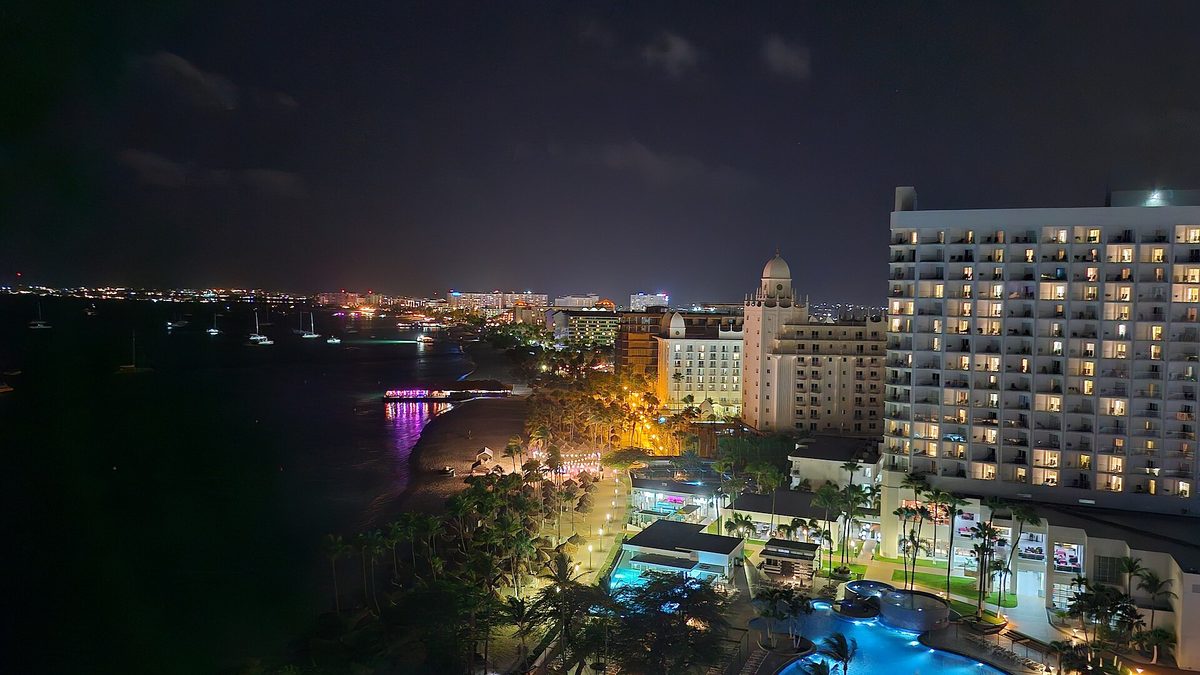
The Hyatt Regency, Aruba Marriott, Hilton and Ritz-Carlton anchor the Palm Beach high-rise strip with direct beach access and full service. Adults-only favorites like Bucuti & Tara and private villa rentals sit at the very top, especially in peak season.
All-inclusive vs. room-only: which actually saves money?
Aruba has fewer true all-inclusives than islands like the Dominican Republic, and they’re not automatically cheaper. They make sense if you’ll drink a lot and don’t plan to leave the resort; they cost you money if you were hoping to explore Aruba’s genuinely good restaurant scene. I dig into the math and the best properties in my guide to Aruba all-inclusive resorts — read it before you assume all-inclusive is the budget option.
The season swing
This is the part people miss: peak season (mid-December through April) runs 30–50% higher than the May–June shoulder or the September–November low season. Booking the exact same room in May instead of January routinely saves $80–$200 a night. If your dates are flexible at all, this is the easiest few hundred (or few thousand) dollars you’ll ever save — see my breakdown of the best time to visit Aruba for the month-by-month trade-offs.

Food and drink: where budgets quietly explode
If accommodation is the line item people expect, food is the one that ambushes them. Almost everything on the island is imported, the resort-strip restaurants are priced for a captive audience, and cocktails add up fast. The good news: the spectrum is huge, and a few local habits cut your food spend in half.
The price ladder, meal by meal
- Breakfast: a bakery pastechi runs $1–$2; a café breakfast $7–$15; a full hotel breakfast $20–$40 per person.
- Lunch: $10–$20 at a local spot, $25–$45 at a sit-down restaurant. The legendary move is Zeerovers in Savaneta — fresh-off-the-boat fried fish and shrimp for around $10–$15.
- Dinner: $20–$35 casual, $45–$80 at a typical Palm Beach restaurant with drinks, and $90–$200+ per person at fine-dining names like Flying Fishbone, Screaming Eagle or Passions on the Beach.
On a per-day basis, the data backs this up: budget travelers can eat well on $15–$30 a day with a kitchen and Zeerovers-style lunches, mid-range diners spend $60–$120, and anyone doing fine dining every night should plan $150–$250+. The single most useful number I tell friends: the average restaurant meal in Aruba is about $27 per person, so every meal you cook or grab from a bakery is real money back in your pocket.
Groceries and self-catering
If your room has a kitchenette, a supermarket run (Ling & Sons or Super Food are the big ones) for breakfast, snacks, beach drinks and a couple of simple dinners can cut a week’s food bill by $200–$400 per person. Even just buying your own water, coffee and sunscreen helps — resort-shop prices on basics are brutal.
The alcohol tax (the invisible one)
Because spirits and wine are imported, drinks are where mid-range budgets blow up. A cocktail at a beach bar is easily $12–$16, a bottle of wine at dinner $40+. Travelers routinely spend around $25–$30 a day on alcohol without noticing. Buying a bottle or a six-pack at the supermarket for sunset on your balcony is the oldest trick on the island for a reason.
| Food style (per person, per day) | What it looks like | Daily cost |
|---|---|---|
| Self-catering / local | Bakery breakfast, Zeerovers lunch, cook dinner | $15–$30 |
| Mixed (my usual) | Breakfast in, casual lunch, restaurant dinner | $50–$90 |
| Restaurants all day | Café breakfast, sit-down lunch & dinner, drinks | $100–$160 |
| Fine dining | Top restaurants nightly with wine/cocktails | $180–$300+ |
Getting around: transport costs in Aruba
Aruba is small — about 20 miles end to end — so you’ll never spend a fortune on transport unless you choose to. The question isn’t “how do I afford getting around,” it’s “do I need a rental car, and for how many days?” Here’s the real cost of each option.
Arubus (the cheap, easy win)
The public bus runs the coastal spine between Oranjestad, Eagle Beach, Palm Beach, Arashi and down to San Nicolas. A one-way fare is about $2.60, a return card around $5, and an all-day pass roughly $15. For a beach-strip-based trip, this alone can cover most of your transport. Budget travelers often spend just $5–$15 a day getting around.
Taxis (predictable, priced per car)
Aruba’s taxis use fixed government zone rates, not meters, and they’re priced per car (not per person), which is great for couples and families. As a rough guide: airport to Oranjestad ~$21, airport to Eagle Beach ~$26, airport to the Palm Beach high-rises ~$31, with a few dollars added on Sundays, holidays and late nights. Palm Beach to Oranjestad runs about $20–$30. If you’re a family of four, a taxi can actually beat four bus fares.
Rental car (freedom, if you’ll use it)
A compact runs about $35–$60/day in low season and $60–$110+ in peak; a jeep or SUV (needed for Arikok’s rough interior) is $90–$180+. Add $12–$35/day for fuel and incidentals. My honest advice: don’t rent for the whole week. Rent for one to three days to hit Arikok National Park, the Natural Pool, Baby Beach and the wild north coast, then use the bus or your feet for beach days. That hybrid approach saves a couple hundred dollars versus a week-long rental that sits in a hotel lot.

Activities and tours: what’s free, what’s worth paying for
This is the most controllable part of your Aruba vacation cost, because the island’s single best asset — its beaches — is completely free. Every beach in Aruba is public, snorkeling from shore costs nothing, and some of the most memorable spots (Casibari, the lighthouse, the chapel) don’t charge a cent. You only spend here if you choose to.
| Activity | Typical cost per person |
|---|---|
| All public beaches | Free |
| Snorkeling from shore (Boca Catalina, Mangel Halto) | Free (gear rental ~$10–$25) |
| Arikok National Park entry | $15–$22 |
| Catamaran snorkel/sunset cruise | $69–$120 |
| Half-day ATV/UTV tour | $75–$120 |
| Full-day jeep/Natural Pool tour | $89–$155 |
| Antilla shipwreck dive | $65–$85 |
| Horseback riding (1.5 hrs) | $75–$100 |
| Atlantis submarine | ~$109 |
| De Palm Island all-inclusive day | $120–$180 |
| California Lighthouse climb / Butterfly Farm | $5 / ~$19 |
For a balanced week, I budget for two paid experiences — usually a catamaran sail and one off-road or Natural Pool tour — and let the free beaches carry the rest. That keeps activity spend around $150–$250 per person without feeling like you skipped anything. For the full menu of options at every price point, see my guide to the best things to do in Aruba and the rundown of Aruba’s beaches, almost all of which are free to enjoy.
Your Aruba daily budget by travel style
If you’d rather think in days than in big lump sums, here’s how it shakes out per person, per day, all-in once you’re on the island (not counting flights). I’ve split it by season because, as you’ve gathered by now, when you go matters almost as much as how you travel.
| Daily budget (per person) | Off-season | Shoulder | Peak (winter) |
|---|---|---|---|
| Budget traveler | $105–$220 | $135–$270 | $165–$325 |
| Mid-range traveler | $260–$515 | $320–$625 | $370–$745 |
| Luxury traveler | $560–$1,250+ | $700–$1,500+ | $820–$1,860+ |
For a quick gut-check, aggregated traveler data pegs the average Aruba daily spend at about $325 per person — roughly $418 on a shared hotel room, $68 on food, $32 on local transport, plus activities. That “average” hides a lot, but it’s a fair midpoint: if your plan comes out well under it, you’re traveling smart; well over it, you’re in splurge territory (which is fine, as long as you meant to).
Sample Aruba trip budgets (real scenarios)
Ranges are useful, but actual itineraries are clearer. Here are four trips I’ve either taken or planned for friends, with the numbers that actually came out the other end. All are per the whole party, including flights from the US East Coast.
Budget couple, 5 nights — about $2,100 total
A studio apartment in Noord ($90/night = $450), two East Coast flights ($800), groceries plus Zeerovers lunches and a few casual dinners ($350), the Arubus and one taxi run ($70), one catamaran cruise for two ($170), and free beach days for the rest. Two people, five nights, roughly $2,100 — proof that a real place to stay in Aruba off the strip changes everything.
Mid-range couple, 7 nights — about $7,000 total
A week at a mid-range Eagle Beach resort ($300/night = $2,100), two flights ($1,100), a mix of breakfasts in and dinners out with drinks ($1,400), a rental car for three days plus taxis ($450), and three excursions across the two of you ($900). Two people, seven nights, around $7,000 — the most common “nice but not crazy” Aruba trip.
Family of 4, 7 nights — about $9,500 total
A two-bedroom condo or family resort room ($380/night = $2,660), four flights ($2,000), family groceries plus restaurant dinners ($2,000), a rental car for the week ($600), and a couple of family activities like De Palm Island and a snorkel cruise ($1,200), plus incidentals. Four people, seven nights, roughly $9,500 — and the kitchen is what keeps it from being far more. Our full family-of-four budget breaks that total down line by line.
Luxury honeymoon, 7 nights — $14,000+ total
An adults-only or high-rise suite ($650/night = $4,550), two flights with a premium-cabin upgrade ($1,800), fine dining most nights with wine ($3,000), a private catamaran and spa treatments ($2,500), and a rental car or private transfers ($700). Two people, seven nights, $14,000 and up — the ceiling is essentially unlimited once you add villas and private chefs. Our Aruba honeymoon cost breakdown prices the modest and comfortable versions too.
Aruba vacation cost by type of traveler
Two people on the same island in the same week can spend wildly different amounts, because the cost drivers are different for each kind of trip. Here’s where your money tends to go depending on who you are.
Couples and honeymooners
You benefit from splitting one room two ways, so accommodation per person drops. The flip side is couples spend more on dining and romance — sunset cruises, fine dinners, spa. Put your money into the room and a couple of standout meals; that’s where the trip’s memories actually come from.
Families
Room configuration is your biggest cost lever. A family of four needing two-bedroom space or connecting rooms pays a real premium, and teenagers eat like adults. The wins: kids often fly and enter attractions cheaper, a condo kitchen tames the food bill, and Aruba’s calm, shallow beaches are free entertainment for days.
Budget travelers and backpackers
Yes, it can be done — I’ve met people doing Aruba on under $100 a day — but it takes discipline. Apartment-style lodging inland, the Arubus everywhere, groceries and Zeerovers, free beaches, and maybe one splurge. You won’t be on the Palm Beach sand at a swim-up bar, but you’ll see the same sunsets for a fraction of the price.
Cruise passengers (a day in port)
If Aruba is a cruise stop, your costs are tiny by comparison: a taxi or bus into Oranjestad, lunch, and maybe a half-day tour or a beach chair. Plan $40–$150 per person for the day depending on whether you book an excursion. Eagle Beach is a cheap taxi from the port and worth every minute.
The hidden costs nobody budgets for
This is the section I most wish someone had handed me before my first trip. None of these are huge on their own, but together they can add a few hundred dollars to a couple’s week — and they almost never show up in the headline price.
Resort fees and “destination” charges
Many of the bigger Palm Beach resorts tack on a daily resort fee (often around $35–$50+ per room, per night) covering Wi-Fi, beach chairs, pool service and the like. Over a week that’s $250–$350 you didn’t see at checkout. Always read the fine print on the booking — the nightly rate is not always the nightly cost.
Government tax and service charges
Aruba applies a room tax and a turnover tax, and hotels frequently add a service charge on top. Bundled together, taxes and service can add roughly 20–25% to your accommodation bill. Some quoted rates include it; many don’t. When you compare hotels, compare the all-in total, not the teaser rate.
Tipping
Restaurants often include a 10–15% service charge, but it’s customary to add a little more for good service (rounding up to ~15–18% total). Housekeeping ($2–$5/day), tour guides and drivers all expect tips too. Budget around $10–$20 a day for a couple in gratuities — it’s real money over a week. Our guide to tipping in Aruba covers who to tip, how much, and how to avoid double-tipping on top of a service charge.
Airport transfers and travel insurance
That airport taxi is $21–$31 each way, so $40–$60 round trip before you’ve bought a thing. And for a trip this expensive, travel insurance (typically 4–8% of your total trip cost) is worth pricing in — a single weather-disrupted flight or medical issue can dwarf the premium.
Is Aruba expensive? How it compares
Honestly? Yes, Aruba is on the pricier side — it sits in the top quarter of Caribbean destinations for cost. It’s more expensive than Jamaica, the Dominican Republic and even its Dutch neighbors Curaçao and Bonaire, and it runs roughly 20–30% above many comparable beachfront islands. It’s in the same ballpark as St. Lucia, Barbados and Turks & Caicos, and significantly cheaper than Bora Bora or the Maldives.
Compared to Hawaii, the two are surprisingly close on hotels and dining, but Aruba usually wins on airfare from the eastern US and on reliably dry, calm weather. What you’re paying the premium for is consistency: water outside the hurricane belt, white-sand beaches that deliver every time, and infrastructure that just works. If your top priority is the absolute lowest price, another island may suit you better. If it’s a sure thing, Aruba earns its keep.
How to do Aruba on a budget: my money-saving playbook
Everything below is how I’d cut an Aruba vacation cost without making the trip feel cheap. None of it requires roughing it — it’s just knowing where the island overcharges and routing around it.
- Travel in May–June or September–November. Same sunshine, 25–35% cheaper hotels and flights, thinner crowds. This is the biggest single saving, full stop.
- Stay one street back from the beach. A condo or guesthouse in Noord costs a fraction of beachfront, and the sand is a 5–10 minute walk or a $2.60 bus ride away.
- Book a kitchen and use it. Breakfast and lunch in, dinner out. This single habit saves $200–$400 a week per person.
- Eat where locals eat. Zeerovers for lunch, bakeries for breakfast, restaurants in Noord and Oranjestad instead of the hotel strip.
- Ride the Arubus. A few dollars versus $20–$30 taxis for the coastal run.
- Rent a car for 2–3 days, not seven. Cluster your exploring (Arikok, Natural Pool, north coast) into those days.
- Lean on free beaches and shore snorkeling. Boca Catalina, Arashi, Malmok and Mangel Halto are free and excellent.
- Buy your own drinks. Sunset on the balcony with a supermarket bottle beats a $15 beach cocktail.
- Book peak season early, shoulder season late. Winter sells out; shoulder months sometimes reward last-minute flexibility.
Money matters: currency, cards and ATMs
Aruba’s currency is the Aruban florin (AWG), pegged at roughly 1.79–1.80 to the US dollar — but you barely need to think about it, because US dollars are accepted absolutely everywhere. Prices on the resort strip are usually quoted in dollars; smaller local spots may quote florin. Either way you can pay in USD and you’ll often get change in florin, which is just souvenir money to spend before you fly home.
Credit cards (Visa and Mastercard especially) are widely accepted at hotels, restaurants and tour operators, so you don’t need a thick wad of cash. Bring some small bills for tips, bus fares and beach vendors, and use ATMs if you want florin, but for most travelers a card plus a little cash covers everything. Watch for foreign-transaction fees on your card and dynamic-currency-conversion prompts (always choose to be charged in the local price, not “converted” to USD by the terminal).
How to plan and budget your trip
The smartest budgeting move isn’t cutting any single cost — it’s sequencing your decisions. Pick your season first (it sets the price of everything), then your base and accommodation tier (the biggest lever), then your trip length, and only then your activities. Lock the season and the room, and your Aruba vacation cost is basically decided; the rest is fine-tuning.
From there, pair this guide with the planning pieces it connects to: choose your dates with the best time to visit Aruba, pick your neighborhood with where to stay in Aruba, weigh the all-in math in the all-inclusive resorts guide, and turn your nights into a plan with the Aruba itinerary. Budget the trip in that order and you’ll never be blindsided by the total.
Aruba vacation packages vs. booking it yourself
One question I get constantly: is it cheaper to book an Aruba vacation package — flight plus hotel bundled — or to book each piece separately? The honest answer is “it depends,” and it’s worth ten minutes of comparison because the gap can be hundreds of dollars in either direction.
Packages from the big online travel agencies often start around $700–$900 per person for flight-plus-hotel on the lower end, and they shine in two situations: peak season (when bundling can unlock cheaper hotel inventory) and travelers who want one payment and one customer-service number if something goes wrong. The convenience is real, and occasionally the bundled price genuinely beats the parts.
Booking separately usually wins when you’re flexible, traveling shoulder season, or want a specific apartment or boutique stay that packages don’t list. It also lets you stack flight deals, use points, and choose a place with a kitchen — which, as you’ve read, is the budget cheat code. My routine: I price a package first as a baseline, then price the flight and hotel independently for the same dates, and book whichever is cheaper for the same quality. Don’t assume the package is the deal; prove it.
Whatever route you choose, build your day-by-day plan separately so you’re not over-paying for excursions inside a package you could book cheaper locally. The Aruba itinerary guide helps you decide which experiences are worth pre-booking and which to leave flexible.
Common Aruba budgeting mistakes to avoid
After planning a lot of these trips, the same avoidable mistakes come up again and again. Sidestep these and you’ll keep your Aruba vacation cost honest:
- Judging the trip by the nightly rate. Resort fees, room tax and service charges can add 25%+ to the number you saw. Always compare the all-in total.
- Underestimating food and drinks. This is the number one budget-buster. Imported ingredients and $15 cocktails add up shockingly fast — plan a realistic daily food figure.
- Booking too short a trip. When your airfare is fixed, three nights spreads that cost over very few days. Four to seven nights gives far better value per day.
- Renting a car for the whole week. It mostly sits in the lot during beach days. Rent for your exploring days only.
- Assuming every room is beachfront. “Resort-area” and “ocean view” cost more than garden-view rooms a short walk from the same sand.
- Traveling at peak without a reason. If your dates are flexible, going in winter instead of shoulder season can cost you 30–50% more for the identical trip.
Aruba vacation cost: frequently asked questions
How much does a trip to Aruba cost?
A one-week trip to Aruba averages around $2,500–$4,500 per person for a mid-range vacation including US flights, a beachfront-area hotel, mixed dining and a couple of activities. Budget travelers can do a week for $1,200–$2,000, while luxury trips run $5,000–$12,000+ per person. Your hotel choice and travel season move the number most.
How much does a 7-day trip to Aruba cost?
For two people, a 7-day mid-range trip typically lands around $5,700–$9,500 total including flights, a mid-range resort, daily dining and a few excursions. A budget couple can do seven nights closer to $2,800–$3,900, and a luxury week easily tops $12,000–$14,000 for two once suites and fine dining are added. I priced out a full week line by line — flights, room, meals, tours, taxes — in the cost of a 7-day trip to Aruba.
Is Aruba expensive?
Yes, relatively. Aruba sits in the top 25% of Caribbean destinations for cost — pricier than Jamaica, the Dominican Republic, Curaçao and Bonaire, and roughly on par with St. Lucia and Barbados. Accommodation and imported food and alcohol are the main reasons. It’s manageable on a moderate budget, but it’s not a bargain beach destination.
What is the cheapest time to visit Aruba?
September through November brings the lowest hotel rates, while May–June offers the best balance of low prices and great weather — typically 25–35% cheaper than peak winter (mid-December through April) with nearly identical sunshine. Since Aruba sits outside the hurricane belt, the “off-season” still delivers reliable beach weather.
How much spending money do I need for a week in Aruba?
Beyond flights and your hotel, budget roughly $800–$1,200 per person for a week to cover mid-range dining, one or two big activities, transport, tips and incidentals. Eating local and using the bus pushes that lower; daily fine dining and cocktails push it well above $1,500 per person.
How much does an Aruba vacation cost for a family of 4?
Plan around $8,000–$12,000 for a family of four for a week, including flights, a two-bedroom condo or family resort room, meals and a couple of activities. Room size is the biggest driver — connecting rooms or suites cost a real premium. A kitchen and Aruba’s free beaches keep the total in check.
Is Aruba more expensive than other Caribbean islands?
Generally yes. Aruba runs about 20–30% above many comparable Caribbean beach destinations, and it’s notably pricier than nearby Curaçao and Bonaire. You’re paying for dependable dry weather outside the hurricane belt, consistently beautiful beaches and solid infrastructure. It’s cheaper, though, than top-tier destinations like Bora Bora or the Maldives.
Do I need to rent a car in Aruba?
Not necessarily. If you’re staying near Palm or Eagle Beach and mostly relaxing, the Arubus, taxis and walking are plenty. A rental car earns its cost when you want to explore Arikok National Park, the Natural Pool, Baby Beach and the north coast — so many people rent for just two or three days rather than the whole trip.
How much does food cost in Aruba?
Food spans a wide range. Eating local — bakeries, Zeerovers, groceries — you can manage $15–$30 per person per day. A mix of breakfasts in and restaurant dinners runs $50–$90, and dining out for every meal with drinks is $100–$160+. Fine-dining restaurants cost $90–$200+ per person per meal.
What is the biggest hidden cost in Aruba?
Dining and cocktails are where most people blow their budget, since nearly everything is imported. After that, watch for resort fees ($35–$50+ per night), room tax plus service charges (often 20–25% on top of the rate), and daily tips. Read the all-in price before booking so these don’t surprise you.
How much should I tip in Aruba?
Many restaurants add a 10–15% service charge; it’s polite to top up to around 15–18% for good service. Tip housekeeping $2–$5 a day, and tour guides and drivers 10–15%. A couple should budget roughly $10–$20 a day for gratuities across the trip.
Can you visit Aruba on a budget?
You can. Travel in shoulder or low season, stay in an apartment inland, cook your own breakfasts and lunches, ride the Arubus, lean on free beaches and limit yourself to one paid excursion, and a week can come in around $1,200–$2,000 per person including flights. It takes discipline, but Aruba on a budget is real.
What currency does Aruba use, and do they take US dollars?
The local currency is the Aruban florin (AWG), pegged near 1.79–1.80 per US dollar, but US dollars are accepted virtually everywhere. Credit cards are widely taken at hotels, restaurants and tours. Carry small bills for tips, buses and vendors, and you’ll often receive change in florin.
Final thoughts: budget the trip, then enjoy it
When I closed that resort tab on my first attempt, I’d made the classic mistake of judging the whole trip by its most expensive single number. The truth is that an Aruba vacation cost is a set of dials, not a fixed price: shift your season, slide your accommodation tier, cook a few meals, ride the bus, and the same island swings from a $1,500 budget week to a $14,000 honeymoon — with the exact same sunsets included free.
Decide what you actually care about — maybe it’s the beachfront room, maybe it’s the fine dining, maybe it’s just being there at all — spend there, and trim everywhere else without guilt. Do that, and Aruba stops being intimidating and starts being what it should be: one of the easiest, most reliable good trips in the Caribbean. Now go build the budget, then go enjoy the beach.
Photo credits
All images via Wikimedia Commons, used under their respective licenses. See each image’s source page for full attribution; credits are also listed below. Palm Beach resorts at night by Rarends297 (CC0).
- Eagle Beach: Photo: sbmeaper1 (CC0) via Wikimedia Commons. Source
- Palm Beach high-rise resorts: Photo: Rarends297 (CC0) via Wikimedia Commons. Source
- Oranjestad harbor: Photo: Navigator334 / CC BY-SA 4.0 via Wikimedia Commons. Source
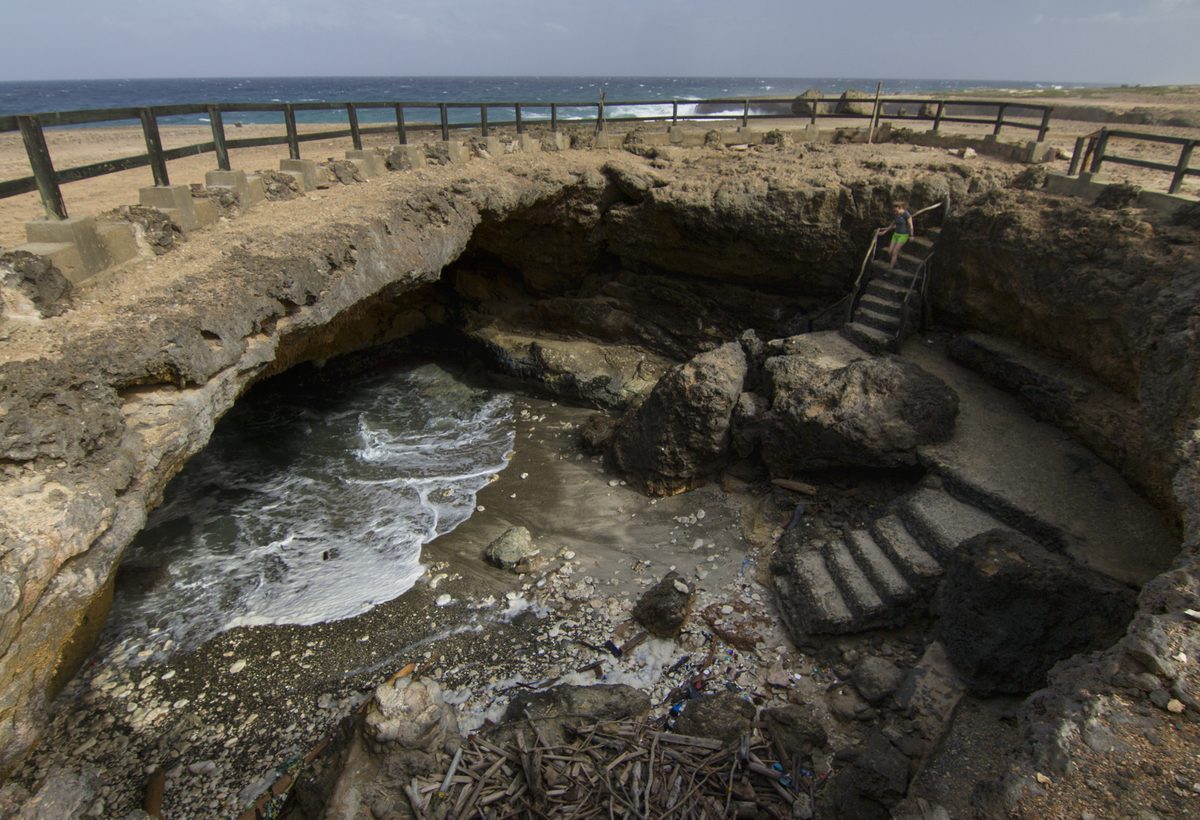
- Arikok National Park coast: Photo: Brell64 / CC BY-SA 4.0 via Wikimedia Commons. Source