By the ArubaTourism.org team — Last updated June 2026
Here is the thing almost nobody realizes while wading out across that impossibly calm, waist-deep water: this beach is not entirely natural. The gentle half-moon lagoon on the island’s southern tip was shaped by a concrete breakwater built in the 1940s, so the families of oil-refinery workers had somewhere safe to swim. Eight decades later, Baby Beach Aruba is the island’s go-to for parents with toddlers, first-time snorkelers, and anyone who just wants to float without fighting a wave. It is a 40-minute drive from the high-rise hotels, and it is worth every mile.
Quick answer: Baby Beach is a crescent-shaped, man-made lagoon on Aruba’s southeastern tip near San Nicolas, roughly a 40–45 minute drive from the Palm Beach hotels. Its shallow, glass-calm water makes it the island’s most family-friendly beach and the most forgiving place to learn to snorkel. Parking and shade huts are free; chairs, gear, and food are available on site.
Baby Beach at a glance
| Detail | What to know |
|---|---|
| Location | Seroe Colorado, near San Nicolas, southeastern Aruba |
| Drive time | ~40–45 min from Palm/Eagle Beach; ~30 min from Oranjestad |
| Best for | Families with young kids, beginner snorkelers, calm-water swimmers |
| Water | Shallow (mostly waist-deep), calm, turquoise; a protected lagoon |
| Snorkeling | Good for beginners along the protected channel; stay inside the buoys |
| Parking | Free, and recently expanded |
| Shade | Free palapas (first-come), plus paid cabanas and chairs |
| Food & drink | Big Mama’s Grill, Rum Reef (infinity pool), a snack shack |
| Best time | Arrive by 9 a.m.; weekdays are quieter than weekends |
| Cost to enter | Free |
I think of Baby Beach as the antidote to Aruba’s famously breezy, wave-washed west coast. If Aruba’s other beaches are about long sweeps of sand and sunset cocktails, this one is about a single, sheltered cove where the sea barely moves. That makes it a very different kind of beach day — and a slightly more involved one to plan, because it sits at the far end of the island. Here is everything I wish I had known before my first drive south.
If you like having this much space to yourself, the island has more of it — see Aruba’s most secluded beaches.
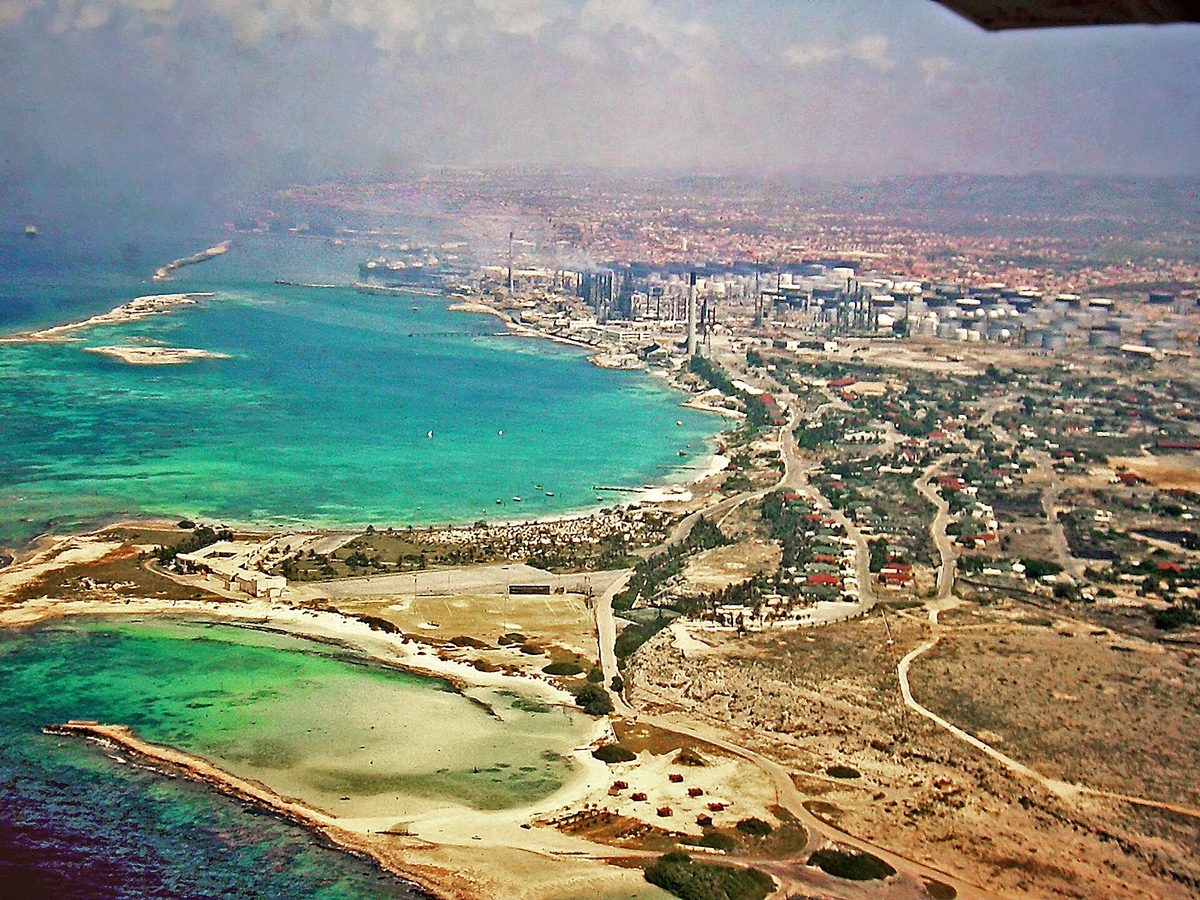
Where Baby Beach is — and how it got that name
Baby Beach sits at the very bottom of the island, tucked into the Seroe Colorado headland just past the town of San Nicolas. Its official name is Klein Lagoen — “small lagoon” in Papiamento — and the lagoon part is the whole point. A low rock-and-concrete breakwater curls around the cove, blocking the open Caribbean and trapping a shallow pool of water that stays calm even when the wind is howling everywhere else on Aruba.
That breakwater is the reason the swimming is so gentle, and it has a genuinely interesting backstory. During World War II, the refinery at San Nicolas was one of the largest in the world, and Seroe Colorado was built as a self-contained American company town — the Lago Colony — with hundreds of homes, a hospital, a church, and a school. The calm cove became the colony’s family swimming spot, safe enough for the smallest children, which is how “Baby Beach” got its name. The refinery wound down in the 1980s, the colony emptied out, and the beach quietly became public. Today you can still see traces of that history on the drive in, including the giant red anchor that marks the turn toward Seroe Colorado.
The practical upshot: the calm you feel here is partly engineered, which is exactly why it works so well for kids and beginners. The water is shallow for a long way out — in most of the lagoon you can wade well past the buoys and still touch the bottom at chest height — and the surface is usually flat enough to see your feet through it.
How to get to Baby Beach in Aruba
Baby Beach is the farthest major beach from the hotel districts, so getting there is the main thing to plan. The good news is that the drive is straightforward and the roads are well marked. For a fuller rundown of your options, see our guide to getting to and around Aruba.
By rental car (the easiest option)
A car is by far the simplest way to do this. From Palm Beach or Oranjestad, follow the main coastal road (Route 1) south toward San Nicolas, continue through town, and keep going until the road bends through Seroe Colorado and ends at the beach. Budget about 40–45 minutes from the high-rise hotels, or around 30 minutes from Oranjestad. You will pass the big red anchor near the end; once you do, you are only minutes away. Renting wheels also lets you string together the southern sights on the way, which I will get to below.
By taxi
Taxis in Aruba run on fixed government rates rather than meters, so agree on the fare before you set off. Expect somewhere in the range of $50–$60 each way from the Palm Beach area — meaning a round trip can run north of $100 for two. Taxis are not reliably waiting at Baby Beach for the trip back, so arrange a pickup time with your driver before they drop you, or ask the staff at Big Mama’s to help you call one.
By public bus
Aruba’s Arubus system reaches Baby Beach for a fraction of the taxi fare — a round trip is only a few dollars — but it takes time and a transfer. From the hotel area you ride into the main bus terminal in Oranjestad, change to a San Nicolas-bound line, and from the San Nicolas station catch the local connection out to Baby Beach. Door to door it can take around 90 minutes each way, so it is best for budget travelers who are not in a hurry. Check the current schedule before you rely on the last bus back.
Parking
Parking is free, and the lot was expanded in recent years to keep up with the crowds, so finding a space is rarely the ordeal it once was. There are paved lots on both ends of the beach — one by Big Mama’s Grill on the left, one near Rum Reef on the right — plus overflow on the surrounding dirt during peak times. As with everything here, the earlier you arrive, the closer you park.
The water: why this is the calmest swim on the island
If you have only swum on Aruba’s west coast, the water here will surprise you. The lagoon is shallow and almost eerily still, sloping so gently that you can walk out a long way before it reaches your chest. For families, this is the headline feature — little kids can splash for hours in water that never gets rough, and the sandy bottom is soft and easy on bare feet. It is the single best beach on the island for nervous swimmers and toddlers, and one of the reasons it lands on so many family-friendly Aruba shortlists.
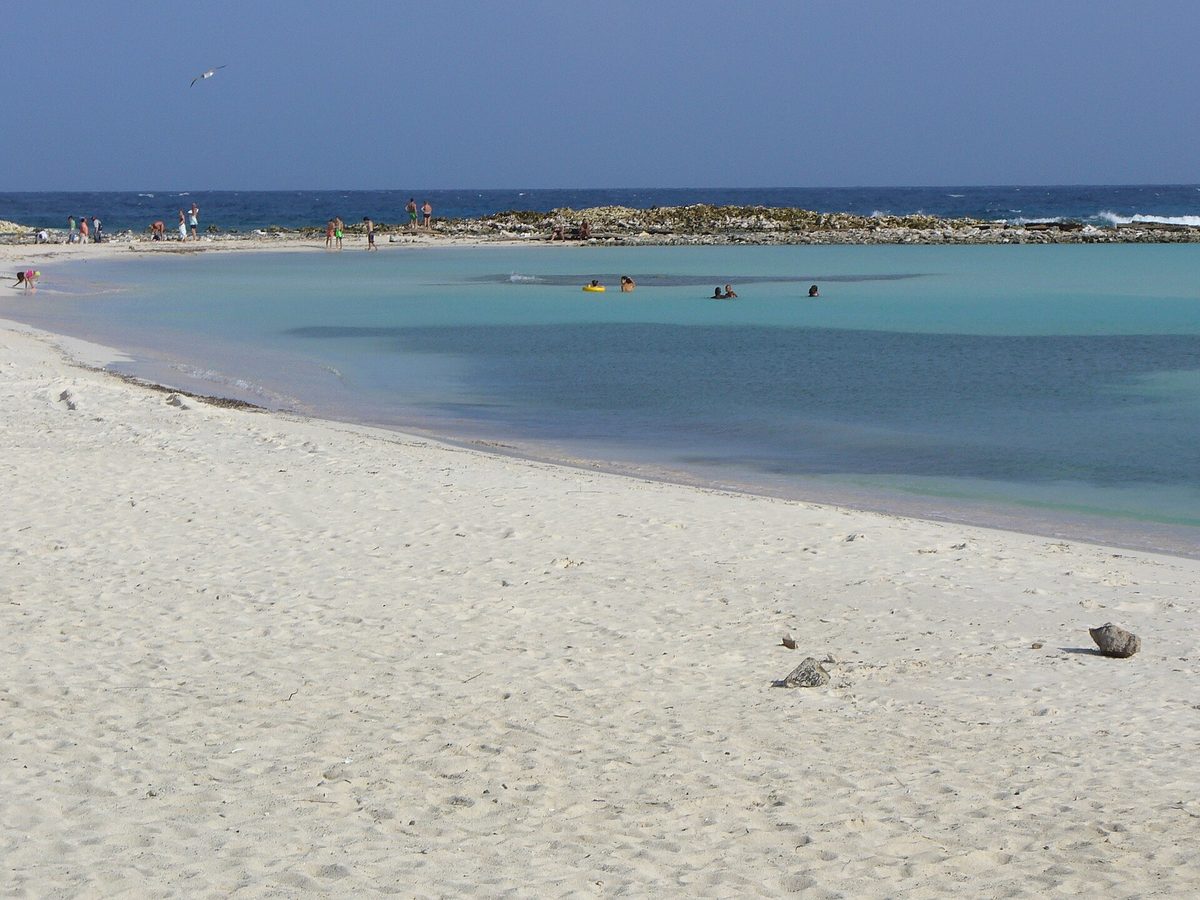
One honest caveat, because it matters: calm does not mean currentless. Where the lagoon opens toward the sea, the water deepens and a real current can run — strong enough to carry a floating adult across the cove faster than they expect, especially on windy days. So let the little ones play in the shallows near shore, keep everyone inside the marked buoys, and treat the open end of the lagoon with respect. There are not always lifeguards on duty, so you are your own safety net here.
Snorkeling at Baby Beach
Baby Beach is where a lot of people try snorkeling for the first time, and it is a forgiving classroom. You do not have to swim out into open water to see fish — the action is along the protected edges of the lagoon, where the rock barrier and an artificial reef give marine life something to hang around.
Where to go in the water
The best snorkeling is toward the mouth of the bay and along the channel on the left (south) side, near Big Mama’s Grill, where the bottom drops off beyond a roped line. That rope is your friend: it marks the safe zone and, conveniently, the spot where the fish gather. Stay inside it. Beyond the buoys the water gets deep and the current picks up, and that is not where beginners belong. If you are not a confident swimmer, stick to the shallower stretches and you will still see plenty.
What you’ll see
On a good day you can expect parrotfish, sergeant majors, angelfish, the occasional barracuda hanging motionless in the blue, and sometimes a blowfish or a small eel tucked into the rocks. Snorkelers often spot sea turtles grazing the seagrass beds over toward the Rum Reef side. Visibility is best early, before the wind comes up and before dozens of fins stir the sand, so this is a morning activity.
Gear and a few tips
You can rent masks and fins from JADS Dive Center near Rum Reef or from Big Mama’s, but if you have your own, bring it — rentals are limited and the fit is hit or miss. Water shoes are genuinely worth packing, because the rocks and bits of coral near the reef are sharp. And go easy on the sunscreen chemistry: there is almost no natural shade in the water, so reef-safe sunscreen and a rash guard will save both your skin and the reef. For more places to get in the water around the island, see our guide to water sports in Aruba.

Diving from Baby Beach
The same JADS Dive Center that rents snorkel gear runs guided dives in the deeper water off the lagoon’s mouth, and it is a friendly place to start if you are diving for the first time — they offer beginner sessions and refresher courses for people who have not been down in a while. Even if you never plan to strap on a tank, it is reassuring to know there is a dive operation on site. Prices vary by dive, so ask at the shop or check ahead.
Facilities and amenities
Baby Beach has more infrastructure than its remote location suggests, but it is not a resort beach, so come prepared.
Shade. Free thatched palapas are dotted along the sand, and they are the only no-cost shade you will find — which is exactly why they vanish within the first hour or two on a busy day. If shade matters to you, arrive early and claim one. Otherwise, you can rent a cabana or lounge chairs (more on prices below), or bring your own umbrella.
Chairs and cabanas. Big Mama’s Grill rents half-tent cabanas and lounge chairs by the day. Expect to pay roughly $80 for a shaded cabana with two chairs, with extra chairs around $15 each — cash is preferred, though they will sometimes take a card. Prices and inventory change, so treat those as ballpark figures and confirm on the day. If you want to save money, some visitors rent chairs and umbrellas from a delivery service near the hotels and bring them along.
Restrooms. This trips people up: there are no free public restrooms on the beach. You use the facilities at Big Mama’s or Rum Reef, and you may be asked for a small cash fee (around a dollar) even as a paying customer. Bring small bills in US dollars or Aruban florin. Changing rooms and showers are minimal to nonexistent, so plan to leave wet.
Valuables. There are no lockers, so do not bring anything you would hate to lose. A waterproof pouch for your phone and a locking beach bag go a long way; better yet, leave the good jewelry at the hotel.
Food and drink at Baby Beach
You will not go hungry here, and the dining is genuinely part of the fun.
Big Mama’s Grill
The big, colorful, Flintstones-themed restaurant right on the sand is something of a landmark in its own right, complete with oversized wooden chairs and a cheerful staff. The menu runs to ribs, burgers, grilled fish, and sandwiches — the calamari sandwich has a following — and meals often come with a homemade pasta salad. It doubles as the beach’s rental hub for cabanas, chairs, and snorkel gear. Figure roughly $20–$30 a head for a sit-down lunch.
Rum Reef Bar & Restaurant
Up on the rocks at the other end sits Rum Reef, whose small but deep infinity pool overlooking the sea is one of the most photographed spots in southern Aruba. Any paying customer can use the pool, the cocktails are strong, and the views are excellent — just note the pool has a sharp drop-off toward the edge, so it is not a wade-in kiddie pool. It is a lovely grown-up perch for a sunset drink if you are making a couples’ day of it, the kind of detail that earns this corner a mention on romantic Aruba itineraries.
The snack shack
If you just want a quick bite, the beachside snack stand does hamburgers, hot dogs, fries, and cold drinks — beer, soda, and cocktails included — at reasonable prices. It is the easy option when you do not want to leave the sand. For a broader look at eating around the island, our Aruba restaurants guide covers everywhere from beach shacks to fine dining.
The best time to visit Baby Beach
Timing changes this beach more than almost any other on the island, because the crowds and the wind both build through the day.
Time of day. Go early. Arriving by 8 or 9 a.m. gets you the easiest parking, first pick of the free palapas, the calmest and clearest water for snorkeling, and a beach that still feels spacious. By late morning it fills in, especially the left side near Big Mama’s. Late afternoon is the other sweet spot — the day-trippers thin out and the light turns golden — though the snorkeling is murkier once the wind has stirred things up.
Day of week. Weekdays beat weekends. Locals and cruise excursions both pile in on weekends and holidays, so if your schedule is flexible, pick a Tuesday over a Saturday.
Season. Aruba is warm, dry, and sunny essentially year-round, and it sits outside the hurricane belt, so there is no truly bad time. The December-to-April high season brings the biggest crowds and the highest prices; the quieter shoulder months on either side are my favorite balance of good weather and elbow room. For the full breakdown, see our guide to the best time to visit Aruba.
One word on wind. Even when the lagoon is calm, the breeze at this end of the island can be relentless — strong enough to launch an unsecured hat or towel. It also masks the strength of the sun, so people burn here without feeling hot. Plan around both.
What to pack for a day at Baby Beach
Because this is a do-it-yourself beach without resort conveniences, a little packing goes a long way:
- Reef-safe sunscreen and a rash guard — shade is scarce and the breeze hides the burn.
- Water shoes — the rocks and coral near the snorkel zone are sharp.
- Your own snorkel gear if you have it, since rentals are limited.
- Small bills in cash (US dollars or florin) for restrooms, rentals, and the snack shack.
- Water and snacks, plus a waterproof pouch for your phone.
- A secured hat or visor you will not lose to the wind.
Stops on the drive — and what’s nearby
Because Baby Beach is so far south, it pairs naturally with the rest of the island’s southern half. Treat the drive as part of the day rather than just transit, and consider folding it into a wider Aruba itinerary:
San Nicolas, the “Sunrise City,” is worth a slow roll-through for its enormous, gallery-quality street murals — easily some of the best free things to do in Aruba. While you are there, the legendary Charlie’s Bar has been serving since the 1940s and is plastered wall-to-ceiling with decades of visitors’ memorabilia; it sits a short drive from the beach.
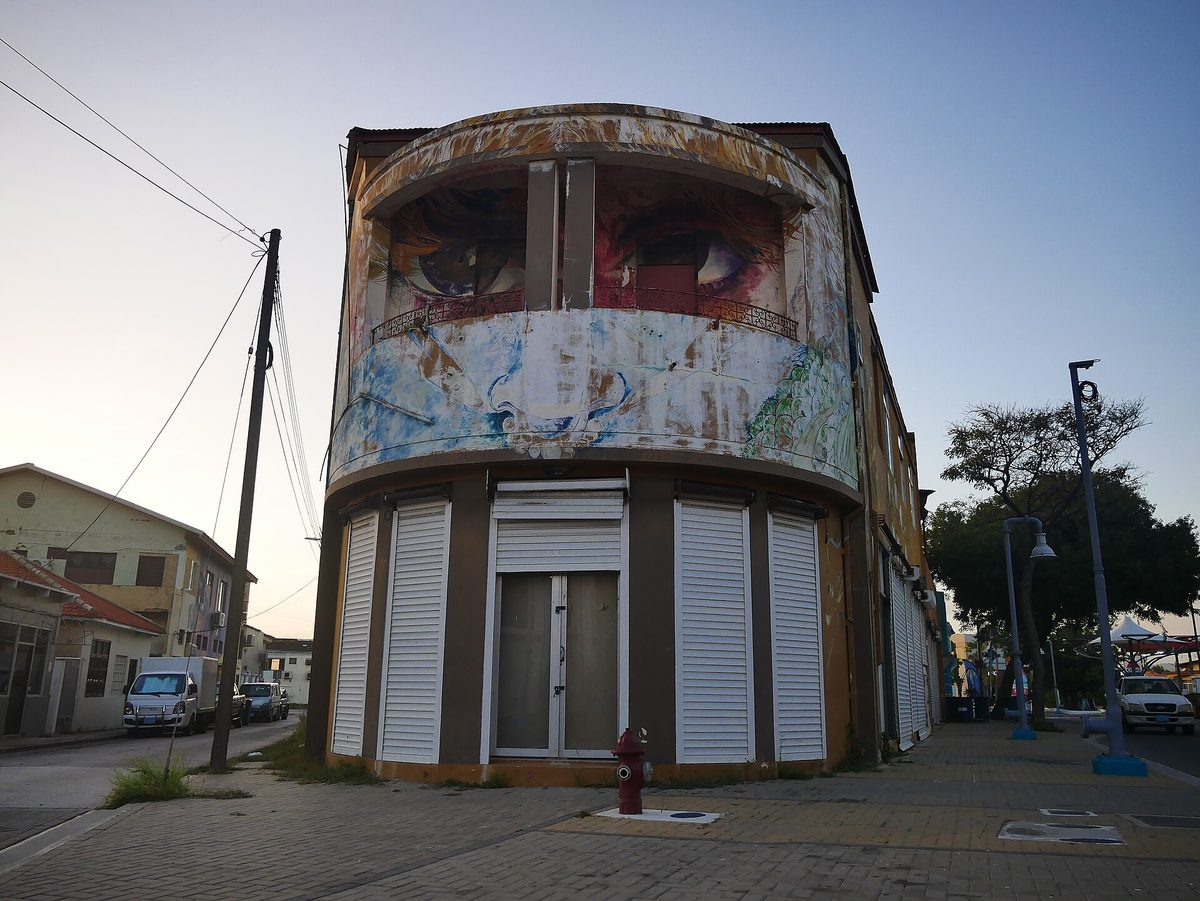
The red anchor at Seroe Colorado is a quick photo stop near the final turn, and tiny Rodgers Beach sits right next door to Baby Beach if you want a quieter, more sheltered patch of sand. Heading back north, seafood lovers stop at Zeerovers in Savaneta, where you order the day’s catch by the pound straight off the boat (note the kitchen closes on Mondays). Kite-surfers detour to windy Boca Grandi just up the coast.
If wildlife is the goal, the famous flamingos live on a private island reachable via a Renaissance resort day pass rather than at Baby Beach itself, and the rugged interior of Arikok National Park covers much of the eastern coast you skirt on the way down.
Where to stay near Baby Beach
Most visitors treat Baby Beach as a day trip from the hotel zones up north, and for a first trip that is what I would recommend — you will want to be near the dining and nightlife of Palm and Eagle Beach. That said, the adults-only Secrets Baby Beach resort opened right on the cove in 2025, putting an all-inclusive option directly on the sand for travelers who want to wake up here. For the full range of options across the island, see our guides to where to stay in Aruba and the island’s all-inclusive resorts.
Is Baby Beach Aruba worth it?
For most travelers, yes — with a caveat. If you have young kids, if you are anxious in waves, or if you want to try snorkeling without the open ocean, this is the best beach on the island and the long drive pays off completely. If you are a strong swimmer chasing dramatic surf or a lively beach-bar scene, you may find the lagoon a touch tame and prefer the west-coast beaches closer to your hotel. I would budget at least half a day for it given the distance, and pair it with San Nicolas to make the round trip feel worth it. The cost itself is modest — entry and parking are free, and you can keep a day here cheap by bringing your own gear and snacks. Our Aruba vacation cost guide breaks down what a day like this adds up to.
Frequently asked questions
Is Baby Beach safe for children?
It is the safest swimming beach on the island for young kids, thanks to the shallow, calm, sandy-bottomed lagoon. The one rule: keep them in the shallows near shore and well inside the buoys, because the current strengthens toward the open mouth of the bay and lifeguards are not always present.
Why is it called Baby Beach?
The name comes from the gentle, shallow water — calm enough for the smallest children, almost like a giant natural bathtub. The shelter is partly man-made: a breakwater built in the 1940s for oil-refinery families created the protected lagoon, which became the community’s family swimming spot.
How deep is the water at Baby Beach?
Most of the lagoon is shallow, roughly waist- to chest-deep, and you can wade out a long way while still touching the bottom. It deepens toward the mouth of the bay near the snorkeling zone, which is why beginners should stay inside the marked area.
Can you visit Baby Beach from the cruise port?
Yes. It is about a 40-minute drive from the Oranjestad cruise terminal. A taxi or a pre-booked island tour is the most reliable way to do it on a tight cruise-day schedule; the public bus is cheaper but takes far longer with a transfer in San Nicolas.
Do you need to bring your own snorkel gear?
No — you can rent masks and fins from JADS Dive Center or Big Mama’s on site. But rentals are limited and fit varies, so bringing your own is more reliable if you have it.
Can you pay by credit card at Baby Beach?
Sometimes, but do not count on it. The restaurants will often take cards, while rentals and the restroom fee usually want cash. Bring small bills in US dollars or florin to be safe.
Final thoughts
Baby Beach asks a little more of you than the beaches outside your hotel — a long drive, an early start, a packed cooler — and it rewards that effort with the gentlest water in Aruba and a snorkeling spot that forgives beginners. Go early, respect the current at the mouth of the lagoon, build in a stop in San Nicolas, and you will understand why a beach originally built for refinery kids still draws families from across the island. It remains one of the most rewarding stops on any tour of Aruba’s beaches.
Photo credits
- Aerial view of the calm crescent lagoon at Baby Beach, Aruba, with Rodgers Beach and the old San Nicolas refinery beyond. Photo: Arthur Meiners / CC BY-SA 4.0 via Wikimedia Commons.
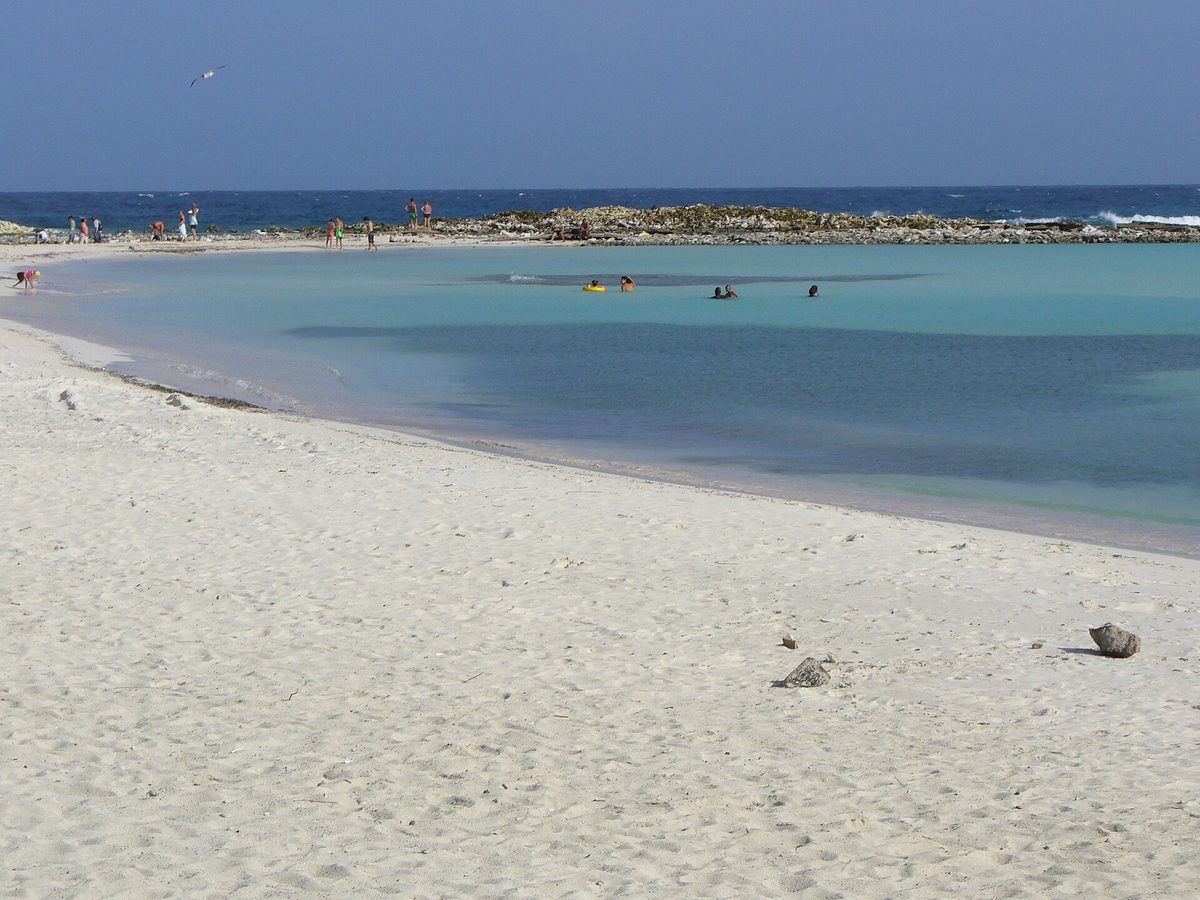
- Shallow turquoise water and white sand of the Baby Beach lagoon in southern Aruba. Photo: Dje9537459, public domain, via Wikimedia Commons.
- A school of reef fish over Caribbean coral, the kind of scene snorkelers find at Baby Beach. Photo: NPS Photo (CC0) via Wikimedia Commons.
- Colorful street-art mural on a building in San Nicolas, a short drive from Baby Beach Aruba. Photo: Ginelly.Q (CC0) via Wikimedia Commons.
Baby Beach lagoon by Dje9537459 (Public domain).