Category: Aruba Itinerary

  • Aruba Itinerary: How Many Days & Day-by-Day Plans

    Aruba Itinerary: How Many Days & Day-by-Day Plans

    The first Aruba trip I ever planned, I made the classic mistake: I booked seven nights, assumed I’d “figure it out there,” and spent the first two days driving in circles trying to decide whether today was a beach day or an Arikok day. The island is small enough that you feel like you can wing it — and big enough on variety that winging it quietly wastes half your mornings. Every trip since, I’ve built a loose Aruba itinerary before I land, and every trip has been better for it.

    The short answer: a great Aruba itinerary runs five to seven days for most first-timers — long enough to mix calm beach days with a catamaran sail, an Arikok National Park adventure, and a couple of standout dinners without rushing. Three to four days works for a focused beach-and-relax escape, and even a single cruise day can hit the highlights if you plan it tightly.

    This guide is the one I wish I’d had: honest day-by-day plans for one day, a long weekend, four, five, and seven days; itineraries tailored to couples, families, first-timers, and budget travelers; a realistic cost breakdown; and the handful of things worth booking before you go. I’ve leaned on multiple trips across the island — high-rise and low-rise, north tip to the southeast caves — to make these plans flow logically instead of zig-zagging you across the map. Pair it with our complete guide to things to do in Aruba and you’ll have everything you need.

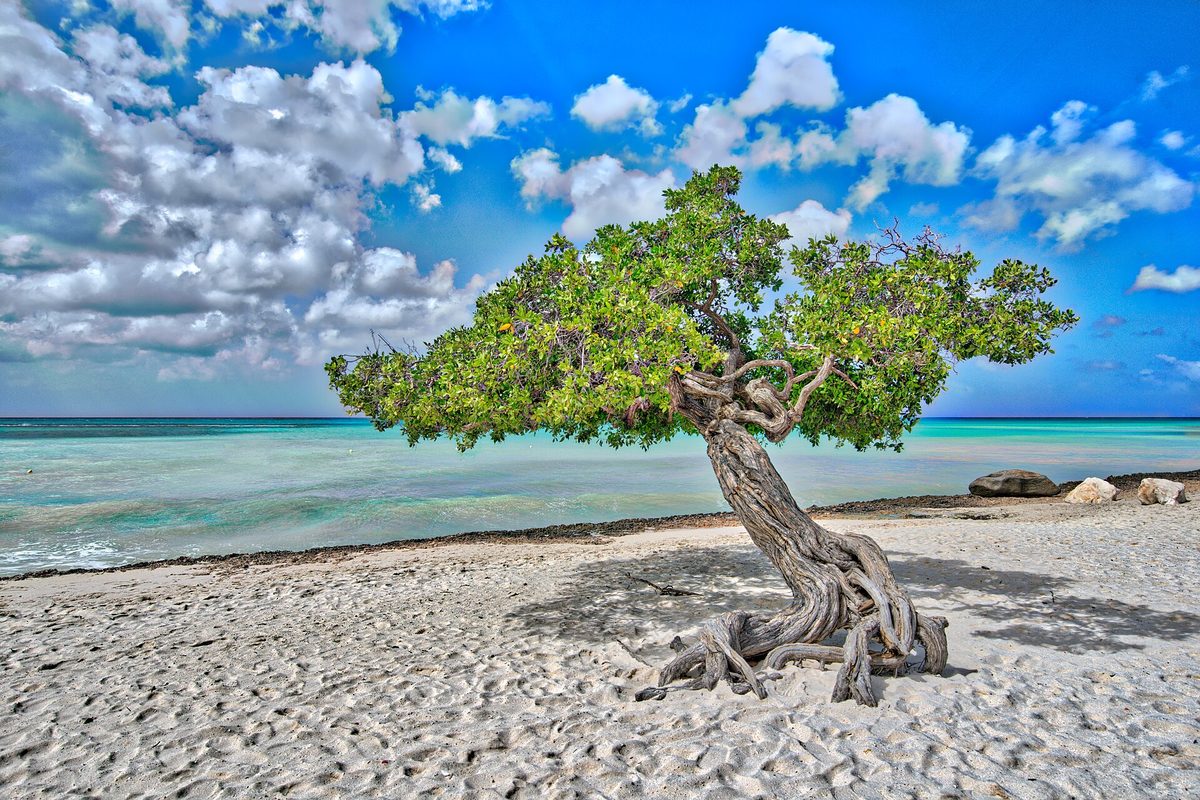
    Eagle Beach, a highlight of any Aruba itinerary, with white sand, turquoise water and a divi-divi tree

    Aruba itinerary at a glance

    Here’s the whole question — “how many days, and what do I actually do each day?” — boiled down to one screen. Use it to pick a trip length, then jump to that section below for the hour-by-hour plan.

    Trip length What you can realistically fit in Best for Rental car?
    1 day (cruise/layover) One headline beach or a quick island highlights loop; lunch in town Cruise passengers, long layovers No — taxi or ship tour
    2–3 days (long weekend) Two beaches, one boat trip, one dinner out, a wander through Oranjestad Quick getaways, add-ons to other trips Optional (1 day)
    4 days The above plus a full Arikok/Natural Pool day and a snorkel morning Short, well-rounded first visits Recommended (2 days)
    5 days Beaches, catamaran, Arikok, north-coast loop, Baby Beach, several great dinners The sweet spot for most first-timers Recommended (2–3 days)
    7 days Everything above, unhurried, plus San Nicolas street art, flamingos, a true do-nothing beach day Relaxed full weeks, repeat visitors, families Yes (2–3 days)

    If you only take one number from this table, take five. Five days is the length I recommend most often: it’s enough to see that Aruba is more than its famous beaches without turning your vacation into a checklist. For the reasoning behind the timing of your trip, our guide to the best time to visit Aruba goes deep on weather, crowds, and prices by month.

    How many days in Aruba do you need?

    This is the question I get asked more than any other, so let me give you the candid version rather than the “any time in paradise is wonderful!” non-answer.

    Three days is the floor. With three days you can relax on a great beach, take one boat trip, and eat a couple of memorable meals — a genuine taste of the island. What you won’t have time for is the rugged side: Arikok National Park, the Natural Pool, the caves, and the far beaches all sit on the opposite coast from the hotels and eat up the better part of a day each. Three days is a beach holiday, not an Aruba holiday.

    Four days adds the adventure. A fourth day is exactly enough to dedicate one full day to Arikok and the wild east coast, which is the single biggest upgrade you can make to a short trip. Four days is my minimum recommendation for a true first visit.

    Five days is the sweet spot. Five gives you two relaxed beach days, a catamaran sail, a full Arikok day, and a north-coast loop (California Lighthouse, Alto Vista Chapel, the rock formations) without ever feeling rushed. You leave satisfied rather than wishing you’d had one more day.

    Seven days is luxury, not excess. A week lets you do all of the above at a slower pace and add the things people skip on shorter trips: the San Nicolas street-art murals, a Renaissance Island flamingo morning, a sunset horseback ride, and at least one day where you do absolutely nothing but lie on Eagle Beach. Aruba is only about 20 miles long and 6 miles wide, so a week is never too much — but it’s rarely necessary to see the headliners.

    Anything beyond seven days moves into “I love this island and I’m here to live slowly” territory, which is a wonderful reason to come but not something you need a packed itinerary for. Snowbirds and repeat visitors happily spend two weeks or a month here.

    How to build any Aruba itinerary (the four decisions)

    Before the day-by-day plans, four upfront decisions shape everything else. Get these right and the daily itinerary almost writes itself.

    1. Pick your base

    Where you sleep determines how every day starts and ends. The overwhelming majority of visitors stay in the northwest hotel zone — Palm Beach (the lively high-rise strip) or Eagle Beach (the calmer, low-rise, prettier-sand strip). Both put you minutes from the best swimming, the most restaurants, and the boat-tour marinas, which is why my itineraries assume you’re based there. If you’re deciding between areas, our full guide to where to stay in Aruba breaks down every neighborhood by who it suits, and if you’d rather not think about logistics at all, an all-inclusive resort can simplify a short trip enormously.

    2. Decide on a rental car (and when)

    Here’s the move that makes these itineraries work: rent a car for some days, not all of them. You don’t need wheels on a beach-and-catamaran day when everything’s walkable from your hotel — and parking a car you’re not using just costs money. But the wild east coast, the north tip, and the far beaches are impractical without one. I rent a car for the two or three “exploring” days and skip it on the “lazy” days. An economy car runs roughly US$35–50 a day; a proper 4×4 (the only way to self-drive to the Natural Pool) runs US$90–140. The public Arubus is a cheap, reliable option up and down the hotel strip and into Oranjestad (around US$2.60 one way), so you’re never stuck on car-free days.

    3. Time your trip

    Aruba sits outside the hurricane belt in a dry, breezy, desert climate, so the weather is reliably good year-round — daytime highs hover in the low-to-mid 80s°F almost every day, cooled by constant trade winds. The practical differences between months are about crowds and price, not sunshine: mid-December through mid-April is peak season (busiest, priciest, and you’ll want to book tours further ahead), while late spring through fall is quieter and noticeably cheaper. Our best time to visit Aruba guide has the month-by-month detail, but for itinerary purposes, just know your plans will work in any season.

    4. Book the few things that sell out

    Aruba is laid-back, but a short list of experiences genuinely sell out and can blow a hole in your itinerary if you assume you’ll arrange them on arrival. Reserve these before you go, especially in high season: the Renaissance Island flamingo day pass (limited daily, sells out routinely), a catamaran snorkel or sunset sail, dinner at the toes-in-the-sand spots like Flying Fishbone or Barefoot, and your rental car in peak weeks. Everything else you can comfortably sort out once you land.

    Getting to and from Aruba (and your first and last days)

    Two logistics quirks shape the bookends of every itinerary, so plan for them. First, almost all flights land at Queen Beatrix International Airport (AUA) just outside Oranjestad — about 3.5 to 4.5 hours nonstop from the US East Coast, and a 10–20 minute drive from the hotel zone. Second, and this catches people out: Aruba has US Customs and Border Protection preclearance, meaning you clear US immigration in Aruba before your flight home. It’s a huge convenience on the US end (you arrive as a domestic passenger), but it means you should get to the airport about three hours early for US-bound departures. Don’t schedule anything tight on departure morning.

    A few more arrival notes that make day one smoother: US, Canadian, and most European travelers just need a valid passport (check current entry requirements before you fly); US dollars are accepted island-wide alongside the Aruban florin, so you don’t need to exchange money; the power outlets are US-style 110–127V, so no adapter for American devices; English is spoken everywhere; and cars drive on the right, just like in the States. All of which means your first afternoon can go straight to the beach instead of to errands — which is exactly how every plan above begins.

    One day in Aruba: the cruise & layover plan

    If you’re stepping off a cruise ship or have a long layover, you have roughly six to eight useful hours. Don’t try to do it all — pick one of two tracks and commit.

    The beach track: Cabs wait right at the cruise terminal in Oranjestad. Take one straight to Eagle Beach (about 15 minutes, ~US$25–30) and spend the day on the widest, whitest sand on the island, with the famous wind-bent fofoti trees for photos. Rent a chair, swim, have lunch at a beach bar, and taxi back with plenty of buffer before all-aboard. This is the right call if your group just wants to plant themselves on a postcard beach.

    The highlights track: Book a small-group island tour or a catamaran snorkel trip in advance (cruise excursions sell out, and you do not want to miss the boat). A half-day catamaran to the Antilla shipwreck and Boca Catalina delivers the most “Aruba” per hour — open bar, snorkeling with sea turtles, and the leeward coastline from the water. Alternatively, a UTV or jeep tour hits the California Lighthouse, Alto Vista Chapel, and the rugged north coast in one efficient loop. Either way, leave the wandering for another visit and let a guide handle the clock.

    Whichever you choose, finish with a quick walk through colorful Oranjestad — the pastel Dutch-colonial main street and the free streetcar are right by the port — and you’ll have seen a genuine slice of the island in a single day.

    A long weekend: 2 to 3 days in Aruba

    A 2–3 day plan is built around beaches and one or two signature experiences. No rental car required; you can taxi or bus everywhere you need to go.

    Day 1 — Settle in on the beach. Don’t over-schedule arrival day. Check in, grab a chair on Palm Beach or Eagle Beach, and let the trip start at the pace of the waves. Late afternoon, walk the Palm Beach strip, and book a sunset dinner — Pinchos on its little pier or any of the beachfront spots are an easy first night.

    Day 2 — Catamaran morning, town afternoon. Spend the morning on a catamaran snorkel sail to the shipwreck and Boca Catalina — the highest-value half-day on the island and a guaranteed memory. After lunch, head into Oranjestad for the streetcar, duty-free shopping, and the colorful old town. Dinner toes-in-the-sand if you reserved ahead.

    Day 3 — One more beach, your way. Use a final morning for whatever stole your heart: more snorkeling at Boca Catalina, the calm shallows for kids, or simply your favorite lounger. If you rented a car for the day, drive the quick north loop to the California Lighthouse before you fly out. For a focused list of what to prioritize on a short trip, our things to do in Aruba guide ranks the must-dos.

    4 days in Aruba itinerary

    Four days is where an itinerary stops being a beach holiday and becomes a real visit, because you finally have a full day for the wild side of the island. Rent a car for at least the Arikok day.

    Day 1 — Arrive & beach. Settle in, claim a lounger, sunset stroll, easy first dinner. Same relaxed arrival as above.

    Day 2 — Catamaran & the leeward coast. Morning catamaran snorkel sail (shipwreck + turtles), afternoon at the beach, dinner on the strip. This is your classic, low-effort “Aruba is paradise” day.

    Day 3 — Arikok National Park & the east coast. Your big adventure day, and the reason four days beats three. With a 4×4 (or a guided UTV/jeep tour, which I honestly recommend over self-driving), explore Arikok National Park, which covers nearly a fifth of the island: the dramatic windward coast, the Conchi Natural Pool for a swim, the Quadirikiri and Fontein caves with their ancient petroglyphs, and the Bushiribana gold-mill ruins. It’s hot, dusty, and spectacular — bring water, reef-safe sunscreen, and sturdy shoes.

    Day 4 — North tip & a slow finish. Drive the north loop: California Lighthouse for the views, the 18th-century Alto Vista Chapel, and the Casibari or Ayo rock formations. Snorkel at Arashi Beach, then close the trip with your best dinner. For everything the park holds, our things to do in Aruba guide covers Arikok in depth.

    The Conchi Natural Pool in Arikok National Park on Aruba's rugged east coast

    5 days in Aruba: the perfect itinerary

    This is the one I’d hand most first-time visitors. Five days balances genuine relaxation with enough exploring that you leave feeling you know Aruba, not just its hotel beach. Rent a car for Days 3 and 4; skip it on the lazy days.

    Day 1 — Arrival & your home beach

    Keep it simple. Land, check in, and spend the afternoon getting your bearings on Eagle or Palm Beach — float in the calm water, claim your spot, and adjust to island time. Walk the strip in the evening for a casual welcome dinner and an Aruba Ariba cocktail. No car, no agenda. Arrival days you fight the schedule are arrival days wasted.

    Day 2 — Catamaran sail & snorkel

    Book a morning catamaran trip down the leeward coast to the Antilla shipwreck (one of the largest in the Caribbean) and the turtle-filled shallows at Boca Catalina. Open bar, music, snorkel gear, and the island skyline from the water — it’s touristy and it’s worth every penny. Back on land by mid-afternoon for beach time, then dinner at a Palm Beach favorite. For the full menu of water activities, see our things to do in Aruba guide.

    Day 3 — Arikok National Park & the wild east

    Pick up your rental (a 4×4 if you’ll self-drive into the park) or join a guided UTV/jeep tour. Spend the day on the rugged windward side: the Natural Pool (Conchi) for a protected swim in the surf, the sunlit Quadirikiri Cave, the Bushiribana ruins on their clifftop, and the moonscape coastline in between. It’s the most physically demanding day of the trip and the one people remember most. Reward yourself with a relaxed dinner near your hotel.

    Day 4 — North coast loop & the famous beaches

    Keep the car. Drive northwest to the California Lighthouse for panoramic views, stop at the peaceful Alto Vista Chapel, and clamber up the Casibari or Ayo rock formations. Snorkel the clear, calm water at Arashi Beach and Boca Catalina (sea turtles love it here), then drift south to Eagle Beach for golden hour and the fofoti trees. Tonight is the night for a toes-in-the-sand dinner at Flying Fishbone or Barefoot — reserve well ahead.

    Day 5 — Your choice, then farewell

    Use your last full day for whatever you loved most. Want calm, shallow water and a quieter vibe? Drive (or tour) to Baby Beach at the southern tip — the gentlest swimming on the island. Prefer not to move? Spend it on your home beach with a long lunch. Squeeze in any souvenir shopping in Oranjestad, then a final sunset before you pack. Five days, and you’ve done the whole island justice. Our complete Aruba beaches guide can help you pick the right sand for that last morning.

    Palm Beach, Aruba's lively high-rise hotel strip, with calm turquoise water and catamarans

    6 days in Aruba: the relaxed week

    Six days is a lovely length if a full week is just slightly more than you can swing — you get nearly all the breathing room of seven days with one fewer night’s hotel bill. Build it straight off the five-day plan and add one extra block depending on your mood: a Renaissance Island flamingo morning (book ahead) for an easy, photogenic day, or a southern run to San Nicolas and Baby Beach for street art, calm shallows, and a side of the island most visitors miss. I’d slot the extra day in the middle — say, between your Arikok day and your north-coast loop — so the active days don’t stack up back to back. Six unhurried days is genuinely hard to beat.

    7 days in Aruba: the one-week itinerary

    A full week is my favorite way to do Aruba, because it adds breathing room and the experiences that get cut from shorter trips. Take the five-day plan above and weave in these days. Rent a car for the three exploring days; go car-free the rest.

    Days 1–2 — Arrive, settle, sail. As in the five-day plan: an easy arrival and beach afternoon, then a catamaran snorkel sail on Day 2.

    Day 3 — Renaissance Island & flamingos. Spend a half or full day on the Renaissance’s private island, home to Aruba’s famous pink flamingos and calm, clear water. You’ll need a hotel stay or a limited day pass — book it before you go, because it sells out. A relaxed, photogenic day that breaks up the active ones.

    Day 4 — Arikok National Park & the east coast. Your big adventure day: Natural Pool, caves, ruins, and the windward coast, exactly as in the five-day plan.

    Day 5 — North loop & snorkeling. California Lighthouse, Alto Vista Chapel, the rock formations, and snorkeling at Arashi and Boca Catalina.

    Day 6 — San Nicolas & the south. Drive south to San Nicolas, Aruba’s “Sunrise City,” reinvented as an open-air street-art gallery — block after block of huge, vivid murals. Continue to Baby Beach for the calmest swim on the island and a seafood lunch in sleepy Savaneta. An offbeat day that shows you the Aruba most visitors never see.

    Day 7 — Do nothing, beautifully. Earn one true do-nothing day: your favorite beach, a long lunch, maybe a sunset horseback ride or a second sail. After a week, you’ll have seen the headliners and found a few corners to call your own. That’s the week I’d wish on anyone.

    Aruba itinerary by type of traveler

    The plans above are templates. Here’s how I’d tweak them depending on who’s traveling — because a honeymoon and a family-of-five trip want very different days.

    Couples & honeymooners

    Lean into the low-rise side. Base yourselves on Eagle Beach for space and romance, prioritize a sunset catamaran cruise over a rowdy daytime party boat, and splurge on at least one toes-in-the-sand dinner at Flying Fishbone or Barefoot. Swap the harder Arikok self-drive for a private guided tour so neither of you is white-knuckling a 4×4. Add a couples’ spa morning or a sunset horseback ride on the beach. A relaxed five days is plenty.

    Families with kids

    Stay where everything’s walkable — the Palm Beach high-rise strip — so naps and snack runs are painless, and strongly consider an all-inclusive resort to keep food costs and decision fatigue down. Favor calm, shallow water: Baby Beach and the protected Palm Beach shallows are ideal for little ones. Keep the Arikok day shorter (the heat and rough roads wear kids out), and trade a long sail for a glass-bottom boat or the De Palm Island day, which packs snorkeling, a water park, and lunch into one easy ticket. Seven gentle days beat five packed ones with kids.

    First-time visitors

    Follow the five-day plan almost exactly — it’s designed for you. The goal on a first trip is breadth: one catamaran, one Arikok day, one north-coast loop, and two relaxed beach days teaches you what kind of Aruba traveler you are, so your next trip can specialize. Don’t skip the wild east coast just because the beaches are so good; the contrast is the whole point.

    Budget travelers

    Go in the quieter, cheaper months, base yourself in Noord or Oranjestad slightly back from the sand, and lean on the public Arubus instead of taxis. Rent a car for just one shared exploring day. Eat where locals do — a pastechi breakfast, fresh fish by the pound at Zeerovers in Savaneta (around US$10–15 and a genuine highlight, not a compromise), and a picnic on the beach. Free experiences carry a budget trip here: the beaches, the lighthouse, the murals, the chapel, and the rock formations cost nothing.

    Adventure & active travelers

    Front-load the active days. Self-drive Arikok in a 4×4, hike to the Natural Pool instead of riding in, dive the Antilla wreck, try kitesurfing off Boca Grandi or Hadicurari, and add a sunrise hike up the Hooiberg or a UTV circuit of the backcountry. Aruba’s steady trade winds make it a world-class spot for wind and water sports, so build a day around them.

    The building blocks: how to mix and match your days

    Once you understand the five “ingredients” of an Aruba day, you can assemble any itinerary length yourself. Almost every plan above is just these blocks in a sensible order.

    Beach days

    The leeward (west) coast holds the calm, swimmable, postcard beaches: Eagle and Palm for the classic strip, Arashi and Boca Catalina for snorkeling, Baby Beach for the calmest shallows. The windward (east) coast is dramatic but rough — beautiful to look at, not to swim. Our complete guide to Aruba’s beaches ranks every stretch of sand by water conditions and crowds.

    On-the-water days

    Catamaran snorkel sails, sunset cruises, scuba on the shipwreck, kayaking, paddleboarding, parasailing, and the De Palm Island day. Pick at least one boat trip per visit — seeing the coastline from the water is non-negotiable.

    Arikok & the wild east

    The Natural Pool, caves, ruins, and rugged coastline inside Arikok National Park. Budget a full day and a 4×4 or a guided tour. This is the block first-timers most often skip and most regret skipping.

    Town & culture days

    Colorful Oranjestad (streetcar, museums, duty-free shopping, Dutch-colonial streets) and the San Nicolas murals in the south. Half a day each, easy to bolt onto a beach afternoon.

    Food & nights

    Build dinners into the plan deliberately: the toes-in-the-sand spots (Flying Fishbone, Barefoot) and the local seafood at Zeerovers need advance thought, and a Kukoo Kunuku party-bus night is a fun one-off. Sample local flavors like keshi yena, pan bati, and fresh-caught fish along the way.

    Colorful Dutch-colonial buildings in Oranjestad, Aruba's capital

    What an Aruba itinerary actually costs

    Aruba is one of the pricier Caribbean islands, so it helps to plan a daily budget. These are rough per-person, per-day figures for 2026 excluding flights, to sanity-check your itinerary. Always confirm current prices when you book.

    Style Per person / day What that looks like
    Budget ~US$125–200 Guesthouse or condo back from the beach, Arubus, local eats, mostly free activities
    Mid-range ~US$250–400 3–4★ beach hotel, a rental-car day or two, one paid tour, restaurant dinners
    Luxury US$400–600+ High-end resort, private tours, fine dining, cabanas and cocktails

    The big line items are lodging and food. A few ways to keep the itinerary affordable without gutting it: visit in the quieter season, rent a car only for exploring days (an economy car is ~US$35–50/day; a 4×4 ~US$90–140), use the Arubus on beach days, and balance splurge dinners with casual local lunches. For the full money breakdown — flights, resorts, and trip totals — a dedicated vacation-cost guide is the next thing on our roadmap.

    What to book ahead, and what to skip

    Book before you go: your flights and hotel (obviously), the Renaissance Island flamingo experience (sells out daily), a catamaran or sunset sail in high season, the toes-in-the-sand dinners, and a 4×4 if you’re self-driving Arikok in peak weeks.

    Sort out on arrival: beach chairs and umbrellas, casual restaurant tables, the Arubus, snorkel gear, and most land tours outside peak season — Aruba’s tourism machine is efficient and English-speaking, so day-of arrangements are usually easy.

    Honestly skippable: don’t burn a precious day driving yourself to remote spots in a tiny economy car (people get stuck on the Natural Pool road constantly — take a tour or a 4×4), don’t try to cram Arikok and a catamaran into the same day, and don’t over-shop the same duty-free chains you’ll find in any port. And resist the urge to schedule arrival day — jet-lagged you will thank rested you.

    Aruba itinerary: frequently asked questions

    How many days do you need in Aruba?

    Five to seven days is ideal for most first-time visitors — enough to combine relaxed beach days with a catamaran sail, a full Arikok National Park adventure, and the north-coast highlights without rushing. Four days is a solid, well-rounded minimum. Three days works for a beach-focused escape, and even a single cruise day can hit the headliners with tight planning.

    Is 3 days enough in Aruba?

    Three days is enough for a relaxing beach getaway — you can enjoy a couple of great beaches, take one boat trip, and have a few memorable dinners. It’s not quite enough to add the island’s rugged side (Arikok, the Natural Pool, the caves, and the far beaches each need most of a day). If you can stretch to four or five days, you’ll see a far more complete picture of the island.

    Do you need a rental car for an Aruba itinerary?

    Not for the whole trip. The hotel zone, beaches, and boat marinas are walkable or a cheap bus ride apart, so you don’t need a car on beach-and-catamaran days. You do want one (ideally a 4×4) for exploring Arikok, the north tip, and the far beaches. Renting for just the two or three exploring days is the most cost-effective approach.

    What is the best Aruba itinerary for first-timers?

    The five-day plan in this guide: arrive and settle in on the beach, take a catamaran snorkel sail, spend a full day in Arikok National Park, drive the north-coast loop (California Lighthouse, Alto Vista Chapel, the rock formations and snorkel beaches), then use your last day for Baby Beach or your favorite stretch of sand. It balances relaxation with breadth so you leave knowing the island.

    Can you see Aruba in one day?

    You can see the highlights, not the whole island. With six to eight hours — typical for a cruise stop or layover — pick one focus: a postcard beach day at Eagle Beach, or a guided highlights loop or catamaran trip. Trying to do everything in a day means rushing past all of it. Book any tour in advance so you’re not scrambling at the port.

    What’s the best time of year for an Aruba trip?

    Any time, honestly — Aruba sits outside the hurricane belt with reliable sun and trade winds year-round. The trade-off is crowds and price: mid-December through mid-April is peak (book tours earlier), while late spring through fall is quieter and cheaper. See our best time to visit Aruba guide for the month-by-month breakdown.

    How many days in Aruba do couples need?

    For a couples’ trip or honeymoon, five days hits the sweet spot: enough for a sunset catamaran cruise, a romantic toes-in-the-sand dinner, a relaxed Arikok adventure, and plenty of unscheduled beach time on Eagle Beach. Stretch to six or seven if you want spa mornings and true do-nothing days. Where you base yourselves matters as much as the length — see our where to stay in Aruba guide for the most romantic areas.

    Is Aruba expensive to visit?

    Yes — Aruba is one of the more expensive Caribbean islands, mainly because of lodging and dining. A mid-range trip runs roughly US$250–400 per person per day excluding flights, while budget travelers can manage US$125–200 by visiting in the off-season, staying slightly back from the beach, using the public bus, and eating local. The beaches, lighthouse, murals, and rock formations are free, which helps stretch any budget.

    What should you not miss in Aruba?

    If your itinerary only has room for a handful of things, make them these: a catamaran snorkel sail to the Antilla shipwreck, a full day in Arikok National Park including the Natural Pool, a sunset at Eagle Beach by the fofoti trees, and one toes-in-the-sand seafood dinner. Add the California Lighthouse loop and the San Nicolas murals if you have the days. Those few experiences capture the whole range of the island.

    Final thoughts: build the trip, then let it breathe

    The best Aruba itinerary isn’t the one that crams in the most — it’s the one that mixes a few genuine adventures with real time to do nothing. Lock in the handful of things that sell out, rent a car for your exploring days, pick a base you love, and then leave room for the island to surprise you: the snack bar you stumble into, the turtle that swims up at Boca Catalina, the sunset that makes you cancel your dinner reservation just to watch it. Plan it like I did after that first aimless trip — loosely, deliberately, five days at the center — and you’ll come home already plotting the next one.

    About the author: This guide was written and is maintained by the ArubaTourism.org editorial team — travel writers who have planned and re-planned Aruba trips across every length and season, from one-day cruise stops to relaxed weeks spanning the high-rise strip, Eagle Beach, Arikok, and the quiet southeast. Our mission is simple: give you the honest, specific, up-to-date information you need to plan a great Aruba trip.

    Last updated: June 2026. Prices, hours, and tour availability change frequently — always confirm current details directly with operators and venues before booking.

    Photo credits

    All images are used under their respective Creative Commons licenses or are in the public domain. Thank you to the photographers who share their work.

    • Divi-divi tree on Eagle Beach: Photo: sbmeaper1 (CC0) via Wikimedia Commons.
    • Conchi Natural Pool, Arikok National Park: Photo: Bjørn Christian Tørrissen / CC BY-SA 3.0 via Wikimedia Commons.
    • Palm Beach high-rise strip: Photo: Kwihi / CC BY 4.0 via Wikimedia Commons.
    • Dutch-colonial Oranjestad: Photo: Choinowski / CC BY-SA 4.0 via Wikimedia Commons.