On my first trip to Aruba I did the thing almost every first-timer does: I ate dinner at my resort four nights in a row. The food was fine. It was also $58 a head for a buffet I could have gotten in Orlando, while ten minutes down the road local families were lined up at a dock in Savaneta eating the best fried fish of my life for twelve bucks. By my third visit I’d flipped the whole equation — resort breakfast, then out into the island for every lunch and dinner. That’s when Aruba restaurants actually opened up to me: the real island beyond the resort buffet.
Aruba restaurants run the full range, from barefoot fish shacks and food trucks to candlelit tables set right in the sand and tasting menus from Caribbean star chefs. There are more than 200 places to eat on an island you can drive across in 40 minutes, the US dollar works everywhere, and you’ll find Aruban, Dutch, Venezuelan, Italian, Peruvian, Indonesian and Argentine cooking often on the same street. This guide is how to eat well here without wasting a single meal.
I’ve written it the way I’d brief a friend before their trip: where to eat by area, my honest shortlist of the best restaurants in Aruba by the kind of night you want, what local dishes to actually order, how much it all costs, and the practical stuff — reservations, tipping, dress codes — that the listicles skip. Whether you’re planning a honeymoon, wrangling kids, or off a cruise ship for eight hours, there’s a section below for you.
Aruba restaurants at a glance
If you only skim one thing, make it this. Here’s how the island’s main dining areas compare, so you can match where you eat to the kind of trip you’re having.
Self-catering some meals is the single biggest food-budget lever on the island, which is why so many repeat visitors book a rental with a kitchen or a base in downtown Oranjestad within walking distance of the restaurants.
| Area | Vibe | Best for | Price level | Reservations? |
|---|---|---|---|---|
| Palm Beach | Lively, walkable high-rise strip | Variety, beach bars, big groups | $$–$$$ | For dinner in peak season |
| Eagle Beach & Manchebo | Low-rise, romantic, low-key | Couples, dinner on the beach | $$$–$$$$ | Yes, book ahead |
| Oranjestad | Capital; historic and authentic | Local food, value, fine dining | $–$$$$ | For top tables only |
| Noord | Old country (cunucu) houses | Traditional Aruban dining | $$–$$$ | Recommended |
| Savaneta & the south | Sleepy fishing villages | Fresh seafood, feet-in-water tables | $–$$$$ | Yes for sit-down; no for shacks |
| San Nicolas | Arty, gritty, real | Cheap local eats, street food | $ | Walk in |
Price guide per person before drinks: $ = under $15, $$ = $15–30, $$$ = $30–60, $$$$ = $60+.

How dining in Aruba actually works
A few things about eating here surprise first-timers, and knowing them up front saves money and awkwardness. Aruba is wealthy, safe and very Americanized in its tourist zones, so the basics are easy — but the details matter.
What it costs to eat in Aruba
Aruba is not a cheap-Caribbean destination, and restaurants are where that shows. A casual lunch of a burger or fish sandwich with a drink runs about $18–28. A main course at a mid-range Palm Beach restaurant is usually $25–45, and the high-end and beachfront places climb to $45–75 for a main, with the chef’s-table tasting menus landing anywhere from $120 to $200+ before wine. The flip side: local snèks (snack bars), food trucks and fish shacks will feed you very well for $8–15. Budgeting your meals is a big part of your overall Aruba vacation cost, and mixing a few splurges with plenty of casual local meals is how I keep it sane.
Tipping and service charges — the thing everyone gets wrong
This trips people up constantly, so read carefully. Many Aruba restaurants automatically add a service charge of around 10–15% to the bill, often labelled as such, sometimes folded in for larger groups. That charge goes into a pool the restaurant splits among all the staff, including the kitchen — it is not a personal tip to your server. So check your bill first. If a service charge is already on there, a little extra (about 5–10%) left in cash is a genuine thank-you that goes straight to your waiter. If there’s no service charge, tip the usual 15–20%. US dollars are accepted for tips everywhere at the standard exchange rate, so bring a few small bills.
When you actually need a reservation
For most casual and mid-range places, you can walk in. But the marquee restaurants — the feet-in-the-water tables, the romantic beach spots, the chef’s tables — book out, and in high season they book out weeks ahead. If you’re visiting between mid-December and April, which is the busiest stretch of the best time to visit Aruba, reserve your headline dinners before you even fly. I learned this the hard way, calling Flying Fishbone from the beach on a Tuesday in February and being offered a table the following Sunday. Off-season (May through November) is far more forgiving.
Dress code, timing and the little things
Aruba is relaxed but not sloppy. Daytime is pure beach casual — cover-up and flip-flops are fine for lunch. For dinner, “resort casual” is the norm: a sundress or a collared shirt and nice shorts or trousers will get you in almost anywhere. A handful of fine-dining rooms ask for long trousers and closed shoes for men, so check when you book. Locals eat dinner on the later side, with prime time around 7–8:30pm; if you want a sunset table on the sand, ask for the seating that lines up with sunset (roughly 6:30–7pm depending on season). Tap water is desalinated, excellent and safe to drink, so skip the bottled water upsell.
Happy hour, beach bars and sunset drinks
Drinks are their own small sport in Aruba, and happy hour is how you take the edge off the prices. Most Palm Beach and Eagle Beach bars run happy-hour specials in the late afternoon (roughly 4–6pm), with two-for-one cocktails and cheap local Balashi beer, and the beach bars — MooMba, Bugaloe out on its pier, the Bucuti and Manchebo loungers — are made for a toes-in-the-sand drink as the sun goes down. Sunset is the event of the day here; there are no tall mountains to hide it, so the whole western coast glows. A lot of my best Aruba “meals” were really just a plate of bitterballen and a cold beer at a beach bar while the sky did its thing. Build at least one of those into the trip and don’t overthink it.
Where to eat in Aruba, by area
The single most useful way to think about Aruba restaurants isn’t by cuisine — it’s by neighborhood, because where you’re staying shapes where you’ll eat most nights. Here’s the lay of the land, roughly north to south. It pairs naturally with our guide to the island’s neighborhoods and hotel strips, since each area has its own dining personality.
Palm Beach: the liveliest strip
Palm Beach is the high-rise hotel zone, and it has the densest concentration of restaurants on the island — somewhere north of two dozen within walking distance of each other along J.E. Irausquin Boulevard and the Palm Beach Plaza area. This is where you go for choice and energy. You can get an all-you-can-eat Brazilian churrascaria at Texas de Brazil, proper handmade pasta at Lucca Trattoria, schnitzel and German beer at the genuinely good Bavaria, or the theatrical, see-and-be-seen dinner at Screaming Eagle, where you eat in bed-sized lounges. For toes-in-the-sand drinks and a casual bite, MooMba Beach Bar is the heart of the action and stays open late. Palm Beach is also the most family-friendly and group-friendly area, with the widest spread of prices. It’s a short hop to most of the things to do in Aruba, so it’s an easy base.
Eagle Beach and Manchebo: romance and fine dining
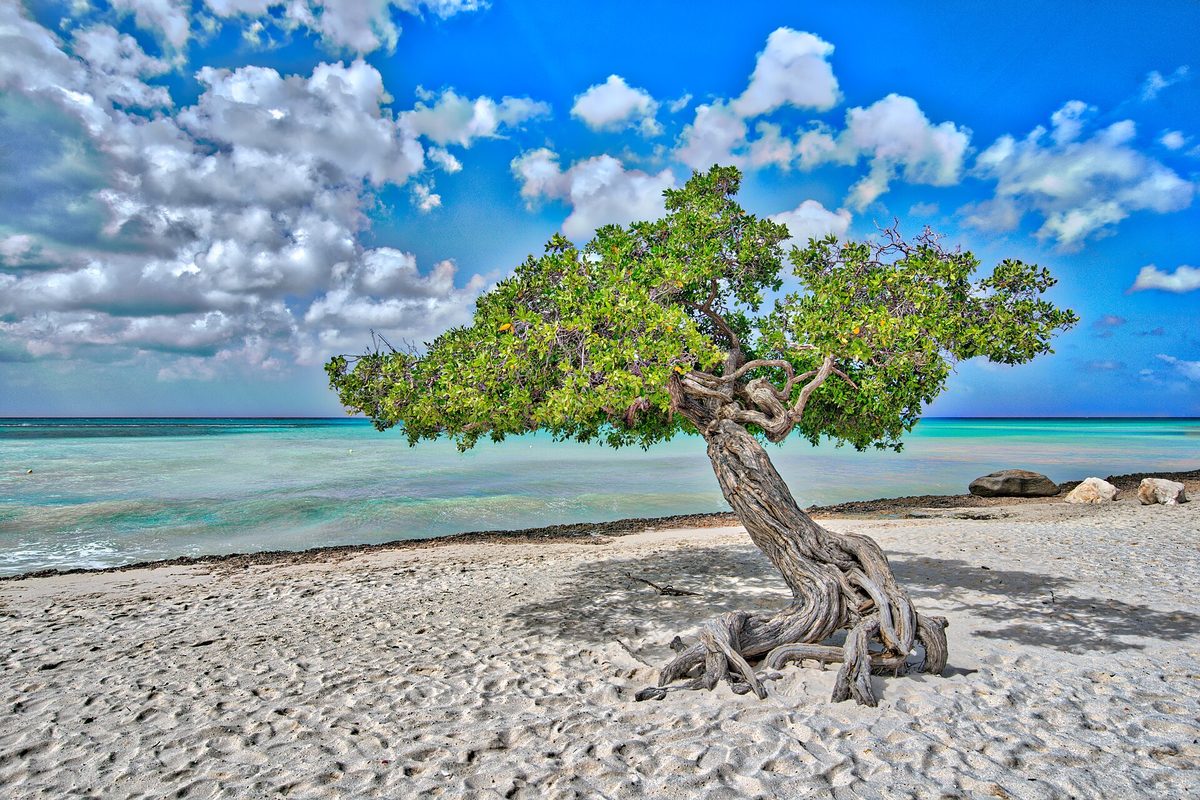
Just south, the low-rise district along Eagle and Manchebo beaches trades Palm Beach’s buzz for space, quiet and some of the island’s most romantic tables. This is dinner-on-the-beach country. Passions on the Beach sets torchlit tables directly on the sand of Eagle Beach — it’s touristy, yes, and worth it once for the sheer atmosphere as the sun drops. Barefoot does upscale seafood with your feet literally in the sand, and Elements at the adults-only Bucuti & Tara is the island’s most sustainability-minded fine-dining room. Eagle Beach itself is regularly rated one of the best of Aruba’s beaches, so you’re pairing a world-class stretch of sand with a world-class dinner. Book these ahead; the good tables go fast. Our guide to restaurants near Eagle Beach covers the casual and breakfast spots along this strip too.
Oranjestad: the capital — authentic and better value
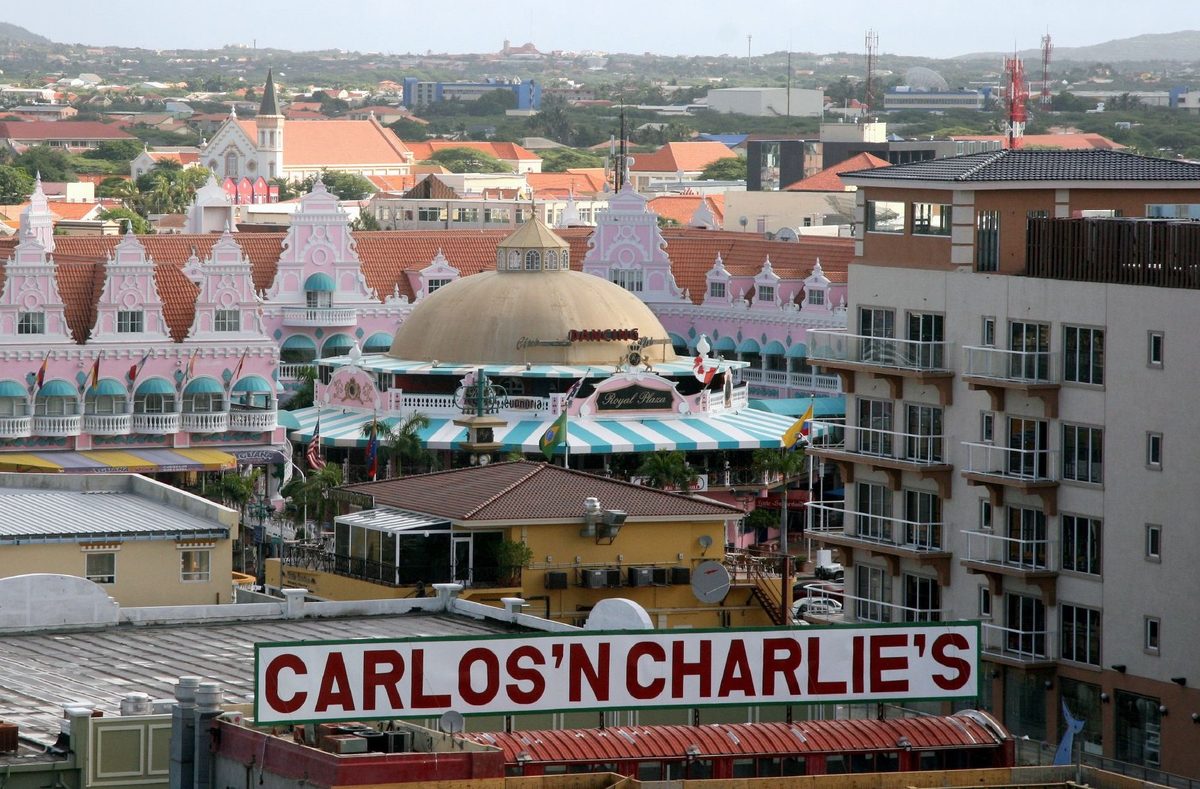
Downtown Oranjestad is where I send people who want to eat like they’re actually in Aruba and not in a resort food court. The capital mixes pastel Dutch colonial buildings, a working marina and the island’s best concentration of value and serious cooking. This is the heart of the search for the best restaurants in Oranjestad: you’ve got the highest-rated table on the island in Ever (an intimate tasting-menu room with Aruba’s top Google rating), Argentine steaks at El Gaucho, which has been grilling since 1977, fine dining inside a genuine 18th-century building at Restaurant anno 1877, and creative Peruvian-leaning cooking at Lima Bistro on the harbor. For local soul food, Wilhelmina has been going since 1948. Crucially, Oranjestad runs roughly 20–30% cheaper than the Palm Beach strip for comparable food, and it’s a 10-minute, cheap taxi ride away. If you’re a cruise passenger, it’s all walkable from the terminal.
Noord: cunucu houses and Aruban tradition
Inland and a bit north, the district of Noord is where several of the island’s most atmospheric traditional restaurants live, often set inside cunucu houses — the old Aruban country homes built of stone and coral. Gasparito serves authentic Aruban cooking and doubles as a local art gallery; The Old Cunucu House has been doing keshi yena and fresh fish in a 150-year-old homestead for decades; and Papiamento plates Caribbean food in a lush garden setting. Madame Janette (named for the local pepper) is the area’s special-occasion Caribbean fine-dining heavyweight. You’ll want a car or a taxi for these, and a reservation is smart.
Savaneta and the south coast: seafood at the source
Drive 20 minutes south to the old fishing village of Savaneta and you reach my favorite eating on the island. This is where the boats come in, and the seafood is correspondingly unbeatable. Two institutions anchor it: Zeerovers, a no-frills dock where you order fresh fish and shrimp by weight, fried, with funchi and plantain, for a fraction of resort prices (cash only, long but fast-moving lines); and Flying Fishbone, the polar opposite in price but unforgettable, with tables set out in the shallow water so the Caribbean laps your ankles between courses. Pinchos and Marina Pirata add more waterfront seafood nearby. You’ll need to drive or taxi here — see our guide to getting around Aruba — but it’s the most worth-it trip on this whole list.
San Nicolas: the island’s gritty, arty food corner
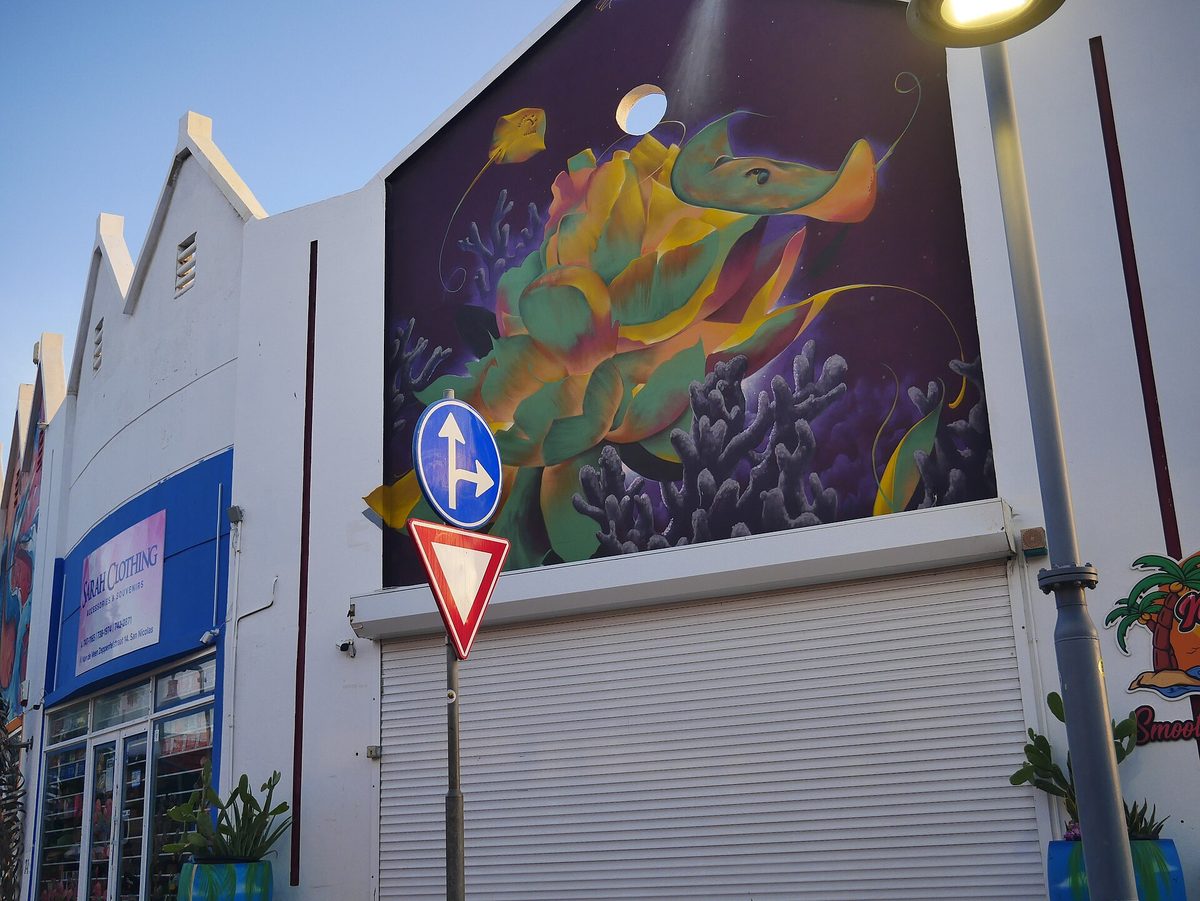
Aruba’s second city, San Nicolas, in the deep south, has reinvented itself as a street-art capital, its walls covered in huge murals. It’s also where you find some of the most honest, cheapest local cooking on the island — spots like Kamini’s Kitchen for goat stew and O’Niel Caribbean Kitchen for local classics. It’s about 40 minutes from Palm Beach, so pair lunch here with a mural walk and the southern beaches to make a day of it. This is real-deal local Aruba, not a tourist set piece.
The best restaurants in Aruba, by the night you want
“What are the best restaurants in Aruba?” is the question I get most, and the honest answer is that it depends entirely on the evening you’re after. A blow-the-budget anniversary dinner and a Tuesday seafood feast are completely different searches. So here’s my shortlist sorted by occasion rather than a meaningless 1-to-30 ranking. For the complete area-by-area list, see our guide to the best restaurants in Aruba.
Best for a special-occasion splurge
Aruba’s fine-dining scene has quietly gotten serious, and it now centers on a cluster of intimate chef’s tables. Ever, in Oranjestad, holds the island’s highest rating and serves a multi-course tasting menu in a tiny room where the chef cooks in front of you. Infini by Urvin Croes, on Eagle Beach, is an eight-course gastronomic experience from one of Aruba’s most celebrated chefs. Carte Blanche seats just 14 around a single oval bar for a theatrical tasting menu, and 2 Fools and a Bull caps the room at a dozen guests with a set menu you book months out. These are reservations-essential, dress-up, $150-and-up nights — and they’re the equal of fine dining anywhere in the Caribbean.
Best for dinner on the beach
If you do one “only-in-Aruba” meal, make it dinner with your feet in or beside the sand. Flying Fishbone in Savaneta is the famous one, with tables actually set in the shallow water. Passions on the Beach lines up torchlit tables on Eagle Beach for sunset. Barefoot, near the airport in Oranjestad, splits the difference with elegant food on a casual beach. Pinchos Grill is a tiny ten-table restaurant built out on a pier over the water in town. And Atardi is the Marriott’s beachfront-on-Palm-Beach affair. The food at these places is good rather than transcendent — you’re paying for the setting, and on the right night it’s absolutely worth it.
Best for fresh seafood
Hunting for the best seafood restaurant in Aruba splits neatly into two camps. For local, dirt-cheap and unforgettable, Zeerovers in Savaneta is the answer — fresh catch, fried, by the pound, eaten at plastic tables over the water. Wacky Wahoo’s near Palm Beach is owned by a local fisherman and is one of the most popular sit-down seafood spots on the island, with huge portions at fair prices. For waterfront seafood with a little more polish, Marina Pirata and The Old Man and the Sea on the south coast, and Driftwood in Oranjestad (a rustic institution since 1980) all deliver. Order whatever’s local and just landed: red snapper, mahi mahi, grouper, wahoo or barracuda.
Best for authentic Aruban food
For the real island cooking — keshi yena, fresh fish creole, goat stew, pan bati — head to the cunucu-house restaurants in Noord (Gasparito, The Old Cunucu House, Papiamento), the historic dining rooms of Oranjestad (Wilhelmina), or the local kitchens of San Nicolas (Kamini’s Kitchen, O’Niel). These are the places that tell you what Aruba actually tastes like, beyond the international hotel menus. I’ll break down exactly what to order in the next section.
Best steakhouses
Aruba takes its beef seriously, a legacy of its strong Venezuelan and Argentine connections. El Gaucho has been the Argentine standard-bearer since 1977 and still serves enormous, perfectly grilled cuts. Steakout and Yemanjá Woodfired Grill in Oranjestad both turn out high-end, wood-fired steaks and seafood, and Texas de Brazil on Palm Beach is the all-you-can-eat churrascaria where gauchos carve skewers tableside until you surrender. These are reliable splurge dinners that aren’t quite chef’s-table prices.
Best for an international craving
Because nearly 100 nationalities live on Aruba, the international cooking is excellent and authentic. For Italian, Lucca Trattoria and Terrazza Italiana both do real handmade pasta and proper pizza; Faro Blanco sits at the foot of the California Lighthouse for Italian with a view. Nusa serves a proper Indonesian rijsttafel, a delicious legacy of Aruba’s Dutch ties. Lima Bistro and Carlitos cover Peruvian ceviche and Latin flavors, and Azar brings Mediterranean mezze to Palm Beach. When you’ve had your fill of fish and stew, this is your release valve.
What to eat in Aruba: the local dishes worth ordering
You can eat Italian and steak anywhere. The whole point of traveling is to taste the place, and Aruban food is a genuinely distinctive mash-up of Dutch, Spanish, Venezuelan, African and Indigenous Caquetío roots, built around fresh fish, corn, cheese and slow-cooked stews. Here’s what to actually order, in roughly the order you’ll meet it through a day.
Keshi yena — the national dish
If you try one thing, make it keshi yena (“stuffed cheese”). It’s a big dome of Gouda or Edam cheese filled with spiced, shredded chicken or beef studded with olives, capers, raisins and a sweet-savory sauce, then baked until it slumps into something gloriously gooey. It dates back to the resourceful days of stuffing the hollowed rinds of imported Dutch cheese, and it tastes like comfort food from a culture you didn’t grow up in but immediately understand. Gasparito, The Old Cunucu House and Papiamento all do excellent versions.

Pastechi — the breakfast and snack hero
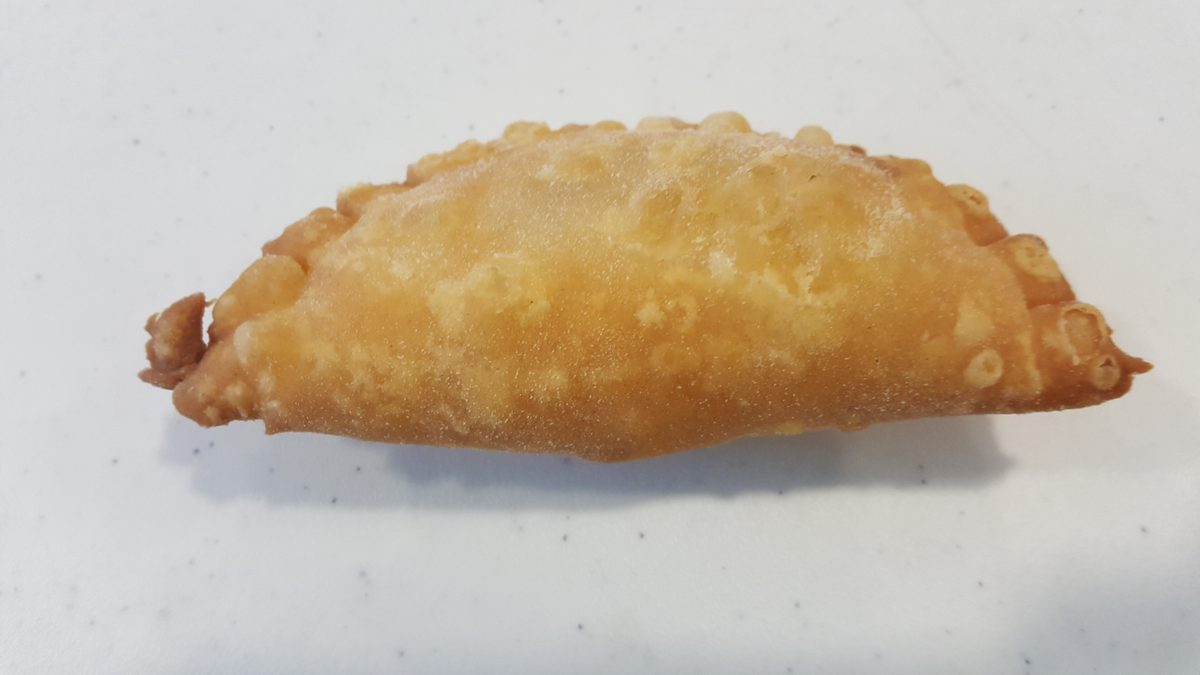
The pastechi is Aruba’s national snack and the breakfast of champions: a crescent of slightly sweet, deep-fried dough stuffed with cheese, spiced beef, chicken, or even Indonesian-style fillings. Locals grab them hot from bakeries and snèks first thing in the morning for a dollar or two. Pastechi House in Oranjestad and Huchada Bakery in Santa Cruz are the classic stops. Do not leave the island without eating at least three. They are also the single best cheap breakfast going.
Fresh fish: pisca hasa and the daily catch
Pisca hasa simply means fried fish — the catch of the day (snapper, grouper, mahi mahi, wahoo) pan-fried and served with pickled onions, plantain and pan bati. It’s the heart of the Zeerovers experience and a staple at every local restaurant. Order it whole or as a fillet, squeeze the lime, and understand why islanders are so proud of their seafood. Fish creole (pisca hasa crioyo), the same fresh fish in a tomato-onion-pepper gravy, is the slightly fancier home-style version.
Stoba and sopi — the stews and soups
For real local soul food, look for stoba (stew) and sopi (soup). Cabrito stoba, a rich goat stew, is the local favorite; carni stoba (beef) and calco stoba (conch) are close behind, all slow-cooked in a tomato-based gravy and served with rice, funchi or pan bati. On the soup side, sopi di pisca (fish), sopi di mondongo (tripe) and sopi di pampuna (a creamy pumpkin soup) show up as daily specials at local kitchens. These are the dishes Aruban grandmothers are judged on.
Funchi and pan bati — the cornmeal sides
Two cornmeal staples accompany almost everything. Funchi is Aruba’s polenta — cornmeal cooked thick, then served creamy, grilled, or cut and fried into funchi fries, which are a fantastic alternative to potato fries. Pan bati is a slightly sweet, fluffy cornmeal flatbread-meets-pancake (the name literally means “beaten bread”) that’s made to soak up stew gravy. Order both at least once; they’re the edible backbone of the cuisine.
Snacks, food trucks and the snèk culture
Aruba loves a snack, and this is also the cheapest, most fun way to eat here. Beyond the pastechi, look for balchi di pisca (fried fish balls), cala (black-eyed-pea fritters), bolita di keshi (fried cheese balls) and, thanks to the Dutch, bitterballen (crispy fried meat-ragout balls) best chased with a cold local Balashi or Chill beer. After dark, the food trucks come out — the cluster near Oranjestad and the Paseo Herencia area in Palm Beach serve everything from fresh fruit smoothies to loaded arepas, ribs and burgers late into the night, usually for $6–12. It’s the best cheap-eats scene on the island.
Dessert and the Aruba Ariba
Finish sweet. Bolo borracho (“drunk cake”) is a rum-soaked sponge; quesillo is the local caramel flan; cocada is a chewy coconut candy; and pan bollo and other bakery cakes fill every local case. To drink, the island’s signature cocktail is the Aruba Ariba — vodka, rum, banana liqueur, fruit juices and a float of the local Coecoei liqueur — invented at the Hilton back in 1963 and now poured at every beach bar at sunset. Wash any of it down with a Balashi, the crisp local lager Arubans call “the national beer.”
Breakfast and brunch in Aruba
Most resorts include or sell a breakfast, but the best breakfast in Aruba is often found off-property. For something local, grab fresh pastechi from a bakery like Huchada or Bright Bakery. For a proper sit-down brunch, Willem’s Dutch Pancakes and the Dutch Pancake House do authentic Dutch pannenkoeken, both sweet and savory, and there’s a cluster of cute cafes around Palm Beach and Eagle Beach doing eggs, smoothie bowls and excellent coffee. Beachfront spots like The West Deck and the casual bar-and-grills open early for an eggs-with-an-ocean-view start to the day. My move: resort coffee on the balcony, then a mid-morning pastechi run.
Cheap eats: where Arubans actually eat
You do not have to spend $50 a head to eat brilliantly here, and the locals certainly don’t. The cheap-eats trinity is simple: the fish shacks (Zeerovers above all), the snèks and bakeries (for pastechi, sandwiches and fritters), and the food trucks after dark. Add the local kitchens of San Nicolas and the daily-special soups at family-run spots in Oranjestad, and you can eat three satisfying local meals a day for what one resort dinner costs. Our guide to cheap eats in Aruba names the specific shacks, trucks and bakeries worth the drive. Lunch is also where even the fancy restaurants get affordable — a midday main at a place that charges $45 at dinner might be $20 at noon. If you’re watching the budget, our Aruba vacation cost guide breaks down how food fits the bigger picture.
Aruba restaurants by type of traveler
Same island, very different dining trips depending on who you’re with. Here’s how I’d steer each.
Couples and honeymooners
This is Aruba’s sweet spot. Book one chef’s-table tasting menu (Ever or Infini), one feet-in-the-water dinner (Flying Fishbone or Passions), and leave the rest loose for beach bars at sunset. The Eagle Beach and Manchebo area is your romantic base. If you’re planning the trip around romance, the dinner-on-the-beach experience belongs on the same list as your top things to do in Aruba.
Families with kids
Palm Beach is the easy answer: walkable, casual, and full of places (MooMba, the beach bars, Texas de Brazil, pizza spots) where kids are welcome and portions are generous. Early dinners around sunset work well, and the food-truck scene is a hit with picky eaters. Many resorts on the strip are genuinely kid-friendly, which dovetails with where to base a family in our where to stay in Aruba guide.
Budget travelers
Lean into the cheap-eats trinity above, eat your big meal at lunch, and use the local supermarkets (there are large ones near Oranjestad and Palm Beach) for breakfast and beach-picnic supplies. A rental car or the cheap Arubus bus opens up Zeerovers and San Nicolas; the logistics are in our getting around Aruba guide.
Cruise passengers
Your ship docks right in Oranjestad, which is the best possible luck for food — the capital’s restaurants, bakeries and the marina are all walkable from the terminal. Grab pastechi, have a local lunch (Wilhelmina, Gostoso or a harbor spot), and you’ve tasted real Aruba without a taxi. If you’ve got a full day, a quick ride to Zeerovers is doable but tight; build it into your day using our Aruba itinerary planner.

All-inclusive guests venturing out
If you’re on an all-inclusive plan, you’ve already paid for meals — but I’d still budget two or three dinners “out” to taste the real island, because no resort buffet matches Zeerovers or a Noord cunucu house. Many Palm Beach resorts also offer dine-around programs with nearby restaurants. Our honest take on the trade-offs is in the Aruba all-inclusive resorts guide.
How to plan your Aruba eating
Here’s the simple framework I use. Pick two or three “destination” dinners you’ll reserve in advance — one fine-dining, one feet-in-the-sand, maybe one traditional Aruban — and book them before you travel if you’re coming in high season. Leave every other meal loose: resort or pastechi breakfasts, casual or local lunches (often your best-value meal), and easy beach-bar or food-truck dinners on the nights you don’t have a reservation. Mix one Savaneta seafood run and one Oranjestad local lunch into the week and you’ll have eaten the whole island. Slot these into the day-by-day flow with our Aruba itinerary and base yourself using the where to stay in Aruba guide, and the food takes care of itself.
A few honest mistakes to avoid
After enough trips, the same avoidable missteps stand out. First, don’t eat every dinner at your resort — you’re on an island with 200+ restaurants and some of the best are a $12 taxi away. Second, don’t assume you can walk into the headline spots in February; the feet-in-the-water tables and chef’s tables genuinely sell out weeks ahead in high season. Third, don’t double-tip without checking for a service charge already on the bill. Fourth, don’t skip the south — people spend a week on the Palm Beach strip and never taste the fishing-village seafood that locals would tell you is the real Aruba. And fifth, don’t over-order at Zeerovers on the first round; the fish is sold by weight and it adds up fast, so start small and go back. None of these are disasters, but fixing them turns a good eating trip into a great one.
Frequently asked questions
What are the best restaurants in Aruba?
It depends on the night. For fine dining, Ever and Infini by Urvin Croes lead the island. For the iconic feet-in-the-water dinner, it’s Flying Fishbone or Passions on the Beach. For unbeatable cheap local seafood, Zeerovers in Savaneta. And for traditional Aruban food, the cunucu-house restaurants in Noord like Gasparito. Pick by occasion rather than chasing a single “best.”
What food is Aruba known for?
Aruba’s national dish is keshi yena, spiced meat baked inside a shell of Gouda or Edam cheese. The island is also known for ultra-fresh fried fish (pisca hasa), the pastechi snack, cornmeal sides funchi and pan bati, hearty stoba (stews) and the Aruba Ariba cocktail. The cuisine blends Dutch, Spanish, Venezuelan, African and Indigenous influences into something distinctly Aruban.
Do you tip at restaurants in Aruba?
Yes, but check the bill first. Many restaurants add a 10–15% service charge that’s pooled among staff and isn’t a personal tip. If that charge is present, an extra 5–10% in cash is a nice thank-you to your server. If there’s no service charge, tip the standard 15–20%. US dollars are accepted everywhere for tips at the fixed exchange rate.
Is food expensive in Aruba?
It can be. Aruba is one of the pricier Caribbean islands for dining: mid-range mains run $25–45 and beachfront or fine dining climbs past $60. But the island also has genuinely cheap local food — fish shacks, bakeries, snèks and food trucks where you can eat very well for $8–15. Mixing a few splurges with lots of local meals keeps costs reasonable.
Do I need reservations at Aruba restaurants?
For casual and mid-range places, usually not. For the marquee restaurants — the feet-in-the-water tables, the romantic beach spots and the chef’s tables — absolutely, and weeks ahead during high season (mid-December to April). Off-season is more forgiving. If a restaurant is on your must-do list, book it before you fly.
What is the dress code for restaurants in Aruba?
Relaxed but tidy. Daytime is beach casual. For dinner, “resort casual” covers almost everywhere: a sundress, or a collared shirt with nice shorts or trousers. A few fine-dining rooms ask men for long trousers and closed shoes, so confirm when booking. You’ll rarely if ever need a jacket and tie.
Where do locals eat in Aruba?
Away from the resort strip. Locals favor the fish shacks of Savaneta (Zeerovers above all), the bakeries and snèks for pastechi and fritters, the family kitchens of San Nicolas and Oranjestad, and the after-dark food trucks. Daily-special soups and stews at small local restaurants are where you’ll see the most Arubans and the fewest tourists.
What currency do Aruba restaurants accept?
The US dollar is accepted virtually everywhere alongside the local Aruban florin, and major credit cards are widely taken. You rarely need to exchange money as an American visitor. Carry some small US bills for tips, food trucks and cash-only spots like Zeerovers, where cards aren’t accepted.
Can you have dinner on the beach in Aruba?
Yes — it’s one of the island’s signature experiences. Flying Fishbone in Savaneta sets tables in the shallow water, and Passions on the Beach and Barefoot put torchlit tables on the sand at Eagle Beach. These book up fast, especially for sunset seatings, so reserve ahead and ask specifically for a table timed to sundown.
Where is the best breakfast in Aruba?
For local flavor, fresh pastechi from a bakery like Huchada or Bright Bakery is the classic Aruban breakfast. For a sit-down meal, Willem’s Dutch Pancakes and the Dutch Pancake House do authentic Dutch pannenkoeken, and the cafes around Palm Beach and Eagle Beach serve eggs, bowls and good coffee, some with an ocean view.
Is the tap water safe to drink in Aruba?
Yes. Aruba’s tap water is desalinated seawater, held to high standards and perfectly safe and pleasant to drink. You can confidently skip bottled water at restaurants and refill your own bottle, which saves money and plastic over a week on the island.
Final thoughts
The travelers who eat best in Aruba are the ones who treat the island as more than the strip in front of their hotel. Yes, book the splashy beach dinner and the chef’s table — they’re worth it. But the meal you’ll still be talking about a year later is just as likely to be a paper plate of fried snapper at a Savaneta dock, or a hot pastechi eaten in a bakery doorway at 8am. Aruba restaurants reward a little curiosity and a short drive more than almost anywhere I’ve eaten. Build a couple of reservations into your trip, then leave room to wander, follow the food trucks, and order the thing you can’t pronounce. Have a wonderful trip — and save room for the keshi yena.
Photo credits
All images via Wikimedia Commons. High-rise hotels and the Palm Beach restaurant strip at night — Rarends297 (CC0). White sand and the divi-divi tree at Eagle Beach — sbmeaper1 (CC0). Colorful colonial buildings and Carlos’n Charlie’s in Oranjestad — gailf548 / KimChee (CC BY 2.0). Keshi yena, Aruba’s national dish — Ricardo Caputto / La Cocina de Caputto (CC BY 3.0). A freshly fried pastechi — Ecritures (CC BY-SA 4.0). Street-art murals in San Nicolas — Ginelly.Q (CC0). The marina waterfront in Oranjestad — Chris Favero (CC BY-SA 2.0).