By the ArubaTourism.org team — Last updated July 2026
Here is something the brochures quietly skip: not every beach in Aruba is safe to swim. Drive out to the wild northeast shore and you will meet pounding surf, hidden rip currents, and weathered signs warning you to stay out of the water. Yet fifteen minutes away, on the island’s sheltered side, the sea goes as flat and clear as a hotel pool. That split personality is exactly why it pays to know which are the best beaches in Aruba for swimming before you spread your towel — it is the difference between a blissful float and a frightening afternoon. The reassuring part: the calm, swimmable bays are also the famous ones, and there are more of them than most first-timers expect.
The short answer: the calmest, most swimmable beaches sit on Aruba’s protected west and south coasts. Baby Beach and Mangel Halto offer shallow, kid-safe water; Eagle, Palm, and Manchebo deliver classic wide-sand swimming; and Boca Catalina, Arashi, and Malmok are calm coves perfect for a snorkel-swim. Steer clear of the windward east and north coasts, where strong currents make swimming genuinely dangerous.
This guide ranks the gentle bays by who they suit best — toddlers, couples, snorkelers, cruise-day visitors — tells you where the water is too rough to enter, and folds in the practical stuff (water temperature, lifeguards, how to reach the quieter beaches) so you can match the right shoreline to your group. It is a companion to our full complete guide to Aruba’s beaches; here we focus only on calm, swimmable water.
The best beaches in Aruba for swimming, at a glance
Use this table to find your match fast. “Entry” describes how you get into the water; “coast” tells you roughly where the beach sits, which is the single biggest clue to how calm it will be.
Most of the calm-water beaches sit in front of the resort strip, which is why so many parents book a family all-inclusive in Aruba and simply walk out to the sand.
| Beach | Coast / area | Water character | Best for | Entry |
|---|---|---|---|---|
| Baby Beach | Southeast tip | Shallow, lagoon-calm | Toddlers, nervous swimmers | Gentle sandy walk-in |
| Mangel Halto | South coast | Calm, clear, reef-sheltered | Snorkelers, older kids | Steps/dock to sand |
| Palm Beach | Northwest resort strip | Calm, shallow, patrolled | Families who want amenities | Gentle sandy walk-in |
| Eagle Beach | West coast | Calm with a gentle slope | Classic swim, room to spread out | Soft sandy walk-in |
| Manchebo Beach | West (south of Eagle) | Calm, wide, uncrowded | Couples, quiet swims | Soft sandy walk-in |
| Boca Catalina | Northwest cove | Very calm and clear | Snorkel-swims from shore | Sandy with some rocks |
| Arashi Beach | North tip | Calm, clear, breezier | Snorkeling and sunsets | Soft sandy walk-in |
| Malmok Beach | Northwest | Shallow, clear, calm | Snorkelers (rocky entry) | Rocky — water shoes help |
| Flamingo Beach | Renaissance Island | Calm, shallow | Adults-only escape | Sandy walk-in (day pass) |
Why one side of Aruba is calm and the other is wild
Aruba is small — about 20 miles long — but its two coastlines could belong to different islands. The reason is wind. Steady easterly trade winds blow across the island almost every day of the year, which is wonderful for keeping the heat comfortable and terrible for swimming on the side that faces them. The east and north shores are the windward coast: open to the Atlantic swell, raked by those trades, and lined with crashing waves, churning currents, and dramatic rock formations. Gorgeous for photos. Dangerous for swimming.
The west and south shores are the leeward coast, tucked in the island’s wind shadow. The Aruba Tourism Authority puts it plainly: the west and south coasts are calm and protected, which makes them perfect for swimming and snorkeling, while the east and north coasts face open sea with stronger winds and crashing waves. Aruba has more than 20 public beaches — and every single one is public, so you are free to roam — but the swimmable ones cluster almost entirely on that protected leeward stretch from the southeast tip up through the northwest point.
Two practical takeaways flow from this. First, when in doubt, choose a beach on the west or south coast. Second, even on the calm side, mornings are usually glassier than afternoons, because the trade winds tend to strengthen as the day heats up. If you want the most mirror-flat water for a toddler or a hesitant swimmer, go early.
The calmest, shallowest beaches for little kids
If you are traveling with toddlers or anyone uneasy in the water, start here. These three beaches share one quality: the sea stays shallow and tame far from shore, so small bodies can wade and float without waves bowling them over.
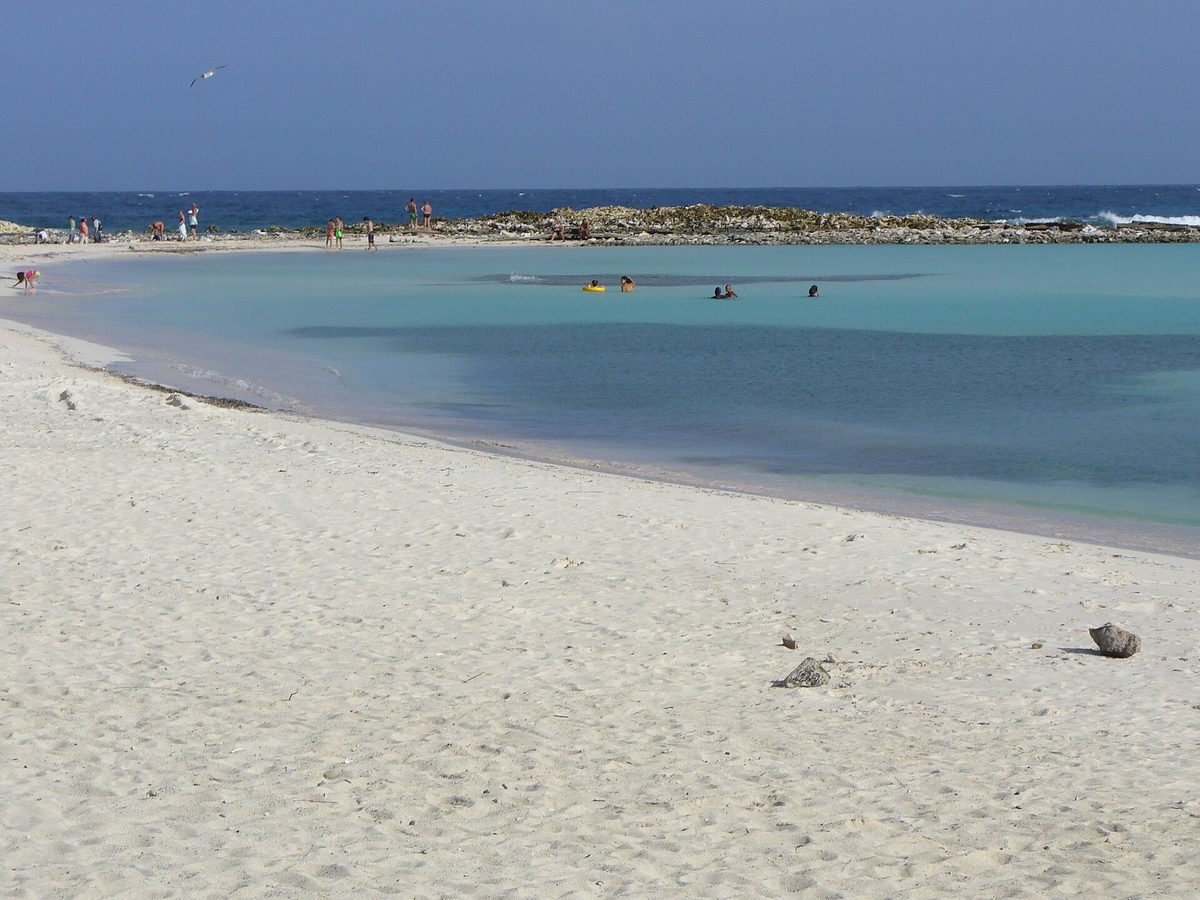
Baby Beach — the gold standard for calm water
Ask any Aruban parent where to take a two-year-old and they will say Baby Beach, and the name is not an accident. This crescent-shaped cove on the island’s southeast tip is wrapped by a natural reef and rock barrier that turns it into an enormous, shin-to-waist-deep wading pool. The water stays waist-deep a remarkably long way out, and the lagoon stays genuinely calm even on days when the trade winds are kicking up chop everywhere else on the island. There is simply nowhere better in Aruba for a child’s first ocean swim, or for an adult who would rather stand and chat than fight the surf.
Baby Beach sits near San Nicolas, roughly a 40-minute drive from the Palm Beach hotel strip, so it takes commitment to reach — but that distance is also why it never feels as packed as the resort beaches. Rent palapa shade and chairs near the entrance, grab a plate at Big Mama Grill overlooking the bay, and snorkel the reef edge on the cove’s far side where the water deepens. Note there is no full-time lifeguard, so keep your usual eyes on the kids. For everything else family-related, our guide to visiting Aruba with kids covers strollers, sunscreen, and rainy-day backups, and the dedicated Baby Beach guide has the full logistics.
Mangel Halto — calm water with a wilder, prettier setting
Mangel Halto is the local favorite that most first-time visitors never find. Tucked along the south coast and fringed by mangroves, it offers a band of shallow, glass-clear water near the shore that is calm enough for older kids, then drops into a deeper channel that rewards confident snorkelers with one of the island’s best shore reefs. You typically enter down a short set of wooden steps or off a small dock, then it is soft sand and warm, still water. Because it is off the main tourist track, you often share it with only a handful of families and a few divers. Bring your own shade and snacks — there are no big amenities here, which is part of the charm. The full Mangel Halto guide maps the entry points and the best snorkel line.
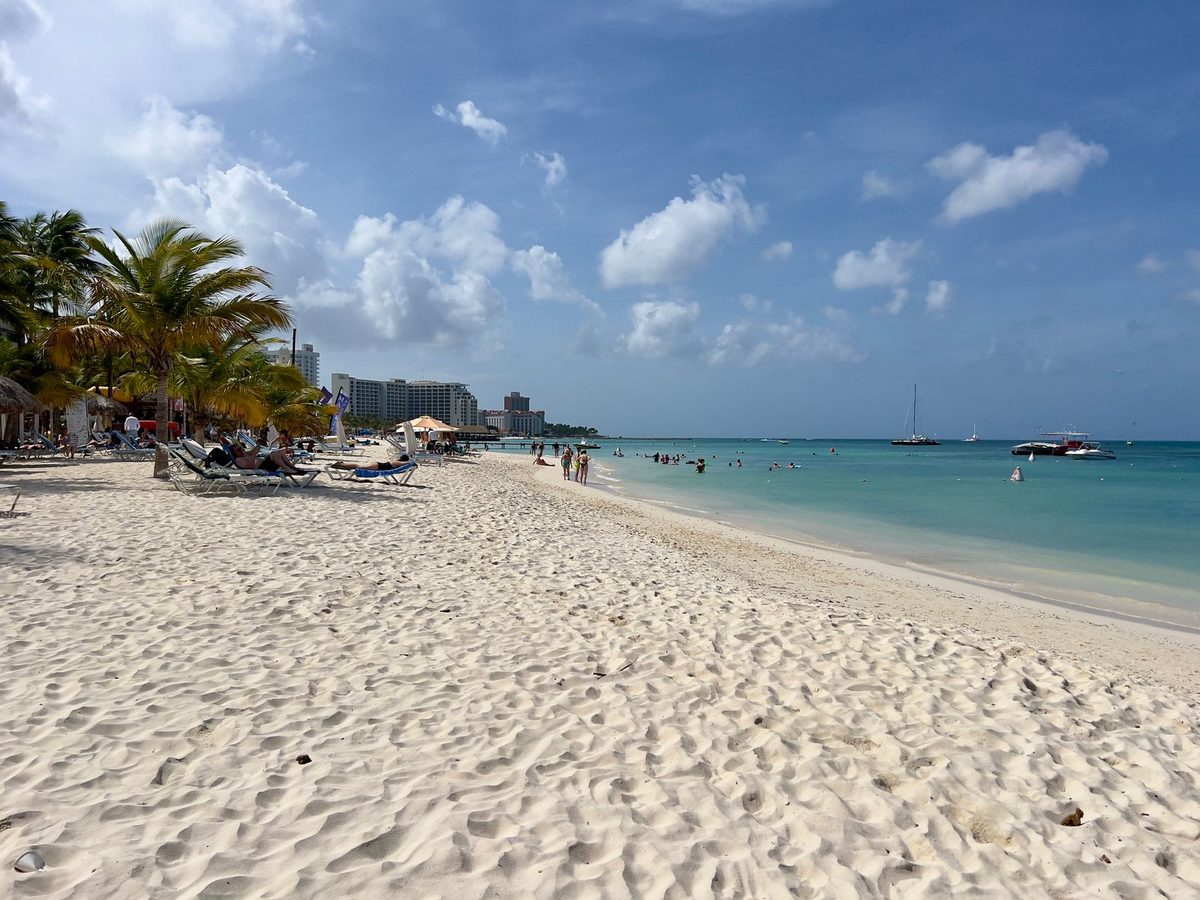
Palm Beach — shallow, gentle, and the most patrolled on the island
When families want calm water and every convenience within a hundred steps, Palm Beach delivers. The entry is shallow and gentle, the waves rarely amount to more than a ripple, and — crucially — Palm Beach is the most maintained and patrolled stretch in Aruba, with cordoned swimming sections and the closest thing the island has to a regular lifeguard presence. Behind the sand sits a wall of high-rise resorts, restaurants, water-sports kiosks, and shops, so you are never more than a few minutes from a bathroom, a frozen drink, or a rented stand-up paddleboard. The trade-off is crowds and boat traffic; this is the island’s busiest beach by far. If you are choosing a base, our guide to which Aruba neighborhood suits you weighs the buzzy Palm Beach strip against quieter alternatives, and the Palm Beach guide covers the layout end to end.
Iconic wide-sand beaches for an easy swim
These are the postcard beaches — broad ribbons of powder-soft sand with calm, clear water and enough room to find your own patch even in high season. The water is a touch deeper than Baby Beach but still gentle, with a slow, swimmer-friendly slope.
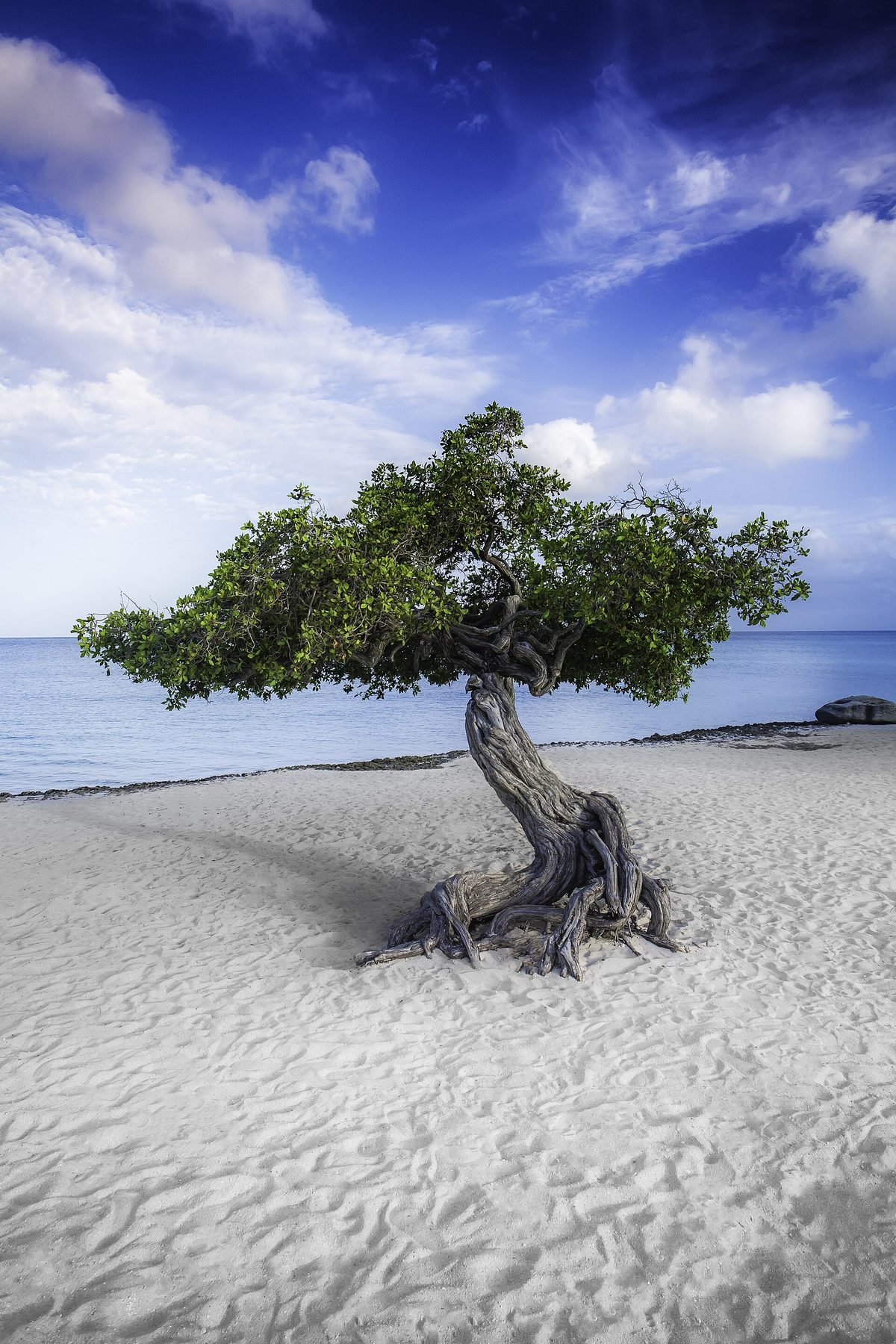
Eagle Beach — calm water and arguably the best sand in the Caribbean
Eagle Beach earns its reputation. It was voted the #3 “Best of the Best” beach in the Caribbean in the 2026 Tripadvisor Travelers’ Choice Awards, and standing on its impossibly wide apron of white sand, you understand why. The water is calm, clear, and slopes gently enough that you can wade out a long way before it reaches your shoulders — ideal for a relaxed swim or a long float on your back beneath the famous wind-bent fofoti trees. Because the beach is so deep and broad, it never feels as crowded as Palm Beach even when busy, and there is space to set up well away from the next group. Read the full Eagle Beach guide for parking, palapas, and the best photo spots.
Manchebo Beach — the wide, quiet one for couples
Just south of Eagle, Manchebo Beach is the widest single stretch of sand on the island and the one I point couples toward when they want calm water without a crowd. The same gentle west-coast conditions apply — soft entry, mellow water, slow slope — but the low-rise resorts behind it keep the energy hushed and grown-up. It is a wonderful place for a sunrise swim or a sunset wade, and the sand is so deep you can always find solitude. The Manchebo Beach guide has the details. For a couples’ trip built around quiet beaches like this, our Aruba honeymoon guide is a good next read.
Druif and Surfside — calm beaches close to town
Two more west-coast options round out the wide-sand category. Druif Beach, between Manchebo and the low-rise resort area, has the same calm, swimmable water and a slightly more local feel. Surfside Beach, just outside Oranjestad near the cruise port, is the most convenient calm swim if you are short on time or arriving by ship — the water is flat and the sand is a quick taxi from downtown. Neither has the wow factor of Eagle, but both are safe, gentle, and easy to reach.
Calm coves for swimmers who want to snorkel
These northwest coves trade the wide-open sand of Eagle and Palm for something more intimate: small, sheltered bays where the reef starts just a few fin-kicks from shore. The water is calm and clear, which makes them as good for a gentle swim as for a mask-and-snorkel drift.
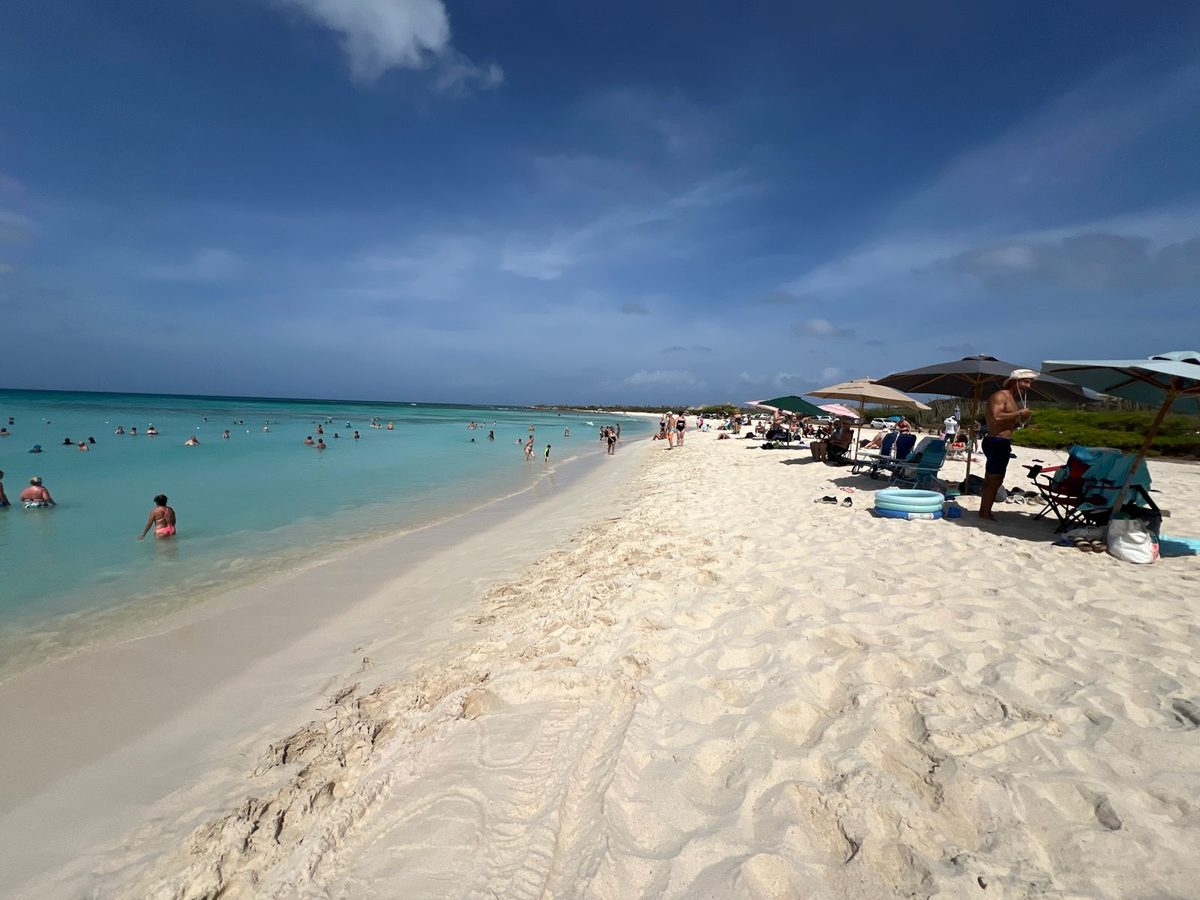
Boca Catalina — the easiest shore snorkel on the island
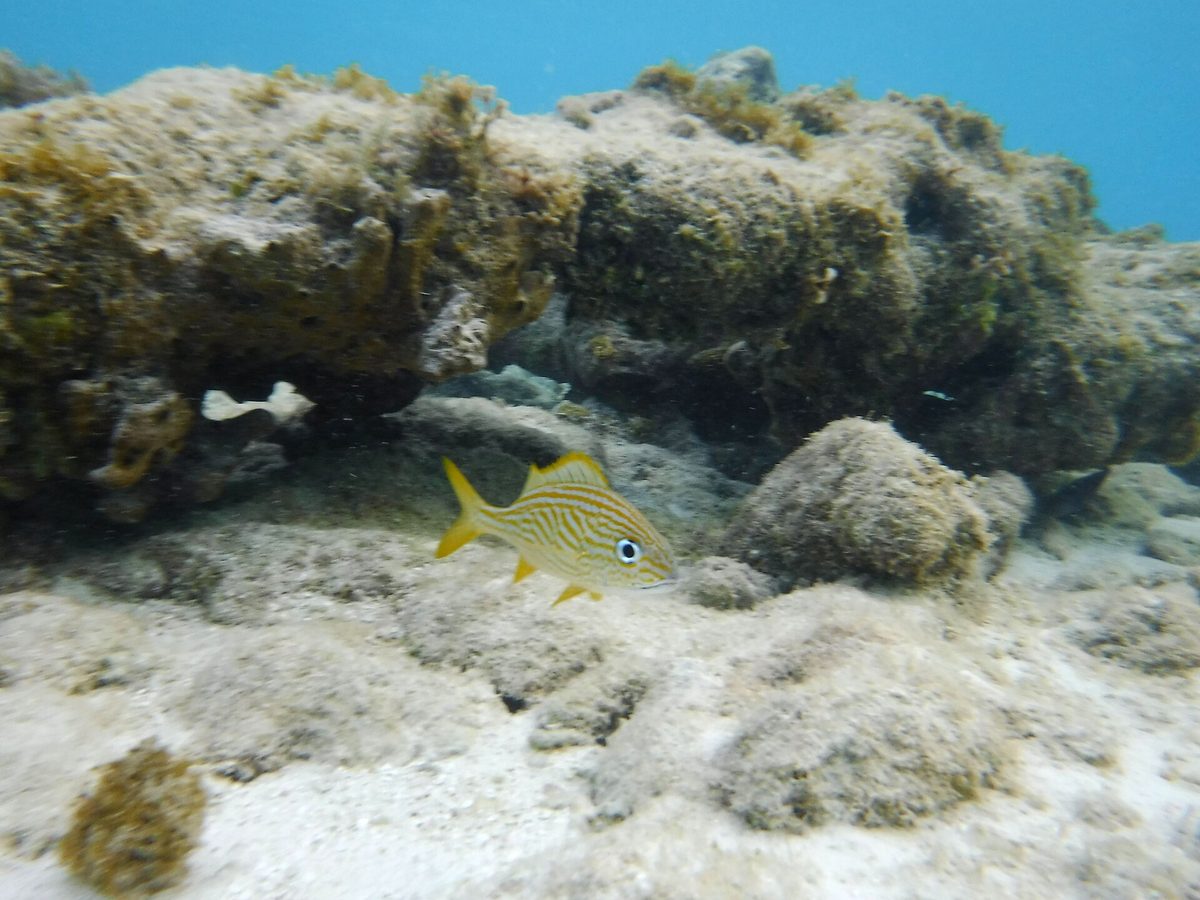
Boca Catalina is a small, horseshoe-shaped cove in the Malmok area, and it is my first pick for travelers who want to actually swim with fish without booking a boat. The water is exceptionally calm and clear, and schools of sergeant majors and other reef fish hang around the rocks just offshore, so you can wade in, float out a few meters, and be surrounded by color. The bay is sheltered enough for a relaxed swim even if you leave the snorkel gear at the hotel. It is small and parking is limited, so arrive earlier in the day. Pair the Boca Catalina guide with our overview of Aruba water sports if you want to add a guided snorkel or dive.
Arashi Beach — calm, clear, and a sunset finish
At the island’s far northwest tip, near the California Lighthouse, Arashi Beach combines soft white sand with calm, clear water and a reef close to shore — one of the best beginner snorkeling beaches in the Caribbean. It is a touch breezier than the resort beaches because of its exposed position, but the water itself stays gentle and the visibility is excellent. Locals love it for swimming by day and for its quiet, glowing sunsets, so it makes a natural last stop on a beach-hopping afternoon. The Arashi Beach guide covers the palapas and parking.
Malmok Beach — clear water, but mind the rocky entry
Malmok is a narrow strip with shallow, crystal-clear water full of sergeant majors, wrasses, and angelfish — fantastic for snorkeling and calm enough for an easy swim. The one caveat is the entry: it is rocky rather than sandy in places, so a pair of water shoes turns a wince into a non-issue. Once you are in, the water is calm and the reef life is excellent. It is also the launch point for snorkeling the nearby Antilla shipwreck on boat tours. See the Malmok Beach guide for the easiest spots to get in.
Tres Trapi — calm water and resident sea turtles
Just north of Malmok, Tres Trapi (Papiamento for “three steps,” after the concrete steps that lead into the sea) is a calm, clear snorkeling spot famous for green sea turtle sightings. There are no amenities and the steps can be slick, but the water is gentle and the turtle encounters are special. Go early, tread lightly around the wildlife, and never touch or chase the turtles.
Quiet, grown-up calm water for couples and adults
Want calm water with the volume turned down? These spots skew quiet and adult.
Flamingo Beach — calm, shallow, and adults-only
Flamingo Beach sits on Renaissance Island, the private island a short boat shuttle from the Renaissance resort in Oranjestad, and its shallow, dead-calm water is the backdrop to those famous photos of pink flamingos wandering the sand. The adults-only side is reserved for guests aged 18 and up, which keeps it serene. If you are not staying at the Renaissance, day passes are sometimes sold to the public depending on availability and season (expect a fee in the region of $125 or more per person, so check ahead). The water is gentle enough for a long, lazy float — about as relaxing as swimming in Aruba gets. The Flamingo Beach guide explains how access works.
Rodgers Beach — the calm local secret next to Baby Beach
Right beside Baby Beach on the southern tip, Rodgers Beach shares the same protected, shallow, calm water but draws a fraction of the crowd. It has a genuine local feel — you will see Aruban families here on weekends — and a refreshingly low-key atmosphere. If Baby Beach is busy, simply walk over. There are no major amenities, so pack what you need.
Where you should not swim in Aruba
This is the part the glossy listicles leave out, and it matters more than any “best of” ranking. Aruba’s east and north coasts — the windward side — are beautiful and genuinely dangerous for swimming. Powerful waves, strong undertows, and rip currents are the norm, and several of these beaches have a sobering safety history. Treat the following as look-but-don’t-swim:
- Boca Grandi — a kitesurfing and windsurfing beach on the east coast with strong, steady wind and a powerful current. Great for watching the kites; not for swimming.
- Andicuri, Dos Playa, and Boca Prins — dramatic surf beaches inside and around Arikok National Park, beloved by photographers and experienced bodyboarders but riddled with rip currents.
- Wariruri and Black Stone Beach — rugged northern shores with crashing waves and no safe entry.
- Boca Grandi to Grapefield — the whole exposed eastern stretch reads “scenic,” not “swimmable.”
The one exception worth a special trip is the Natural Pool (Conchi) inside Arikok, a rock-rimmed tidal pool where you can float safely while waves explode on the rocks around you — but you reach it only by 4×4, horseback, or a guided tour, never by simply swimming off the coast. If a beach on the wild side has no other swimmers and the water looks angry, trust that and stay out. When in doubt, drive back to the leeward coast.
How to pick your calm beach by traveler type
If you only remember one thing, let it be this quick match:
- Toddlers and first-time swimmers: Baby Beach, then Palm Beach for the amenities and patrols.
- Couples wanting quiet: Manchebo or Eagle in the early morning; Flamingo Beach for a splurge.
- Snorkelers who want to swim too: Boca Catalina and Arashi (sandy), Mangel Halto and Malmok (a little more effort, more reward).
- Cruise-ship day-trippers: Surfside or Eagle Beach — both calm and close to the port.
- Strong swimmers who want room: Eagle and Manchebo, where the wide, gently sloping sand lets you swim parallel to shore for ages.
Practical tips for swimming in Aruba
Water temperature and the best time of day
Good news for the cold-averse: Aruba’s sea is warm year-round. Water temperatures hover around 79°F (26°C) at their coolest in January and February and climb to about 84°F (29°C) by September and October, so you will never need more than a swimsuit. The bigger variable is wind, not temperature. Because the trade winds usually freshen through the day, the calmest, glassiest water is almost always in the morning. For toddlers and nervous swimmers, aim to be in the water before lunch. For more on seasonal patterns, see our guide to the best time to visit Aruba.
Lifeguards and staying safe
Be realistic about supervision: most Aruban beaches do not have full-time lifeguards. Palm Beach is the most patrolled and has cordoned swim zones, and the government has been working toward a wider lifeguard program, but on the majority of beaches you are responsible for your own group. A few sensible habits cover almost every risk: swim on the calm west or south coast, keep children within arm’s reach, watch for boat and jet-ski traffic near Palm Beach (stay inside any marked swim area), wear water shoes on rocky entries like Malmok, and if you ever feel pulled sideways or out, swim parallel to the shore rather than fighting straight back in. Reef-safe sunscreen protects both you and the coral.
Getting to the quieter beaches
Palm, Eagle, Manchebo, and Surfside are easy to reach on foot, by bus, or by a short taxi from the main hotel areas. The calmest beaches for kids, though — Baby Beach, Mangel Halto, and Rodgers — are down on the south and southeast coast, and for those a rental car pays for itself in freedom. The drive to Baby Beach runs about 40 minutes from Palm Beach, and the road is straightforward. Our guide to getting to and around Aruba breaks down car rental, buses, and taxis. If you would rather not drive, several island tours and beach-hopping excursions include the southern beaches.
What to pack and book ahead
For a calm-water beach day you want reef-safe sunscreen, water shoes (essential for Malmok and Tres Trapi, handy elsewhere), your own snorkel gear if you have it, and shade — public palapas at the popular beaches fill early, so arrive before mid-morning or bring an umbrella. Nothing needs booking in advance except Renaissance Island day passes, which sell out, and any guided snorkel trips.
Frequently asked questions
Which beach in Aruba has the calmest water?
Baby Beach, on the island’s southeast tip, has the calmest water in Aruba. A natural reef and rock barrier wrap it into a shallow, lagoon-like cove that stays waist-deep far from shore and remains tranquil even when trade winds stir up chop elsewhere, making it the top pick for toddlers and nervous swimmers.
Are the beaches in Aruba good for swimming?
The beaches on Aruba’s west and south coasts are excellent for swimming — calm, clear, warm, and gently sloping. The east and north coasts are a different story: strong waves and rip currents make them unsafe to swim. As long as you stick to the leeward (west/south) side, you will find some of the easiest swimming in the Caribbean.
Which side of Aruba has the calm water?
The west and south coasts. They sit in the island’s wind shadow, sheltered from the easterly trade winds, so the water stays calm and protected. The east and north coasts face the open sea and the full force of the wind, producing dramatic but dangerous surf. Choose west or south whenever you plan to swim.
What is the best beach in Aruba for toddlers?
Baby Beach is the clear winner for toddlers thanks to its shallow, reef-protected lagoon. For families who also want restaurants, restrooms, and the island’s most patrolled water, Palm Beach is the runner-up. Both keep waves to a minimum so small children can wade and splash safely.
Can you swim at Eagle Beach and Palm Beach?
Yes. Both are on the calm west coast with gentle, gradually deepening water that is ideal for swimming. Eagle Beach is wider and more relaxed; Palm Beach is busier but has more amenities and the closest thing to lifeguard coverage on the island. You can swim comfortably at either.
Are there lifeguards on Aruba’s beaches?
Only at a few. Palm Beach is the most patrolled and has marked swim zones, and a wider lifeguard program is in development, but most Aruban beaches have no full-time lifeguard. Supervise children closely, stay within any marked areas, and pick calm west- or south-coast beaches.
Where can I snorkel right from the beach?
Boca Catalina, Arashi, Malmok, Mangel Halto, and Tres Trapi all have reefs close enough to reach by swimming out a few meters from shore. Boca Catalina and Arashi have the easiest sandy entries; Malmok and Tres Trapi reward you with great fish and turtles but have rockier access, so bring water shoes.
Is the water cold in Aruba?
No. Aruba’s sea stays warm all year, ranging from about 79°F (26°C) in winter to 84°F (29°C) in early autumn. You will never need a wetsuit — just a swimsuit and sunscreen.
Final thoughts
Aruba makes swimming almost foolproof, as long as you read the island correctly. Keep to the calm, protected west and south coasts and you have your pick of shallow lagoons, wide-sand classics, and clear little snorkel coves; wander to the windswept east and you trade a safe swim for a great photo. Match the beach to your crew — Baby Beach or Palm for the kids, Manchebo or Eagle for a peaceful float, Boca Catalina or Arashi for fish — go in the calmer morning hours, and you will understand why people come back to this island year after year. For the bigger picture, our complete Aruba beaches guide covers every shore on the island, calm and wild alike.
Photo credits
All images are freely licensed. Credits below; please retain attribution if you reuse them.
- Baby Beach — Dje9537459, CC0 / public domain, via Wikimedia Commons
- Palm Beach — Kwihi, CC BY 4.0, via Wikimedia Commons
- Eagle Beach (fofoti tree) — Jason Boldero, CC BY 2.0, via Wikimedia Commons
- Arashi Beach — Kwihi, CC BY 4.0, via Wikimedia Commons
- Mangel Halto — Ginelly.Q, CC0, via Wikimedia Commons