By the ArubaTourism.org team — Last updated June 2026
Here is the thing nobody mentions before you go chasing that photo: flamingos do not wander wild across the island’s coastline. You can walk every stretch of sand from Baby Beach to the California Lighthouse and never see a single pink feather. The flamingos everyone flies here for live in exactly one place: Flamingo Beach Aruba, tucked on a private island you can only reach by boat. I have sent enough friends down the wrong rabbit hole on this to want to set it straight from the first line.
So before you build a whole day around it, let’s get the logistics, the prices, and the morning-of strategy right. Visiting is absolutely worth it — it is one of the most photographed spots in the Caribbean for a reason — but access is gated, day passes are genuinely hard to grab, and there are four other ways onto the island that almost nobody talks about.
The short answer: Flamingo Beach sits on Renaissance Island, a private 40-acre island owned by the Renaissance Wind Creek Aruba Resort, just offshore from Oranjestad. You reach it on the resort’s free water taxi — but only if you are a hotel guest, hold a day pass, or have booked a spa treatment or beach dinner. The famous wild-roaming flamingos live on the adults-only side.
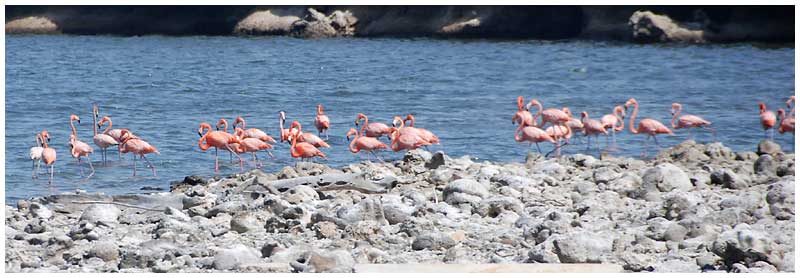
The five ways to visit Flamingo Beach (at a glance)
There is no public ferry and no “just show up” option — the island is private, and the only boat is the resort’s. But “you have to stay at the hotel” is a myth too. Here are all five legitimate ways onto Renaissance Island, cheapest realistic option first, with rough 2026 pricing. Prices change often, so treat these as ballpark and confirm before you book.
| Way in | Rough cost (2026) | Guarantees a spot? | Best for |
|---|---|---|---|
| Stay at the Renaissance | From ~$230+/night (access free for guests) | Yes — unlimited during your stay | Couples, multi-visit, peace of mind |
| Day pass | ~$130 + tax per adult; ~$62.50 child 6–12; under 5 free | No — sells out fast | Day-trippers who can pounce Saturday 9am |
| Okeanos Spa treatment | From ~$160 per person (+$25 if not a hotel guest) | Yes — your appointment is your access | A relaxed, splurge-y morning or sunset |
| Dinner Under the Stars (Wed) | ~$90 adult / ~$40 child + 17% service | Yes — reserved seating | A romantic evening, not a beach day |
| One paid night, then visit | Cost of one room night | Yes — and often cheaper than two day passes | The savvy workaround for two people |
I will break each of these down below, because the differences matter a lot depending on whether you are a couple on a honeymoon in Aruba, a family traveling with kids, or a cruise passenger with one precious day in port. First, the question I get asked most: why are there flamingos here at all?
Where is Flamingo Beach, and why are there flamingos in Aruba?
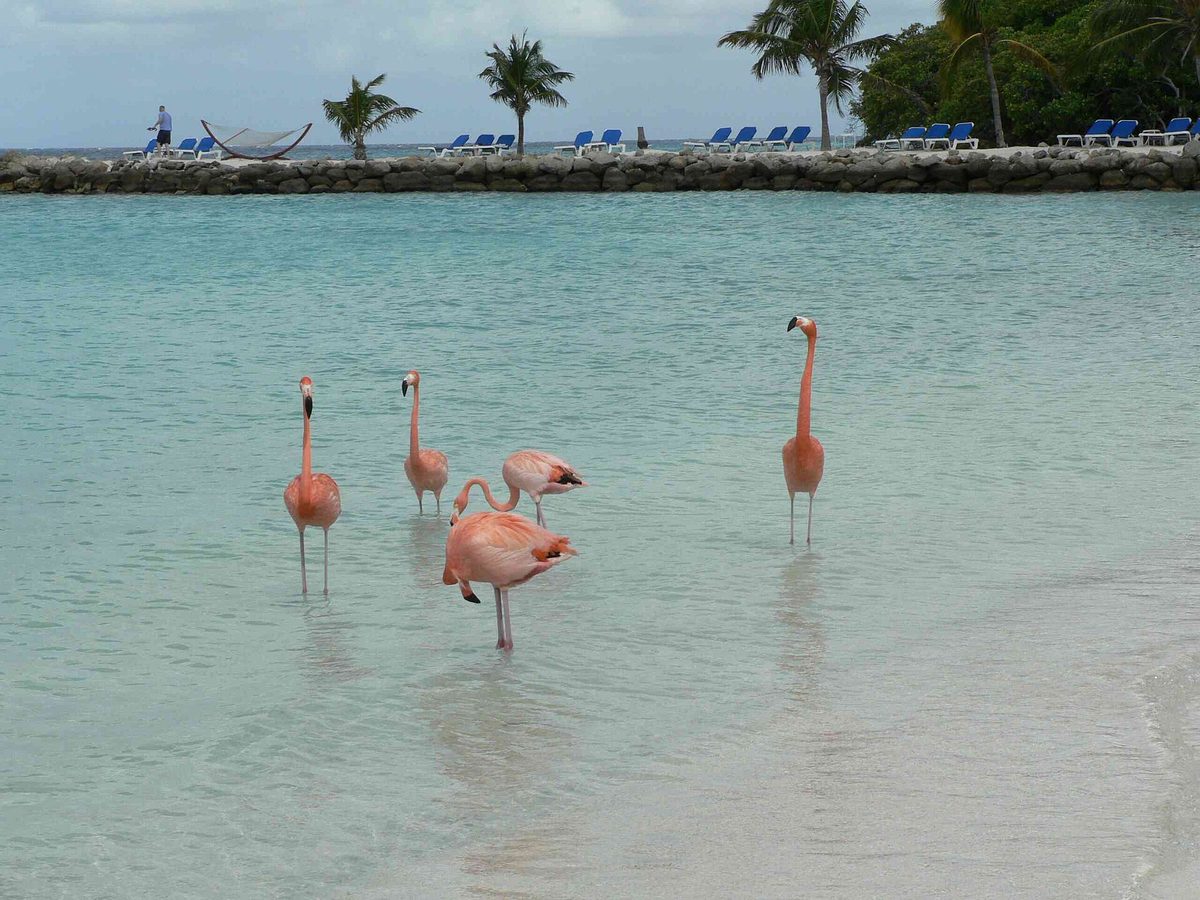
Flamingo Beach is on Renaissance Island (also called Renaissance Private Island or, colloquially, “Flamingo Island”), a roughly 40-acre slip of sand and mangrove owned and run by the Renaissance Wind Creek Aruba Resort & Casino. It sits a short eight-minute boat ride off the back of the resort in downtown Oranjestad — close enough that you can see the cruise ships, far enough that it feels like a different, quieter country.
Now the part that surprises people: flamingos are not native to Aruba. You will not find a wild flock anywhere on the main island. The birds on Renaissance Island were brought over from neighboring Bonaire — which does have huge wild colonies — and they live here, fed and cared for, largely as a (wildly successful) attraction. To keep them from flying off, their wings are clipped. They are not caged; they wander the shoreline freely, wade through the shallows, and will walk right up to you if you sit still. It is worth knowing the honest backstory: this is a managed, semi-wild population, not a natural phenomenon, and I would rather you arrive with clear eyes than a false expectation.
If seeing flamingos is the entire point of your trip and you cannot get onto Renaissance Island, there is one other spot — De Palm Island, a separate private island to the south — that keeps a small flock of Chilean and Cuban flamingos and is far more family-friendly. More on that below.
For where Flamingo Beach fits among the island’s other shorelines — the seven-mile sweep of Eagle and Palm, the wild coves of the north — see our complete guide to the best beaches in Aruba.
The five ways to get onto Renaissance Island, explained
1. Stay at the Renaissance Wind Creek Aruba Resort
The simplest route is to book a room. Guests of either Renaissance property — the adults-only Marina Hotel or the family-friendly Ocean Suites — get unlimited island access for the length of their stay, and that includes your check-in day before your room is ready and your check-out day after you have left it. No passes to fight for, no alarms to set: you scan your room key, you board the boat, you go. If the flamingos are the centerpiece of your trip, this is the only way to guarantee you will actually stand next to them. For how the Renaissance compares to the big Palm Beach properties, see our rundown of where to stay in Aruba and the island’s all-inclusive resorts.
2. Buy a day pass (the hard but cheaper way)
A day pass is how most non-guests get on, and it is the option that causes the most heartbreak. As of 2026 the pass runs around $130 plus tax per adult, about $62.50 for children aged 6–12, and free for little ones under five — though I have seen it quoted as high as $150, so check the live price. It typically includes use of beach towels, floats, and snorkel gear. There has historically been a $25 food-and-beverage credit baked in, but the resort has changed that on and off, so do not count on it.
The catch is availability. Passes are released online every Saturday at 9:00 a.m. Aruba time for the following Monday-through-Sunday, on the resort’s official iDayPass site — and they sell out within minutes. The resort only releases passes when occupancy is low enough (the often-repeated rule of thumb is below about 80% full), and on the days they do sell, it is usually only 20–30 passes total. You can buy a maximum of five at once. There is no way to pre-book further ahead and no waitlist.
My honest advice if you are going this route: set an alarm for 8:55 a.m. the Saturday before, have the site already open and you logged in, and refresh at 9:00 sharp. If you have a partner, put two devices on it. And have a backup plan ready, because plenty of people refresh for an hour and still come up empty.
3. Book a spa treatment at Okeanos Spa
Here is the trick the day-pass scramble crowd often misses: a booked spa appointment is island access. Okeanos Spa runs a string of open-air treatment coves right over the water in the island’s Spa Cove, and your reservation guarantees you a boat ride over. Treatments start around $160 per person (couples packages and lunch add-ons run higher), with a roughly $25 surcharge per person if you are not staying at the resort. You can arrive before your massage or linger after it to enjoy the beach. It is not cheap, but for a couple it can cost about the same as two day passes — and it is guaranteed.
4. Dinner Under the Stars (Wednesdays)
On Wednesday evenings the resort runs “Dinner Under the Stars,” a four-course beachfront dinner on the island with live music and a cash bar — and, often, flamingos strolling out of the shallows at dusk for a final photo. It is around $90 per adult and $40 per child (ages 5–12), plus a 17% service charge. The trade-off: it is an evening event, so you do not get a full beach day, and you arrive at dinnertime rather than at sunrise. As a romantic evening, though, it is hard to beat, and it sidesteps the day-pass lottery entirely.
5. The one-night workaround
This is the move I quietly recommend to couples. Instead of buying two day passes at ~$130 each (already $260+ before tax), price out a single night at the Renaissance. Rooms have been available in the low $200s, and a paid night gives you guest access on both your arrival and departure days — effectively two days of island visits for less than two day passes, with a hotel room and a downtown base thrown in. It does not always pencil out in peak season, but it is worth a five-minute price check before you commit to the Saturday-morning gamble.
Getting there: the water taxi to Renaissance Island
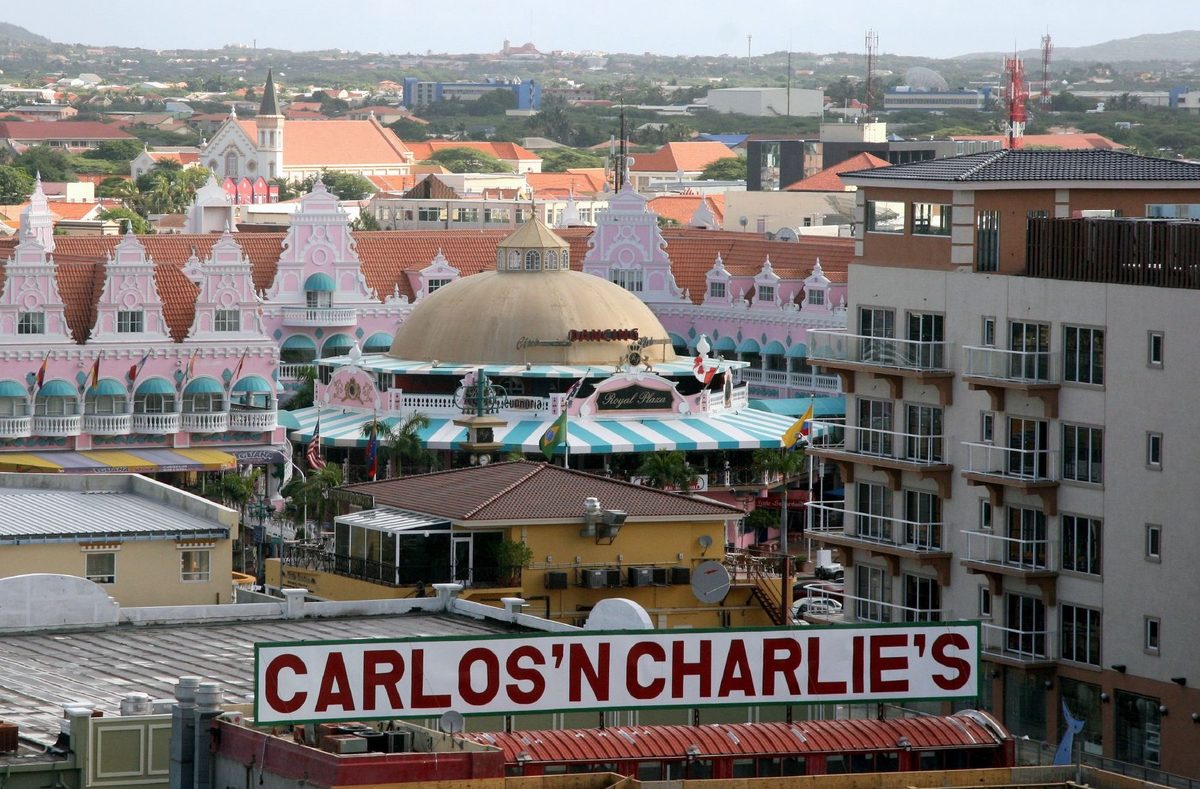
However you get your access, everyone boards the same boat. The water taxi leaves from inside the Renaissance complex in downtown Oranjestad — from the Marina Hotel lobby, near the Starbucks, where a small dock sits behind the atrium. Boats run roughly every 15 minutes from about 7:00 a.m. until around 6:45 p.m., the crossing takes about eight minutes, and each boat holds around 20 people. You scan your room key to board, or show your day pass, spa confirmation, or dinner reservation.
When you step off on the island, you have a choice that matters: turn left for Flamingo Beach, the adults-only side where the famous birds hang out, or right for Iguana Beach, the family-friendly side. Getting downtown in the first place is easy from anywhere on the island — taxis, the free Oranjestad streetcar, and rental cars all converge here; see our guide to getting to and around Aruba if you are coming from the high-rise hotels.
Flamingo Beach vs. Iguana Beach: which side is yours?
Renaissance Island is really two beaches with two different personalities, and which one you can use depends on your travel party.
Flamingo Beach is the adults-only side (16 and up). This is where the flamingos live, where the iconic over-water cabanas line the sand, and where the vibe is calm, quiet, and grown-up. Iguana Beach is the family side — open to all ages, dotted with iguanas instead of flamingos, with its own bar and shallower water that is easy for little kids.
The wrinkle that trips up families: children are only allowed on Flamingo Beach itself between 9:00 and 10:00 a.m. For that one hour, kids can come over to meet the flamingos; after 10:00 the beach is adults-only again and families head back to the Iguana side. The flamingos do sometimes wade across to Iguana Beach on their own, so you might get lucky later in the day — but do not bank on it. If you are traveling with children and the flamingos are non-negotiable, plan to be on the very first boats so you make that 9–10 window, or consider De Palm Island instead. Our guide to visiting Aruba with kids walks through which beaches and attractions actually work for younger travelers.
Meeting the flamingos: feeding, photos, and etiquette
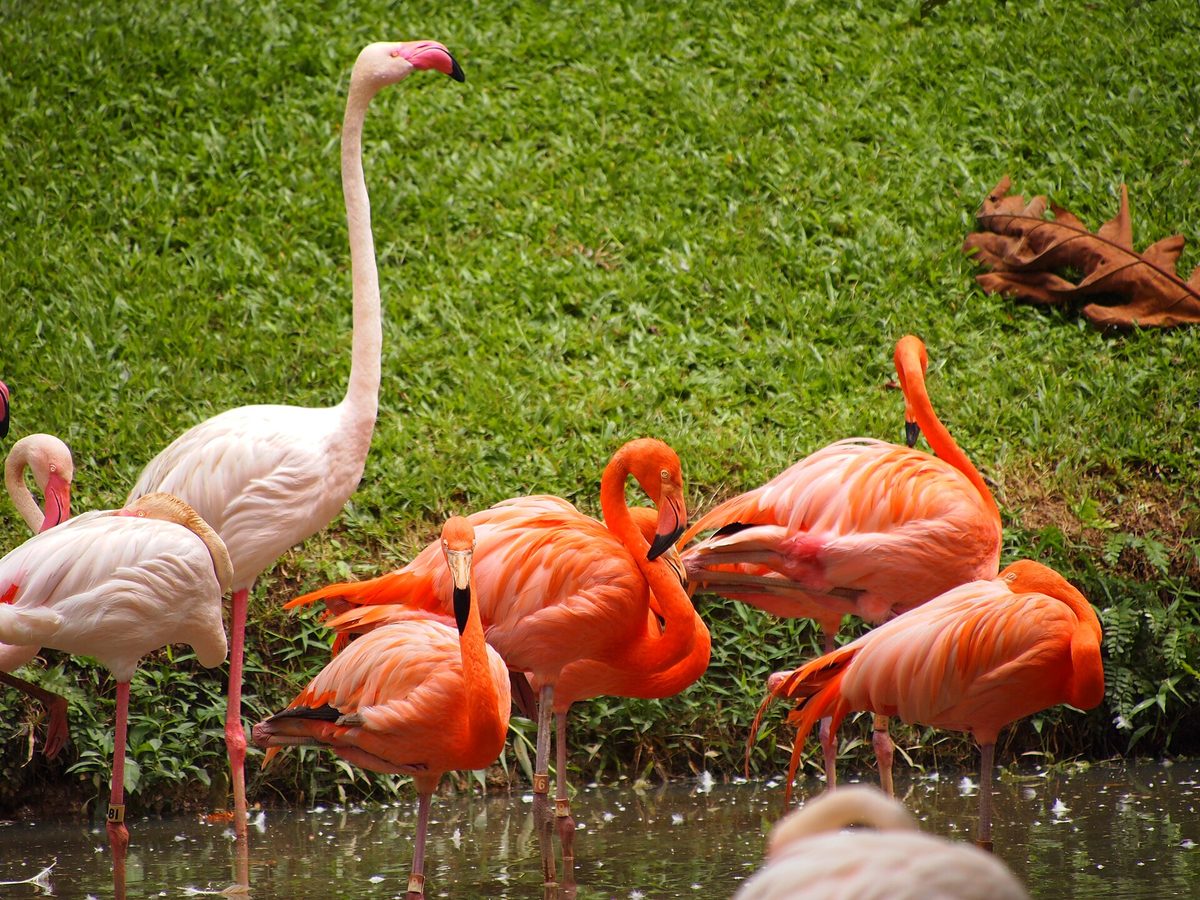
The flamingos are remarkably relaxed around people — they have grown up with a steady parade of visitors — but a great encounter still comes down to timing and manners.
How to feed them: there are small food dispensers along Flamingo Beach. They take quarters (bring a few — about 25 cents gets you a handful of pellets), and the island is otherwise cashless, so quarters are the one bit of physical money worth packing. The technique that works: sit or crouch low in the shallow water, hold the food in a flat open palm, and stay still. The birds will pick their way over to you on their own. Do not chase them, do not grab, and do not loom over them.
Timing is everything. Go early — like first-boat, 8:00-to-9:00 early. By mid-morning the flamingos have been fed by dozens of people, they are full, and they lose interest in the crowd and wander off to nap. The dreamy, empty-beach photos you have seen on Instagram were almost all taken in the first hour or two of the day. Come at 1:00 p.m. and you will find a busier beach and a flock that has clocked out.
A word on the birds’ wellbeing: feed them only the dispenser pellets, never your own food or drink, give them space, and skip the urge to pick one up for a photo. They are habituated, not pets.
What else to do on Renaissance Island
The flamingos are the headline, but a full day here is genuinely lovely even after the photos are done. The water on both beaches is calm, clear, and shallow — some of the gentlest swimming on the island.
Snorkeling and water toys
Red Sail Sports runs a hut on the island and lends out the basics free to visitors — snorkel gear, floats, kayaks, and paddleboards. Snorkels and floats are generally available from about 8:30 a.m. to 4:00 p.m.; kayaks and paddleboards are first-come, first-served from 8:30. The shallows hold small fish, the odd ray, and enough structure to keep a casual snorkel interesting. If you want serious reefs and wrecks, you will find better elsewhere — our Aruba water sports guide covers the island’s best snorkel and dive sites — but for a lazy float between flamingo sessions, it is perfect.
Private cabanas
If you want shade and a bit of luxury, the island rents private cabanas — including the famous over-water ones perched on stilts on the Flamingo side. They are not cheap (rates start around $425, and there are only about 20 of them), they are adults-only, and they book up well in advance through the resort’s reservation site. For a honeymoon or a milestone trip, though, an over-water cabana with flamingos below is a hard memory to top.
Eat, drink, and relax
There are a couple of spots to eat without leaving: the Mangrove Beach Bar & Fish Shack (usually open around 11:30 a.m.–3:30 p.m.) and the Papagayo Bar & Grill (roughly 11:00 a.m.–5:00 p.m.), plus beach service to your lounger. Remember the island is cashless — you pay by card or charge to your room — and you cannot bring your own food or drinks over. After you have eaten, there is not much to do but exactly what you came for: lie on soft white sand, nap under a sea grape tree, and watch pink birds wade past. For more downtown dining once you are back on the mainland, see our Aruba restaurants guide.
What a visit really costs
It is easy to underestimate this one. A day pass for two adults is already $260+ before tax, and that is before lunch, drinks, or a cabana. Add a $40 cabana-curious moment and a couple of cocktails and a family of four can clear $400 for the day without trying. That is part of why the one-night-stay workaround is so popular, and why couples often fold the visit into a romantic splurge rather than treating it as a casual beach afternoon. If you are mapping out a full budget, our Aruba vacation cost guide puts a Flamingo Beach day in context against everything else you will spend.
None of this makes it a tourist trap — the setting genuinely delivers — but going in with realistic numbers means you will enjoy it instead of wincing at the bar tab.
When to go: timing your visit

Two timing decisions shape your whole experience. The first, as covered, is time of day: be on the earliest boats you can. The flamingos are hungriest and most photogenic in the first hour or two, the light is softer, and the beach is emptiest before the mid-morning rush.
The second is time of year. Aruba sits below the hurricane belt and is warm, dry, and breezy year-round, so there is no bad season for this — but day passes are easiest to snag in the slower months (roughly late spring through early fall), when resort occupancy dips and more passes get released. In peak winter season, passes can be nearly impossible and the one-night or spa routes become far more reliable. For the full seasonal picture, see our guide to the best time to visit Aruba.
What to bring and know before you go
- A few quarters — the only cash you need, and only for the flamingo food dispensers.
- Reef-safe sunscreen — there is shade, but the sun off the water is intense, and reef-safe is the responsible choice.
- A card — the island is cashless for food, drinks, and rentals.
- A waterproof phone case or GoPro — your best flamingo shots happen while you are crouched in the shallows.
- Leave behind: outside food and drinks, large speakers, coolers, and big luggage — none are allowed.
- Towels and snorkel gear are provided, so you can pack light.
For more pre-trip logistics — money, tipping, connectivity, and etiquette — our Aruba travel tips cover the essentials.
Is Flamingo Beach Aruba worth it?
Honestly? Yes — once. The combination of bright white sand, glassy turquoise water, and tame flamingos wading past your beach chair is genuinely unlike anywhere else in the Caribbean, and for most first-time visitors it becomes a highlight of the whole trip. The novelty, the photos, and the simple delight of a flamingo padding over to your outstretched hand earn the price of admission.
Where I would gently temper expectations: it is expensive, the day-pass logistics are a real hassle, and the beach itself is small and can feel crowded by midday. Some people who have been once feel no urge to repeat it at that price. But as a one-time, must-see experience? It absolutely belongs on a first Aruba itinerary — and it pairs naturally with the rest of the things to do in Aruba.
Fitting Flamingo Beach into your trip
Because access hinges on a morning boat, the smart play is to treat Renaissance Island as a half-day anchor and build around it. Go early, spend the morning with the flamingos and the afternoon snorkeling or napping, then head back into Oranjestad for shopping, dinner, and a sunset. It slots neatly into a downtown day — and from there, Aruba’s nightlife and casinos are a short walk away. For a day-by-day framework that places this visit alongside Eagle Beach, Arikok National Park, and the rest, our Aruba itinerary guide is the place to start.
Frequently asked questions
How much does it cost to go to Flamingo Beach in Aruba?
For non-guests, a Renaissance Island day pass runs roughly $130 plus tax per adult in 2026 (about $62.50 for children 6–12, free under 5), and it usually includes towels, floats, and snorkel gear. Guests of the Renaissance Wind Creek resort get in free. Prices change, so confirm on the resort’s official day-pass site before you plan.
Can you visit Flamingo Beach without staying at the hotel?
Yes. You do not have to be a hotel guest. Non-guests can buy a day pass (released Saturdays at 9 a.m. for the following week), book a treatment at Okeanos Spa, or reserve the Wednesday “Dinner Under the Stars” — each of those guarantees a boat ride to the island. The day pass is cheapest but sells out fastest.
Are kids allowed at Flamingo Beach?
Only briefly. Flamingo Beach is adults-only (16+) except for a single window from 9:00 to 10:00 a.m., when children may come over to see the flamingos. The rest of the day, families use the all-ages Iguana Beach on the other side of the island, which has its own bar and calm, shallow water but usually no flamingos.
Are the flamingos in Aruba wild?
Not exactly. The flamingos were brought to Renaissance Island from Bonaire and are kept and fed as an attraction; their wings are clipped so they cannot fly off. They roam the beach freely rather than being caged, and they are well cared for — but this is a managed, semi-wild flock, not a naturally occurring colony.
Where do you catch the boat to Renaissance Island?
From inside the Renaissance Marina Hotel in downtown Oranjestad — the dock is behind the lobby atrium, near the Starbucks. Water taxis run about every 15 minutes from roughly 7:00 a.m. to 6:45 p.m., and the ride takes about eight minutes. You scan your room key or show your day pass to board.
Can you see flamingos in Aruba for free?
Not on Renaissance Island — access there always costs something. The only no-cost-of-entry way to see flamingos is to spot the occasional bird that wanders to the public-facing edges, which is unreliable. The other paid option is De Palm Island, which keeps its own flock and is more family-oriented.
Final thoughts
Flamingo Beach earns its fame. Yes, it takes planning, a bit of money, and a willingness to win the Saturday-morning pass lottery (or sidestep it with a spa booking or a one-night stay) — but standing ankle-deep in warm, clear water while a flamingo strolls over to inspect your hand is the kind of small, surreal moment that ends up as the cover photo of the whole trip. Go early, go in with realistic expectations about the crowds and the cost, treat the birds gently, and it will be worth every quarter. When you are ready to round out the rest of your days, our complete guide to Aruba’s beaches will point you to the seven-mile stretches and hidden coves that make this island worth the flight.
Photo credits
- Flamingos on a Caribbean shoreline: photo by Dan Hershman, Wikimedia Commons (CC BY 2.0).
- Caribbean flamingo close-up: photo by Tu7uh, Wikimedia Commons (CC BY 3.0).
- Downtown Oranjestad: photo by gailf548 / KimChee, Wikimedia Commons (CC BY 2.0).
- Aruba beach: photo by Kwihi, Wikimedia Commons (CC BY 4.0).
Renaissance Island flamingos by David Stanley (CC BY 2.0).