There is a myth that floats around every Aruba planning thread like a pool float nobody asked for: that to “do Aruba right” you have to wake up with your toes practically in the sand, on a resort beach, paying resort-beach prices. Sleep anywhere else, the thinking goes, and you have somehow failed the assignment. I want to gently pop that float. Plenty of smart, happy travelers skip the beachfront tower entirely and base themselves in the capital, and if you are weighing where to stay in Oranjestad Aruba, you are asking a better question than most travelers do.
Here is the flip: Oranjestad is Aruba’s most walkable, most characterful, and often most affordable place to sleep. You trade a private stretch of sand for pastel Dutch-colonial streets, real restaurants, the cruise port, casinos, the airport ten minutes away, and a short, cheap ride to Eagle and Palm if you want the postcard beach. For the right traveler, that trade is not a compromise. It is the upgrade.
The short version: Stay in Oranjestad if you are a cruiser, a no-car traveler, a culture-and-food person, a value seeker, or in town on business. The standout is the Renaissance Wind Creek Aruba Resort, which solves the “no beach downtown” problem with its own private flamingo island. Boutique stays like Wonders, RH Boutique, and Central Boutique cover the mid-range, and a cluster of guesthouses and apartments handles the budget end. If your whole trip is sunbathing, book a beach instead.
Where to Stay in Oranjestad Aruba: The Short Answer
Most downtown lodging is not on a swimmable resort beach, and that single fact decides whether Oranjestad is right for you. If you want to roll out of bed onto white sand, this is not your neighborhood. But if you value walkability, culture, food, value, and convenience, downtown is an underrated, savvy base. The big exception is the Renaissance, whose guests get a water-taxi ride to a private island with actual flamingos. Everyone else uses the (free) bus or a quick taxi to reach the famous beaches in about fifteen minutes.
At a glance: downtown Oranjestad stays
Rough nightly bands below are ballpark, low-to-high-season figures in US dollars for two adults; always check live rates, because Aruba pricing swings hard with the calendar. “Walkability” rates how much you can do on foot from your door.
| Stay / type | Best for | Rough nightly band | Beach access | Walkability |
|---|---|---|---|---|
| Renaissance Wind Creek — Marina (adults-only) | Couples, casino & nightlife, cruisers | ~$300–$650+ | Private island via water taxi | Excellent |
| Renaissance Wind Creek — Ocean Suites | Families, longer stays, more space | ~$300–$650+ | Private island + Surfside nearby | Excellent |
| Boutique hotels (Wonders, RH, Central) | Mid-range, couples, foodies | ~$120–$260 | Short ride/bus to beaches | Very good |
| Aparthotels & ocean suites (e.g. Vistalmar) | Self-caterers, families | ~$120–$220 | Surfside walkable; beaches by ride | Good |
| Guesthouses & budget apartments | Backpackers, long stays, value | ~$60–$130 | Bus or taxi to beaches | Good |
| voco Surfside / Surfside-area | Walk-to-beach-in-town, plane spotters | ~$150–$300 | Surfside Beach on foot | Good |
Why stay downtown in Oranjestad (and who really shouldn’t)
I keep coming back to one word: friction. A downtown base removes a surprising amount of it. You land at Queen Beatrix International Airport and you are at your hotel in roughly ten to fifteen minutes, because the airport sits just south of town. No long transfer up the hotel strip. When you want dinner, it is a stroll, not a taxi negotiation. When you want a coffee, a pharmacy, an ATM, a SIM card, or a bottle of rum to take home, it is all within a few blocks. That convenience is worth real money and real vacation hours.
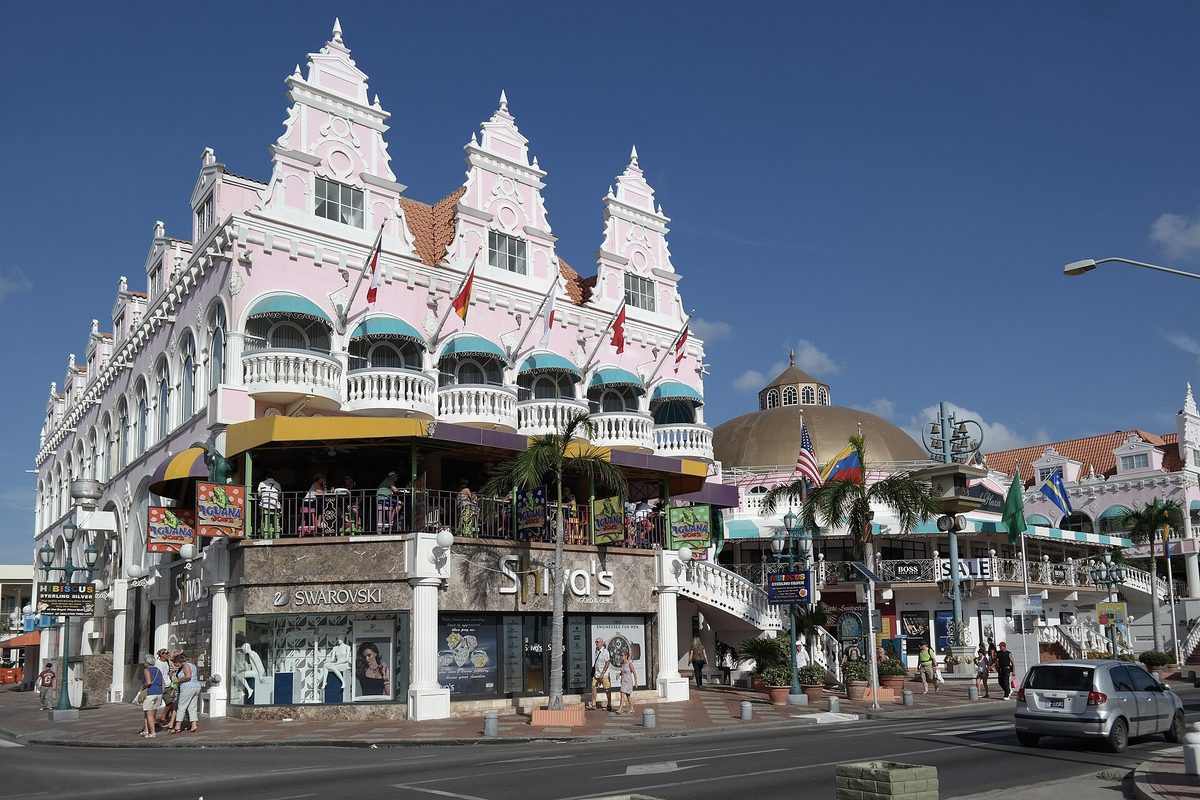
Then there is the texture of the place. Oranjestad is genuinely pretty in a way the resort strips are not. The historic core is a parade of restored Dutch-colonial buildings painted in sherbet pinks, yellows, blues, and greens, strung along Main Street (Caya G. F. Betico Croes) and the waterfront. There is a free streetcar that loops the downtown, the open-air Renaissance Marketplace and Royal Plaza for shopping and dining, casinos when you want them, and a daily rhythm of locals and cruise passengers mixing on the same sidewalks. It feels like a city, not a lobby.
Value is the third pillar. Because most downtown rooms are not selling beachfront, they are very often cheaper than the equivalent on Palm or Eagle, and the budget tier (guesthouses, apartments) barely exists out on the beach strips. If you would rather spend your money on excursions, dinners, and a snorkel trip than on a sea-view markup, downtown stretches the trip further.
Now, the honest part. Who should not stay here? If your dream is a beach chair, a swim-up bar, and never moving more than 200 feet from the surf, downtown will frustrate you, and you should book Palm or Eagle instead. If you are traveling with small kids who melt down without a pool-and-sand routine, the daily ride to the beach can wear thin. And if you want a big all-inclusive where everything is bundled, that is not the downtown model. Match the base to how you actually vacation, not to how Instagram says you should.
The hotels: where to actually book in downtown Oranjestad
Downtown breaks into three honest tiers: the one full-service resort (Renaissance), a band of boutique and value hotels, and a deep bench of guesthouses and apartments. Here is how I think about each.
Renaissance Wind Creek Aruba Resort (Marina & Ocean Suites)
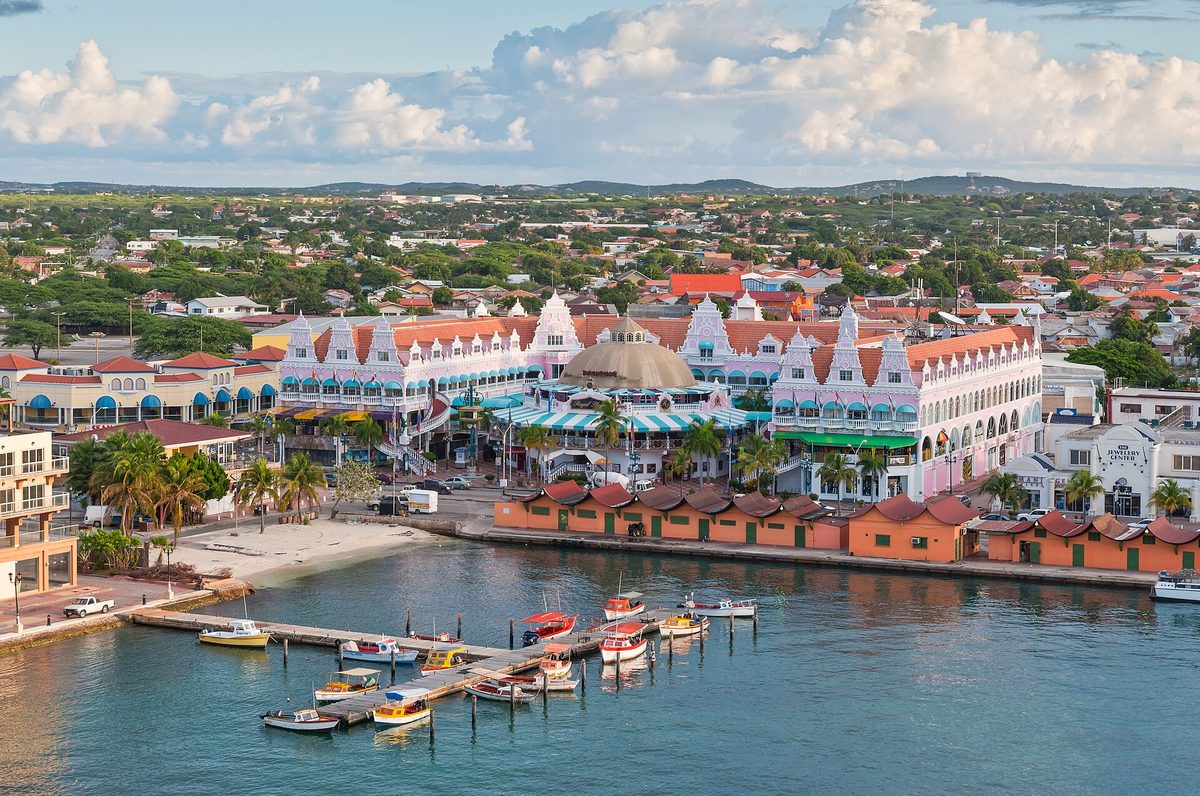
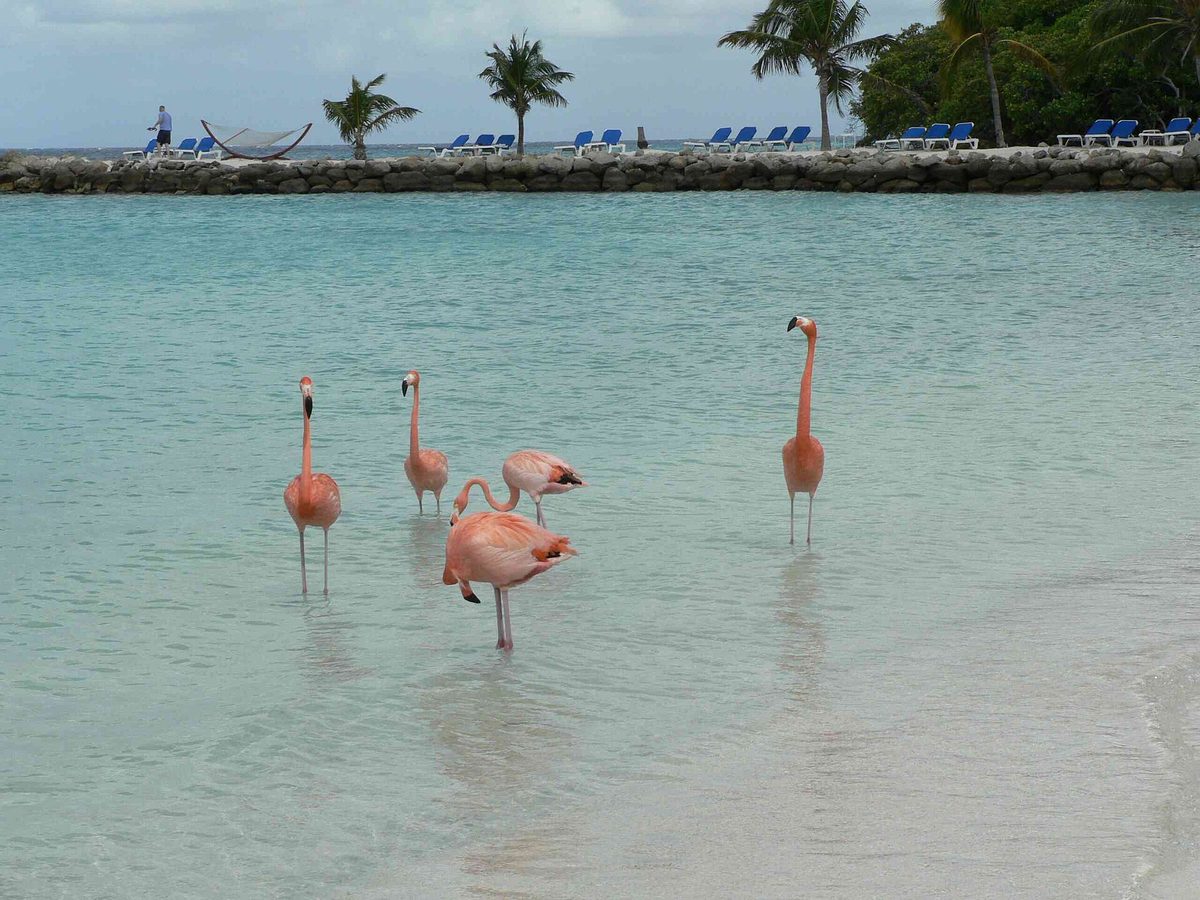
This is the headliner, and the reason the “no beach downtown” objection mostly evaporates. The Renaissance is the only full resort right in the heart of Oranjestad, and it is split into two properties that share the same crown jewel: a 40-acre private island, reached by a complimentary water taxi that leaves from inside the resort. On the island you get two beaches, family-friendly Iguana Beach and the adults-only Flamingo Beach, where, yes, actual pink flamingos wander the sand. That is a genuinely unique amenity you cannot get on Palm or Eagle at any price.
The two halves serve different travelers. The Marina Hotel is adults-only, set right on the marina at the center of the action, with an infinity pool overlooking the boats, the 24-hour Wind Creek casino, and quick walk-out access to restaurants and shops. It suits couples, casino-and-nightlife folks, and cruisers who want to be steps from the port. The Ocean Suites are more spread out and family-oriented, with larger one-bedroom suites, resort-style pools, a swim-up bar, and a calmer feel, a short walk along the waterfront from the Marina side. Rates are the highest downtown, often in the ballpark of $300 and up depending on season, but you are buying the private island, a real resort, and an unbeatable location at once.
Boutique and value hotels
This is the sweet spot for a lot of travelers, and it is where downtown quietly beats the beach strips on price. A handful of small hotels sit in or just off the historic core, typically running somewhere around $120 to $260 a night depending on dates. Wonders Boutique Hotel is a relaxed, design-forward little spot with a pool, restaurant, and garden, near the National Archaeological Museum. RH Boutique Hotel offers a cozy stay with a pool, fitness center, bar, and restaurant. Central Boutique Hotel leans practical and well-located, with a 24-hour front desk that cruisers and late arrivers appreciate. Victoria City Hotel is another frequently recommended, sensibly priced option. None of these are beachfront; all of them put you within walking distance of dinner and the port, and a short ride from sand.
Guesthouses, apartments, and aparthotels
If you are watching the budget or staying a week-plus, this tier is the real reason to consider Oranjestad, because it barely exists out on Palm Beach. Think family-run guesthouses, simple studios, and self-catering apartments, often in the rough range of $60 to $130 a night. Vistalmar Ocean Suites is a long-running favorite for travelers who want a kitchen and a bit of water view; smaller apartment blocks and downtown studios fill in below that. A kitchen changes the math on a trip: a few grocery breakfasts and the occasional cook-in dinner can offset a lot of Aruba’s (not cheap) restaurant tab. For value-focused, no-rush travelers, this is where downtown shines.
The beach question: how to get sand from a downtown base
Let’s deal with the elephant on the towel. Downtown Oranjestad is not lined with swimmable resort beach, so if you stay here you need a plan for sand. The good news: you have three solid ones, and none of them is hard.
Renaissance Island and Surfside Beach
If you book the Renaissance, your beach problem is solved before you arrive. The complimentary water taxi runs guests out to the private island and its two beaches throughout the day, so you get calm, sheltered, postcard-grade water (and the flamingos) without leaving the resort’s orbit. It is, honestly, nicer and quieter than much of the public beach strip.
For everyone else downtown, the closest in-town option is Surfside Beach, a small but real city beach on the south edge of Oranjestad, near the airport. It is famous for two things: being walkable from the cruise port and downtown (roughly a fifteen-minute walk, or a five-minute, ~$10 taxi), and for sitting almost under the airport’s approach path, so plane spotters love watching jets float in overhead. The water is calm and shallow, good for a quick swim or a sunset, even if it is not the wide, dazzling sweep of Eagle Beach.
A short ride to Eagle and Palm
When you want the marquee beaches, they are genuinely close. Aruba’s public bus (Arubus) line 10 runs from the downtown terminal, next to the Royal Plaza on L. G. Smith Boulevard, straight up to Eagle and Palm Beach. The ride is about fifteen minutes, costs only a few dollars (carry small US bills or pay in florins), and buses run frequently through the day with reduced evening service. A taxi covers the same trip in ten to fifteen minutes for a flat fare that is typically in the ballpark of $10 to $15, fixed by zone rather than metered. So “no beach at my door” really means “a cheap fifteen-minute hop to two of the best beaches in the Caribbean.” That is a very livable trade.
By traveler type: is Oranjestad right for you?
For cruisers
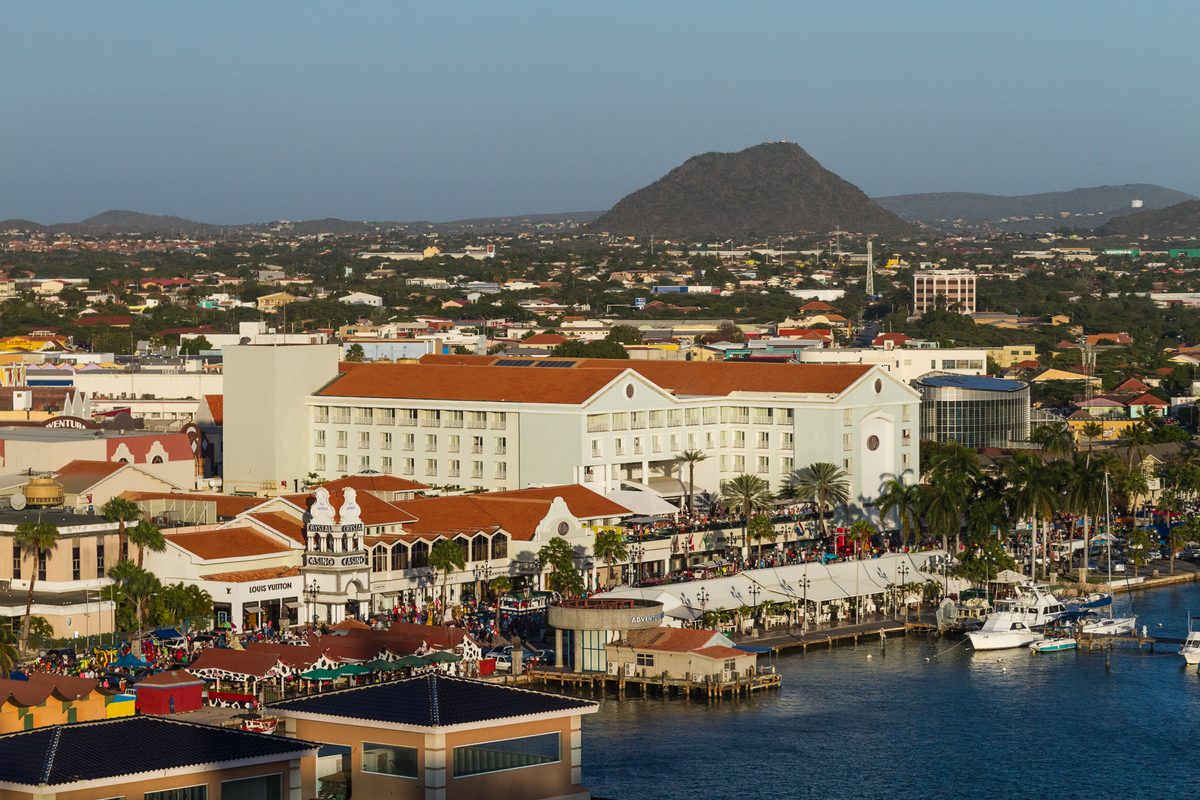
If you are arriving by ship, downtown is almost cheating. The cruise terminals sit right in Oranjestad, within about a five-minute walk of the shops, restaurants, and casinos, so a downtown hotel (especially the Renaissance Marina, practically at the port) means zero transfer stress on either end of a pre- or post-cruise night. You can drop bags, walk to lunch, stroll Main Street, and be back aboard or at your room in minutes. Even on a single port day with no hotel, basing your plans downtown, with Surfside Beach a walk away and Eagle a short bus ride, makes for an easy, car-free day.
For no-car travelers
This is the single best argument for Oranjestad. If you do not want to rent a car, do not want to drive on vacation, or just hate parking, downtown is the most self-sufficient base on the island. Restaurants, groceries, pharmacies, the bus terminal, the port, and the airport are all close, and the free downtown streetcar handles the historic core. You can run an entire Aruba trip from here on foot plus the bus, dipping out to the beaches and back, without ever touching a steering wheel. Out on the resort strips, life without a car is doable but more constrained.
For budget travelers
Aruba is not a cheap island, but Oranjestad is where you claw back the most. The guesthouse-and-apartment tier simply does not exist in the same depth on Palm or Eagle, and even the boutique hotels undercut comparable beachfront rooms. Add a kitchen, a few self-catered meals, and the $3-ish bus instead of taxis, and a downtown base can shave a meaningful chunk off the trip. If you are prioritizing experiences over a sea view, stay here and spend the savings on a sail or a Jeep tour.
For culture lovers and foodies
This is my personal favorite reason. Downtown is where Aruba feels most like a place and least like a resort. You are steps from the National Archaeological Museum, the colorful streets and plazas, local markets, and a restaurant scene that ranges from casual local plates to serious dinners, all walkable. You can eat somewhere different every night without a car, wander the Marketplace after dark, catch live music, and actually feel the island’s Dutch-Caribbean character instead of admiring it from a lounger. For travelers who think the best souvenir is a good meal and a real sense of place, Oranjestad delivers.
Getting around from Oranjestad: walk, bus, and airport proximity
Logistics are where a downtown base quietly pays you back every single day, so it is worth knowing exactly how it works.
On foot. The historic core is flat, compact, and walkable end to end. Main Street, the waterfront, the Marketplace, the port, and most downtown hotels are all within a comfortable stroll, and the free downtown streetcar (a charming open-sided trolley) loops the central blocks if your feet get tired or the midday sun is fierce. For evenings out, walking home from dinner instead of waiting on a taxi is a small luxury that adds up.
By bus. Aruba’s Arubus network is cheap, clean, and centered on the downtown terminal by the Royal Plaza, which makes Oranjestad the natural hub. Line 10 connects you to Eagle and Palm in about fifteen minutes for a few dollars each way; other lines reach San Nicolas and points around the island. Buses run roughly every fifteen to forty minutes depending on the time of day, with thinner service after dark, so check the current schedule and keep small bills handy. For a no-car traveler, this is your lifeline, and it is a good one.
Airport proximity. Queen Beatrix International is just southeast of town, usually ten to fifteen minutes by taxi. That short hop is a real perk on both ends of a trip: easy late arrivals, relaxed last mornings, and no anxiety about a long transfer when you have a flight to catch. Taxis in Aruba are not metered; fares are set by zone, so agree on the price before you ride.
Do you need a rental car? Honestly, from Oranjestad, often not. If your trip is downtown plus the western beaches plus the odd excursion (which usually includes pickup), the bus and taxis cover it. Rent a car for a day or two if you want to chase the wild north coast, Arikok National Park, or remote beaches at your own pace, then return it. Paying for a car to sit in a hotel lot all week is money you could spend better.
Booking tips and the honest trade-offs
A few things I would tell a friend before they book a downtown room:
- Be clear-eyed about the beach. Outside the Renaissance’s private island and a Surfside stroll, you are committing to a short daily ride for marquee sand. If that sounds annoying rather than easy, book Eagle or Palm and pay the premium.
- Read the location, not just the name. “Oranjestad” stretches beyond the pretty core. Confirm a property is actually in or near the walkable downtown if walkability is why you are here; some “Oranjestad” listings sit out along the highway.
- Ask about noise. Downtown is lively, which is the point, but if you are a light sleeper, request a room away from the marina bars, casino, or Main Street, especially on weekends.
- Consider a kitchen for longer stays. Aruba dining adds up fast; an apartment or suite with a kitchenette can fund a whole extra excursion over a week.
- Time your visit. Rates and crowds swing hard between high season and the quieter months, so the same room can cost wildly different amounts. Build your dates around that if you can.
- Mind cruise-ship days. When multiple ships are in, downtown shops and Surfside get busy by midday; an early start keeps it pleasant.
- Always verify live prices and hours. Everything here is a guide, not a guarantee; rates, schedules, and amenities change, so confirm current details before you book.
Frequently asked questions about staying in Oranjestad
Is Oranjestad a good place to stay in Aruba?
Yes, for the right traveler. Oranjestad is ideal if you value walkability, culture, food, value, and convenience, or if you are a cruiser or no-car traveler. It is the island’s most characterful, central base. It is a poor fit if your priority is rolling out of bed onto a swimmable resort beach, in which case Aruba’s beaches on Eagle or Palm suit you better.
Does Oranjestad have a beach?
Not a big resort beach in the historic core, but it does have Surfside Beach on its southern edge, a small, calm city beach that is walkable from downtown and the cruise port and sits near the airport. Renaissance guests also reach a private island with two beaches by water taxi. For wide white sand, Eagle and Palm are a short bus or taxi ride away.
Which hotel in Oranjestad has the flamingos?
The Renaissance Wind Creek Aruba Resort. Its guests ride a complimentary water taxi to a 40-acre private island that includes the adults-only Flamingo Beach, where pink flamingos roam the sand, plus the family-friendly Iguana Beach. The flamingo beach is generally reserved for resort guests (with limited day passes when available), so booking the Renaissance is the reliable way to see them.
How far is Oranjestad from Eagle Beach and Palm Beach?
Close. Both sit a short way northwest of downtown, roughly a ten-to-fifteen-minute drive. The Arubus line 10 runs there from the downtown terminal in about fifteen minutes for a few dollars, and a taxi takes a similar time for a fixed zone fare in the ballpark of $10 to $15. You can easily beach by day and return downtown for dinner, no rental car required. See our guide to getting to and around Aruba for details.
Is Oranjestad walkable from the cruise port?
Very. Aruba’s cruise terminals are right in downtown Oranjestad, within about a five-minute walk of the shops, restaurants, casinos, and Main Street, and roughly fifteen minutes on foot to Surfside Beach. That walkability is exactly why cruisers and no-car travelers love a downtown base; you can do a full day, or a pre-cruise night, entirely on foot. Browse our list of things to do in Aruba to fill the time.
Do I need a rental car if I stay in Oranjestad?
Usually not. Downtown is walkable, the bus reaches the main beaches cheaply, taxis cover the rest, and most excursions include pickup. A car helps only if you want to explore the rugged north coast or Arikok National Park independently, and even then a one- or two-day rental does the job. Our Aruba travel tips cover transport choices in more depth.
Is staying in Oranjestad cheaper than the beach resorts?
Often, yes. Because most downtown rooms are not beachfront, they tend to undercut comparable Palm and Eagle resorts, and Oranjestad has a far deeper pool of guesthouses and apartments. Add a kitchen and the cheap bus, and a downtown trip can cost noticeably less. See our breakdown of typical Aruba vacation costs to plan a budget.
Final thoughts: who should book downtown
So, back to that myth. You do not have to sleep on a resort beach to “do Aruba right.” You have to match your base to the trip you actually want. If your ideal week is sand, swim-up bars, and never moving far, the beach strips earn their premium, and that is a legitimate choice. But if you want to walk to dinner, soak up the island’s color and culture, keep the budget sane, skip the rental car, or step off a ship into the middle of everything, downtown is not the consolation prize. It is the clever pick.
My honest take: the Renaissance is the easy luxury answer, because it hands you a private flamingo island and a downtown address in one booking. The boutique hotels and apartments are where value-minded and culture-minded travelers win. And the beaches you came for are a cheerful fifteen-minute hop away whenever you want them. When you have settled the city, line up the rest of the trip with our Aruba itinerary, scout the island’s restaurants and nightlife, and check the best time to visit Aruba before you lock in dates.
For the full lay of the land on every neighborhood and resort area, start with our pillar guide on where to stay across the island, then branch into the options that fit your style, from all-inclusive resorts to a romantic Aruba honeymoon or a trip with the kids. And if you are still weighing activities, our roundups of the best things to do in Aruba and free things to do in Aruba pair perfectly with a walkable downtown base.
Photo credits
- Photo: Choinowski / CC BY-SA 4.0 via Wikimedia Commons
- Photo: Navigator334 / CC BY-SA 4.0 via Wikimedia Commons
- Photo: Chris Favero from USA / CC BY-SA 2.0 via Wikimedia Commons
- Photo: David Stanley from Nanaimo, Canada / CC BY 2.0 via Wikimedia Commons