Aruba has a reputation as a big-spender island — the kind of place where the room rate has a comma in it and the swim-up bar quietly empties your wallet. That reputation is only half true, and the search for cheap hotels in Aruba is far less hopeless than the high-rise brochures make it look. The strip along Palm Beach absolutely can cost a fortune, but it is not the whole island, and it is not where the smart, value-minded travelers I know actually stay. There is a quieter Aruba of small family hotels, guesthouses and self-catering apartments where a week feels like a treat, not a second mortgage. This guide is about that Aruba: the genuinely good cheap hotels in Aruba, the neighborhoods worth booking, and the handful of habits that cut a Caribbean trip down to size.
I want to be honest from the first paragraph, though. “Cheap” here is relative. A budget room in Aruba is not a ten-dollar hostel bunk; it is a clean, simple, often surprisingly characterful base that costs a fraction of the beachfront palaces a five-minute walk away. Get your expectations and your strategy right, and Aruba is one of the most rewarding value trips in the Caribbean. Get them wrong, and you will wonder where the money went. Let me make sure it is the former.
The Short Answer: Cheap Stays That Still Feel Like a Vacation
The best-value places to stay in Aruba are the small, locally run hotels and apartments in and around Oranjestad, the Noord district and the Eagle Beach fringe — properties like MVC Eagle Beach (a low-rise right across from the sand), Brickell Bay, Coconut Inn and Arubiana Inn. To pay less, travel in low or shoulder season, book a room with a kitchen, ride the cheap Arubus, eat where locals eat and lean on Aruba’s free public beaches.
This guide is for the traveler who would rather spend on a sunset sail or a great meal than on a marble lobby — backpackers, couples on a budget, and families stretching a vacation fund. If that is you, read on. If you want the all-inclusive towers, we cover those separately in our guide to Aruba’s hotel neighborhoods; this is the thrifty, characterful side of the island.
An At-a-Glance Look at Aruba’s Best-Value Stays
Here is how the realistic budget options stack up. Nightly bands are rough and swing hard by season — treat them as a starting point and always check live rates, because a shoulder-season Tuesday and a Christmas-week Saturday are different planets.
| Hotel / Stay | Area | Rough nightly band | Why it’s good value |
|---|---|---|---|
| MVC Eagle Beach | Eagle Beach | ~$140–250 | Low-rise directly across from Eagle Beach for a fraction of the resort rate; simple, friendly, pool on site |
| Brickell Bay Beach Club | Palm Beach (off-sand) | ~$150–240 | Adults-oriented boutique a short walk from the high-rise beach without the high-rise price |
| Coconut Inn | Noord / Palm Beach fringe | ~$120–180 | Budget studios with kitchenettes and free breakfast; walkable to Palm Beach |
| Arubiana Inn | Noord | ~$110–170 | Small inn with a pool and kitchenettes, near supermarkets and the bus line |
| Talk of the Town / Best Western | Oranjestad | ~$130–200 | Reliable mid-budget hotel near the airport, harbor and bus hub |
| The Mill Resort | Palm Beach (off-sand) | ~$150–230 | Apartment-style suites with kitchens; pools and short walk or shuttle to the beach |
| Camacuri Apartments | Oranjestad edge | ~$90–150 | Self-catering apartments aimed at longer, slower, cheaper stays |
| Aruba Beach Villas | Malmok / Hadicurari | ~$120–190 | Low-key beachy units near the snorkel and windsurf coast, away from resort prices |
None of these are luxury, and that is the point. What you are buying is a clean bed, a fair price and a location that lets you spend your days on the same world-class beaches everyone else paid triple to sleep beside.
First, a Reality Check on Aruba Prices
Let me set expectations before we talk hotels, because half of doing Aruba cheaply is knowing what “cheap” means here. Aruba is an arid island that imports almost everything, runs on tourism, and sits firmly in the premium tier of the Caribbean. Beachfront resort rooms routinely run several hundred dollars a night in season. Taxis are pricey, restaurant checks on the strip add up fast, and even a casual lunch can surprise you.
So when I say a hotel is a budget pick at around $120–180 a night, I mean it is a strong value for Aruba — not that it is backpacker-cheap by global standards. The island has very little true hostel infrastructure and no real budget-resort district. The savings come from choosing smaller, simpler, locally owned places and from changing how you eat, move and time your trip.
The encouraging part: those savings are real and large. Independent budget guides put a typical budget traveler in Aruba at roughly $150–220 a day per couple excluding flights, versus $300–400 for mid-range, and most of that gap is decided by where you sleep and where you eat. Off-season room rates can dip toward $60–100 a night at simple properties, while the same calendar in a high-rise tower might never drop below $300. The strategy in this guide is about living on the right side of that gap.
The Best Cheap Hotels in Aruba, by Area
Where you book matters more than which specific budget hotel you choose, because each area buys you a different trade-off between price, beach access and convenience. Here is how I think about the three neighborhoods that actually hold value, and the standout stays in each. Prices below are rough and seasonal; verify before you book.
Oranjestad: The Capital Is the Budget Base
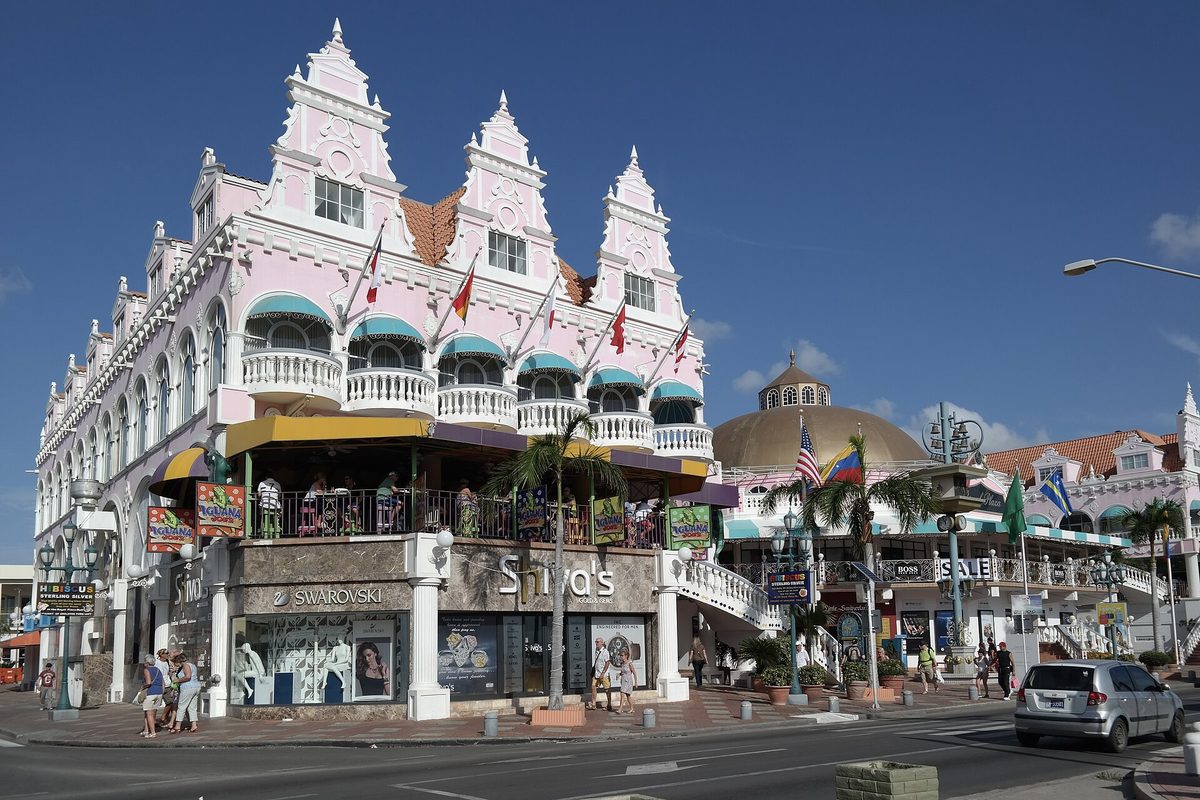
If I had to send one budget traveler to one part of Aruba, I would point them at Oranjestad. The capital is not on a swimming beach, and that is exactly why it is cheaper — you are paying for a walkable, lived-in town instead of beachfront. In return you get the cruise harbor, the colorful Dutch-colonial main street, the free streetcar, the densest cluster of supermarkets and casual restaurants, and the island’s bus hub, from which the Arubus runs cheaply up to Eagle and Palm Beach all day.
Look at Talk of the Town (long run as a Best Western) for a dependable mid-budget hotel near the airport and harbor, and at small guesthouses and apartment buildings such as Camacuri Apartments for self-catering at the lower end. There is a growing crop of boutique guesthouses and “city hotel” rooms in and just behind town — simple, clean, often family-run — that undercut anything on the sand. You trade a few minutes on the bus each morning for a meaningfully smaller bill, and Oranjestad has enough character that plenty of evenings you will be happy to just stay put.
Noord and the Palm Beach Fringe: Walk to the Strip, Skip the Strip Price
Noord is the district behind Palm Beach, and it is where the math gets interesting. The high-rise hotels sit right on the sand and charge for it. Walk one, two or three blocks inland into Noord and the rates fall off a cliff, while the same beach, restaurants, casinos and nightlife are still a short stroll or quick bus ride away.
This is the home of Aruba’s most useful budget standbys. Coconut Inn is the classic: simple studios with kitchenettes and a free continental breakfast, walkable to Palm Beach, regularly one of the cheapest real hotels on the island. Arubiana Inn is a similar small inn with a pool and kitchen-equipped rooms, handy to supermarkets and the bus. Brickell Bay Beach Club is a step up — a boutique, adults-leaning hotel just off the sand that delivers a stylish stay without the beachfront premium. And The Mill Resort offers apartment-style suites with kitchens and multiple pools, a genuinely good family value a short walk or shuttle from the beach. Noord is my default recommendation for travelers who want the Palm Beach scene but refuse to pay Palm Beach rates.

Eagle Beach Value: The MVC Eagle Beach Trick
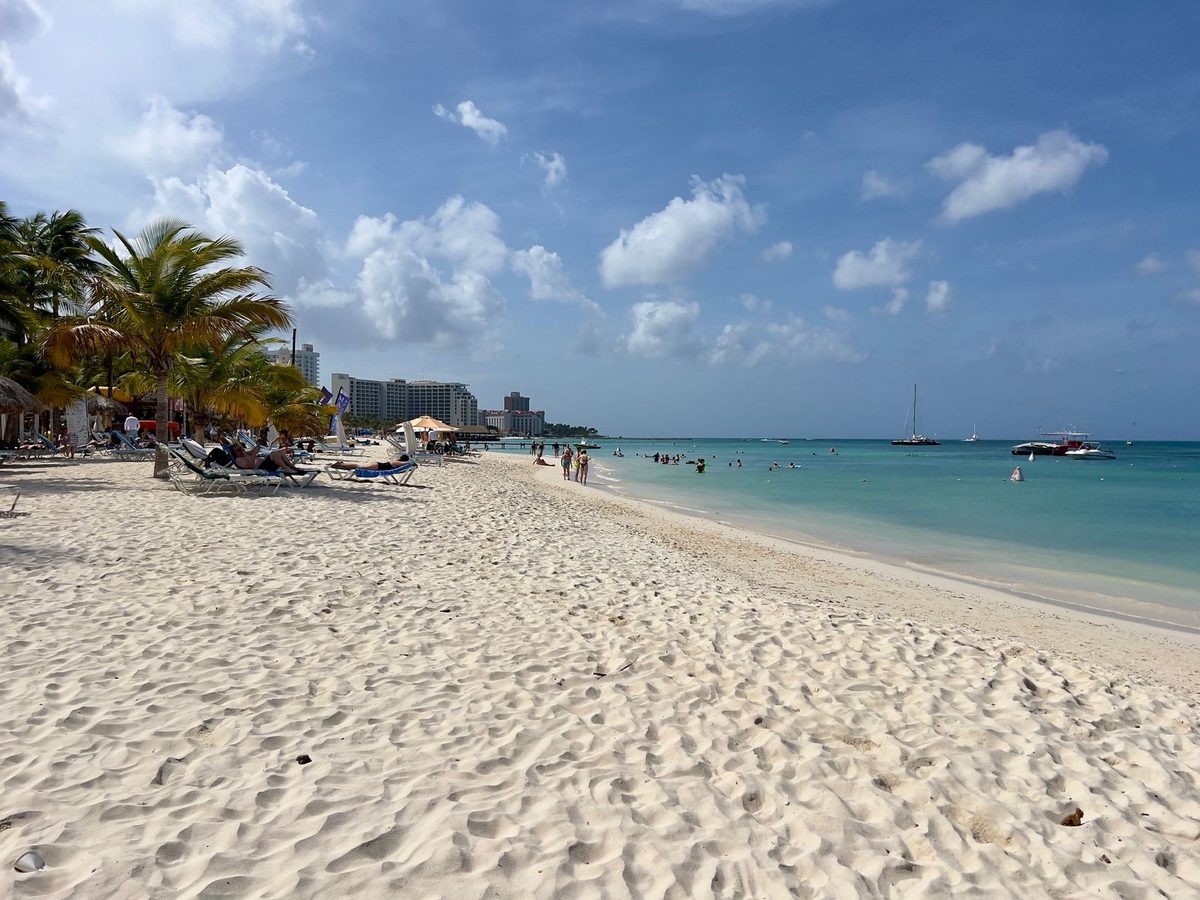
Here is the move that surprises people. Eagle Beach is consistently ranked among the best beaches on earth — wide, white, low-rise, with the famous wind-bent fofoti trees — and you can sleep directly across the road from it without paying resort money. The way you do that is MVC Eagle Beach.
MVC is a small, low-rise, family-run hotel set right across J.E. Irausquin Boulevard from the sand, roughly a five-minute walk to the water. It describes itself, accurately, as “basic yet cozy,” and a recent renovation freshened the rooms, pool, lobby and bar; there is a restaurant on site (Tulip) that serves breakfast. Rooms have run from around $140 in quieter periods up toward $250 in peak season, which is remarkable for a property this close to a top-five-in-the-world beach. It is not fancy and it is not trying to be. What it is, is the single clearest example of how to get an Eagle Beach vacation on a budget — you are buying location and friendliness instead of marble and a spa, and on a beach this good, location is the whole game.
Just inland and along the low-rise belt you will also find a scattering of small apartments and guesthouses that ride the same logic: a short walk or bus from Eagle and Manchebo beaches, priced well below the towers a little farther up the coast.
On the Beach vs. Off the Beach: Where the Real Savings Hide
This is the single most important budget decision you will make in Aruba, so it gets its own section. Almost everything you pay extra for in this destination is the privilege of sleeping where your toes can touch the sand. Give that up — even a little — and the price drops dramatically.
The case for staying off the beach
Here is the thing nobody on a resort website will tell you: Aruba’s beaches are public. Every inch of Eagle, Palm, Manchebo, Druif and the rest is open to anyone, whether you slept on the sand or took a five-minute bus from town. So the question is not “do I get to enjoy the famous beaches?” You always do. The question is only “how many steps from my bed to the water am I willing to add in order to save real money?”
For most budget travelers, the answer should be “a few.” A room a couple of blocks inland in Noord, or in Oranjestad with a short bus ride, can cost half of what the beachfront tower charges, and you spend the saved money on experiences. You are at the beach all day anyway; you are only in the room to sleep, shower and change. Paying a premium to be ten steps closer to water you visit at 9am and leave at sunset is, for a thrifty traveler, the easiest cut to make.
When paying for the beach is worth it
I will not pretend off-beach is always better. If you have very young kids and want to dash back for naps, if mobility is a concern, or if your whole vision of the trip is rolling out of bed onto the sand, then a value beachfront option like MVC Eagle Beach earns its slightly higher rate. The trick is to choose the cheapest property that is genuinely on or across from the beach, rather than a pricey one — that is where MVC and a handful of low-rise apartments shine. Decide honestly which camp you are in before you book, because it is the choice that most shapes your final bill.
Guesthouses, Inns and Apartments: Aruba’s Quiet Bargains
Beyond the named hotels, Aruba’s best value often lives in its small guesthouses and self-catering apartments — and learning to look here is what separates a savvy budget trip from an expensive one.
Why a kitchen changes the whole budget
If I could give a budget traveler one piece of Aruba advice, it would be this: book a room with a kitchenette. Eating every meal out is the silent budget-killer on this island, where a casual restaurant dinner for two can rival the room rate. An apartment or studio with even a small kitchen lets you stock up at a supermarket like Ling & Sons or one of the big stores near Oranjestad, make your own breakfast and a few simple dinners, and keep cold drinks on hand instead of buying them beachside. Self-catering buildings such as Camacuri Apartments, Coconut Inn, Arubiana Inn and the apartment-style suites at The Mill Resort are built for exactly this. For a week-long stay, the grocery-versus-restaurant difference alone can pay for a day or two of your room.
Guesthouses and the local-host advantage
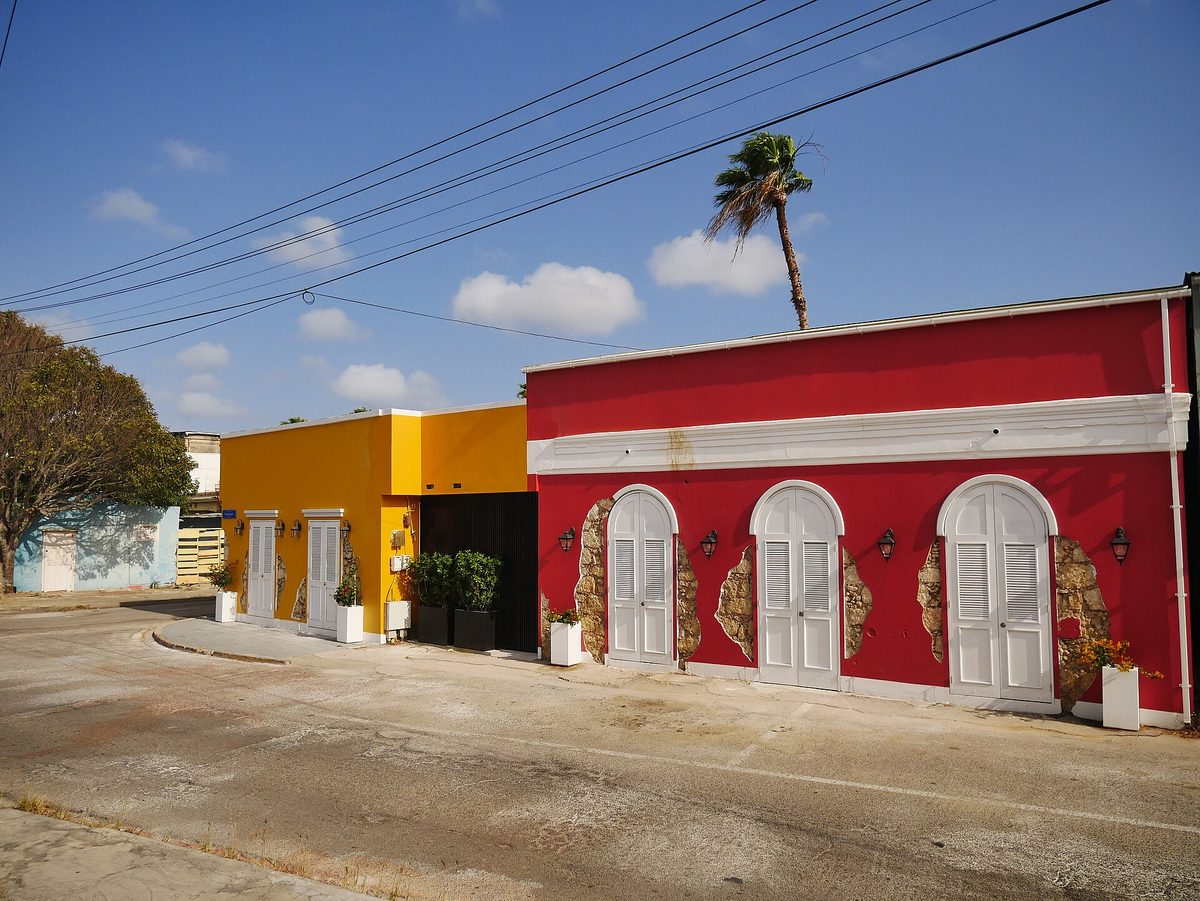
Aruba has a real network of small guesthouses and rooms run by local families, concentrated in Oranjestad, Noord and the residential pockets between them. These are the closest thing the island has to budget lodging, and beyond the low rate they come with something the towers cannot match: a host who actually lives here and will tell you which food truck to hit, which beach is calm that week, and which day the bus schedule shifts. The rooms are simple — expect a bed, a fan or AC, a clean bathroom, maybe a shared or kitchenette setup — but the price and the local knowledge are the payoff.
Vacation rentals and condos for longer stays
If you are staying a week or more, or traveling as a family or small group, a privately rented condo or apartment frequently beats a hotel on both price and comfort. You get more space, a full kitchen, often laundry, and a per-night rate that drops the longer you stay. Look slightly inland or in the low-rise areas, split the cost across the group, and the per-person number can fall below even the cheap hotels. We dig into this in our dedicated guidance on evenings and entertainment; for budget travelers it is one of the strongest plays on the island.
How to Cut Your Aruba Costs (Beyond the Room)
The hotel is the biggest lever, but the difference between a budget trip and a blown budget is the sum of a dozen small habits. These are the ones that move the needle most.
Travel in low or shoulder season
Timing is the cheat code. Rates roughly tier into three seasons: peak (about December through April) is the priciest and busiest; shoulder (around May through August) brings moderate prices and thinner crowds; and the low season (roughly September into November) carries the lowest rates of the year — sometimes 30–50% below peak for the same room. Aruba sits below the main hurricane belt, so the off-season weather is generally reliable and hot, which is part of what makes those months such a value. If your dates are flexible, booking outside the December–April window is the easiest large saving available, on both hotels and flights. See our seasonal breakdown for the month-by-month detail.
Ride the Arubus instead of taxis
Taxis in Aruba are expensive and unmetered, and they will quietly become your biggest non-hotel cost if you let them. The fix is the Arubus, the island’s public bus. It is cheap (think a few dollars each way, less with a day pass), reliable, and it runs the busy corridor from the Oranjestad hub up to Eagle Beach, Palm Beach and the hotel strip throughout the day. For a budget traveler this single habit — staying near a bus stop and using the bus instead of cabs — can save more over a week than almost anything else. A short multi-day car rental can also beat taxis if you want to explore the wild side of the island, and it splits well across a group.
Eat where locals eat
Restaurant prices on the strip are tuned to resort guests on vacation budgets. Step away from them and the island gets affordable fast. Aruba’s food trucks and casual local spots serve generous plates — pastechi, fresh fish, ribs, local stews — often in the $8–15 range, and a solid local meal can come in well under $25 a head. Combine that with a kitchen in your room for breakfasts and the odd dinner, and your food spend can drop by half or more versus eating every meal at sit-down restaurants. One more freebie: Aruba’s tap water is produced by reverse osmosis and is safe to drink, so skip the bottled water and refill.
Lean on the free beaches and free attractions
The best things in Aruba are free, which is wonderful news for a budget. Every beach is public and costs nothing — Eagle, Palm, Manchebo, Baby Beach, the lot. Beyond the sand, the colorful Aruba Streetcar through downtown Oranjestad is free to ride, the climb up Hooiberg (a few hundred steps to a panoramic island view) costs nothing, the California sand dunes and several natural-bridge viewpoints are open and free, and simply wandering Oranjestad’s pastel streets is a fine afternoon. Build your days around these and you can fill a whole trip with memorable things to do without buying a single ticket. We keep a fuller list of the island’s no-cost highlights if you want to plan around them.
The Best Budget Approach by Traveler Type
“Budget” means something different depending on who is traveling. Here is how I would steer each kind of visitor.
For backpackers and solo budget travelers
Aruba is not a backpacker hub — there is no real hostel scene — so set expectations: your cheapest realistic bed is a simple guesthouse room or a budget studio, not a $10 dorm. Base yourself in Oranjestad to be on the bus line and near cheap eats, travel in low season, live off food trucks and groceries, and spend your days on free beaches and free hikes. A lean solo traveler can keep daily costs to roughly $150 or so excluding flights with that approach. The island rewards you with safety, easy buses and walkable towns, which makes solo budget travel here unusually low-stress.
For families stretching the budget
Families should chase space and a kitchen above all. An apartment-style suite or a rented condo with a kitchen and a pool — The Mill Resort, a Noord apartment, MVC across from Eagle Beach — lets you cook breakfasts, do laundry, and skip the per-head restaurant carnage. Choose a low-rise area with gentle, shallow water (Eagle and Manchebo are ideal for little ones), use the bus, and fill days with free beach time. The combination of self-catering plus free beaches is what makes an Aruba family trip affordable. Our family-focused planning covers the kid-friendly logistics in more depth.
For couples who want value, not a hostel
Couples usually want something a little nicer than a bare guesthouse but well short of resort prices, and that sweet spot is exactly where Aruba’s budget boutiques live. Brickell Bay just off Palm Beach, a tidy room at MVC across from Eagle Beach, or a stylish small guesthouse in town all deliver a romantic-enough base for a fraction of the high-rise rate. Spend the savings where it counts for a couple — a sunset sail, one really good dinner — rather than on a room you are barely in.
What to Skip to Keep Aruba Cheap
Saving money is as much about what you say no to as what you book. A few honest “skip these” calls:
- Skip the beachfront high-rise tower if budget is the goal — you are paying a steep premium for sand you can reach for free from a cheaper room nearby.
- Skip taxis for routine trips. They add up brutally; the bus does the same job for a few dollars.
- Skip three restaurant meals a day. Use your kitchen and the food trucks; save sit-down dining for a treat or two.
- Skip bottled water. The tap water is safe and excellent, so refill a bottle instead.
- Skip peak-season dates if you possibly can — the same trip in shoulder or low season can cost dramatically less.
- Skip over-booking paid tours. Pick one or two you really want; fill the rest with free beaches, hikes and town wandering.
None of this means a worse trip. Honestly, some of my favorite Aruba days — a food-truck dinner, a free beach, a bus ride into town — are the cheap ones. Doing the island thriftily can make it feel more local, not less.
Putting It Together: A Cheap-but-Great Aruba Plan
So here is the whole strategy in one breath. Book a simple, well-located stay — MVC across from Eagle Beach, a Noord budget inn like Coconut Inn, or a self-catering apartment in or near Oranjestad — ideally with a kitchen. Go in shoulder or low season. Get around on the Arubus, eat from food trucks and your own kitchen, drink the tap water, and build your days around Aruba’s free public beaches and free attractions. Do that and a famously pricey island turns into one of the Caribbean’s best value trips, without giving up a single thing that makes Aruba special. If you want a day-by-day plan, our Aruba itinerary and travel tips slot these budget moves into a full trip. For the bigger picture, our overview of where to stay across the island maps how the budget areas fit alongside everything else, and our rundown of total trip costs shows where the rest of your money goes.
Frequently Asked Questions About Cheap Hotels in Aruba
Are there really cheap hotels in Aruba, or is the whole island expensive?
There are genuinely affordable hotels, but “cheap” is relative to Aruba’s premium baseline. Simple, locally run places in Oranjestad and Noord, or value low-rises like MVC Eagle Beach, run far below the beachfront towers — roughly $100–180 a night in many seasons, dipping lower off-peak. The island skews pricey overall, but smart choices on location, season and dining keep a budget trip very doable.
What is the cheapest area to stay in Aruba?
Oranjestad, the capital, is usually the cheapest base because it is not on a swimming beach — you trade beachfront for a walkable town with the bus hub, supermarkets and casual food. Noord, just behind Palm Beach, is the next best value: a few blocks inland from the sand, with budget inns and apartments and an easy walk or bus to the beach.
How much money do I need per day in Aruba on a budget?
Plan on roughly $150–220 a day for a budget couple excluding flights, or about $150 a day for a lean solo traveler. That assumes a simple room, meals from food trucks and a kitchen rather than restaurants, the Arubus instead of taxis, and mostly free beaches and attractions. Mid-range travel runs closer to $300–400 a day, so the budget habits genuinely move the number.
When is the cheapest time to visit Aruba?
The low season — roughly September into November — brings the lowest hotel and flight prices of the year, often well below peak rates, with fewer crowds and reliably hot weather since Aruba sits below the main hurricane belt. Shoulder months around May through August are moderately priced too. Peak season, about December through April, is the most expensive and busiest stretch.
Can I stay near a good beach in Aruba on a budget?
Yes. The clearest example is MVC Eagle Beach, a basic, friendly low-rise directly across from world-famous Eagle Beach for far less than the resorts. Because every Aruba beach is public and free, you can also book a cheaper room a few blocks inland and reach the same sand in a short walk or quick bus ride — so a great beach does not require a great room rate.
Is it cheaper to book a hotel or an apartment in Aruba?
For one or two nights a budget hotel is often simplest, but for a week or for families and groups, a self-catering apartment or condo usually wins. You get a kitchen (which slashes the food bill), more space, sometimes laundry, and a nightly rate that drops the longer you stay. Splitting an apartment across a group can push the per-person cost below even the cheap hotels.
Can you drink the tap water in Aruba?
Yes — and it is a real money-saver. Aruba produces its tap water through reverse-osmosis desalination, and it is safe, clean and good-tasting across the island. Skip the bottled water entirely, carry a refillable bottle, and you will save a surprising amount over a week while cutting plastic waste at the same time.
Final Thoughts
Aruba earned its glossy, big-spender image honestly — the beaches really are that good and the high-rise strip really is that polished. But the image is only half the story. Step a few blocks off the sand, book a small family hotel or an apartment with a kitchen, ride the bus, eat like a local and time your trip well, and the same island becomes genuinely affordable. The good cheap hotels in Aruba are not a compromise; they are a smarter way to experience a place where the best parts — the sea, the sand, the sun, the easy local rhythm — never cost a thing. Plan it right and you will come home with a tan, a stack of great memories and money still in your pocket.