Every few weeks someone messages me some version of the same nervous question: “Be honest — can you actually do Aruba cheap, or is it one of those islands where you either bring a fat wallet or stay home?” I get why people ask. The marketing is wall-to-wall infinity pools and swim-up suites, and the high-rise strip will gladly empty your account. So here’s my honest, slightly contrarian answer, and I’ll spend the rest of this guide proving it: yes, a genuinely cheap Aruba vacation is absolutely doable, and it doesn’t have to feel like punishment. I’ve watched friends do a comfortable week here for less than what they assumed three nights would cost, and the only thing they gave up was the resort logo on the towel.
The trick is that “cheap” on this island isn’t about being stingy once you land — it’s about a handful of decisions you make before you go. Pick the right week, book the right flight, sleep one street back from the sand instead of on it, and cook breakfast yourself, and the whole math changes. The same beaches, the same impossibly blue water, the same sunsets the resorts charge $14 a cocktail to watch — all of it is free or nearly free if you know how to plan around the expensive parts.
The quick answer: A no-frills week in Aruba for two people can land somewhere around $1,300–$1,900 all in, with flights often the single biggest line item. The levers that move the number most are when you go (shoulder/low season can roughly halve lodging), where you sleep (a studio with a kitchen or a low-rise over a beachfront tower), and how you eat (groceries and food trucks instead of resort restaurants). Nail those three and everything else is rounding error.
This isn’t a list of 25 random money tips you’ll forget by the time you board. It’s a step-by-step plan — a playbook — you can follow in order: choose the cheapest dates, hunt cheap flights, pick the cheapest place to sleep, build a cheap daily routine, and dodge the handful of mistakes that quietly blow a tight budget. If you want the full context on what a trip here actually runs and where the money goes, start with our deeper breakdown of Aruba vacation cost, then come back here for the how-to. Let’s build the cheap version together.
What a genuinely cheap Aruba vacation actually costs
Before the playbook, let’s anchor on numbers so “cheap” means something concrete. Below is a sample bare-bones budget for two people sharing a studio with a kitchen for seven nights in low season, eating mostly groceries and food-truck meals, and getting around by bus and on foot. Treat every figure as “around” — prices drift with season, fuel, and exchange rates (the Aruban florin runs about 1.79 to the US dollar, and dollars are accepted everywhere), so always verify current rates when you book.
| Line item (2 people, 7 nights, low season) | Cheap plan | Typical resort trip |
|---|---|---|
| Flights (2 round-trip, US East Coast) | ~$600–$900 | ~$900–$1,300 |
| Lodging (studio/low-rise vs. beachfront resort) | ~$560 ($80/night) | ~$2,450 ($350/night) |
| Food & drink (groceries + food trucks vs. restaurants) | ~$280 ($40/day) | ~$1,050 ($150/day) |
| Getting around (Arubus + walking vs. rental car + taxis) | ~$70 | ~$320 |
| Activities (free beaches/hikes vs. paid tours) | ~$60 | ~$400 |
| Rough total | ~$1,570–$1,870 | ~$5,120–$5,520 |
Look at where the gap actually comes from. It’s not a thousand tiny sacrifices — it’s four big swaps: lodging, food, transport, and activities. The cheap column isn’t roughing it, either. You’re still on Eagle Beach every day; you’re just sleeping a five-minute walk away and making your own coffee. That’s the whole game. The rest of this guide is how to pull each of those levers without making the trip feel grim.
Step 1: Choose the cheapest dates (this one decision saves the most)
If you only optimize one thing, make it timing. Nothing else on this list moves the total as much as the calendar, because Aruba’s lodging prices swing wildly by season while the island itself — the weather, the water, the sun — barely changes.
Go in low or shoulder season
High season runs roughly mid-December through mid-April, when snowbirds flood in and room rates can sit 40–60% above their off-peak levels. The sweet spot for a cheap trip is roughly mid-April through early December, with the deepest discounts from late August into November. Here’s Aruba’s unfair advantage over most of the Caribbean: it sits below the hurricane belt, so the “low season” doesn’t come with the usual storm anxiety. You’re trading a slightly hotter, occasionally breezier day for hotel prices that can be nearly half. To me that’s the easiest money I save all trip. For a fuller month-by-month rundown, our guide to the best time to visit Aruba breaks down exactly how rates move.
Fly midweek and stay flexible
Once you’ve picked a cheap month, zoom in on the days. A Tuesday-to-Tuesday or Wednesday-to-Wednesday trip is routinely cheaper than the Saturday-to-Saturday pattern everyone defaults to, both on airfare and sometimes on lodging. If your dates can flex even by a day or two, you’ll often find a fare that’s $100–$200 lower per person. Avoid US holiday weekends and school breaks, when everyone else is booking the same flights.
Don’t shorten the trip to save — restructure it
A counterintuitive point: a longer cheap trip can cost less per day than a short expensive one, because the flight (your fixed cost) gets spread over more nights. Five to seven nights in a kitchen-equipped studio usually beats three nights in a resort on both total comfort and cost-per-day. So instead of cutting nights, cut the nightly rate. More on that in Step 3.
Step 2: Find cheap flights to Aruba
For most people flying from the US mainland, airfare is the biggest single line on the whole trip, which makes it the place where a little effort pays off most. Aruba’s airport (AUA, Queen Beatrix International) gets a lot of nonstop service from the East Coast and decent connections from elsewhere, so you have real options to play with.
Set fare alerts early and watch, don’t pounce
The moment you have a rough month in mind, set up price alerts on a flexible search tool and let them run for a few weeks. You’re learning the “normal” price for your route so you’ll recognize a genuine deal when it appears. Use the flexible-dates or whole-month calendar view to spot the cheapest day combinations, and don’t get emotionally attached to a specific Saturday. Booking roughly one to three months out for a low-season trip tends to hit the sweet spot; last-minute Caribbean fares rarely drop.
Check nearby airports and nonstop vs. connecting
If you live near more than one airport, price all of them — a 90-minute drive to a different departure city can save a couple hundred dollars per ticket. Nonstop flights are wonderful and worth a modest premium for the saved hassle, but if a one-stop connection is meaningfully cheaper and you’re optimizing for price, take it. Just give yourself a sane layover so a delay doesn’t cost you a missed connection (and a hotel night you didn’t budget for).
Fly light to dodge bag fees
Checked-bag fees quietly add up, especially on the budget-leaning carriers. Aruba is a shorts-and-swimsuit destination — you genuinely need less than you think. Packing carry-on only can save $60–$140 per person round-trip, which on a cheap trip is a whole extra day of food. Pack a collapsible tote for the beach and a refillable water bottle (tap water here is desalinated and safe to drink, so you’re not buying cases of bottled water either).
For the bigger picture on flight routes, transfers, and what to expect on arrival, our overview of getting to and around Aruba covers the logistics so you can focus on price here.
Step 3: Pick the cheapest place to stay
This is the lever that surprises people most. The beachfront high-rises on Palm Beach are gorgeous and brutal on a budget. But you do not need to sleep on the sand to spend your days on it — the beaches are public and free, so where you sleep is purely a cost decision. Move one or two streets back, or to a quieter beach, and your nightly rate can drop by half or more for the exact same sunshine.
Studios and vacation rentals with a kitchen
The single best-value lodging for a cheap trip is a studio or one-bedroom rental with a kitchenette, often in the range of around $70–$110 a night in low season. The kitchen is the real prize: it turns breakfast and a few dinners into grocery money instead of restaurant money, which (as the budget table showed) is where the typical trip bleeds cash. Look in the Eagle Beach / Manchebo low-rise area, in or near Oranjestad, and in residential pockets like Noord that are a short hop from the beaches.
Low-rise hotels over beachfront towers
The low-rise hotels around Eagle Beach and Manchebo Beach tend to be smaller, calmer, and cheaper than the Palm Beach high-rises, while sitting on what many regulars consider the better stretch of sand. If you want a “real hotel” feel without the resort price, this is the zone to shop. Our guide to where to stay in Aruba maps out every neighborhood so you can match a cheaper area to the vibe you want, and the rundown of Aruba’s beaches helps you pick which free stretch to base yourself near.
Guesthouses, studios in Oranjestad, and splitting costs
For the lowest tier, look at guesthouses and small apartment rentals, several of which cluster around Oranjestad and run cheaper than anything beachfront. They’re simple, often family-run, and perfectly comfortable for travelers who plan to be out at the beach all day anyway. Two more cost-killers: travel with another couple and split a two-bedroom rental (halving lodging is the fastest budget win there is), and always book a place with a kitchen even if you only use it for breakfast and drinks. If an all-inclusive ever does go on a deep shoulder-season sale, it can occasionally pencil out — our look at Aruba all-inclusive resorts explains when the math works and when it doesn’t.
Step 4: Eat cheap without eating badly
Food is where good intentions go to die. Resort restaurants and the Palm Beach tourist strip are happy to charge $30–$50 a plate, and three sit-down meals a day for two people will quietly become the most expensive part of your trip. The fix isn’t to starve — it’s to eat the way locals do and save the splurges for one or two meals you actually care about.
Hit the grocery store first
Your very first stop after checking in should be a supermarket. The big ones (Super Food Plaza is the famous one, but there are several) carry everything you need to handle breakfasts, beach snacks, drinks, and a couple of simple dinners. A week of groceries for two runs somewhere around $70–$120 — roughly the cost of a single restaurant dinner for two. Coffee in your studio, sandwiches and fruit for the beach, a few pasta-and-salad dinners at “home,” and you’ve already saved hundreds. Buy your beer, wine, and rum at the store too; bar markups are where budgets evaporate.
Eat from the food trucks and lunch specials
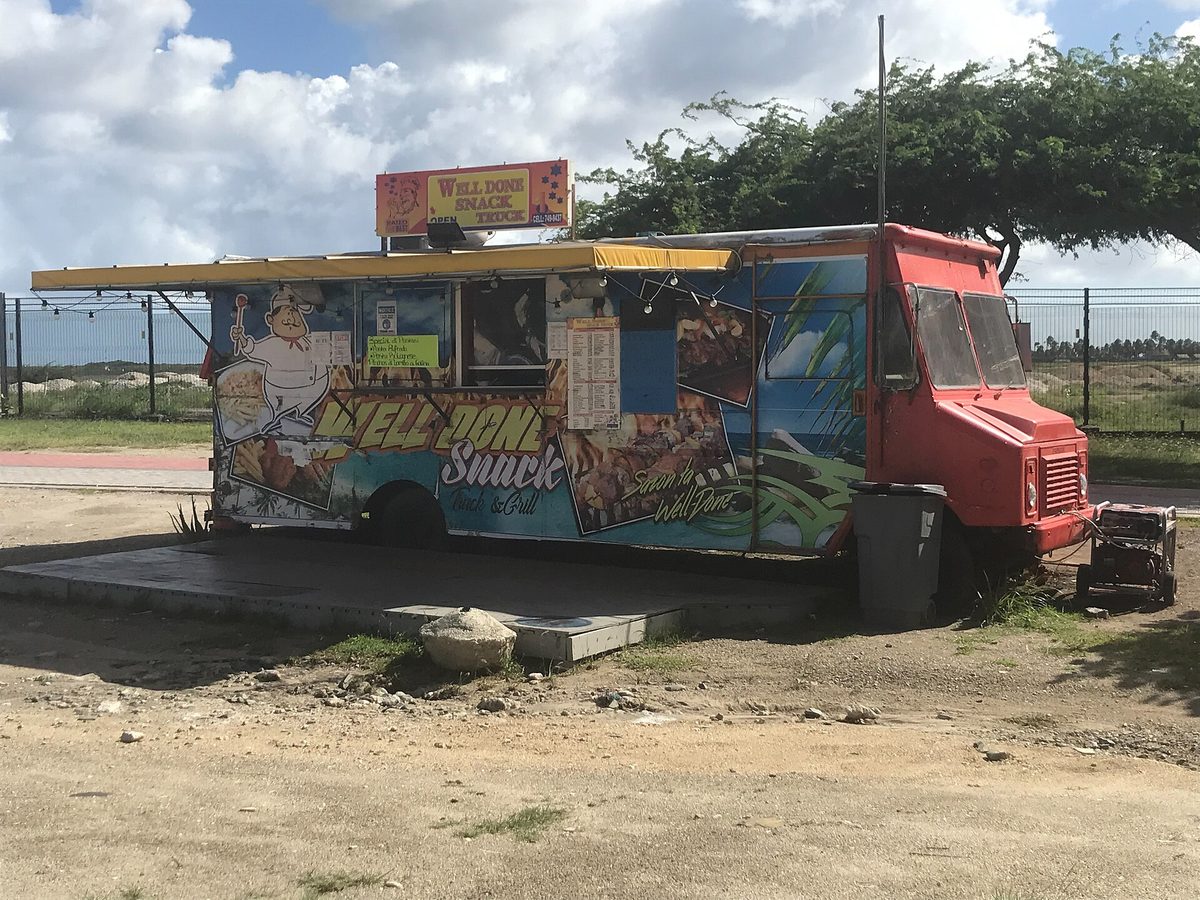
Aruba’s food-truck scene is genuinely good and genuinely cheap — think fresh local plates, arepas, fish, and ribs for roughly $8–$15. They cluster in Oranjestad in the evenings and are a highlight, not a compromise. For sit-down meals, eat your big meal at lunch, when many restaurants run “lunch specials” or “early bird” menus at a fraction of dinner prices for nearly the same food. Look for the roadside snack spots and hole-in-the-wall local places away from the resort strip; that’s where the value (and often the best food) hides.
Budget one real splurge
A cheap trip doesn’t mean zero treats. Pick one memorable meal — a fresh-catch dinner, a famous food truck, a sunset drink with your feet in the sand — and budget for it on purpose. It costs little when it’s the exception instead of the default, and it keeps the whole week from feeling like deprivation. For ideas across every price range, our guide to Aruba restaurants flags the spots worth your one splurge and the cheap local gems worth repeating.
Step 5: Fill your days with free and low-cost things to do
Here’s the best news for a cheap trip: the headline attraction in Aruba — the beaches and the water — is completely free, and it’s the thing most people come for anyway. Build your days around the free stuff and sprinkle in a couple of cheap paid extras, and you’ll barely dent your budget.
Free beaches and shore snorkeling
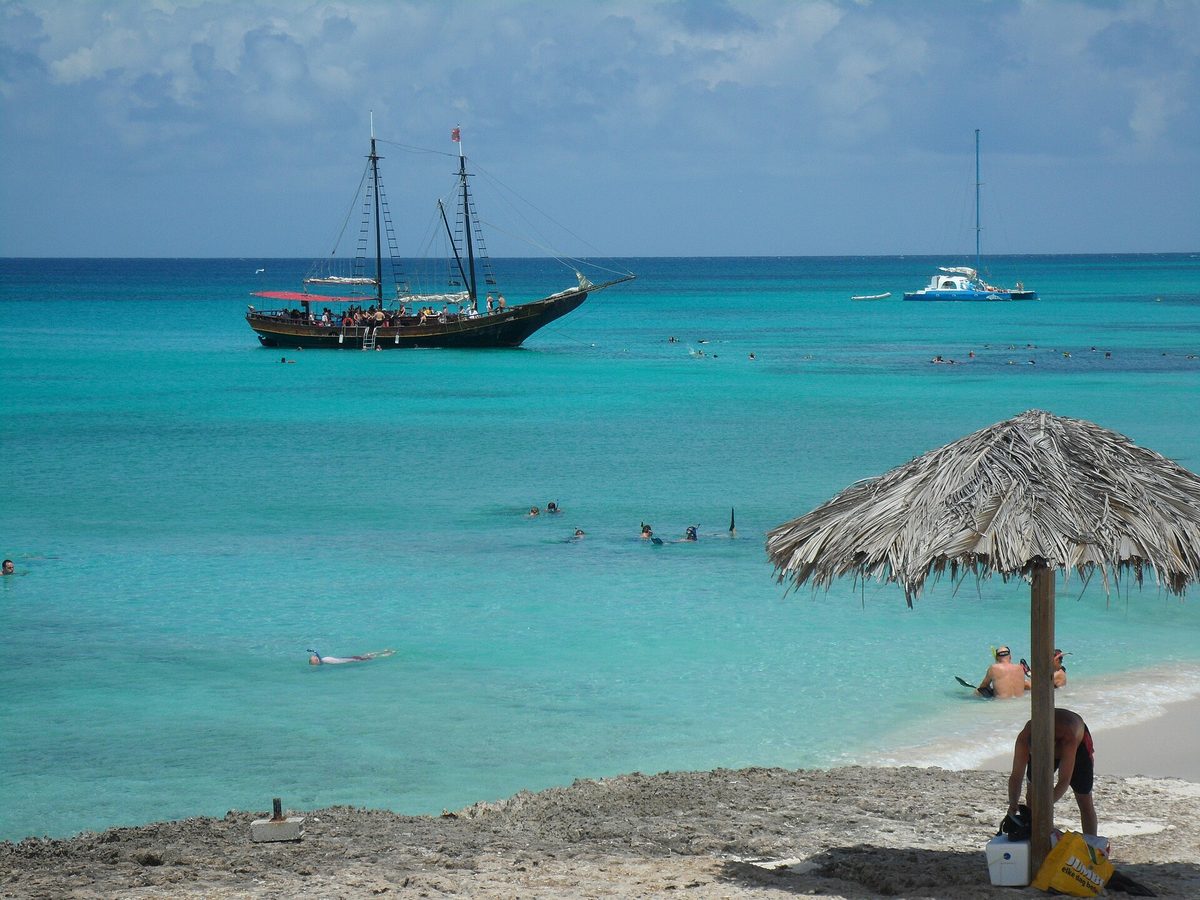
Every beach in Aruba is public and free, including the famous ones. Eagle Beach (those wide, white sands with the divi-divi trees), Palm Beach, Arashi, and Baby Beach cost nothing to enjoy. Bring your own snorkel mask and you’ve unlocked free underwater days: Boca Catalina and Malmok on the northwest coast have calm, shallow water and reef fish right off the shore — no boat tour required. A $25 snorkel set from home pays for itself on day one versus a guided trip. Our roundup of free things to do in Aruba is the perfect companion to this section, and the broader things to do in Aruba guide covers the paid options worth saving up for.
Arikok National Park on foot, downtown, and the lighthouse
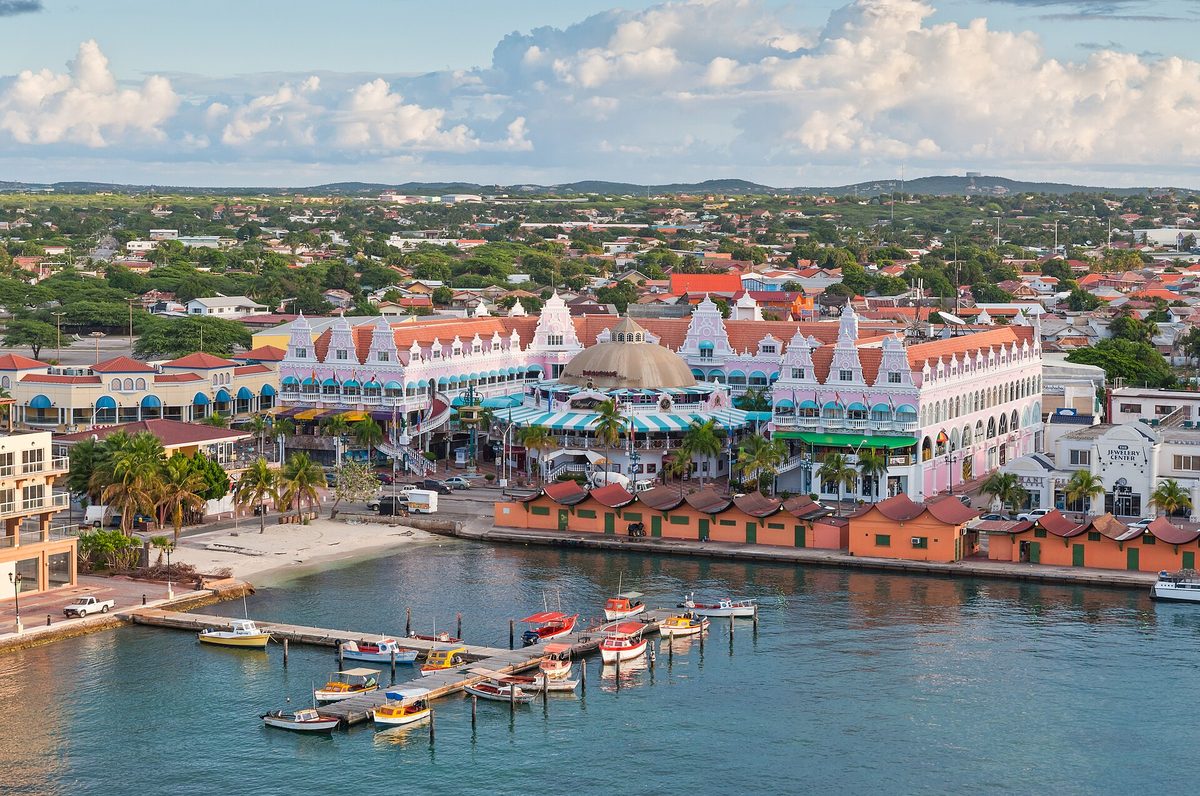
Aruba’s wild side is cheap too. Arikok National Park charges only a small entry fee (around $11 per person), and if you skip the pricey 4×4 tour and explore on foot, that’s your whole cost for a day of caves, cactus, and dramatic coastline. In Oranjestad, wandering the pastel Dutch streets, riding the free downtown trolley, and visiting the free Archaeological Museum make for a no-cost afternoon. The California Lighthouse runs about $5 to climb for one of the island’s best views. For a fuller menu of low-cost adventures, see our list of the best things to do in Aruba.
Sunsets, walks, and the things that cost nothing
Some of the best Aruba moments are free by nature. The sunset from Eagle Beach or near the California Lighthouse rivals any $14 rooftop cocktail, watched from the sand with a store-bought drink. Long beach walks, palm-shaded naps, and people-watching downtown fill the gaps between the “doing” beautifully. When you sketch out your week, our sample Aruba itinerary shows how to string the free and cheap highlights into full, satisfying days.
Step 6: Get around cheap with Arubus and your own two feet
Transportation is a sneaky budget killer if you default to taxis (no Uber here, and fares add up fast). The cheap traveler’s answer is the public bus plus walking, and it’s genuinely easy.
Ride the Arubus #10
Arubus, the public bus system, connects the airport, Oranjestad, and the entire Eagle Beach–Palm Beach hotel strip for a few dollars a ride. The #10 line is the one most visitors live on — it runs between downtown and the beaches frequently throughout the day. Fares are around $2.60 one-way or about $5 round-trip, and a full-day pass is roughly $10. Compare that to a single airport taxi that can run $25–$40 one-way, and the bus pays for your groceries. Pay the driver when you board, and keep small US dollars or florins handy.
Walk, and skip the rental car if you can
If you base yourself near Eagle Beach or in the low-rise area, you can walk to the sand, to restaurants, and to a supermarket — which means you may not need a car at all. A rental runs around $30–$45 a day before fuel and parking, so on a cheap trip the bus-and-walk combo can save $200+ over the week. The one case for renting: if you’re a group splitting the cost and you want a day or two exploring Arikok and the rugged interior, a single shared rental day can be worth it. Otherwise, let the #10 do the work.
A sample bare-bones cheap Aruba vacation budget, day by day
To make the playbook concrete, here’s how a real cheap week actually flows for two people in a studio with a kitchen, using everything above. It’s not a fantasy “$0 a day” stunt — it’s a comfortable, realistic week that happens to be cheap. Numbers are rounded and per couple unless noted; verify current prices when you book.
- Day 1 — Arrive, provision, settle in. Arubus from the airport (~$5), grocery run for the week (~$90 one-time), simple dinner “at home.” Beach walk at sunset (free).
- Day 2 — Eagle Beach. Free beach day with your own umbrella-shade and snorkel gear. Lunch from a food truck (~$24 for two). Cook dinner. Cost: ~$24.
- Day 3 — Snorkel Malmok/Boca Catalina. Bus up the coast (~$10 round-trip for two), free shore snorkeling, packed beach lunch from groceries. Cost: ~$10.
- Day 4 — Oranjestad day. Free trolley, free Archaeological Museum, pastel-street wandering, food-truck dinner (~$28). Cost: ~$28.
- Day 5 — Arikok on foot. Park entry (~$22 for two), explore caves and coast, pack lunch. Cost: ~$22.
- Day 6 — Your one splurge. Lazy beach morning, then a real restaurant dinner or sunset spot (~$70). Cost: ~$70.
- Day 7 — Slow beach day + lighthouse. California Lighthouse climb (~$10 for two), last swim, leftovers for dinner. Cost: ~$10.
Add it up and the on-island spend (excluding flights and lodging) lands around $200–$300 for the week per couple — food, transport, and activities combined. Stack that on roughly $560 of lodging and your chosen flights, and the bare-bones cheap week is very much real. If you want to push it even leaner, drop the splurge and the rental-free days carry the whole thing on bus fare and groceries.
Mistakes that quietly blow a cheap Aruba budget
Most people who “tried to do Aruba cheap and it didn’t work” got tripped up by the same handful of avoidable mistakes. Dodge these and the plan holds.
- Booking high season by accident. Stumbling into mid-December–April pricing can double your lodging before you’ve done anything else. Check the season first.
- Sleeping on the beach you could walk to. Paying the beachfront-tower premium when a studio one street back costs half — for the same free beach — is the most common money leak.
- Eating every meal out. No kitchen, three restaurant meals a day, and bar drinks will sink a budget faster than anything. Provision groceries on day one.
- Defaulting to taxis. A few airport-and-back taxi rides can cost more than a week of bus passes. Learn the #10.
- Over-booking paid tours. When the beaches and snorkeling are free, you don’t need a paid excursion every day. Pick one or two that genuinely excite you.
- Forgetting the resort fees and taxes. Hotels often add service charges and tourism levies; rentals usually don’t. Read the fine print so your “cheap” rate stays cheap.
- Paying baggage fees you didn’t need. Overpacking for a swimsuit island means checked-bag fees for clothes you won’t wear. Go carry-on.
For a broader set of on-the-ground pointers — currency, tipping, safety, what to pack — our Aruba travel tips guide rounds out the practical side so nothing catches you off guard.
How to plan a cheap Aruba vacation: the one-page checklist
If you remember nothing else, run this order and you’ll have a cheap Aruba vacation built before you know it:
- Pick a low/shoulder-season month (roughly mid-April–early December) and flex your days midweek.
- Set flight alerts, compare nearby airports, and book carry-on only 1–3 months out.
- Book a studio or low-rise with a kitchen near (not on) Eagle Beach or in Oranjestad — split it with friends if you can.
- Provision groceries on arrival; eat food trucks and lunch specials; budget one splurge.
- Build days around free beaches, shore snorkeling, Arikok on foot, and downtown.
- Ride the Arubus #10 and walk; skip the rental car unless you’re splitting it for a day.
Follow those six steps and the scary “is cheap even possible?” question answers itself. For the numbers behind all of it — and to see how this fits the bigger picture of what a trip here costs — head back to our pillar guide on Aruba vacation cost.
Cheap Aruba vacation FAQ
Can you really do Aruba on a budget?
Yes. A no-frills week for two can run around $1,300–$1,900 all in, versus $5,000+ for a typical resort trip. The savings come from four swaps: travel in low season, sleep in a studio or low-rise near (not on) the beach, cook with groceries and eat food trucks, and use the public bus. The beaches and water — the main draw — are free.
What is the cheapest time to visit Aruba?
The cheapest stretch is roughly late August through November, within the broader low season of mid-April to early December, when lodging can run 40–60% below winter rates. Because Aruba sits below the hurricane belt, this period is low-risk for storms — you’re mostly trading slightly hotter days for much cheaper rooms. Flying midweek shaves the cost further.
How much money do I need per day in Aruba on a budget?
On a tight budget, plan for roughly $40–$60 per day per couple for food, around $10 for the bus, and little to nothing for free-beach activities — call it $50–$80 a day on the island, excluding lodging and flights. Add one splurge meal here and there. Staying somewhere with a kitchen is what keeps the daily number that low.
Is it cheaper to stay in an Airbnb or a resort in Aruba?
For budget travelers, a studio or apartment rental with a kitchen almost always wins. Beachfront resorts run around $300–$400 a night, while a kitchen-equipped rental near the beach is often $70–$110. The kitchen also slashes your food spend. Resorts only pencil out if a deep shoulder-season all-inclusive sale beats your à-la-carte total — worth checking, rarely the default cheap option.
Do I need a rental car for a cheap Aruba trip?
Usually no. If you stay near Eagle Beach or the low-rise strip, you can walk to the sand, food, and a supermarket, and the Arubus #10 covers the rest for a few dollars a ride. A rental runs around $30–$45 a day plus fuel. Renting only makes budget sense if you’re splitting it with a group for a day or two of exploring Arikok and the interior.
Is Aruba safe and pleasant if you travel cheap?
Very. Aruba is one of the safer Caribbean islands, and traveling cheap here doesn’t mean dodgy areas or sketchy lodging — it means a comfortable studio a street back from a world-class free beach. You give up the resort logo, not the safety, the sun, or the water. Take normal precautions with valuables on the beach and you’re set.
Final thoughts: cheap doesn’t mean lesser
The thing I most want you to walk away believing is that a cheap trip here isn’t a watered-down version of the “real” Aruba — it is the real Aruba, minus a marketing premium. You’ll stand on the same blinding-white sand, float in the same impossible blue, and watch the same sun drop into the sea as the people paying five times more. The only difference is that you planned around the expensive parts instead of paying for them by default. Pick the dates, book the flight, choose the studio, provision the groceries, ride the bus, and go enjoy one of the best beaches on earth for a fraction of what everyone told you it would cost.
By the ArubaTourism.org team — Last updated June 2026. Prices are approximate and were accurate at the time of writing; the Aruban florin trades around 1.79 to the US dollar and US dollars are widely accepted. Always verify current fares, rates, and entry fees before you book.
Photo credits
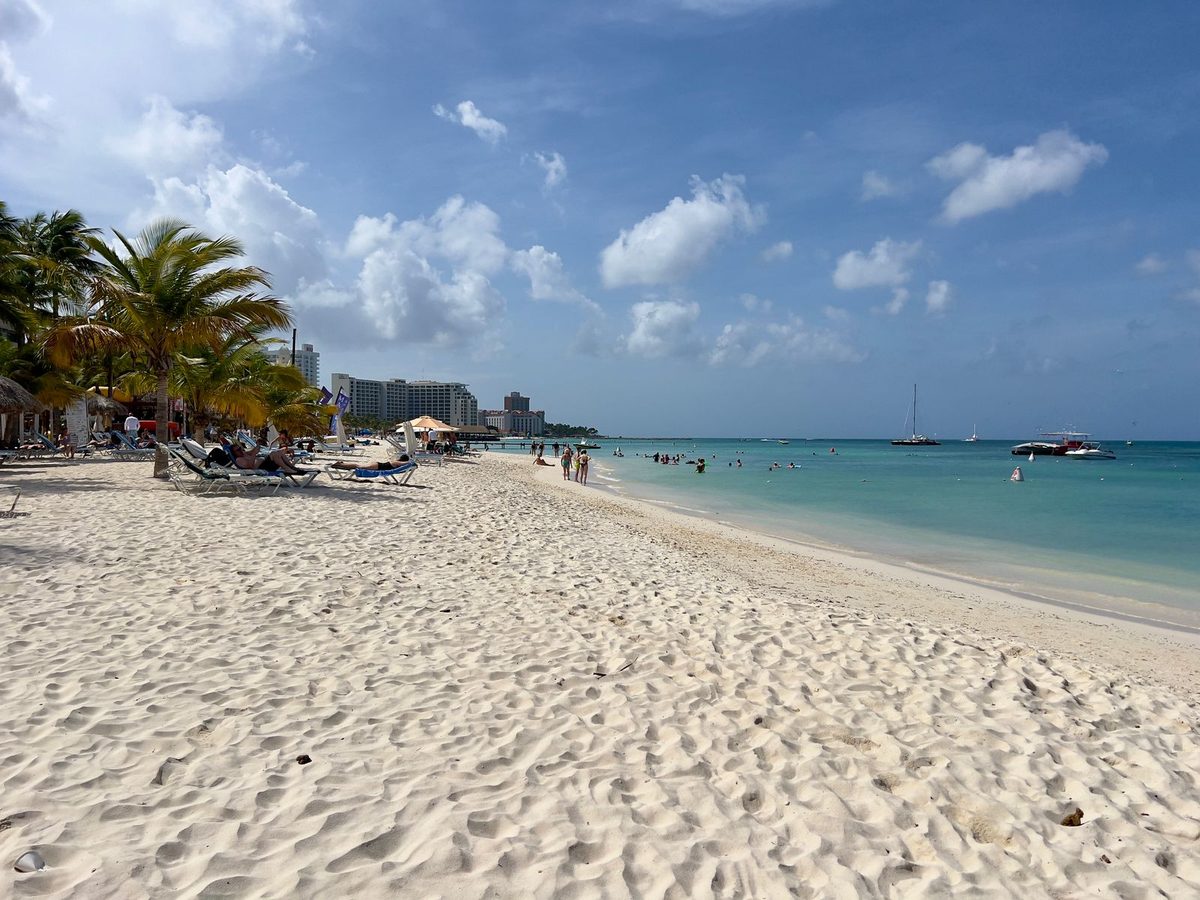
- White-sand Aruba beach with turquoise water, the heart of a cheap Aruba vacation — Photo: Kwihi / CC BY 4.0 via Wikimedia Commons. Source.
- Pastel Dutch colonial buildings in downtown Oranjestad, Aruba — Photo: Navigator334 / CC BY-SA 4.0 via Wikimedia Commons. Source.
- Local food truck in Aruba serving inexpensive island plates — Photo: Caribiana / CC BY-SA 4.0 via Wikimedia Commons. Source.
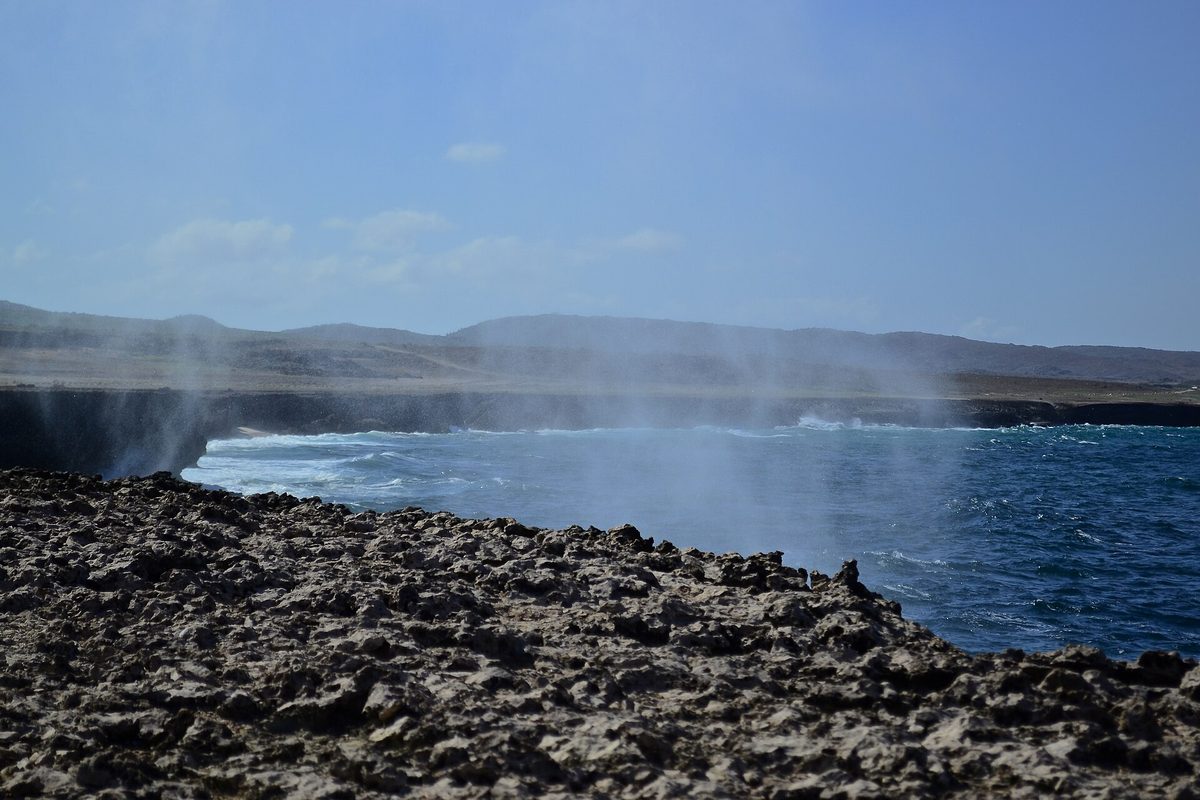
- Rugged cactus-dotted coastline in Arikok National Park, Aruba — Photo: Misty Johnson / CC BY 2.0 via Wikimedia Commons. Source.
- Clear shallow turquoise water off an Aruba beach, ideal for free shore snorkeling — Photo: EgorovaSvetlana / CC BY-SA 4.0 via Wikimedia Commons. Source.