Here is the honest answer before we get into numbers: yes and no. Aruba can be one of the priciest islands in the Caribbean, or a genuinely reasonable beach trip, and which version you get is decided by two or three choices you make before you ever board the plane. Pick the wrong week, the wrong stretch of beach, and a resort restaurant for every meal, and the bill climbs fast. Pick well, and you will wonder what everyone was complaining about.
So is Aruba expensive? It sits in the mid-to-upper tier of Caribbean destinations — pricier than the Dominican Republic or Jamaica, roughly on par with Barbados or St. Lucia, and noticeably cheaper than Turks and Caicos, St. Barts, or Anguilla. The island runs on imported goods and a tourism economy, so the baseline cost of “stuff” is high. But the levers that actually swing your total — when you go, where you sleep, and how often you eat where the cruise crowd eats — are entirely in your hands. This guide is the candid version of how those levers work, with current price ranges you can sanity-check before you book. For the full budgeting picture, our Aruba vacation cost hub breaks down sample trips end to end.
The 40-second answer
Aruba is moderately expensive for the Caribbean: plan on roughly $150–250 per person, per day for a comfortable mid-range trip (3- to 4-star hotel, restaurant meals, the odd tour), under $120 a day if you stay off the resort strip and self-cater, and $400–800+ a day at the luxury end. The single biggest variable is timing — travel in the low season and the same hotel can cost 25–40% less. Flights, not the island, are often the largest line item.
At a glance: what things actually cost in Aruba
Prices below are typical 2026 ranges in US dollars (the local florin is pegged to the dollar, and greenbacks are accepted everywhere, so you rarely need to convert). Treat these as ballpark figures and confirm current rates when you book — tourism prices drift upward most years.
| Item | What you’ll likely pay | Honest take |
|---|---|---|
| High-rise resort, per night (Palm Beach) | around $280–500 | Peak-season rates; the headline expense |
| Low-rise / boutique hotel, per night | around $150–250 | Eagle Beach & Manchebo; better value, same sand |
| Guesthouse or studio (Noord/Paradera) | around $80–130 | 10-minute drive to the beach, big savings |
| Dinner for two, mid-range with drinks | around $90–150 | Where Aruba feels expensive fastest |
| Casual local lunch (e.g. fried fish) | around $12–18 a head | Zeerovers-style spots; great value |
| Cocktail on the strip | around $12–18 | Half that at happy hour or a local bar |
| Local Balashi beer (bar) | around $4–6 | Cheaper than imported brands |
| Rental car, per day | around $40–90 | Cheaper booked weeks ahead; fuel is extra |
| Arubus public bus (one-way) | around $2.60 | Day pass about $10; a genuine bargain |
| Bottled water (small, shop) | around $1.50–3 | Skip it — tap water is excellent |
| Catamaran snorkel sail (per person) | around $65–95 | The classic splurge; book direct to save |
| Public beaches & sunsets | $0 | The best part of Aruba is free |
Notice the spread. The same island that charges you $16 for a poolside daiquiri will sell you a plate of fresh-caught fish for $14 and let you watch the best sunset in the Caribbean for nothing. That gap is the whole story.
Why is Aruba expensive in the first place?
It helps to understand why prices run high, because it tells you exactly where to push back. Three forces are at work.
Almost everything is imported
Aruba is a small, dry, limestone-and-cactus island with very little agriculture and no meaningful manufacturing. Nearly everything — food, fuel, building materials, the beer that isn’t Balashi, the lime in your cocktail — arrives by ship or plane. Add freight, import duties, and the cost of warehousing on an island, and a box of cereal or a bottle of wine simply costs more than it would on the mainland. This is the structural reason groceries and restaurant ingredients aren’t cheap, and it isn’t going away.
It’s a tourism economy priced for visitors
Tourism is the engine of Aruba’s economy, and demand from North America is strong and steady. When a place is genuinely popular and the weather is reliable year-round, businesses can hold firm on price. The Palm Beach high-rise strip in particular is built around well-heeled resort guests, and the menus, spa rates, and excursion desks are priced accordingly. You are paying a convenience-and-location premium there, not just for the product.
The florin is pegged to the US dollar
The Aruban florin (AWG) is fixed to the US dollar at roughly 1.79 to 1, and dollars are accepted almost everywhere. For American travelers that means no currency-exchange games and no nasty conversion surprises — a real convenience — but it also means you never get the “favorable exchange rate” windfall that makes some destinations feel cheap. What you see is roughly what you pay, in money that behaves exactly like the cash in your pocket at home. Our Aruba travel tips cover the currency and tipping basics in more detail.
Where Aruba is genuinely expensive
If you want to know where your money goes fastest, it’s these four buckets. Spend consciously here and the rest of the trip takes care of itself.
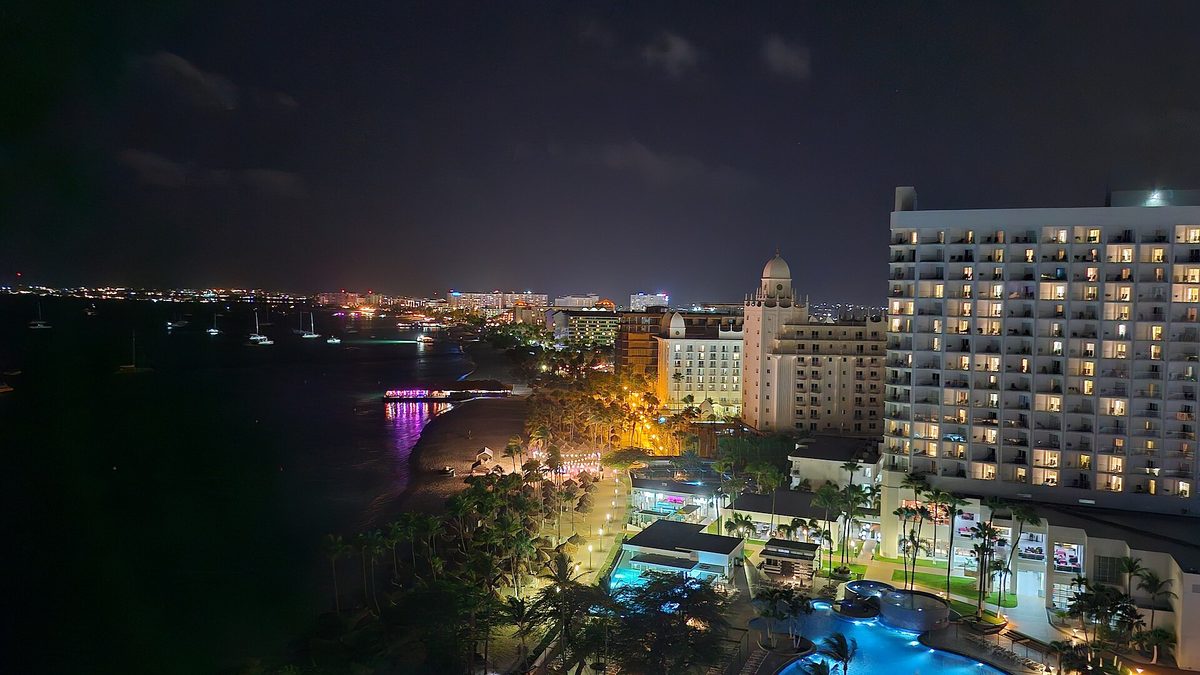
The Palm Beach high-rise resorts
The big-name towers along Palm Beach — the Marriott, Hilton, Hyatt, Ritz-Carlton, RIU and friends — are the headline cost of an Aruba trip. In peak winter season you’re often looking at around $280–500 a night for a standard room, and the flagship luxury properties climb well past that. You’re paying for a prime beachfront position, casinos, pools, and a wall of amenities. It’s lovely, and for many people it’s the point — just know it’s the single line most responsible for Aruba’s pricey reputation. Our guide to where to base yourself on the island lays out the trade-offs neighborhood by neighborhood, and the all-inclusive resorts can actually tame the food-and-drink spend if you’d eat and drink a lot on site anyway.
Sit-down restaurants, especially oceanfront ones
This is where Aruba surprises people. A mid-range dinner for two with a couple of drinks lands around $90–150 once you factor in the near-universal 15% service charge plus a tip on top. The famous toes-in-the-sand spots — the kind where they carry your table out onto the beach — can run $90–150 per person before wine. The food is often excellent, but eating every dinner at this tier is the quickest way to blow a budget. Lunch is where the value hides, which we’ll get to. Browse our Aruba restaurants guide for the full spread, from $14 fish shacks to special-occasion tables.
Excursions booked through the resort desk
Aruba’s signature experiences — sunset catamaran sails, snorkel trips to the shipwrecks, UTV safaris to the Natural Pool, sub tours — mostly run around $65–130 per person, and a private charter is far more. The activities themselves are worth it. The mistake is booking them at the concierge desk, where there’s a markup baked in. Book the same tour directly with the operator (or online a day or two ahead) and you’ll often save 15–20% for an identical seat. See our roundup of things to do in Aruba for what’s actually worth the money.
Taxis, if you lean on them
Aruban taxis run on fixed government rates rather than meters, which keeps things honest but not cheap. A short hop from the high-rise strip into Oranjestad can be around $10–15, and airport runs typically land around $25–40 depending on where you’re staying. One or two rides are nothing; relying on them daily adds up quickly. Always confirm the fare before you get in. More on this in our getting to and around Aruba guide.
Where Aruba is surprisingly reasonable (or free)
Here’s the half of the story the “Aruba is so expensive” crowd leaves out. A huge amount of what makes this island wonderful costs little or nothing.
The beaches are public — all of them
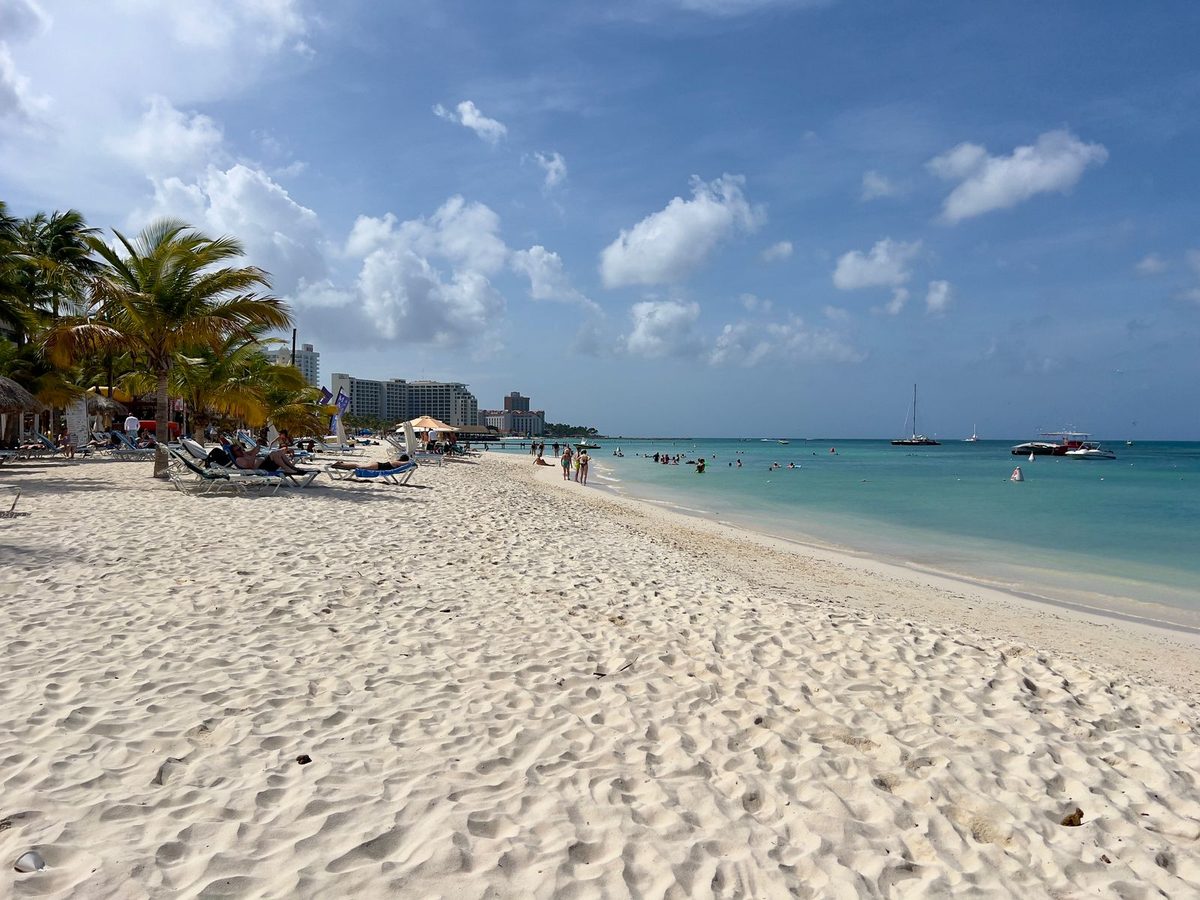
Every beach in Aruba is free and open to the public, including the sand directly in front of the priciest resorts. Eagle Beach — regularly ranked among the best beaches on earth — costs exactly nothing to walk onto, spread a towel, and stay all day. Bring your own shade and cooler and the headline attraction of the entire island is free. Our Aruba beaches guide maps out which stretches are best for swimming, snorkeling, and quiet.
Staying off the high-rise strip
Switch from a Palm Beach tower to the low-rise area around Eagle and Manchebo Beach, and you typically save real money for arguably nicer, lower-key sand. Go a step further to a guesthouse or studio in Noord or Paradera — a 5- to 10-minute drive from the water — and you can be looking at around $80–130 a night. Same island, same sunshine, a fraction of the room rate.
Local food and self-catering
A lunch of fresh-caught fried fish and a cold drink at a no-frills local spot runs around $12–18 — less than a single cocktail at a resort bar. The supermarkets (Ling & Sons, Super Food) are large and well-stocked, so a condo with a kitchenette lets you handle breakfasts and a few dinners yourself and pour your own sundowners. Even doing this half the time meaningfully changes your total.
The bus is excellent and cheap
Arubus runs comfortable, air-conditioned coaches along the main tourist corridor connecting the airport, Oranjestad, and the resort beaches. A one-way fare is around $2.60 and a day pass is about $10 — versus a $10–15 taxi for the same trip. If your plans mostly follow that corridor, the bus alone can save a couple a hundred dollars over a week. Details are in our getting around Aruba guide.
Tap water, happy hours, and free attractions
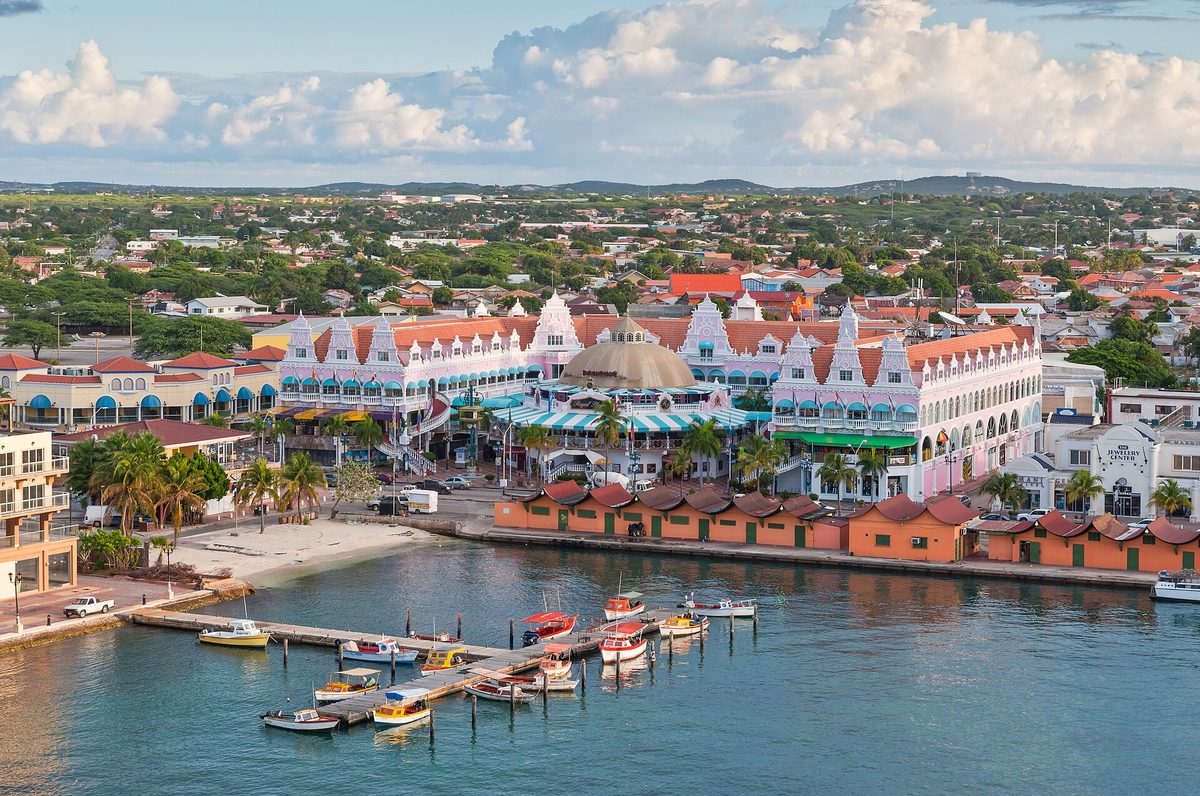
Aruba’s tap water is desalinated, clean, and genuinely good — skip the bottled water entirely and refill. Happy hours are an institution here, with two-for-one or half-price drinks at countless bars in the late afternoon, so your sunset cocktails can cost a fraction of menu price. And plenty of the island is free to explore: the California Lighthouse viewpoint, the murals of San Nicolas, the Bubali Bird Sanctuary, and wandering the pastel streets of Oranjestad. We’ve gathered the best of these in our roundup of free things to do.
Aruba vs. other Caribbean destinations
“Expensive” only means something relative to the alternatives, so here’s roughly where Aruba lands among the islands people actually compare it to.
- Cheaper than Aruba: the Dominican Republic and parts of Jamaica or Mexico’s Riviera Maya, where all-inclusive competition and a weaker local currency drive prices down. If rock-bottom cost is the only goal, Aruba won’t win.
- Roughly on par with Aruba: Barbados, Curacao, St. Lucia, and Antigua — mid-to-upper Caribbean islands with a similar imported-everything reality and a comparable resort scene.
- More expensive than Aruba: Turks and Caicos, St. Barts, Anguilla, the British Virgin Islands, and the Cayman Islands, where luxury positioning and limited budget options push daily costs well above Aruba’s.
Two things tilt the comparison in Aruba’s favor even when the nightly rate looks similar. First, it sits outside the hurricane belt, so you’re far less likely to lose a paid week to a storm — a real financial hedge other islands can’t match. Second, because it’s so easy to get around cheaply (that bus, those public beaches, walkable Oranjestad), the gap between your hotel bill and your total spend can be smaller here than on islands where you’re captive to taxis and resort prices. If you’re weighing options, our top Aruba activities roundup is a good gut-check on whether the experience justifies the tier.
How the time of year swings the price
If you remember one cost lever, make it this one. Aruba has a pronounced high and low season, and the same room can swing dramatically between them.
High season (mid-December through mid-April)
This is peak: holidays, snowbirds, and spring break. Hotels are at their priciest and most fully booked, and you’ll want to reserve rooms and popular tours well in advance. The weather is gorgeous — but the weather in Aruba is gorgeous almost all the time, which is exactly why the off-season is such a deal.
Shoulder and low season (mid-April through early December)
This is the value sweet spot. From around late April into early December, the same hotels often drop 25–40%, the beaches are calmer, and because Aruba sits below the hurricane belt the conditions stay reliably sunny and dry. May, June, and the autumn months in particular give you near-identical weather to peak season at a meaningfully lower price. For a month-by-month breakdown of weather, crowds, and rates, see our best time to visit Aruba guide — it’s the highest-leverage page you can read before booking. Shifting your trip by a few weeks can save more than every other tactic in this article combined.
Who finds Aruba expensive — and who doesn’t
The same trip earns wildly different verdicts depending on traveler type. Here’s where people tend to land.
People who find Aruba expensive
Travelers who book a Palm Beach high-rise in peak season, eat every dinner at oceanfront restaurants, book excursions at the resort desk, and taxi everywhere will find Aruba genuinely pricey — comfortably $400–800+ a day for two. Backpackers and shoestring travelers expecting Southeast-Asia prices will also be disappointed; there’s a budget floor here that the imports-and-tourism economy sets, and it’s higher than in much of the world.
People who find Aruba affordable
Travelers who go in the low season, stay at a low-rise hotel or a Noord guesthouse, mix local lunches and self-catering with a few nice dinners out, ride the bus, and lean into the free beaches routinely keep things to around $100–160 per person per day — a reasonable beach holiday by any measure. Couples and families who plan a little tend to be pleasantly surprised; the people blindsided by the bill are almost always the ones who booked the most expensive version of everything by default.
Concrete ways to make Aruba cheaper
None of these ask you to suffer. They’re the moves that quietly cut a trip’s cost without dimming it. If you want the long version, I’ve collected 25 money-saving tips for Aruba in one place.
- Travel in the low season. Late April to early December can mean 25–40% off the same hotel, with the same sunshine. This is the big one.
- Book flights early and be flexible. For most US travelers the airfare is the largest single expense; midweek flights booked six to eight weeks out usually beat weekend last-minute fares. Our getting to Aruba guide covers the main gateways.
- Stay off the high-rise strip. Eagle/Manchebo low-rises, or a studio in Noord, deliver the same island for less per night.
- Do lunch out, dinner in (sometimes). Local lunches around $12–18 plus a few self-catered meals offset the nights you splurge on a great restaurant.
- Hunt happy hour. Late-afternoon two-for-one and half-price drink deals are everywhere; your sunset round can cost a fraction of menu price.
- Ride Arubus. About $2.60 a ride or $10 a day pass beats taxis along the main corridor.
- Drink the tap water. It’s excellent and free — refill a bottle instead of buying cases.
- Book tours direct. Skip the concierge markup and reserve the same excursion with the operator to save 15–20%.
- Consider all-inclusive only if you’ll use it. If you’d eat and drink heavily on property anyway, an all-inclusive resort can cap a volatile food bill; if you’d rather explore local restaurants, it’s money wasted.
- Front-load the free stuff. Beaches, sunsets, lighthouse views, San Nicolas murals, and Oranjestad strolls cost nothing — see free things to do in Aruba.
String even half of these together and a trip that could have read as “Aruba is so expensive” turns into one of the better-value weeks in the Caribbean. For a sample budget that puts real numbers to a full itinerary, head back to our Aruba vacation cost guide, then sketch your days with the help of our Aruba itinerary.
So, is Aruba expensive? The honest verdict
After all the line items, here’s where I land. Aruba is moderately expensive by Caribbean standards and decidedly not a budget-backpacker island — the imported-everything economy sets a floor you can’t duck under. But it is one of the most controllable destinations in the region. Unlike islands where you’re trapped paying resort prices, Aruba hands you cheap public transit, free world-class beaches, excellent local food, and a low season with nearly identical weather. So the real answer to “is Aruba expensive” is that it costs exactly as much as you let it. Book the default luxury version and it’s a splurge; make three or four smart choices and it’s a fair-value beach trip you’ll want to repeat. Either way, you’re paying for genuinely good sunshine insurance — this is one of the few Caribbean islands you can confidently book months ahead without sweating a hurricane.
Frequently asked questions
Is Aruba expensive compared to other Caribbean islands?
It’s mid-to-upper tier. Aruba is pricier than the Dominican Republic, Jamaica, or Mexico’s Riviera Maya, roughly on par with Barbados, Curacao, and St. Lucia, and clearly cheaper than luxury-positioned islands like Turks and Caicos, St. Barts, and Anguilla. Its big advantage is sitting outside the hurricane belt, which makes a paid trip far less likely to be weather-ruined.
How much does a week in Aruba cost?
Excluding flights, a budget-minded couple staying off the strip and self-catering can do a week for around $1,200–1,800 total; a comfortable mid-range week runs roughly $2,500–4,000; and a luxury week at a top resort with fine dining easily exceeds $6,000. Airfare from the US typically adds around $350–700 per person. Travel in the low season to land at the lower end of each range.
Is food expensive in Aruba?
It can be, but it doesn’t have to be. Sit-down dinners at oceanfront restaurants are where Aruba feels priciest — expect around $90–150 for two with drinks and the 15% service charge. Yet a fresh local lunch runs around $12–18 a head, supermarkets let you self-cater, and the quality is high. Mixing local lunches with the occasional nice dinner keeps food costs reasonable.
Do I need cash, and what currency does Aruba use?
Aruba’s currency is the florin, pegged to the US dollar at about 1.79 to 1, but US dollars are accepted nearly everywhere and credit cards are widely taken. You rarely need to exchange money — just carry some small bills for tips, the bus, and local stands. Prices quoted in florins and dollars track each other closely, so there are no exchange-rate surprises.
Is Aruba cheaper in the off-season?
Yes, significantly. From roughly late April through early December, hotel rates commonly fall 25–40% versus the December–April peak, with smaller crowds and the same reliable sunshine. Because Aruba sits below the hurricane belt, the off-season weather stays dependable, making it the single best way to cut your costs without compromising the trip.
Are the beaches in Aruba free?
Completely. Every beach in Aruba is public and free, including the sand in front of the most expensive resorts. You can spread a towel on Eagle Beach — one of the world’s most celebrated beaches — without paying a cent. Bringing your own shade, water, and snacks turns the island’s top attraction into a no-cost day out.
Final thoughts
Don’t let the “Aruba is so expensive” chatter scare you off or, worse, talk you into overpaying. The island rewards a little planning more than almost any destination I know: shift your dates into the low season, sleep a block off the strip, eat where the locals eat at lunch, ride that excellent bus, and bank the free beaches and sunsets. Do that, and the version of Aruba you experience is warm, easy, gloriously sunny — and a genuinely fair deal. When you’re ready to put numbers to your own trip, start with our Aruba vacation cost hub and build out from there.
By the ArubaTourism.org team — Last updated June 2026
About the author
The ArubaTourism.org team writes from years of combined time on the island — pricing out hotels across Palm and Eagle Beach, eating our way from $14 fish shacks to special-occasion tables, and riding the bus more often than we’d care to admit. We update our cost guidance regularly; prices here reflect typical 2026 ranges and should be confirmed against current rates when you book.
Sources & further reading
- Aruba Tourism Authority — official visitor information (aruba.com)
- Central Bank of Aruba — florin/US-dollar peg and currency information
- Arubus N.V. — public bus routes and fares
- Our own on-island price tracking across hotels, restaurants, transport, and tours, 2026
Photo credits
- Photo: Rarends297 (CC0) via Wikimedia Commons
- Photo: Jason Boldero from UK / CC BY 2.0 via Wikimedia Commons
- Photo: Kwihi / CC BY 4.0 via Wikimedia Commons
- Photo: Navigator334 / CC BY-SA 4.0 via Wikimedia Commons
- Photo: EgorovaSvetlana / CC BY-SA 4.0 via Wikimedia Commons