Yes, you tip in Aruba — but the way it works trips up a lot of first-time visitors, and getting it slightly wrong costs you money or, worse, shorts someone who took good care of you. The short version is that tipping in Aruba looks roughly like tipping in the United States, with two big asterisks: many restaurants and resorts quietly add a service charge of around 10–15% to your bill, and that charge is not the same as a tip for your server. Sort out those two things and the rest is easy.
I’ve eaten my way through Palm Beach high-rises, paid for plenty of taxis with no meter running, and handed a soggy stack of singles to more than one catamaran crew. What follows is the honest, practical version: who to tip, roughly how much, when it’s already covered, and how to read your check so you don’t accidentally double-tip or stiff anybody. Aruba runs on US dollars at a fixed rate, so you almost never need to convert anything — you just need to know the local rhythm.
The quick rule for tipping in Aruba
At a sit-down restaurant, tip around 15–20% — but check the bottom of the bill first for a 10–15% “service charge,” and if it’s already there, an extra 5–10% in cash for your server is plenty. Round up taxi fares, leave a few US dollars a day for housekeeping, and tip tour and boat crews $5–20 per person. US cash is perfect; small bills are king.
That’s the whole guide in one paragraph. If you remember nothing else, remember check the bill — it’s the single thing that separates travelers who tip well from travelers who tip twice. Everything below is the detail behind that rule, service by service, plus the etiquette and the mistakes I see people make. For the bigger picture on what a trip here actually runs you, this pairs naturally with our full guide to Aruba vacation cost, where tipping is one line in a much larger budget.
At a glance: how much to tip in Aruba by service
Here’s the cheat sheet I wish someone had handed me on my first trip. Treat the percentages and dollar figures as customary ranges, not rules — nothing here is mandatory, and you should always glance at the bill before you add anything. Amounts are in US dollars, which every business on the island accepts.
| Service | Customary tip | Service charge often already added? |
|---|---|---|
| Sit-down restaurant | Around 15–20% (or +5–10% if service charge is on the bill) | Often, ~10–15% — check the receipt |
| Bar / beach bar | Around $1–2 per drink, or ~15% of the tab | Sometimes on a tab; rarely per drink |
| Taxi driver | Round up, or roughly 10% for good service | No (fares are fixed, not metered) |
| Hotel housekeeping | Around $2–5 per day, left daily | No |
| Bellhop / porter | Around $1–2 per bag | No |
| Concierge | Around $5–10 for a real favor | No |
| Tour guide (jeep, ATV, walking) | Around $10–20 per person, half or full day | No — cash, at the end |
| Boat / catamaran crew | Around $5–10 per person | No — cash, to the crew directly |
| Spa therapist | Around 15–20% of the treatment | Sometimes at resort spas — ask |
| Hair salon / barber | Around 10–15% | No |
Keep that table in mind and you can stop reading here and still tip like you’ve done this before. But the service-charge question deserves its own section, because it’s the part that costs people real money.
The service-charge question: how to read your bill so you don’t double-tip
This is the heart of the whole topic, so I’ll be specific. In a lot of Aruban restaurants, bars, and resorts, a service charge of around 10–15% is added to the check automatically — sometimes only for larger groups, sometimes for everyone. On the receipt it shows up near the bottom as “service,” “servicio,” or “service charge,” tucked in just above or below the tax line.
Here’s the part North American visitors usually misread: that service charge is not a tip for your server. The Aruba Tourism Authority spells this out plainly — the charge goes into a pool and is distributed across the whole staff, including the kitchen crew, dishwashers, hosts, and cleaners, often via a points system. The highest-ranked staff take the largest share and your server takes one of the smaller ones. So while a slice of it does reach your waiter, the bulk of it is a back-of-house wage mechanism, not a thank-you to the person who refilled your water.
What that means in practice:
- If a service charge is on the bill, you’re not obligated to add anything. The team is covered. But if your server was genuinely good — attentive, warm, knew the menu — locals and repeat visitors typically leave an extra 5–10% in cash directly on the table. That money is far more likely to land in your server’s pocket than the pooled charge is.
- If there’s no service charge, tip the full 15–20% the way you would back home. Restaurant base wages here are modest and tourist-zone servers genuinely rely on it.
- If you’re not sure, ask. “Is service included?” is a completely normal question and no server will blink at it.
The simple math: on a $100 dinner with a 15% service charge already added, the check reads $115. If service was good, drop $5–10 in cash and walk out feeling fine. On the same $100 dinner with no service charge, you’d leave $15–20. Same great meal, very different second number — which is exactly why glancing at the bill matters. When you’re planning where to eat, our guide to restaurants in Aruba flags the kinds of places (resort dining rooms, fine dining) most likely to add a charge.
One honest caveat: not everyone loves the service-charge system, including some locals, who argue back-of-house pay should be the owner’s cost and the tip should go straight to the server. You’ll see that debate play out in restaurant reviews. As a visitor, you don’t need to litigate it — just read the bill, cover your server fairly, and move on to the sunset.
Tipping at restaurants and bars in Aruba
Restaurants are where you’ll do most of your tipping, so it’s worth getting the feel for it. Aruba’s dining scene punches way above the island’s size — you’ll go from fresh fish at a no-frills harborside shack one night to a candlelit table on the sand the next — and the tipping etiquette shifts a little depending on where you are.
Sit-down and fine dining
At a proper sit-down dinner, work from the rule above: 15–20% if no service charge, an extra 5–10% on top of a service charge for good service. Fine-dining rooms and resort restaurants are the most likely to add the charge automatically, so those are exactly the bills to scan. If you’re splitting a big group across one check, a service charge is almost guaranteed — that’s usually what triggers it.
You can add a tip to a credit-card slip at most restaurants, and that’s fine. But I keep a few singles and fives in my pocket because cash left on the table is the surest way to get the money to your actual server rather than into a pooled, points-split system. It also just feels better to hand it over.
Beach bars and pool bars
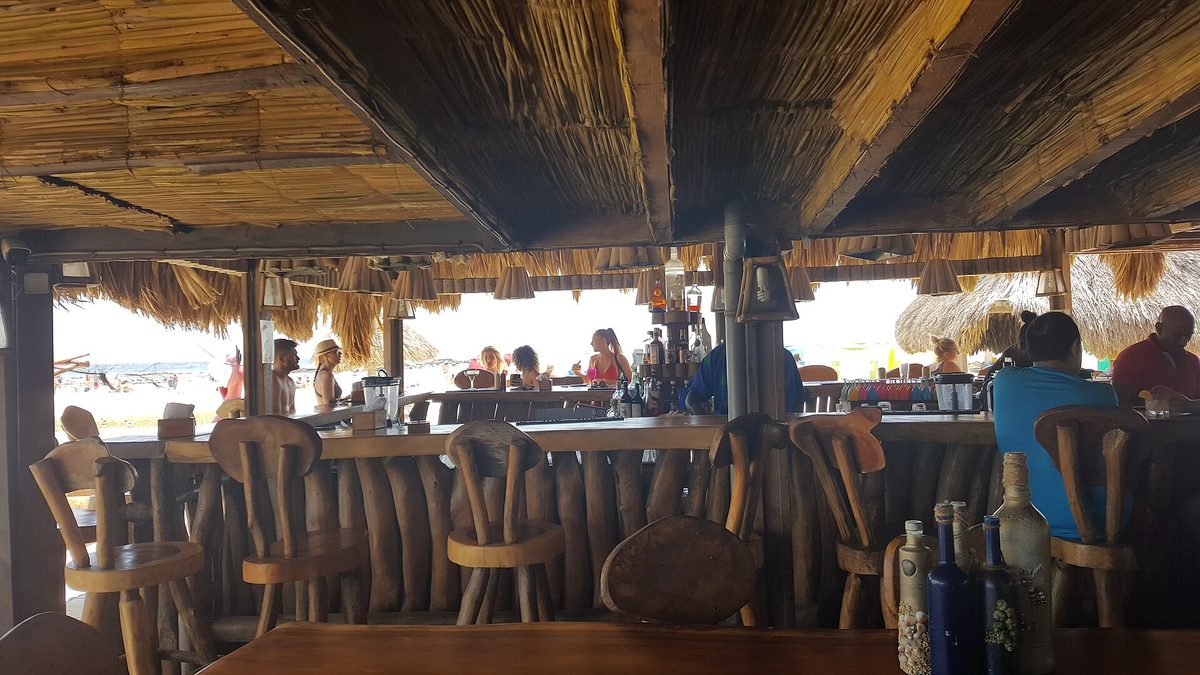
At a bar, the easy approach is around $1–2 per drink, dropped when you get it, or roughly 15% if you’re running a tab and settling at the end. The dollar-a-drink move has a nice side effect at a busy beach bar: a bartender who clocks you as a good tipper tends to find you faster on the next round. If you’re bouncing between spots, our rundown of Aruba nightlife covers the bar and lounge scene where this comes up most.
Casual, local, and grab-and-go spots
This is the exception worth knowing. At local fish shacks, pastechi (savory pastry) stands, food trucks, and counter-service lunch spots, there’s genuinely no formal tipping culture. You order, you pay the posted price, you grab a table. Rounding up or dropping your loose coins in a tip jar is a kind gesture and never unwelcome, but nobody’s expecting 18% on a $7 plate of fried fish. Don’t overthink it — these places are about the food, not the math.
Tipping taxis and drivers in Aruba
Aruba’s taxis don’t run meters. Fares are set by the government and fixed by route, and the rates are posted at the airport and available from any driver up front, so there’s no haggling and no surprise total. Because the price is fixed rather than metered, tipping is genuinely optional here in a way it isn’t at dinner — drivers don’t bank on it the way servers do.
That said, a tip is appreciated and most American visitors leave one. My rule of thumb: round up to the next $5, or tip roughly 10% for a normal ride. If the driver muscled four suitcases into the trunk, gave you a genuinely useful rundown of the island, or waited while you ran back for a forgotten phone, bump it to $3–5. For airport runs with a lot of luggage, a couple of dollars per bag on top is a normal courtesy.
The fixed-fare system also means short hops are pricier per mile than you’d expect, and those rides add up fast over a week. Plenty of visitors decide a rental car pencils out better than constant taxis — if you’re weighing it, our guide to getting to and around Aruba breaks down taxis, buses, and rentals so you can see which suits your trip. Either way, when you do take a cab, have small bills ready — drivers carry change, but rounding up is smoother with singles and fives in hand.
Tipping hotel staff in Aruba: housekeeping, bellhops, concierge
Hotel tipping is where good intentions quietly fall apart, because the people who earn it are often the ones you never see. A little planning fixes that. Where you’re based shapes how much of this applies — a full-service Palm Beach high-rise has a whole cast of staff, while a condo or vacation rental has almost none. Our guide to where to stay in Aruba lays out those lodging types if you’re still deciding.
Housekeeping
Leave housekeeping around $2–5 per day, and — this is the important bit — leave it daily, not in one lump at checkout. A different person may clean your room each day, so a single tip at the end only reaches whoever happens to flip the room that morning. Set the cash somewhere obvious, on the pillow or the desk, ideally with a quick note that says “housekeeping” or “thank you” so there’s no doubt it’s for them. It’s a small habit that makes a real difference to someone earning a modest wage.
Bellhops and porters
Around $1–2 per bag when someone carries your luggage to the room, with a dollar or two extra if they walk you through the room or haul something heavy. If a porter grabs your bags curbside at check-in and again at checkout, tip both times — it’s often two different people.
Concierge, valet, and pool staff
The concierge gets tipped for effort, not information. Asking for directions or a dinner suggestion? Nothing needed. But if they landed you a table at a booked-solid restaurant, sorted out a tricky excursion, or fixed a genuine problem, $5–10 (more for something major) is the right call, given when they come through. Valet parking runs a couple of dollars when the car is brought to you. And if a pool or beach attendant is setting up your loungers and running drinks all afternoon, $1–2 a day keeps the service warm. Room service usually has a charge built into the bill already — check before adding more.
Tipping tour guides and boat or catamaran crews
If there’s one place visitors consistently under-tip relative to the work involved, it’s tours — and it’s a shame, because a good guide or crew is the difference between a fine day and the best day of your trip. These folks are working hard in the sun, often for tips that make up a real chunk of their pay.
Land tours: jeep, ATV, UTV, and walking
For a half- or full-day guided tour — a 4×4 safari bouncing out to the natural pool, an ATV run across the desert interior, a guided walk — figure $10–20 per person, leaning to the higher end for a full day or a guide who clearly went above and beyond. Hand it to the guide directly in cash at the end. If you booked through a big operator, the guide and driver may be splitting tips, so a slightly more generous total is kind.
Boat trips, snorkel sails, and catamaran cruises
For a group catamaran or snorkel cruise, $5–10 per person to the crew is the going rate — these are the people pouring the rum punch, rigging your snorkel gear, and pulling you back aboard. Many boats pass a tip envelope or have a jar at the bar near the end of the trip; that’s your cue. For a private charter, think bigger: 15–20% of the charter cost, split among the captain and crew, the same way you’d tip a private guide anywhere. A dedicated snorkel or dive guide who looked after a small group is worth $5–10 a head. If you’re booking any of this, our overview of Aruba water sports and the broader list of things to do in Aruba will help you line up the day.
One practical tip about tips: bring the cash with you on the boat or the jeep. There’s no ATM at sea, the day ends back at a dock or a dusty parking lot, and “I’ll get you next time” doesn’t help a crew you’ll never see again. Tuck a few fives and tens in a dry bag or a zipped pocket before you leave the hotel.
Tipping at spas and hair salons in Aruba
Spa and salon tipping follows the US logic almost exactly. For a massage, facial, or body treatment, 15–20% of the service price is standard for your therapist. The one wrinkle is the same one as restaurants: resort spas sometimes add a service charge to the treatment automatically, so ask at checkout or scan the slip before you tip on top. If it’s included and you loved the treatment, a small extra in cash to the therapist directly is a nice touch but not required.
At a hair salon or barber, figure around 10–15%, and a few dollars to anyone who shampooed or assisted. Nail technicians fall in the same range. None of this is unique to Aruba — if you tip these services at home, tip them here, just remember USD is fine and cash is cleanest.
USD vs. Aruban florin: which currency to tip with, and cash vs. card
Good news: this is the easy part. The US dollar is accepted everywhere in Aruba at a fixed exchange rate of roughly 1.79 florin to the dollar, and that rate doesn’t move. You do not need to convert money, hunt for an ATM, or carry a brick of local currency to tip well. Servers, drivers, and crews are equally happy with dollars or Aruban florin (AWG) — dollars are simply more convenient for most visitors, since that’s what’s already in your wallet.
My one strong piece of advice: carry small bills. A fat stack of twenties is useless for tipping a $2 bellhop or a $5-a-day housekeeper. Before your trip, or at the bank machine on arrival, get a wad of $1 and $5 bills and keep $20–40 of them accessible at all times. You’ll burn through singles faster than you expect — bartenders, porters, valets, housekeeping, the airport luggage guy — and there’s nothing worse than only having a twenty when a couple of bucks is what the moment calls for.
On cards: you can usually add a restaurant or bar tip to a credit-card payment, and that’s perfectly normal. But housekeeping, taxi drivers, tour guides, and boat crews are cash, full stop — there’s no slip to sign. So even in a tap-to-pay world, Aruba is a place where you genuinely need physical cash for the everyday tipping to work. For more of these on-the-ground money basics, our Aruba travel tips guide is a good companion read.

Do you tip at all-inclusive resorts in Aruba?
All-inclusive is the one setting where tipping is genuinely optional, and it depends on your resort. Most true all-inclusives in Aruba build gratuities into the package price, which means the bartenders, servers, and housekeepers are already compensated and you are under no obligation to tip on top. Your booking confirmation or the resort’s FAQ will usually say so in plain language — it’s worth a thirty-second check before you go so you’re not guessing at the swim-up bar.
Here’s the real-world nuance, though: plenty of guests still tip selectively, and it changes the experience. A dollar or two slipped to a bartender early in the week is the oldest trick on the island for getting your drinks made well and made first. A few dollars to the housekeeper who’s kept your room spotless, or to a server who remembers your order by day three, is never expected but always appreciated — and gratuities-included doesn’t mean tips-forbidden. My approach at an all-inclusive: I don’t tip on every drink, but I carry singles and reward the people who go out of their way. If you’re comparing properties, our guide to Aruba all-inclusive resorts notes which ones fold gratuities into the rate.
Cultural etiquette: what tipping in Aruba is really like
A few things about the feel of it, because Aruba isn’t the US and the vibe is different. Tipping here is framed as appreciation, not obligation — the Aruba Tourism Authority itself describes it as “not mandatory but very much appreciated.” You will not be chased down or guilt-tripped for a tip the way you might be at home, and there’s no aggressive expectation hanging in the air. That actually makes generosity feel better here: when you tip well, it lands as a genuine thank-you between two people, not a tax.
The service itself tends to be warm and unhurried — this is “One Happy Island,” and the hospitality culture is real, not performed. A small kindness goes a long way: a please, a thank-you (“danki” in Papiamento earns a smile every time), patience when a kitchen is slammed. Tip for that warmth, and you’ll get even more of it. And don’t stress about getting a number exactly right — nobody is grading you. Read the bill, be fair, be kind, and you’re doing it correctly. For the wider lay of the land before you arrive, our first-time travel tips and the seasonal rundown of the best time to visit Aruba round out the picture.
Common tipping mistakes visitors make in Aruba
- Double-tipping on a service charge. The big one. People see a great meal, leave a full 20% out of habit, and never notice the 15% service charge already on the check — effectively tipping 35%. Glance at the bill first.
- Stiffing the server because of the service charge. The opposite error: assuming the service charge fully covers your waiter when it’s really a pooled, points-split wage. If service was good, 5–10% in cash actually reaches them.
- Only carrying big bills. A wallet of twenties leaves you unable to tip the dollar-and-two crowd — porters, housekeeping, valets, the beach guy. Get singles and fives early.
- Tipping housekeeping once at checkout. Different staff clean on different days; the end-of-stay lump misses most of them. Leave it daily.
- Forgetting cash on tours and boats. Guides and crews can’t take a card at sea or in a dusty lot. Bring the cash with you.
- Over-tipping at local counter spots. Fish shacks and snack stands don’t expect a restaurant tip. Pay the posted price; round up if you like, but no pressure.
- Stressing about florin vs. dollars. Dollars are accepted everywhere at a fixed rate. Don’t waste a day converting cash you don’t need to.
Avoid those seven and you’re tipping better than most visitors who’ve been here a dozen times. If you’re still mapping out the trip itself, our day-by-day Aruba itinerary and the guide to the island’s best beaches will help you figure out where all this tipping will actually happen.
Frequently asked questions about tipping in Aruba
Do you tip in Aruba?
Yes — tipping is customary in Aruba at restaurants, bars, hotels, and on tours, though it’s appreciated rather than mandatory. The standard at a restaurant is around 15–20% when no service charge is added. Many places tack on a 10–15% service charge automatically, so always check the bill before deciding how much to leave.
Is a service charge the same as a tip in Aruba?
No. A service charge (usually around 10–15%) goes into a pool that’s shared across the whole restaurant staff — kitchen, hosts, cleaners — not straight to your server. The Aruba Tourism Authority is explicit that it isn’t a personal tip for your waiter. If service was great, an extra 5–10% in cash reaches them directly.
How much do you tip a taxi driver in Aruba?
Taxi fares in Aruba are government-fixed by route, not metered, so tipping is optional. Most visitors round up to the next $5 or leave roughly 10% for a normal ride. For a driver who handles a lot of luggage, shares good local tips, or goes out of their way, $3–5 extra is a fair and welcome gesture.
What currency should I use to tip in Aruba?
US dollars are accepted everywhere in Aruba at a fixed rate of about 1.79 florin per dollar, so you can tip in dollars without converting anything. Aruban florin works equally well, but dollars are usually what’s already in your wallet. The key move is carrying small bills — ones and fives — for everyday tipping.
Do you tip at all-inclusive resorts in Aruba?
Usually you don’t have to — most true all-inclusives in Aruba include gratuities in the package, so staff are already paid. Check your booking to confirm. Even so, many guests bring singles to tip bartenders for faster, better drinks, or to thank a standout housekeeper or server. It’s genuinely optional, never expected.
How much should I tip a tour guide or boat crew in Aruba?
For a half- or full-day land tour (jeep, ATV, walking), around $10–20 per person to the guide is customary. For a group catamaran or snorkel cruise, $5–10 per person to the crew is the norm; for a private charter, think 15–20% of the cost. Always tip in cash, handed over at the end of the trip.
Final thoughts: tip with confidence, not anxiety
Strip away the details and tipping in Aruba comes down to a single habit: read the bottom of your bill. Do that, keep a fold of singles and fives handy, and reward the people who make your trip great — the server who nailed the recommendation, the housekeeper who left the towels like swans, the catamaran crew who poured one more rum punch as the sun dropped. The island runs on warmth, and a fair tip is just you returning some of it. Now go enjoy the beach — you’ve got the money part handled.
By the ArubaTourism.org team — Last updated June 2026. Tipping customs and service charges are conventions, not laws; amounts here are typical ranges as of writing. Service-charge and tipping practices follow guidance from the Aruba Tourism Authority. Always check your individual bill and current rates.