Here is the heads-up I wish someone had handed me before my first trip: the nightly rate you carefully compared across booking sites is almost never the number you actually pay. By checkout, taxes and charges quietly add roughly a quarter to a third on top, and most of it stays hidden until the fine print or the folio slid under your door on the last morning. Most US travelers come looking for Aruba resort fees — that mandatory daily “resort fee” you know from Las Vegas hotels.
I will be straight with you: Aruba mostly does not work that way. There is no island-wide, government-mandated daily resort fee. Instead you are looking at a stack of government taxes plus a hotel service charge, with a genuine resort or energy surcharge appearing only at some properties. Same end result — a bigger final bill — but knowing the difference helps you budget accurately and ask the right questions.
The short answer: what Aruba really adds to your room rate
Aruba rarely charges a Vegas-style mandatory daily resort fee. What you should budget for instead is the Tourist Levy (room tax) of around 12.5%, a hotel service charge of roughly 10–15%, a small per-night environmental levy, and a one-time $20 Sustainability Fee you pay online before you fly. Add it up and you should plan for roughly 25–30% on top of your base room rate. Always confirm the current numbers with your specific hotel.
That is the honest summary. The rest of this guide breaks down every line item — what it is, roughly how much, who charges it, and when you actually pay — then walks through a real worked example so the math stops being a surprise. If you are still mapping out your overall budget, our complete guide to Aruba vacation cost puts these fees in the context of flights, food and activities; this page zooms all the way in on the taxes and surcharges.
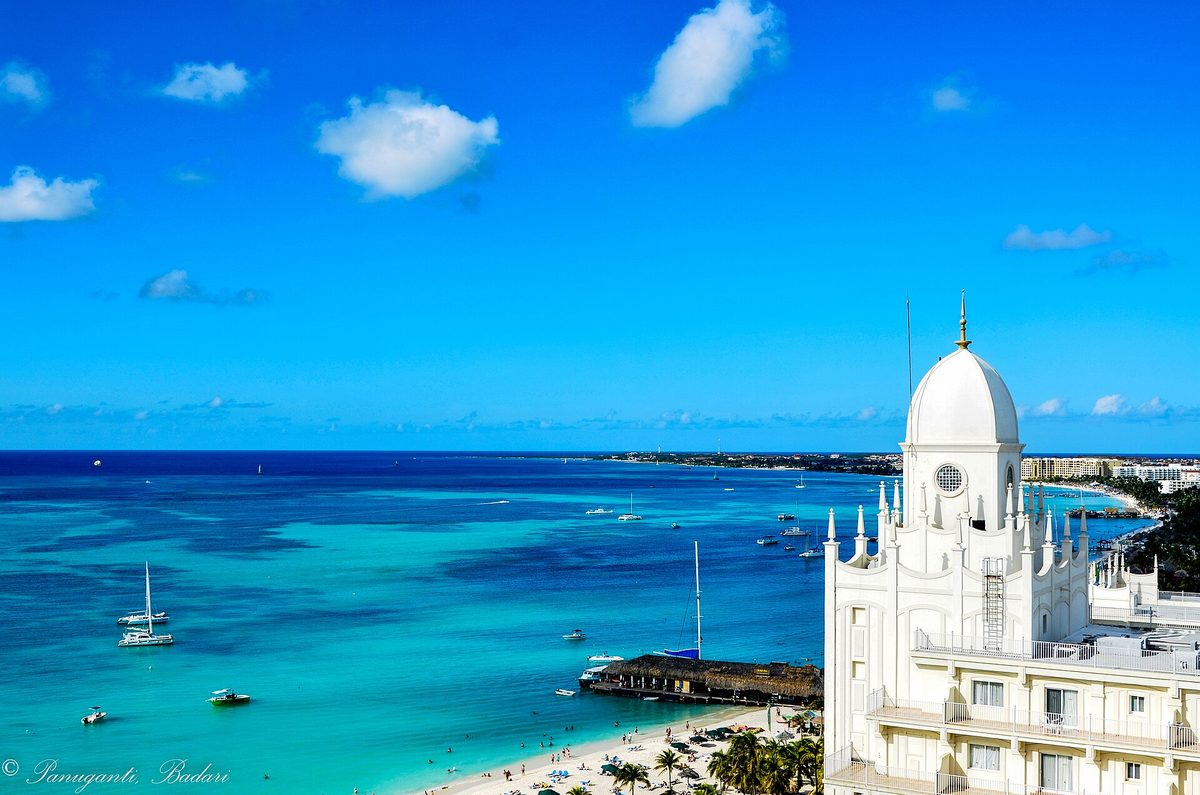
Aruba fees and taxes at a glance
Here is every add-on you are likely to meet on an Aruba hotel stay, with typical amounts, who levies it and when it hits your wallet. Treat the figures as “around” — rates change, and properties apply them slightly differently. This is the table I would screenshot before booking.
| Charge | Typical amount | Who charges it | When you pay |
|---|---|---|---|
| Tourist Levy (room tax) | Around 12.5% of the room rate | Government of Aruba (collected by the hotel) | On your hotel bill |
| Environmental Levy | Around US$3 per person, per night (timeshares pay a fixed amount per stay) | Government of Aruba (collected by the hotel) | On your hotel bill |
| Service charge | Around 10–15% of the room rate | The hotel | On your hotel bill |
| Sustainability Fee | US$20 per air visitor, once per calendar year | Aruba Wastewater Sustainable Solutions (AWSS) | Online, with your ED Card, before you fly |
| Resort / energy / amenity surcharge | 0% at most hotels; up to ~15% of the daily rate where it exists | Specific resorts only | On your hotel bill |
| Departure tax / passenger facility charge | Around US$33–37, almost always included in airfare | Airport / airline | Built into your plane ticket |
| Car-rental surcharges | Varies — insurance, airport fee, young-driver fee | The rental company | At pickup |
| Tips / gratuities | Optional; a few dollars to ~10–15% on top of a service charge | You decide | As you go |
So, does Aruba charge resort fees? The honest answer
No — not in the way most Americans mean the term. If “resort fee” to you means a compulsory daily charge that every hotel on the island slaps on regardless of what you use, Aruba does not have one. The big, unavoidable add-ons here are taxes the government sets and a service charge the hotel adds, not a discretionary “resort fee” invented by the property to pad a low headline rate.
That said, the term is not entirely wrong either. A handful of resorts — usually the larger Palm Beach high-rises with pools, water features, fitness centers and a casino — do apply a genuine resort or “amenity” charge on top of taxes. The Hyatt Regency on Palm Beach, for example, publishes a resort charge of around 15% of the daily rate per night plus tax, covering things like Wi-Fi, pool and beach chairs, towels, the fitness center and the grounds. So if you are eyeing a big-name high-rise, ask specifically; if you are booking a smaller boutique hotel or a low-rise near Aruba’s beaches, you will probably never see one.
The practical takeaway: do not assume there is no resort fee, and do not assume there is one. Read the rate’s fine print and email the hotel to ask whether taxes and service charges are included in the price you see, and whether any separate resort or energy surcharge applies. Aruba’s official tourism position is that it wants pricing to be transparent, but the only way to be sure for your booking is to ask.
The room tax (Tourist Levy): the big one
If there is one charge to burn into memory, it is the Tourist Levy — Aruba’s hotel room tax. Since the start of 2023 it has sat at around 12.5% of your room rate, up from the older 9.5% figure you will still see quoted on out-of-date blogs. It applies to overnight accommodation across the board: high-rise resorts, low-rise hotels, boutique stays and, in its own way, timeshares and vacation rentals.
A couple of details worth knowing. The levy is calculated on the “gross turnover” of the room — meaning the rate including certain surcharges, not just the bare room price — so on a property that also adds a service charge or energy surcharge, the tax can be figured on a slightly larger base. And because it is a government tax rather than a hotel invention, you cannot negotiate it away or earn loyalty points to dodge it. It is simply part of the cost of sleeping on the island.
What trips people up is how it is quoted. Some hotels and most travel agents fold the levy into an all-in price; others show a tempting low nightly rate and add the 12.5% at checkout. Neither is dishonest, but they produce very different-looking confirmation emails. When you compare two rates, make sure you are comparing like with like — pre-tax against pre-tax, or all-in against all-in.
The service charge (and how it tangles with tipping)
On top of the government’s room tax, most Aruba hotels add their own service charge of roughly 10–15%. This is not a tax; it is the hotel’s own line item, traditionally meant to cover gratuities for housekeeping, bellhops and other staff. Combined with the Tourist Levy, this is where the bulk of that “25–30% on top” comes from — the two together routinely land in the low twenties as a percentage. Travel agents often quote a blended 21–23% in combined taxes and service charge depending on the resort, which is a useful sanity-check number.
The service charge creates the single most common tipping question I get: if a service charge is already on my bill, do I still tip? My honest take, and the local norm: the automatic service charge is not the same as a personal tip, and it does not always reach the specific person who looked after you. So for genuinely good service — a server who made your dinner, a bartender who remembered your order, a housekeeper who kept your room immaculate — a few extra dollars is appreciated and customary, even with a service charge in place. You are not obligated, and you should not feel guilted into double-tipping 20% on everything, but small cash tips for standout service are the warm, normal thing to do.
Restaurants work the same way: many add a 10–15% service charge automatically, so check the bottom of the check before you add another 20% out of habit. If the service charge is there and service was fine, rounding up or leaving a little extra is plenty. Our guide to Aruba restaurants goes deeper on dining costs and tipping etiquette, and our broader Aruba travel tips cover the day-to-day money habits that keep you from over- or under-paying.
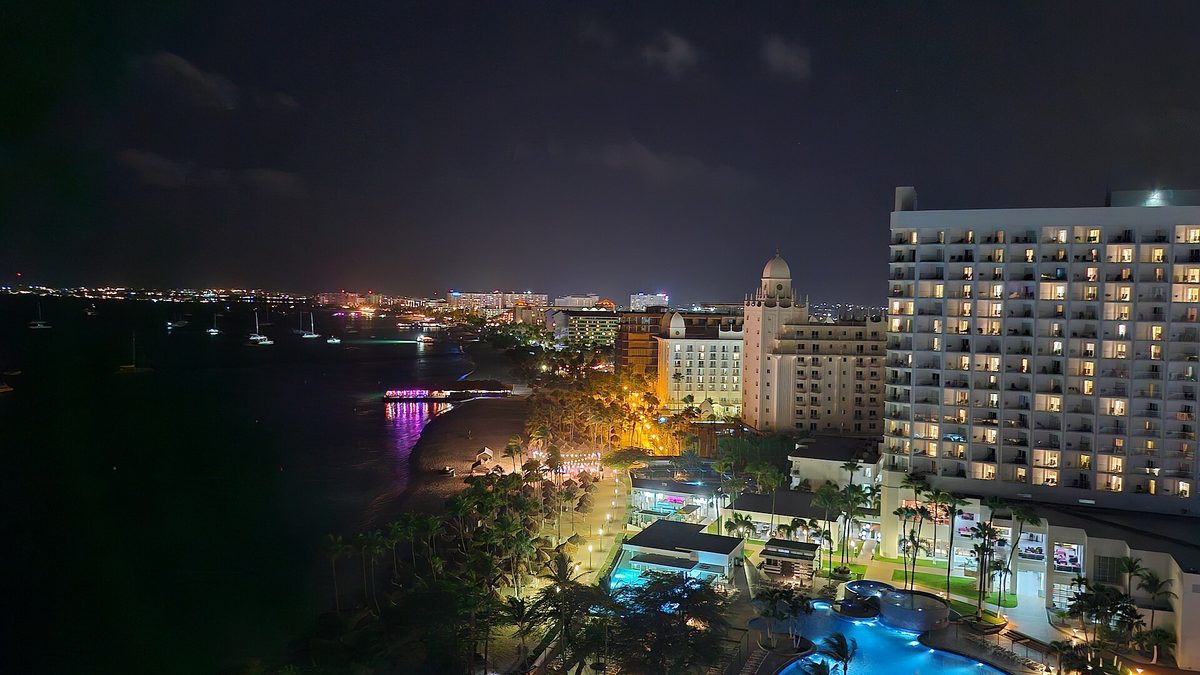
The Sustainability Fee: the new $20 you pay before you fly
Here is the fee that surprises even repeat visitors, because it is genuinely new. Since July 1, 2024, every traveler arriving by air pays a one-time $20 Sustainability Fee. It funds upgrades to Aruba’s wastewater treatment plants and related infrastructure — the unglamorous but essential plumbing that keeps the island’s beaches and reefs healthy. It is run by a body called Aruba Wastewater Sustainable Solutions (AWSS), and it is separate from, and additional to, the long-standing environmental tax.
The part that catches people: you do not pay this at the airport or the hotel. You pay it online when you complete your mandatory Embarkation & Disembarkation (ED) Card at edcardaruba.aw before your flight. As of December 1, 2024, the payment is built right into the ED Card process — you cannot get your ED Card approval, which is your authorization to travel, until you have paid. Only credit cards are accepted (Visa, Mastercard, Discover); there is no cash-on-arrival option. Do this a day or two before you leave home, not at the gate.
A few things that genuinely save money and hassle:
- It is once per calendar year, not per visit. If you come back to Aruba again before December 31, you should not owe it a second time — though the system cannot always recognize repeat visitors, so you may have to pay and then request a refund with proof via AWSS.
- Children under eight are exempt, as are registered Aruba residents, same-day transit passengers, and airline/ship crew on duty.
- Keep the email receipt. If you make an error on your ED Card and have to redo it, you should not be charged twice — but you will want the receipt as proof, and refunds for genuine errors are time-limited (within roughly 60 days).
Twenty dollars per person is not going to make or break a trip, but for a family of four that is $80, and it is one of those charges that feels worse when it ambushes you at the airline check-in counter. Pay it early and forget about it.
Environmental levy and energy surcharges: the small per-night extras
Two more line items round out the picture, and they are smaller but real.
The Environmental Levy
Separate from the $20 Sustainability Fee, Aruba applies an Environmental Levy of around US$3 per person, per night on overnight stays charged at a nightly rate. On a week-long stay for two, that is roughly $42 — not huge, but it is there. Timeshare owners are billed differently: a fixed environmental amount per stay (often in the region of $10 for a studio, $15 for a one-bedroom and $25 for a two-bedroom, per week owned) rather than per person per night. If you own or are renting a timeshare week, ask how the levy is applied so it does not surprise you at check-in.
Energy and amenity surcharges
This is the closest thing Aruba has to a true “resort fee,” and it appears only at some properties. Because the island generates electricity and fresh water from desalination — both energy-intensive — a few resorts and condo/timeshare buildings add a modest energy surcharge per night to offset utility costs. Others, especially the big Palm Beach high-rises, fold a resort or amenity charge into the stay (think the Hyatt’s ~15% resort charge covering Wi-Fi, pools, towels, fitness center and grounds). Most hotels, particularly smaller and low-rise ones, add nothing extra here at all. The only way to know is to check that specific property’s policy page or ask the front desk before you book. When you are deciding where to stay in Aruba, this is a fair thing to weigh alongside location and room quality.
Where genuine “Aruba resort fees” actually show up
Let me get specific about the places real Aruba resort fees — in the literal, named-on-your-folio sense — tend to appear, so you can spot them before booking rather than at checkout:
- Large Palm Beach high-rise resorts. The full-service giants with multiple pools, water slides, a spa, a casino and beachfront cabanas are the most likely to publish a resort or amenity charge (around 10–15% of the daily rate at the properties that have one). You are paying for the resort machine, whether or not you use the tennis court.
- Condo and timeshare properties. These more often carry a per-night energy surcharge and, for timeshares, the fixed environmental levy noted above. Booking platforms sometimes show these as separate lines only at the final step.
- Anything booked through a third party with “taxes and fees” bundled. When a site quotes one “taxes and fees” figure, that bundle usually contains the 12.5% Tourist Levy and the hotel service charge — and occasionally a resort/energy charge folded in — without itemizing them. The total is honest; it just is not transparent about what is inside.
Boutique hotels, low-rise properties, guesthouses and most all-inclusive resorts in Aruba are far less likely to add a discrete resort fee on top of the standard taxes and service charge — with an all-inclusive, the whole point is that the big stuff is already baked into one price (though you should still confirm taxes and service charge are included, and check what is genuinely “inclusive”).
Timeshare and booking add-ons to watch
Timeshares deserve their own warning because the add-ons are easy to forget between annual visits. Beyond the room itself you may see the fixed environmental levy per week, an energy surcharge, and sometimes an all-inclusive or housekeeping charge depending on the resort and how your week is structured. If you bought resale or are renting someone else’s week, ask the resort directly what is owed on arrival — the owner may not have mentioned every line.
On the online-booking side, the usual travel-industry add-ons apply: prepaid versus pay-at-hotel rates tax slightly differently in how they display, “resort credit” promotions can come with strings, and third-party sites occasionally add their own service fee. None of this is Aruba-specific, but it stacks on top of the island’s taxes, so read the final price breakdown screen before you click “book.”
Car rental and activity surcharges
If you are renting a car — and on Aruba I usually recommend it for at least a few days, since the island rewards exploring — budget for surcharges beyond the headline daily rate. Expect a possible airport pickup fee, mandatory or strongly encouraged insurance (often the biggest add-on, and worth checking whether your credit card already covers it), a young-driver surcharge if anyone is under 25, and a gas/refueling policy that costs more if you return the tank empty. Our guide to getting to and around Aruba walks through transport options if you would rather skip the car some days.
For tours and activities — catamaran sails, snorkel trips, UTV adventures, and the like — check whether the quoted price includes tax and gratuity. Many operators add a service charge, and a tip for a good guide or crew is customary on top. When you are lining up your Aruba activities, build a little cushion into the budget for these extras so the day stays fun rather than fiddly.
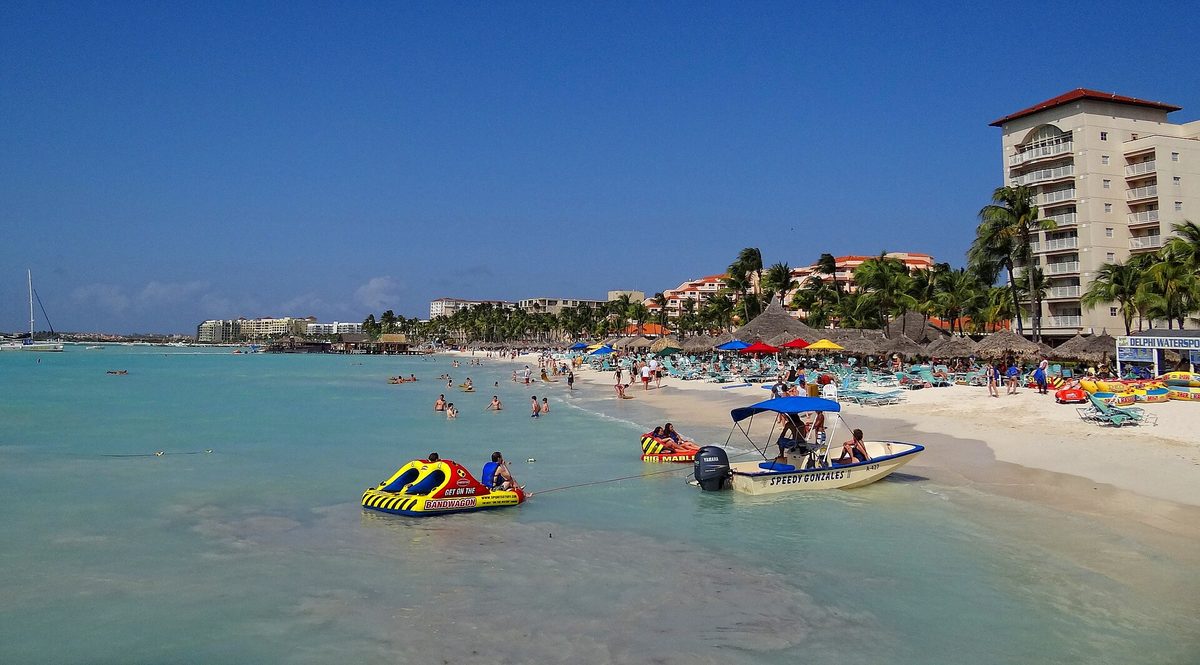
A worked example: the rate you book vs the bill you pay
Numbers make this concrete, so here is a realistic (illustrative) example for a couple staying five nights at a mid-range Palm Beach hotel. I am using round figures to show the mechanics — your actual rates will differ, so treat this as a template, not a quote.
| Line item | How it is figured | Amount |
|---|---|---|
| Room rate | $300/night × 5 nights | $1,500.00 |
| Tourist Levy (room tax) | ~12.5% of room rate | $187.50 |
| Service charge | ~12% of room rate | $180.00 |
| Environmental Levy | ~$3 × 2 people × 5 nights | $30.00 |
| Sustainability Fee | $20 × 2 people (once per year) | $40.00 |
| Real total | Booked rate plus everything above | $1,937.50 |
So the “$1,500 stay” is really closer to $1,940 — about 29% more than the headline. And that is before a single tip, meal, taxi or excursion, and before any property-specific resort or energy surcharge. If you booked a high-rise that adds a ~15% resort charge, you would tack on roughly another $225 and cross $2,150. None of this should scare you off — Aruba is worth it — but it should change the number you plug into your budget. When you compare hotels, mentally add about 25–30% to every nightly rate so you are comparing real costs, not marketing numbers.
How to avoid surprises: what to ask before you book
You cannot dodge Aruba’s taxes, but you can eliminate the unpleasant-surprise factor entirely with about five minutes of due diligence. Before you confirm any stay, get clear answers to these:
- “Does the rate I see include the 12.5% Tourist Levy and your service charge, or are they added at checkout?” This single question resolves most billing shock.
- “Do you charge a separate resort, amenity or energy surcharge? If so, how much per night?” Ask even at smaller hotels — condos and timeshares are the usual culprits.
- “Is there a per-night environmental levy, and is it per person?” Useful for budgeting longer or larger-group stays.
- “What is your tipping policy given the service charge?” So you know whether extra gratuity is expected.
- For timeshares: “What do I owe on arrival beyond the room — environmental levy, energy surcharge, all-inclusive or housekeeping fees?”
Two more habits that save real money. First, pay your $20 Sustainability Fee online with your ED Card a day or two before you fly — never leave it for the airport. Second, when you compare hotels across booking sites, scroll to the final price-breakdown screen on each one; a property that looked $40 cheaper per night sometimes loses the lead once its taxes and fees are itemized. The cheapest headline rate and the cheapest real total are not always the same hotel.
Are these fees worth it? My honest take
I will not pretend the math is fun. But a few of these charges genuinely buy something. The Sustainability Fee and environmental levy fund the wastewater and infrastructure that keep Aruba’s water clear and its reefs alive — the exact things you came for. The service charge supports the staff who make a resort stay feel effortless. The Tourist Levy is just tax, the same as anywhere, and it helps fund the island you are enjoying. None of it is a rip-off; it is simply the true cost of a Caribbean island that imports almost everything and runs on desalinated water. Budget for it honestly and Aruba delivers enormous value — especially if you balance the splurge with free pleasures like a sunset at Aruba’s beaches or an evening wandering town. If you are timing your trip around price, our guide to the best time to visit Aruba covers when rates (and therefore the taxes calculated on them) dip lowest.
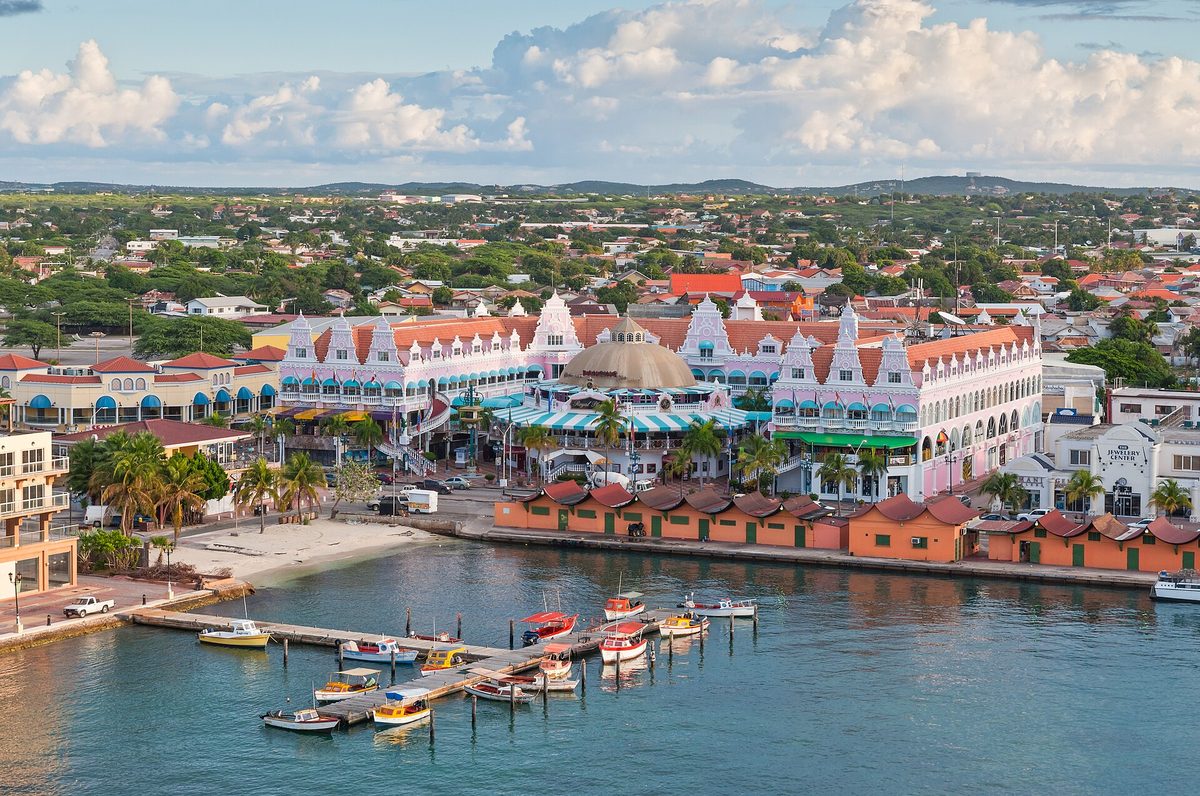
Frequently asked questions about Aruba resort fees and taxes
Does Aruba charge resort fees?
Not in the standard US sense of a mandatory daily resort fee at every hotel. Aruba’s big add-ons are a government Tourist Levy of around 12.5% and a hotel service charge of roughly 10–15%. A few large Palm Beach resorts and some condos or timeshares do add a genuine resort, amenity or energy surcharge on top, so always check the specific property before booking.
What taxes do you pay on an Aruba hotel?
Mainly the Tourist Levy (room tax) of around 12.5% of your room rate, plus a small Environmental Levy of about US$3 per person per night. Most hotels also add their own service charge of roughly 10–15%. Separately, every air visitor pays a one-time US$20 Sustainability Fee online before arrival. Budget around 25–30% on top of the base rate.
How much are taxes and fees on a hotel in Aruba?
Plan for roughly 25–30% above your base room rate once you combine the ~12.5% Tourist Levy, the ~10–15% service charge and the small environmental levy. Travel agents often quote a blended 21–23% for taxes and service charge, then the $20 Sustainability Fee and any property resort surcharge are extra. Always confirm current figures with your hotel.
What is Aruba’s $20 Sustainability Fee and how do I pay it?
It is a one-time fee, in effect since July 1, 2024, that funds wastewater and sustainability infrastructure. You pay it online when you complete your mandatory ED Card at edcardaruba.aw before you fly — credit card only, no cash at the airport. It applies once per calendar year, with exemptions for children under eight, same-day transit passengers and registered residents.
Do I still tip in Aruba if there’s a service charge?
You are not obligated to, but it is customary for good service. The automatic service charge does not always reach the specific person who helped you, so a few extra dollars for an excellent server, bartender or housekeeper is appreciated and normal. Just check restaurant bills first — many already include a 10–15% service charge, so you needn’t add a full second tip.
Is there a departure tax when leaving Aruba?
Yes, there is a departure tax and passenger facility charge (around US$33–37 depending on your destination), but for almost all travelers it is already built into the price of your airline ticket. You will not normally pay anything separately at the airport when you leave, so there is no extra cash to budget at the gate.
Are taxes and fees included when I book online?
It depends on the site and rate. Some show an all-in price; many display a low room rate and add a bundled “taxes and fees” line at the final step, which usually contains the Tourist Levy and service charge. Always scroll to the full price breakdown before confirming, and ask the hotel whether a separate resort or energy surcharge applies.
Final thoughts
Aruba is not trying to nickel-and-dime you — it just prices its hotels the way the Caribbean does, with taxes and a service charge that the headline rate quietly leaves out. Once you know to add roughly a quarter to a third on top, pay your $20 Sustainability Fee online before you fly, and ask two plain questions before booking, the checkout surprise disappears and you can budget with confidence. Do that, and the only thing waiting for you on the last morning is the urge to rebook. For the full picture of what a trip really costs, head back to our Aruba vacation cost guide, and once the budget is sorted, start dreaming with our roundup of the best things to do in Aruba.
By the ArubaTourism.org team — Last updated June 2026. Figures here, including the Tourist Levy, service charge, environmental levy and Sustainability Fee, are approximate and change over time; confirm current rates with your hotel and Aruba’s official channels (aruba.com and edcardaruba.aw) before you travel.
Photo credits
- Photo: shutterstuman / CC BY 2.0 via Wikimedia Commons
- Photo: Rarends297 (CC0) via Wikimedia Commons
- Photo: Bjørn Christian Tørrissen / CC BY-SA 3.0 via Wikimedia Commons
- Photo: Navigator334 / CC BY-SA 4.0 via Wikimedia Commons
- Photo: sbmeaper1 (CC0) via Wikimedia Commons