On my first trip to Aruba I learned the hard way that a few smart Aruba travel tips make all the difference. I made every rookie mistake in the book: I almost missed my flight because I hadn’t filled out the ED card, I exchanged a wad of dollars for florins I never needed, and I burned the backs of my legs to a crisp on day one because the trade winds tricked me into thinking the sun wasn’t serious. Aruba is one of the easiest, friendliest Caribbean islands to visit — but a handful of small things will make or break those first 48 hours, and almost nobody tells you about them until you’re standing at the gate.
The most important Aruba travel tips come down to five things: complete your mandatory online ED card (and pay the US$20 sustainability fee) before you fly, bring a valid passport, don’t bother exchanging money because US dollars are accepted everywhere, pack reef-safe sunscreen because regular sunscreen is banned, and respect the sun even when the breeze fools you. Get those right and the rest of your trip is smooth sailing.
This is the guide I wish I’d had: a complete, honest, “know before you go” rundown from people who have actually navigated Aruba’s entry rules, money, safety, packing and customs — not a recycled listicle. Whether it’s your first time or your fifth, I’ll walk you through everything that matters, flag the things that genuinely catch visitors out, and point you to our deeper guides on what an Aruba trip costs and getting to and around the island. Let’s make sure your trip starts the way mine eventually learned to: relaxed.
Aruba travel tips at a glance
If you read nothing else, read this. Here’s the essential “before you go” cheat sheet — the facts I’d want tattooed on the inside of my eyelids before boarding a flight to Oranjestad.
Two decisions do most of the work on cost: which area you stay in and when you book. Cheap hotels in Aruba and vacation rentals are where the savings actually live.
| Essential | What to know | My quick advice |
|---|---|---|
| Passport & visa | Valid passport required to fly; US/EU/Canada need no tourist visa | Check it’s valid for your whole stay |
| ED card | Mandatory online immigration form, one per person | Do it 3–7 days before, at edcardaruba.aw only |
| Sustainability fee | US$20 per visitor, paid with the ED card | Budget for it; a few exemptions apply |
| Currency | Aruban florin (AWG), pegged ~1.79 to US$1 | Just bring US dollars and cards |
| Language | Dutch & Papiamento official; English everywhere | Learn “bon dia” and “masha danki” |
| Safety | One of the safest Caribbean islands | Normal city sense; don’t leave gear on the beach |
| Weather | 82–88°F year-round, outside the hurricane belt | Any month works; pack for sun and wind |
| Sunscreen | Oxybenzone sunscreen is banned (reefs) | Buy reef-safe SPF 50 before you fly |
| Tap water | Desalinated and safe to drink | Bring a refillable bottle, skip plastic |
| Power | Same 110–120V, type A/B plugs as the US | US travelers need no adapter |
| Tipping | 10–15%; a service charge is often added | Check the bill before you double-tip |
| Getting around | Drive on the right; no Uber; taxis fixed-rate | Rent a car for freedom beyond the resort |
Entry requirements: passport, visa and the ED card
Nothing derails a trip faster than a paperwork surprise at check-in, and Aruba has one genuine gotcha that trips up thousands of visitors every year. Let’s get the entry rules straight first, because they’ve changed in the last couple of years and a lot of the advice floating around online is out of date.
Do you need a passport for Aruba?
Yes. If you’re flying, you need a valid passport — a US passport card or driver’s license won’t cut it (the card only works if you arrive by cruise ship). Although Aruba is part of the Kingdom of the Netherlands, it sits outside the Schengen zone and runs its own immigration. I’d make sure your passport is valid for the entire length of your stay; some travelers report being asked for a little extra validity, so if yours is within a few months of expiring, renew before you go. Keep a photo of the ID page on your phone as a backup.
On the accommodation line specifically, cheap all-inclusive resorts and family all-inclusive resorts are the two formats that most reliably cap what you spend once you arrive.
Do you need a visa? How long can you stay?
For tourism, citizens of the United States, Canada, the UK, the EU and many other countries do not need a visa. You’re typically granted an initial stay of up to 30 days when you land, and US citizens can generally stay up to 90 days; extensions up to 180 days are possible but require proof of travel insurance and sufficient funds. At the border you may be asked to show a return or onward ticket and your accommodation details, so have your hotel booking and flight confirmation handy — I keep mine screenshotted offline in case the airport wifi is sluggish.
The Aruba ED card (don’t skip this one)
This is the single most common thing first-timers get wrong. Every traveler to Aruba — every person, including infants and children, regardless of nationality — must complete the online Embarkation/Disembarkation (ED) card before arrival. It replaced the old paper landing form and is now a permanent part of immigration. You complete it at the official government portal, edcardaruba.aw, and you can only submit it within seven days of your arrival date. Once done, you get a “qualifier” with a QR code that the airline checks before you board and Aruban border control scans when you land.
Here’s why it matters so much: you cannot check in for your flight without it. I’ve watched people get pulled out of the boarding line to frantically fill it out on airport wifi while everyone else claims the overhead bins. Do it from your couch a few days before instead. It takes about ten minutes per person if you have your passport and flight details in front of you.
The US$20 sustainability fee
Newer than most blogs will tell you: as part of the ED card process, most visitors now pay a US$20 sustainability fee (sometimes called the visitor entry fee). You pay it online at edcardaruba.aw when you submit your card. A few people are exempt — children under 8, cruise passengers, Aruba residents, and repeat visitors within the same calendar year — but assume you’ll pay it and build it into your Aruba trip budget. One warning I’ll repeat: only use edcardaruba.aw. If a website charges you more than US$20 or asks for a “processing fee,” it’s an unofficial middleman. Go straight to the source.
A pleasant surprise on the way home: US pre-clearance
Here’s a tip that will change how you plan your departure day. Aruba’s Queen Beatrix International Airport has US Customs and Border Protection pre-clearance, meaning you clear US immigration in Aruba before you board. The upside is huge: you land back in the States as a domestic passenger, skipping the customs scrum at your home airport. The catch is you must get to the airport early — I budget a full three hours for departures to the US. Don’t cut it close; the pre-clearance hall can back up when several flights leave together.

Money in Aruba: currency, cards, ATMs and tipping
Money is where I see visitors waste the most time and energy before a trip — standing in line at their home bank to order a currency they’ll barely touch. Let me save you the trouble.
What currency does Aruba use?
The official currency is the Aruban florin (AWG, sometimes written Afl.), and it’s pegged to the US dollar at a fixed rate of about 1.79 florin to US$1. But here’s the thing: you almost never need it. US dollars are accepted virtually everywhere — restaurants, shops, taxis, tour operators, supermarkets. On my first trip I exchanged a couple hundred dollars and then didn’t see a florin until I went hunting for one at a casino cashier just to keep as a souvenir. Don’t bother exchanging money before you fly. If you end up with florins as change, spend them or keep a colorful banknote as a keepsake.
Cards, ATMs and a little cash
Major credit cards (Visa and Mastercard especially) are accepted almost everywhere, so I put most expenses on a card with no foreign-transaction fee and carry a modest amount of US cash for tips, taxis, beach vendors and the odd small shop. ATMs are plentiful around Oranjestad, Palm Beach and the airport; many dispense both florins and US dollars, so check which you’re withdrawing if you have a preference. A small heads-up: when you pay in cash you may get change back in a mix of dollars and florins, which is completely normal. Tell your bank you’re traveling so a card isn’t frozen mid-trip, and you’re set.
Tipping in Aruba
Tipping is appreciated but not the free-for-all it is in the US. Most restaurants add a service charge of around 10–15% to the bill — always glance at the check before you tip again, because doubling up is easy to do by accident. If service was great and nothing was added, 15% is generous and welcome. For taxis, rounding up or adding a dollar or two is fine; for housekeeping, a few dollars a day is a kind gesture; for tour guides and bartenders, a couple of dollars goes a long way. None of it needs to be agonized over. Our guide to tipping in Aruba has the full who-and-how-much cheat sheet. For the full picture of what things cost, see our Aruba vacation cost guide.

Is Aruba safe? An honest look
This is the question I get asked most by first-timers, and the short answer is reassuring. Aruba is consistently ranked among the safest islands in the Caribbean, with low violent crime and a stable, tourism-focused economy. I’ve walked back to my hotel along Palm Beach after dinner, driven the island solo, and never once felt uneasy. That said, “safe” doesn’t mean “switch your brain off,” so here’s the candid version.
Crime and common-sense precautions
The crime you’re most likely to encounter is petty — opportunistic theft from unlocked cars or unattended bags on the beach. The fixes are the obvious ones: don’t leave valuables visible in a parked rental, don’t walk away from your phone and wallet on your beach towel while you swim, and use the in-room safe for your passport and spare cash. Oranjestad and the resort areas are well-lit and busy at night. Use the same instincts you’d use in any unfamiliar city and you’ll be fine.
The sea is the real thing to respect
Honestly, the biggest genuine hazard in Aruba isn’t crime — it’s the water on the wrong side of the island. The calm, swimmable beaches are on the leeward (western and southern) coast: Eagle, Palm, Baby Beach and the like. The windward north and northeast coast is wild, with powerful surf and rip currents that have caught out strong swimmers. Gorgeous to look at, dangerous to swim. Heed posted warnings, ask locals or lifeguards if you’re unsure, and save your swimming for the protected west-coast beaches. Read more in our guide to Aruba’s beaches before you pick where to dip in.
Health, water and the sun
Good news on two fronts. Aruba’s tap water is desalinated from seawater and safe to drink — it’s some of the cleanest in the world, so skip the bottled water, bring a refillable bottle, and put ice in your drinks without a second thought. No special vaccinations are required for most travelers, and there’s no malaria risk. The thing that actually gets people is the sun. Aruba sits close to the equator and the constant trade winds mask how strong it is — you don’t feel yourself burning until it’s too late. I learned this the hard way. Wear and reapply a high-SPF reef-safe sunscreen, throw on a rash guard for snorkeling, and seek shade between roughly 11 a.m. and 3 p.m.
Laws worth knowing
A couple of legal notes that surprise visitors. Despite the Dutch connection, marijuana and other recreational drugs are illegal in Aruba and the laws are enforced, including against tourists — don’t assume “Netherlands rules” apply, because they don’t. The drinking and gambling age is 18. And remember the reef-safe sunscreen rule: sunscreens containing oxybenzone are banned to protect the coral, and you can be fined, so leave the old bottle at home.
Weather and when to go: what it means for your trip
One of Aruba’s great selling points is how little you have to think about the weather. Aruba enjoys warm, dry, sunny conditions essentially year-round, with average highs of 82–88°F (28–31°C), low humidity by Caribbean standards, and a near-constant cooling breeze. Crucially, the island sits outside the hurricane belt in the far southern Caribbean, just 15 miles off Venezuela, so the late-summer storms that rattle other islands almost never reach it.
What does that mean practically? You can have a great trip in any month. The busy, pricier season runs roughly mid-December through April; the quieter, better-value months fall in the autumn. The “rainy season” (around October to January) brings only brief passing showers, not washouts. The trade winds blow hardest in spring, which windsurfers love and umbrella-owners curse. For a month-by-month breakdown of crowds, prices and conditions, see our full guide to the best time to visit Aruba. The headline, though, is simple: there’s no bad time, so book around the fares and the crowds rather than the forecast.
What to pack for Aruba
Aruba is a casual, low-maintenance island, so packing is easy — but a few items are genuinely make-or-break, and one of them is something you can’t buy on arrival without effort. Here’s my no-nonsense Aruba packing list, organized by what actually matters.
The non-negotiables
- Reef-safe sunscreen (SPF 50+): buy it before you fly. Oxybenzone sunscreens are banned, and the reef-safe versions on the island can be pricey and limited. Pack more than you think you’ll need.
- A refillable water bottle: the tap water is excellent, so this saves money and plastic.
- Sun protection beyond lotion: a wide-brim hat, polarized sunglasses, and a rash guard or UPF shirt for long beach and snorkel days. The wind hides the burn.
- Reef shoes or sturdy water sandals: several of the best snorkeling spots and the rocky coves have sharp rock and coral entries.
Clothing
Think light, breathable and casual. Swimwear, shorts, sundresses, linen shirts, and a couple of “resort casual” outfits for nicer dinners (a collared shirt or a sundress covers almost everything — very few places require more). Bring a light layer for breezy evenings and over-air-conditioned restaurants, and quick-dry fabrics generally beat heavy cotton in the humidity. Leave the formalwear at home unless you have a specific event.
Electronics and the little things
If you’re coming from the US or Canada, good news: Aruba uses the same 110–120V power and type A/B plugs, so you need no voltage converter or adapter. Travelers from the UK, EU and elsewhere will want a US-style adapter. Throw in a portable charger for long days out, a dry bag for boat trips, any motion-sickness remedy if you’re prone to it on catamaran cruises, and a small first-aid kit with aloe for the sunburn you’re hopefully not going to get. A reusable tote doubles as a beach bag and a grocery bag.
Getting around Aruba
How you get around shapes your whole trip, and Aruba gives you a few good options. I’ve covered this in depth in our guide to getting to and around Aruba, but here are the tips that matter most for first-timers.
Renting a car: the freedom play
If you want to see the real island beyond your resort — the quiet southern beaches, Arikok, the lighthouse, the local restaurants — rent a car. A few reassuring facts: Arubans drive on the right, the same as the US, and a valid driver’s license from your home country is accepted. Roads in the tourist areas are good; the main quirk is the abundance of traffic circles (roundabouts), so brush up on yielding to traffic already in the circle. If you want to explore Arikok’s off-road tracks or the Natural Pool, you’ll need a genuine 4×4, not a soft crossover. Reserve ahead in high season, when cars sell out.
Taxis, buses and the no-Uber reality
There is no Uber or Lyft in Aruba — don’t land expecting to summon a ride from your phone. Taxis are plentiful and run on fixed government rates rather than meters, so always agree the fare before you set off (drivers will tell you the set price; rates can rise a little at night and on Sundays). For budget travelers, the public Arubus runs a reliable, cheap route along the hotel strip between Oranjestad and the high-rise resorts, which is perfect if you’re staying near the line and don’t need to roam. Many resorts also run shuttles. My rule of thumb: car if you want to explore, taxis and the bus if you’re mostly beaching it near the strip.
Staying connected: SIM cards, eSIMs and wifi
For a short beach holiday, the wifi at your hotel and the restaurants may be all you need — it’s widely available and generally decent. But if you’re renting a car, using maps, or working a little on the road, having your own data is worth it, and it’s cheap to sort out.
Your options, cheapest effort first: check your home carrier’s international day pass (convenient but the priciest per day — US carriers like Verizon, AT&T and T-Mobile all offer Aruba roaming, so confirm the rate before you fly to avoid bill shock). For longer or data-heavy trips, buy a local SIM card from Setar or Digicel, the island’s two providers, both of which have desks right at the airport and shops around town. The most painless modern option is an eSIM you install before departure — you land already connected, with no shop visit, provided your phone is unlocked and eSIM-capable. Whatever you choose, you’ll have no trouble getting online; Aruba is well-covered.
Language and culture: speak a little, respect a lot
You will have zero language trouble in Aruba. The official languages are Dutch and Papiamento, but English and Spanish are spoken almost universally, especially anywhere near tourism. Most Arubans are comfortably multilingual — it’s genuinely impressive.
A few Papiamento phrases go a long way
That said, learning a couple of words of Papiamento, the island’s beloved creole mother tongue, earns real smiles. The ones I actually use: “Bon dia” (good morning), “bon tardi” (good afternoon), “bon nochi” (good evening/night), “masha danki” (thank you very much), and “ayo” (goodbye). Drop a “masha danki” on your server or taxi driver and watch the warmth come back at you. It’s a small gesture that signals you see Aruba as more than a backdrop.
Be a guest, not just a tourist
Arubans take real pride in their “One Happy Island,” and the local ethos — sometimes framed as the “Aruba Promise” — is about treating the island and its people with respect. In practice that means simple things: greet people before launching into a request, dress with a little modesty away from the beach (beachwear stays at the beach, not in shops and restaurants), don’t touch or disturb wildlife, take your trash with you, and stay on marked trails in natural areas like Arikok National Park. Tread lightly and you’ll get the island’s famous friendliness back tenfold.
Do you need travel insurance for Aruba?
Travel insurance isn’t legally required for a standard tourist visit (the exception: if you apply to extend your stay beyond 30 days, proof of medical and liability insurance is required). But required and wise are different things, and I always buy a policy for Aruba. Here’s my honest take on why.
Aruba is safe and healthy, but it’s an island far from home, and the things insurance covers are exactly the things that ruin trips: a medical emergency or clinic visit, a water-sports or hiking mishap, a hurricane disrupting your connecting flights even though Aruba itself is storm-free, lost baggage, or a trip you have to cancel last-minute. Aruba has good private medical facilities, but you’ll pay out of pocket up front, and a medical evacuation can run into five figures. A basic policy with medical coverage, emergency evacuation, and trip cancellation/interruption is cheap relative to the cost of the trip — often a small percentage of your total. Compare a couple of providers, read what’s actually covered (especially for the adventure activities you plan to do), and keep the policy details saved offline on your phone. For most travelers it’s money you’re delighted to have wasted.
Aruba tips by type of traveler
The “know before you go” essentials are the same for everyone, but the smart moves shift depending on who you’re traveling with. Here’s how I’d tweak the advice.
Couples and honeymooners
Aruba is built for romance — sunset catamaran cruises, beachfront dinners, adults-only resorts on Eagle and Palm Beach. Book a sunset sail early in your trip (it’s the perfect orientation and the light is unreal), reserve any special dinner ahead in high season, and consider an adults-only or boutique stay if peace is the priority. Browse our pick of where to stay in Aruba to match the vibe to the mood.
Families
It’s a fantastic family island: calm west-coast beaches for little ones, short drives, safe water, and easy logistics. Base yourself near Palm Beach for the gentlest water, calmest snorkeling and the most kid-friendly amenities. Pack extra reef-safe sunscreen and rash guards for the kids, and lean on supermarkets to self-cater breakfasts and snacks — it saves a fortune over three restaurant meals a day. Many resorts have kids’ clubs and pools for the midday sun hours.
Budget travelers
Aruba has a reputation for being pricey, but you can absolutely do it affordably. Stay in a vacation rental or low-rise hotel with a kitchen, hit the supermarkets (Super Food near Eagle Beach is a one-stop), ride the cheap Arubus along the strip instead of renting a car for a beach-only trip, and remember that every beach in Aruba is public — you can lay your towel on the sand in front of any glittering resort for free. Our cost guide breaks down where the money really goes and how to trim it.
Cruise passengers
If Aruba is a port day, you’ll dock right at Oranjestad, which is walkable for shopping and the colorful Dutch architecture. With only a handful of hours, don’t overreach: pick one thing — a nearby beach like Eagle, a snorkel trip, or a quick island tour — rather than racing to do it all and enjoying none of it. Keep an eye on your all-aboard time, and know that the calmest, prettiest beaches are a short taxi ride from the pier. (And yes, the island is lovely enough that a lot of cruisers come back for a full week.)
Adventure seekers
Aruba over-delivers for active travelers. The windward coast and Arikok National Park are made for 4×4 safaris and hiking; the water is a playground for diving the Antilla wreck, kitesurfing and the world-class windsurfing that gives the island its nickname. See our guide to Aruba water sports to plan it, rent a true 4×4 for the off-road tracks, and carry far more water and sun protection than feels necessary — the interior is hot, dry and shadeless.
Rookie mistakes to avoid (I made most of them)
Consider this the section I’d hand my past self at the airport. None of these will ruin your trip, but avoiding them makes it noticeably smoother.
- Forgetting the ED card. Say it with me: do it before you fly, at edcardaruba.aw, within seven days of arrival. It’s the number-one cause of gate-side panic.
- Exchanging currency you’ll never use. US dollars work everywhere. Skip the exchange counter and its bad rates.
- Underestimating the sun. The breeze is a liar. People who never burn at home come home from Aruba looking like lobsters. Reapply, cover up, hide at midday.
- Bringing banned sunscreen. Oxybenzone is prohibited. Buy reef-safe before you go or risk a fine and an awkward bin trip.
- Swimming on the wild side. The north and northeast coast surf is genuinely dangerous. Swim on the calm leeward beaches.
- Never leaving the resort. The strip is lovely, but Oranjestad, San Nicolas’s street art, Arikok and the local food scene are where Aruba’s character lives. Give it a day or two.
- Expecting Uber. There isn’t any. Agree taxi fares up front or rent a car.
- Cutting departure too fine. US pre-clearance means three hours at the airport on the way home. Build it in.
- Double-tipping. Check whether a 10–15% service charge is already on the bill before adding more.
- Trying to do everything. It’s a small island and a vacation, not a checklist. Leave room to do gloriously little.
How to plan it: a first-timer’s pre-trip checklist
Let’s tie the practical pieces together into the order I’d actually do them. Knock these out and you’ll arrive relaxed. The one decision that comes before all of them is how long to go for — it sets the budget, the car, and the flights.
- As soon as you book: check your passport’s validity, buy travel insurance, and start a rough budget. Reserve a rental car if you want one (they sell out in high season).
- A few weeks out: decide where to stay and book any must-do tours, sunset cruises or special dinners. Sketch a loose Aruba itinerary so you’re not deciding everything on the fly.
- The week before: buy reef-safe sunscreen, sort an eSIM if you want one, and screenshot your hotel and flight confirmations for the border.
- 3–7 days before: complete the ED card for every traveler at edcardaruba.aw and pay the US$20 sustainability fee. Save the QR-code qualifier offline.
- Departure day home: arrive three hours early for US pre-clearance.
That’s genuinely the whole game. Aruba makes the rest easy — you’ll spend more time deciding which beach than wrestling with logistics. For inspiration on filling the days, browse our roundup of the best things to do in Aruba and the island’s restaurants.
Frequently asked questions about visiting Aruba
Is Aruba safe for tourists?
Yes. Aruba is regularly ranked among the safest islands in the Caribbean, with low violent crime and a stable, tourism-driven economy. The main risks are petty theft (don’t leave valuables unattended on the beach or in a car) and the strong surf on the wild north coast. Use normal city common sense and swim only on the calm leeward beaches and you’ll be fine.
Do you need a passport to go to Aruba?
If you’re flying, yes — a valid passport is required, and a US passport card or driver’s license is not accepted for air travel (the card works only via cruise ship). US, Canadian, UK and EU citizens don’t need a tourist visa. Make sure your passport stays valid for the duration of your trip, and complete the mandatory online ED card before you fly.
What is the ED card and is it mandatory?
The Embarkation/Disembarkation card is Aruba’s mandatory online immigration form, and yes, every traveler needs one — including infants. Complete it at the official portal edcardaruba.aw within seven days of arrival; most visitors also pay a US$20 sustainability fee. You can’t check in for your flight without it, so do it before you leave home rather than at the gate.
What currency should I bring to Aruba?
Bring US dollars and a credit card with no foreign-transaction fee. The official currency is the Aruban florin (pegged at about 1.79 to the dollar), but US dollars are accepted virtually everywhere, so there’s no need to exchange money in advance. Carry some small bills for tips, taxis and beach vendors, and use ATMs on the island if you need more cash.
Can you drink the tap water in Aruba?
Yes, absolutely. Aruba’s tap water is produced by desalinating seawater and is considered some of the cleanest in the world. It’s perfectly safe to drink, use for ice, and brush your teeth with. Skip bottled water entirely — bring a refillable bottle instead to save money and cut plastic waste on the island.
What language do they speak in Aruba?
The official languages are Dutch and Papiamento, the local creole. In practice, English and Spanish are spoken almost everywhere, especially in hotels, restaurants and shops, so you’ll have no communication trouble. Learning a few Papiamento phrases — “bon dia” (good morning) and “masha danki” (thank you) — is appreciated and earns warm smiles.
Is Aruba in the hurricane belt?
No, and it’s a real advantage. Aruba sits in the far southern Caribbean, outside the main hurricane belt, so it very rarely sees the tropical storms that affect islands farther north. Combined with warm, dry, breezy weather year-round (82–88°F), that makes Aruba a reliable any-month destination. See our best time to visit guide for month-by-month detail.
Do I need to rent a car in Aruba?
Not necessarily, but it helps if you want to explore. For a beach-focused trip near the resort strip, taxis (fixed-rate, no Uber) and the cheap Arubus bus are plenty. If you want to reach quiet southern beaches, Arikok or local restaurants on your own schedule, rent a car — Arubans drive on the right and your home license is accepted. You’ll need a 4×4 for Arikok’s off-road tracks.
Do you tip in Aruba?
Yes, but check the bill first. Most restaurants add a service charge of about 10–15%, in which case an extra tip is optional. If nothing is added, 15% for good service is standard. A dollar or two for taxi drivers, bartenders and housekeeping is appreciated. Tipping is welcomed but more relaxed than in the US — you won’t be chased for it.
Final thoughts: the island makes it easy
Looking back at that sunburned, slightly frazzled version of me at the gate, I have to laugh — because the truth is Aruba is one of the most forgiving places I’ve ever traveled. Sort the five things that actually matter (the ED card, your passport, reef-safe sunscreen, a respect for the sun, and the knowledge that your dollars work just fine) and the island takes care of the rest. The water is safe, the people are warm, the weather behaves, and English is everywhere.
That’s the whole secret to a great first trip here: do a little homework before you fly so you can do absolutely nothing once you land. Save this guide, run the checklist a week out, and then go let the trade winds and the turquoise water do their thing. Once you’ve planned the essentials, dive into the fun part — the best things to do, the beaches worth your towel, and the restaurants worth your appetite. I have a feeling you’ll be booking a return trip before the first one’s even over. Most people do.
Photo credits
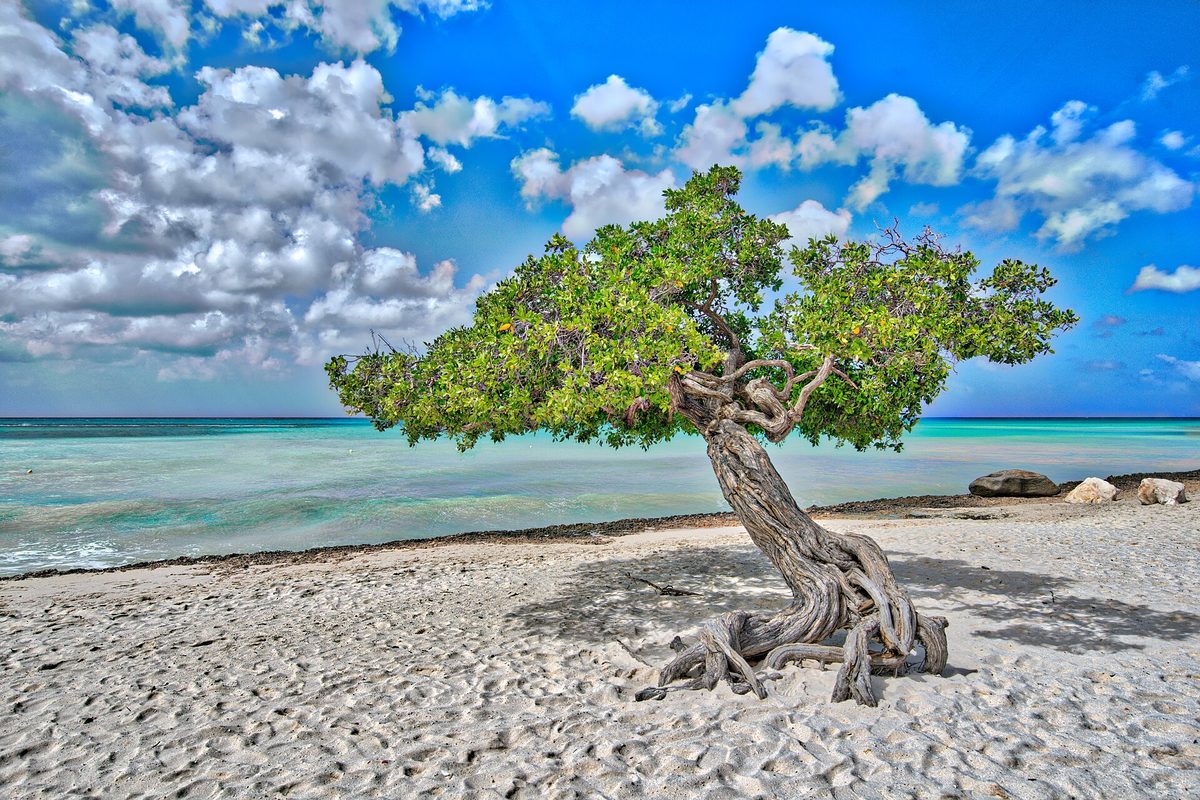
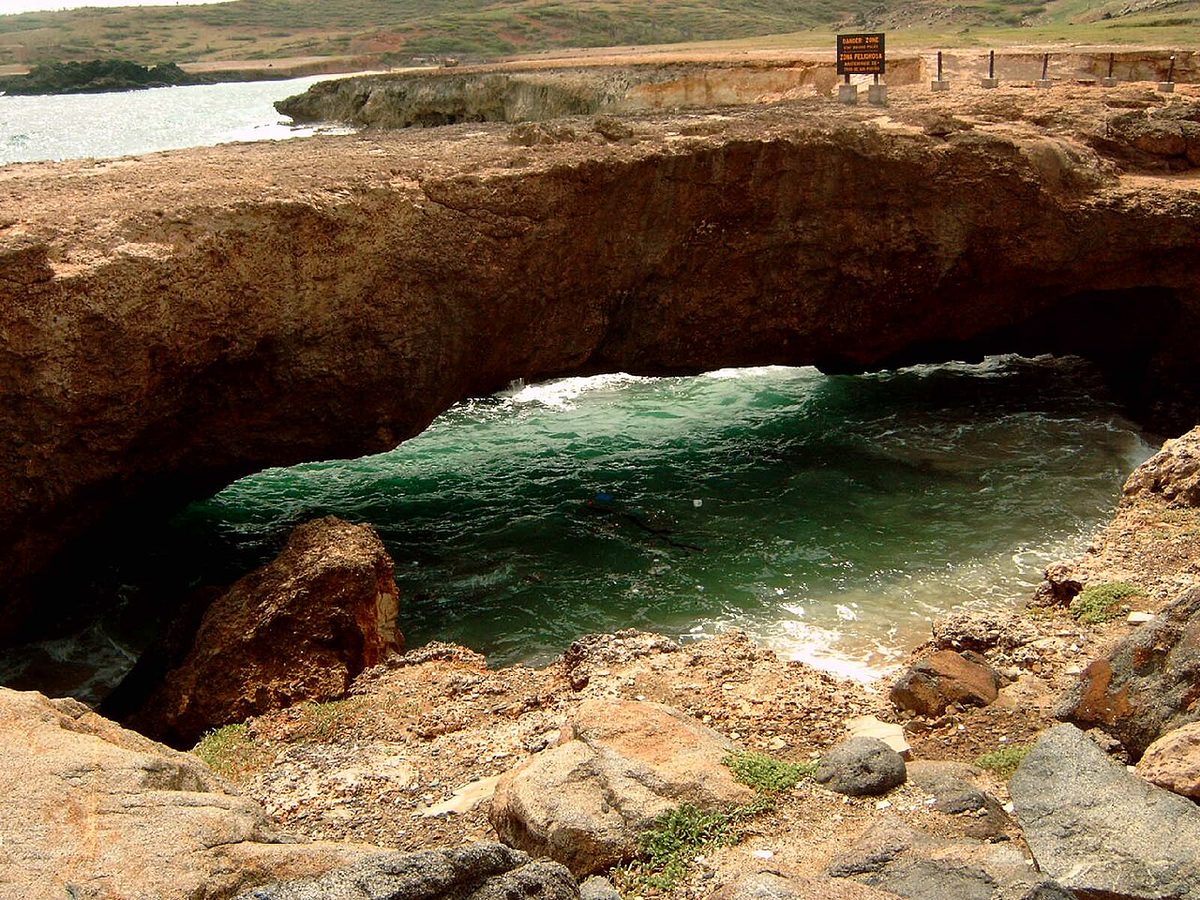
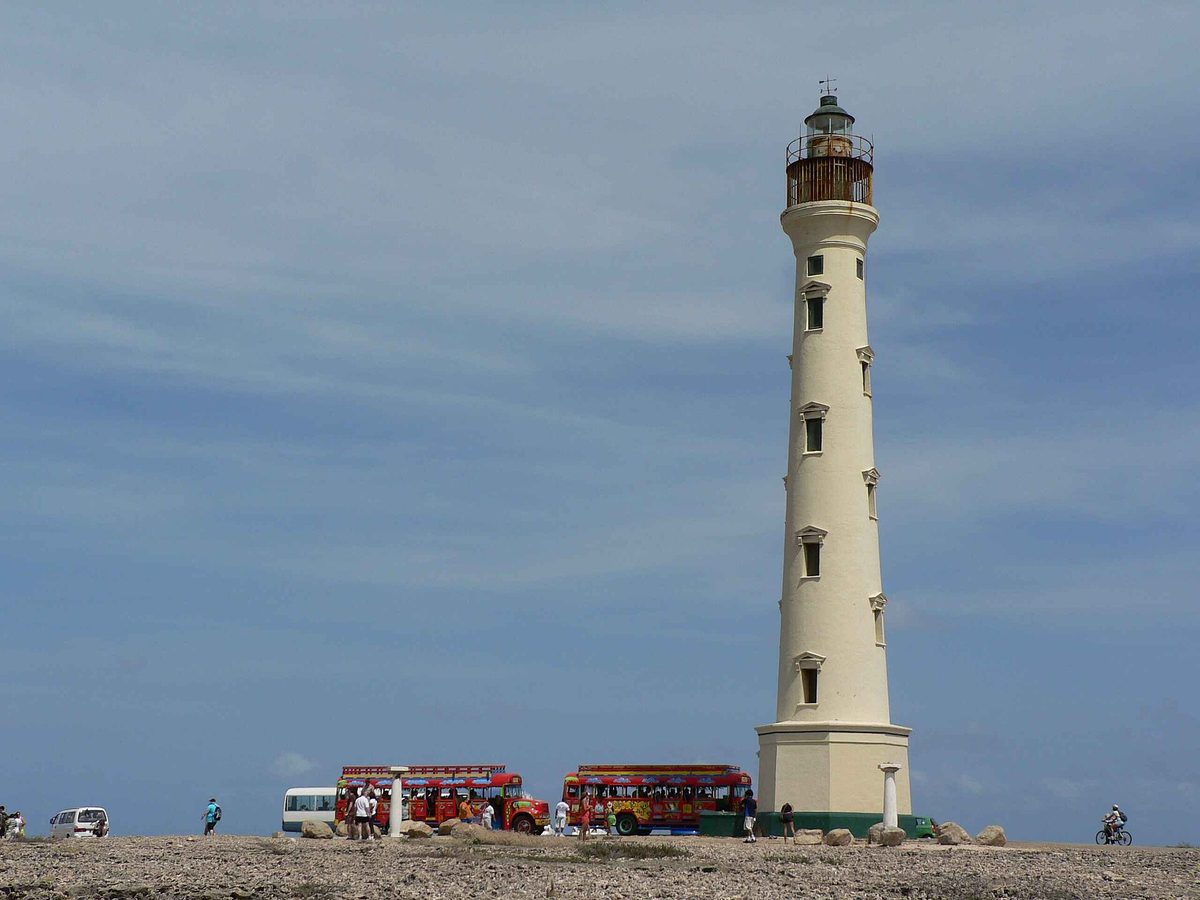
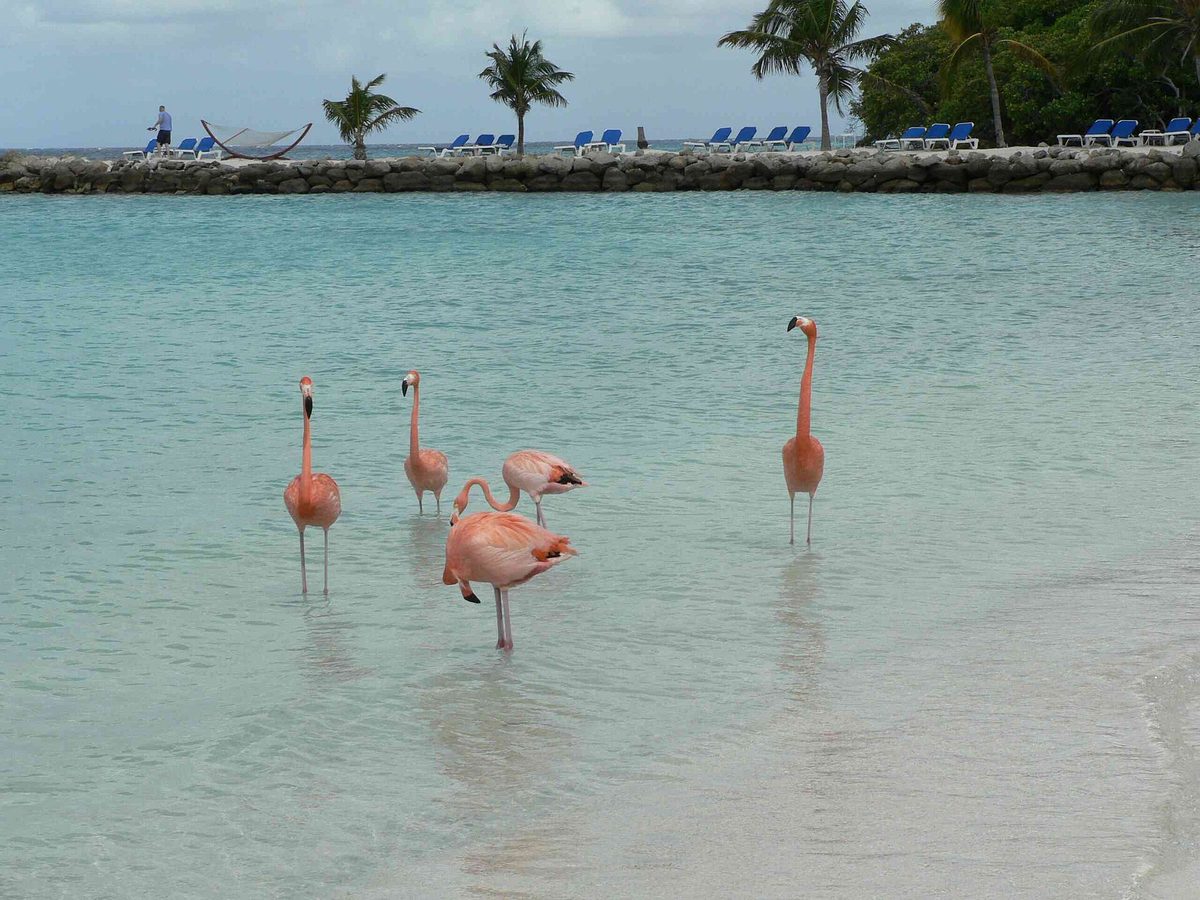
Images via Wikimedia Commons unless noted. See each image’s source page for full license details. Photos featured: an Aruba beach with the island’s iconic divi-divi trees; the colorful Dutch colonial architecture of Oranjestad; the Palm Beach high-rise resort strip; Aruba’s rugged windward coastline near the Natural Bridge; the California Lighthouse; and the flamingos of Renaissance Island. Each photographer is credited on the image’s Wikimedia Commons file page, and all images are used under their respective Creative Commons or public-domain licenses.