Ask almost anyone to picture Aruba and they’ll describe Palm Beach: a wall of high-rise resorts, jet skis buzzing offshore, and barely a square foot of sand to call your own. That Aruba is real. But it’s maybe four miles of a 20-mile-long island that has more than 30 named beaches, and the quietest, most beautiful of them never make the postcards. The hidden beaches in Aruba are where I send friends who tell me they want the Caribbean without the crowd.
After years of driving the island’s back roads and wrong turns, I’ve learned that “secluded” here means two very different things depending on which coast you’re standing on. This guide sorts them out honestly, tells you which ones you can actually swim at, and shows you how to reach each without wrecking a rental car.
By the ArubaTourism.org team — Last updated June 2026
The short answer: where to find a beach to yourself
Aruba’s secluded beaches fall into two camps. The calm, swimmable coves on the sheltered west and south coasts — Boca Catalina, Tres Trapi, Mangel Halto and Rodgers Beach — are reachable in a regular rental car and great for snorkeling. The wild, wave-battered shores on the rugged north and east coasts — Dos Playa, Andicuri, Boca Prins — need a 4×4, reward you with drama and solitude, and are for photographs and picnics, not swimming.
Aruba’s hidden beaches at a glance
Here’s the quick comparison I wish someone had handed me on my first trip. “Swimmable” assumes normal conditions; always read the water before you get in.
| Beach | Coast / area | The vibe | Swimmable? | Getting there |
|---|---|---|---|---|
| Boca Catalina | Northwest (Malmok) | Snorkel cove, clear water | Yes — calm | Any car, short walk |
| Tres Trapi | Northwest (Malmok) | Turtles, “three steps” | Yes — calm | Any car |
| Mangel Halto | Southeast (Pos Chiquito) | Mangroves, best snorkel | Yes — shallow | Any car |
| Rodgers Beach | South (San Nicolas) | Soft sand, private feel | Yes — calm | Any car |
| Savaneta / Santo Largo | South coast | Local, near-empty weekdays | Yes — calm | Any car |
| Dos Playa | North (Arikok) | Twin coves, surfers | No — undertow | 4×4 / tour |
| Boca Prins | North (Arikok) | Sand dunes, cliffs | No — currents | 4×4 / tour |
| Andicuri | Northeast | Shaded ledges, clear water | No — strong waves | 4×4 |
| Daimari | Northeast | Calm-ish, horse rides end here | Caution | 4×4 / horseback |
| Grapefield | Southeast | Sea grapes, cliffs | No — current | Any car (then dirt) |
| Boca Grandi | Southeast tip | Kitesurfers, windswept | No — for kiting | Any car |
| Black Stone Beach | North coast | Black pebbles, natural arch | No — rocky/wild | 4×4 / UTV |
If you only do one thing with this article, understand the next section — it explains why half these beaches are postcard-calm and the other half will knock you off your feet.
Why Aruba has two kinds of secluded beach
Aruba sits at an angle to the constant easterly trade winds, and that single fact shapes every beach on the island. The leeward side — the west and south coasts where every resort is built — is sheltered. The water there is calm, clear and warm, which is exactly why the hotels claimed it. The handful of quiet coves still tucked between the development (Boca Catalina, Tres Trapi, Malmok) share that gentle water without the crowds.
The windward side — the entire north and east coast — takes the trade winds and open-Atlantic swell head-on. The result is spectacular: limestone cliffs, sea caves, dunes, crashing surf and beaches where you genuinely may not see another soul. It’s also genuinely dangerous to swim, with rip currents and undertow that catch strong swimmers out every year. Locals go there to surf, kitesurf, picnic and watch the waves, not to float.
Keep that compass in your head — calm in the west and south, wild in the north and east — and you’ll never be disappointed by a beach in Aruba. For the full lay of the land, our complete guide to Aruba’s beaches covers the famous stretches too; this article is about the ones that aren’t on the tour-bus route.
Calm, swimmable hidden beaches (west & south coasts)
Start here if you want seclusion and a swim. None of these require a 4×4, all have water gentle enough for snorkeling on a normal day, and most are a 10–25 minute drive from the Palm Beach hotel strip. Getting a car for a day or two makes all of them easy; see our guide to getting around Aruba if you’re deciding whether to rent.
Boca Catalina — the snorkeler’s secret north of the hotels
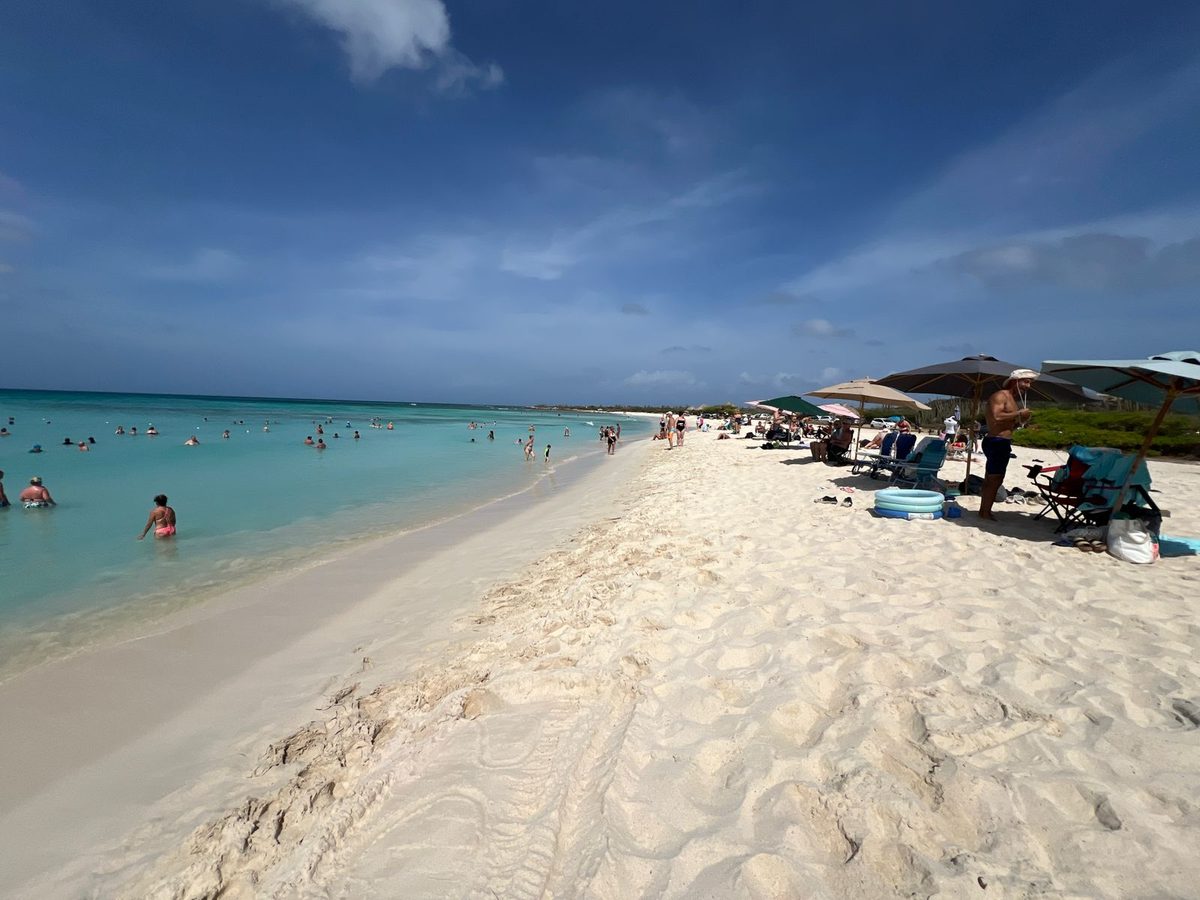
Boca Catalina is the one I recommend most often, because it delivers the “deserted Caribbean cove” fantasy while sitting a short drive past the last high-rise. It’s a small crescent of sand in the Malmok area with clear, shallow, almost waveless water and a rocky reef edge that fills with fish. Snorkel straight off the beach and you’ll see sergeant majors, parrotfish and the occasional barracuda hanging in the blue.
It’s not a total secret — snorkel catamarans sometimes anchor offshore mid-morning — but arrive before 9am or after 3pm and you can have the sand to yourself. There are no facilities, no shade and no vendor, so bring water, a hat and your own mask. If you’re chasing fish and turtles, our Aruba water sports guide maps out the island’s best snorkeling and boat trips.
Tres Trapi — “three steps” and a good shot at turtles
Just south of Boca Catalina, Tres Trapi (Papiamento for “three steps”) is named for the small concrete staircase that drops you straight into the water. There’s almost no sand — people lay towels on the flat rock shelf — which keeps the crowds thin even though the snorkeling is some of the easiest on the island. Green sea turtles graze the sea grass here regularly, especially in the calmer early morning.
Water shoes help on the rocky entry, and the current can pick up past the rope line, so keep an eye on conditions. It’s a fantastic 45-minute stop rather than a full beach day, and it pairs perfectly with Boca Catalina next door.
Mangel Halto — the best secluded snorkeling on the island
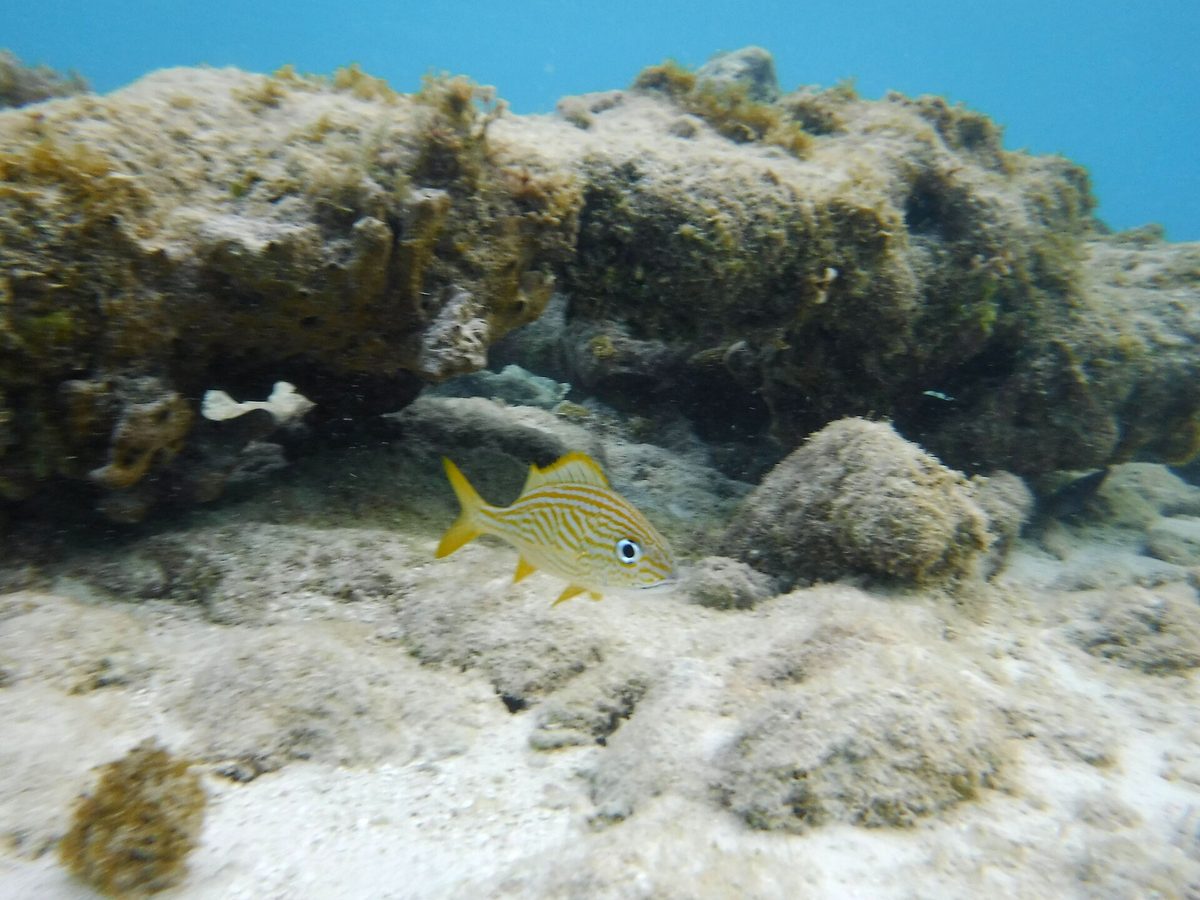
If I had to pick one hidden beach for a full day in the water, it’s Mangel Halto on the southeast coast near Pos Chiquito. Tucked behind a fringe of mangroves, it’s a roughly 600-meter run of sugar-fine sand broken into little private pockets, with shallow turquoise water that’s ideal for families and a genuinely excellent reef a short swim out. You can drift-snorkel along the drop-off or paddle a kayak through the mangrove channels.
Weekday mornings it’s blissfully quiet; on weekends local families claim the palapas early for barbecues, which is its own kind of fun. It’s calm enough for children, making it one of the better picks in our Aruba with kids roundup. Bring everything you need — the facilities are minimal.
Rodgers Beach — the quiet twin of Baby Beach
Everyone funnels to Baby Beach at the island’s southern tip; far fewer notice Rodgers Beach right next door, reached past a weathered turquoise staircase that feels like a little secret. It’s a soft, white-sand curve with calm, shallow water and a refinery in the background that, honestly, you stop noticing within five minutes. Weekdays it’s close to empty.
Because the water is so protected, it’s a relaxed swim and an easy snorkel along the rocks at either end. Pair it with Baby Beach and the funky town of San Nicolas for a full day in Aruba’s south — an easy half-day block to drop into any Aruba itinerary.
Savaneta & Santo Largo — where locals actually swim
Strung along the south coast near the fishing village of Savaneta are a couple of tiny, low-key beaches most visitors blow right past. Savaneta Beach is a 50-meter ribbon of white sand; Santo Largo sits just beside it. Neither has facilities, both have calm water, and on a weekday you may share them with nothing but a local tossing a fishing net. It’s about a 15-minute drive from Oranjestad and a window into everyday island life rather than a manicured resort beach.
Wild, secluded beaches on the rugged coast (north & east)
This is where Aruba gets dramatic. The north and east coasts are raw, windswept and almost entirely undeveloped — no resorts, no lifeguards, often no other people. Several of the best sit inside Arikok National Park, which protects nearly a fifth of the island. A quick, non-negotiable warning first: do not swim at these beaches unless a local who knows the spot tells you it’s safe that day. The currents and undertow are no joke. Come for the scenery, the surf-watching and the solitude.
Dos Playa — twin coves carved from the cliffs
Dos Playa (“two beaches”) is the showpiece of Arikok’s coastline: two pristine, white-sand coves scooped out of the limestone, framed by cliffs, with turquoise water rolling in as serious surf. Local surfers and bodyboarders treat it as a home break; everyone else comes to spread a towel, scramble the rocks and feel gloriously far from anywhere. It’s one of Aruba’s least-populated beaches for a reason — the unpaved track in keeps the casual crowds away.
The water looks irresistible and is genuinely hazardous, with a strong undertow even on calm-looking days. Wade, don’t swim. There’s no shade or facilities, so plan for sun and bring everything. Reaching it means a 4×4 over a rough interior road or a guided UTV/horseback tour through the park.
Boca Prins — sand dunes meeting the sea
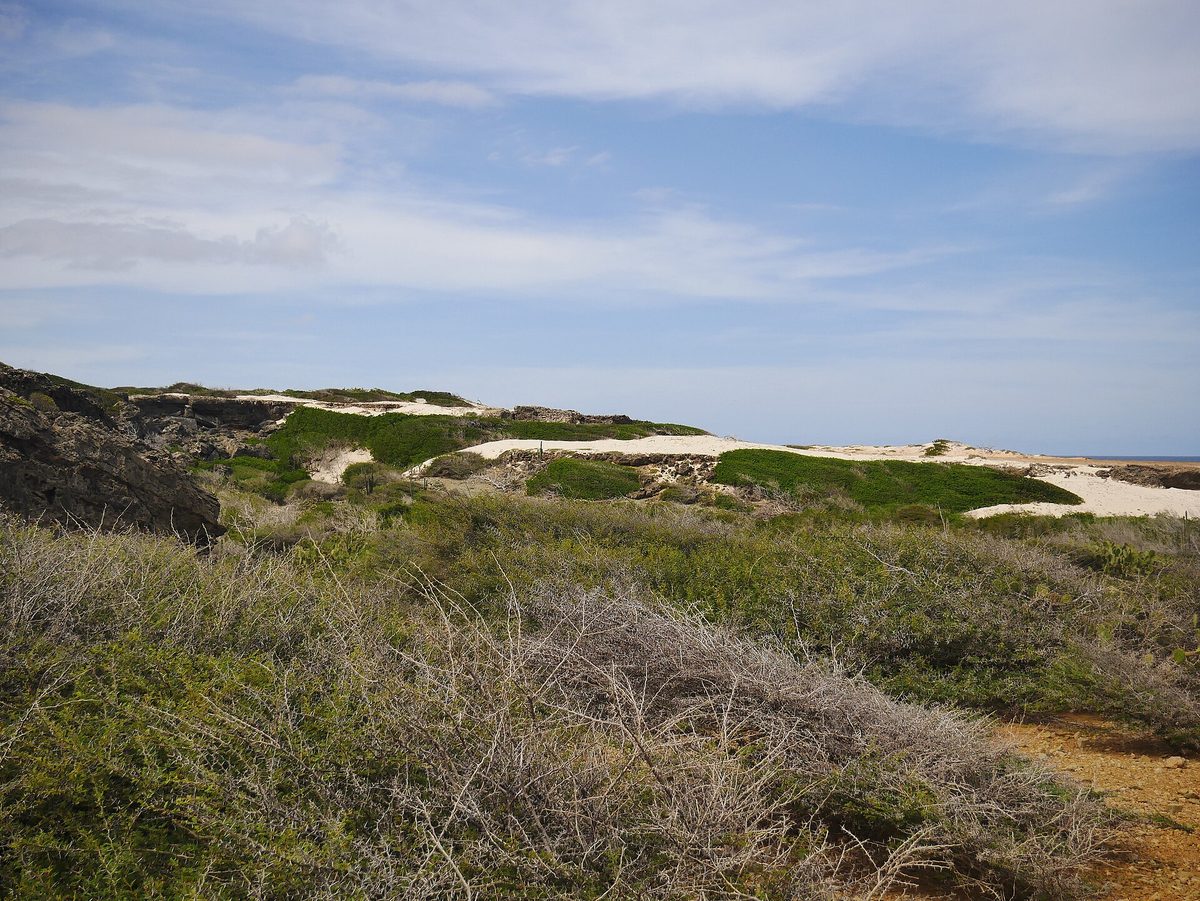
A little over a kilometer south of Dos Playa, Boca Prins is small — maybe 55 meters of sand — but the setting is unforgettable: towering golden dunes behind you, cliffs to either side, and white water exploding where the Atlantic hits the rocks. People sandboard or simply tumble down the dunes, then picnic with one of the wildest views on the island. There’s a snack stop nearby at times, but don’t count on it.
Swimming is dangerous here and not recommended. Treat Boca Prins as a stunning photo and picnic stop on an Arikok loop that can also take in the Conchi natural pool and the Fontein Cave.
Andicuri — clear water and shaded ledges
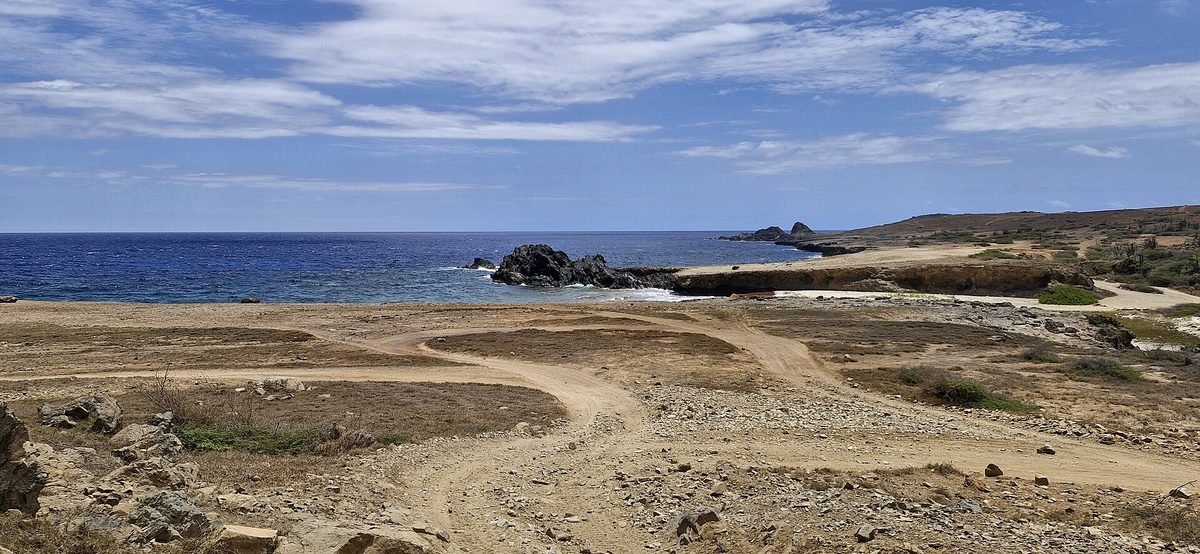
Andicuri is my pick for the prettiest of the wild beaches that you can reach without a full park expedition. It sits on the northeast coast near the site of the old Natural Bridge, a tranquil cove backed by limestone ledges that throw real shade — a rarity on this coast — over surprisingly clear water. Bodyboarders and kitesurfers love the consistent waves; sunbathers love that they often have it nearly to themselves.
The waves and current are strong, so swimming isn’t advised, but wading and watching are glorious. A regular car can get fairly close on the dirt approach in dry weather; a 4×4 removes all doubt.
Daimari — the calmest of the wild ones
Reached down an unassuming dirt road, Daimari Beach is where many of the island’s horseback-riding tours end up, splashing into the shallows at the finish. It’s more sheltered than its neighbors, with a calmer (though never guaranteed) shoreline and a real sense of having stumbled somewhere off the map. It’s also the launch point many use for the hike or ride to the Conchi natural pool just up the coast.
Grapefield Beach — sea grapes and silence
On the southeast coast just past Boca Grandi, Grapefield Beach is a long, quiet sweep of sand with cliffs on one side and the sea-grape bushes that give it its name on the other. It’s one of the easier “wild” beaches to reach — much of the drive is paved before a short dirt stretch — yet it stays almost empty. The current is strong; stay in the shallows if at all. It’s pure peace-and-solitude territory, ideal for a long, contemplative walk.
Boca Grandi — Aruba’s kitesurfing playground
Near the southeast tip, Boca Grandi is windswept, broad and reliably gusty — which is precisely why kitesurfers and windsurfers flock to it while sunbathers stay away. If you don’t kite, it’s still a striking, near-empty beach for a walk among smooth stones and driftwood. The same trade winds that make it a sport mecca make the water rough, so this is a watch-and-wander beach. To learn the ropes, our water sports guide covers where to take lessons.
Black Stone Beach — black pebbles and a natural arch
Black Stone (or Blackstone) Beach is the island’s strangest hidden shore: a narrow band not of sand but of smooth black volcanic pebbles, with a small natural rock arch you can stand on. It’s down a windy, rocky dirt track on the north coast that demands a jeep or UTV, and the reward is a moonscape-meets-ocean view unlike anywhere else on Aruba. No swimming — it’s rocky and wild — but as a photograph and a sense of discovery, it’s hard to beat.
How to actually reach the hidden beaches in Aruba
The single biggest factor in whether a secluded beach is “easy” or “expedition” is the road to it, so plan around that.
Rent the right vehicle
For the calm west- and south-coast coves (Boca Catalina, Tres Trapi, Mangel Halto, Rodgers, Savaneta), any economy rental car is fine. For the wild north and east coast and the interior of Arikok, you want a genuine 4×4 — a Jeep Wrangler or a UTV — not a soft crossover. The interior tracks are rocky, sandy and hard on a low car, and many rental contracts won’t cover damage off paved roads. If you’d rather not drive the rough stuff yourself, guided UTV, ATV and horseback tours reach Dos Playa, Boca Prins and Daimari daily. Compare your options in our guide to getting around Aruba, and budget for it using our Aruba vacation cost breakdown — a 4×4 runs noticeably more than an economy car.
Arikok National Park: fees and hours
Dos Playa, Boca Prins, Daimari and the Conchi natural pool sit inside Arikok National Park, which charges an entrance fee — around US$22 for adults as of early 2026, with children under 18 admitted free. The main San Fuego entrance generally runs roughly 8am to 4pm; hours and prices change, so confirm current details on the official park website before you go. The fee funds conservation, and your ticket is good for the whole day. Full park detail lives in our Arikok National Park guide.
What to bring (there are no facilities)
Treat every beach in this guide as off-grid. Pack more water than you think you need, real sun protection (shade is rare and the trade winds hide how hard you’re burning), water shoes for rocky entries like Tres Trapi and Boca Catalina, a hat, snacks, and a bag for your trash — pack it in, pack it out. A dry bag protects your phone, and a basic snorkel set saves you renting. None of these beaches have a lifeguard. Our Aruba travel tips cover the practical safety basics worth reading before any beach day.
Respect the water and the wildlife
I’ll say it once more because it matters: the north and east coasts have killed strong swimmers. If you don’t see locals in the water, that’s your answer. Sea turtles nest on several quiet beaches between roughly March and September — keep your distance, never use flash near them, and skip the beach entirely if it’s roped off for nesting.
The best secluded beach for your kind of trip
Not every “hidden” beach suits every traveler. Here’s how I’d match them.
Couples and honeymooners
For a romantic, near-private swim, Boca Catalina at sunrise or the protected pockets of Mangel Halto are hard to beat. For drama and a once-in-a-trip photo, time a late-afternoon picnic at Boca Prins or Andicuri. We gather the most romantic spots in our Aruba honeymoon guide.
Families with kids
Stick to calm, shallow water: Mangel Halto and Rodgers Beach are the standouts, with Baby Beach next door as a backup. Skip the wild coast with small children entirely. More family logistics live in our Aruba with kids guide.
Snorkelers
Boca Catalina, Tres Trapi and Mangel Halto form a near-perfect snorkeling trio — two on the northwest tip, one in the southeast. Tres Trapi for turtles, Boca Catalina for fish off the sand, Mangel Halto for reef.
Adventurers and photographers
This is the whole point of a 4×4 day: Dos Playa, Boca Prins, Black Stone Beach and the Conchi natural pool, ideally as one loop through Arikok. It’s one of the most memorable things to do in Aruba, and the beaches themselves cost nothing — see our roundup of free things to do in Aruba.
When to go for the most solitude
Seclusion in Aruba is as much about timing as location. Early morning is the magic window — arrive by 8 or 9am and even popular coves like Boca Catalina are empty, the light is soft, and the snorkeling water is at its calmest before the wind builds. Weekdays beat weekends everywhere, but especially at local favorites like Mangel Halto, Rodgers and Savaneta, which fill with island families on Saturdays and Sundays.
Aruba sits below the hurricane belt and stays dry and sunny year-round, so there’s no truly bad season for beaches; the trade winds simply blow a touch harder in spring. For the month-by-month picture, see our best time to visit Aruba guide. Whenever you come, the formula holds: go early, go midweek, and drive ten minutes past where the tour buses stop.
Frequently asked questions
What is the most secluded beach in Aruba?
For sheer remoteness, Dos Playa and Boca Prins inside Arikok National Park top the list — twin wild coves you reach by 4×4 or guided tour, often with no one else around. If you want secluded and swimmable, Boca Catalina on the northwest coast is the best of both worlds: a quiet cove with calm, clear water you can reach in a normal car.
Can you swim at Aruba’s hidden beaches?
It depends entirely on the coast. The west- and south-coast coves — Boca Catalina, Tres Trapi, Mangel Halto, Rodgers, Savaneta — have calm, swimmable water on a normal day. The north- and east-coast beaches — Dos Playa, Boca Prins, Andicuri, Grapefield — have strong currents and undertow and are not safe for swimming. Watch where (and whether) locals get in.
Do you need a 4×4 to reach the secluded beaches?
Only for some. The calm coves on the leeward coast are reachable in any economy car. The wild beaches inside Arikok and along the north coast — Dos Playa, Boca Prins, Black Stone Beach — need a real 4×4 or a guided UTV, ATV or horseback tour, because the interior roads are rough and unpaved.
Which hidden beach is best for snorkeling?
Mangel Halto for its reef, Tres Trapi for sea turtles, and Boca Catalina for easy fish-filled water right off the sand. All three are calm, shallow and reachable by car. Go early before the wind picks up and the snorkel boats arrive for the clearest water.
Are there quiet beaches near the high-rise hotels?
Yes — you don’t have to go far. Boca Catalina and Tres Trapi are only a 10–15 minute drive north of Palm Beach in the Malmok area, yet feel a world away. Even Arashi Beach, just beyond them, is markedly calmer than the resort strip, especially first thing in the morning.
What should I bring to a secluded beach in Aruba?
Everything, because there are no facilities: plenty of water, sun protection, a hat, water shoes, snacks, a snorkel set, a dry bag for valuables, and a bag to carry out your trash. There are no lifeguards, shops or shade at most of these beaches, so a little planning makes the difference between a great day and a sunburnt one.
Is Mangel Halto good for families?
Very. Its shallow, protected, turquoise water and little sheltered sand pockets make it one of the calmest swimming spots on the island for children, and the easy reef snorkeling keeps older kids happy. Bring your own gear and shade, and aim for a weekday morning to have more room.
Final thoughts
The Aruba most people photograph is a four-mile strip of hotels. The Aruba I love is everything around it — the snorkel coves the catamarans haven’t found yet, the dune-backed beaches you bounce down a dirt road to reach, the local stretches where a fisherman is your only company. You don’t need a guide or a secret map to find them; you need a rental car, an early start, and the willingness to drive past the crowd. Do that, and a beach to yourself is one of the easiest luxuries in the Caribbean to find. Plan the rest of your trip with our complete Aruba beaches guide, and go get sand in your shoes.
Photo credits
Images are used under their respective licenses via Wikimedia Commons. See each credit below.
- Wild northeast coast at Andicuri — Photo: Rarends297 (CC0) via Wikimedia Commons.
- Boca Prins sand dunes — Photo: Ginelly.Q (CC BY 4.0) via Wikimedia Commons.
- Reef and grunt at Mangel Halto — Photo: Ginelly.Q (CC0) via Wikimedia Commons.
- Calm water near Boca Catalina / Arashi Beach — Photo: Kwihi (CC BY 4.0) via Wikimedia Commons.