By the ArubaTourism.org team — Last updated June 2026
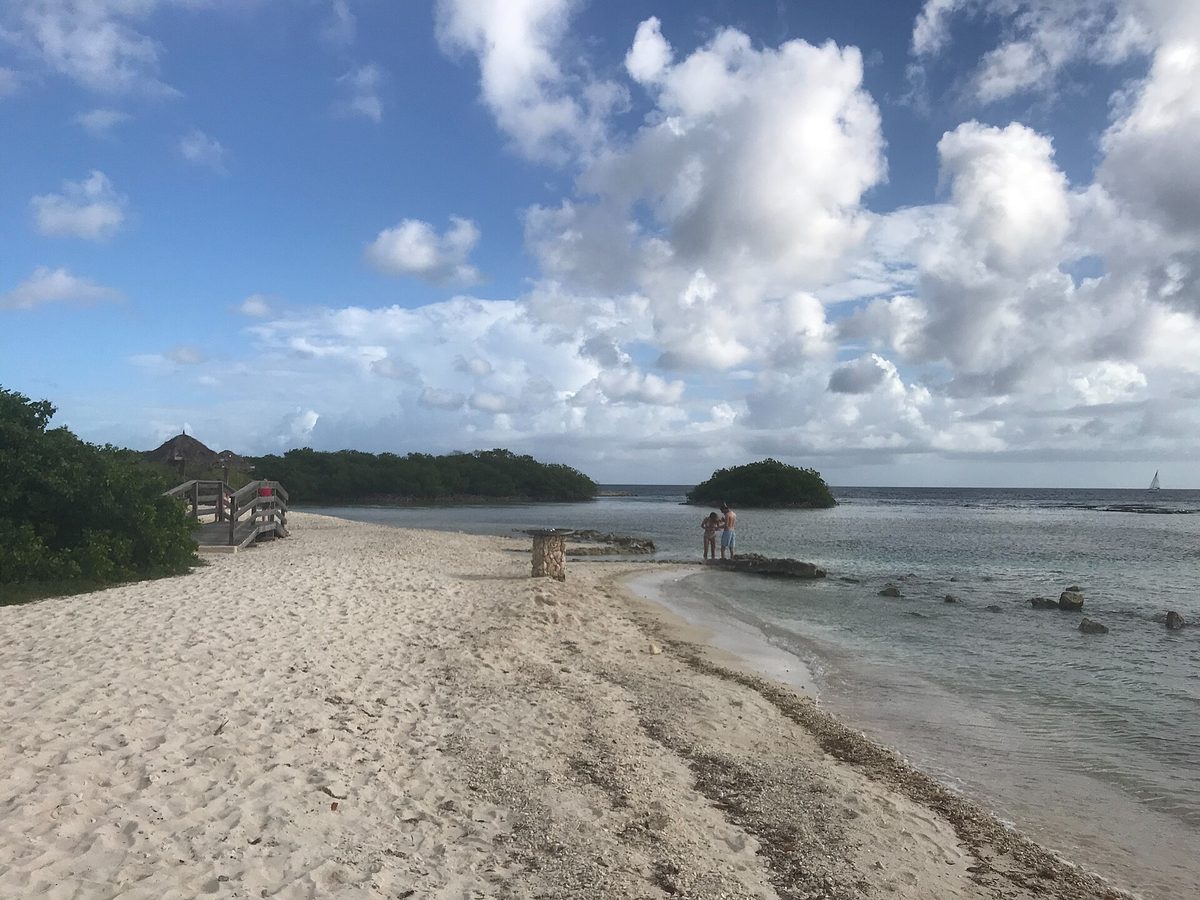
Ask a local where they actually swim on a day off, and a surprising number will steer you away from the glossy high-rise strip and toward a tangle of mangroves on the island’s quiet southeast coast. That’s where you’ll find Mangel Halto, a sheltered cove near Pos Chiquito with a wooden sun deck, glassy turquoise shallows, and what many experienced snorkelers consider the best reef you can reach from shore in Aruba. It is not the easiest beach to love at first glance — there’s no powdery mile of sand, no swim-up bar — but slip into the water and you understand the fuss.
The short version: Mangel Halto is a calm, mangrove-fringed beach on Aruba’s southeast coast, about a 20-minute drive from Oranjestad. The protected inner bay is gentle enough for nervous first-timers, while the outer reef and a sunken tugboat reward confident snorkelers and divers. It’s free, low on facilities, and best in the morning when the water is calm and clear.
Mangel Halto at a glance
| What | The details |
|---|---|
| Where | Pos Chiquito, southeast coast, just south of Spanish Lagoon |
| Drive time | ~15–20 minutes from Oranjestad; ~30 from Palm Beach |
| Best for | Snorkeling, shore diving, kayaking/SUP, a quiet local beach day |
| Water entry | Ladders and a wooden deck in the bay; rocky in spots — water shoes help |
| Facilities | Shade palapas, a porta-potty, trash cans. No rentals, no lifeguard |
| Cost | Free; free parking (limited) |
| Best time | Early morning, calm days, weekdays for fewer people |
| Skill level | Bay = beginner-friendly; outer reef = intermediate/advanced |
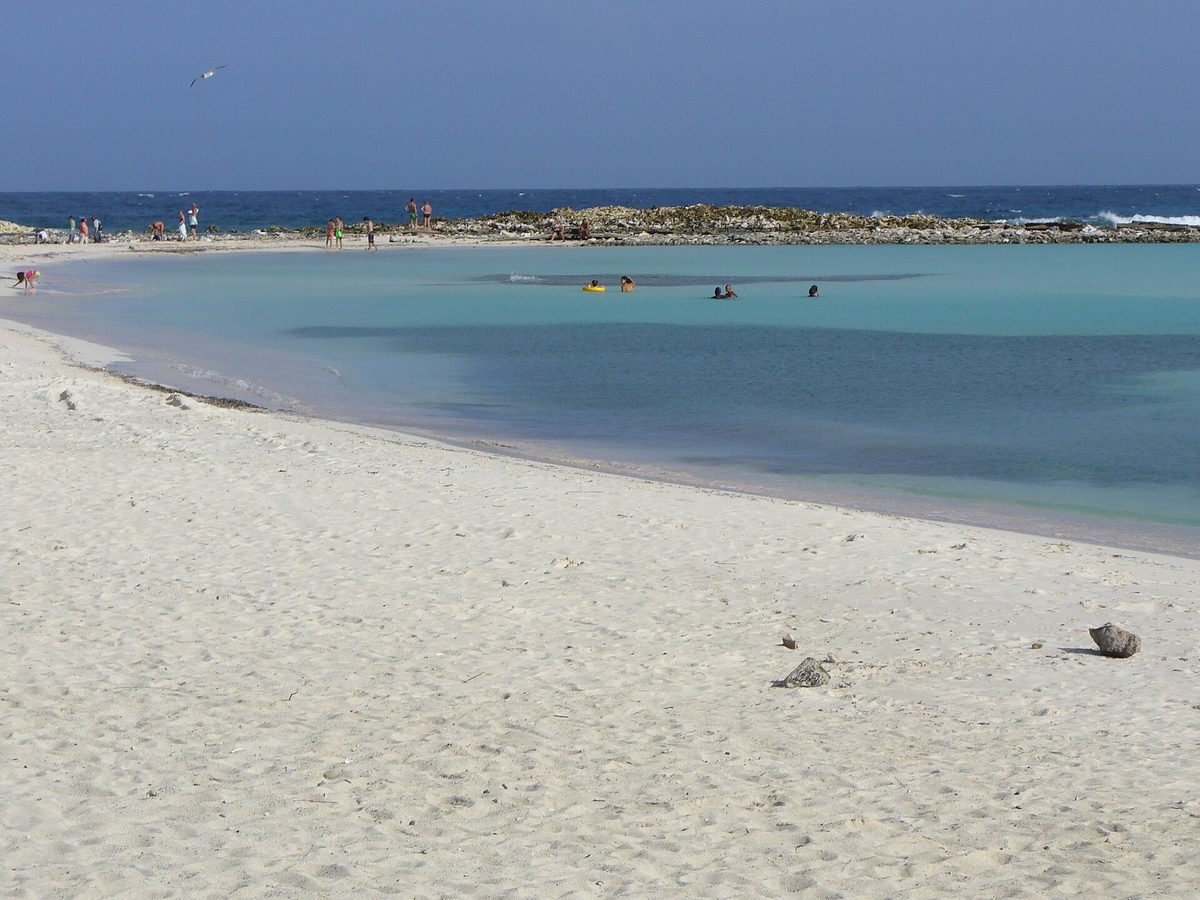
If you only have time for the famous sand, you’ll want our full rundown of Aruba’s beaches first — Mangel Halto is the snorkeler’s counterpoint to the resort strip, and it pairs beautifully with a calm-water classic like Baby Beach further down the same coast.
Where Mangel Halto is — and why it feels so different
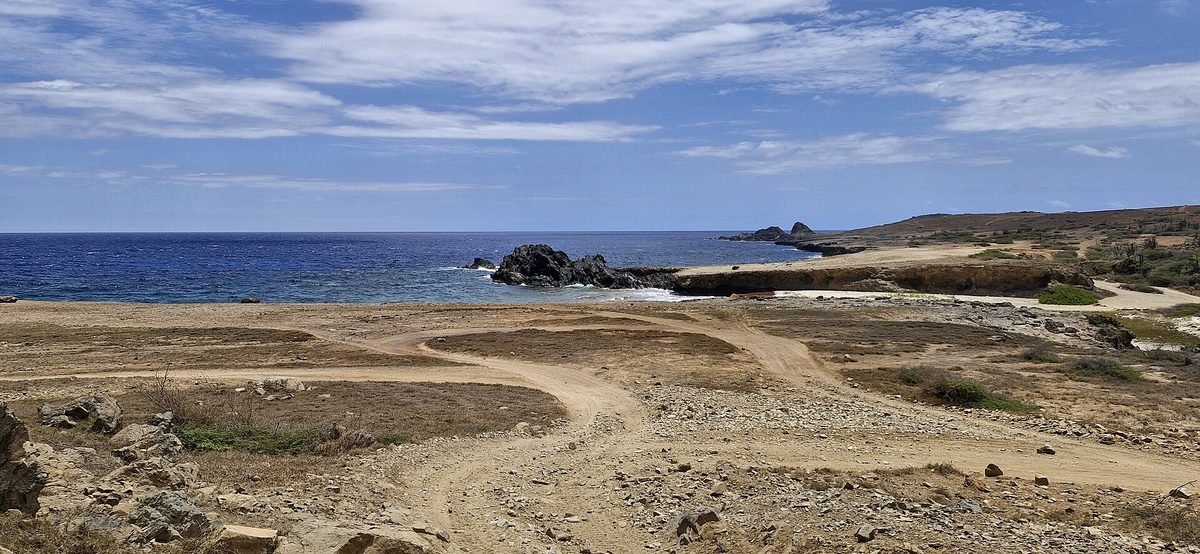
Most of Aruba’s tourism lives on the west coast, where Eagle and Palm beaches face the sunset with their resorts lined up like teeth. Mangel Halto sits on the other side of the island’s personality entirely: the breezier southeast, in a fishing-village stretch between Pos Chiquito and Savaneta, tucked just south of the Spanish Lagoon. The name is Papiamento and translates roughly to “high mangrove,” which tells you exactly what you’re looking at — a shoreline laced with red mangroves rather than palm trees.
Those mangroves are the whole reason the snorkeling is so good. Their roots act as a nursery for juvenile fish and they buffer the shallows from the open Caribbean, creating a protected lagoon of clear, knee-to-chest-deep water before the seabed drops away to the reef. You get a natural progression here that few beaches offer: toddler-safe shallows up front, a healthy coral garden a short swim out, and a wall that plunges toward 100-plus feet for the divers.
The vibe is local and low-key. On a typical morning you’ll see a handful of Aruban families claiming palapas, a couple of dive trucks unloading tanks, and maybe a kayak gliding out through a gap in the mangroves. It is genuinely quiet compared with the west coast — the kind of place where you can hear the wind in the sea grape leaves. Sunbathers who want privacy come here, and it’s a lovely, uncrowded spot to watch the sky go pink in the evening.

The snorkeling: this is why you came
Here’s the honest framing that the brochures skip: Mangel Halto is two beaches in one. There’s a calm, forgiving bay that almost anyone can enjoy, and there’s a “real” reef out past the shallows that demands a bit of fitness, calm conditions, and confidence in deeper, open water. Knowing which one you’re equipped for is the difference between a magical morning and a frustrating one. Snorkelers who’ve worked the whole island — Boca Catalina, Arashi, Tres Trapi — routinely rank Mangel Halto’s outer reef at or near the top.
The protected bay (great for beginners and kids)
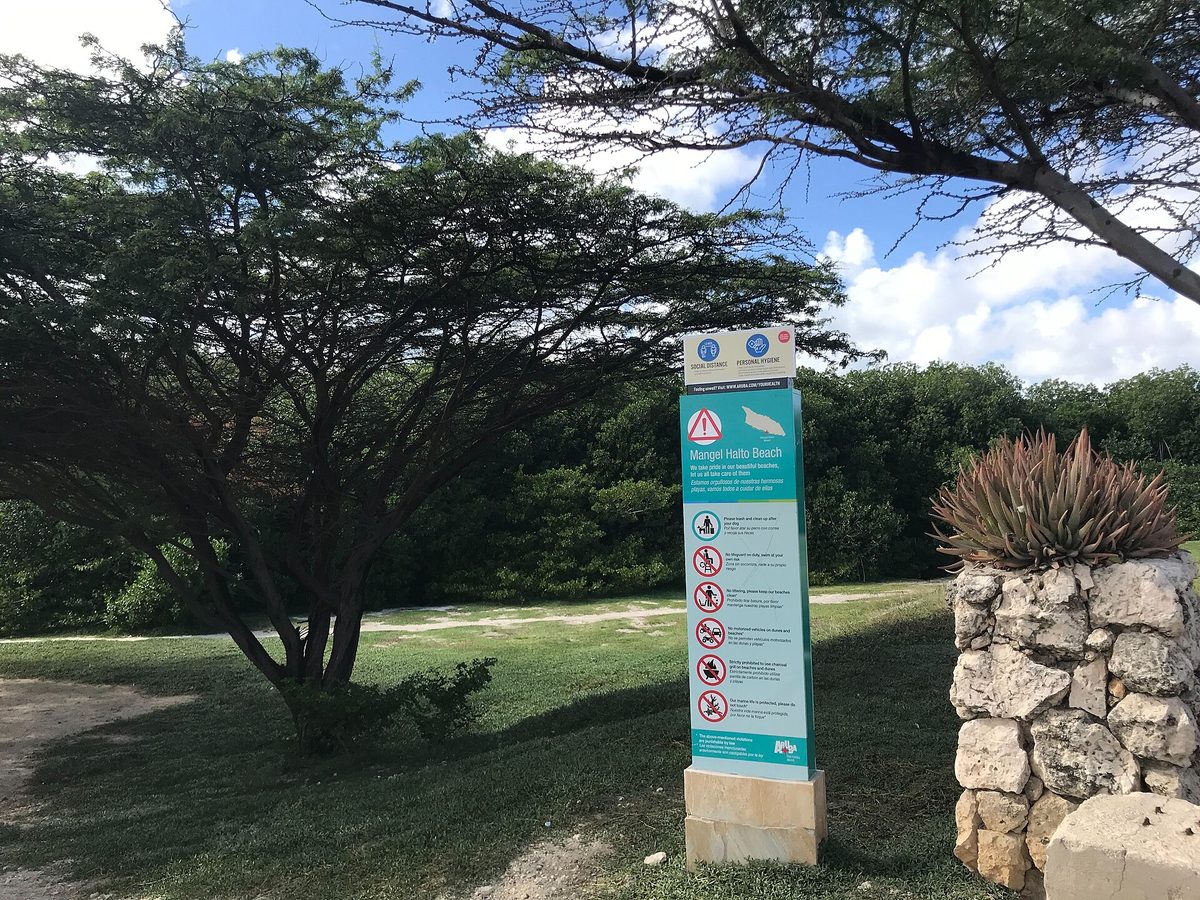
Park near the big red “Mangel Halto” sign, and the bay is right there. Enter from the wooden sun deck or one of the two ladders that drop into a sandy-bottomed, chest-deep channel — easy, no rock scrambling required. Inside the bay the water is calm and shallow, and you’ll already see sergeant majors, the odd parrotfish, and small schools flickering around the seagrass and scattered coral heads. This is the zone for nervous snorkelers, for children getting their fins under them, and for anyone who just wants to float without a workout. If your crew includes little ones, our guide to Aruba with kids has more calm-water spots in the same spirit.
The outer reef and the cuts (intermediate to advanced)
The good stuff — the dense coral garden, the bigger fish, the wow factor — lives on the outer edge of the reef facing the open sea. To reach it from the beach, you walk past the Mangel Halto sign and through the trees by the mangroves to a second, smaller beach with a few palapas. The catch is the entry: it’s shallow and rocky, and you’ll half-walk, half-shuffle out over the bottom (water shoes or dive booties are not optional here) before there’s enough depth to swim.
Once you’re out, you cross the reef flat to two natural cuts in the reef. Past them, the coral wall drops and the visibility opens up — top of the reef sits in the 3-to-10-foot range and then plunges. Two big cautions. First, only do this when the water is genuinely calm; chop and surge over a shallow reef turn a beautiful swim into a scrape. Second, one of the cuts is marked with a buoy and is the channel where small boats enter the bay — do not cross it, and keep an eye out for boat traffic. Plan to loop back and exit at the ladder in the bay rather than fighting your way back over the rocky entry.
The Puerto Chiquito drift (for strong, experienced snorkelers)
There’s a third, more advanced option that the guidebooks rarely explain well: a drift snorkel that starts further south at an entry locals call Puerto Chiquito. Shortly past the red sign you’ll spot a two-story house marked #79; take the first right toward the water and park in the dirt lot. You enter near a rock wall with two clear cuts, drift parallel to the shore past the sunken ship, and exit back at the bay ladder.
Candid warning from snorkelers who’ve tried it: the visibility near the entry can be murky, especially in the afternoon when the sand is stirred up, and you may have to swim a good 40–50 yards through cloudy water before it clears out near the reef. Waves can knock you around getting out. If you’re not a strong, confident open-water swimmer, skip the drift and stick to the advanced reef section — it’s beautiful in its own right, and you can still see the wreck. Fins are essential for any of these longer swims, and a snorkel vest is a smart safety net if you tire easily.
The Kappel wreck
The signature sight here is the Kappel, a small tugboat (around 50 feet) that was intentionally sunk near the reef around 2009–2010 to create an artificial reef. It rests on the sand beside the reef at roughly 35–45 feet, near the first cut and a yellow buoy maybe 20 meters out from shore. Divers explore it up close, but strong snorkelers can float over it and look straight down — and even from the surface it’s a thrill, draped in growth and circled by fish. Over the years it has grown into a living structure: juvenile fish, arrow crabs, feather-duster worms, and a resident moray eel or two that have moved into the hull.
What you’ll actually see underwater
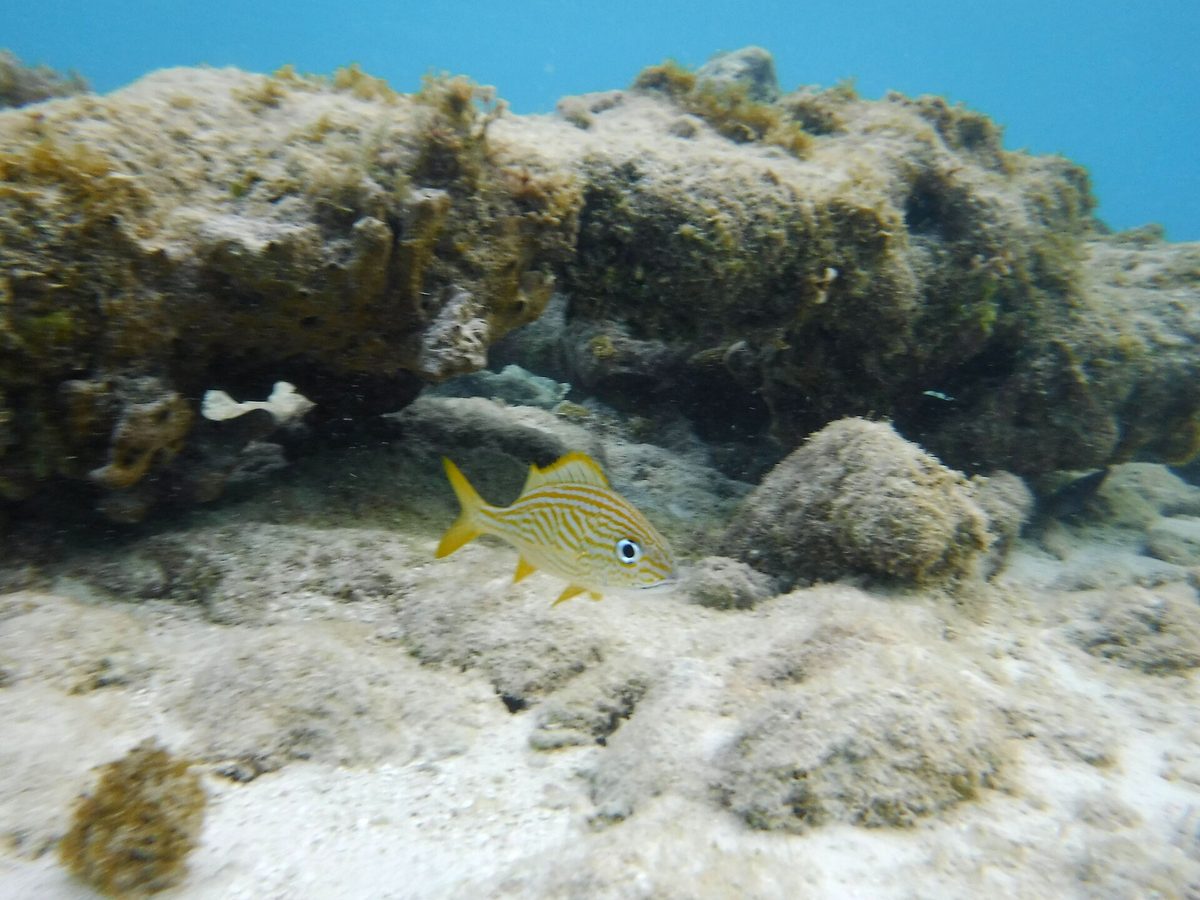
This is a properly alive reef, not a sad patch of bleached rubble. On a good day expect schools of brilliant blue tang, several kinds of parrotfish grinding away at the coral, trumpetfish hanging vertically, yellowtail snapper, blue-striped and French grunt, damselfish, sergeant majors, and — if you’re lucky — moray eels tucked into the rock. Out deeper, divers report octopus, barracuda, and the gorgonians, sponges, and anemones that cling to the wall. The coral itself is the supporting cast worth slowing down for: brain coral, starlet coral, delicate lettuce coral, and swaying soft corals. For more ways to get on and under the water around the island, our Aruba water sports guide covers boat snorkel trips, diving operators, and kayak tours.

How to get to Mangel Halto
Mangel Halto is easy to reach but easy to drive past — there’s no grand entrance, just a roadside sign and a scrappy parking area. Here are your options.
- By rental car (easiest): From Oranjestad, head south on L.G. Smith Boulevard, loop around the airport, and follow signs toward Pos Chiquito and Savaneta. Keep straight through the roundabout and turn off toward the water at the Mangel Halto / Spaanse Lagoenweg sign. It’s roughly 15–20 minutes from downtown. In Google Maps, search “Mangel Halto” or “Pos Chiquito Beach Park” and you’ll land right at the red sign. A car is genuinely the most practical way to do this beach, and our guide to getting around Aruba breaks down rentals, driving quirks, and road signs.
- By bus: Arubus line 2 runs down the southeast corridor; get off at Pos Chiquito and it’s a short walk to the beach. A one-way fare is around $2.60. It’s cheap and doable, just slower and less flexible if you’re hauling snorkel gear and a cooler.
- By taxi: A taxi from the Oranjestad area runs roughly $13–15 one way (Aruba taxis use fixed-zone rates, not meters — always confirm the fare before you get in). Easy for getting there; just arrange a pickup time, because cabs don’t idle at Mangel Halto waiting for fares.
Parking: It’s free, and you’ll find spots in the dirt on either side of the road near the Mangel Halto bar and along the shoulder. Spaces are limited and fill up on calm weekend mornings, which is one more reason to come early.
Facilities, what to bring, and what to skip
Set your expectations correctly and you’ll have a great day; show up expecting a resort beach and you’ll be annoyed. Mangel Halto is rustic. The facilities amount to shaded palapas, a porta-potty, and trash cans. There are no chair or umbrella rentals, no snorkel-gear rental kiosk, no snack bar on the sand, and no lifeguard. You bring what you need, and you pack out what you bring.
What I’d put in the beach bag:
- Water shoes or dive booties — the single most important item. The entries are rocky and the reef flat is shallow; bare feet will have a bad time.
- Your own mask, snorkel, and fins. No rentals here, so bring gear from your hotel or buy a cheap set in town. Fins matter for the longer outer-reef swims.
- Reef-safe sunscreen (and a rash guard) — you’ll be face-down in the sun for a long time, and reef-safe formulas protect the coral you came to see.
- Water and snacks. There’s no reliable food on the sand, so pack a cooler. For lunch, the fishing village of Savaneta is minutes away.
- A dry bag for phones and keys, since there are no lockers and you’ll want to leave the beach unattended while you swim.
A snorkel vest is worth considering for the advanced sections if you’re not a confident swimmer. For a fuller packing rundown and island basics, see our Aruba travel tips.
When to go: timing the tides, wind, and crowds
Timing makes or breaks Mangel Halto. The reef sections are only enjoyable — and only safe — when the water is calm, so the move is to come early in the morning. Mornings tend to be the flattest and clearest, before the trade winds build through the day and before afternoon stirring clouds the visibility. Early also means easier parking and a quiet bay.
Weekdays are calmer than weekends, when Aruban families come out to enjoy their own beach (which is lovely, but busier). Aruba’s weather is reliably warm and dry year-round, but the windier months early in the year can chop up the surface; if your trip lands then, watch the conditions and have a backup. Our best time to visit Aruba guide covers the wind and weather patterns month by month so you can plan around them.
Beyond snorkeling: kayaking, paddleboarding, diving, and sunsets
Snorkeling is the headline, but it’s not the only reason to come. The mangrove channels are made for kayaking and stand-up paddleboarding — gliding through the still, root-lined waterways out to open water is a genuinely peaceful way to spend a morning, and several operators run guided mangrove paddles here. Shore diving is excellent: dive operators use Mangel Halto as a training and fun-dive site precisely because you can walk in, descend along the reef, and visit the Kappel without a boat. And because the cove faces a quiet horizon, it’s an underrated sunset spot — bring a picnic to a palapa and have the place nearly to yourself.
Mangel Halto for different travelers
Families with kids
Stick to the inner bay. The shallow, calm water and the ladder entries make it manageable for children who can swim a little, and there’s enough fish life right there to keep them wide-eyed. Just supervise closely — there’s no lifeguard — and keep everyone out of the deeper outer reef.
Couples
Come for a morning snorkel, then claim a shady palapa for a picnic. The quiet and the sunset views make it more romantic than the busy west-coast strands. Pair it with dinner in Savaneta for a low-key, local evening.
Divers and serious snorkelers
This is your beach. The wall, the cuts, and the Kappel wreck deliver more than almost any other shore site on the island. Go early, go on a calm day, and consider a local dive guide for your first time orienting to the cuts and the wreck.
Cruise passengers
It’s doable on a port day if you rent a car or taxi straight here, but it’s a 15–20 minute drive each way and gear-dependent, so it suits independent visitors more than first-timers. If you’re weighing how to spend limited hours, our Aruba cruise port guide compares the easier in-town and west-coast options.
Make a day of the southeast coast
One of the best things about Mangel Halto is everything around it. The old fishing village of Savaneta — Aruba’s original capital — is right next door, home to beloved local seafood spots where you order fried fish and shrimp by the pound and eat at picnic tables over the water. Our Aruba restaurants guide points you to the standouts. Keep driving southeast and you reach Baby Beach, the famous calm lagoon at the island’s tip, and the colorful street-art town of San Nicolas. String them together and you have a full, low-crowd day on the side of Aruba most visitors never see. If you’d rather build the whole trip around days like this, our Aruba itinerary shows how to slot it in.
Frequently asked questions
Is Mangel Halto good for snorkeling?
Yes — many experienced snorkelers rate it the best shore snorkeling on the island. The protected bay is gentle and fish-filled, while the outer reef and the Kappel wreck offer dense coral and bigger marine life. Just match the zone to your ability and only swim the outer reef on calm days.
Is Mangel Halto good for beginners?
The inner bay is, yes. It’s calm, shallow, and easy to enter from the ladders, with plenty of fish to see. The outer reef is not for beginners — the rocky entry, deeper water, and boat-channel cut make it an intermediate-to-advanced swim. First-timers may prefer Boca Catalina or Arashi Beach on the calmer northwest tip.
Do you need water shoes at Mangel Halto?
Bring them. The shoreline and reef-flat entries are rocky and shallow, and water shoes or dive booties make getting in and out far more comfortable — and protect both your feet and the coral.
Is there an entrance fee for Mangel Halto?
No. Mangel Halto is a free public beach, and parking is free too. You’ll only spend money on gear, food, or a guided tour if you choose one.
Are there bathrooms or facilities at Mangel Halto?
Minimal ones. Expect shaded palapas, a porta-potty, and trash cans — and not much else. There are no gear rentals, no lifeguard, and no restaurant on the sand, so come prepared with your own gear, water, and snacks.
What is the Kappel wreck?
It’s a small tugboat sunk near the reef around 2009–2010 to form an artificial reef. It sits at about 35–45 feet beside the reef and now teems with marine life. Divers explore it closely; strong snorkelers can see it from the surface near the first reef cut.
How do you get to Mangel Halto?
It’s a 15–20 minute drive south from Oranjestad toward Pos Chiquito and Savaneta; search “Mangel Halto” in Google Maps. You can also take Arubus line 2 to Pos Chiquito (around $2.60) or a taxi (roughly $13–15 one way). A rental car is the most convenient option.
Can you swim at Mangel Halto?
Yes. The protected bay is calm and good for swimming and floating. Conditions get more demanding on the outer reef, where there can be current and boat traffic, so judge the water and your ability before heading out past the bay.
Final thoughts
Mangel Halto rewards the traveler willing to trade a little polish for a lot of payoff. Show up early, pack your own gear and water shoes, respect the conditions, and you’ll get the kind of morning that turns a beach holiday into a snorkeling trip you remember for years — a quiet cove, a living reef, and a tugboat on the seabed all to yourself. It’s the clearest argument I know that Aruba’s best beach experiences aren’t always the ones on the postcards. When you’re ready to explore the rest, our complete guide to Aruba’s beaches and the wider list of things to do in Aruba will help you fill the days around it.
Photo credits
Images via Wikimedia Commons: the cove, mangrove and rocky-shore photos by Caribiana (CC BY-SA 4.0); the underwater snorkeling photo by Ginelly.Q (CC0); and the Caribbean reef photo by M., W. & J. Strzelecki (CC BY 3.0). Prices, hours and conditions change — please confirm current details before you go.