By the ArubaTourism.org team · Last updated June 2026
Aruba is one of the easiest, most rewarding stops on any Southern Caribbean cruise: your ship docks in Oranjestad practically in the middle of town, so the best things to do on an Aruba cruise-port day begin the moment you walk down the gangway. No long transfers, no wasted hours. With even six or seven hours ashore you can stretch out on a world-class beach, snorkel a shipwreck, or explore the colorful capital on foot. This guide lays out the smartest ways to spend a port day in Aruba — sorted by how much time and energy you have.
This is our honest, first-person guide to the best things to do in Aruba cruise port on a single port day. I will cover exactly where the terminal sits, what is within walking distance, the beach-and-snorkel combos worth your time, when to book a ship excursion versus going independent, how to budget your hours, how to get around, and a few sample plans by interest. I will also tell you what to skip if you are short on time, and how to get back to the ship without that stomach-drop moment at the pier.
The Best Things to Do in Aruba Cruise Port (the short answer)
With a typical 7-to-9-hour stop, the best Aruba port day pairs one great beach with one experience. Walk into colorful Oranjestad right from the terminal, then taxi 10 minutes to Eagle or Palm Beach to swim, or book a catamaran snorkel to the Antilla shipwreck. Save the far corners (Baby Beach, Arikok) for a guided tour, and aim to be back at the pier 60 to 90 minutes before all-aboard.
If the port visit sells you on a longer trip, start with where to stay in Oranjestad and when to book.
At a glance: Aruba cruise-day options compared
Here is how the most popular choices stack up for a port day. Times are one-way from the cruise terminal; prices are rough 2026 estimates and you should always confirm current rates before you commit.
| Option | Time from pier | Rough cost | Best for | Book ahead? |
|---|---|---|---|---|
| Walk into Oranjestad (shops, museums, marina) | 5 to 10 min walk | Free | Short stops, easy mornings | No |
| Eagle Beach (swim, sand, beach bars) | ~10 min taxi | ~$10 taxi each way | Classic Aruba beach day | No |
| Palm Beach (high-rise strip, water sports) | ~12 to 15 min taxi | ~$11 taxi each way | Activities, lunch, people-watching | No |
| Catamaran + Antilla shipwreck snorkel | Pickup near port | ~$90 to 110 pp | Snorkelers, social groups | Yes |
| UTV / Jeep island tour | Pickup near port | ~$90 to 150 pp | Adventure, rugged scenery | Yes |
| Baby Beach (calm, shallow swimming) | ~40 to 45 min drive | Tour or rental car | Long port days, families | Usually |
| Renaissance Island flamingos | Water taxi from downtown | ~$125 day pass | Bucket-list photos | Yes, sells out |
Where the Aruba cruise port is (and why it’s so easy)
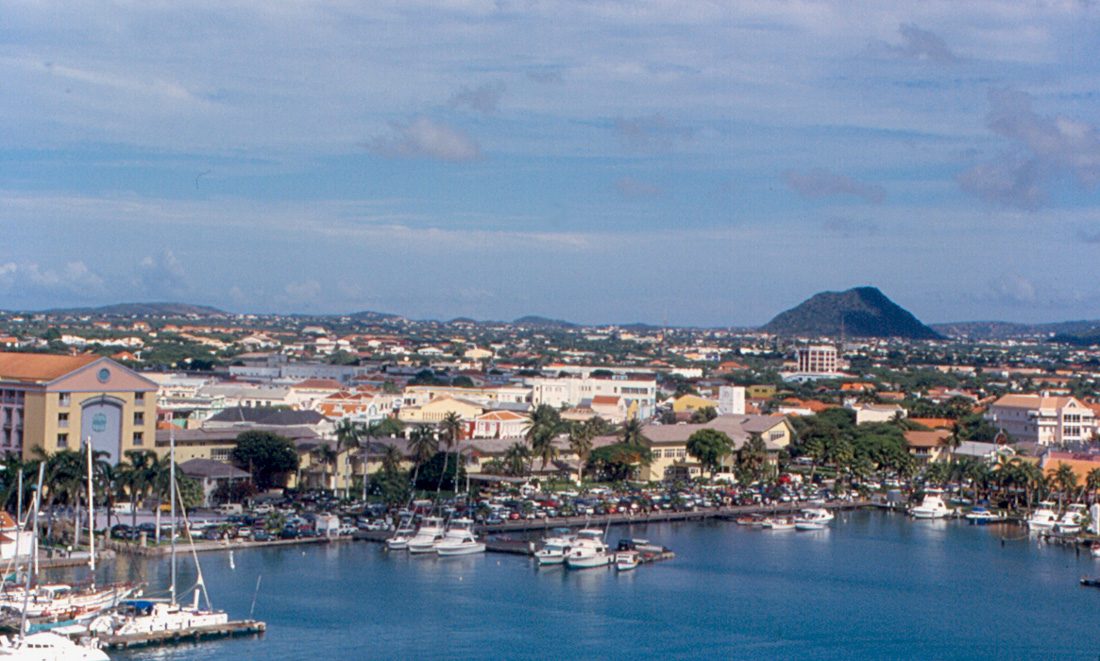
The Aruba cruise port sits on the edge of Oranjestad, the island’s capital, on the calmer southwest coast. This is the rare Caribbean port where “just walk into town” is real advice and not a travel-blog fantasy. From most berths you clear the terminal gates and you are on the edge of the downtown shopping district within five to ten minutes on foot, depending on which pier your ship uses.
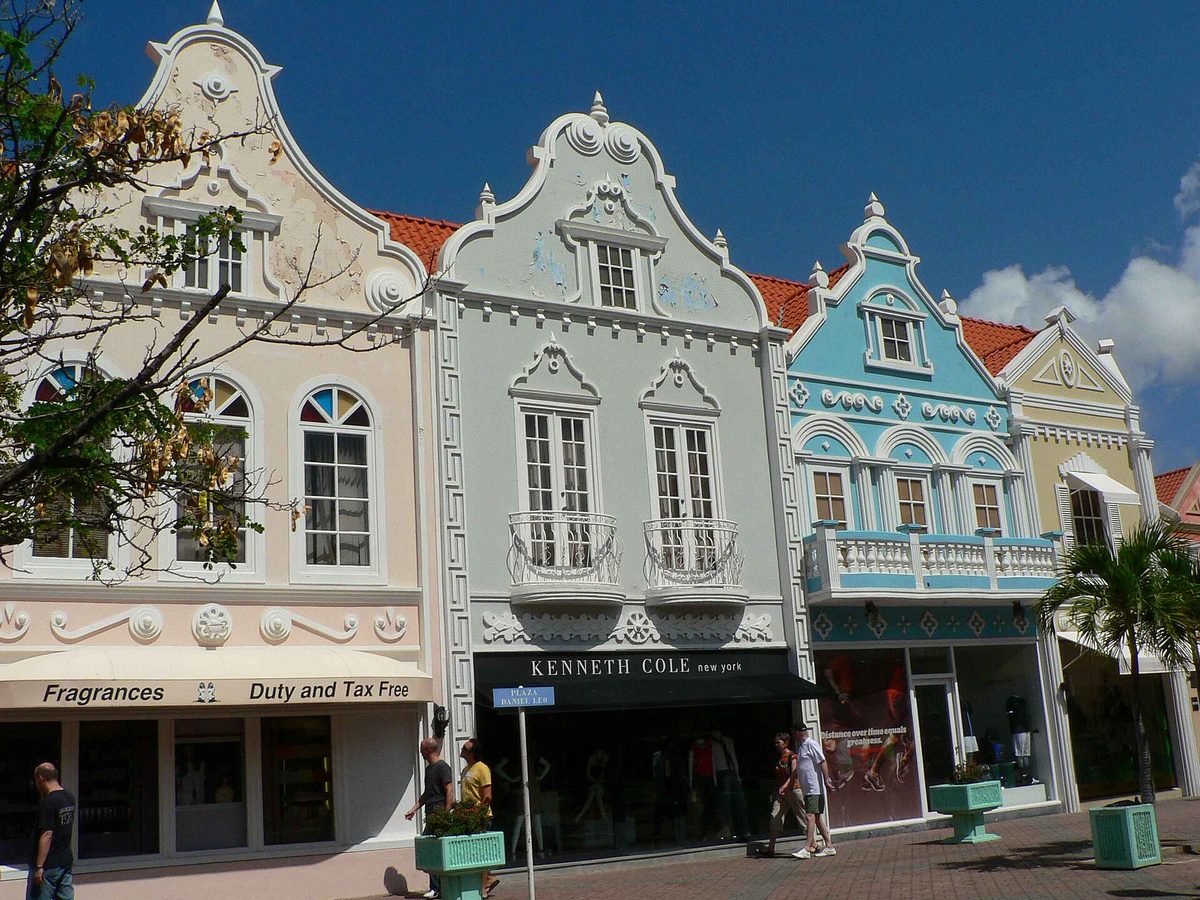
That location is the single biggest reason Aruba is so forgiving on a cruise schedule. You are not stuck on a remote industrial dock with a 30-minute shuttle just to reach civilization. You step off, and the colorful Dutch-colonial facades, the marina, the free trolley, and a line of taxis are right there. If your plan is mostly shopping and a wander, you may never need to pay for transport at all.
A few orientation facts that make the day smoother: Aruba uses the Aruban florin, but U.S. dollars are accepted nearly everywhere, so you do not need to change money for a short visit. The island runs on Atlantic Standard Time year-round with no daylight saving, and it is small, roughly 70 square miles, which is exactly why an island loop is realistic even on cruise hours. The flip side: when several ships are in port at once, the popular stops and the taxi line fill up fast.
Walking into Oranjestad: what’s right by the terminal
If you do nothing else, give Oranjestad an hour. It is genuinely charming, easy to navigate (the downtown is basically linear, so you can’t get lost), and it is the most efficient way to feel like you actually saw Aruba without burning time in a vehicle.
Shopping, the straw market, and the free trolley
Right as you exit the terminal there is a small craft market, and just across the boulevard you’ll find a larger straw market with the well-priced stuff: island dresses, button-up shirts, shell bracelets, and baseball caps for a few dollars. It is a low-haggle, low-stress environment in my experience, so bring small U.S. bills. Beyond that, the Renaissance Mall and the pink Royal Plaza Mall cover the duty-free, jewelry, and brand-name shopping, and the open-air Renaissance Marketplace along the marina is the easy place to sit down for food or a drink. There is also a free downtown trolley that loops between the terminal area and the center of town if you’d rather save your steps.
Museums and quick culture stops
For a dose of history, two stops are walkable in under ten minutes. Fort Zoutman, completed in 1798, with the adjoining Willem III Tower from 1868, is the oldest building in Oranjestad and houses the Historical Museum. The National Archaeological Museum of Aruba is free (donations welcome), covers the island’s earliest inhabitants, and is surprisingly good with kids thanks to its hands-on areas. Note that both tend to close on Sundays and Mondays, so check the day your ship is in. If you just want a green breather, Wilhelmina Park near the marina does the job.
The closest beach you can almost walk to
If you want sand without committing to a taxi across town, Surfside Beach (also signed as the in-town beach near the airport, sometimes called Bushiri or Druif) is the closest “real” beach, a roughly 15-minute walk down L.G. Smith Boulevard. The water is shallow and calm, there are casual spots for a drink, and you get the fun bonus of planes coming in low over the waterline. It is not Aruba’s most photogenic beach, but for a quick dip on a short port day it is hard to beat the convenience.
The best beaches on a limited port day
Let’s be honest: most people come to Aruba for the beaches, and the island has some of the best in the Caribbean. The question on a port day is which one is worth your limited hours. Here is how I’d choose.
Eagle Beach: the classic choice
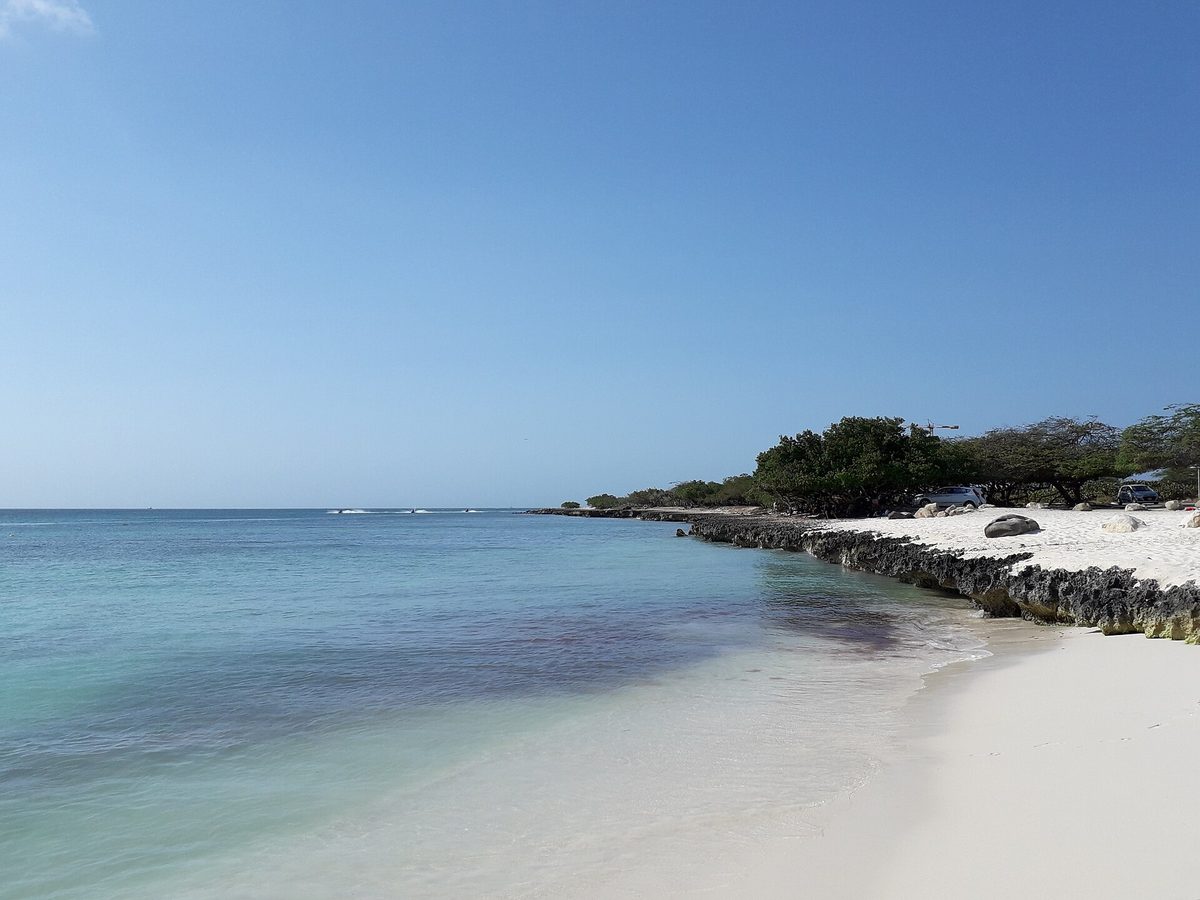
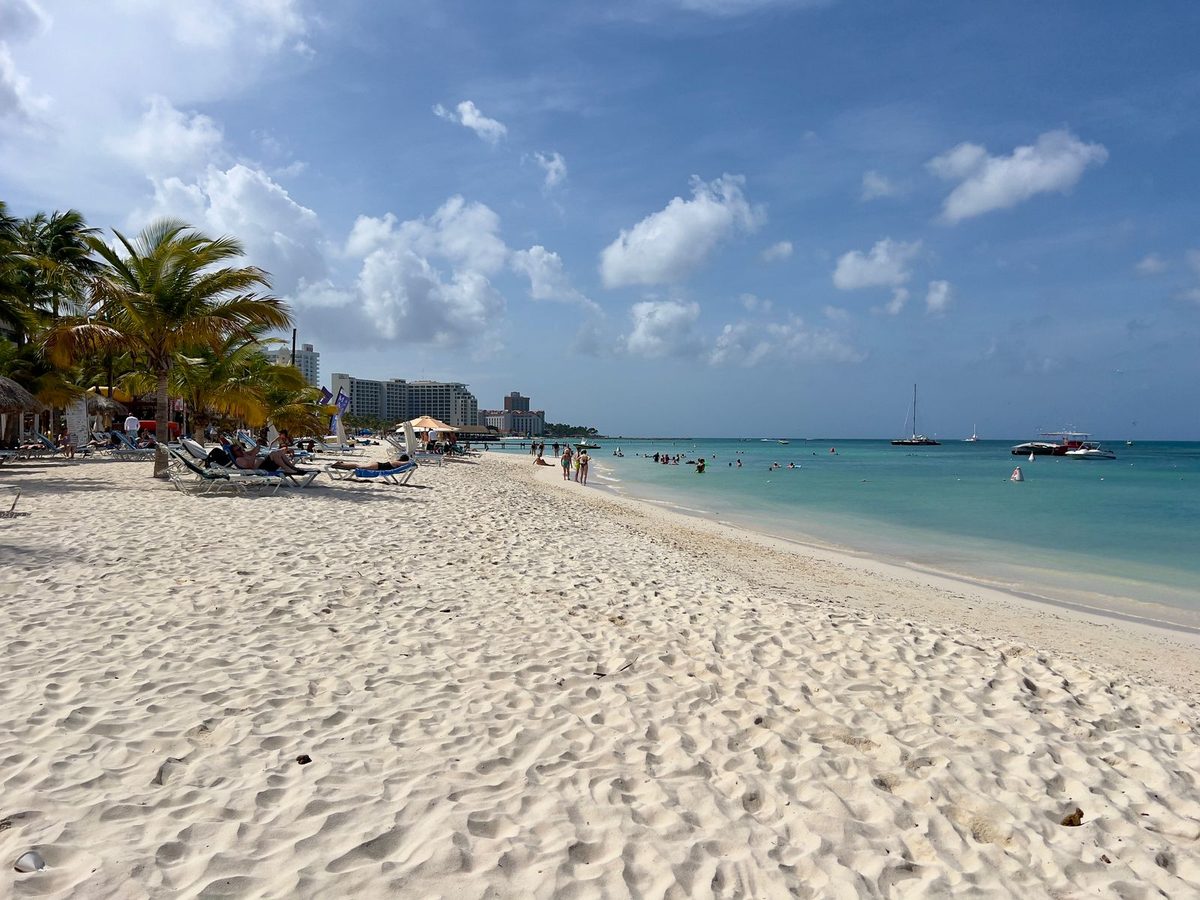
If you only have time for one beach, make it Eagle Beach. It is about a 10-minute taxi from the pier (roughly $10 each way, or $2.50 on the public Arubus), the sand is wide and powder-soft, the water entry is gentle, and it usually feels less hemmed-in than the high-rise strip. This is the home of those famous wind-bent fofoti trees you have seen in every Aruba photo. You can rent a chair and umbrella, grab a drink from a beach bar, swim, and be perfectly happy doing nothing else all day. Go earlier rather than later to beat the peak-time crowd and the taxi crush.
Palm Beach: activities and energy
Palm Beach sits just north of Eagle and is the livelier, more developed strip, lined with the big resorts. It is the better pick if you want things to do beyond sunbathing: rentable water sports, pier bars, parasailing, banana boats, and plenty of restaurants within steps of the sand. It is a touch farther (about 12 to 15 minutes, ~$11 by taxi). I send energetic groups and families who want lunch-with-a-view here, and I send couples who want a quieter towel to Eagle.
Baby Beach: only if you have the hours
Baby Beach, way down at the island’s southeastern tip near San Nicolas, is a shallow, calm, almost-lagoon that’s wonderful for relaxed swimming and easy snorkeling. But it is a real commitment from the cruise port: roughly 40 to 45 minutes each way. Treat it as the main event of a long port day, not a quick add-on, and be very disciplined about your return time. If your ship leaves in the late afternoon, the math gets stressful. On a short stop, skip it.
Renaissance Island and the flamingos
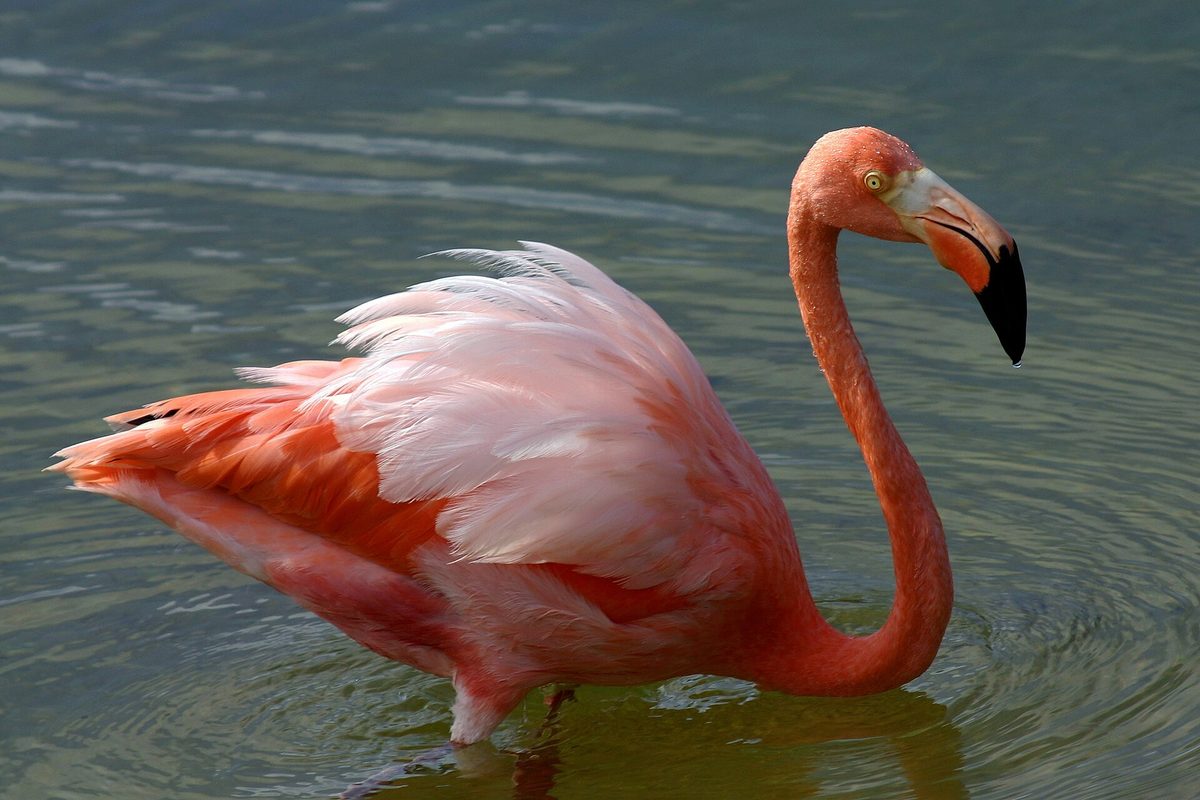
This is the photo everyone wants: pink flamingos wading on a private-island beach. Here is the honest version. The flamingos live on Renaissance Island, which is private to the Renaissance Aruba Resort, so as a cruise passenger you can’t simply walk on. Day passes do exist (around $125 per person), but they release online weekly and sell out fast, and availability for a specific cruise date is hit-or-miss. The other routes in are booking a spa treatment at the resort’s Spa Cove (which includes water-taxi access, plus a per-person water-taxi charge) or staying at the hotel. Doable, but plan it well in advance or set your heart on a regular beach instead.
On the water: catamarans, snorkeling, and submarines
Aruba’s calm leeward coast makes it a brilliant place to get on or under the water, and a half-day boat trip is, for my money, the single best “experience” you can fit into a port day. You see the prettiest part of the coast, you usually get a wreck and a reef, and the boat handles all your timing.
Catamaran snorkel to the Antilla shipwreck
The headline trip is the catamaran sail-and-snorkel that stops at the Antilla, a 400-foot German freighter scuttled in 1940 and now one of the largest wrecks in the Caribbean, sitting shallow enough to snorkel. Most tours pair it with a vibrant reef stop like Boca Catalina or Malmok, and the better ones include gear, an open bar on the return sail, and a light lunch. Expect roughly $90 to $110 per person and a three-to-five-hour window. It is social, it is scenic, and it consistently ranks as the top-rated cruise excursion on the island for good reason. Pickups are typically near the port or a short shuttle away.
Don’t want to get in the water?
If snorkeling isn’t your thing but you still want the underwater scenery, the Atlantis Submarine descends well below the surface to see reef and wreck life through portholes, and there’s a cheaper semi-submarine that keeps you mostly above water. Both are family-friendly and time-manageable on a cruise schedule. De Palm Island, an all-inclusive private-island day pass, is the easy “pay once, do everything” choice for mixed-interest groups: snorkeling, slides, banana boats, buffet, and bar in one organized place.
Going inland: UTV, Jeep, and island tours
Aruba’s interior is a surprise. Step away from the resort strip and you are in a high desert of cactus, wind-sculpted rock, and rugged coastline pounded by the Atlantic. The only realistic way to see it on a port day is a guided tour or a rental, because the good stuff is spread out and some of it is genuinely off-road.
What an island tour covers
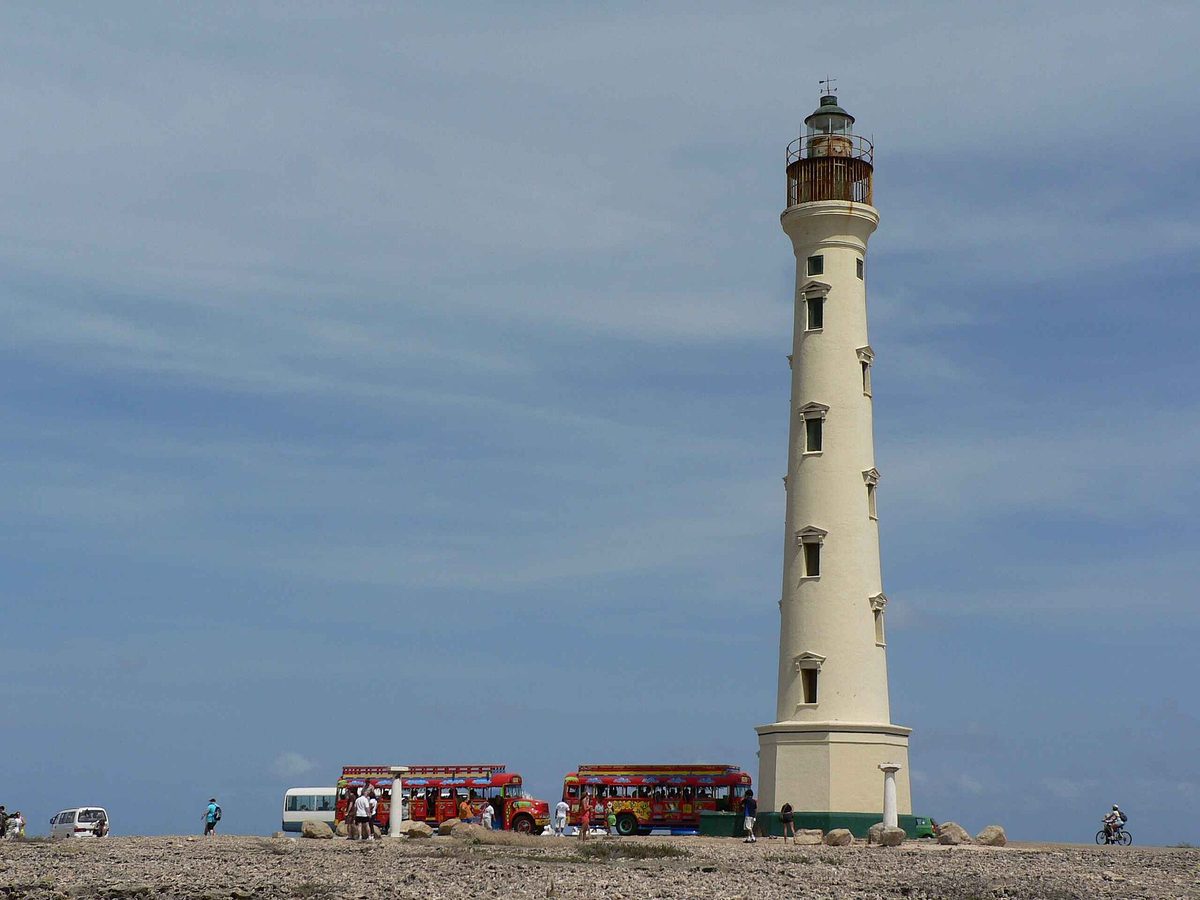
A typical UTV, ATV, or Jeep tour links the photogenic landmarks: the California Lighthouse on the northwest tip (named for a steamship wrecked nearby in 1891), the Casibari or Ayo rock formations, the Bushiribana gold-mill ruins, the Natural Bridge area, and often a quirky stop like the Aloe factory, the Ostrich Farm, or the donkey sanctuary. Some run into Arikok National Park for caves and the Natural Pool (Conchi), the rough-road swimming hole that’s a real highlight. Reckon on $90 to $150 per person and a half-day-plus commitment. Bring a buff or bandana for dust and sun if you’re in an open vehicle, it gets breezy and gritty out there.
A note on Arikok and the Natural Pool
Arikok National Park covers nearly 20% of the island and is wonderful, but it is far and the terrain is demanding. ATVs are not allowed inside the park, and the Natural Pool can only be reached on foot, by horse, or by 4×4. On a cruise day, the sane way to do Arikok is a booked 4×4 tour that handles the logistics and the timing. Trying to DIY it in a rental and still make all-aboard is how people end up sprinting for the gangway.
Ship excursions vs. independent: which to choose
This is the question I get most, and there’s no single right answer, it depends on your appetite for risk and how much you want to save.
Book through the cruise line when you want the safety net. The big advantage is the guaranteed return-to-ship policy: if a ship-sponsored tour runs late, the ship waits (or gets you to the next port). That peace of mind is worth a lot for first-time cruisers, anyone with limited mobility, families with young kids, or a port day with a tight all-aboard. The trade-off is cost, line excursions carry a markup, and groups tend to be bigger.
Go independent when you want better prices, smaller groups, and flexibility, and you’re comfortable watching the clock yourself. Booking directly with a reputable local operator or via a third-party platform often costs noticeably less than the same activity onboard, and you can linger at a quiet beach or customize a route. The catch: if you’re late back, the ship will not wait, that’s entirely on you. Build in a generous buffer and don’t cut it close.
My usual move is a hybrid: pre-book one anchor experience (a catamaran, say) directly with a local outfit for value, keep the rest of the day loose and walkable, and never schedule the independent activity to end near all-aboard. If the seas or your nerves are uncertain, the ship tour is cheap insurance.
Getting around: taxis, the bus, and rentals
You have three realistic ways to move on a cruise day, and the right one depends on your plan. Aruba does not really have ride-hailing apps working reliably, so don’t count on Uber.
Taxis
Taxis line up right outside the terminal and are the fastest way to get somewhere specific. They use government-set zone rates rather than meters, so agree on the price before you get in. As a rough guide, the cruise port to Eagle Beach runs about $10 and to Palm Beach about $11, with small surcharges on Sundays, holidays, and after dark, and a typical per-car (not per-person) structure for a few passengers. Grab the driver’s card or arrange a pickup time for the return, especially from the beaches where the line can build at midday.
Arubus (public bus)
The public bus is the budget hero. The Arubus station sits right across from the cruise port, and the L10/L1-style routes run up the hotel strip to Eagle and Palm Beach. A one-way fare is around $2.50, and a round-trip “retour” card is about $5, exact small bills help. It takes a little longer than a taxi (15-ish minutes to Eagle) but for a couple it’s a fraction of the cost. Confirm the current route and schedule at the station before you head out.
Rental car, Jeep, or scooter
Renting gives you total freedom to chase the far-flung sights, and a 4×4 or Jeep (often around $250 to $300 for the day) is the only way to properly DIY Arikok and the Natural Pool. But a car is overkill if your plan is one beach plus downtown, and remember your real cost is the pickup, paperwork, and parking, not just the drive. If you rent, note: driving is on the right, speed limits are in km/h, and right-on-red is not allowed.
How far is everything, and budgeting your hours
The mental model that keeps you out of trouble: anything in the Oranjestad-to-Palm-Beach corridor is 5 to 15 minutes away and low-risk. Anything beyond, San Nicolas, Baby Beach, the California Lighthouse, Arikok, is 30 to 50 minutes one-way and needs a real time budget with buffer baked in.
Most ships are in port roughly 7 a.m. to 5 p.m., giving you 7 to 9 usable hours, but check your specific schedule, some calls are shorter, and a few overnight. Whatever you do, anchor your day to the all-aboard time (usually 30 to 60 minutes before departure) and work backward. A simple rule I live by: be physically back inside the terminal area 60 to 90 minutes before the ship leaves. Traffic when multiple ships disembark at once is real, and the gangway does not negotiate.
Sample port-day plans by interest
Mix and match, but here are four plans I’d actually run, each sized for a standard 7-to-8-hour day.
The beach lover
- Morning: Taxi to Eagle Beach early; rent a chair, swim, relax.
- Midday: Lunch at a beach bar; one cold drink in the shade.
- Afternoon: Taxi back by mid-afternoon; 30-minute stroll through downtown and the straw market on the way to the ship.
The adventurer
- Morning: Pre-booked UTV or Jeep tour pickup near the port; lighthouse, rock formations, gold-mill ruins.
- Midday: Tour stop for a swim or the Natural Pool if it’s a 4×4 itinerary.
- Afternoon: Back by tour’s end (leave margin); quick drink at the Renaissance Marketplace.
The snorkeler / sailor
- Morning: Catamaran sail-and-snorkel to the Antilla wreck and a reef; open bar on the way back.
- Afternoon: Wander Oranjestad, grab lunch, shop, and be back with hours to spare.
The easy / first-timer day
- Morning: Walk into Oranjestad; Fort Zoutman or the Archaeological Museum, then shopping.
- Midday: Lunch at the Renaissance Marketplace.
- Afternoon: 15-minute walk to Surfside Beach for a dip, or hop the free trolley, then back to the ship.
What to skip if you’re short on time
If your stop is under six hours, be ruthless. Skip Baby Beach and San Nicolas (too far), skip any DIY rental-car run at Arikok (too risky against all-aboard), and don’t try to chase the flamingos unless you locked in a Renaissance day pass weeks ago. The downtown-plus-Eagle-Beach combo, or a single boat trip, gives you the most Aruba per hour with the least stress.
Money, tipping, and practical tips
- Cash: Bring small U.S. bills. Dollars are accepted island-wide; you do not need florins for a day.
- Tipping: Customary for good service, restaurants often add ~10-15% service (check the bill), and a few dollars for guides and drivers is appreciated.
- Sun and wind: Aruba is hot, dry, and breezy. Reef-safe sunscreen, a hat, and water are non-negotiable; the constant trade winds hide how much sun you’re getting.
- Safety: Aruba is one of the safer-feeling Caribbean stops, but it’s still a tourist economy, watch your bags and don’t leave valuables on the sand. For any current advisory, check your government’s travel guidance before you sail.
- Snorkel gear: If you have your own mask, bring it; it pays off at Surfside, Baby Beach, or any boat trip.
Getting back to the ship safely
This is the part that turns a great day sour if you blow it. Note the all-aboard time the moment you step off (it’s printed on your sail-and-sign card and posted at the gangway), and set a phone alarm. From the beaches, don’t assume a taxi will appear instantly at 4 p.m., several hundred cruisers have the same idea, so pre-arrange your pickup or head back early. If you booked an independent tour, confirm the drop-off time and location and pad it. Keep a little cash for an emergency taxi. And remember the ship’s clock is what matters: Aruba doesn’t change for daylight saving, but make sure your phone is showing ship time, not a roaming network’s guess. Do those few things and Aruba is one of the most relaxed, rewarding ports you’ll ever sail into.
Frequently asked questions
How long do cruise ships stay in Aruba?
Most ships dock in Oranjestad for roughly 7 to 9 hours, commonly arriving around 7 to 9 a.m. and leaving in the late afternoon, though a handful of itineraries stay later or overnight. Always confirm your ship’s specific arrival and all-aboard times, and build your plan around being back at the pier at least an hour before departure.
Can you walk into town from the Aruba cruise port?
Yes, and it’s one of the best things about this port. The terminal is on the edge of Oranjestad, so you can be on the main downtown shopping streets within five to ten minutes on foot. Shops, museums, the marina, the straw market, and a free trolley are all right there, no taxi required for a downtown-focused day.
Are Aruba cruise excursions worth booking through the ship?
It depends. Ship-booked Aruba cruise excursions cost more but guarantee the ship waits if your tour runs late, which is reassuring on a tight day or for first-timers. Independent tours usually cost less, with smaller groups and more flexibility, but you’re responsible for getting back on time. Many travelers book one anchor activity and keep the rest of the day independent.
How do you get from the Aruba cruise port to Eagle Beach?
Eagle Beach is about a 10-minute taxi from the terminal (roughly $10 each way; agree the fare first). The cheaper option is the Arubus public bus from the station across from the port, around $2.50 one-way or $5 for a round-trip card, taking about 15 minutes. Both are easy; go early to beat the midday crowd.
Can cruise passengers see the flamingos in Aruba?
Yes, but it takes planning. The flamingos are on Renaissance Island, private to the Renaissance Aruba Resort. Cruisers can buy a day pass (around $125, released online weekly and quick to sell out) or book a Spa Cove treatment that includes water-taxi access. There’s no walk-up option, so arrange it well before your sailing or plan a regular beach instead.
Is one day in Aruba on a cruise enough?
One day isn’t enough to see everything, but it’s plenty to enjoy the highlights. A typical 7-to-8-hour stop comfortably fits one great beach plus a downtown wander, or a single boat or island tour. Pick one or two things, do them well, and leave the rest as a reason to come back for a full Aruba vacation.
Final thoughts
Aruba spoils cruisers. The port location alone removes most of the friction, and the island packs world-class beaches, an easy walkable capital, a genuinely wild interior, and some of the Caribbean’s best snorkeling into a footprint you can sample in a single day. My advice after many port calls: don’t try to do it all. Choose a lane, beach, boat, or adventure, give Oranjestad an hour, watch your return clock, and you’ll step back onboard already planning a longer trip.
Ready to go deeper? This guide is part of our larger hub on things to do in Aruba. To plan the rest of your visit, see our guides to Aruba’s best beaches, getting to and around Aruba, and Aruba water sports and boat tours. Hungry? Browse where and what to eat in our Aruba restaurants guide. If a port day leaves you wanting more, our Aruba itinerary planner and advice on the best time to visit Aruba will help you build the full trip, and you can compare neighborhoods in where to stay in Aruba. Traveling as a group? See Aruba with kids, dream up a romantic Aruba honeymoon, budget with our Aruba vacation cost breakdown, explore the wild side in Arikok National Park, and see what happens after dark in our Aruba nightlife guide.
Photo credits
- Oranjestad harbor: Photo by Roger W (Sarasota, FL) / CC BY-SA 2.0 via Wikimedia Commons.
- Downtown Oranjestad Dutch buildings: Photo by David Stanley / CC BY 2.0 via Wikimedia Commons.
- Eagle Beach: Photo by DDJJ / CC BY-SA 4.0 via Wikimedia Commons.
- Palm Beach with boats: Photo by Kwihi / CC BY 4.0 via Wikimedia Commons.
- California Lighthouse: Photo by David Stanley / CC BY 2.0 via Wikimedia Commons.
- Flamingo: Photo by Charles J. Sharp / CC BY-SA 4.0 via Wikimedia Commons.