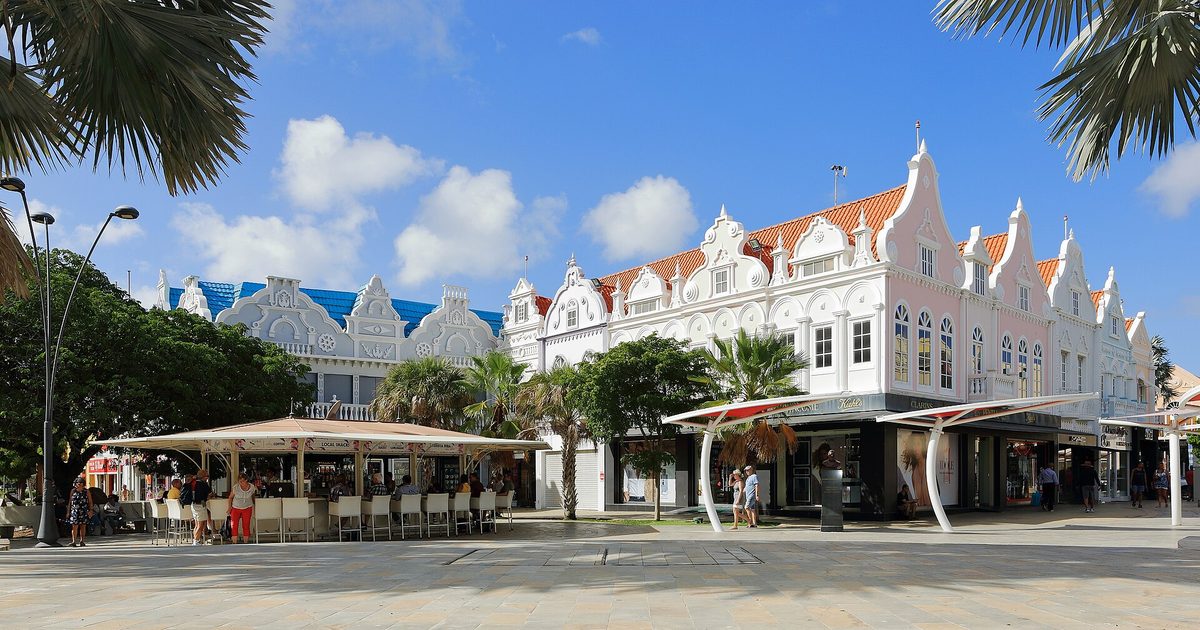
I have a confession: I did not come to Aruba to shop. I came for the water. But somewhere around my third trip, between a rained-out snorkel morning and a cruise-ship day when the beach was packed, I started actually paying attention to the stores, and I realized Aruba shopping is its own small art form. Some of it is a genuinely good deal. A lot of it is the same marked-up resort merchandise you can buy on any island. And a few things are worth flying home with even if you came, like me, for the water.
This is the honest version of an Aruba shopping guide. Not “everything is a steal in paradise!” – that is marketing. This is where to go, what is actually worth buying, what the duty-free hype gets right and wrong, and how to not overpay. I have wandered Caya G.F. Betico Croes with melting ice cream, priced the same Aruba Aloe bottle in four different shops, and watched a friend talk himself into a watch he did not need. Let me save you some money and some steps.
Aruba shopping in a nutshell (the 40-second answer)
Aruba shopping centers on two zones: downtown Oranjestad (Caya G.F. Betico Croes plus the Renaissance and Royal Plaza malls) and the Palm Beach high-rise strip (Paseo Herencia and Palm Beach Plaza). The island is a duty-free port, so perfume, cosmetics, watches and fine jewelry can run roughly 15-35% under US retail – but electronics, alcohol and souvenirs often are not cheaper. Buy local Aruba Aloe, hot sauce, art and Balashi; skip the generic tourist trinkets.
Nearly all of this is walkable from a downtown Oranjestad hotel, which is the main reason to base yourself there.
Here is who this guide is for: the cruise passenger with six hours and a shopping list, the resort guest looking for a rainy-afternoon plan, and anyone who wants to bring home something that actually says “Aruba” instead of a fridge magnet made in a factory three time zones away. If you want the wider picture of how shopping fits into a trip, start with our overview of the best things to do in Aruba, then come back here for the retail deep dive.
At a glance: where to shop in Aruba
If you remember nothing else, remember this table. It is the cheat sheet I wish someone had handed me on day one.
| Area | Best for | The vibe |
|---|---|---|
| Caya G.F. Betico Croes (Main Street), Oranjestad | Local souvenirs, Aruba Aloe, mid-range fashion, people-watching | Lively pedestrian-friendly strip, Dutch-colonial facades, free streetcar |
| Renaissance Mall, Oranjestad | Luxury – Louis Vuitton, Gucci, Cartier, designer watches | Air-conditioned, polished, quiet, splurge energy |
| Renaissance Marketplace / Seaport, Oranjestad | Casual shops, waterfront dining, evening drinks | Open-air harbor boardwalk, lively after dark |
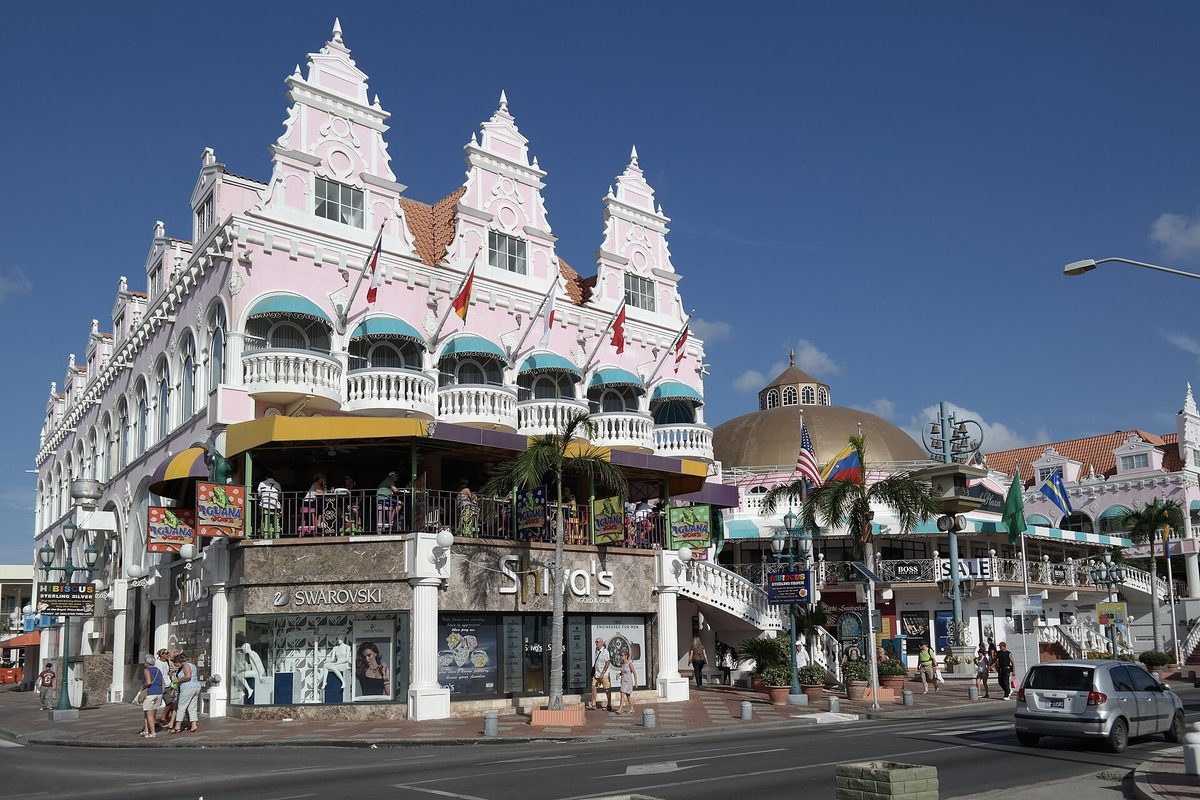
| Royal Plaza Mall, Oranjestad | Perfume and cosmetics duty-free, jewelry, that pink building photo | Colorful landmark across from the cruise pier |
| Paseo Herencia, Palm Beach | Brand-name fashion, gifts, a movie + dinner + shopping night | Pretty open-air plaza, fountains, nightly light show |
| Palm Beach Plaza, Palm Beach | Indoor A/C browsing, bowling, electronics, rainy-day backup | Enclosed mall, more local-feeling, fewer crowds |
| Queen Beatrix Airport (AUA) | Last-minute liquor, perfume, cigarettes, chocolate | Surprisingly large duty-free; shop after US pre-clearance |
Oranjestad shopping: the heart of it
If you only have one shopping outing in you, make it Oranjestad. The capital packs the widest range into the smallest footprint, and it has the one thing Palm Beach does not: a sense of place. You can buy a $20,000 watch and a $4 bottle of hot sauce within a two-minute walk, and that contrast is half the fun of Oranjestad shopping.
Caya G.F. Betico Croes (Main Street)
This is the island’s main shopping street, usually just called Main Street or “Caya Betico.” It runs through downtown in a parade of pastel Dutch-colonial buildings, and it is where I send first-timers. You will find Aruba Aloe shops, souvenir stores, jewelers, mid-range fashion (think Mango, local boutiques), pharmacies that sell sunscreen for less than your resort, and ice cream when the heat wins.
It is walkable and mostly relaxed. Vendors will say hello but the hard-sell pressure you might brace for is largely absent here – Aruba is genuinely laid-back about it. Give yourself an hour to stroll, more if you like to browse. The free downtown streetcar (more on that below) trundles right down the middle of it, which is both charming and a great way to rest your feet.
Renaissance Mall (the luxury one)
Attached to the Renaissance Wind Creek resort, the Renaissance Mall is Aruba’s luxury address. This is the air-conditioned, marble-floored, hushed-voices kind of mall where the names on the doors are Louis Vuitton, Gucci, Cartier, and a roster of high-end watch and jewelry houses. If you are shopping for a serious watch or designer handbag, this is your room.
Even if you are not buying, I think it is worth a ten-minute walk-through, partly for the blast of A/C and partly because it connects to the resort’s pretty lobby and the Renaissance Marketplace beyond. Honestly, for most of us the luxury floor is a window-shopping experience – but the duty-free pricing on big-name watches and jewelry is where Aruba’s tax status can genuinely pay off (I will get into the real math in a minute).
Renaissance Marketplace and Seaport Village
Out the back of the mall, along the harbor, the Renaissance Marketplace (you will also hear “Seaport”) is the open-air, lower-key sibling. It is more about casual shops, waterfront restaurants, a casino, and sunset drinks than serious retail, but it is one of my favorite places to wander in the early evening when downtown empties out. Come for dinner, do a little browsing, and watch the boats. It pairs naturally with Aruba’s nightlife if you are making a night of it downtown.
Royal Plaza Mall
You cannot miss Royal Plaza – it is the candy-pink, wedding-cake building right across from the cruise terminal, and it is one of the most photographed spots in Oranjestad. Inside you will find perfume and cosmetics duty-free counters, jewelry, and a mix of fashion shops. It is a convenient, cruise-day-friendly stop precisely because of where it sits. If duty-free fragrance is on your list, this is an easy place to compare prices against the airport before you fly.
Palm Beach shopping: malls, A/C and a night out
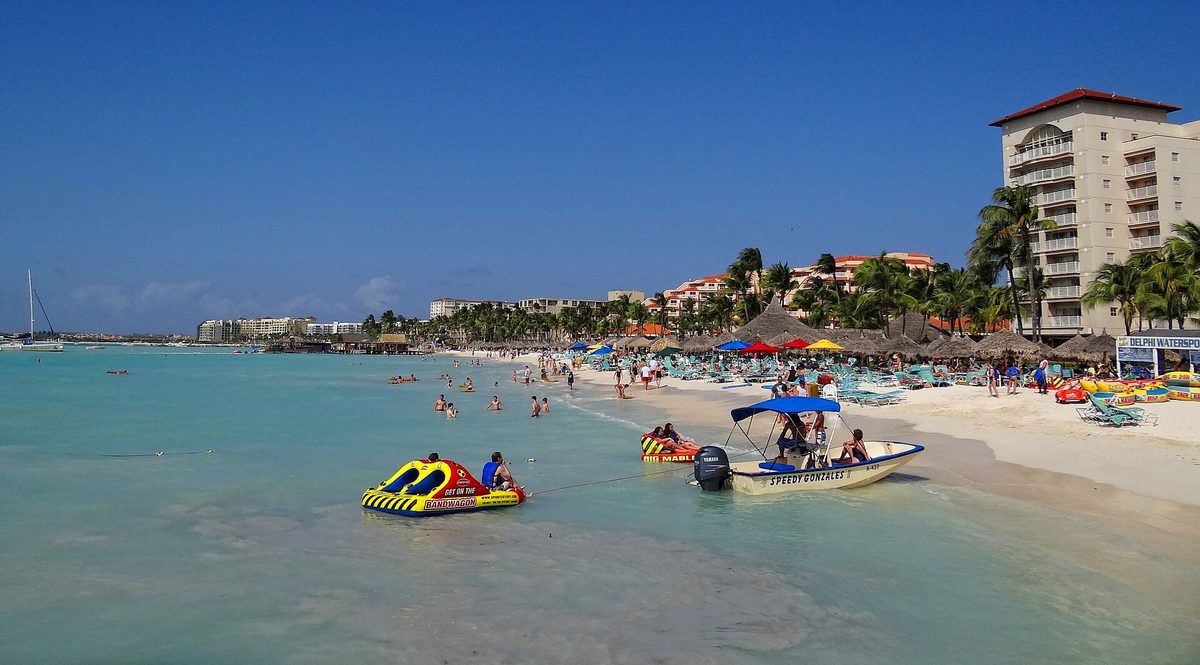
If you are staying in the high-rise hotel zone, you may never make it downtown – and that is okay, because Palm Beach has its own little shopping ecosystem within walking distance of the big resorts. It skews more “mall and brand names” than “local character,” but it is convenient, it is open late, and it doubles as an evening out.
Paseo Herencia
Paseo Herencia is the prettier of the two Palm Beach centers – an open-air plaza built to look like an old Aruban village, with fountains, a clock tower, restaurants, a movie theater, and a nightly light-and-water show that the kids (and, fine, the adults) love. The shopping is brand-name fashion and gifts: think Calvin Klein, Tommy Hilfiger, surf and resort wear, sunglasses, and souvenir shops. I like it best in the evening, when it lights up and you can fold dinner, a movie, and a little browsing into one stop. It is a genuinely nice place to spend a couple of hours after the beach, and it is right across from the high-rise hotels, so families with strollers will appreciate it. For more on the area, see our guide to where to stay in Aruba.
Palm Beach Plaza
A short walk away, Palm Beach Plaza is the indoor, fully air-conditioned mall – the one to keep in your back pocket for a hot or rainy afternoon. It has a more local, everyday feel: electronics, a bowling alley, an arcade, casual dining, and shops that cater as much to residents as tourists. It is rarely crowded, which after a packed beach day can feel like a small luxury. If you are traveling with kids and need a low-stakes indoor plan, this plus the bowling is a reliable couple of hours – we cover more options like it in our guide to Aruba with kids.
Queen Beatrix Airport: do not sleep on the duty-free
Here is a tip a lot of guides bury: the duty-free at Queen Beatrix International Airport (AUA) is large and genuinely useful, and because Aruba has US pre-clearance, you clear US customs before you fly. That has a practical upshot for shopping – sort out your liquor and perfume situation here, keep your receipts, and you are already cleared for the US when you land. The airport stocks the usual spirits, fragrances, cosmetics, chocolate and cigarettes at duty-free prices. If you forgot to buy that bottle of Balashi or a perfume gift, the airport is your backstop. Just arrive early; Aruba’s airport recommends getting there about three hours before US-bound flights, and you do not want to spend that buffer sprinting instead of shopping.
The duty-free reality: what is actually a deal?
Let me be the friend who tells you the truth. Yes, Aruba is a duty-free port, and you will see “duty-free” on what feels like every third storefront. But “duty-free” does not automatically mean “cheap.” It means the merchant is not paying certain import duties, and whether that saving reaches you depends entirely on the category and the store. Here is my honest, category-by-category take on duty free Aruba shopping.
Genuinely worth it: perfume, cosmetics, watches and fine jewelry
This is where the savings are real. Aruba has a long tradition of fragrance and cosmetics retailing, and the big players – names like Maggy’s, Aruba Trading Company and Gandelman – are members of the global duty-free association and price accordingly. Expect roughly 15-35% (sometimes more) under US department-store retail on designer perfume and cosmetics. On luxury watches and fine jewelry the percentage can be even more meaningful simply because the ticket price is high, so a 20% gap is real money. If you have been eyeing a specific fragrance or a watch, this is the category where I would actually pull out a phone, look up the US price, and do the comparison.
Sometimes worth it: liquor and Dutch goods
Liquor is a mixed bag. Premium spirits at the airport duty-free can beat US prices, especially on bottles that are heavily taxed at home. But alcohol bought around the island, in regular shops, is often more expensive than in the US – Aruba imports nearly everything. My rule: buy spirits at the airport on the way out, not at a beach shop. Dutch products (Gouda and Edam cheese, stroopwafels, chocolate) are a fun, genuinely Aruban-by-way-of-Holland buy and reasonably priced at supermarkets – much cheaper than the souvenir-shop versions.
Usually NOT a deal: electronics and generic souvenirs
Skip the “duty-free electronics.” Cameras, phones and gadgets are rarely cheaper than buying online at home, and you lose your easy warranty and return options. The same goes for mass-produced souvenirs – the airbrushed T-shirts, the “One Happy Island” shot glasses, the keychains. They are not duty-free anything; they are marked-up tourist goods, and you will see the identical items in five shops. If you want a souvenir, buy a local one (next section). Your dollars go further and the thing actually means something.
How to actually check a “deal”
My three-step gut check, every time: (1) Know the US price before you walk in – look it up on your phone. (2) Factor your home duty-free allowance so you do not get taxed on the way back (more below). (3) Remember that a discount on something you did not want is not a saving. Aruba makes it very easy to “save” your way into spending more than you planned.
Money, tax and payment: the practical bit
Do they take US dollars in Aruba?
Yes – and this is one of Aruba’s great conveniences. The local currency is the Aruban florin (AWG), but US dollars are accepted essentially everywhere: shops, restaurants, taxis, tours. The florin is pegged to the dollar, so the rate barely moves; the official rate is around 1.79 florins to the dollar, and shops typically give change at a slightly rounded commercial rate (often around 1.75-1.80). In practice you can travel Aruba on US cash and cards and never touch a florin. You may get change back in florins, which is fine – just try to spend the coins before you leave, since they are hard to exchange at home.
Is there sales tax in Aruba?
There is no US-style sales tax added at the register and no VAT refund line to stand in. What Aruba has instead is a set of turnover taxes (you will see them abbreviated BBO/BAZV/BAVP) that businesses pay along the supply chain, and that cost is already baked into the shelf price you see – in 2023 the combined rate rose to roughly 7%, charged at the business level. The upshot for you as a shopper: the price on the tag is essentially the price you pay, with no surprise tax added at checkout. (Restaurants are the exception – many add a service charge, which we cover in our Aruba restaurants guide.)
Cards, cash and tips
Major credit cards are accepted almost everywhere, and I put nearly everything on a no-foreign-transaction-fee card. Carry a little US cash for street vendors, the flea market, tips and small stalls. Watch for “dynamic currency conversion” – if a card terminal offers to charge you in US dollars instead of florins, decline and pay in the local currency; the dollar conversion they offer usually carries a worse rate. For the bigger budgeting picture, our Aruba vacation cost guide breaks down what a trip really runs.
What to actually buy in Aruba (the good souvenirs)
This is the section I care about most, because it is where you can come home with something worth having instead of landfill. Here is what I buy, and what I steer friends toward.
Aruba Aloe
If you buy one thing, make it Aruba Aloe. The island has been growing aloe and making skincare from it since the 1890s – it is one of the oldest aloe companies in the world – and the after-sun gel is genuinely excellent on a sunburn (ask me how I know). The lotions, soaps, lip balm and hair products travel well and make great little gifts. You will find it everywhere: dedicated Aruba Aloe shops on Main Street, supermarkets, and the gift shops. Prices are similar across the island, so buy where it is convenient. For the full experience, the Aruba Aloe factory and museum near Hato offers tours and the widest selection – a nice rainy-day or non-beach outing.
Larimar and local jewelry
Larimar is the dreamy, sky-blue stone you will see set into earrings, pendants and rings all over the island. It is technically mined in the Dominican Republic, not Aruba, but it has become a signature Caribbean keepsake and the color is unmistakably “this ocean.” Quality and price vary a lot, so buy from an established jeweler, ask about the grade, and do not be shy about comparing a couple of shops. Beyond Larimar, downtown jewelers carry everything from fun costume pieces to serious gold and gemstones at duty-free pricing.
Local hot sauce
My favorite cheap, packable, genuinely-local souvenir: Aruban hot sauce. The classic is pica di papaya – a tangy, fiery sauce made from green papaya and Scotch bonnet peppers that Arubans put on everything. Look for local brands like Doña Lisa and other island labels in the supermarkets (way cheaper than gift shops). A few bottles wrapped in a sock survive the suitcase fine and bring the island back to your kitchen for months. Pack them in checked luggage.
Mopa Mopa art and local crafts
Mopa Mopa is a striking handcraft you will see in better souvenir shops – colorful figures and decorative pieces made by stretching a resin from the mopa mopa tree over carved wood. It is actually a Colombian/South American tradition that shows up in Aruba’s shops given the island’s location, and the pieces are eye-catching and handmade. If you want something with real artisanal character beyond a magnet, this is a good pick.
Aruban art and prints
For something one-of-a-kind, look at local art. Galleries downtown and pop-up artists sell paintings, prints and photography of the divi-divi trees, the colorful Oranjestad facades and the wild north coast. A small framed print or an unframed piece you can roll into your bag is, to me, the most evocative souvenir there is – and you are supporting an actual Aruban artist. The San Nicolas mural district down south is also worth a look if street art and galleries are your thing; our Aruba itinerary maps out how to fit it in.
Balashi (and other edible/drinkable take-homes)
Balashi is Aruba’s own beer, brewed on-island, and “a Balashi cocktail” is local slang for tap water – because Aruba’s desalinated tap water is famously good. A few cans or a branded glass make a fun, low-cost souvenir for the beer drinker in your life. Other tasty take-homes: Dutch cheese and stroopwafels from the supermarket, local coffee, and the bright-blue novelty of anything Curaçao-liqueur themed. Just mind liquid limits in carry-on and pack bottles in checked bags.
Markets, hours and the street-vendor scene
Local markets and flea markets
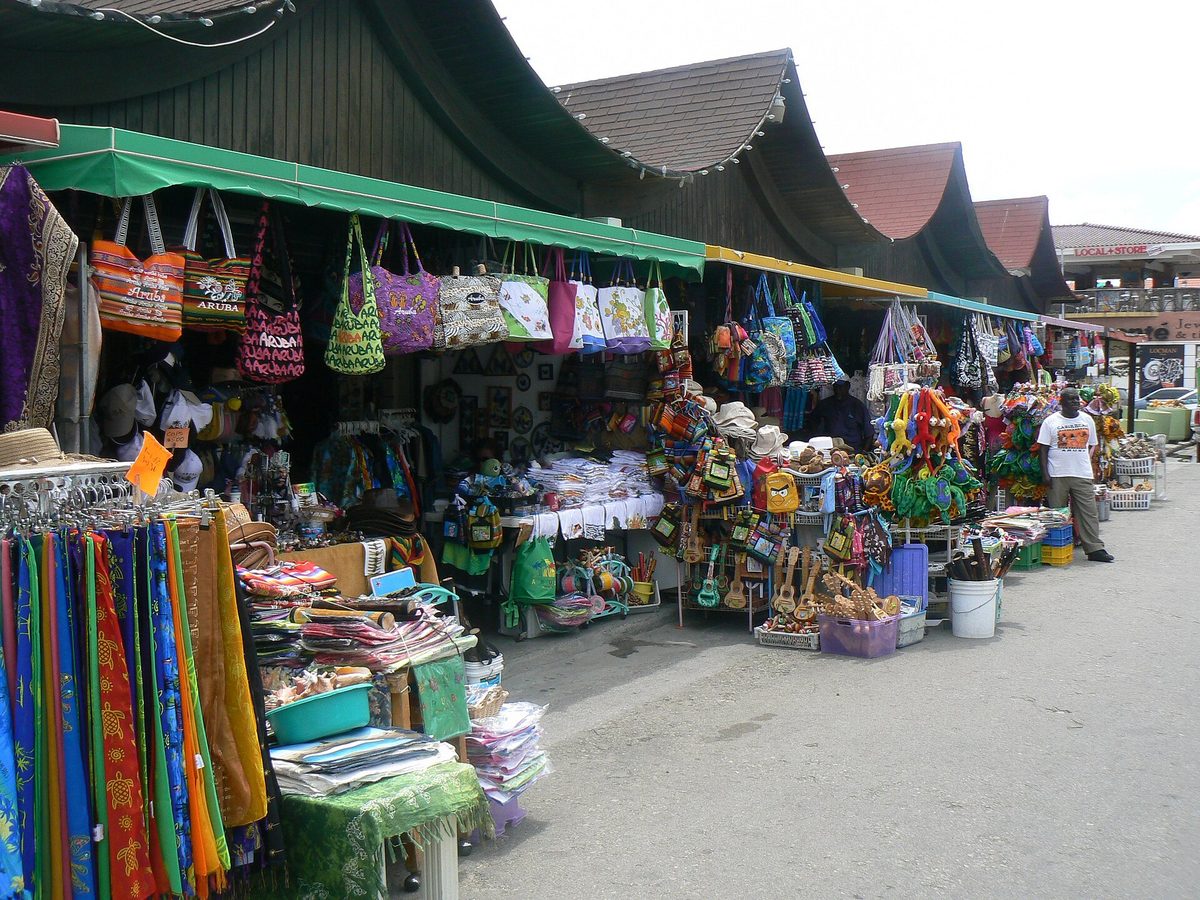
For atmosphere and the only place bargaining is fair game, seek out the markets. There is a craft and flea market scene near the harbor and the cruise area in Oranjestad, plus pop-up vendor stalls selling sarongs, beaded jewelry, woodcarvings, magnets and souvenirs. The quality is hit-or-miss and a lot of it is imported, but it is fun to browse and the prices have a little give. If you want produce and local color rather than souvenirs, ask about the morning market days – they are more for residents but are a genuine slice of island life.
Opening hours (read this before you plan a day)
Most Aruba shops keep daytime hours, roughly 9am or 10am to 6pm, Monday through Saturday. The two Palm Beach malls and the Renaissance Marketplace stay open later – often until 9pm or 10pm – which is why evening shopping there works so well. Sundays are the catch: many downtown shops close or run reduced hours, although stores open up when a cruise ship is in port. If you have your heart set on a specific store on a Sunday, call ahead or check, because nothing is worse than a closed shutter and a wasted taxi. The malls are your safest Sunday and evening bet.
Cruise-day shopping: a six-hour game plan
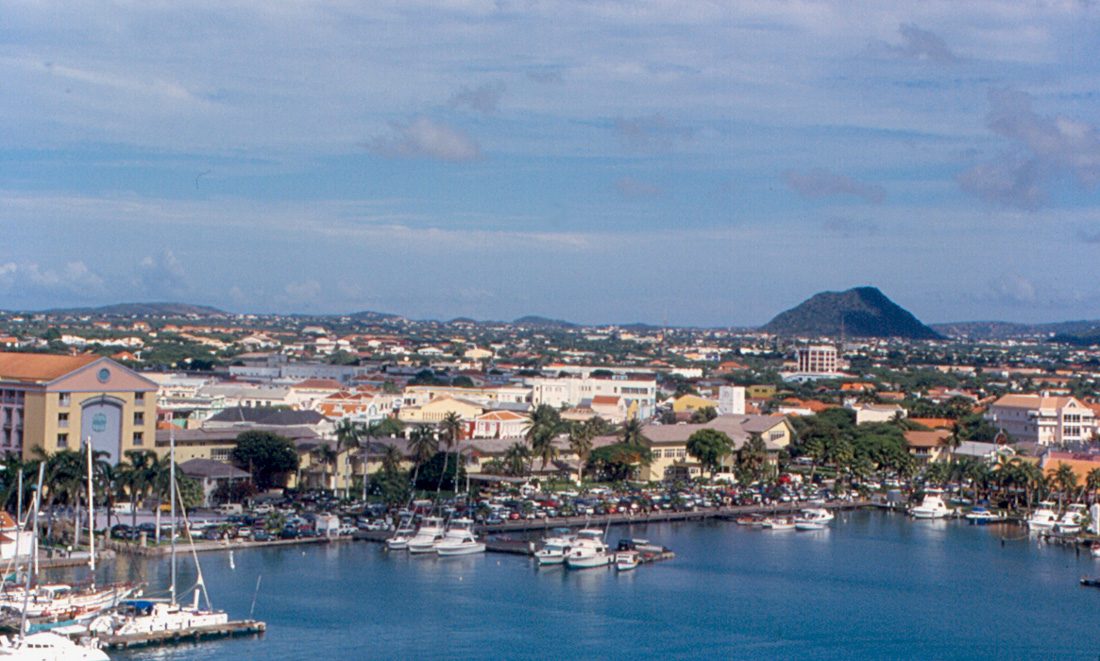
Cruise passengers have it easy in Aruba: the port is in downtown Oranjestad, so you step off the ship and you are basically in the shopping district. Here is how I would spend a port day if shopping is the goal.
First, hop the free downtown streetcar – a charming open-air double-decker trolley that loops from the cruise terminal up Caya G.F. Betico Croes (Main Street) to Plaza Nicky Habibe and back. It is genuinely free, it gives your feet a break, and it is a lovely way to scope out the street before you dive in. Royal Plaza is right by the pier for perfume and cosmetics; the Renaissance Mall (luxury) and Renaissance Marketplace are a short walk; and Main Street covers souvenirs and Aruba Aloe. You can hit all of it without a taxi.
My cruise-day advice: do your duty-free price comparison early, buy the heavy/breakable things last so you are not lugging them, and keep your receipts together for the gangway. If you would rather split the day, a quick beach morning plus an afternoon of downtown shopping is very doable – and our Aruba beaches guide and getting around Aruba guide will help you pick a beach and a ride.
Bargaining etiquette: when (and when not) to haggle
Quick cultural note that will save you embarrassment: in Aruba’s established stores and malls, prices are fixed and haggling is not the done thing. Walking into a jeweler or a perfume counter and demanding a discount will get you a polite, puzzled look. That said, you can absolutely ask whether there is a current promotion, a multi-item deal, or a cash price – that is normal and often works, especially on bigger jewelry or watch purchases. The place where gentle bargaining is fair game is the flea markets and with street/beach vendors. There, a friendly back-and-forth is expected; if you talk a price down by 10-20% you have done well. Keep it good-natured – Aruba runs on warmth, not pressure.
Quick picks by traveler type
- Luxury shopper: Renaissance Mall for watches, designer fashion and fine jewelry; do the US-price comparison and let the duty-free pricing work for you.
- Souvenir hunter: Caya G.F. Betico Croes for Aruba Aloe, plus a supermarket run for hot sauce, cheese and Balashi at local prices.
- Families: Paseo Herencia for the light show, movie and dinner; Palm Beach Plaza for indoor A/C, bowling and an arcade on a hot day.
- Couples: Renaissance Marketplace for evening browsing and waterfront drinks – it pairs beautifully with a sunset, and ideas in our Aruba honeymoon guide.
- Cruise day: Free streetcar up Main Street, Royal Plaza by the pier, no taxi required.
- Budget / no-shopping: Window-shop the malls for the A/C, buy one bottle of Aruba Aloe, and put the rest toward an excursion – see our Aruba travel tips.
Aruba shopping FAQ
Is shopping in Aruba duty-free?
Yes – Aruba is a duty-free port, so many goods are sold without the import duties you would pay elsewhere. But “duty-free” is strongest on perfume, cosmetics, watches and fine jewelry, where stores genuinely undercut US retail. Electronics, alcohol bought around the island, and generic souvenirs are often no cheaper, so treat “duty-free” as a reason to compare prices, not a guarantee of a deal.
Is shopping in Aruba cheaper than the US?
It depends on what you buy. Designer fragrance, cosmetics, luxury watches and jewelry can run roughly 15-35% under US prices at the major duty-free retailers. Most other things – electronics, everyday goods, restaurant meals, souvenirs – are the same or more expensive, because Aruba imports nearly everything. Look up the home price on your phone before any big purchase to know if it is truly a saving.
What should I buy in Aruba?
Buy local. Aruba Aloe skincare (especially the after-sun gel) is the classic and it is excellent. Add a bottle or two of Aruban hot sauce, some Larimar jewelry, a piece of local art or Mopa Mopa craft, and a few cans of Balashi beer or Dutch cheese from the supermarket. These say “Aruba,” support local makers, and pack easily – far better than mass-produced trinkets.
Do they take US dollars in Aruba?
Yes, universally. The local currency is the Aruban florin, but US dollars are accepted in shops, restaurants, taxis and tours across the island, and the florin is pegged to the dollar so the rate is stable (around 1.79 florins per dollar). You can pay in dollars or by card almost everywhere; you may get change in florins, so spend coins before you fly home.
Is there sales tax added at the register in Aruba?
No. Aruba does not add a US-style sales tax or VAT at checkout. It uses turnover taxes (BBO/BAZV/BAVP, around 7% combined as of 2023) that businesses pay up the supply chain, so the cost is already included in the price on the tag. The number you see is essentially the number you pay – no surprise tax at the till, and no VAT-refund line to deal with.
Can you bargain when shopping in Aruba?
Only in the right places. In established stores and malls, prices are fixed and haggling is not customary – though it is fine to ask about promotions or a cash price on big-ticket jewelry. Bargaining is welcome at flea markets and with street or beach vendors, where a friendly negotiation is expected. Talking a vendor down 10-20% there is a good result; keep it warm and good-natured.
What time do shops close in Aruba?
Most shops run about 9am-6pm, Monday to Saturday. The Palm Beach malls (Paseo Herencia, Palm Beach Plaza) and the Renaissance Marketplace stay open later, often to 9-10pm, which makes evening shopping easy there. Sundays are quieter – many downtown shops close or cut hours, though stores open when a cruise ship is in port. For a Sunday plan, head to the malls or check specific stores ahead.
Is Oranjestad or Palm Beach better for shopping?
Oranjestad has the most variety and character – Main Street souvenirs and Aruba Aloe, the luxury Renaissance Mall, perfume at Royal Plaza, all walkable and right by the cruise port. Palm Beach is more about brand-name malls (Paseo Herencia, Palm Beach Plaza) that stay open late and double as an evening out. If you want one outing, choose Oranjestad; if you are staying in the high-rises, Palm Beach is convenient.
Final thoughts
Here is where I land after all those trips: Aruba shopping is a genuinely good time and an occasionally good deal, as long as you go in clear-eyed. Treat the luxury malls as the place where duty-free pricing can actually save you real money on a watch, a piece of jewelry, or your favorite fragrance – and treat the souvenir scene as a chance to bring home something local and meaningful rather than a marked-up magnet. Buy your Aruba Aloe, grab some hot sauce and a Balashi, support an island artist, and put the money you saved second-guessing a “deal” toward another day on the water. That is the trade I would make every time.
Wherever your trip takes you next, our hub of things to do in Aruba ties it all together – and if you are still planning the calendar, the best time to visit Aruba guide will help you pick your week.
Photo credits
- Colorful Dutch-colonial shops and cafes in Oranjestad, the heart of Aruba shopping — Photo: Martin Falbisoner / CC BY-SA 4.0 via Wikimedia Commons
- The pink Royal Plaza building and shops on Caya G.F. Betico Croes, the main shopping street in Oranjestad, Aruba — Photo: Choinowski / CC BY-SA 4.0 via Wikimedia Commons
- The Palm Beach high-rise resort strip in Aruba, home to the Paseo Herencia and Palm Beach Plaza shopping centers — Photo: Bjorn Christian Torrissen / CC BY-SA 3.0 via Wikimedia Commons
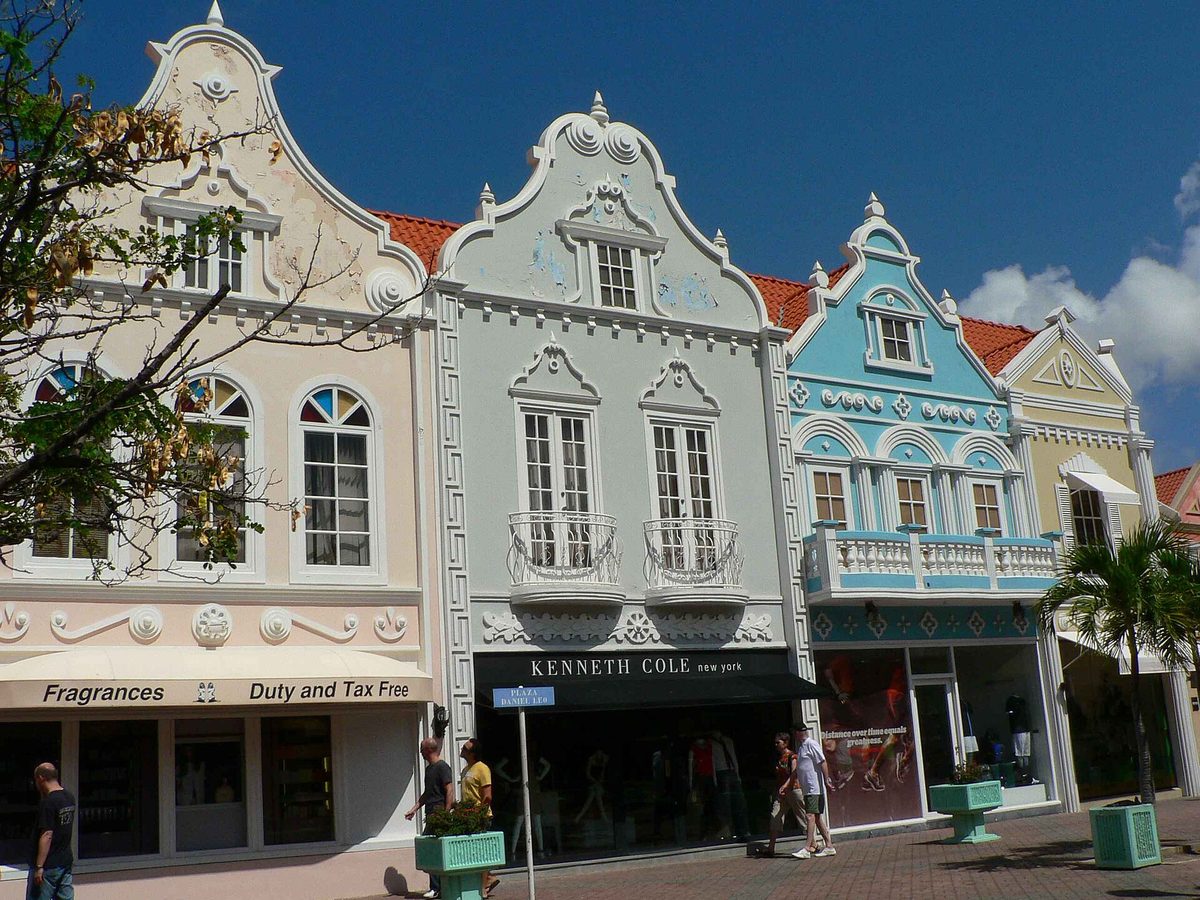
- Duty and tax-free fragrance and fashion storefronts on a downtown Oranjestad shopping street in Aruba — Photo: David Stanley / CC BY 2.0 via Wikimedia Commons
- The Oranjestad harbor and downtown waterfront at the Aruba cruise port, steps from the duty-free shopping district — Photo: Roger W (Sarasota, FL) / CC BY-SA 2.0 via Wikimedia Commons
Sources
- Aruba Tourism Authority (aruba.com) – shopping, duty-free and currency pages
- Aruba Ports Authority / Queen Beatrix International Airport – retail and duty-free
- VisitAruba.com – shopping guide, malls and money/currency
- Government of Aruba – BBO/BAZV/BAVP turnover-tax information
- U.S. Customs and Border Protection – duty-free personal exemption guidance
Oranjestad harbor market by NoTalkMan (CC0).