Aruba is a famously flat island — and then, out of the cactus scrub near the village of Paradera, the Casibari Rock Formations erupt like a pile of giant marbles dropped from the sky. They are some of the most surreal sights on the island: free to visit, genuinely fun to scramble up for a panoramic view, and quick enough to fold into a half-dozen other stops. This guide covers what to see at Casibari and the nearby Ayo formations, how to climb them, the easiest way to get there, and the best things to pair them with.
The Casibari rock formations are a free, easy-to-reach cluster of giant tonalite boulders in central Aruba, with carved steps and short trails that climb to a windy 360-degree viewpoint. Pair them with the nearby Ayo rock formations, where Arawak petroglyphs survive on the stone, for the island’s best look at its geology and pre-Columbian past. Together they make a perfect cooler-hour stop.
This guide is for anyone who wants more than a five-minute photo stop: I cover the geology, both climbs, the petroglyphs at Ayo, exactly how Casibari and Ayo differ and which one to pick, how to get there and park, hours and cost, what to wear, safety on the rocks, the best time of day, photography, and the nearby stops worth bolting on. If you are renting a car for even one day, this is one of the most rewarding non-beach things to do in Aruba.
Casibari and Ayo at a glance
Both sites are free, open-air, and sit within about a 10-minute drive of each other in Aruba’s central interior. Here is the quick version before we dig in.
| Detail | Casibari Rock Formations | Ayo Rock Formations |
|---|---|---|
| What it is | Stacked tonalite boulders with a climb to a viewpoint | Larger monolithic diorite boulders with ancient petroglyphs |
| Cost | Free (restroom ~US$1 donation) | Free |
| Hours | No gates; daylight hours, best early or late | No gates; daylight hours, best early or late |
| Climb | ~50 carved steps plus a tight cave-like passage to the top | Gentler; scramble around and between boulders, marked paths |
| The draw | 360° island views, cafe, gift shop, easy access | Petroglyphs, quieter atmosphere, dramatic shapes |
| Facilities | Free parking, cafe/bar, restrooms, souvenirs, Wi-Fi | Free parking, marked trails, info signs (no cafe) |
| Time needed | 30-60 minutes | 30-60 minutes |
| Best for | Families, first-timers, anyone short on time | History buffs, photographers, quieter explorers |
My honest take: if you only have time for one, make it Casibari for the views and the easy logistics. But the two are so close that skipping Ayo would be a small tragedy, especially if you care about the island’s history. Do both and you have still spent less than two hours.
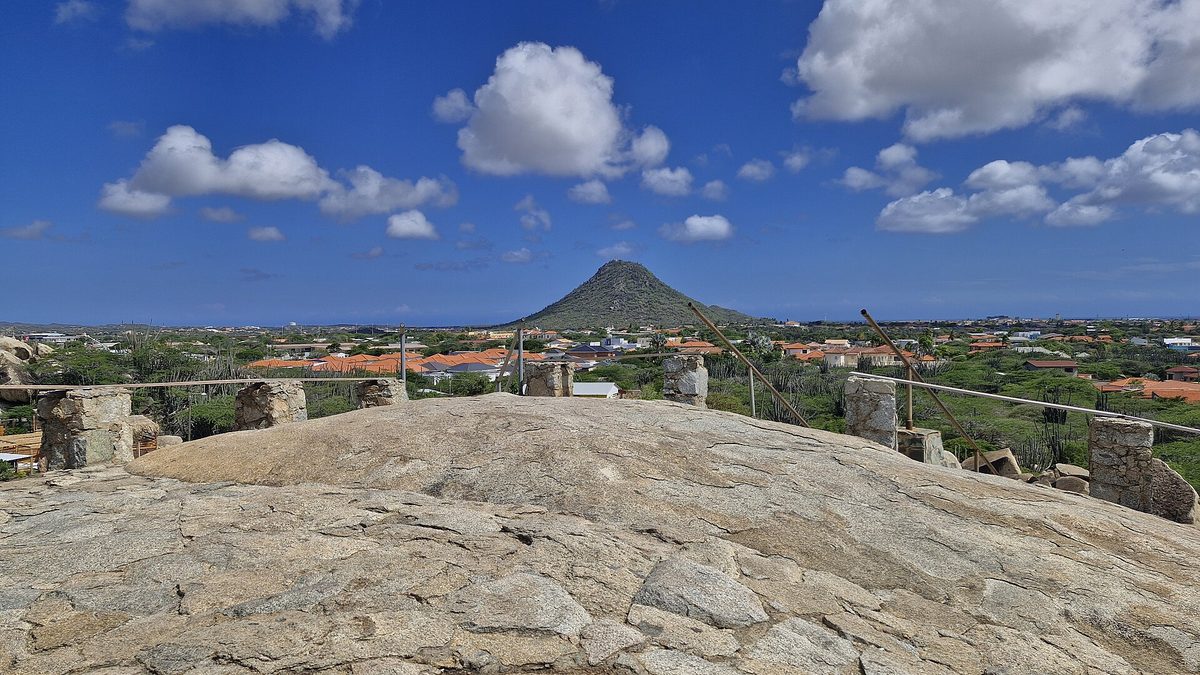
The geology: why are there giant boulders on a flat desert island?
This is the question everyone asks, and the honest answer is that geologists still debate the fine detail. What we do know is that these are not random rocks. The Casibari boulders are tonalite (a coarse, pale, granite-like igneous rock, sometimes described as quartz diorite), and the Ayo boulders are a heap of monolithic diorite. Both are intrusive igneous rocks, which means they crystallized from molten rock deep underground, long before the surrounding softer material eroded away and left them exposed.
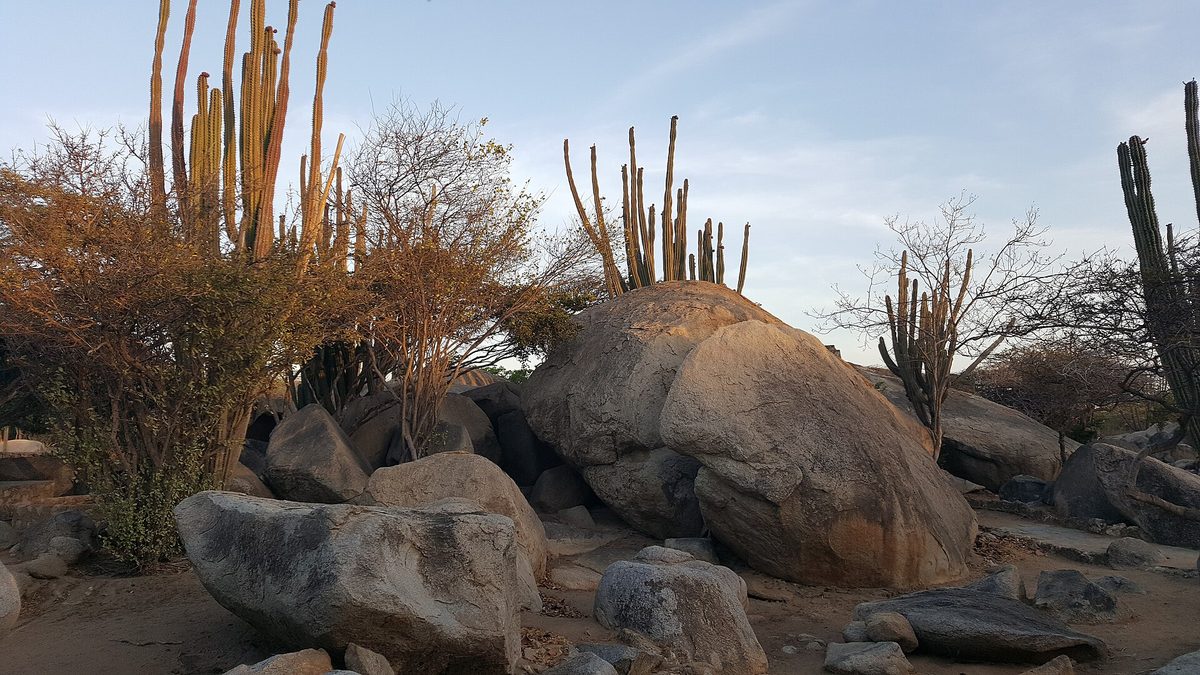
Over millions of years, wind, rain, and the relentless Aruba sun went to work. Water seeped into cracks, minerals expanded and contracted with the heat, and the softer outer layers spalled off in a process called onion-skin or spheroidal weathering. That is why so many of the boulders are rounded, and why they balance on one another in shapes that look almost deliberate. People see birds, dragons, and faces in them; there is a formation at the Ayo entrance that locals call the Dragon Mouth.
What makes it feel so surreal is the contrast. Aruba is largely low and flat, fringed with that famous white sand. Then you reach the center of the island and these massive grey-gold monoliths erupt out of the cactus and divi-divi trees with no obvious explanation. The Casibari boulders sit just north of Hooiberg, the cone-shaped hill, and rise high enough that the climb genuinely rewards you with a panorama. If you have read our overview of Arikok National Park, you already know Aruba’s interior is far more rugged and dramatic than the resort strip suggests; the rock formations are the most accessible taste of that wild side.
Casibari rock formations: the climb, the views, and the cafe
Casibari is the more developed and visitor-friendly of the two, which is exactly why most people start here. You park, walk a few steps, and you are immediately among the boulders. The whole site is compact, so even if you are travelling with kids or grandparents who are not climbing, everyone stays close.
Climbing to the viewpoint
The main event is the climb to the top. There are roughly 50 uneven stone steps carved and set into the rock, switching back as they go. They are not difficult for anyone reasonably mobile, but they are uneven, the handrails are intermittent, and the last stretch involves a bit of light scrambling over bare rock. There is also an alternative route up through a cave-like, tunnel-style gap in the boulders; it is tighter and you go single file, but kids love it and it is genuinely fun to pop out higher up.
At the top, two things hit you at once. First, the wind, which on Aruba is almost always blowing hard from the east, so hold onto hats and loose hats and phones. Second, the view. On a clear day you can see a huge sweep of the island, from the inland hills out to the coastline, and people often claim you can pick out the coast of Venezuela on the horizon. Hooiberg looms right there beside you, and the patchwork of central Aruba spreads out below. It is, hands down, one of the best free viewpoints on the island.
The cafe, restrooms, and souvenirs
Here is where Casibari pleasantly surprises people. For a stack of boulders in the desert, the amenities are good. At the base you will usually find the Casibari Cafe and Grill (sometimes signed as a BBQ bar and grill) serving snacks, cold drinks, and ice-cold local beer, with free Wi-Fi and, if you are lucky, live music. Ask whether they have cactus ice cream; it is a fun, only-in-Aruba thing to try. There is a small gift shop, Mariza’s Cove, near the restaurant selling keychains, T-shirts, Delft pottery, and tote bags at fair prices if you want a souvenir.
There are restrooms on site, which is genuinely useful given how few facilities exist out in the interior. They typically ask for a small donation of around a dollar to use and maintain them; bring a little cash. The parking lot out front is free and easy, just a short, flat walk from the main formation.
How long to spend at Casibari
Most people spend 30 to 60 minutes here. Twenty minutes if you just want to climb, snap photos, and move on; closer to an hour if you stop for a drink, browse the gift shop, and let kids explore every nook. It pairs naturally with Hooiberg next door and with Ayo a few minutes away, so think of it as one piece of a central-interior loop rather than a standalone destination.
Ayo rock formations: petroglyphs and a quieter atmosphere
About two miles (roughly 3.2 km) from Casibari, near the village of Ayo, sits its bigger, quieter sibling. The Ayo rock formations are a heap of even more massive monolithic boulders, and the experience here is different in tone. There is no cafe, no gift shop, no crowd of tour vans (usually). Instead you get marked trails, informational signs, dramatic narrow passages between the rocks, and the island’s most important reason to come inland: the petroglyphs.

The Arawak petroglyphs
Aruba’s earliest inhabitants were the Caquetio, a branch of the Arawak peoples, and Ayo was a place they returned to. According to long-standing accounts, they came here to listen for incoming thunderstorms rolling toward the island, and they carved symbols into the rock, called petroglyphs, while performing religious rites. Those reddish-brown markings, all swirls, dots, and stylized figures, are still here. Today the most fragile petroglyph panels are tucked into smaller rock shelters and protected behind metal bars to prevent vandalism and erosion, so you view them from just outside.
Standing in front of carvings that are many centuries old, on an island most people associate purely with beach resorts, is a genuinely moving moment. It is the single best place in Aruba to connect with the island’s pre-Columbian story, and it costs nothing. Read the signs, take your time, and resist any urge to touch the protected art.
Exploring the boulders at Ayo
Beyond the petroglyphs, Ayo is simply a wonderful place to wander. Trails wind between and around the boulders, including some tight, tunnel-like passages where you squeeze through single file. At the entrance you will find the formation known as the Dragon Mouth. Climbing is gentler and less structured than Casibari; there are fewer formal steps and more natural scrambling, so you pick your own route over and around the stone. Watch for the whiptail lizards (locally called cododo) basking on the warm rock and the towering cacti all around.
Plan to spend about an hour here if you want to take it all in, or 30 minutes for a quicker look. Because it is less developed, Ayo rewards visitors who slow down. It is one of the most atmospheric of the free things you can do on the island, and it slots neatly into a wider Aruba itinerary built around the central interior.
Casibari vs Ayo: which rock formation should you choose?
If your time is tight and you can only fit one, here is how I think about it. Choose Casibari if you want the big payoff view, an easy walk from the car, a cold drink at the end, restrooms, and a fun climb the kids will remember. It is the more polished, more social experience and the safer bet for first-timers and families.
Choose Ayo if you care about history and atmosphere over amenities. The petroglyphs are unique to Ayo, the boulders are arguably more dramatic, and you will often have long stretches of trail to yourself. Photographers in particular tend to prefer Ayo’s scale and quiet.
But truly, the smartest move is to do both. They are only about two miles apart, both are free, and together they take well under two hours including the drive between them. You will leave with a much richer sense of the island than the beach strip alone can give you. Think of the pair as the headline act of any tour through the Aruba rock formations and the central interior.
How to get to the Casibari and Ayo rock formations
Both sites sit inland in the middle of the island, roughly a 20-minute drive from Palm Beach, Eagle Beach, or Oranjestad. Casibari is signposted off the main road toward Santa Cruz, near Paradera, about two miles in from the main north-south highway; Ayo is a short hop further, near Ayo village. They are well marked on Google Maps, and most rental GPS units know them by name.
Renting a car (the easy way)
The honest truth is that a rental car is by far the best way to visit. There is no practical public bus to either site, and while you could take a taxi, you would have to pay the driver to wait while you explore or risk being stranded out in the interior with no easy ride back. With your own car you control the timing (crucial for hitting the cooler hours), you can link Casibari, Ayo, and Hooiberg in one loop, and parking at both is free and simple. If you are weighing it up, our guide to getting to and around Aruba breaks down rentals, driving, and the road rules, and the rock formations are a textbook example of why a car unlocks the island.
Visiting on a guided tour
If you would rather not drive, do not write the boulders off. Most island sightseeing tours, including the popular UTV, ATV, and Jeep safaris and the full- and half-day island tours, stop at Casibari and often Ayo as part of a bigger circuit that usually takes in the California Lighthouse, the Alto Vista Chapel, the Bushiribana gold mill ruins, and sometimes Baby Beach. The upside of a tour is a local guide who can explain the geology and the petroglyphs far better than a sign can. You can see how these fit alongside other outings in our rundown of the best Aruba water sports and adventure options, since many operators bundle land and sea.
Parking
Parking is free at both Casibari and Ayo, with dedicated lots a short, flat walk from the formations. At busy midday hours Casibari’s lot can fill when tour vans roll in, which is one more reason to come early or late. Ayo’s parking is rarely a problem.
Hours, cost, and what it’s like to visit
Both the Casibari and Ayo rock formations are free and essentially open during daylight hours. There are no ticket booths and no formal gates, so there are no fixed opening and closing times in the way a museum would have. In practice you visit between sunrise and sunset; there is no lighting, and scrambling on rock in the dark is a bad idea. The only money you might spend is the small (around US$1) restroom donation at Casibari and whatever you choose to buy at the cafe or gift shop. For a destination where so much costs money, two genuinely world-class natural sights for free is a gift, and they feature heavily in our list-friendly thinking about budget-savvy travel. For broader money planning, see our Aruba vacation cost guide.
What to wear and bring
This is the part casual visitors get wrong, and it matters more than you would think on bare rock in a desert climate.
- Closed, sturdy shoes with grip. Please do not climb in flip-flops. The rock is smooth in places and genuinely slippery when wet or dusty, and the steps are uneven. Trainers or hiking shoes are ideal; this is the single most important thing to get right for safety.
- Plenty of water. There is little to no shade once you start climbing, and the Aruba sun is fierce. Carry more water than you think you need, even for a short visit.
- Sun protection. High-SPF, reef-safe sunscreen, a hat that will not blow away, and sunglasses. You are fully exposed up top.
- A little cash. For the restroom donation, the cafe, or a souvenir at Casibari.
- Your camera or phone with a strap. The wind up top is strong; secure anything you would hate to drop into a crevice.
For a full island packing rundown, including the climate quirks that catch first-timers out, our Aruba travel tips cover what to throw in the bag.
Safety on the rocks
The rock formations are family-friendly, but they are still rock, and a few sensible habits keep them fun. Watch your footing on the uneven steps and bare stone, especially with the wind pushing at you near the top. The base and lower trails are easy and suitable for all ages and most fitness levels, so anyone with mobility concerns can still enjoy fantastic views and the atmosphere without doing the full climb. Keep a close eye on young children near drop-offs and inside the tight passages. If it has recently rained, expect slick surfaces and take it slow. None of this is dramatic; it is just the difference between a great morning and a turned ankle. If you are travelling as a family, our guide to Aruba with kids has more on which sights work best for different ages, and the rock formations are a reliable hit with school-age children.
The best time of day to visit
Time your visit for the early morning or the late afternoon, and it transforms the experience. There are three good reasons. First, temperature: by late morning the rock radiates heat and the climb gets sweaty fast, while early and late are far more comfortable. Second, crowds: the big island tours tend to swing through in the middle of the day, so beat them and you may have Casibari almost to yourself, while Ayo is quiet most of the time anyway. Third, light: the low sun rakes across the boulders, deepens their texture, and throws long shadows that make for far better photos than harsh noon glare.
My personal preference is a little after sunrise. The air is cool, the parking is empty, and the cafe coffee tastes great with that view. If you are a sunset chaser, late afternoon is magic too, just leave enough daylight to climb down safely. For the seasonal big picture (Aruba is reliably warm and dry year-round, but breezier and slightly cooler in the early months), see our guide to the best time to visit Aruba.
Nearby stops to combine into a half-day
The beauty of the rock formations is how easily they string together with other central and northern sights into one satisfying loop. Here is what I would bolt on.
Hooiberg (the Haystack)
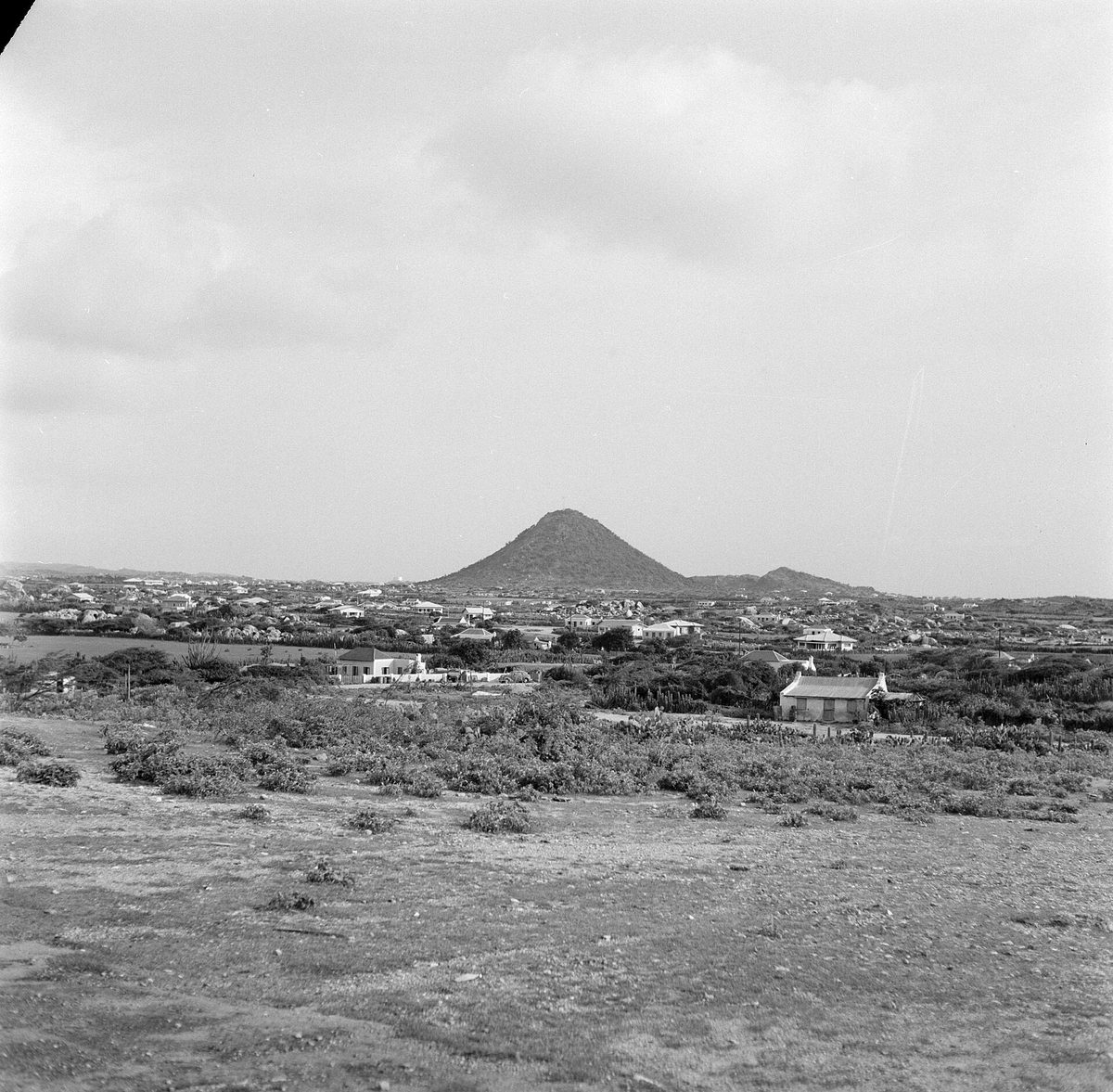
Right beside Casibari stands Hooiberg, the near-perfect cone of a hill that locals nickname the Haystack. It rises about 165 metres and a concrete stairway of roughly 560 steps climbs to the top, where on a clear day the views stretch across the whole island and out toward Venezuela. It is a proper leg-burner in the heat, so save it for a cool morning, but combined with the boulder climb at Casibari it makes a fun, active hour. Even if you do not climb it, Hooiberg is the landmark you will keep seeing from the top of the rock formations.
Ayo and the central interior
We have covered Ayo in depth above, but it is worth repeating that it is the natural partner to Casibari. Around both sites, the central interior, the area around Paradera and Santa Cruz, is classic Aruba cunucu (countryside): cacti, divi-divi trees bent by the trade winds, goats, and brightly painted homes. Driving slowly through it between the two sites is part of the pleasure.
Arikok National Park, the Natural Bridge, and the gold mill ruins
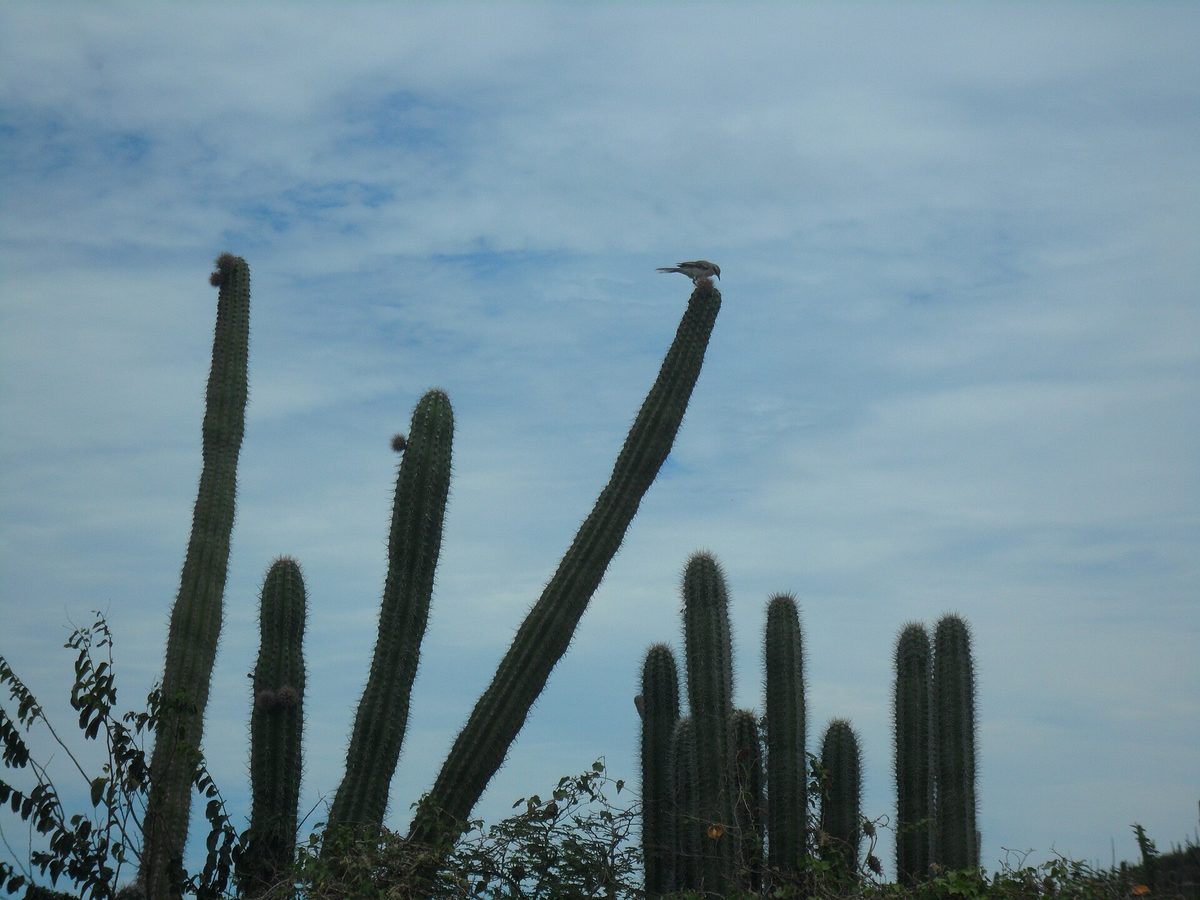
If you want to make a full day of the wild side, the rock formations sit on the way toward Aruba’s rugged northeast coast. Arikok National Park covers nearly a fifth of the island and holds the Natural Pool (Conchi), more caves with petroglyphs and pictographs, and dramatic windward beaches. Nearby are the photogenic Bushiribana gold mill ruins and the collapsed Natural Bridge with its still-standing Baby Bridge. None of this is far in Aruba terms; the whole island is only about 20 miles long, so a central-interior morning at the boulders flows easily into an afternoon of bigger adventures.
Back to the beach
After a hot climb, the reward is obvious: a swim. The west-coast beaches are a short drive away, and there is no better way to wash off the trail dust than floating in that calm turquoise water. Our guide to the best Aruba beaches will point you to the right stretch of sand, whether you want the buzz of Palm Beach or the quiet of Eagle Beach. If you are planning where to base yourself for easy access to both the interior and the coast, our where to stay in Aruba guide helps you choose.
Frequently asked questions
Are the Casibari rock formations free to visit?
Yes. Both the Casibari and Ayo rock formations are completely free to enter, with free parking at each. There are no tickets or gates. The only small cost is an optional restroom donation of around US$1 at Casibari, plus anything you choose to spend at the on-site cafe or gift shop. It is one of the best free things to do on the island.
What are the opening hours of Casibari and Ayo?
Neither site has formal opening hours or staffed gates; they are open-air and accessible during daylight. In practice you visit between roughly sunrise and sunset, since there is no lighting and climbing rocks after dark is unsafe. Aim for early morning or late afternoon to dodge the heat, the midday tour crowds, and harsh light.
What is the difference between Casibari and Ayo rock formations?
Casibari is the more developed site: tonalite boulders with about 50 carved steps to a 360-degree viewpoint, plus a cafe, restrooms, and a gift shop. Ayo is larger, quieter, and less developed, and it is the place to see the ancient Arawak petroglyphs carved into the rock. Casibari wins on views and facilities; Ayo wins on history and atmosphere. They are about two miles apart, so most visitors do both.
How long should I spend at the rock formations?
Allow 30 to 60 minutes at each site, or about 1.5 to 2 hours to comfortably do both including the short drive between them. Add another hour if you also climb Hooiberg next door. They are usually a half-day outing rather than a full day, and they combine well with Arikok National Park or a west-coast beach afterward.
Can you climb the Casibari rock formations?
Yes, and the climb is the highlight. A path of roughly 50 uneven stone steps, plus an optional tighter cave-like passage, leads to the top, where you get sweeping island views. It is manageable for most reasonably mobile visitors, but wear closed shoes with grip, take care on the bare rock, and expect strong wind at the summit. The lower trails stay easy for those who prefer not to climb.
Are the Casibari and Ayo rock formations worth visiting?
Absolutely, especially if you have a rental car. They are free, quick, genuinely unusual, and a complete change of scene from the beaches: giant boulders, a great viewpoint, and centuries-old rock art, all within 20 minutes of the resorts. For first-time visitors who want to understand the real Aruba beyond the sand, the rock formations are an easy yes.
What should I wear to the rock formations?
Closed, sturdy shoes with good grip are essential; the rock can be slippery and the steps are uneven, so skip flip-flops. Bring plenty of water, high-SPF sunscreen, a secure hat, and sunglasses, because there is almost no shade once you start climbing. A little cash is handy for the restroom and cafe at Casibari.
Is the visit suitable for kids and older travellers?
Yes. Kids tend to love scrambling up the steps and squeezing through the cave passage at Casibari, and the sites are compact so families stay together. The base and lower trails are gentle and suitable for older travellers or anyone with mobility concerns, who can still enjoy the boulders and views without doing the full climb. Just supervise children near the higher edges and tight passages.
Final thoughts
Aruba sells itself on beaches, and rightly so, but the Casibari and Ayo rock formations are the stop that makes people fall for the island’s stranger, older character. In a single easy morning you climb a boulder to a 360-degree view, stand in front of rock art carved by the island’s first people, and see a desert interior most beach-only visitors never bother with, all for free. Lace up some real shoes, go early, bring water, and give yourself a couple of unhurried hours. It is one of the most memorable and best-value things you can do in Aruba, and it will change how you see the whole island. If you are mapping out the rest of your trip, our full guide to things to do in Aruba ties the boulders into everything else worth your time.
Photo credits
Images via Wikimedia Commons. Casibari viewpoint — Rarends297 (CC0). Ayo boulders — Ginelly.Q (CC0). Casibari boulders at golden hour — DanielleJWiki (CC BY-SA 4.0). Hooiberg — Willem van de Poll, Dutch National Archives (CC0). Aruba cactus landscape — EgorovaSvetlana (CC BY-SA 4.0).