The booking sites would rather you not dwell on this: the price you pay for an Aruba trip is set by two completely separate clocks. One is when you travel — the calendar week your feet actually hit the sand. The other is when you buy — the day you click “reserve.” Most people obsess over the first and ignore the second — and that second clock, the buying clock, is the real best time to book Aruba vacation lever that almost nobody watches. Airlines and resorts run pricing software (revenue management, in the trade) that nudges fares up as a flight or hotel block fills and quietly cuts them when demand softens or a sale date hits the calendar. Learn how those windows actually move, and you can shave real money off the same trip, in the same room, on the same flight. That is the whole game behind smart booking, and it has surprisingly little to do with luck.
I have booked this island more times than I can count — for myself, for family, for friends who texted me at 11pm asking “is this a good price?” Over the years a few patterns stopped being hunches and started being rules. This guide pulls back the curtain on all of them.
The short answer: when to book Aruba for the best price
For most travelers, book your flights to Aruba about 1–4 months out for off-peak trips, and 3–6 months out for winter, holidays, or Carnival. Book peak and holiday hotel weeks far in advance (often 4–9 months), while quieter low-season stays can sometimes reward booking closer in. Watch the big sale moments — Black Friday, Cyber Monday, Travel Tuesday, and January “wave season” — and always compare current prices before you commit.
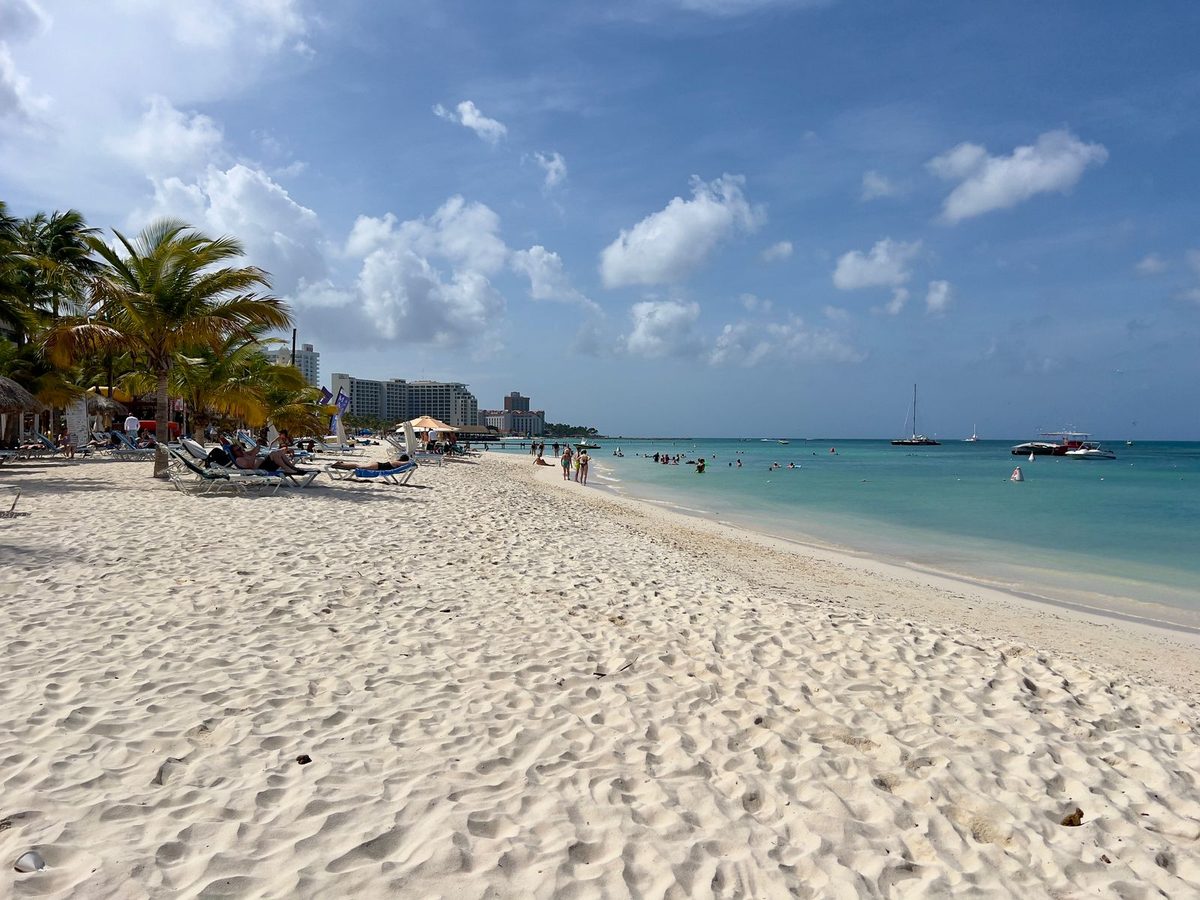
At a glance: ideal booking windows for Aruba
Think of this as the cheat sheet. These are general ranges, not promises — prices move, and you should always check live fares — but they are the windows I aim for.
| What you’re booking | Ideal booking window | Why |
|---|---|---|
| Flights — off-peak (late Apr–early Dec) | ~1–3 months ahead (sweet spot often ~3–6 weeks) | Demand is soft; fares dip closer in and last-minute deals actually appear |
| Flights — peak/winter (mid-Dec–mid-Apr) | ~3–6 months ahead | Seats fill on a hard schedule; waiting almost always costs more, not less |
| Flights — holidays & Carnival | As soon as the schedule opens (often ~5–11 months out) | Limited nonstops sell out; fares only climb as the date nears |
| Hotels & resorts — peak/holiday weeks | ~4–9 months ahead | Top resorts sell out and impose minimum-night stays; early gets the room and the rate |
| Hotels & resorts — low season | 1–3 months ahead, refundable; watch for last-minute drops | Softer demand means some rooms get discounted to fill the calendar |
| All-inclusive & flight+hotel packages | Time to a sale event; lock refundable, then re-shop | Bundled deals swing hardest around promo weeks |
| The deal calendar | Late Nov (Black Friday/Cyber/Travel Tuesday) & Jan “wave season” | The year’s biggest published discounts cluster here |
If you only remember one thing: booking timing and travel timing are different levers, and you pull them differently. The rest of this guide is how.
Booking timing vs. travel timing — the distinction that saves you money
This is the mental model everything else hangs on, so let me make it concrete.
Travel timing is about the season you experience: weather, crowds, water temperature, what is open, how busy the beaches feel. That is a separate decision, and I have written about it at length — if you are still choosing your dates, start with our guide to the best time to visit Aruba, then drill into specifics like Aruba weather by month. Travel timing decides what your trip feels like.
Booking timing is about the price you lock for that experience. And here is the counterintuitive part: the cheapest time to travel and the cheapest time to buy are not the same answer. Aruba in September is genuinely cheaper to visit than Aruba in February — that is travel timing, and our cheapest time to visit Aruba guide breaks down exactly which months cost the least. But when you should click “book” for either of those trips follows its own rules, driven by how airlines and hotels release and price their inventory.
You can mix and match. You can travel in expensive February but book smartly in October and beat the person who waited until January. You can travel in cheap September and still overpay by booking the wrong week or ignoring a refundable rate. Two clocks. Pull both levers and you win twice.
One more reason the distinction matters: it changes your strategy. For a peak-season trip, the dominant risk is that prices rise and inventory disappears — so you book early to lock it. For a low-season trip, the dominant risk flips: you might leave savings on the table by booking too early, because soft demand can push prices down as the date nears. Same destination, opposite playbook, and the difference is entirely about which season you are traveling in versus when you are buying.
When to book flights to Aruba
Flights are the piece that swings the most, and the piece people get wrong most often. There is a persistent myth that prices always drop at the last minute. For a quiet Tuesday in May, sometimes they do. For Christmas week or Carnival, that belief will cost you hundreds. Here is how I think about it.
The booking window: how far ahead to buy
The fare-deal services call it the “Goldilocks window” — not too early, not too late. The rough consensus from people who track airfare for a living: for international trips like Aruba, the sweet spot is often about two to eight months before departure, and for off-peak dates a shorter one-to-three-month window (sometimes as tight as ~3 weeks out) can be ideal. Booking extremely early rarely helps and booking late usually hurts.
Translate that into Aruba seasons:
- Off-peak (roughly late April through early December): demand is soft, so you have room to wait. Booking 1–3 months out is usually fine, and the lowest fares often surface around three to six weeks before departure. This is the one window where genuine last-minute deals do appear — but only because so few people are flying.
- Peak winter (mid-December through mid-April): this is when the rest of the cold world wants Aruba too. Book 3–6 months ahead. Fares climb as seats sell, and the dream of a last-minute winter deal to the Caribbean is mostly a fantasy.
- Holidays and Carnival: Christmas, New Year’s, Presidents’ Day week, and Carnival season (January–March) are special cases — treat them like peak-on-steroids and book as soon as the schedule opens, which for many airlines is around 11 months out. Aruba regulars on the travel forums routinely buy holiday flights the day they’re released, and even then watch the fare climb afterward.
And beware the fare jumps. The deal trackers consistently flag price spikes at the 21-, 14-, and 7-day marks before a flight. If you are anywhere near those thresholds and the price looks reasonable, book it — waiting for a drop inside three weeks is a bet you will usually lose.

Which days to fly (and to shop)
Two levers here, and they are easy wins:
- Fly midweek. Departing Tuesday or Wednesday — and often returning on a Saturday — tends to run noticeably cheaper than Friday/Sunday peak-travel days, frequently on the order of 10–25% less on Caribbean routes. If your schedule has any give, shifting a departure by a day or two is the single easiest saving.
- Be flexible on dates. The more your dates can move, the more a fare calendar can work for you. Even sliding a winter trip by three or four days can dodge a holiday surcharge.
Use fare alerts and the tools that do the watching for you
You do not need to refresh flight searches like it’s a part-time job — that is what alerts are for. Set a price alert for your route and dates (Google Flights, Skyscanner, Hopper, and deal clubs like Going and Dollar Flight Club all do versions of this) and let the email or push notification tell you when the fare moves. A few habits that compound:
- Set alerts for several departure airports. Aruba has nonstops from a dozen-plus US cities, and prices vary wildly between them. Sometimes a cheap hop to Orlando or Fort Lauderdale plus a separate Aruba nonstop beats the “direct” fare from your home airport. The fare clubs call this the alternate-airport trick, and it genuinely works.
- Track a few date sets at once if you’re flexible, so you can pounce on whichever week drops.
- Know your route. Nonstops run from much of the US East Coast, Florida, and a few hubs; from the West Coast you’ll usually connect. Aruba is also part of the Kingdom of the Netherlands, so there are nonstops from Amsterdam. Where you’re starting changes both price and how early you should buy. Our guide to getting to and around Aruba covers the routes and airlines in detail.
When to book hotels and resorts in Aruba
Hotels follow a different logic than flights, and it flips depending on the season — which is exactly why the booking-vs-travel distinction matters so much for lodging.
Peak and holiday weeks: book early, period
For winter, spring break, and especially the Christmas–New Year stretch, Aruba’s best resorts simply sell out. The Palm Beach high-rises and the boutique low-rises near Eagle Beach fill their best rooms months ahead, and top properties impose holiday surcharges and minimum-night stays (a seven-night minimum over Christmas/New Year’s is common). There is no “deal” waiting for you in December if you wait — there’s a sold-out calendar. For these weeks I book 4–9 months out, and for the marquee holiday weeks I treat “as early as the rate is published” as the rule. If you have a specific resort or a specific room category in mind, early booking isn’t about price alone — it’s the only way to guarantee you get it at all. To choose your base, our where to stay in Aruba guide breaks down the neighborhoods and resort zones.
Low season: the one time last-minute can pay off
Here is where hotels invert the flight logic. In the quieter months — roughly late spring through the fall, the same stretch covered in our Aruba in summer guide — softer demand means properties sometimes discount to fill rooms. That’s the window where booking a little closer in, or watching for a price drop, can actually reward you. I still book a refundable rate early to lock a baseline, then keep an eye out: if the same room drops, I rebook at the lower price and cancel the old reservation. You get the security of a confirmed room and the upside of a possible discount. (More on that rebooking move below — it’s one of the most underused tricks in travel.)

A quick reality check on hotel lead times
Most Aruba hotels open their booking calendars roughly 9–12 months in advance, a touch shorter than airlines. Loyal repeat visitors — and Aruba has a famously high return rate — often rebook their favorite resort for next year before they even fly home, especially at smaller adults-oriented properties where rooms are limited. If you’ve found “your” place, that’s not overkill; it’s how you keep your spot.
All-inclusive resorts and flight + hotel packages: timing the bundle
Packages are their own animal, and timing them well can beat booking the pieces separately — or lose to it, depending on when you buy.
When a package wins
Bundling a flight and hotel (and sometimes transfers) through one booking can save money versus buying them separately — the big online travel agencies routinely advertise double-digit savings on bundles, and packaging also simplifies one of travel’s quiet headaches by putting your flight and room on a single itinerary. The savings are real most often when you time the bundle to a sale (more on the deal calendar next) and when you’d otherwise pay near-rack rates for both pieces.
When booking separately wins
If you can pair a fare-alert flight deal with a refundable hotel rate you snagged during a promo, separate booking sometimes beats the bundle — and it keeps each piece independently cancelable. It also lets you use airline miles or hotel points on one side. The honest answer is to price it both ways for your exact dates before committing; neither is universally cheaper.
All-inclusive timing specifically
True all-inclusive resorts (Aruba has a growing handful — see our rundown of Aruba all-inclusive resorts) tend to publish their steepest discounts around the same sale moments as everyone else, and they reward early booking for peak weeks just like standard hotels. Because the up-front number is bigger, a percentage discount on an all-inclusive is a larger dollar saving — which is exactly why timing one to a Black Friday or wave-season promo can be so worth it. If an all-inclusive is your plan, set a target resort, watch its rate, and pounce when a sale lands.
The Aruba deal calendar: when the real discounts drop
If booking timing is a game, these are the dates on the board. The biggest published discounts of the year cluster into a few predictable windows. Mark them.
Black Friday, Cyber Monday & Travel Tuesday (late November)
This is the single richest stretch for travel deals, and Aruba resorts participate heavily. In recent years, hotels and rental companies on the island have rolled out offers in the range of up to 25% off (occasionally headline “up to 50%” on packages), often bookable in the late-November window for travel spread across the following year. The Travel Tuesday after Cyber Monday has become its own event specifically for trips. The catch: these deals usually require booking during the promo window for travel within a defined range, so you need your dates roughly chosen before the sale hits. If you know you’re going next year, this is often the best single time to lock it.
January “wave season” (January–March)
The travel industry’s “wave season” runs in the first months of the year, when cruise lines and resorts roll out their splashiest promotions to capture people booking the year’s vacations. For Aruba, that means resort specials, package deals, and added perks (resort credits, free nights, spa credits) landing in January and February. If you missed Black Friday, wave season is your second big bite — and it lines up nicely with booking a peak-following spring or summer trip a few months out.
Flash sales and airline promotions (year-round)
Beyond the two big tentpoles, airlines and travel agencies run flash sales throughout the year — often short, sometimes tied to holidays or shoulder-season pushes, and frequently surfacing midweek when carriers release new fare buckets. This is precisely where fare alerts earn their keep: you can’t predict a flash sale, but an alert catches it for you. Sign up for a couple of airline newsletters for routes you’d fly, and let the deal clubs do the watching.

Best time to book Aruba vacation deals: refundable rates and price-drop rebooking
Everything above assumes you’re trying to time a single perfect purchase. But the smartest bookers don’t try to be perfect — they build in do-overs. This is the part that turns “I think this is a good price” into “I can’t lose much if it isn’t.”
Book refundable, then re-shop
My default move for hotels, and for flights when the math allows, is to book a refundable or free-cancellation rate as early as I’m confident about my dates. That locks in availability and a baseline price. Then I keep watching. If the price drops — and in the low season it often does — I rebook at the lower rate and cancel the original. You capture the downside protection of booking early and the upside of a later discount. The only cost is a few minutes of attention.
The 24-hour rule on flights
For flights booked directly with a US airline, you generally get a 24-hour window to cancel or change without penalty (when you book at least a week before departure). That’s a free look: book the fare you like, then spend a day double-checking nothing better pops up. It removes the “but what if it drops tomorrow?” paralysis that makes people wait too long and miss the good price entirely.
Travel insurance and “cancel for any reason”
Because Aruba’s low season overlaps the broader Atlantic hurricane season, some travelers want a safety net — even though Aruba sits outside the main hurricane belt and rarely takes a direct hit (our Aruba hurricane season guide explains why the risk here is genuinely low). Standard travel insurance can cover trip cancellation for covered reasons; a pricier “cancel for any reason” upgrade gives you the most flexibility. Whether it’s worth it depends on how non-refundable your bookings are and how much is at stake. The more of your trip you’ve locked as non-refundable far in advance, the more an insurance policy earns its cost. If you booked everything refundable, you may not need much at all.
Booking for holidays and peak season: a special playbook
If your trip lands on Christmas, New Year’s, Presidents’ Day week, spring break, or Carnival, throw out the “wait for a deal” instinct entirely. These weeks run on scarcity, not sales.
- Book flights the moment the schedule opens. Many airlines load schedules about 11 months out. For holiday weeks, the cheapest seats are usually the first ones sold; the fare only climbs from there. Set a reminder for when your route’s calendar opens.
- Lock the hotel just as early, and accept the minimum-night stays and surcharges as the cost of going at the most popular time. If you have a specific resort in mind, this is non-negotiable — popular properties sell their holiday inventory first.
- Consider traveling on the actual holiday. Flying on Christmas Day or New Year’s Day itself is often cheaper than the days bracketing it, since fewer people want to be in the air. It’s a small flexibility that can unlock a meaningfully better fare.
- If you’re set on winter sun, read up on what those months are actually like first — our Aruba in winter guide covers the peak-season experience, and Aruba in December digs into the busiest, priciest, and most festive month of all.
Peak season is the clearest case of the two-clocks principle: travel timing is expensive (high season), so booking timing has to be aggressive (book early) to keep the damage down. You can’t make February cheap, but you can avoid making it more expensive than it has to be.
Mistakes to avoid when booking an Aruba trip
Most overpaying comes down to a handful of avoidable errors. I’ve made several of these myself.
- Waiting for a “last-minute” deal in peak season. It’s the number-one money loser. Off-peak, fine — but for winter and holidays, waiting almost guarantees you pay more, if seats are even left.
- Booking too early in the low season. The opposite error. Locking a non-refundable summer room nine months out can mean missing a later discount. Book refundable instead.
- Ignoring midweek flights. Defaulting to a Friday-out, Sunday-back trip can cost 10–25% more than a Tuesday/Wednesday shuffle for no real benefit.
- Only checking your home airport. Fares to Aruba vary a lot by departure city. Not comparing a couple of nearby airports leaves money on the table.
- Booking non-refundable to save a few dollars, then losing the right to rebook. The refundable rate is usually a small premium that buys you the price-drop do-over. Often worth it.
- Skipping fare alerts. Trying to time the market by manually checking is exhausting and worse than letting software watch for you.
- Forgetting the total trip cost. The flight and room are the headline, but transfers, dining, and activities add up — our Aruba vacation cost guide lays out a realistic budget so the booking price isn’t a surprise. And once dates are set, our Aruba travel tips and a sample Aruba itinerary help you plan the rest.
Frequently Asked Questions
How far in advance should I book a trip to Aruba?
It depends on when you’re traveling. For off-peak trips (late spring through fall), booking flights one to three months ahead is usually fine. For winter, holidays, or Carnival, book three to six months out — and lock holiday flights and top resorts as soon as schedules open, often around 11 months ahead, since they sell out and only get pricier.
When is the cheapest time to book flights to Aruba?
For international routes like Aruba, the “Goldilocks window” is often two to eight months before departure, and for quiet off-peak dates the lowest fares frequently surface around three to six weeks out. Flying midweek (Tuesday or Wednesday) and setting fare alerts both help. Avoid waiting inside the final three weeks, when prices tend to jump.
What’s the difference between when to book and when to travel?
They’re two separate decisions. Travel timing is the season you experience — weather, crowds, prices for that period. Booking timing is the day you actually purchase, which is driven by how airlines and hotels release and price inventory. The cheapest month to visit and the best day to buy aren’t the same; optimizing both saves you the most.
Are Aruba vacation packages cheaper than booking flight and hotel separately?
Sometimes. Bundling a flight and hotel can save money — agencies often advertise double-digit savings — especially when you time the bundle to a sale. But pairing a fare-alert flight deal with a promo hotel rate can beat the bundle and keeps each piece cancelable. Price it both ways for your exact dates before committing; neither is always cheaper.
When do the best Aruba travel deals come out?
The biggest published discounts cluster around late-November Black Friday, Cyber Monday, and Travel Tuesday, then again during January–March “wave season,” when resorts and cruise lines roll out their splashiest promotions. Airlines also run flash sales year-round, often midweek. These deals usually require booking during the promo window, so have your dates roughly chosen beforehand.
Should I book a refundable rate for Aruba?
Usually yes, especially for hotels. A refundable or free-cancellation rate lets you lock availability early, then rebook at a lower price if it drops — capturing both the security of booking early and the upside of a later discount. The small premium over a non-refundable rate often pays for itself, particularly in the low season when prices can soften.
Can I find last-minute deals to Aruba?
In the off-peak months — roughly late spring through fall — yes, genuine last-minute deals do appear because demand is soft and properties discount to fill rooms. In peak winter and over holidays, no: inventory sells out and prices climb as the date nears, so last-minute almost always means more expensive (if anything’s left at all).
Do flight prices to Aruba drop the closer you get to the date?
Only in the off-peak season, and not reliably. For quiet dates, fares can dip a few weeks out. For peak winter, holidays, and Carnival, prices rise as departure approaches, with notable jumps around the 21-, 14-, and 7-day marks. Don’t bank on a drop unless you’re traveling off-peak and can afford to gamble.
Final thoughts
The trip you want is mostly priced by two clocks, and almost everyone only watches one. Decide when to go based on the experience you want — sun, crowds, budget, the vibe of the season. Then decide when to buy on its own terms: book peak and holidays early, give yourself room to wait in the low season, fly midweek, set fare alerts, book refundable so you can rebook on a drop, and circle Black Friday and wave season on your calendar. None of it requires luck. It requires knowing the windows — and now you do. Compare current prices for your dates, pull both levers, and go enjoy the island.
By the ArubaTourism.org team — Last updated June 2026. We’re a team of Aruba regulars who book this island constantly and write the guides we wish we’d had. Prices, fares, and promotions change fast, so always confirm live pricing before you book.
Photo credits
All photos are used under their respective free licenses via Wikimedia Commons. Thank you to the photographers: