One number quietly explains Aruba’s spot on so many shortlists: across the whole year, the average daytime high barely moves. It sits in a tight band of roughly 84–90°F (29–32°C), and the semi-arid island collects only about 18–20 inches of rain a year — far less than the rest of the Caribbean. That is why a careful look at Aruba weather by month is less about dodging washouts and more about reading subtle, useful differences in wind, rain timing, crowds, and price. Aruba is closer in climate to a desert coast than a rainforest, so the question is never “will it be nice?” but “which kind of nice do you want?”
I have walked Eagle Beach in January with a windbreaker zipped against a brisk northeast breeze, and I have stood on the same sand in July sweating in stillness at noon. The thermometer said almost the same thing both times. The experience did not. That gap — small on paper, real on the ground — is what this guide is built to map.
The short answer: Aruba is warm, sunny, and breezy year-round, with highs near 84–90°F and water around 79–84°F every month. The dry, breezy “high season” runs January through April; the hottest, calmest stretch is July through September; and the only meaningfully wetter window is roughly October through December, when short showers (not all-day rain) pick up. Aruba sits at the far southern edge of the hurricane belt, so direct strikes are rare. There is no bad month — only trade-offs.
By the ArubaTourism.org team — Last updated June 2026.
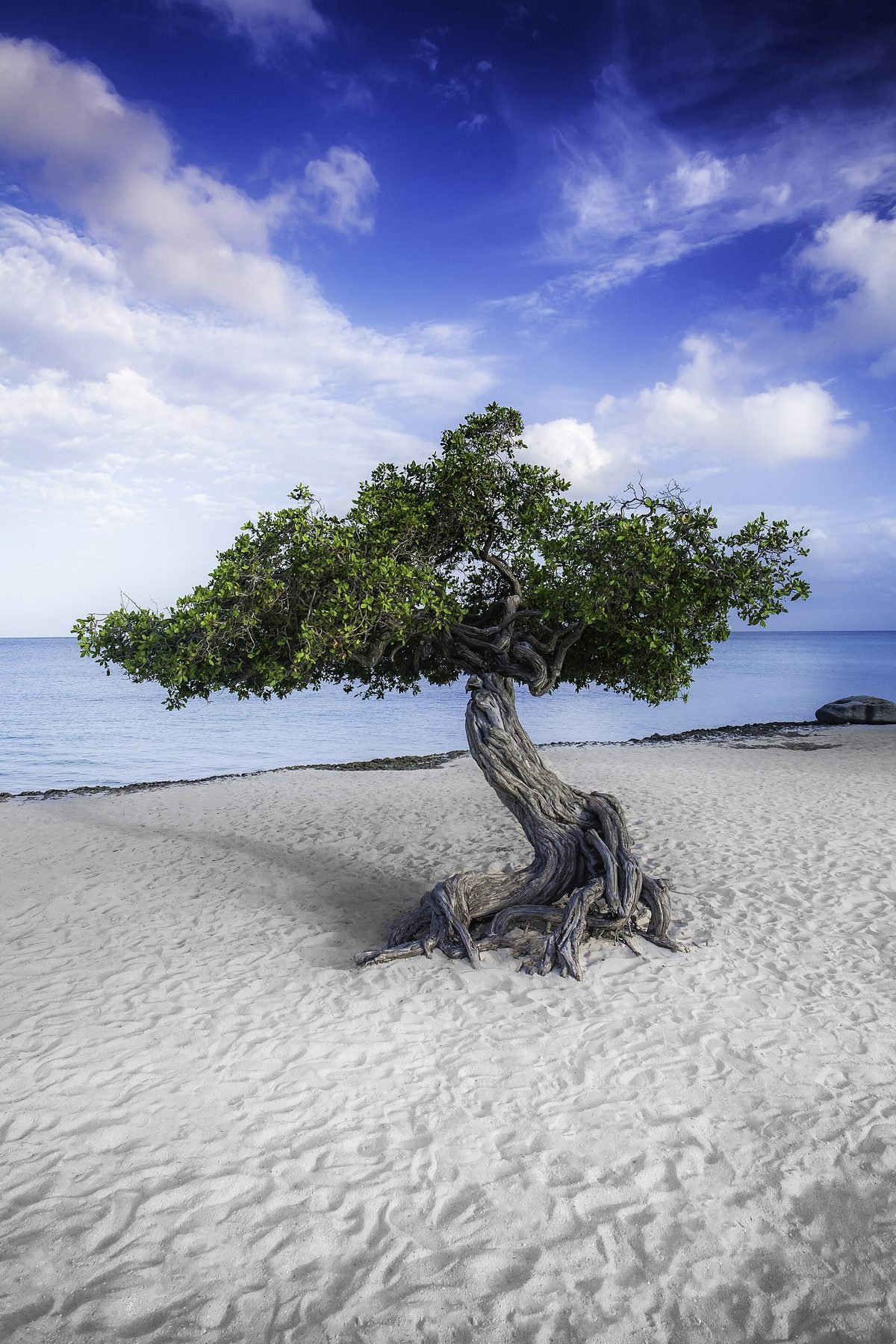
Aruba weather by month: the at-a-glance table
Before we walk through the year, here is the whole thing on one screen. Temperatures are typical daytime highs and overnight lows; “rain/wet days” is the approximate monthly total and how many days see measurable rain; crowds and notes reflect what you actually feel on the island. Treat these as long-term averages — always check a current forecast in the week before you fly, because any single year can run a little wetter or drier.
If you want the verdict rather than the raw numbers, see my pick for the best month of the year to go.
| Month | Avg High / Low (°F) | Rain / wet days | Crowds | Notes |
|---|---|---|---|---|
| January | 85° / 76° | ~1.8 in / 11 days | Very high | Coolest, breeziest month; tail end of the wetter season; peak prices |
| February | 85° / 76° | ~0.8 in / 4 days | Very high | Drying out fast; Carnival season; sunny and windy |
| March | 86° / 76° | ~0.4 in / 2 days | High | One of the driest, sunniest months; superb visibility |
| April | 88° / 77° | ~0.4 in / 2 days | High → moderate | Dry and bright; prices ease after Easter |
| May | 89° / 78° | ~0.6 in / 2 days | Moderate | Shoulder season value; strong trade winds; great for water sports |
| June | 90° / 79° | ~0.6 in / 3 days | Moderate | Hot, dry, windy; excellent windsurfing and kitesurfing |
| July | 90° / 79° | ~1.2 in / 4 days | Moderate → high | Hottest month with August; family travel peak; warm sea |
| August | 91° / 79° | ~0.8 in / 3 days | Moderate | Hottest, with lighter wind some days; warm water for diving |
| September | 90° / 79° | ~1.8 in / 3 days | Low | Quietest, often cheapest month; calmest sea; warmest water |
| October | 89° / 78° | ~3.0 in / 7 days | Low → moderate | Wetter season begins; short showers; great resort deals |
| November | 87° / 78° | ~3.3 in / 10 days | Moderate | Wettest month, but rain is brief; lighter winds |
| December | 86° / 77° | ~3.1 in / 11 days | High → very high | Festive; some showers early; prices climb toward the holidays |
A few patterns jump out of that grid. The high column never strays far from the mid-to-high 80s. The rain column is the real story: five months barely register any rain at all, while October, November, and December carry most of the year’s modest total. And the crowd column moves almost independently of the weather — January is packed because of northern winters, not because it is Aruba’s nicest month. Keep those three columns in mind and the rest of this guide is just detail.
Aruba’s two seasons: dry and “less dry”
Forget the four seasons you grew up with. Aruba really has two, and even those are gentle. Meteorologists call the climate tropical semi-arid: the island sits at about 12° north latitude, roughly 18 miles off the coast of Venezuela, in the rain shadow of the steady trade winds. The vegetation tells the story before any chart does — you will see cacti, aloe, and wind-sculpted divi-divi trees, not jungle.
The dry season (roughly January–September)
For most of the year, rain is almost an afterthought. From February through about September, measurable rain falls only a handful of days each month, and when it does come it is usually a brief shower that blows through in minutes. March and April are the driest, with totals under half an inch and skies that stay a deep, cloudless blue. This long dry stretch overlaps with the strongest trade winds, which is why the island feels so comfortable despite temperatures that would be oppressive somewhere humid and still.
The wetter season (roughly October–December, sometimes into January)
Aruba’s “rainy season” would be a punchline almost anywhere else in the Caribbean. The wettest months — October, November, and December — each average only around 3 inches of rain, and that rain tends to arrive as short, warm downpours, often overnight or in quick afternoon bursts, rather than gray all-day systems. You will still get plenty of sun on a November day; you just want a backup idea for the odd hour when the sky opens. The wetter pattern is driven by the northeast trade winds, which turn slightly more humid and occasionally unstable late in the year. If you want the full picture of what that looks like on the ground, the parent guide to the best time to visit Aruba breaks the seasons down against crowds and prices in more detail.
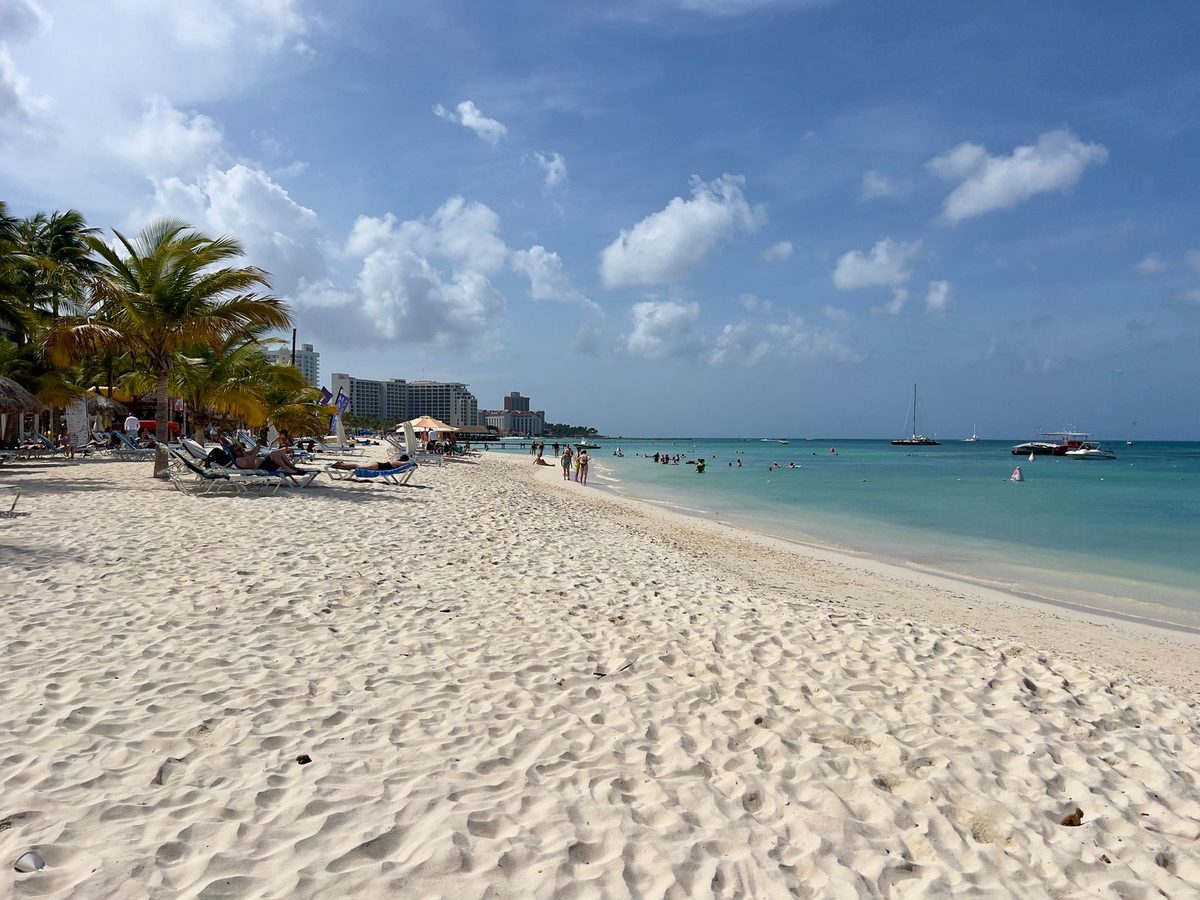
Month by month through the dry season: January to April
January — cool, breezy, and busy
January is the closest Aruba comes to feeling “fresh.” Highs sit around 85°F, overnight lows dip to a comfortable 76°F, and the northeast trade winds are at their most assertive — this is the one month I sometimes want a light layer for a windy dinner by the water. It is also the tail of the wetter season, so you might catch a passing shower, especially early in the month. None of that dents the crowds: January is peak season, with northerners fleeing winter, so beaches, restaurants, and prices all run hot. If you are pricing a trip, our breakdown of Aruba vacation costs shows just how much that January premium adds up to.
February — Carnival, sun, and wind
February is when the island visibly dries out. Rain days drop to a handful, the sun is relentless in the best way, and the trade winds keep the heat honest. It is also Carnival season, so Oranjestad and San Nicolas fill with music, color, and late nights — arguably the most fun time to feel Aruba’s culture, and a reason to book early because hotels know it. Weather-wise you are nearly guaranteed bright, breezy beach days. If festivals are your thing, pair this month with our look at things to do in Aruba to build the trip around the parades.
March — arguably the sweet spot
If someone forced me to pick one month for classic Aruba weather, I would lean hard toward March. Rainfall is essentially nil — we are talking a couple of wet days all month — humidity is moderate, the wind is steady but not punishing, and the underwater visibility is superb. That last point matters more than people expect: clear, calm-enough water makes March and April some of the best weeks of the year for snorkeling and diving. Spend a morning at one of the best beaches in Aruba for swimming and you will see why divers and families both quietly love early spring here.
April — dry, bright, and a little quieter
April keeps March’s near-perfect dry weather but nudges the thermometer up a degree or two, with highs around 88°F. The meaningful change is off the beach: once Easter passes, the high-season crush starts to loosen and prices soften, which makes mid-to-late April one of my favorite value windows that still delivers bone-dry, sunny days. It is an ideal month for couples and for unhurried sightseeing — a good time to rent a vehicle and explore, which our guide to getting to and around Aruba can help you plan.
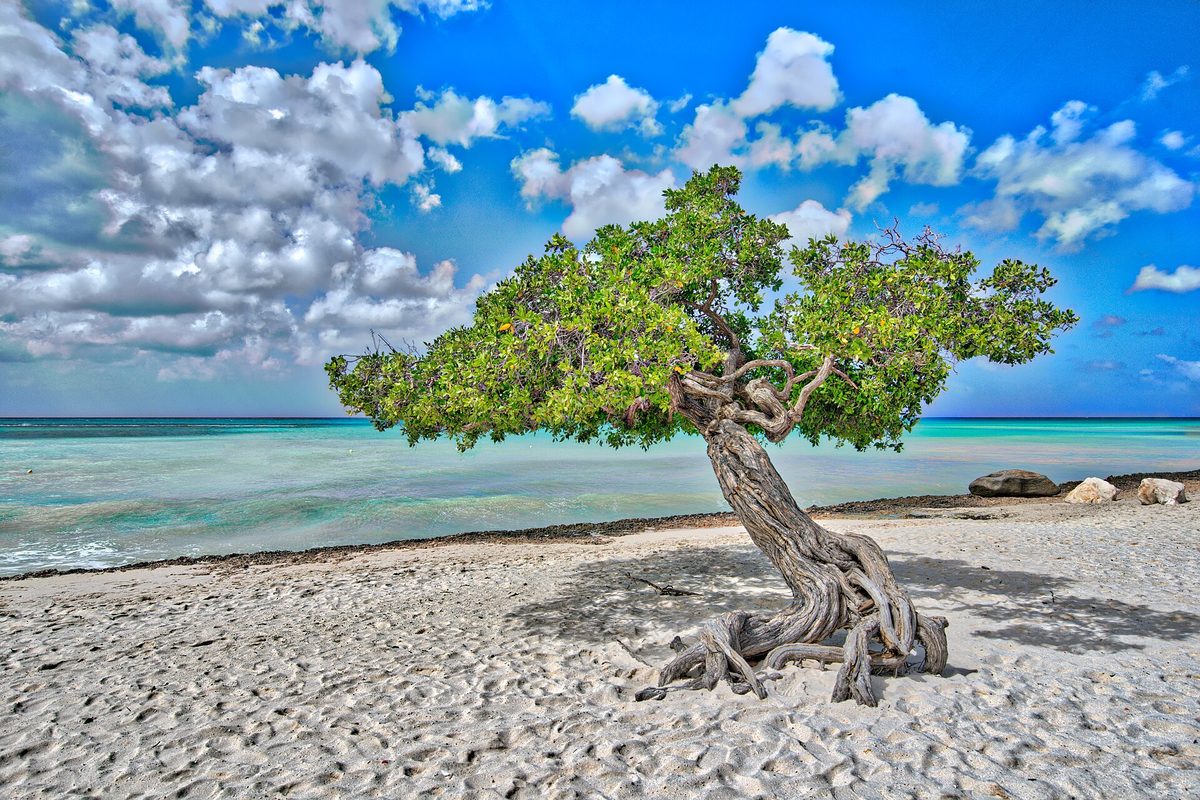
Month by month through summer and fall: May to September
May — the value sweet spot with a stiff breeze
May is where the savvy travelers start showing up. The weather is still firmly dry, highs climb to about 89°F, and crucially the trade winds are roaring — late spring into summer is the windiest stretch of the year. That wind is a gift in two directions: it keeps the heat comfortable on the beach, and it turns Aruba’s southwest coast into a world-class playground for windsurfers and kitesurfers. Prices have eased out of high season, so May often delivers the best weather-to-cost ratio of the whole calendar. It is a brilliant month to try the island’s water sports, from a first windsurfing lesson to a sunset catamaran.
June — hot, dry, and reliably sunny
June opens the summer in earnest. Daytime highs reach about 90°F, rain stays very low, and the sky is dependable. The trade winds are still strong, which is the only reason a 90-degree afternoon feels like a beach day rather than a sauna. School-holiday travel hasn’t fully peaked yet in early June, so you can still find decent rates while enjoying essentially guaranteed sun. It is a fine month for families easing into summer travel — our guide to Aruba with kids has ideas for keeping younger travelers happy when the midday sun is at full strength.
July — peak heat, peak family season
July ties August as the hottest month, with highs nudging 90–91°F and the sea warming to a bath-like 82–83°F. You will notice the wind eases slightly compared with spring, so midday can feel genuinely hot — plan beach time for mornings and late afternoons, and keep the shade and water bottles close. This is prime family-vacation season, so Palm Beach in particular gets lively. The payoff is long, sun-drenched days and warm water that makes swimming and snorkeling effortless. If a July trip is on the table, a structured Aruba itinerary helps you front-load activities into the cooler hours.
August — the warmest water of the summer
August is, by a hair, the warmest month, and some days the trade winds take a breather, which is when the heat is most noticeable. But the flip side is glorious: the calmest seas of late summer and the warmest water of the year so far make August a standout for diving, snorkeling, and just floating. Crowds are a touch lighter than July in spots, and you are still well clear of any real rain. Bring strong sun protection and lean into early starts. The sheltered, clear coves on the northwest coast are ideal in this weather — the kind of calm, glassy water you will find at Palm Beach and the bays just north of it.
September — the island’s quiet, warm secret
September is the month locals sometimes hope you won’t discover. It is the quietest, often the cheapest time to visit, the sea is at its warmest and calmest, and rain is still modest — a few wet days, mostly brief. The trade winds are at their lightest of the year, so it is the least breezy month, meaning more heat but also the glassiest water for snorkeling and paddleboarding. For couples chasing value and serenity, September is hard to beat; it is one of the strongest months on our Aruba honeymoon shortlist precisely because you get warm water, low crowds, and soft prices all at once.
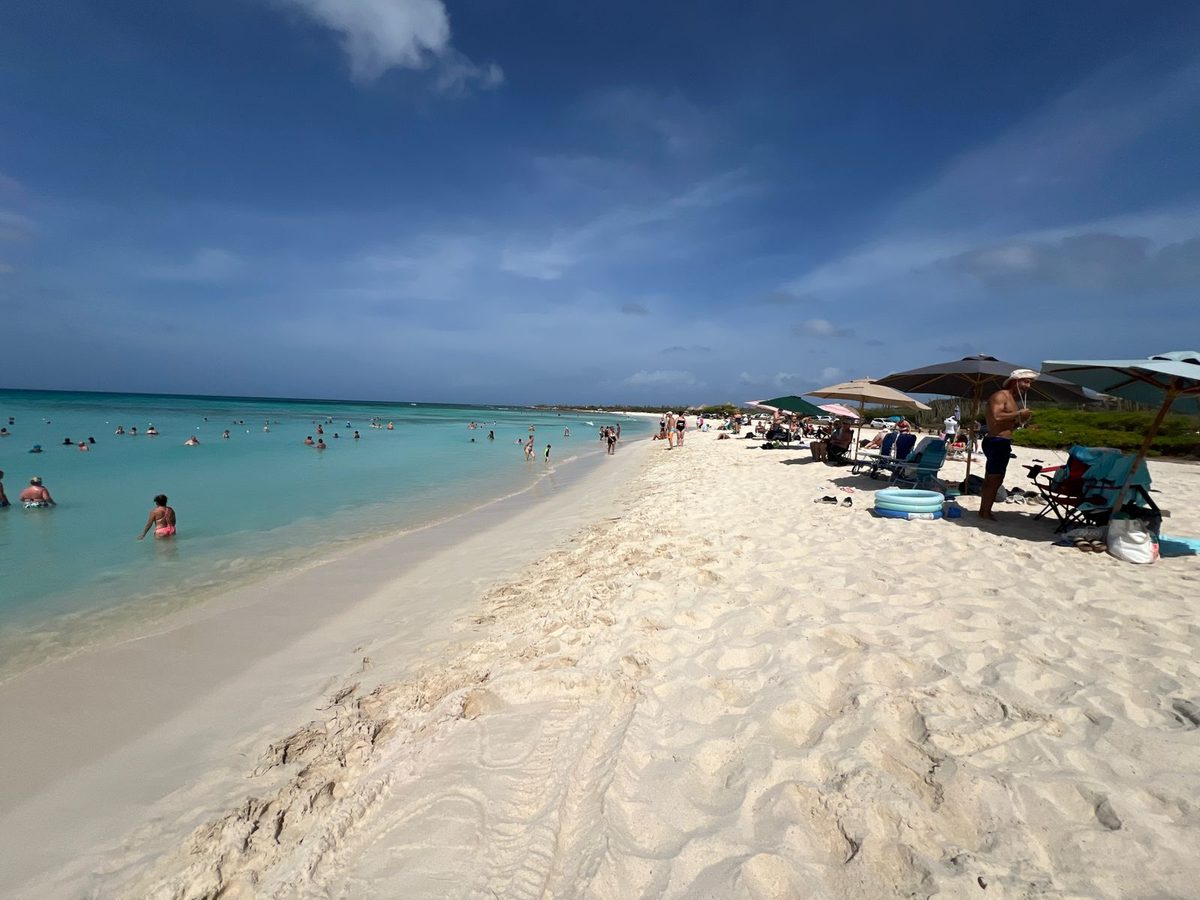
Month by month through the wetter season: October to December
October — the rain (gently) returns
October marks the shift into the wetter pattern, but keep the word “wetter” in perspective: we are talking about an average of roughly 3 inches across the month, delivered as short showers rather than gray days. Highs hold around 89°F, the water stays warm, and crowds remain low — which means October serves up some of the best resort and flight deals of the year for travelers who don’t mind the occasional passing cloud. Pack a light rain layer, keep a backup indoor plan, and you will still bank plenty of sun. It is a good month to explore inland, where the landscape comes alive after a little rain; Arikok National Park is especially rewarding in this season.
November — the wettest month, still mostly sunny
November is statistically Aruba’s wettest month, with around 3.3 inches of rain over roughly ten days. Read that carefully: ten days with some rain still leaves about two-thirds of the month dry, and the rain itself is typically brief and warm. Winds are lighter now, temperatures are pleasant in the upper 80s, and the shoulder-season value is excellent. I would happily book November and simply plan around the possibility of a wet hour here and there. It is a fine time to base yourself somewhere with good on-site options for a rainy spell — our guide to where to stay in Aruba can help you match a neighborhood to that strategy.
December — festive, warm, and filling up
December threads two stories. Early in the month you may still catch the tail of the wetter pattern — some showers, lingering humidity — but the rain eases as the month goes on, highs sit around 86°F, and the holidays bring a festive buzz to the whole island. The catch is demand: from roughly mid-December through New Year, prices and crowds spike to their annual peak as the high season kicks off. If you want the holiday atmosphere, book very early. For a sense of the celebrations and after-dark scene, our overview of things to do in Aruba covers the seasonal events worth building around.
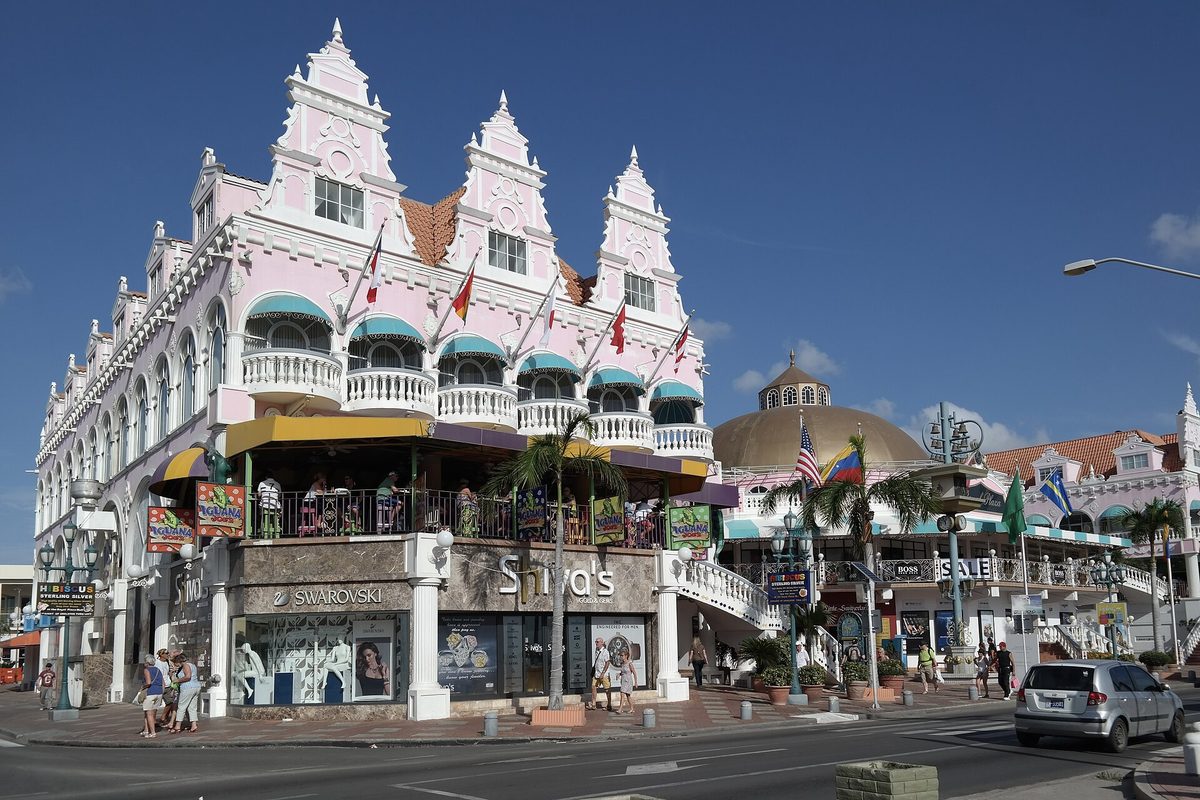
The trade winds: Aruba’s built-in air conditioning
If you remember one thing about Aruba’s weather beyond the numbers, make it the wind. The near-constant trade winds are the single biggest reason the island feels so livable in heat that would flatten you elsewhere. They blow from the east-northeast for most of the year and stiffen from the east-southeast in the dry months, averaging somewhere around 15–20 mph and often gusting higher. Those winds are why the divi-divi trees all lean to the southwest like permanently combed hair — a living wind gauge you will see across the island.
The practical upshot: the wind is strongest from roughly February through August (peaking in spring and early summer) and lightest in September through November. Strong wind means cooler-feeling beach days and prime conditions for windsurfing, kitesurfing, and sailing — the southwest coast near Fisherman’s Huts is famous for it. Lighter wind, mainly in early fall, means hotter afternoons but glassier water for snorkeling and diving. There is a small catch for sun worshippers: that lovely breeze quietly accelerates sunburn and dehydration by keeping your skin cool while the UV keeps working, so reapply sunscreen more often than you think you need to and drink more water than feels necessary.
Water temperature: warm enough to swim every single month
Here is the part beach lovers care about most, and it is delightfully simple: the sea around Aruba is swimmable all year. Surface water temperature ranges from about 79°F (roughly 26°C) in the cooler January-to-March window up to about 83–84°F (around 28–29°C) from September into November. There is no month when you will hesitate to get in; even “cool” here would count as warm in most of the world.
If bath-warm water is your priority — for long snorkel sessions, for nervous swimmers, for kids — aim for late summer and early fall, when both the water temperature and the calm, low-wind conditions peak. The sheltered western and southwestern beaches stay the calmest and clearest; the windward east coast is dramatic but has strong currents and is generally not for casual swimming. For specifics on which shorelines are gentlest, our roundup of the best Aruba beaches sorts them by what each one is actually good for.
Hurricanes: why Aruba sits (almost) outside the belt
This is the question that makes nervous planners exhale. Aruba lies at about 12° north latitude, on the far southern edge of the Atlantic hurricane belt, and that geography is its quiet superpower. The vast majority of Caribbean hurricanes track well to the north, which is why a direct hurricane strike on Aruba is genuinely rare — the island can go decades without one. The Atlantic hurricane season officially runs June 1 through November 30, with peak activity from August into October, but Aruba’s position means most seasons pass with nothing more than the occasional swell, a gray day, or a stretch of unusually still, humid air as a distant storm pulls the trade winds away.
“Rare” is not “never,” and honesty matters here. Aruba has felt the edges of named systems over the years — storms like Ivan (2004), Felix (2007), and Omar (2008) brought wind, rain, or rough seas without making a classic direct hit. The realistic risk for a traveler is not a catastrophic strike but a day or two of disrupted weather during the August–October window. If you are traveling in those months, it is worth choosing a flexible fare and glancing at the National Hurricane Center’s outlook in the days before you fly. For most visitors, Aruba remains one of the most weather-reliable islands in the entire Caribbean — a big part of why it anchors so many all-inclusive resort vacations that people book months in advance with confidence.
Best months for weather vs. best months for value
Because the weather is so consistent, the smartest way to choose your dates is to weigh climate against crowds and cost. Here is how I think about it:
- Best all-around weather: January through April. Dry, sunny, breezy, low humidity. The trade-off is peak (or near-peak) prices and the biggest crowds, especially around the holidays and Carnival.
- Best value with still-excellent weather: May, June, and September. You keep the dry, sunny days (or, in September, the warmest, calmest sea) while prices and crowds drop noticeably. May and June are my top picks for the weather-to-cost ratio.
- Best deals overall: September through early November. This is the low season, with the softest prices of the year. You accept a higher chance of a passing shower (and, in fall, a small hurricane-season caveat) in exchange for real savings and quiet beaches.
- Best for water sports: May through August, when the trade winds are strongest for windsurfing and kitesurfing — though for warm, calm snorkeling water, flip to August–September.
- Best for festivals: February for Carnival, and December for the holiday season — both lively, both pricier.
In other words: if money is no object and you want the most dependable sunshine, come in late winter or early spring. If you want nearly the same weather for meaningfully less, target May, June, or September. And if your priority is the lowest possible price, the early-fall shoulder is your friend, as long as you pack a little flexibility along with the sunscreen. The full best time to visit Aruba guide layers in events and booking timing if you want to optimize even further.
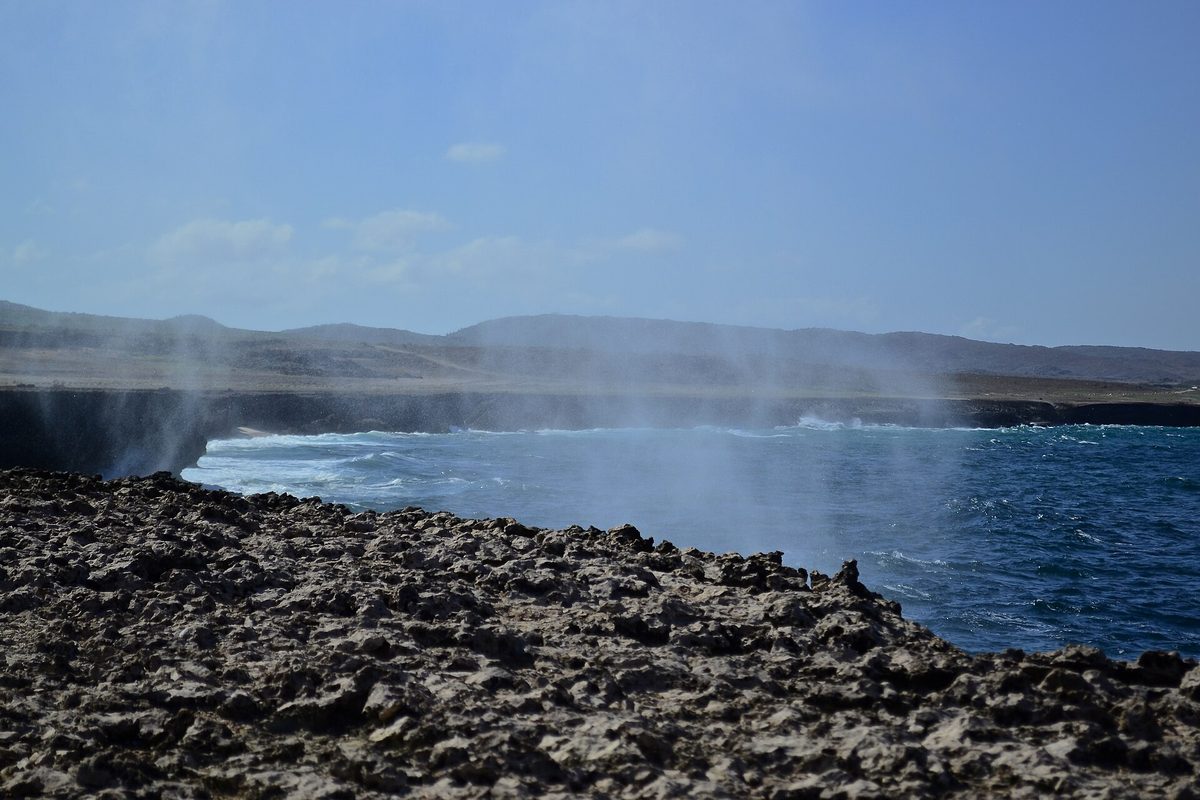
What to pack for Aruba’s weather, any month
Because the climate barely shifts, your packing list barely shifts either — with a couple of seasonal tweaks. Here is the core kit that works in any month:
- Lightweight, breathable clothing in cotton or linen — it is warm year-round, and you will live in shorts, sundresses, and swimwear.
- Serious sun protection: high-SPF, water-resistant, reef-safe sunscreen, a hat, and sunglasses. The trade winds mask how strong the equatorial sun is, so people burn here without realizing it. Reapply often.
- A light layer for the evening or the wind — a thin sweater or windbreaker is genuinely useful for breezy nights, especially December through March when the trade winds are briskest.
- Reef-safe gear: water shoes and your own snorkel mask if you have one; the water is swim-ready every month.
- A compact rain layer if you are traveling October through December — nothing heavy, just something to wait out a 15-minute shower.
- Reusable water bottle: Aruba’s tap water is desalinated and excellent, and the dry, windy air dehydrates you faster than you expect.
That is genuinely it. There is no cold-weather contingency, no monsoon gear, no “in case it turns” wardrobe. The consistency that makes Aruba’s weather so easy to plan around also makes it one of the easiest Caribbean islands to pack for. For more on the practical side of a trip — money, tipping, getting around — our Aruba vacation cost guide and the Aruba excursions roundup round out the planning.
Frequently Asked Questions
What is the best month to understand Aruba weather by month for planning a trip?
For the most dependable weather, January through April is the gold standard — dry, sunny, breezy, and comfortable, though crowded and pricey. If you want nearly the same conditions for less money, May, June, or September are excellent. There is no truly bad month; you are really choosing between peak weather, peak value, or the quietest beaches.
Does Aruba have a rainy season?
Yes, but it is mild. The wetter season runs roughly October through December, sometimes lingering into January. Even then, the wettest month (November) averages only about 3.3 inches over ten days, and the rain usually comes as short, warm showers rather than all-day downpours. You will still get plenty of sunshine on a typical “rainy season” day.
What is the hottest month in Aruba?
July and August are the hottest, with daytime highs around 90–91°F (32–33°C). August edges out July by a hair and tends to have lighter winds on some days, which makes the heat more noticeable. The trade winds keep even these months feeling manageable on the beach, especially in the mornings and late afternoons.
What is the coolest month in Aruba?
January is the coolest, though “cool” is relative — highs still reach about 85°F with overnight lows near 76°F. What makes January feel fresh is the brisk northeast trade wind, which is at its strongest then. It is the one time you might want a light layer for a windy evening dinner by the water.
Does Aruba get hurricanes?
Very rarely. Aruba sits at about 12°N, on the far southern edge of the hurricane belt, so direct strikes are uncommon and the island can go decades without one. During the June–November season it may feel the distant effects of a passing storm — some swell, a gray day, or unusually still air — but a damaging direct hit is unlikely.
Is Aruba windy all year?
Yes. The trade winds blow nearly constantly, averaging around 15–20 mph. They are strongest from about February through August and lightest from September through November. That steady breeze is Aruba’s natural air conditioning — it is the main reason the island feels comfortable even when the thermometer reads 90°F.
What is the water temperature in Aruba by month?
The sea is swimmable every month. Surface temperatures range from about 79°F (26°C) in the January-to-March window up to roughly 83–84°F (28–29°C) from September into November. For the warmest, calmest water — ideal for snorkeling or nervous swimmers — aim for late summer and early fall.
When is the cheapest time to visit Aruba?
The low season runs roughly September through early November, with the softest prices of the year. You trade a slightly higher chance of a passing shower for quiet beaches and real savings on flights and resorts. September in particular pairs low prices with the warmest, calmest sea, making it a standout value month.
Is it humid in Aruba?
Humidity hovers around 76% on average, which sounds high but rarely feels oppressive because the trade winds are almost always moving the air. The semi-arid climate means the muggy, sticky feeling common on lusher Caribbean islands is far less intense here. The lightest-wind weeks of early fall are when you will notice the humidity most.
What should I pack for Aruba’s weather?
Lightweight, breathable clothing, swimwear, and strong reef-safe sunscreen are essentials in every month. Add a hat, sunglasses, and a reusable water bottle, plus a light layer for breezy evenings (especially December through March) and a compact rain jacket if you travel October through December. You will not need anything for cold weather.
The bottom line on Aruba’s weather
Aruba’s great trick is consistency. The highs barely budge, the sun shows up almost every day, the water stays warm, and the trade winds do the heavy lifting of keeping it all comfortable. Reading Aruba weather by month is less about avoiding bad weather — there is precious little of it — and more about matching subtle differences in wind, rain odds, crowds, and price to the trip you actually want. Want dry, breezy perfection and don’t mind the bill? Come in late winter or spring. Want warm, calm water and quiet beaches at a discount? September is waiting. Whenever you land, pack light, slather on sunscreen, and trust the forecast: on this island, it is almost always going to be a beach day. When you are ready to build the trip, start with the best time to visit Aruba hub and our Aruba itinerary ideas.
Photo credits
Photo: Jason Boldero / CC BY 2.0 via Wikimedia Commons — source
Photo: Kwihi / CC BY 4.0 via Wikimedia Commons — source
Photo: sbmeaper1 (CC0) via Wikimedia Commons — source
Photo: Kwihi / CC BY 4.0 via Wikimedia Commons — source
Photo: Choinowski / CC BY-SA 4.0 via Wikimedia Commons — source
Photo: Misty Johnson / CC BY 2.0 via Wikimedia Commons — source