You walk down the sand toward the water with your whole body braced. If you grew up near a northern coast, you know the drill: the first inch of sea closes around your ankles like a cold handcuff, your breath catches, and you wait for the slap of cold to climb your shins.
It never comes. The water folds around your ankles warm and soft, and your shoulders drop two inches because there is nothing to brace against. This is the thing nobody prepares you for about the Aruba water temperature: the sea is genuinely, reliably warm, and you can walk straight in without the ritual gasping. You keep wading, waiting for the cold layer that must be hiding deeper, and it simply is not there. I have watched first-timers stand thigh-deep with a confused little smile, as if the ocean were playing a trick on them.
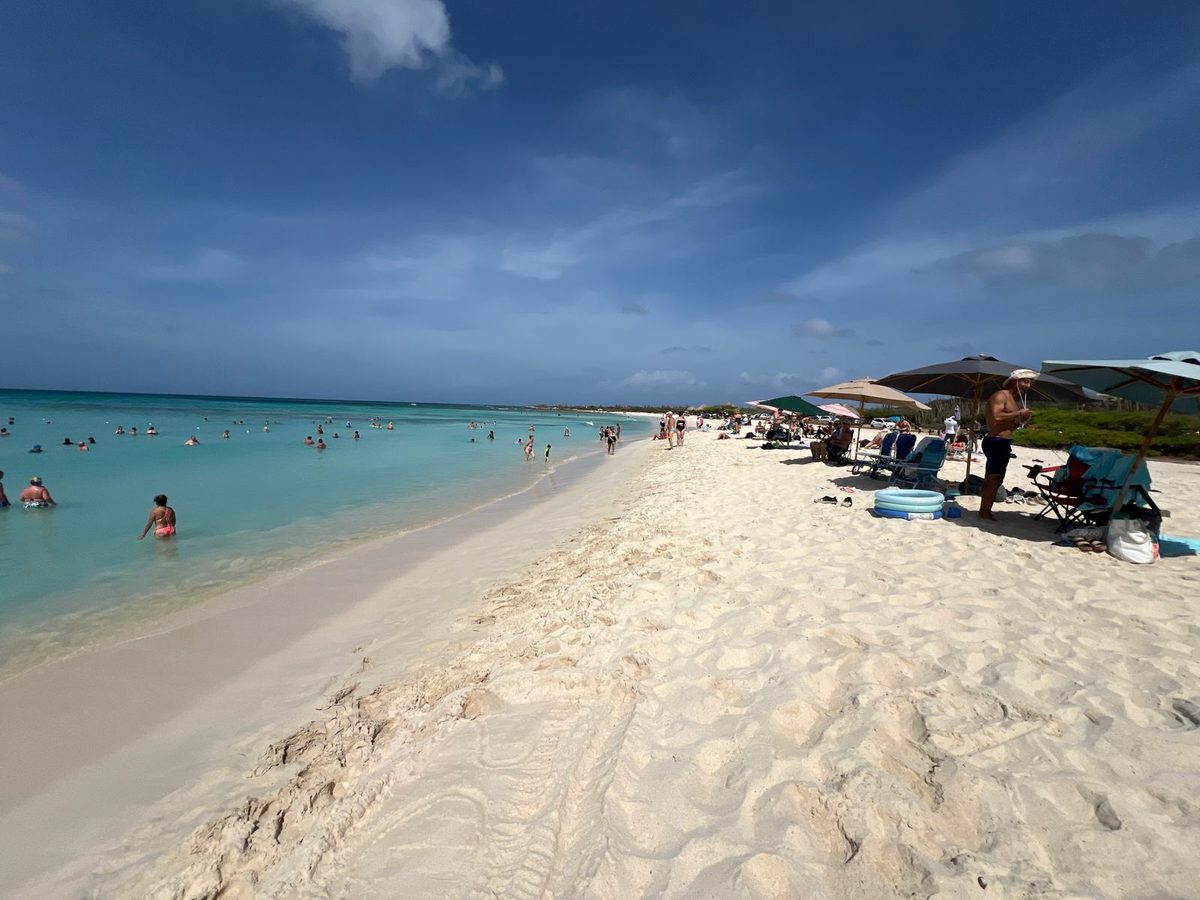
The short answer: how warm is the sea in Aruba?
Aruba’s sea temperature sits in roughly the 79–84°F (26–29°C) range all year, with the coolest stretch around February and March and the warmest in late summer and early autumn (September–October). In practical terms, the water is warm enough to swim, snorkel, and dive comfortably every single month — no wetsuit required. Always check current conditions before you go.
That is the whole answer in one paragraph, and you could stop reading there and be perfectly well informed. But the warm sea is only half the story of how it actually feels to be in Aruba’s water. The other half is the wind — the famous, constant trade winds that shape which beaches are glassy-calm and which are churned into chop, and that turn one stretch of coast into a swimming pool and another into a kitesurfer’s playground. So let me give you the full picture: month by month, coast by coast, and activity by activity, the way I wish someone had explained it to me before my first trip.
Aruba water temperature and wind at a glance
Here is the year in one table. Treat the sea temperatures as typical averages rather than guarantees — the ocean does not read the calendar, and a given week can run a degree or two either side. Wind is described in broad terms because, frankly, that is how it behaves; the trade winds are remarkably steady but they have their windier and calmer seasons.
| Month | Avg sea temp (°F / °C) | Wind | Notes |
|---|---|---|---|
| January | ~79°F / 26°C | Moderate–breezy | Cooler end of the range; still warm. Occasional passing showers. |
| February | ~79°F / 26°C | Breezy, building | Typically the coolest sea of the year — and “coolest” still means bath-warm. |
| March | ~79–80°F / 26–27°C | Breezy–strong | Dry, sunny, winds picking up. Lovely all-round conditions. |
| April | ~80–81°F / 27°C | Strong | Trade winds strengthening into spring. Bright and dry. |
| May | ~81°F / 27°C | Strongest stretch | Among the windiest months — prime windsurf/kite season begins. |
| June | ~82°F / 28°C | Strong | Peak wind continues; warming water. Classic board-sport conditions. |
| July | ~82°F / 27–28°C | Strong | Reliable big breeze; warm sea. Busy, sunny, festive. |
| August | ~82–83°F / 28°C | Strong, easing late | Warm water; wind begins to relax toward month’s end. |
| September | ~83–84°F / 28–29°C | Lightest stretch | Warmest sea and calmest air — glassy snorkeling, gentle swimming. |
| October | ~84°F / 29°C | Light–moderate | Peak water warmth; calmest conditions. Some autumn showers. |
| November | ~82–83°F / 28°C | Light–moderate | Still very warm; gentle winds. Wetter end of the year. |
| December | ~81–82°F / 27°C | Moderate, building | Easing off the warmest months; winds returning. Festive and busy. |
If you want the wider seasonal context behind these numbers — rainfall, crowds, prices, and the lot — our month-by-month guide to Aruba’s weather sits alongside this page and goes deep on the whole calendar. And if you are still deciding when to come, start at the pillar: the best time to visit Aruba pulls every thread together.
Sea temperature month by month
Let me walk you through the year, because while “warm all the time” is true, the small differences are real enough to notice if you are sensitive to them.
Winter: January to March (the cool end)
This is as cold as the sea gets, and I want to be clear about how relative that is. Around February and March the water typically settles near 79°F (26°C). For a Caribbean baseline that is the bottom of the range; for anyone arriving from a northern winter it is borderline miraculous. You will still walk straight in. The only people who genuinely notice the dip are folks who spend hours in the water — long snorkel sessions, repeat dives — and even they tend to reach for a thin rash guard for sun and comfort rather than warmth. If you are coming in Aruba’s winter high season, the sea will not be the thing that gives you pause; the air is gorgeous and the water is forgiving.
Spring: April to June (warming, windiest)
Through spring the sea climbs steadily from the high 70s into the low 80s°F (27–28°C). By June you are in proper warm-bath territory. The catch — and it is not really a catch — is that this is also the windiest stretch of the year, which I will get to below. The combination makes spring a fascinating split: the leeward beaches are warm and swimmable, while the open water is alive with whitecaps that the board-sport crowd lives for.
Summer to early autumn: July to October (the warmest)
Here the water peaks. From September into October the sea routinely reaches 83–84°F (28–29°C), and on a still afternoon it can feel almost too warm — that bathwater-on-a-hot-day sensation where the sea offers no real cooling, just buoyancy and light. This is also when the wind tends to be at its gentlest, so the surface goes glassy and snorkeling visibility is often at its best. If you are visiting in the warm months, our guide to Aruba in summer covers what else to expect, including the one thing worth a glance on a calendar — see the section on hurricanes below.
Late autumn into the holidays: November to December
The sea eases back off its peak but stays generously warm, around 81–82°F (27–28°C). Winds begin returning toward the end of December. This is a wetter window — short, passing showers rather than washouts — but the water itself remains a non-issue for swimming. If a December trip is on the cards, our December guide has the festive-season details.

Why Aruba’s water temperature is so stable
The thing that surprises people is not just that the water is warm — it is that it is warm so consistently. The gap between the coolest month and the warmest is only about five Fahrenheit degrees across the entire year. There are a few reasons for this remarkable steadiness, and they are worth understanding because they explain why you can essentially ignore the sea-temperature question when you book.
First, geography. Aruba sits at about 12 degrees north of the equator, well inside the tropics, off the coast of Venezuela. At that latitude the sun stays high year-round and day length barely changes — there is no long, dark winter to let the ocean cool down, and no dramatic summer spike either. The water absorbs a steady ration of solar energy every month.
Second, the body of water itself. Aruba sits in the southern Caribbean Sea, a large, deep, slow-to-change reservoir of warm tropical water. Big bodies of water have enormous thermal inertia: they heat and cool sluggishly, which smooths out seasonal swings. The Caribbean does not flip from warm to cold the way a shallow temperate bay does between July and January.
Third — and this is the local twist — Aruba lies at the very southern edge of the hurricane belt and outside the main track of the big tropical systems that stir up other islands. Fewer major storms means fewer of the deep-water upwellings and disruptions that can briefly chill the sea elsewhere. The result is a coastline where “what will the water be like?” has essentially the same answer in February as it does in September: warm, clear, and ready for you.
The Aruba trade winds, explained
Now for the part of the story that actually changes your day-to-day experience far more than a couple of degrees of water ever will: the wind. Aruba is windy. Pleasantly, famously, sometimes startlingly windy, and you should understand this before you arrive so it delights rather than surprises you.
The island sits in the path of the trade winds — the steady belt of air that flows from the northeast and east across the tropical Atlantic and Caribbean. Aruba is flat and low, with no mountains to break the flow, so the wind sweeps across it almost unobstructed nearly every day of the year. This is the same wind that bends Aruba’s iconic divi-divi trees into their permanent southwestward lean — a living wind sock you will see all over the island.
How strong, and how steady?
On a typical day the trade winds blow somewhere around 15–25 mph (roughly 13–22 knots), with calmer days dipping toward 10–15 mph and the brisk days pushing 30 mph or more. The defining feature is not the peak speed but the consistency: the wind is there almost every day, all day, which is exactly why Aruba has earned a global reputation among windsurfers and kitesurfers. You are rarely waiting around for wind here. You are far more often working out how to make the most of it.
The seasonal rhythm of the wind
The trade winds do have a season, even if it is subtler than the wind itself. They tend to be strongest from roughly March through July — spring into early summer — when sustained breezes and frequent stronger days make for prime board-sport conditions. They ease to their gentlest around September, October, and into November, when calmer air lets the sea go glassy. So there is a neat inverse relationship worth filing away: the windiest months (late spring and early summer) are brilliant for sailing across the water, while the calmest months (early autumn) are dreamier for floating in it. Whichever you are after, Aruba has a season for it.
One more practical note: the wind is a genuine gift in this climate. Daytime air temperatures hover in the upper 80s°F (around 30–32°C) almost year-round, and without the constant breeze that would feel oppressive. The trades keep the air moving, temper the heat, and are a big reason Aruba feels so comfortable despite sitting in the deep tropics. The flip side is sunburn — more on that below — because a cooling wind hides how hard the sun is actually working on your skin.

Calm west and south beaches vs the rough windward coast
Here is the single most useful thing to understand about swimming in Aruba, and it follows directly from the wind. Because the trades come from the northeast and east, they hit one side of the island and shelter the other. This splits Aruba’s coastline into two completely different worlds, and knowing which is which will make or break a beach day.
The leeward side: the calm, swimmable coast (west and south)
The western and southwestern shore — where you will find the famous resort beaches — faces away from the wind. The island itself acts as a windbreak, so the water here is sheltered, calm, and often astonishingly clear and flat. This is where almost everyone swims, and for good reason. Eagle Beach and Palm Beach stretch along this leeward coast with their gentle, gradually shelving entries and their picture-book turquoise water. Down at the island’s southern tip, Baby Beach is a shallow, protected lagoon so calm it is essentially a giant warm wading pool — the clue is in the name. For the full roll-call of sand, our complete guide to Aruba’s beaches maps them all out, and if swimming is your priority, we have a dedicated rundown of the best beaches in Aruba for swimming.
The windward side: the wild, rough coast (north and east)
Now turn to the other side. The northern and eastern coast faces straight into the trade winds and the open ocean swell, and it is dramatically different: pounding surf, strong currents, rocky shores, and water that is genuinely dangerous to swim in. This is the coast of crashing waves and rugged beauty — wonderful to look at, photograph, and explore on a sightseeing day, but not a place to wade in for a casual dip. The rule of thumb is simple and worth tattooing on your memory: swim on the leeward (west/south) side; sightsee on the windward (north/east) side. The locals know exactly where this line falls, and the difference between the two coasts on the same afternoon can be the difference between a millpond and a maelstrom.
Do you need a wetsuit in Aruba?
No. For all but the most unusual cases, you do not need a wetsuit in Aruba. With sea temperatures sitting between roughly 79°F and 84°F (26–29°C) all year, the water is warm enough for comfortable, extended time in the sea without any thermal protection. Leave the wetsuit at home.
That said, here is the honest nuance. A few specific people do choose a little extra coverage, and it is almost never about cold:
- Long, repeated dives. Scuba divers who do multiple dives a day, or who linger at depth, can feel a mild chill simply from being submerged for hours — water pulls heat from the body faster than air even when it is warm. Many divers wear a thin 3mm shorty or a 2mm top in the cooler months (February–April), not because the sea is cold but because it keeps a long day comfortable.
- Sun protection. By far the most common reason visitors wear neoprene or, more often, a lightweight rash guard is to shield their skin from Aruba’s intense sun while snorkeling face-down for an hour. A rash guard or a UV swim shirt is genuinely worth packing — it does the sunscreen’s job on your back and shoulders, the exact spots that burn first and worst.
- Personal comfort. If you simply run cold, a rash guard or a thin top adds a touch of insulation and a lot of reassurance. But this is preference, not necessity.
For the vast majority of swimmers and snorkelers, board shorts and a swimsuit are all the kit the sea demands. The thing to pack religiously is sun protection, not warmth.
Best conditions for every water activity
Because the warm-and-stable sea is a near-constant but the wind is a variable, the “best time” for any given water activity is really a question about wind, not temperature. Here is how it breaks down.
Swimming
You can swim year-round, full stop. The leeward beaches are calm and warm in every season. If you want the very calmest, glassiest water for a leisurely float, aim for the lower-wind months of September through November, when even the surface chop on the west coast settles down. But honestly, on any normal day, the sheltered west and south beaches are swimmable and lovely. The sea temperature will never be your limiting factor.
Snorkeling
Snorkeling rewards calm, clear water, which means the lighter-wind season — late summer into autumn — often delivers the best visibility and the easiest, flattest conditions. That said, the leeward snorkel spots are good most of the year. Malmok Beach and neighbouring Boca Catalina on the calm northwest shore are the classic shore-snorkeling pair, with easy entries and reliable fish life. On the protected southeast coast, Mangel Halto offers sheltered, mangrove-fringed water that snorkellers love. For the full list of where to put your face in the water, see our guide to the best snorkeling beaches in Aruba.
Scuba diving
Diving is excellent year-round thanks to the warm water and Aruba’s famous wreck dives, including the well-known Antilla shipwreck off the northwest coast. The calmer months (roughly September to December) tend to bring the flattest seas and best visibility, making boat trips smoother and entries easier, but operators run all year. As with snorkeling, a thin exposure suit is optional comfort rather than a cold-water necessity.
Windsurfing and kitesurfing
This is where Aruba’s wind becomes the headline act. The island is a genuine world-class destination for windsurfing and kitesurfing precisely because the trade winds are so strong and so reliable. The prime season runs from roughly May through July, when the wind is at its most powerful and consistent — this is when the international board-sport crowd descends. Palm Beach and the waters off Hadicurari (Fisherman’s Huts) just to its north are the legendary launch zone, with steady cross-shore wind and flat-to-moderate water that suits beginners and experts alike. Even in the calmer autumn months there is usually enough breeze for a session. For the full menu of ways to get out on the water — sailing, paddleboarding, parasailing and more — see our guide to Aruba water sports.

Sun and water safety
The warm, friendly sea has one quiet danger built into it, and it is the same culprit that makes Aruba so pleasant: the wind. Because the constant breeze keeps you cool, it masks how strong the equatorial-latitude sun really is. You will not feel yourself burning. Then you will get out of the water after an hour of blissful snorkeling and discover, several hours later, that your back is the colour of the inside of a watermelon. I have made this mistake. Do not make this mistake.
A few simple habits keep the sea the joy it should be:
- Treat the sun as fierce, because it is. Aruba sits at about 12°N and gets over 3,000 hours of sunshine a year. Use a high-SPF, water-resistant, reef-safe sunscreen, reapply often, and lean on a rash guard or UV shirt for snorkeling. A hat and sunglasses on the beach are not optional.
- Respect the two-coast rule. Swim on the calm leeward (west/south) side. The windward (north/east) coast has powerful surf and currents and is not for swimming, however inviting a particular cove looks.
- Mind the currents and check conditions. Even on the leeward side, conditions vary day to day. Heed any flags or local advice, do not swim alone in unfamiliar water, and ask your hotel or a local operator if you are unsure. Always check the current forecast before heading out.
- Hydrate. The breeze and the warm sea conspire to dehydrate you without your noticing. Drink more water than you think you need.
- Footwear for rocky and reef areas. Some snorkel entries are rocky; water shoes save your feet and the reef alike.
None of this should make the sea sound intimidating. It is, genuinely, one of the most welcoming bodies of water you will ever swim in. It just rewards a little respect — chiefly aimed at the sun overhead rather than the water itself.
So, what should you expect from Aruba’s water?
Picture it one more time. You arrive, you walk down to a leeward beach, and you stride into water that is warm from your first step — no gasp, no bracing, just a soft, buoyant welcome somewhere around 80°F whatever the month. Behind you the divi-divi trees lean in the steady trade wind that keeps the air comfortable and, on the right beach, sends the kitesurfers skating across the bay. The sea barely changes from your winter visit to your summer one; the wind shifts its mood with the seasons but is almost always there. Pack sun protection, skip the wetsuit, choose the calm coast, and the water will do the rest.
If you are weighing up exactly when to come, let the activities be your guide: late spring and early summer for the wind sports, early autumn for the warmest and calmest water, and any month at all for simply swimming and snorkeling in a sea that is forever warm. For the bigger picture, our best-time-to-visit pillar guide ties together weather, crowds, and cost, and the weather-by-month guide sits right next to this one for the full seasonal detail.
Frequently Asked Questions
What is the water temperature in Aruba?
Aruba’s sea temperature stays warm all year, typically ranging from around 79°F (26°C) in the cooler months of February and March to about 84°F (29°C) in September and October. The variation across the whole year is only a few degrees, so whenever you visit, the water is warm enough for comfortable swimming, snorkeling, and diving. Always check current conditions before you go.
Is the ocean warm enough to swim in Aruba in winter?
Yes. Even in the coolest months — roughly January through March — Aruba’s sea sits near 79°F (26°C), which is still pleasantly warm by almost any standard. You can walk straight in without the cold shock northern oceans deliver. The “cool” season is relative; for most visitors arriving from a temperate winter, the water feels wonderfully warm and inviting all year.
Do I need a wetsuit to swim or snorkel in Aruba?
No. With water temperatures between about 79°F and 84°F (26–29°C) year-round, no wetsuit is needed for swimming or snorkeling. Some scuba divers wear a thin shorty for long, repeated dives, and many snorkellers wear a lightweight rash guard — but that is almost always for sun protection or extended comfort rather than warmth. A UV swim shirt is more useful than neoprene here.
Why is Aruba so windy?
Aruba sits directly in the path of the northeast trade winds and is a flat, low island with no mountains to slow the airflow, so the breeze sweeps across it nearly every day. These steady winds keep the tropical heat comfortable and bend the island’s divi-divi trees into their famous lean. They are strongest in spring and early summer and gentlest around September through November.
Which side of Aruba is best for swimming?
The western and southern (leeward) coast is best for swimming. Because the trade winds blow from the northeast, the island shelters its west and south shores, leaving the water calm, clear, and gentle — this is where Eagle Beach, Palm Beach, and Baby Beach sit. The northern and eastern (windward) coast faces the wind and open swell, with rough surf and strong currents that make it unsafe for swimming.
When is the water warmest in Aruba?
The sea is at its warmest in late summer and early autumn, with September and October typically reaching around 83–84°F (28–29°C). These months also tend to bring the lightest winds, so the surface goes glassiest — ideal for snorkeling and easy swimming. The cooler end of the range arrives in February and March, but even then the water stays comfortably warm.
Is Aruba good for windsurfing and kitesurfing?
Absolutely — Aruba is a world-class destination for both. The constant, reliable trade winds, strongest from roughly May through July, combined with warm water and flat-to-moderate conditions on the leeward side, make it ideal. Palm Beach and the Hadicurari (Fisherman’s Huts) area are the main launch zones, suiting everyone from first-timers to experts. See our windsurfing and kitesurfing guide for operators and lessons.
Photo credits
- Arashi Beach, Aruba — Photo: Kwihi / CC BY 4.0 via Wikimedia Commons.
- Reef fish at Mangel Halto, Aruba — Photo: sbmeaper1 (CC0) via Wikimedia Commons.
- Divi-divi tree at Eagle Beach, Aruba — Photo: sbmeaper1 (CC0) via Wikimedia Commons.
- Baby Beach lagoon, Aruba — Photo: Mattia Luigi Nappi / Public domain via Wikimedia Commons.
By the ArubaTourism.org team — Last updated June 2026.