By the ArubaTourism.org team — Last updated June 2026
Ask around the high-rise hotels for the best snorkeling and you’ll mostly hear about boat tours — the Antilla wreck, the catamaran with the open bar, the $60-a-head reef stop. All fun. But the brochures bury the easiest win of all: a free, calm little bay up the northwest coast where you wade in from soft sand and find reef fish and grazing green sea turtles waiting just offshore.
So what is Boca Catalina Aruba, and why snorkel here? In short, it’s a small, sheltered, white-sand cove about a 5–10 minute drive north of Palm Beach — free, easy to reach, and beginner-friendly, with calm, clear water, a shallow reef full of fish, and seagrass beds where green sea turtles graze. Come early, bring your own gear, and snorkel toward the rocky point for the best of it.
Boca Catalina Aruba at a glance
| What | The details |
|---|---|
| Where | Malmok area, northwest coast, on the road to the California Lighthouse |
| Drive time | ~5–10 min from Palm Beach; ~20 min from Oranjestad / cruise port |
| Cost | Free — no entrance fee, no parking fee |
| Best for | Beginner snorkelers, families, calm-water swimmers, turtle spotting |
| Water entry | Easy, from a small sandy beach; rocky elsewhere (water shoes help) |
| You’ll see | Green sea turtles, parrotfish, French angelfish, grunts, trunkfish, the odd moray eel |
| Facilities | None on-site — no restrooms, no rentals, no snack bar, no lifeguard |
| Best time | Early morning (roughly 8–10 a.m.) for calm water, clarity and turtles |
| Bring | Your own snorkel gear, water, snacks, reef-safe sunscreen, shade |
Why Boca Catalina is worth the detour
Aruba’s west coast is one long ribbon of postcard sand — Eagle Beach, Palm Beach, Druif. They’re gorgeous for sunbathing, but for snorkeling they’re mostly… sand. There’s nothing on the bottom to look at. Drive fifteen minutes north of the Marriott and the coastline changes character: the shore turns rocky, the seafloor sprouts coral and seagrass, and suddenly there are fish. Boca Catalina sits right in the heart of this stretch, and it’s the easiest place along it to get into the water without scrambling over rocks.
What makes it special isn’t dramatic coral cliffs or huge schools of pelagics — Aruba isn’t that kind of dive destination. It’s the accessibility of good snorkeling. You park, walk down a few steps, wade in from soft sand, and within a couple of minutes you’re floating over reef fish in water so clear you can read the time on a friend’s watch ten feet below. For a beginner, a nervous swimmer, or a family with kids, that combination — calm, shallow, free, and genuinely full of life — is hard to beat anywhere in the Caribbean. It’s exactly the kind of place I’d send someone who has never put their face in the water before.
It’s also one of the best free things to do in Aruba, which matters more than it sounds on an island where a lot of the “must-do” experiences come with a hefty per-person price tag. And it slots neatly into the broader world of Aruba’s beaches, where Boca Catalina plays a very different role than the resort sands a few miles south.
Where is Boca Catalina, exactly?
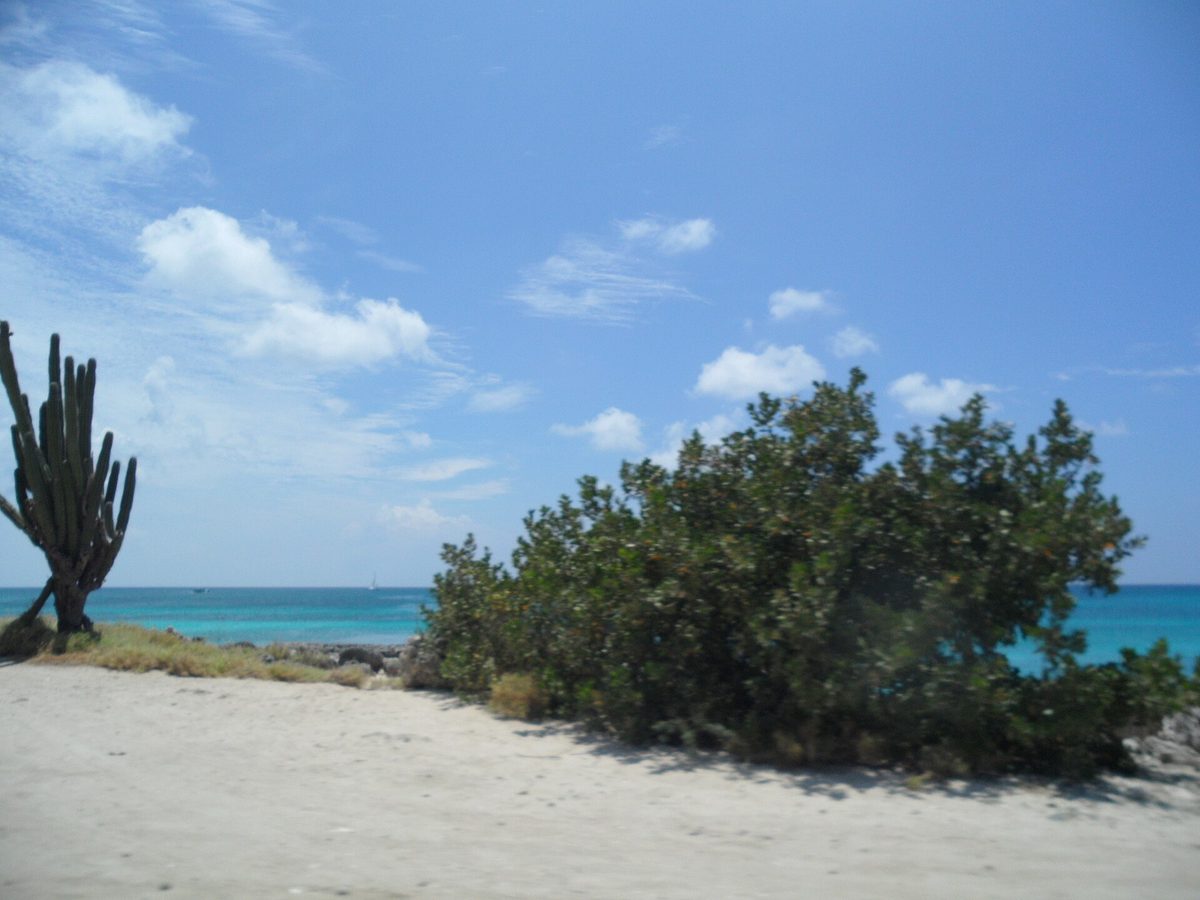
Boca Catalina is on Aruba’s northwestern tip, in the Malmok district, along the main road that runs from the Palm Beach hotel zone up toward Arashi Beach and the California Lighthouse. On a map it’s roughly at 12.606° N, 70.052° W. The whole stretch of coast here — Malmok, Boca Catalina, Arashi — is the island’s de facto snorkeling corridor, and the three spots sit within a few hundred yards of each other.
“Boca” means “mouth” in Papiamento and Spanish, and you’ll see it on beaches all over Aruba (Boca Grandi, Boca Prins, Boca Catalina). Here it refers to the small mouth-shaped bay scooped out of an otherwise rocky shoreline. Confusingly, there are really two little coves people lump under the name, and knowing the difference is the key to a good visit.
Boca Catalina Beach vs. Catalina Cove
Drive north and you’ll pass two signed pull-offs on the seaward (left) side of the road. The first, usually marked as Boca Catalina Beach on Google Maps, is the prettier crescent of sand with a handful of free palapa shade huts. The water entry here is lovely and sandy — but, candidly, there isn’t much to see directly in front of it. The good stuff is off to the right (north), toward the rocky point.
A little further along, where Arashi Road bends, is the second pull-off most people call Catalina Cove. The beach is smaller and rockier, but you’re parking right on top of the action — this is where the snorkel boats drop their passengers, and where the reef and fish are densest. My advice: if you mainly want to swim and lounge, park at Boca Catalina Beach for the sand and shade. If you’re here to snorkel, aim for Catalina Cove, or park at the beach and simply swim right around the point. Either way you’ll end up in the same productive water.
How to get to Boca Catalina
This is one of the easier spots on the island to reach, and you have three good options.
By rental car (easiest)
From Palm Beach, head north on L.G. Smith Boulevard (the main coast road) toward Malmok and Arashi. In about 5–10 minutes you’ll see the beach signs on your left. From Oranjestad or the cruise terminal, it’s roughly a 20-minute drive. There’s no traffic to speak of and the road is well paved the whole way. A car is genuinely the most convenient way to do the northwest coast, because it lets you hop between Malmok, Boca Catalina, and Arashi in a single morning. If you’re weighing whether to rent, our guide to getting around Aruba breaks down rental costs, driving rules, and whether you really need a Jeep (for this beach, you don’t — any compact car is fine).
By bus
Aruba’s public Arubus service runs up the hotel strip and out toward the Malmok/Arashi end of the island. It’s cheap — a few dollars — and reliable, though it’ll take longer than driving and you’ll do a little walking from the stop. Tell the driver you’re headed to Malmok or Arashi and ask to be let off near the Boca Catalina beach signs. Check current Arubus schedules before you go, as frequency drops in the late afternoon and on Sundays.
By boat tour
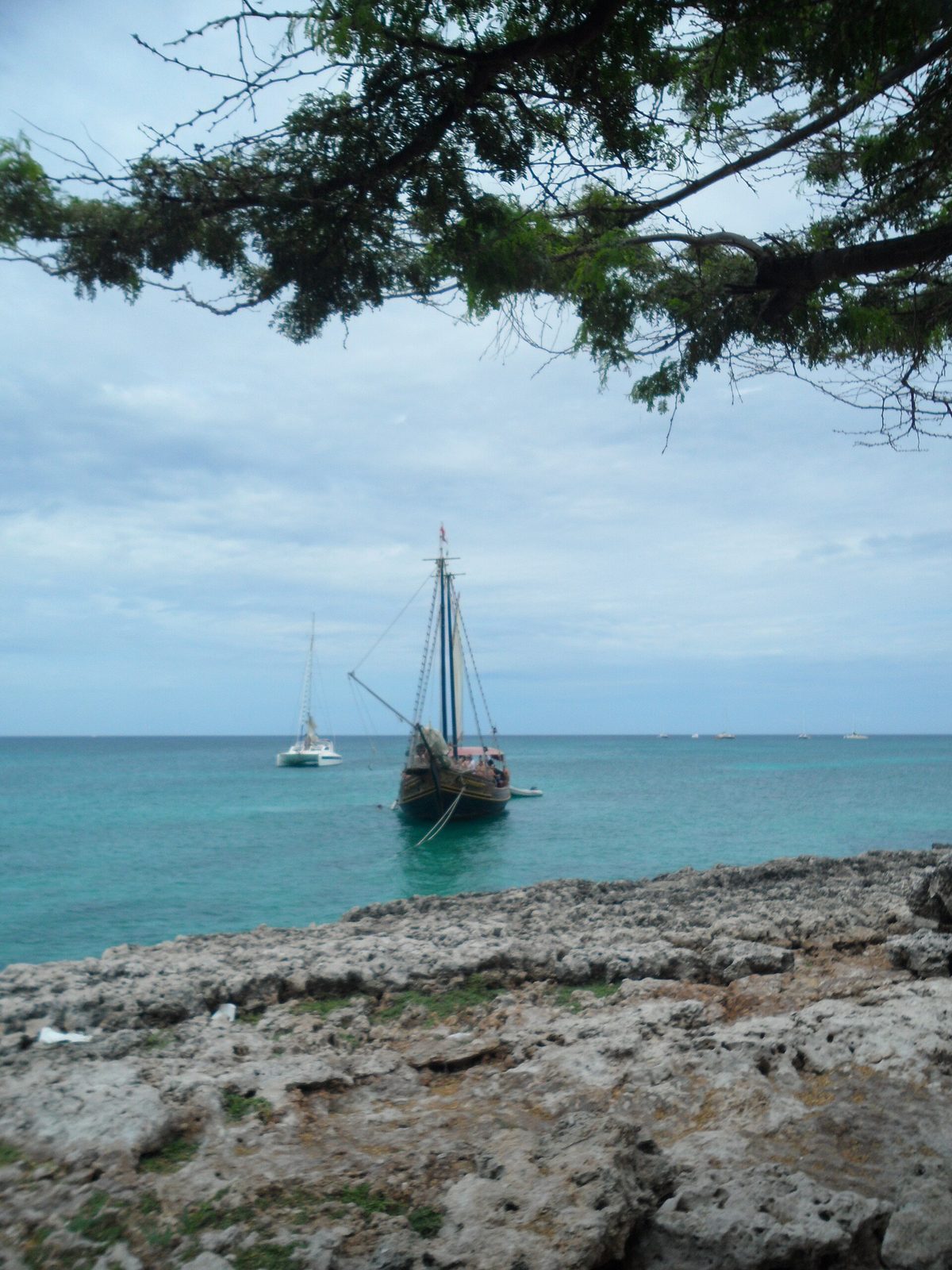
Almost every snorkel cruise that leaves from Palm Beach or Eagle Beach includes a stop on Boca Catalina’s reef, usually paired with the nearby Antilla shipwreck and Malmok. If you’d rather be ferried out with gear, a guide, and a rum punch waiting, that’s a perfectly good way to see it — expect to pay from around $50–$70 per person. You’ll find the full range of trips in our Aruba water sports and boat tours guide. Just know that the boat drops you in the same water you could have walked into for free.
Parking at Boca Catalina
Parking is free, but limited. Both pull-offs have a modest gravel/dirt area beside the road, and on a busy day — especially weekends and cruise-ship days — they fill up. The single best thing you can do for your visit is arrive early, ideally before 9 a.m. You’ll get a parking spot, your pick of the free palapa shade huts, calmer water, better visibility, and a far better shot at turtles before the crowds and tour boats churn things up. By mid-afternoon on a Saturday it can feel busy and the parking turns into a patient game of waiting for someone to leave.
Snorkeling Boca Catalina: where to actually go in the water
Here’s the single most useful piece of advice in this whole guide, because it’s what separates a “meh, I saw a few fish” visit from a great one: don’t just float around in front of the beach. The sand entry is easy and pleasant, but the bottom directly off Boca Catalina Beach is fairly bare. The life is concentrated in two zones.
1. The rocky point and reef (shallow, 3–7 ft)
Swim to the right (north) toward the rocky headland that separates Boca Catalina from Catalina Cove and Arashi. As the sandy bottom gives way to rock, coral and sponges take over and the fish appear — often in real numbers. This shallow rocky zone is where you’ll see the densest action: boxfish, needlefish, wrasse, butterflyfish, sergeant majors, parrotfish crunching on coral, and shimmering schools of hundreds of juvenile grunts. It’s only a few feet deep in places, so it’s forgiving and bright, and the light makes for great photos.
2. The seagrass beds (deeper, 12–20 ft)
Out in front of the beach, past the buoy line, the bottom drops into meadows of seagrass in about 12–20 feet of water. This is turtle territory — green sea turtles come here to feed and rest on the grass. It’s deeper and you’re more exposed to passing boats here, so it’s better suited to confident snorkelers comfortable with a bit of distance from shore. Peacock flounder and the occasional flying gurnard also haunt the sand patches between the grass.
A note on safety and boats: most of the best snorkeling at Boca Catalina is beyond the swimming buoys, and this is an active spot for tour boats coming and going. Stay aware, surface with a hand up near boat lanes, and if the usually-light current picks up or you’re not a strong swimmer, keep inside the marked area. There’s no lifeguard here.
What you’ll see underwater
Aruba’s snorkeling is about variety and clarity rather than vast coral gardens, and Boca Catalina is a perfect example. On a good morning the visibility is excellent, and the cast of characters is genuinely rich for such an easy spot. Regulars include:
- Reef fish galore: blue tang, sergeant majors, blue-striped and French grunts, parrotfish, surgeonfish, wrasse, needlefish, and butterflyfish.
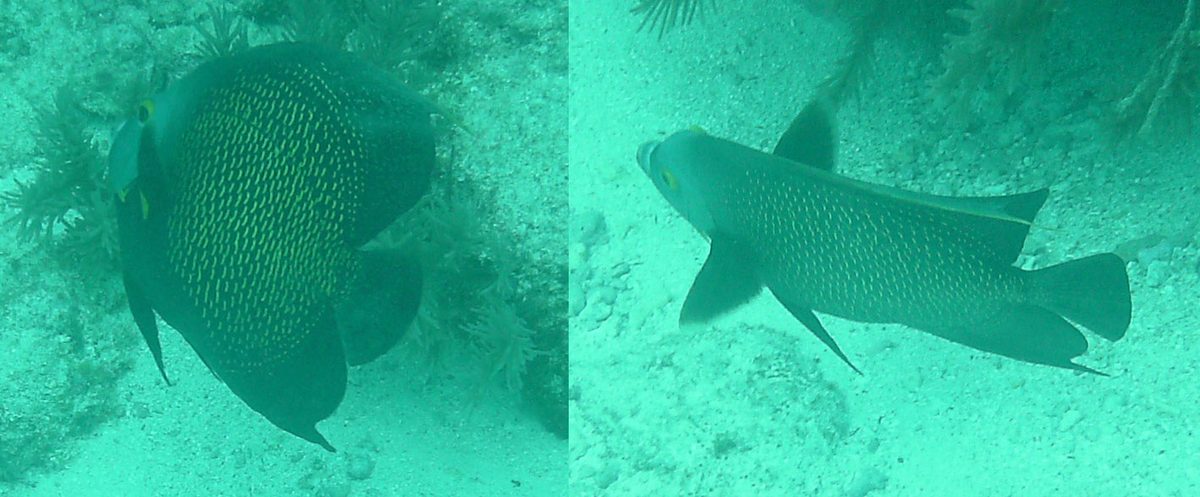
- The showstoppers: French angelfish and queen angelfish gliding through the shallows, spotted trunkfish, white-spotted filefish, and clouds of silvery Bermuda chub.
- Oddities worth hunting for: peacock flounder camouflaged on the sand, a flying gurnard fanning its “wings,” and — if you’re lucky — a moray eel tucked into the rocks.
- Coral and sponges: brain coral, pillar coral, sea fans, and colorful sponges colonizing the rocky areas.
- And, of course, turtles — the main reason a lot of people make the trip.
Sea turtles at Boca Catalina
Boca Catalina is one of the most dependable places on the island to snorkel with green sea turtles, and they’re the highlight for most visitors. They graze on the seagrass beds offshore and surface periodically for air, and on a calm early morning your odds of an encounter are genuinely good — though, as with all wild animals, never guaranteed.
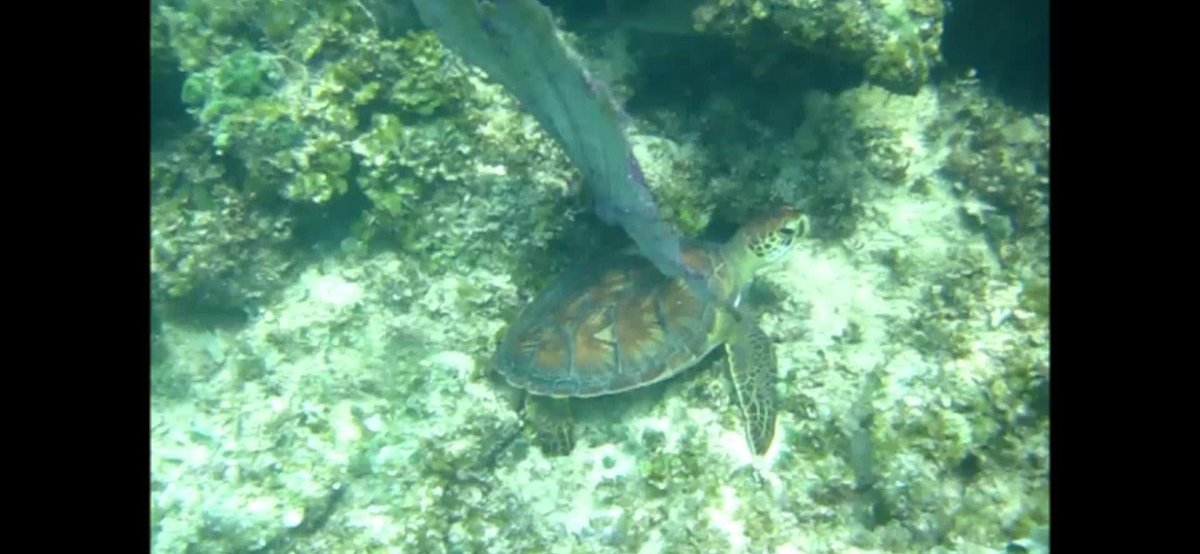
The trick is timing and behavior. Turtles are most relaxed and visible in the quiet early hours, before dozens of snorkelers and tour boats arrive; once the water gets busy they tend to drift off to deeper, calmer ground. So go early, swim slowly, and keep noise and splashing down.
If you do find one, please be a responsible guest in their home:
- Never touch, chase, or try to ride a turtle — it’s stressful for the animal and illegal to harass protected wildlife.
- Keep a respectful distance of at least 6–10 feet.
- Don’t block a turtle swimming to the surface to breathe — give it a clear path up.
- Avoid sudden movements, and never feed them.
Watching a green turtle calmly mow the seagrass two body-lengths below you, then rise past your shoulder for a breath, is the kind of quiet magic that sticks with people long after the tan fades. It’s worth setting an early alarm for.
The best time to snorkel Boca Catalina
Two timing questions matter: time of day and time of year.
Time of day: early morning, full stop. Roughly 8–10 a.m. gives you the calmest, clearest water, the best parking and shade, the fewest boats, and the best turtle odds. Afternoons bring more wind, more chop, stirred-up visibility, and crowds — the trade winds typically build as the day goes on.
Time of year: Aruba sits below the main hurricane belt and is dry, sunny, and snorkel-friendly essentially year-round, which is a big part of its appeal. Water clarity is generally excellent in the calmer months, while the breezier winter trade winds can occasionally kick up a little surface chop on this exposed northwest coast. For a deeper look at seasons, crowds, and weather patterns, see our month-by-month guide to the best time to visit Aruba. The honest answer for Boca Catalina: almost any morning of any month can be excellent — just go early.
What to bring (because there’s nothing there)
This is the one thing that catches people out. Boca Catalina is a wild little bay, not a developed beach — there are no facilities at all. No restrooms, no showers, no chair rentals, no snack shack, and crucially, no snorkel gear rental on-site. You need to arrive self-sufficient. My packing list for a morning here:
- Your own snorkel gear. Rent it from a dive shop near your hotel the day before, or bring your own mask and fins. Without gear you’ve got a pretty beach and not much else.
- Water shoes or reef booties. The Catalina Cove entry and the rocky point are, well, rocky. Booties make the whole thing more comfortable.
- Reef-safe sunscreen, and a rash guard. You’ll be face-down with your back to a strong tropical sun for a long time; a shirt beats reapplying lotion.
- Plenty of water and snacks. There’s nowhere to buy anything. Bring a cooler if you’re staying a while.
- Shade. Grab a free palapa if one’s open (arrive early), or pack a beach umbrella. There’s little natural shade.
- An underwater camera or phone case. The clarity and the angelfish make it worth it.
- A dry bag. For phone, keys, and wallet while you’re in the water — there are no lockers.
Pack out everything you bring in. There are few (if any) trash bins, and keeping this little bay pristine is on all of us.
Who Boca Catalina is best for
Families and kids
The sandy, gentle entry at Boca Catalina Beach is about as kid-friendly as snorkeling gets, and the shallow rocky zone means little ones can see fish without going deep. It’s one of the spots I’d put near the top of any Aruba with kids itinerary. Just mind the boat traffic with children and keep them inside the buoy line.
Beginner and nervous snorkelers
Calm, clear, shallow, and walk-in — this is a fantastic place to try snorkeling for the first time or to rebuild confidence. Stay in the shallows by the point and you’ll see plenty without ever being out of your depth.
Couples and quiet-seekers
Come on a weekday morning and you might have the cove nearly to yourself. It’s a lovely, low-key alternative to the busy resort beaches and pairs well with a sunset drive up to the lighthouse. Couples building a romantic Aruba getaway often find these northwest coves more their speed than the crowded high-rise strip.
Cruise passengers
If you’re in port for the day, Boca Catalina is an easy, affordable DIY excursion — about 20 minutes from the terminal by taxi or rental car, no tour required. Combine it with Arashi and the California Lighthouse for a self-guided northwest-coast morning.
Nearby: make a morning of the northwest coast
One of the joys of Boca Catalina is that it’s surrounded by other worthwhile stops within minutes:
- Malmok Beach — just south, another rocky-shore snorkeling spot and the launch area for many boat trips to the Antilla wreck.
- Tres Trapi (“three steps”) — a nearby cove with concrete steps into the water, famous as another turtle-spotting site. Popular and small, so it gets busy.
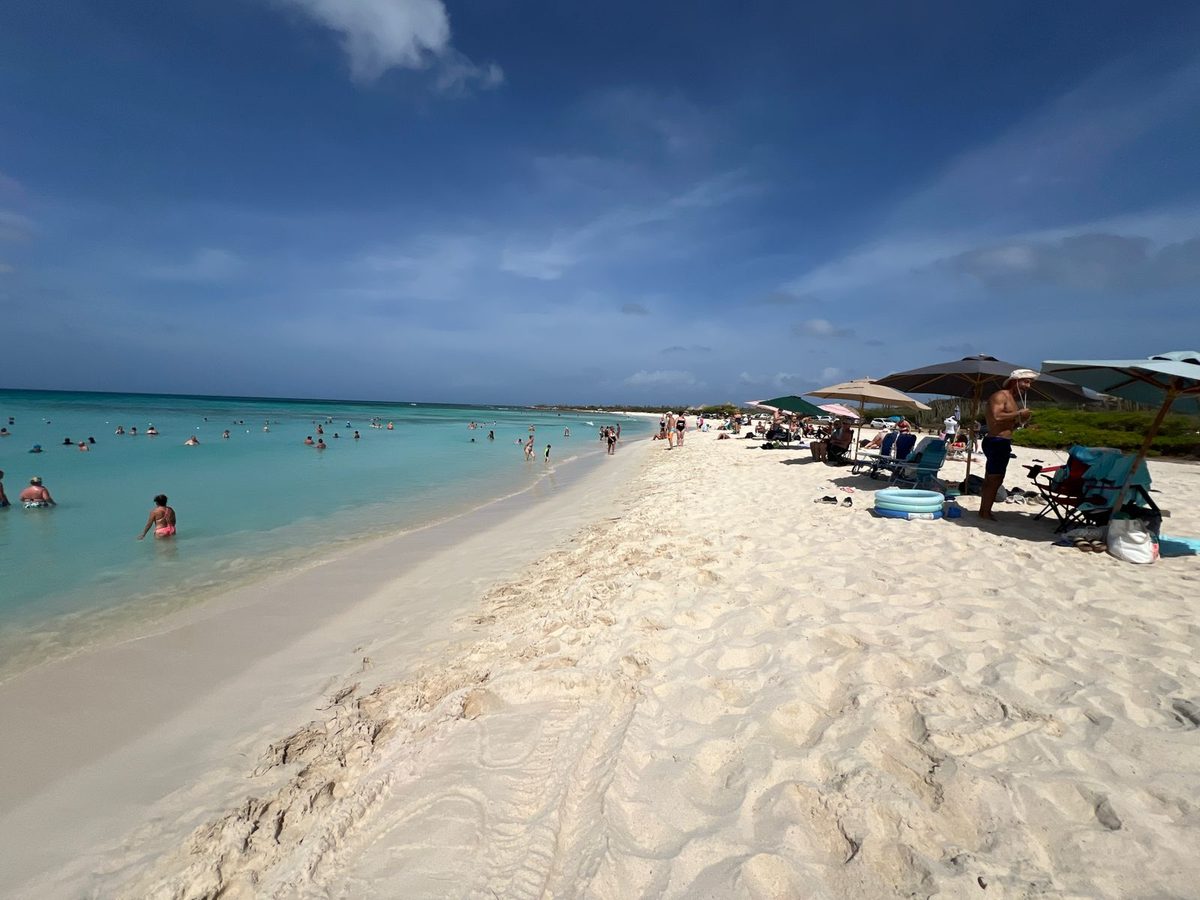
- Arashi Beach — just north, a sandier swimming beach with snorkeling at its rocky north end. Many people snorkel from Catalina Cove around the point to Arashi.
- California Lighthouse — at the island’s northern tip, with sweeping views; a classic sunset spot and an easy add-on.
- The Antilla shipwreck — a massive WWII-era German freighter offshore, one of the Caribbean’s best wreck snorkels, reachable only by boat from this area.
For dining, there’s nothing at the beach itself, but the Palm Beach restaurant scene is a 5–10 minute drive back south, and there are a few spots up near Tierra del Sol and the lighthouse. See our Aruba restaurants guide for where to eat afterward. If you want to string several of these into a single well-paced day, our Aruba itinerary plans show how the northwest coast fits into a wider trip, and the broader things to do in Aruba guide covers everything beyond the water.
What does it cost?
Boca Catalina itself is completely free — no entrance fee, no parking fee, no chair fee. Your only real costs are getting there and gear:
- Beach access & parking: free.
- Snorkel gear rental (from a dive shop, per day): roughly $10–$20.
- Rental car (if you go that route): roughly $40–$70/day.
- Bus from the hotel area: a few dollars each way.
- Guided boat snorkel tour that stops here: around $50–$70 per person.
In other words, a DIY morning at Boca Catalina can cost almost nothing beyond gear — which is exactly why it’s one of the best-value experiences on the island. For the bigger picture on budgeting a trip, see our breakdown of Aruba vacation costs, and if you’re choosing a home base, our guide to where to stay in Aruba covers which areas put you closest to this coast (Malmok and Palm Beach are nearest).
Frequently asked questions
Is Boca Catalina good for snorkeling?
Yes — it’s one of the best easy, shore-accessible snorkeling spots in Aruba. The water is calm and clear, entry is from a sandy beach, and the shallow reef near the rocky point is full of fish, with green turtles on the seagrass beds offshore. It’s especially good for beginners and families.
Can you see turtles at Boca Catalina?
Often, yes. Green sea turtles feed on the seagrass beds just offshore. Your best chance is early morning, before crowds and boats arrive. Sightings aren’t guaranteed — they’re wild animals — but Boca Catalina is one of the more reliable turtle spots on the island. Keep your distance and never touch them.
How do you get to Boca Catalina?
It’s a 5–10 minute drive north of Palm Beach (about 20 minutes from Oranjestad or the cruise port) on the road toward the California Lighthouse. You can drive, take the Arubus public bus toward Malmok/Arashi, or arrive by snorkel boat tour. The beach is signed on the seaward side of the road.
Is there an entrance or parking fee?
No. Boca Catalina is free, and so is parking. The lot is small, though, so arrive early — ideally before 9 a.m. — to get a space and a shade hut, especially on weekends and cruise days.
Are there bathrooms or snorkel rentals at Boca Catalina?
No. There are no restrooms, showers, lifeguards, or gear rentals on-site, and no food or drinks for sale. Rent your snorkel gear from a dive shop beforehand and bring your own water, snacks, sunscreen, and shade.
Is Boca Catalina good for kids and beginners?
Very. The sandy entry is gentle, the water is calm and shallow near shore, and you’ll see fish without going deep. Just supervise children closely, keep everyone inside the swimming buoys, and watch for tour-boat traffic beyond the marked area.
What fish will I see at Boca Catalina?
Expect parrotfish, blue tang, sergeant majors, grunts, wrasse, needlefish, butterflyfish, French and queen angelfish, spotted trunkfish, and schools of Bermuda chub, plus the occasional moray eel, flounder, or flying gurnard — and green sea turtles on the grass beds.
Boca Catalina or Arashi Beach — which is better?
They’re neighbors and complement each other. Arashi has more sand and is the better pure swimming/lounging beach; Boca Catalina (especially Catalina Cove) generally has the better fish and turtle snorkeling. The ideal plan is to do both in one morning — many people snorkel from Catalina Cove around the point to Arashi.
Is it safe to swim at Boca Catalina?
Generally yes — the bay is sheltered and usually calm. But there’s no lifeguard, the best snorkeling is beyond the buoys in active boat lanes, and the trade winds can pick up in the afternoon. Snorkel early, stay aware of boats, and don’t go beyond your comfort level.
Final thoughts
If I had to hand a first-time visitor a single, no-stress way to experience Aruba’s underwater side, I’d point them straight up the coast to this little bay with a mask, a bottle of water, and an early alarm. Boca Catalina doesn’t have the marketing budget of the catamaran tours or the sand-square footage of Eagle Beach, and that’s exactly the point — it’s quiet, it’s free, and it delivers the two things people actually come to snorkel for: clear water full of fish and a decent shot at a sea turtle. Get there early, swim toward the rocks, move slowly, and let the bay do the rest. It remains one of my favorite mornings on the island, and it might become one of yours.
Photo credits
- Turquoise water, white sand and a cactus along the Malmok and Boca Catalina coast in Aruba — Photo: EgorovaSvetlana / CC BY-SA 4.0 via Wikimedia Commons
- Snorkel-cruise boats anchored off the rocky Malmok and Boca Catalina coast in Aruba — Photo: EgorovaSvetlana / CC BY-SA 4.0 via Wikimedia Commons
- A French angelfish, one of the colorful reef fish seen snorkeling at Boca Catalina Aruba — Photo: Jstuby (CC0) via Wikimedia Commons
- A green sea turtle on the reef, frequently spotted snorkeling at Boca Catalina in Aruba — Photo: James St. John / CC BY 2.0 via Wikimedia Commons
- Arashi Beach on Aruba’s northwest coast, a short walk from Boca Catalina — Photo: Kwihi / CC BY 4.0 via Wikimedia Commons