There’s a slot on the calendar most people walk right past, and I think that’s the best thing about it. By the time May rolls around, the snowbirds and spring-breakers have packed up and flown home, the winter rates that made you wince in February have quietly come down, and yet the sky over the beaches is still that hard, cloudless blue, the trade winds are still blowing, and hurricane season hasn’t so much as cleared its throat. That’s the paradox of Aruba in May: peak-season conditions at off-peak prices. It is, to my mind, the most underrated month to visit the island — the one where you get nearly everything the winter crowd paid a premium for, minus the crowd and minus the premium.
So what is May actually like? Hot, dry, and breezy, with daytime highs in the high 80s Fahrenheit (around 31–32°C), a warm sea near 81°F (27°C), and only an inch or so of light, passing rain all month. The winter peak is over, so hotel rates often run roughly 25–35% below their January–March highs and crowds thin out noticeably. You get the dry-season weather without the dry-season scrum — the definition of a value sweet spot.
That combination is exactly why May is a quiet favorite among repeat visitors and why this guide exists. Below I’ll walk you through the weather and the wind in detail, why the shoulder season pays off the way it does, how May stacks up against April and early June, the events worth planning around (the windsurfing is genuinely world-class this month), and who should — and shouldn’t — book this particular window. For the bigger picture across the whole calendar, our complete guide to the best time to visit Aruba is the place to start; this article zooms all the way in on one excellent month.
Aruba in May at a glance: April vs May vs early June
May sits in the middle of a three-month stretch where the weather barely changes but the price and the crowds do. Here’s the quick comparison I’d want before booking. Treat the numbers as typical averages — any single week can run warmer, wetter, or breezier, so check a current forecast close to your dates.
| What you get | April (late high season) | May (sweet spot) | Early June (start of summer) |
|---|---|---|---|
| Average daytime high | ~88°F / 31°C, edging toward 90°F | ~88–89°F / 31–32°C | ~89–90°F / 32°C |
| Average overnight low | ~79°F / 26°C | ~79°F / 26°C | ~80–81°F / 27°C |
| Sea temperature | ~80°F / 27°C | ~81°F / 27°C | ~82°F / 28°C |
| Rainfall | ~1.1 in over ~4 days | ~1.1–1.4 in over ~5–7 days | ~1.1–1.2 in over ~6 days |
| Trade winds | Strong, steady | Strong, often the windiest stretch | Strong, easing slightly into midsummer |
| Crowds | Busy early, easing after Easter | Noticeably quieter | Quietest of the three |
| Prices | High early; dipping late April | Among the lowest of the year | Low, similar to May |
| Hurricane risk | None (pre-season) | None (pre-season) | Season opens June 1; risk still very low this far south |
Read the table and the pattern jumps out: the weather column hardly moves, but the crowds-and-prices columns swing hard in your favor as you slide from April into May. That gap — same sunshine, smaller bill — is the whole pitch. If you want the month-by-month version of this across all twelve months, our Aruba weather by month breakdown lays it out, and the cheapest time to visit Aruba guide digs into exactly where May lands on price.
May weather and wind: dry, sunny, and breezy
Aruba’s weather is famously stable — the island markets itself on roughly 350 days of sunshine a year, and it isn’t really exaggerating — but May still has a personality. Here’s what to actually expect when you step off the plane.
Temperature and sunshine
Daytime highs sit in the high 80s Fahrenheit, typically around 88–89°F (31–32°C), and on the hottest afternoons you’ll see the thermometer brush 90°F (32°C). Overnight it barely cools, settling near 79°F (26°C), so you can have dinner outdoors in shorts and never feel a chill. The sun is strong and the UV index runs high, which matters more than the air temperature does: I’ve watched people who shrugged off sunscreen at 10 a.m. turn an unhappy shade of pink by lunch. Reef-safe SPF, a hat, and shade in the early afternoon are not optional. Pack them.
Rain (there’s very little of it)
May falls firmly in Aruba’s dry season. The island averages only about an inch to an inch and a half of rain for the entire month, spread across maybe five to seven days, and almost all of it arrives as a brief, warm shower — often around dawn — that blows through in minutes and leaves the sky scrubbed clean. You are extraordinarily unlikely to lose a beach day to weather in May. If you want the full context on how dry this is compared with the autumn months, our Aruba rainy season guide spells out when the wetter weather actually shows up (spoiler: not now).
The trade winds — Aruba’s secret air conditioning
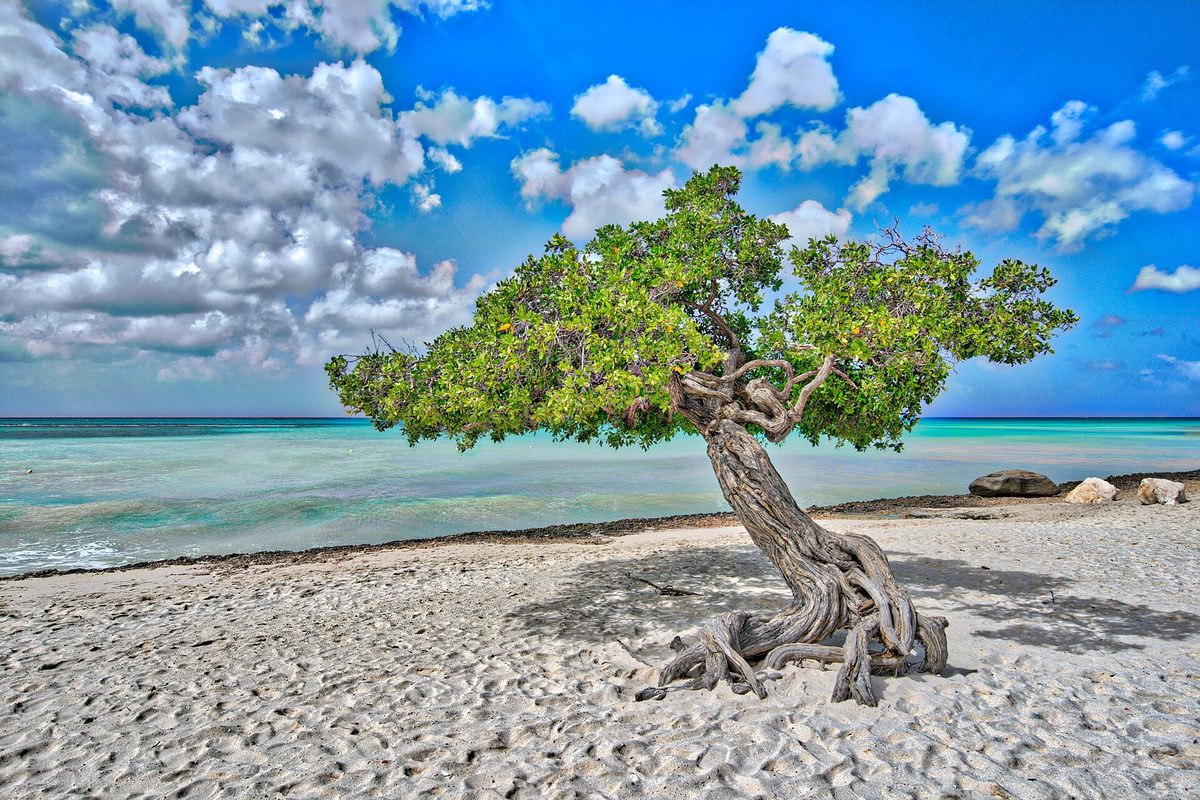
Here’s the detail that changes how May feels on your skin. Aruba sits in the path of steady easterly trade winds, and spring is when they really crank. Through May you can expect a fresh, persistent breeze, frequently strengthening in the afternoon, with gusts that can top 30 mph. That wind is the reason 89°F in Aruba feels nothing like 89°F in a humid mainland city — it pulls the heat and the mugginess right off you, keeps the bugs down, and makes the shade genuinely pleasant. It also has one practical consequence worth knowing: the divi-divi trees all lean southwest because of it, and so will your beach umbrella if you don’t anchor it deep. The flip side is that these same winds turn the west-coast water into one of the planet’s best flatwater playgrounds — more on that below.
Why May is Aruba’s shoulder-season sweet spot
“Shoulder season” gets thrown around loosely, so let me be precise about what it means here and why it works so well in May. A shoulder season is the transitional window between a destination’s high season and its low season — you catch the tail end of great conditions while the demand (and pricing) has already softened. In Aruba, the high season is the dry, cooler-feeling winter, roughly mid-December through mid-April, anchored by North Americans and Europeans fleeing the cold and by spring break. The slower summer stretch follows. May is the hinge between them, and it’s an unusually good one because of a quirk of Aruba’s climate.
In most Caribbean destinations, the trade-off for shoulder-season prices is a real downgrade in weather — you save money but you risk rain and humidity. Aruba breaks that rule. Because the island sits at the far southern edge of the Caribbean, just off Venezuela and well below the main hurricane belt, its dry season stretches deep into the summer. So when the winter crowd leaves in May, the weather they were chasing simply… stays. You inherit their sunshine at a discount. That’s the part visitors who only know the winter rates tend to find almost suspicious: the catch is that there is barely a catch.
What you’re really buying in May is breathing room. The beaches that felt territorial in February — towels staking claims at 8 a.m. — relax. Restaurants that needed reservations a week out will often seat you the same night. Tour operators have availability. The island feels less like a sold-out show and more like a place you can move through at your own pace. For travelers who hate the feeling of competing for their own vacation, that shift is worth as much as the money saved. If timing the booking itself is your priority, pair this with our guide on the cheapest time to visit Aruba, which gets into the mechanics of fares and rates.
Crowds and prices in May versus winter
The clearest way to feel the difference is to look at the two extremes of Aruba’s year side by side. In peak winter, the island is genuinely busy: cruise ships stack up in Oranjestad with one to three in port on a typical day and well over fifty for the month, stay-over visitor numbers run high, and hotel rates and airfares climb to their annual ceiling. December is the most expensive month of all to be here. By May, that whole picture inverts.
Crowds
The cruise traffic drops off a cliff after the winter season — by May the monthly ship count falls to roughly a dozen as the luxury lines reposition out of the Caribbean for the summer. Spring break is over, the snowbirds have gone home, and the result is beaches with real elbow room, shorter waits everywhere, and that pleasant low hum of a place that isn’t straining at capacity. You’ll still find Palm Beach lively in the evenings — it never really goes quiet — but the crush is gone.
Prices
This is where May earns its reputation. Hotel rates commonly run something like 25–35% below their winter peak, and the savings on the water can be even more dramatic: for cruise travelers, May tends to post the lowest average Southern Caribbean fares of the entire year — a fraction of the December high. Resort packages, villa rentals, and even some tours follow the same downward curve. The honest caveat is that prices are not flat across the month: the one stretch that bucks the trend is the Soul Beach Music Festival weekend at the end of May, when demand around that event spikes and rates with it. Outside that window, May is about as soft as Aruba pricing gets. For a full accounting of what a trip actually costs, our Aruba vacation cost breakdown is worth a read before you book.
One nuance worth flagging: “cheaper” doesn’t mean “deserted in a sad way.” Aruba’s tourism economy hums year-round, so in May you still get full service, open restaurants, running tours, and lively nightlife — you’re just paying less and sharing it with fewer people. That’s a very different proposition from a destination whose off-season means half the island shuts down.
Windsurfing, kitesurfing, and water sports in May’s breeze
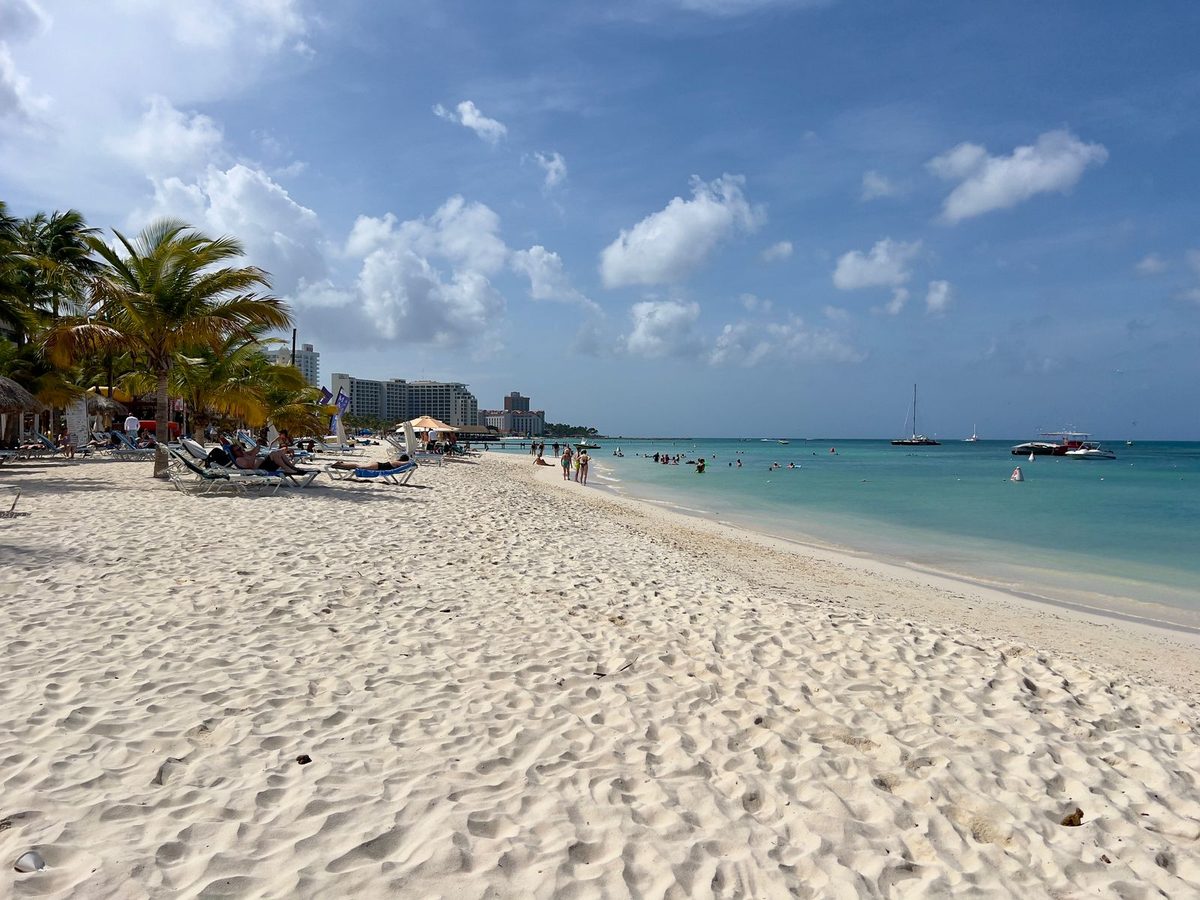
If there’s one activity that makes May more than just “a cheaper version of winter,” it’s this. Those strong spring trade winds I mentioned turn Aruba’s western and northwestern shoreline into one of the best windsurfing and kitesurfing arenas on Earth, and May is right in the heart of the prime wind season. This is the month I’d specifically tell a wind-sports traveler to target.
Hadicurari (Fisherman’s Huts)
The epicenter is Hadicurari Beach, universally known as Fisherman’s Huts, just north of the Palm Beach high-rise strip. The setup here is close to ideal for the sport: steady, powerful cross-shore wind, and a wide patch of shallow, flat, turquoise water held in by an offshore reef, so beginners get a forgiving learn-to-ride lagoon while experts get speed and space. On a breezy May afternoon the bay fills with a moving quilt of sails and kites, and honestly, it’s worth driving up just to watch even if you never touch a board. Several schools operate right on the sand and rent gear and run lessons.
The rest of the water
May’s wind is a gift to board sports, but it doesn’t spoil everything else — the calmer mornings and the sheltered spots stay perfectly swimmable and snorkel-friendly. The sea is a bath-warm 81°F (27°C), visibility is good in the dry season, and the island’s signature outings are all in season: catamaran sails to the Antilla shipwreck, snorkeling at Boca Catalina and Malmok, scuba trips, stand-up paddleboarding in the lee of the reef, and the classic sunset cruise off the west coast. For the full menu, see our guide to Aruba water sports, and if warm water is what you care about, our Aruba water temperature month-by-month guide confirms May sits right in the comfortable zone.
Events in May: Soul Beach, Hi-Winds, and more
May punches above its weight for events, which is a nice bonus on top of the weather and the value. Two stand out, and both are the kind of thing you’d plan a trip around — just confirm the current year’s dates on the official sites before you book, because they move.
Soul Beach Music Festival
This is Aruba’s marquee international music event, traditionally staged over the US Memorial Day weekend at the end of May. It’s a multi-day blend of R&B, hip-hop, and soul headliners plus comedy shows, and it draws a big, celebratory crowd that fills the Palm Beach resorts. If you want to be here for it, book your accommodation two to three months ahead — this is the one weekend in May when rooms get tight and rates jump. Dates and the exact lineup vary year to year (and have been announced for different late-May weekends in the past), so check the official festival schedule for the year you’re traveling rather than assuming.
Aruba Hi-Winds
For the wind-sports crowd, Hi-Winds is the headliner. It’s a long-running amateur windsurfing and kitesurfing tournament — the 2026 edition is the 38th — held right at Fisherman’s Hut/Hadicurari, with several days of racing, freestyle, kite cross, beach parties, and a genuinely fun spectator scene (watching is free). Recent editions have landed in the second half of May, which dovetails perfectly with the month’s peak winds, though it has historically floated around the May–June line, so verify the dates for your year on the event’s site. Even if you’re not competing, catching a Hi-Winds heat from the beach is a highlight.
And the everyday rhythm
Beyond the big two, May keeps the island’s year-round nightlife and dining scene fully switched on — the beach bars, the casinos, the Palm Beach strip after dark. If a lively evening matters to your trip, our Aruba nightlife guide covers where to go.
The best things to do in Aruba in May
Because the weather is so reliable and the crowds are thin, May is a fantastic month to actually do the island rather than just lie on it. Here’s how I’d think about filling the days.
Beach days, with room to breathe
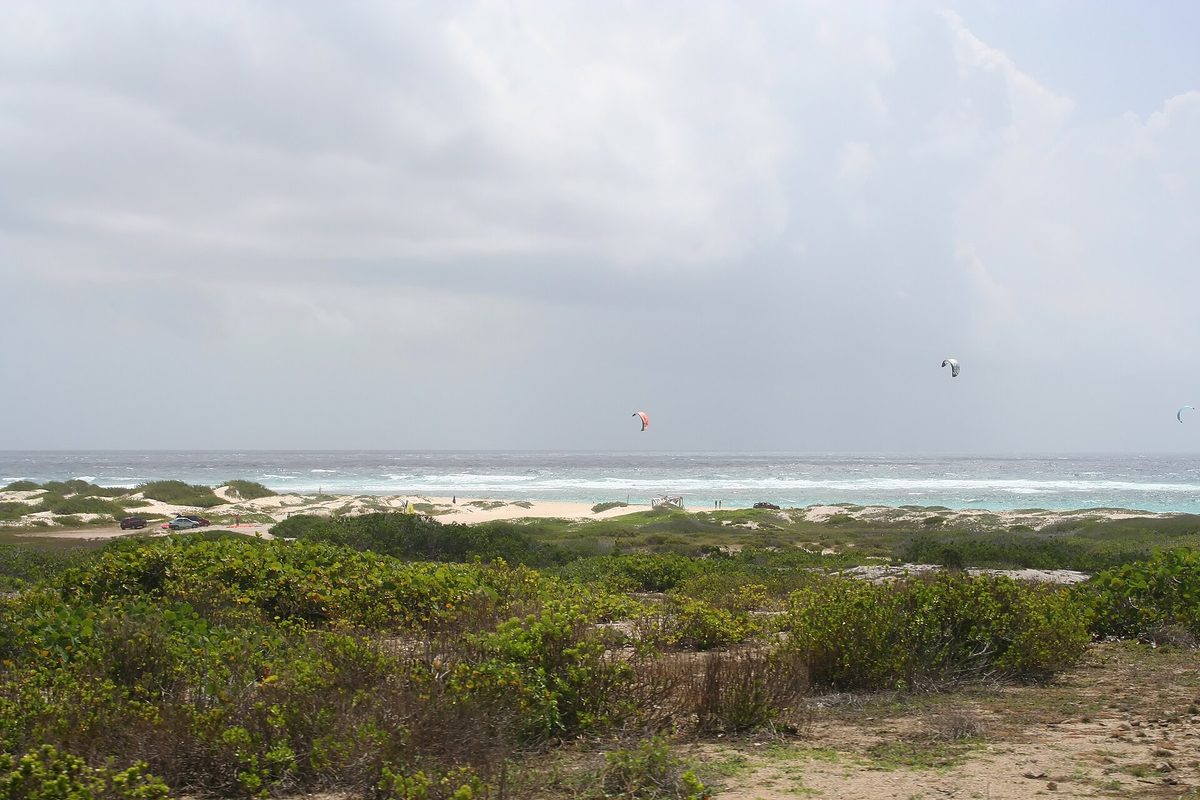
Start where everyone starts, because in May you can have it on better terms. Eagle Beach — that broad ribbon of powder-white sand with the famous leaning divi-divi trees — routinely ranks among the best beaches in the Caribbean, and in May you can find a stretch of it to yourself far more easily than in winter. Up the coast, Palm Beach is the livelier, high-rise-backed scene with watersports, beach bars, and a long pier; it’s where the action is. For the complete lay of the land, our roundup of Aruba’s best beaches sorts the calm-swim coves from the windswept surf breaks.
Get out on (and under) the water
This is the month to book the catamaran day-sail, the snorkel-and-shipwreck trip, or a dive. The dry-season clarity and warm sea make May excellent for it, and with fewer visitors the boats are less packed. A sunset cruise on a breezy May evening, drink in hand as the sky goes orange behind the divi-divi trees, is about as good as a vacation evening gets.
Explore the desert interior
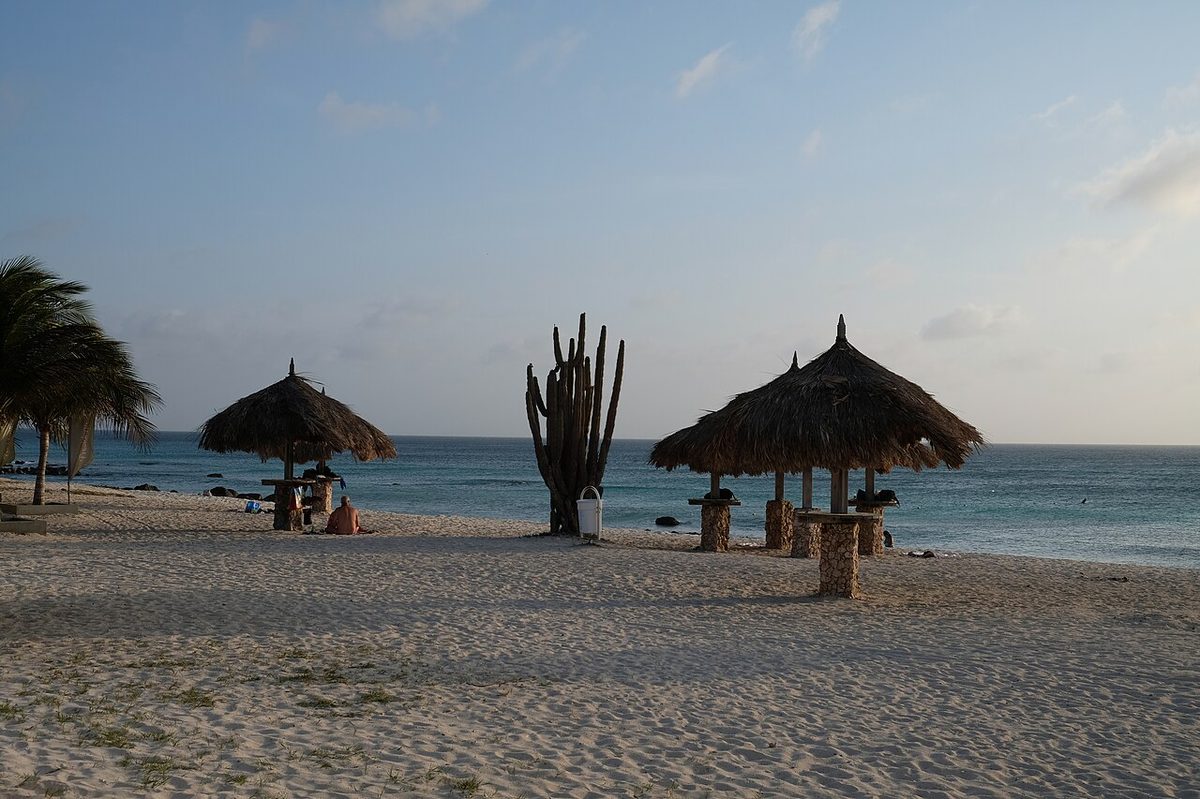
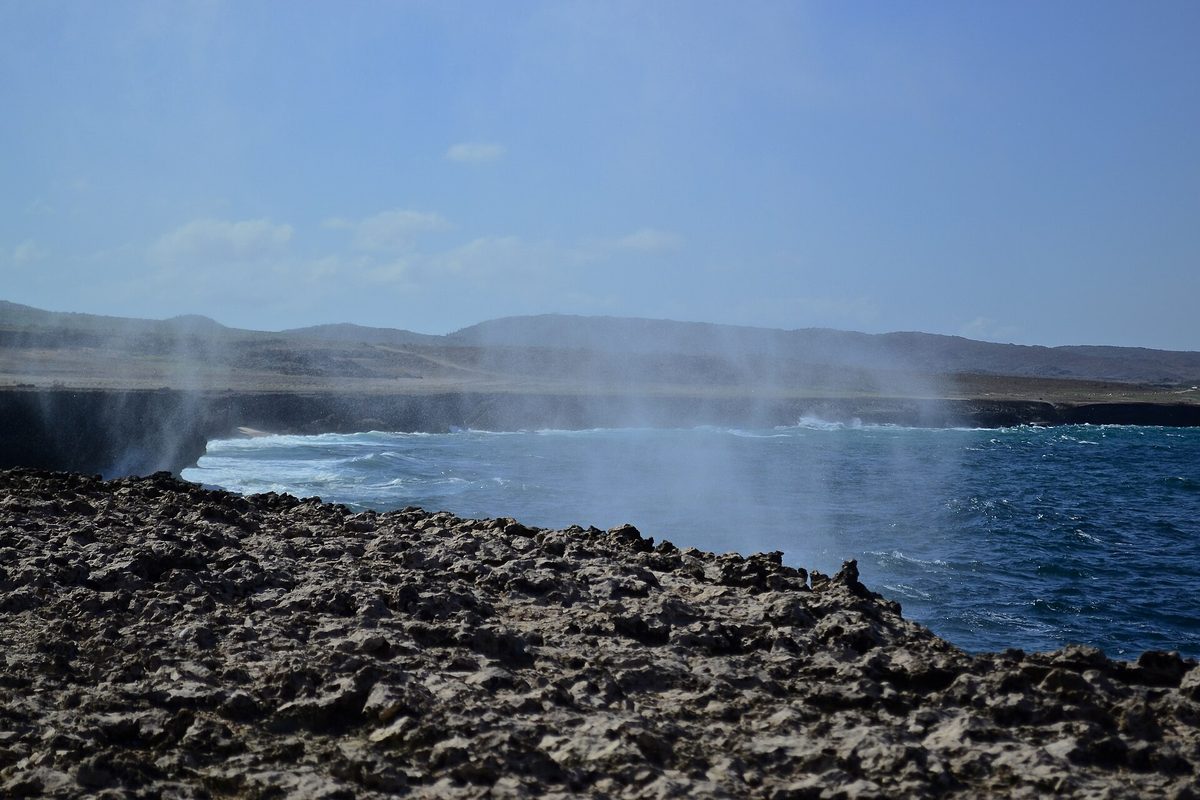
Aruba isn’t all beach — two-thirds of it is a rugged, cactus-studded desert, and the cooler-feeling, drier conditions of late spring make exploring it more comfortable than the deep-summer furnace. Rent a 4×4 or join a Jeep or UTV tour into Arikok National Park to see the wind-sculpted rock formations, the old gold-mill ruins, hidden coves, and the Natural Pool (Conchi) tucked into the wild north coast. It’s a completely different side of the island from the resort strip. Our master list of things to do in Aruba and the curated best things to do in Aruba have the full slate of options.
Eat, shop, and wander Oranjestad
With restaurants easy to get into, May is a good month to eat well — fresh local catch, the island’s signature keshi yena, the Dutch-Caribbean fusion that defines Aruban dining. Wander the pastel Dutch colonial streets of Oranjestad, browse the shops, and ride the free downtown streetcar. It’s the kind of low-key day that rounds out a trip nicely between beach sessions.
April vs May vs early June: which shoulder month wins?
The at-a-glance table up top gives you the numbers; here’s the judgment to go with them, because the differences between these three months are real even though the weather barely budges.
April: the tail of high season
April is a month of two halves. The first part still carries peak-season DNA — Easter and the back end of spring break keep crowds up and prices high, and you’ll want to book ahead. The weather is gorgeous, with highs creeping toward 90°F and the trade winds blowing strong. But once Easter passes, the island starts to exhale: rates begin to slide, restaurants loosen up, and late April becomes one of the smartest windows of the year — high-season conditions with the crowd already thinning. If your dates are flexible, the back half of April behaves a lot like May. For the deeper dive, our Aruba weather by month guide covers April’s split personality in more detail.
May: the value sweet spot
May takes late April’s best qualities and extends them across a whole month. The weather is virtually identical — same heat, same sun, same wind — but the crowds are thinner still and the prices are at or near their annual floor for most of the month. You also pick up the events: the wind-sports season peaks and the festivals land here. The only soft spot is the Soul Beach weekend pricing bump at month’s end. If I had to pick a single month for the best overall blend of weather, value, and breathing room, May would be it — which is the whole reason this guide leads with the paradox it does.
Early June: summer begins, quietly
Cross into June and not much changes underfoot: the weather stays hot and dry, the sea is even warmer, and the crowds are the thinnest of the three months as the stay-over count dips. Prices remain low. The two things to note are that the heat starts to build toward the midsummer peak, and that the Atlantic hurricane season technically opens on June 1 — though Aruba’s position at the far south of the Caribbean keeps its actual risk very low, which is exactly why the island leans on its “outside the hurricane belt” reputation. If you’re curious how the rest of summer unfolds, see our Aruba in summer guide, and for the risk question specifically, the Aruba hurricane season explainer puts the numbers in perspective.
Who should visit Aruba in May (and who maybe shouldn’t)
May is a brilliant fit for a lot of travelers and a slightly awkward one for a few. Let me be candid about both.
May is ideal if you’re:
- A value-minded traveler who wants winter-grade weather without winter-grade prices. This is the headline case — couples, solo travelers, and anyone watching the budget get the best deal of the year here without sacrificing sunshine.
- A windsurfer, kitesurfer, or wind-sports fan. The peak trade winds and the Hi-Winds event make May arguably the single best month to come for board sports.
- A crowd-averse beach lover. If your idea of paradise includes actually finding space on the sand and a same-night dinner reservation, May delivers.
- A honeymooner or couple wanting warm, romantic, uncrowded beaches and sunset sails on a smaller budget. Our Aruba honeymoon guide leans into this.
- Heat-tolerant. If high-80s with strong sun and constant breeze sounds wonderful rather than oppressive, you’ll love it.
May might not be your month if you’re:
- Very sensitive to heat or strong wind. The breeze is constant and the sun is intense; if you wilt above the mid-80s, the cooler-feeling depths of winter might suit you better — see our Aruba in winter guide.
- Chasing the glittery winter high-season social scene — the see-and-be-seen, packed-resort energy of January and February. May is mellower by design.
- Locked into the Soul Beach weekend on a tight budget. If your only available dates are Memorial Day weekend, you’ll pay more and book earlier than the rest of May requires.
Planning tips for an Aruba trip in May
A few practical notes to make the most of the month. Pack for sun and wind: high-SPF reef-safe sunscreen, a hat that won’t blow away, sunglasses, and light, breathable clothing. Book the Soul Beach weekend early if that’s your window, and book everything else relatively late if you want to chase deals — May rewards flexibility. Rent a car or 4×4 for at least a day to reach the windward beaches and Arikok; the island is small (just 20 miles long) and easy to drive. Reserve a windsurf lesson or catamaran sail if those are priorities, but you’ll generally have more same-week availability than in winter. And stay hydrated — the wind is deceptive and you’ll lose more water than you think. For where to base yourself, our guide on the island’s hotel areas compares Palm Beach, Eagle Beach, and beyond, and the Aruba itinerary guide helps you structure the days.
Frequently Asked Questions
Is May a good time to visit Aruba?
Yes — for many travelers it’s the best time. May delivers peak-season weather (hot, dry, sunny, breezy, with highs in the high 80s) at well below peak-season prices, because the winter crowds have left and hurricane season hasn’t begun. You get uncrowded beaches, easy reservations, strong wind-sports conditions, and hotel rates often 25–35% under their winter high. The main trade-off is heat and intense sun.
What is the weather like in Aruba in May?
Hot, dry, and windy. Expect daytime highs around 88–89°F (31–32°C), overnight lows near 79°F (26°C), a warm sea around 81°F (27°C), and only about an inch to an inch and a half of rain all month — usually brief morning showers. Strong, steady trade winds blow throughout, gusting past 30 mph at times, which keeps the heat feeling far more comfortable than the number suggests.
Does it rain a lot in Aruba in May?
No. May sits in Aruba’s dry season, averaging only about 1.1 to 1.4 inches of rain across roughly five to seven days, and most of that falls as short, passing showers — frequently around dawn — that clear quickly. It’s very rare to lose a full beach day to rain in May. The genuinely wet stretch of Aruba’s year is the autumn, not late spring.
Is May part of Aruba’s shoulder season?
Yes. May is the heart of Aruba’s spring shoulder season — the transitional window after the December–April winter high season and before deep summer. It’s an unusually rewarding shoulder season because Aruba’s dry weather lingers well past the winter crowds, so you get high-season sunshine at low-season prices. Late April and early June share the same sweet-spot quality.
How does Aruba in April compare to May?
The weather is nearly identical — both hot, dry, and breezy. The difference is timing: early April still carries peak-season crowds and prices because of Easter and spring break, while May is consistently quieter and cheaper all month. Late April starts to feel like May as rates ease. If you want the lowest crowds and prices with the same weather, May edges out April.
Is it hurricane season in Aruba in May?
No. The Atlantic hurricane season runs June 1 to November 30, so all of May falls before it begins. Even once the season opens, Aruba’s location at the far southern edge of the Caribbean — outside the main hurricane belt — means direct strikes are very rare. May carries essentially no tropical-storm risk, which is part of what makes it such a safe, reliable month to plan around.
How much can you save by visiting Aruba in May?
A fair amount. Hotel rates commonly run roughly 25–35% below their winter peak, and cruise fares to Aruba tend to hit their annual low in May. Villa rentals and many tours soften too. The exception is the Soul Beach Music Festival weekend at month’s end, when demand and prices spike. Outside that weekend, May is among the most affordable times to visit Aruba.
What is there to do in Aruba in May?
Plenty. It’s prime season for windsurfing and kitesurfing at Fisherman’s Huts, plus catamaran sails, snorkeling, diving, and sunset cruises in warm, clear water. On land, explore Arikok National Park and the Natural Pool by 4×4, relax on uncrowded Eagle and Palm beaches, dine and shop in Oranjestad, and time your trip for the Soul Beach Music Festival or Hi-Winds if the dates line up.
Final thoughts: the underrated month
I keep coming back to the same word for May in Aruba: underrated. It doesn’t have the marketing glow of the winter high season or the bargain-basement headlines of the deep off-season, so it slips under a lot of people’s radar — and that’s precisely its charm. You get the sunshine the February crowd paid a premium for, the wind that makes the island world-class for board sports, beaches with room to spread out, restaurants that’ll seat you tonight, and a bill that’s noticeably lighter. If you’ve only ever thought of Aruba as a winter destination, May is the month that quietly proves you’ve been overpaying. Check current rates and event dates for your travel year, pack good sunscreen, and go.
For the wider context, circle back to our best time to visit Aruba pillar guide, which sets every month side by side — May included.
By the ArubaTourism.org team — Last updated June 2026. We’re a team of Aruba travel writers and frequent visitors who cover the island season by season to help you plan the right trip at the right time. Weather figures are typical long-term averages drawn from public climate data; prices and event dates shift year to year, so always confirm current schedules and rates before booking.