By the ArubaTourism.org team — Last updated June 2026
Ask ten travel writers to name the most beautiful beach in the Caribbean and a surprising number will point to the same wide ribbon of powder-white sand on Aruba’s southwest coast. They’re describing Eagle Beach, the wide, low-rise stretch that has quietly become Aruba’s most celebrated shoreline. What sets Eagle Beach Aruba apart is what it lacks: no high-rise hotels stand on its sand, no wall of jet-ski vendors, no thumping beach club — and that absence is exactly why it keeps winning awards. In the 2026 Tripadvisor Travelers’ Choice “Best of the Best” list it was ranked the #3 beach in the entire Caribbean, and most visitors who split their stay between here and the busier strip up north end up wishing they’d spent every day on this one.
This guide covers everything that actually matters for planning a day (or a whole vacation) here: how to find it, where to park, the famous fofoti trees, the sea turtles that nest in the sand, the low-rise hotels and restaurants within walking distance, and exactly how Eagle Beach stacks up against Palm Beach so you can choose well.
The short answer: what makes Eagle Beach special
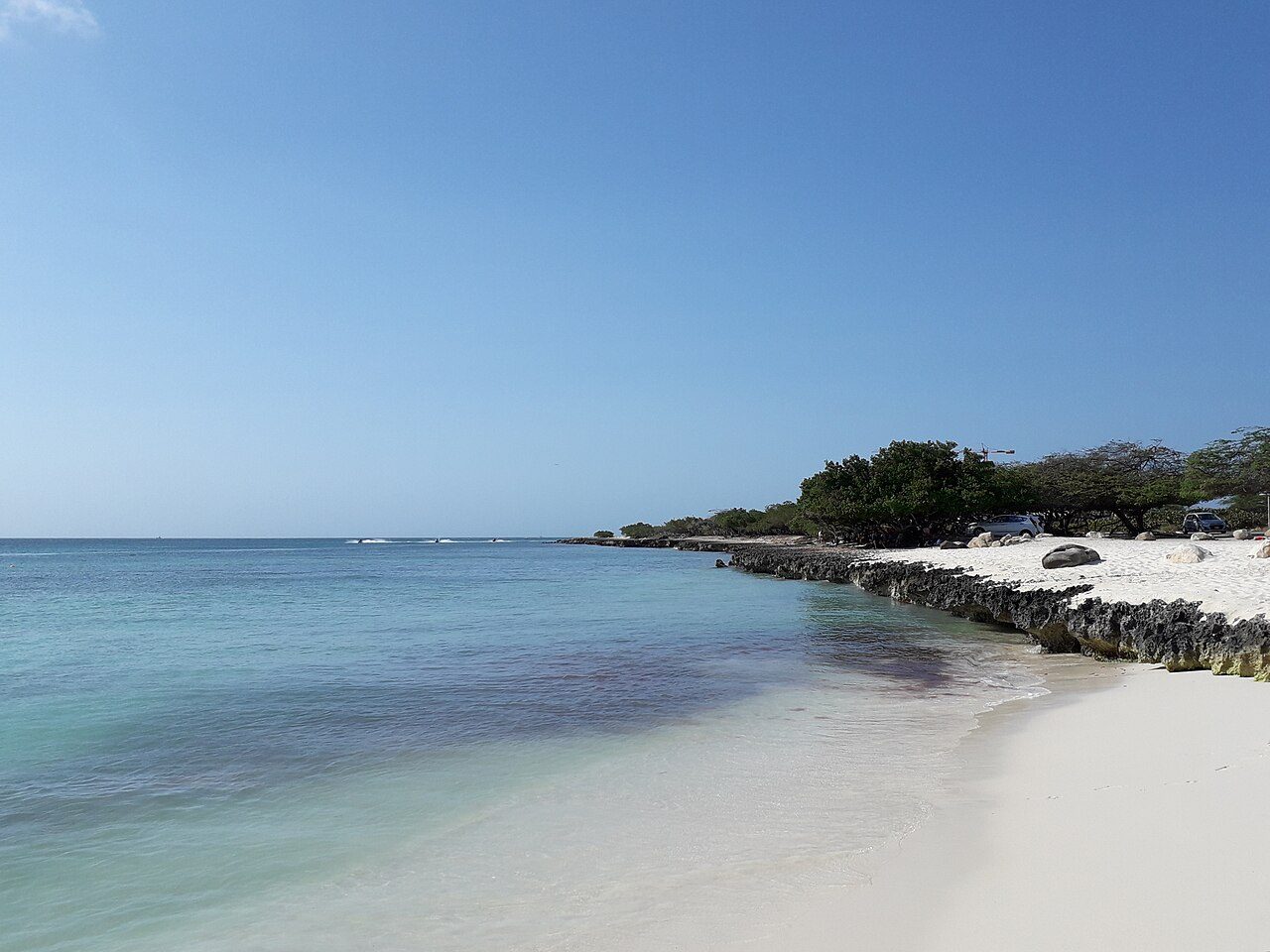
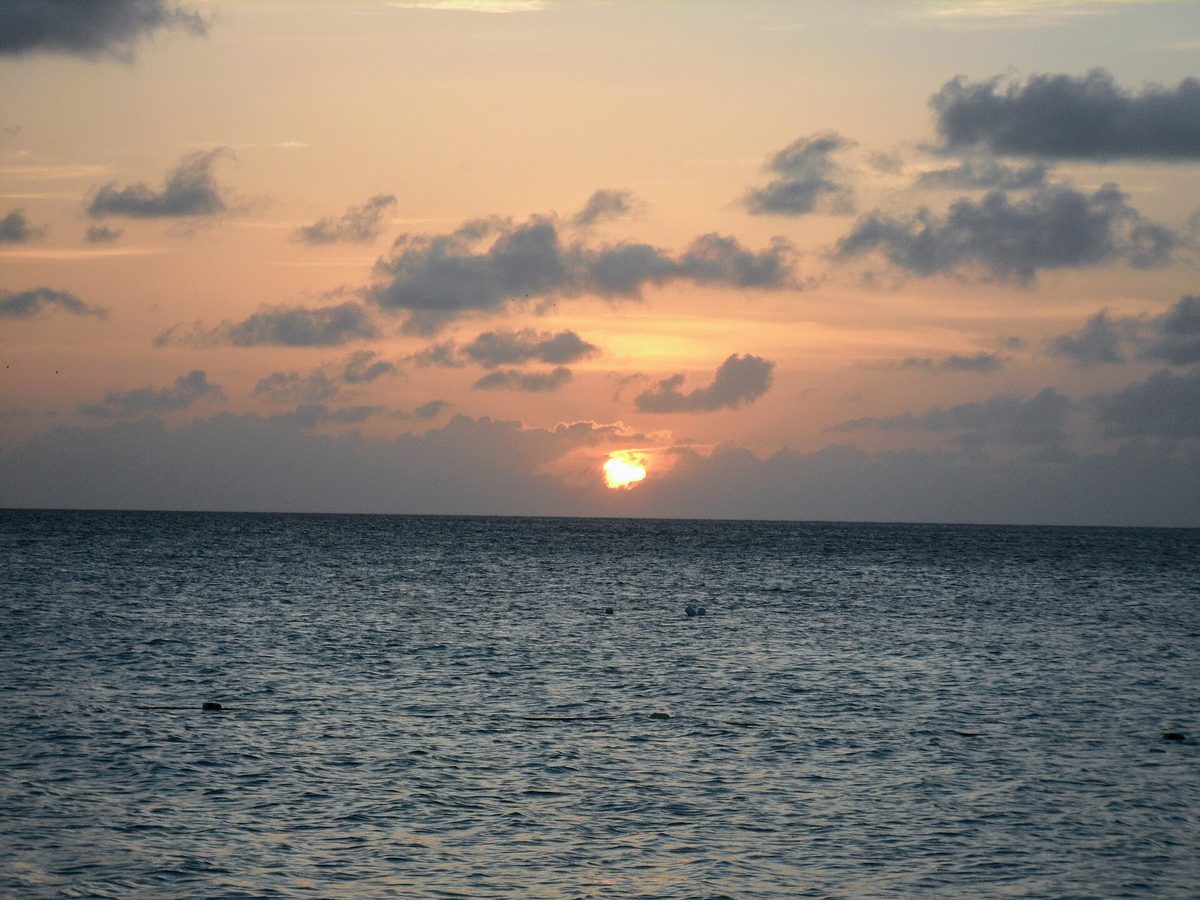
Eagle Beach is Aruba’s widest beach — a long, gently curving stretch of soft white sand on the calm, protected west coast, famous for its two photogenic fofoti trees, turquoise swimming water, and a quieter, low-rise atmosphere with no big resorts on the sand. It faces due west, so the sunsets are extraordinary, and it’s one of the island’s most important sea-turtle nesting sites. Free to enter, free to park, and open to everyone.
Nothing is built on the sand here, so “beachfront” means across a quiet road — I explain which properties genuinely qualify in my guide to Aruba’s beachfront hotels.
Eagle Beach at a glance
| Feature | What to know |
|---|---|
| Location | Southwest (Low-Rise) coast, J.E. Irausquin Blvd, ~3 km south of Palm Beach |
| From the airport | About 5–7 miles (10–15 minutes by car) from Queen Beatrix International (AUA) |
| Sand & water | Wide, soft white sand (40–60 m deep at low tide); calm, clear, turquoise, shallow entry |
| Famous for | The fofoti trees, sea-turtle nesting, and being one of the world’s top-ranked beaches |
| Cost | Free to access; free public parking; chair/umbrella and watersport rentals cost extra |
| Best for | Couples, swimmers, photographers, sunset-chasers, families wanting space |
| Facilities | Public restrooms, beach huts/palapas, food truck, watersport stands; restaurants across the road |
| Don’t miss | Sunset behind the fofoti trees; turtle nesting season (roughly March–September) |
Why Eagle Beach Aruba is considered the island’s best
Aruba is not short on gorgeous coastline, so what pushes Eagle Beach to the top of nearly every list? Three things, mostly.
The width. This is the widest beach on the island. At low tide there are 40 to 60 metres of dry, soft sand between the dune line and the water — enough room that even on a busy February afternoon you can find a patch to yourself without your towel touching a stranger’s. That space is a big part of why it never feels crowded the way the hotel-front sand up north can.
The sand and water. The sand is genuinely powder-soft and stays comfortable underfoot, and because the whole west coast is sheltered from the Atlantic swell by the island’s own geography, the Caribbean here is usually calm, clear and a ridiculous shade of turquoise. The entry is gentle and shallow, so it’s an easy, reassuring place to swim.
The lack of development on the sand. Unlike Palm Beach, where high-rise resorts line the shore and stake out the front rows with loungers, no hotel sits directly on most of Eagle Beach. The low-rise hotels are set back across the road. The practical effect is fewer vendors, less noise, more open sand and a slower, more natural feel — the beach belongs to everyone, not to a resort.
Add the Blue Flag environmental certification, the protected fofoti trees and the nesting turtles, and you get a beach that’s beautiful and looked after. It’s a short drive from almost anywhere on the populated side of the island, which makes it an easy addition to any Aruba itinerary, whether you’re here for three days or two weeks.
The fofoti trees: Aruba’s most photographed landmark
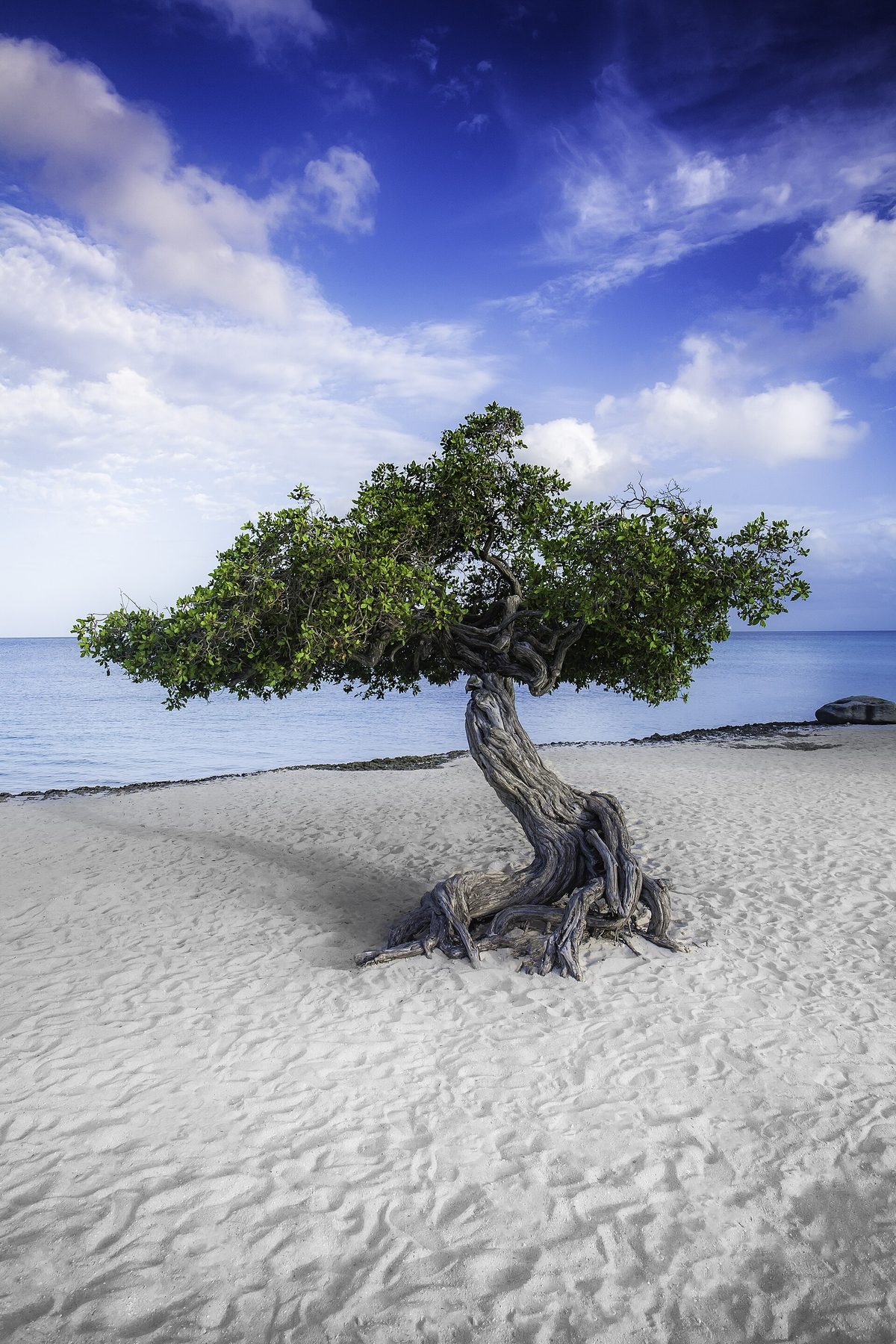
If you’ve ever seen a postcard, screensaver or airline ad for Aruba, you’ve almost certainly seen the two windswept trees that stand on Eagle Beach. Their gnarled trunks and branches lean dramatically toward the southwest, sculpted over decades by the island’s relentless trade winds, and they’ve become the unofficial symbol of the whole island.
A quick myth to bust: these are fofoti trees (Conocarpus erectus, a member of the button mangrove family), not the divi-divi tree they’re so often confused with. Both lean the same way for the same reason — the constant northeasterly wind — but the divi-divi (locally watapana) is a different species you’ll see scattered across Aruba’s interior. The fofoti has thicker, greyish bark and evergreen leaves and tends to grow near the coast. Knowing the difference is a small piece of local literacy that locals genuinely appreciate.
Both trees on Eagle Beach are now protected by law. That means a couple of simple courtesies: don’t climb on them, and don’t hang bags, towels or hammocks from the branches. They’re older and more fragile than they look, and they’re a shared treasure.
Photographing the fofoti trees
For the classic silhouette shot, come at sunset — the trees sit on the western shore, so the sun drops right behind them and lights the sky on fire. Sunrise is the secret alternative: the light is soft, the beach is nearly empty, and you’ll have the trees to yourself. Midday is the worst time for photos (harsh overhead light) but the best time for that glowing-turquoise-water look. A wide shot from the dune side captures both trees and the sea; get low to the sand for the most dramatic angle.
Where exactly is Eagle Beach — and how to get there
Eagle Beach runs along J.E. Irausquin Boulevard on Aruba’s southwest coast, in the area known as the Low-Rise hotel district. It’s the same continuous ribbon of coastline as the famous strip to the north: heading south, Palm Beach becomes Manchebo Beach, which becomes Eagle Beach. From the Palm Beach high-rises it’s only about 3 km.
From Queen Beatrix International Airport it’s roughly 5 to 7 miles, a 10- to 15-minute drive depending on traffic. Here are your options for actually getting there:
- Rental car: The most flexible choice, and parking is free (more on that below). Drive south on J.E. Irausquin Boulevard; the beach is well signed.
- Taxi: Aruba taxis run on fixed government rates rather than meters. From Palm Beach expect roughly $10–15 for the short hop (about 10 minutes); from the airport, more. Agree the fare before you get in. One quirk: some drivers won’t take wet, sandy passengers, so plan your return.
- Public bus (Arubus): The island’s reliable public bus runs the Oranjestad–Eagle Beach–Palm Beach corridor for around $2.60 per trip. It’s a genuinely useful, cheap option if your hotel is near a stop.
- Walk or bike: If you’re staying on Palm or Manchebo Beach, you can walk or rent a bike and follow the beachfront path south.
Parking at Eagle Beach
Parking is free and refreshingly easy by Caribbean standards. There’s a dedicated lot near the beach plus plenty of parallel street parking along the boulevard and the side streets. Arrive before about 11 a.m. in high season (December–April) to land a spot close to the sand. One firm rule: never drive or park on the sand or dunes — it’s prohibited, and it protects the turtle nests buried just under the surface.
Swimming, snorkeling and water sports
The water at Eagle Beach is about as friendly as the Caribbean gets: calm, clear and shallow for a good distance out, with a soft sandy bottom and no significant surf on a normal day. That makes it excellent for unhurried swimming and floating, and a comfortable place for kids and nervous swimmers.
For snorkeling, be honest with your expectations. Eagle Beach is a swimming beach — the bottom is mostly sand, so you won’t find the reef life you’d get at Aruba’s rockier spots like Boca Catalina, Malmok or Arashi up north. You’ll see the occasional fish, but if marine life is your priority, treat Eagle as your sunbathing base and book a boat trip for the good stuff.
On-sand watersport stands such as Julio’s Watersports and Frank’s Place rent the basics — kayaks, stand-up paddleboards, snorkel gear and the like — though the selection is deliberately lighter here than on the activity-packed strip to the north. For jet skis, parasailing, and the bigger menu of adventures, see our full guide to water sports in Aruba. Many visitors use Eagle Beach as their morning swim-and-relax spot and join an afternoon catamaran or snorkel cruise along the calm west coast to see the Antilla shipwreck and the reefs.
Sea turtles at Eagle Beach: when and how to see them
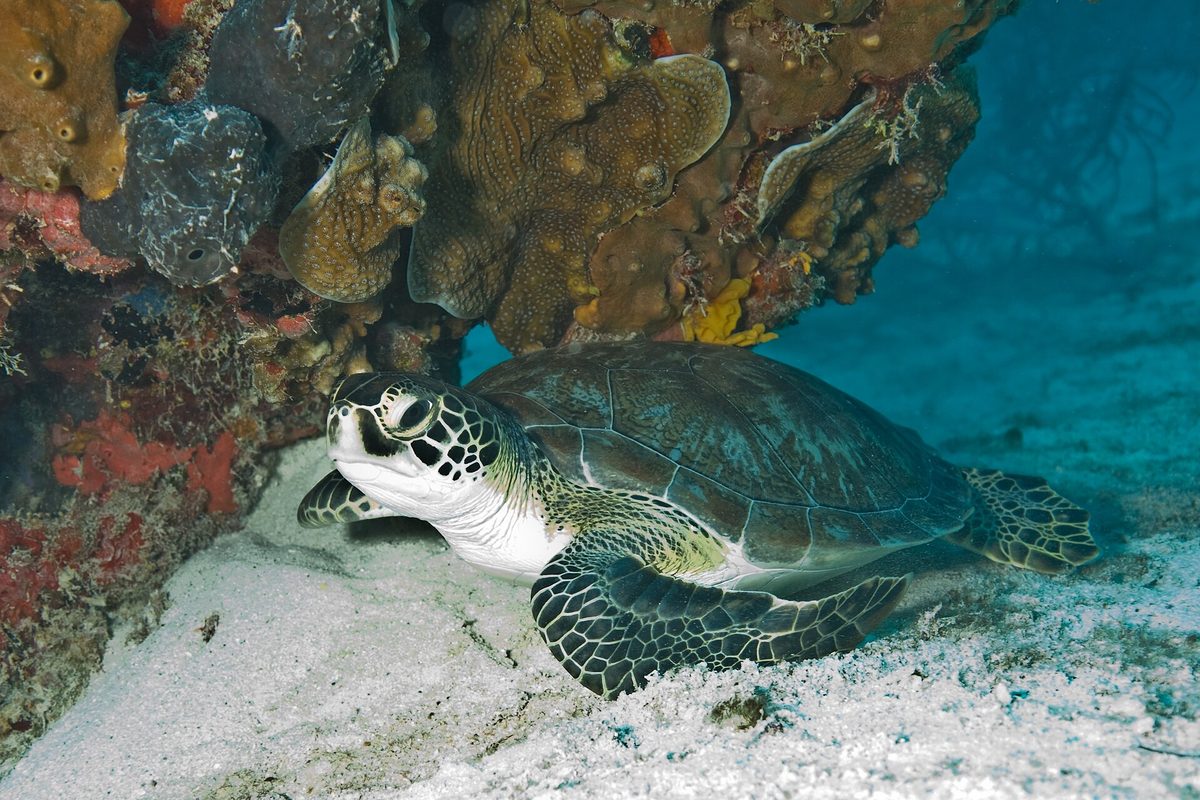
Eagle Beach is one of Aruba’s most important sea-turtle nesting beaches. Four species nest on the island — leatherback, loggerhead, green and hawksbill — and a large share of those nests end up in Eagle Beach’s wide, soft sand. Nesting season runs roughly from March to September, with hatchlings emerging through the summer and into the fall.
During the season you’ll see roped-off, marked-off nest sites dotted along the beach, looked after by the local conservation group Turtugaruba. If you want the best odds of seeing a turtle, walk the beach at dawn during nesting season — quietly, and from a respectful distance. A few non-negotiable rules protect both the turtles and your good karma:
- Never touch, sit on, or dig near a marked nest.
- At night, keep lights (including phone screens and flash) off near the water — artificial light disorients hatchlings.
- Fill in any holes you dig and remove your gear at the end of the day, so hatchlings don’t get trapped.
- Keep your distance from any turtle on the sand; let it do its thing.
For an almost-guaranteed encounter, book a guided turtle snorkel tour (they typically launch elsewhere on the coast, like Tres Trapi). But simply being on Eagle Beach at the right time of year, eyes open, is one of the most memorable free things you can do here.
Eagle Beach hotels: where to stay in the Low-Rise district
One of Eagle Beach’s quiet advantages is its hotels. Instead of the towering resorts up north, this stretch is the island’s Low-Rise district — smaller, lower-key properties that give the whole area a relaxed, almost residential feel. If you want to wake up steps from the best beach on the island without the mega-resort buzz, this is where you stay. A few standouts, across budgets:
Bucuti & Tara Beach Resort
The romantic heavyweight. This adults-only resort sits directly on Eagle Beach and is consistently rated among the best hotels not just in Aruba but in the world, with a long list of Tripadvisor Travelers’ Choice honors. Its beachfront Elements restaurant is a perennial pick for the most romantic dinner on the island. If your budget stretches and you’re here as a couple, it’s hard to beat.
Amsterdam Manor Beach Resort
A charming boutique option across the road from the sand, with around 72 studios and suites done in cheerful Caribbean colors, many with kitchenettes. It’s small enough that the staff learn your name, and the rooftop Horizons bar is a local-favorite sunset spot. Good value for the location.
JOIA Aruba by Iberostar
One of the newer arrivals, this upscale all-inclusive brings a polished, modern feel to the Low-Rise strip — a strong choice if you want all-inclusive convenience without the frenetic energy of a big Palm Beach resort. See how it compares in our roundup of Aruba’s best all-inclusive resorts.
Eagle Aruba Resort & Casino
A solid mid-range pick just across from the beach, with multiple pools (including a waterslide pool for kids and an adults-only pool), a casino and roomy suites with kitchenettes. A practical base for families who want space and self-catering.
Embassy Suites by Hilton Aruba Resort
Opened in 2023, this beachfront Hilton has quickly earned good reviews for its included breakfast, comfortable all-suite rooms and reliable-brand consistency — a dependable choice if you like knowing exactly what you’re getting.
That’s just the Eagle Beach shortlist; for the full island picture, including how the Low-Rise area compares with Palm Beach and downtown, read our complete guide to where to stay across Aruba.
Where to eat near Eagle Beach
You won’t go hungry here — the boulevard and the hotels just across from the sand hide some of the island’s best-loved restaurants, and there’s beach food right on the sand too.
- Passions on the Beach — The signature Eagle Beach experience: torch-lit tables set right on the sand at sunset. Touristy in the best way, and worth doing once for the setting alone.
- Elements (at Bucuti & Tara) — Adults-only, sustainability-minded beachside dining that regularly tops “most romantic” lists.
- Food Truck Eagle Beach — Right on the beach for an easy, cheap lunch: chicken, steak, pork and grouper plates for around $8. Perfect when you don’t want to leave your spot.
- Willem’s Dutch Pancakes — Casual, crowd-pleasing breakfast and lunch a short stroll away.
- Nearby variety — Within a mile you’ll find Italian (Terrazza Italiana), Peruvian (Así Es Mi Peru), and reliable favorites like Screaming Eagle and Chalet Suisse.
For a fuller rundown by cuisine, price and neighborhood, see our guide to the best restaurants in Aruba.
Eagle Beach vs Palm Beach: which should you choose?
This is the question almost every first-time visitor wrestles with, because the two beaches are only a few minutes apart yet feel completely different. The short version: Eagle Beach wins on pure beauty and calm; Palm Beach wins on convenience and energy. Here’s the side-by-side.
| Category | Eagle Beach | Palm Beach |
|---|---|---|
| Width & space | Wider (40–60 m at low tide); more open sand | Narrower; busier in front of hotels |
| Crowd & vibe | Quieter, calmer, more natural | Lively, energetic, lots of foot traffic |
| Hotels | Low-rise, set back across the road | High-rise resorts directly on the sand |
| Water sports | Limited (kayaks, SUPs, snorkel rentals) | Full menu — jet skis, parasailing, banana boats |
| Dining & nightlife | A handful of excellent spots; low-key | Dense — many restaurants, bars, casinos |
| Best for | Couples, photographers, swimmers, sunsets | Families wanting action, nightlife, convenience |
Here’s the good news: you don’t really have to choose. They’re a 10-minute drive apart, so plenty of people stay near one and visit the other. A common winning combo is to base yourself in the lively north for the amenities and make the short trip down to Eagle Beach for your actual beach days and sunsets. Both belong on any shortlist of the best beaches in Aruba.
Best time to visit Eagle Beach
Aruba sits below the hurricane belt and stays warm, dry and sunny almost year-round — daytime temperatures hover around 82–88°F (28–31°C) with a near-constant cooling trade wind — so there’s no truly bad time to come. That said, timing affects crowds, price and what’s happening on the sand.
Season: December through April is peak — best weather, highest prices, busiest beach. May through early December brings noticeably lower hotel rates and thinner crowds with very similar weather, which makes the quieter months genuinely underrated. For a month-by-month breakdown, see our guide to the best time to visit Aruba.
Time of day: Come early (before 11 a.m.) for the easiest parking, the softest light and the calmest scene. Stay for sunset — facing due west, Eagle Beach delivers one of the best free shows on the island, especially behind the fofoti trees. Midday is hottest and brightest; that’s the time for swimming, not photography.
Time of year for turtles: If seeing nesting turtles matters to you, aim for the March–September window and walk the beach at dawn.
Practical tips and what to bring
A few things make a day at Eagle Beach smoother:
- Reef-safe sunscreen is the law. Aruba bans sunscreens containing oxybenzone to protect its reefs and marine life. Bring a mineral, reef-safe formula — and you’ll need it, because the trade wind hides how strong the sun is.
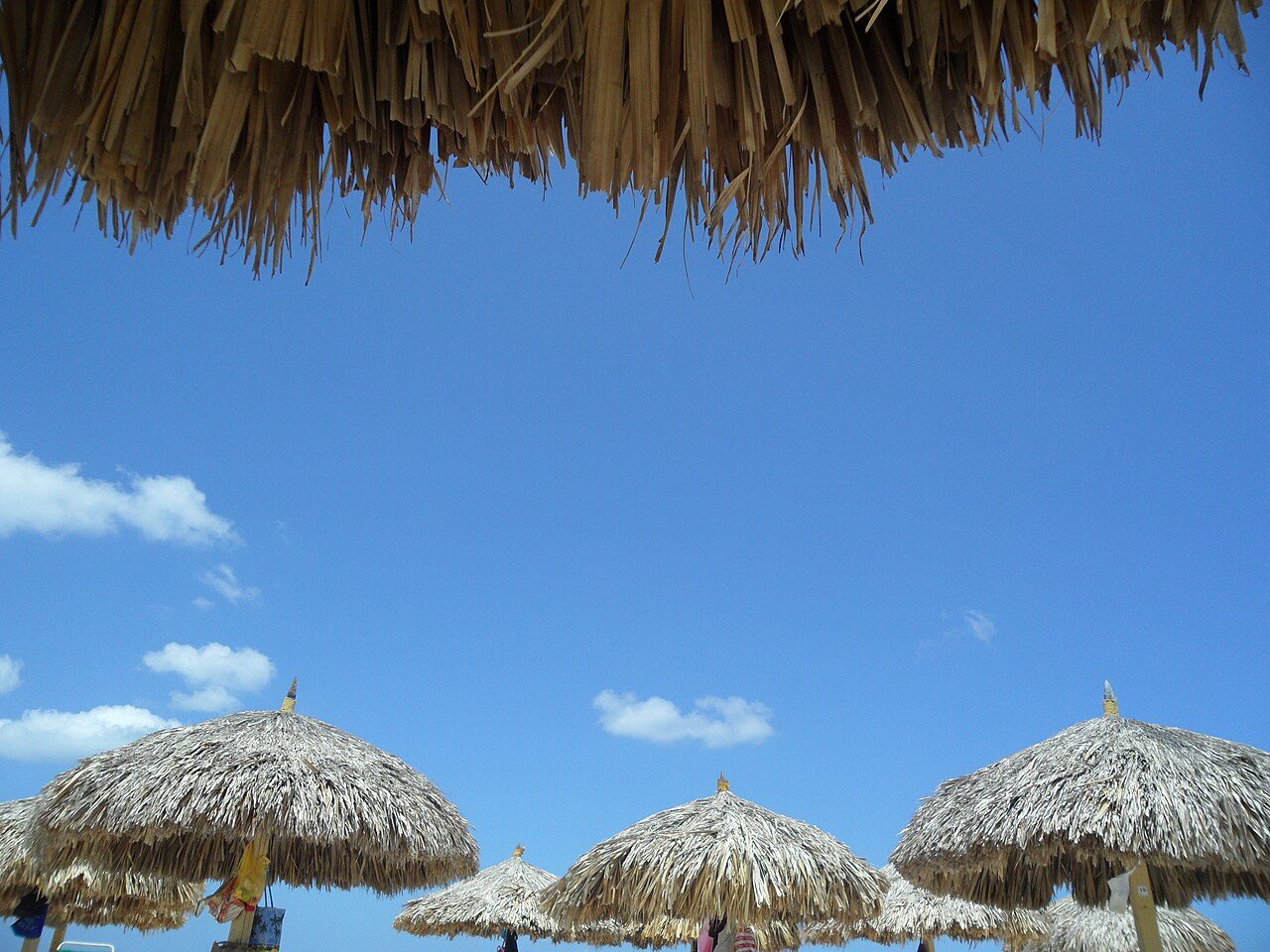
- Bring or rent shade. There are some palapas/huts and a few shade structures, but they go fast. Chair-and-umbrella rentals are available; in high season they can sell out by midday, so arrive early or bring your own.
- Cash for small things. The US dollar is accepted everywhere on the island, so no currency exchange is needed for American travelers — handy for the food truck and rentals.
- Pack light but smart. Water, a hat, a dry bag, and water shoes if you have tender feet (the sand gets hot midday).
- Facilities: There are public restrooms near the beach, and restaurants across the road if you need more.
- Mind the nests and dunes: stay off the dunes, fill in holes, and give marked turtle nests a wide berth.
For broader planning — money, safety, etiquette and packing — our Aruba travel tips guide rounds it all up.
Eagle Beach by traveler type
Couples: This is the romantic beach. Sunset behind the fofoti trees, a barefoot dinner at Passions on the Beach, an adults-only stay at Bucuti & Tara — it’s no accident Eagle Beach features on so many Aruba honeymoon itineraries.
Families: The calm, shallow water and wide-open sand make it easy with kids, and the food truck saves a midday meltdown. See more ideas in our guide to Aruba with kids.
Budget travelers: The beach itself is free, parking is free, the bus is cheap, and the food truck is a bargain — Eagle Beach is one of the best free things to do in Aruba. It’s a reliable way to keep your Aruba vacation cost down without missing the headline experience.
Frequently asked questions about Eagle Beach
Why is Eagle Beach famous?
Eagle Beach is famous for being one of the widest, whitest and most beautiful beaches in the Caribbean, for the two iconic fofoti trees that make it Aruba’s most photographed spot, and for its calm turquoise swimming water. It regularly lands in global “best beach” rankings — most recently #3 in the Caribbean in the 2026 Tripadvisor Travelers’ Choice awards — and it’s a protected sea-turtle nesting site.
Is Eagle Beach free and open to the public?
Yes. Like every beach in Aruba, Eagle Beach is public and free to access, and the parking is free too. You only pay if you choose to rent a chair, umbrella or watersport gear, or buy food and drinks. Arrive early in peak season, as rental loungers can sell out by midday.
Is Eagle Beach or Palm Beach better?
It depends on what you want. Eagle Beach is wider, quieter and more beautiful, with the fofoti trees and spectacular sunsets — best for couples, swimmers and photographers. Palm Beach is busier and more built-up, with high-rise resorts on the sand, more water sports, restaurants and nightlife — best for families wanting action and convenience. They’re only about 10 minutes apart, so many visitors enjoy both.
How far is Eagle Beach from the airport?
Eagle Beach is roughly 5 to 7 miles from Queen Beatrix International Airport (AUA) — about a 10- to 15-minute drive. From the Palm Beach hotel strip it’s only about 3 km, or a $10–15 taxi ride.
Can you see sea turtles at Eagle Beach?
Yes. Eagle Beach is one of Aruba’s most active nesting beaches for all four local sea-turtle species, mainly between March and September. You’ll see marked, roped-off nests during the season; walk the beach quietly at dawn for the best chance of spotting a turtle, and never disturb a nest. Guided turtle snorkel tours offer the most reliable in-water encounters.
What is the fofoti tree?
The fofoti (Conocarpus erectus) is a coastal tree in the button mangrove family whose trunk leans permanently southwest, shaped by Aruba’s steady trade winds. It’s frequently mistaken for the divi-divi (watapana) tree, which leans the same way but is a different species found inland. The two fofoti trees on Eagle Beach are protected by law and are the island’s most photographed natural landmark.
Do I need a car to visit Eagle Beach?
Not necessarily. If you’re staying in the Low-Rise or Palm Beach areas you can reach Eagle Beach on foot, by bike, by cheap public bus (about $2.60) or by a short taxi ride. A rental car is handy if you also plan to explore Arikok National Park and the rugged north coast, but it isn’t essential for the beach itself.
Is Eagle Beach safe?
Yes. Aruba is consistently one of the safest islands in the Caribbean, and Eagle Beach is well-used and safe during the day and into the evening. Apply normal common sense: don’t leave valuables unattended on the sand while you swim, and keep an eye on the strong sun and the trade wind, which can mask sunburn.
Final thoughts
Eagle Beach earns its reputation. It’s the rare famous beach that’s actually better in person than in the photos — wider, calmer and more genuinely beautiful, with sea turtles in the sand and those two leaning trees catching the last gold light of the day. Whether you spend one slow afternoon here or build your whole trip around it, plan to arrive early, stay for sunset, tread lightly around the nests and trees, and you’ll understand why so many people quietly call it the best beach in the Caribbean. When you’re ready to compare it with the rest of the island’s coastline, our full guide to Aruba’s beaches is the place to start, and our overview of things to do in Aruba will help you fill the days around it.
Photo credits
- Photo: DDJJ / CC BY-SA 4.0 via Wikimedia Commons — source.
- Photo: Jason Boldero / CC BY 2.0 via Wikimedia Commons — source.
- Photo: EgorovaSvetlana / CC BY-SA 4.0 via Wikimedia Commons — source.
- Photo: EgorovaSvetlana / CC BY-SA 4.0 via Wikimedia Commons — source.
- Photo: U.S. National Park Service (public domain) via Wikimedia Commons — source.