Ask ten people where to snorkel in Aruba and most will point you toward a boat tour, a catamaran with a swim-up bar, or the wreck of the Antilla. They are not wrong, exactly — but they are missing the easiest, cheapest, and arguably prettiest reef on the island, and it costs nothing but the gas to get there. Up on the breezy northwest tip, Arashi Beach Aruba’s most dependable shore-snorkel rewards anyone willing to swim out from the sand. No ticket, no captain, no schedule. Just fins, a mask, and a calm turquoise bay that does most of the work for you.
Short answer: Arashi Beach is a white-sand beach near Aruba’s northwestern tip, just south of the California Lighthouse. It is one of the island’s best beaches for shore snorkeling and calm-water swimming, with free parking, a popular beach bar, and west-facing sunsets. Snorkel the calm left side for fish; the right side is for confident swimmers only.
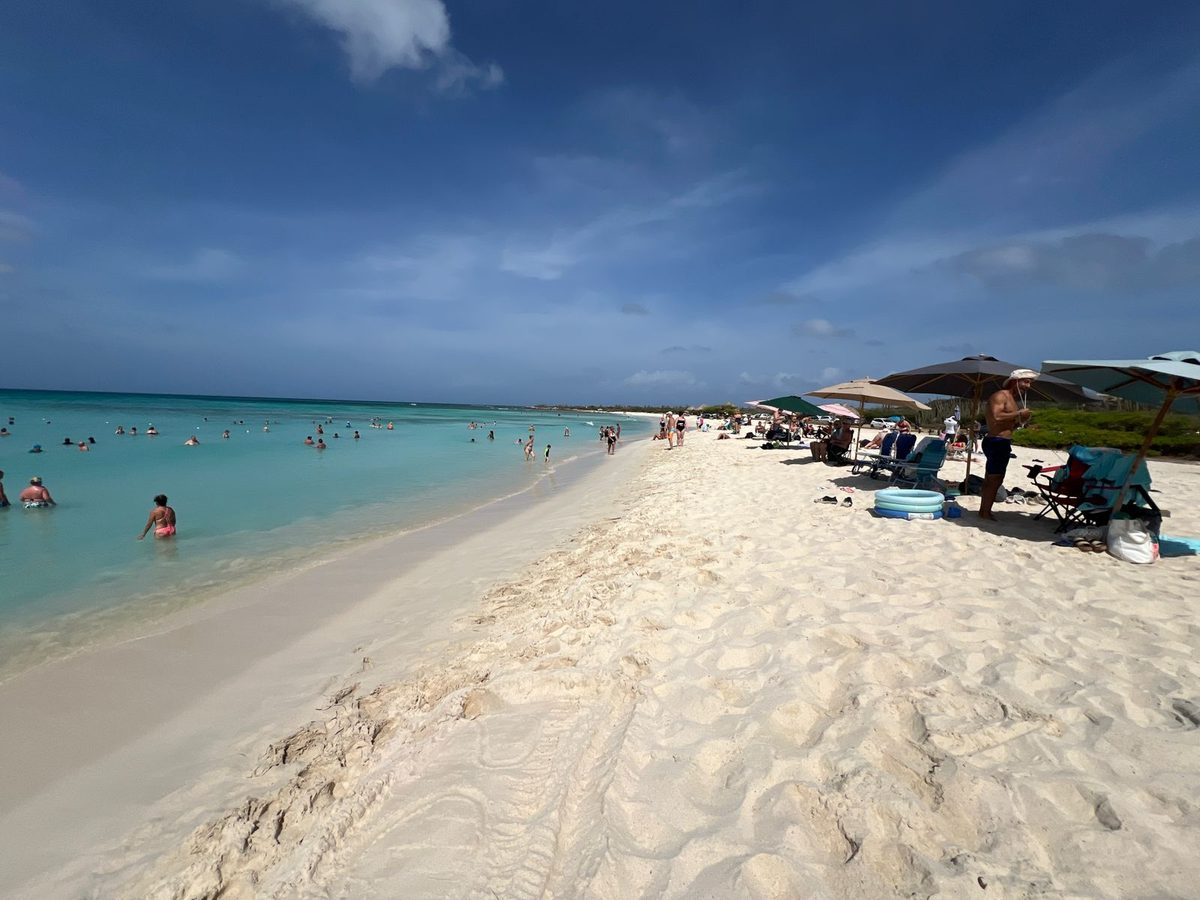
Arashi Beach at a glance
| What to know | Details |
|---|---|
| Location | Noord, northwest coast, ~500 m south of the California Lighthouse |
| Drive time | ~15–20 min from Palm Beach; ~25–30 min from Oranjestad cruise port |
| Best for | Shore snorkeling, calm swimming, families, sunset drinks |
| Water | Calm, clear and shallow on the left; choppier on the far right |
| Snorkeling | Beginner-friendly left side; advanced reef on the right |
| Facilities | Free parking, beach bar/restaurant, restrooms, showers, chair & palapa rentals |
| Cost | Free to enter; bring cash for the bar, chairs and umbrellas |
| Best time | Early morning for clear snorkeling; late afternoon for sunset |
If you have already been mapping out the island’s sand using our complete guide to Aruba’s beaches, think of Arashi as the quiet counterweight to the high-rise strip. There are no towering resorts here, no jet-ski touts, no thumping pool music — just a wide crescent of soft sand, a scruffy-in-the-best-way beach bar, and water so clear you can count your toes in chest-deep shallows.
Why Arashi Beach is worth the drive
Aruba’s most famous beaches — Eagle and Palm — sit in the middle of the action, lined with resorts and restaurants. Arashi is the opposite. It is the last real swimming beach before the road runs out at the lighthouse and the coast turns wild and rocky. That position, tucked behind the headland, is exactly why the water stays so calm: the same trade winds that make the rest of the leeward coast breezy get blocked here, leaving a glassy bay that is forgiving for kids, nervous swimmers, and first-time snorkelers.
It is also genuinely local. On weekends you will see Aruban families hauling coolers and folding tables to the palapas, kids leaping off the low rocks, and the beach bar doing a brisk trade in cold Balashi and Amstel Bright. It feels less like a postcard and more like a neighborhood beach that happens to be ridiculously beautiful. We think that mix — great snorkeling, calm water, a real bar, and an unbeatable sunset — makes it one of the most well-rounded half-days on the island, and a natural addition to almost any Aruba itinerary.
How to get to Arashi Beach
Arashi sits at the northern end of the leeward (calm) coast, in the Noord district, about half a kilometer below the white California Lighthouse. From the high-rise hotels of Palm Beach it is a straightforward 15-to-20-minute drive; from Oranjestad and the cruise terminal, allow around 25 to 30 minutes.
By rental car
Driving is by far the easiest option, and it is the route we recommend. Follow L.G. Smith Boulevard north past the Palm Beach hotels, keep going as the resorts thin out and the landscape turns to cactus and divi-divi trees, and follow the signs toward the California Lighthouse. Arashi is signposted and impossible to miss — the road dead-ends near the beach. A standard car is fine; you do not need a 4×4 for Arashi itself (you would only want one for the rougher tracks deeper into the north). If you are still deciding whether to rent, our guide to getting around Aruba breaks down cars, buses, and taxis.
Parking
There is a large, free parking lot right behind the beach, plus informal roadside spots. It is genuinely free — no meters, no attendant — but it does fill up. The lot is usually wide open before 10 a.m. and tightest between about 11 a.m. and 3 p.m., when day-trippers and the occasional small tour van arrive. Get there early and you will park steps from the sand.
By bus or taxi
Aruba’s public Arubus does run up toward this end of the island, with a stop within walking distance of the beach, though service is less frequent than the busy Oranjestad–Palm Beach route, so check the return times before you set off. A taxi from the high-rise area is quick but adds up at roughly $20–$30 each way (fares are fixed and unmetered, so confirm the price before you get in). For a relaxed beach day with snorkel gear and a cooler, a rental car wins on both cost and freedom.
Snorkeling at Arashi Beach Aruba: the island’s easiest reef
This is the reason most people make the drive, and it is the reason we keep coming back. Aruba is not Bonaire — the island is not ringed by reef — but Arashi is the standout exception you can reach without a boat. The trick is knowing that the beach has two completely different personalities depending on which way you turn when you wade in.
The left side (easy, beginner-friendly)
Stand on the sand facing the water and look left, toward the rocky point. That is where beginners and families should go. Entry is simple: find one of the sandy gaps between the rocks, walk in, and start finning along parallel to shore. The water is shallow and calm, the bottom is a mix of sand, seagrass, and scattered rock, and within a few minutes you are usually surrounded by fish.
On the left we have reliably seen big, shimmering schools of blue tang, blue-striped grunt, sergeant majors, the occasional French angelfish, a spotted trunkfish puttering along the bottom, and — if you are lucky and quiet — a southern stingray gliding over the sand. Keep heading left and the reef eventually leads toward Boca Catalina, another calm snorkeling cove, so strong swimmers can effectively connect the two.
The right side (advanced only)
Now look right. Toward the far right end of the beach you will see where the swell starts to break over a shallow reef shelf. The coral here is in genuinely decent shape for Aruba — we have spotted elkhorn, brain, starlet, and pillar coral, with parrotfish crunching away and more schools of grunt and tang — but the conditions are not for beginners. The water is shallower than it looks, the surge pushes you toward rock and coral, and visibility drops fast once the waves stir up sand, usually by early afternoon.
Only snorkel the right side if you are a confident swimmer, enter before the point where the waves are breaking, and go in the morning when it is calmest. Reef shoes or dive booties are close to essential here to protect both your feet and the coral. If the swell looks pushy, skip it entirely — the left side is the safer, friendlier reef anyway, and on a rough day it is the only one worth your time.

What you’ll see underwater
Across both sides, the regular cast includes blue tang, parrotfish, sergeant majors, blue-striped and French grunt, angelfish, trunkfish, and needlefish hanging just under the surface. Patient snorkelers are sometimes rewarded with a green or hawksbill sea turtle, a southern stingray, or an eagle ray cruising past in deeper water. Pelicans dive-bomb the bait fish just offshore, which is a decent clue that there is life below. It is not a guaranteed turtle beach — for near-certain turtles, locals send you to Tres Trapi a little farther south — but the variety here is excellent for a spot you can walk into from a free parking lot.
Snorkeling tips and safety
- Go early. Mornings are calmer and clearer; afternoon wind and waves cut visibility, especially on the right.
- Bring your own gear if you can. There is no full dive shop on the sand. A basic mask, snorkel and fins are easy to rent near the resorts or pick up cheaply in Oranjestad.
- Wear reef-safe sunscreen and rash guard rather than slathering on regular sunblock — you are swimming over living coral.
- Never touch or stand on the coral. It is fragile, it is protected, and fire coral will return the favor with a nasty sting.
- Respect the conditions. There are no lifeguards. If the right side is breaking hard, stay left or stay out.
Snorkeling is only one slice of what the island’s calm coast offers; if you want boat trips, the Antilla wreck, or guided reef tours, see our full guide to water sports and boat tours in Aruba.
Beyond the reef: swimming, sand, and the beach bar
Even if you never put your face in the water, Arashi earns its reputation. The swimming is some of the gentlest on the island — shallow, clear, and almost wave-free on the left — which is why it shows up so often in our Aruba-with-kids guide as a low-stress beach for little ones. The sand is soft and pale, wide enough to spread out even on a busy day.
Palapas, chairs and shade
Arashi has a row of free public palapas (those thatched palm-roof shade huts) — somewhere around a dozen — and they are first-come, first-served. On a busy day they are claimed by mid-morning, so if shade matters to you, arrive early or plan to rent. A beach concession typically sets out loungers and umbrellas for rent; expect to pay roughly $10–$25 for a chair-and-umbrella setup, payable in cash. Bring your own pop-up shade and you will never have to worry about it.
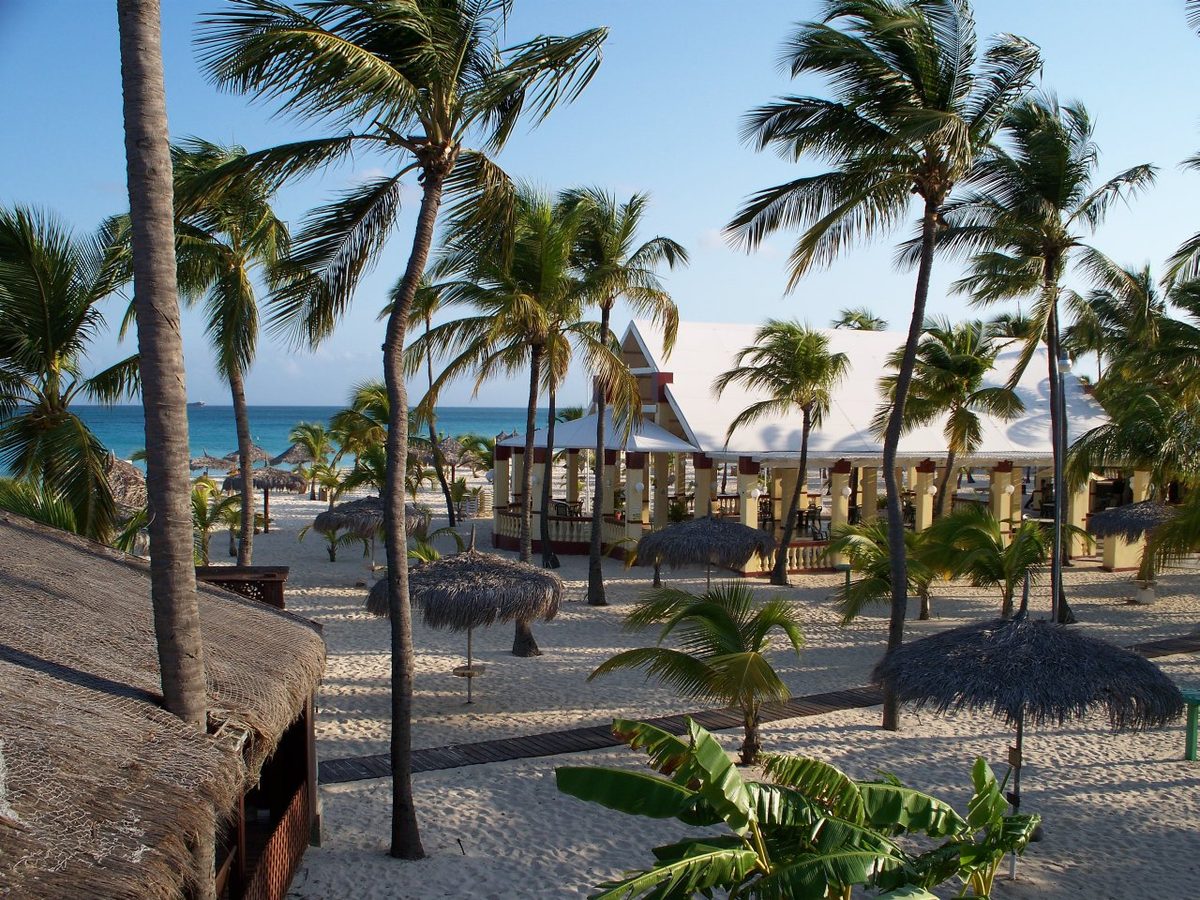
The Beach Bar at Arashi
Half the charm of this beach is the barefoot beach bar tucked behind the sand. It is not fancy — palapa roof, plastic chairs, sand on the floor — and that is the point. Cold Amstel Bright and Balashi beer, rum punch, frozen cocktails, and a short menu of burgers, grilled fish, sandwiches, and snacks come out to a soundtrack of steel drum and reggae. Prices are beach-bar reasonable by Aruba standards (think roughly $4–$8 for a beer, more for cocktails and food); bring cash to be safe. There are restrooms and a freshwater shower here too — a real luxury after a salty snorkel. Hungry for more than bar food? Our guide to Aruba restaurants covers where to eat island-wide.
Sunsets at Arashi Beach
Because Arashi faces roughly west-northwest with an open horizon and no high-rises in the way, it is one of the finest sunset spots in Aruba — a fact the locals who fill the bar at golden hour figured out long ago. As the light drops, the bay turns molten orange and pink, the divi-divi trees throw long silhouettes, and the beach bar quietly becomes the best open-air seat on this end of the island.
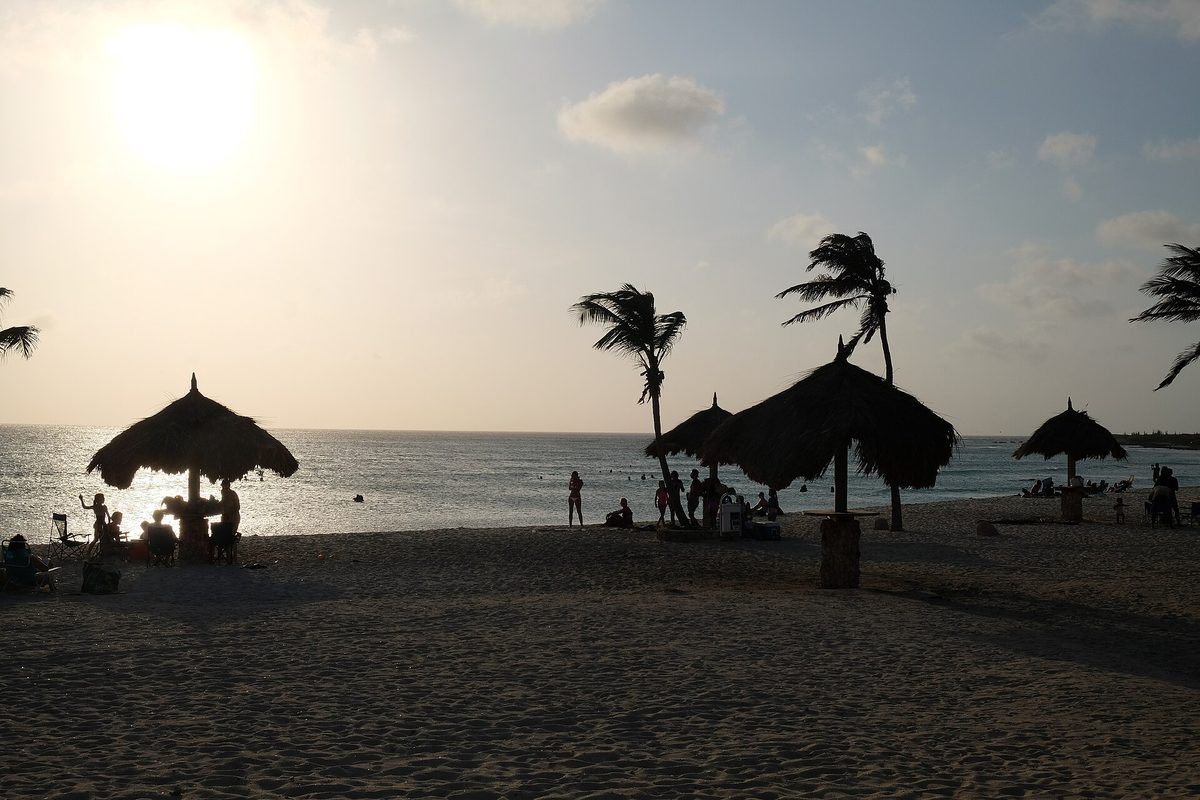
Sunset in Aruba lands somewhere between about 6:15 and 7:00 p.m. depending on the season, so aim to arrive at least 30–45 minutes early to grab a drink and a good patch of sand. It is a romantic enough setting that we flag it in our Aruba honeymoon guide, but it is just as good with kids building sandcastles or a group splitting a bucket of beers. Stick around after the crowd thins and, on a bright moon, the beach turns wonderfully quiet and still.
The best time to visit Arashi Beach
The honest answer is that Arashi is a different beach in the morning than it is in the evening, and the “best” time depends on what you came for.
For snorkeling and swimming, come early — ideally between sunrise and about 10 a.m. The water is at its calmest and clearest, the right-side reef is most approachable, the parking lot and palapas are wide open, and you will share the bay with only a handful of people. For the social scene and sunset, come in the late afternoon, settle in at the bar, and stay through golden hour. Midday (roughly 11 a.m. to 3 p.m.) is the busiest and hottest stretch, and the afternoon breeze stirs up the water.
Seasonally, Aruba sits below the hurricane belt and is dry and sunny nearly year-round, so Arashi is a safe bet in any month — one of the perks we dig into in our month-by-month guide to the best time to visit Aruba. The breeziest months (roughly December through February) can make the water a touch choppier; the calmest, hottest snorkeling conditions tend to come in the early fall. Brief passing showers are most likely from October to January and rarely last long.
Who Arashi Beach is best for
Families: the calm, shallow left side is about as safe as Caribbean swimming gets, and the free palapas plus a bar with restrooms make a full day easy. Snorkelers: the best shore-entry reef on the island, full stop — just respect the right side. Couples: show up for sunset. Cruise passengers: it is doable as a half-day if you have a rental car or taxi, though the drive from the port eats into a short day in dock. Budget travelers: entry and parking are free, which lands it on our roundup of free things to do in Aruba, and it is one of the better-value half-days on an island that is not cheap — see our Aruba vacation cost breakdown.
What to bring to Arashi Beach
- Snorkel gear — mask, snorkel, fins, and reef shoes for the rocky right side
- Reef-safe sunscreen, a hat, and a rash guard (the sun is strong and you are over coral)
- Cash for the bar, chair rentals, and tips
- Water and snacks if you want more than the bar menu
- Your own shade (pop-up tent or umbrella) if you are not counting on snagging a palapa
- A dry bag for phones and keys — there are no lockers
Nearby: make a half-day of it
Arashi is the anchor of a great little northwest loop. The California Lighthouse is a five-minute drive up the road, with the island’s best panoramic view and a restaurant at its base — perfect right before or after the beach. Boca Catalina, just south, is another calm snorkeling cove, and Malmok Beach nearby is a popular snorkel and boat-mooring spot (the Antilla shipwreck sits offshore from here). A little farther south, Tres Trapi (“three steps”) is the spot locals send you for the most reliable turtle sightings.
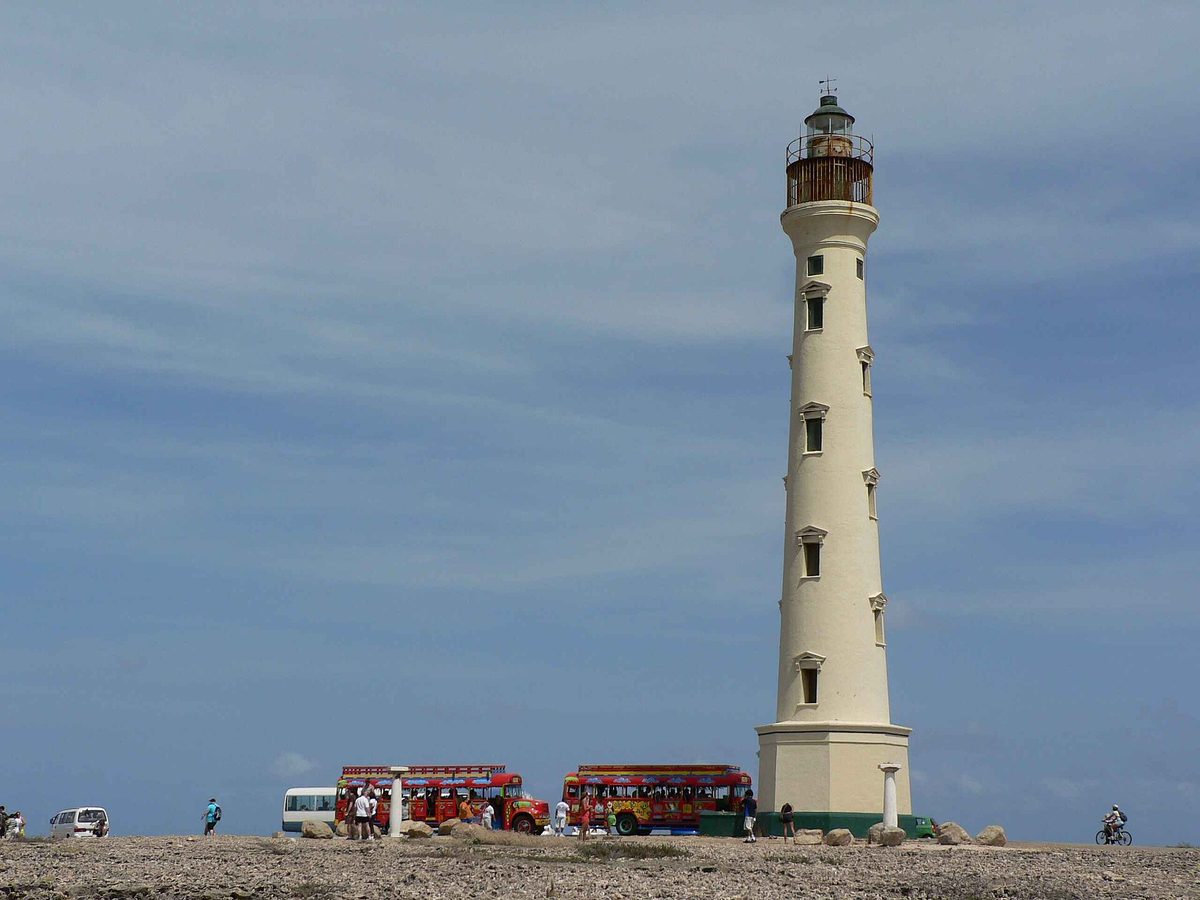
String a few of these together and you have an easy, car-free-optional morning of snorkeling capped by a lighthouse view — one of the most rewarding stretches of coast on the island, and a highlight in our roundup of the best things to do in Aruba. For the bigger picture of how this corner fits into the whole island, start from our things to do in Aruba hub, and if you are still choosing a base, our where to stay in Aruba guide explains why the Noord/Palm Beach side puts you closest to Arashi.
Frequently asked questions
Is Arashi Beach good for snorkeling?
Yes — it is widely considered the best shore-snorkeling beach in Aruba. The calm left side is beginner-friendly with schools of tropical fish, while the reef on the right offers healthier coral for confident swimmers. Go in the morning for the clearest water, and you will not need a boat tour to see plenty of marine life.
Can you see turtles at Arashi Beach?
Sometimes. Green and hawksbill turtles do pass through, along with stingrays and the occasional eagle ray, but sightings are not guaranteed. If turtles are your priority, head a few minutes south to Tres Trapi, the spot locals recommend for the most consistent turtle encounters.
Is there an entrance fee or paid parking at Arashi Beach?
No. Both beach access and the parking lot are completely free. You will only pay if you choose to rent a chair and umbrella (roughly $10–$25) or buy food and drinks at the beach bar. Bring cash, as that is what most concessions prefer.
Is Arashi Beach good for swimming and families?
Very much so. The left side of the bay is shallow, clear, and usually calm, making it one of the gentlest swimming beaches in Aruba for children and nervous swimmers. Just keep kids away from the far right end, where the surf and rocks pick up. There are no lifeguards, so supervise as you would on any beach.
How do you get to Arashi Beach from the cruise port?
From the Oranjestad cruise terminal it is about a 25-to-30-minute drive northwest, following L.G. Smith Boulevard toward the California Lighthouse. A rental car or taxi (roughly $25–$35 each way) is the simplest option; the public Arubus is cheaper but less frequent at this end of the island, so confirm return times.
What is the best time of day to visit Arashi Beach?
Early morning for snorkeling and easy parking; late afternoon into sunset for the bar scene and the views. The midday window of about 11 a.m. to 3 p.m. is the busiest and hottest, and the afternoon wind tends to cloud the water, especially on the right side.
Is Arashi Beach better than Eagle Beach or Palm Beach?
It depends on what you want. For snorkeling and calm, uncrowded swimming, Arashi beats both — neither Eagle nor Palm has a real shore reef. For wide soft sand, water-sports rentals, and a long resort strip with restaurants and bars in walking distance, Eagle and Palm win. Many visitors do both: the resort beaches by day, Arashi for a morning snorkel and a sunset drink.
Final thoughts
Arashi is the beach we send people to when they want the real Aruba without the resort gloss — an easy reef they can swim to, water calm enough for the kids, a beer at a barefoot bar, and a sunset that quietly outclasses the famous strips down the coast. Come early with your mask for the fish, or come late with a few friends for the light. Either way, it makes a strong case for being the most complete beach on the island. Slot it into your plans alongside the rest of Aruba’s beaches and you will understand why so many of us keep driving back up to the lighthouse end.
Photo credits
All images are used under their respective Creative Commons licenses.
- Arashi Beach: Photo: Kwihi / CC BY 4.0 via Wikimedia Commons
- Caribbean reef: Photo: Michal, Wojtek & Jerzy Strzelecki / CC BY 3.0 via Wikimedia Commons
- Aruba beach palapas: Photo: Set1536 / CC BY-SA 3.0 via Wikimedia Commons
- Arashi Beach sunset: Photo: SIryn / CC BY-SA 4.0 via Wikimedia Commons
- California Lighthouse: Photo: David Stanley / CC BY 2.0 via Wikimedia Commons
Information on prices, hours and conditions is accurate as of June 2026; please check current details before you travel. For official island information, see the Aruba Tourism Authority.