About $4,000. That is what a comfortable week for two on Aruba really runs once you add up a mid-range room near the beach, a pair of flights from the U.S. East Coast, a rental car for a few days, dinners out, a catamaran cruise, and the island’s taxes and fees. Could you do it for half that? Absolutely. Could you double it without trying? Even more easily. But that ~$4,000 figure is the honest middle, and it is the number I keep coming back to whenever someone asks me how much does a trip to Aruba cost before they start booking.
I have spent enough time on this island, and helped enough friends plan their first visit, to know that the sticker shock usually comes from one or two line items rather than the trip as a whole. So instead of a vague “it depends,” let me give you the real 2026 breakdown, category by category, with the prices I actually see and the small fees most guides forget to mention.
The short answer: what an Aruba trip costs in 2026
A one-week trip to Aruba for two typically costs around $3,500 to $4,500 all in for a mid-range style: roughly $1,400 for two flights, $1,400 to $1,800 for seven nights at a solid beach hotel, $700 to $900 for food and drinks, $300 to $500 for a rental car and a couple of excursions, plus about $250 in taxes and fees. Budget travelers can do a week for under $2,500 a head; luxury weeks climb past $6,000 per person fast.
That is the elevator answer. Now here is the at-a-glance table I wish every cost guide led with. These are per-person daily ranges in U.S. dollars, which is what you will actually spend day to day. (Aruba’s currency is the florin, pegged at roughly 1.79 to the dollar, but greenbacks are accepted literally everywhere, so you can think in dollars the whole trip.) Treat every number as “around,” and check current rates before you book, because peak-season pricing moves.
| Cost category (per person, per day) | Budget | Mid-range | Luxury |
|---|---|---|---|
| Lodging (share of a double room) | $35–60 | $90–175 | $200–350+ |
| Breakfast | $5–10 (bakery) | $15–25 (café) | $30–50 (hotel) |
| Lunch | $10–18 (Zeerovers, food truck) | $25–45 | $50–80 |
| Dinner | $20–35 | $45–80 | $100–200+ |
| Getting around | $3–10 (Arubus) | $15–30 (taxi) | $45–80 (rental + gas) |
| Activities | $0–30 | $50–100 | $150–300+ |
| Taxes & fees (avg/day) | ~$8 | ~$15 | ~$30 |
| Daily total per person | $110–195 | $350–580 | $700–1,400+ |
Flights sit outside that table because they are a one-time hit rather than a daily cost, so let us start there. For the full picture on getting in and moving around once you land, our guide to getting to and around Aruba goes deeper than I can here, and the complete Aruba vacation cost pillar ties every number on this page together.
Flight costs to Aruba (by where you are starting)
Queen Beatrix International (AUA), just south of Oranjestad, is one of the easier Caribbean airports to reach nonstop, which keeps airfare reasonable. What you pay depends almost entirely on your departure city and how far ahead you book. Here is what round-trip economy typically looks like in 2026.
| Departure region | Typical round-trip (economy) | Notes |
|---|---|---|
| U.S. East Coast (NYC, Miami, Atlanta, Charlotte) | $350–600 | Most nonstops; best value |
| U.S. Midwest / South Central (Chicago, Dallas, Houston) | $450–700 | Some nonstops, often one stop |
| U.S. West Coast (LAX, SFO, Seattle) | $500–800 | Usually one connection |
| Canada (Toronto, Montreal) | CAD $450–700 | Seasonal nonstops in winter |
| Amsterdam (KLM direct) | €400–700 | The long Dutch connection |
A few things move that needle. Booking six to eight weeks out and flying Tuesday through Thursday is the reliable way to land at the low end of each range. The budget carriers (Spirit, Frontier, JetBlue’s basic fares) can shave $100 or more off, but price the bags before you celebrate, because two checked bags can erase the savings on a family booking. And holiday weeks, Christmas through early January especially, can push East Coast fares past $800. If your dates are flexible, glance at our notes on the best time to visit Aruba before you lock anything in; shifting a trip by three weeks can save more on the flight than any coupon code.
One genuinely nice thing about flying to Aruba from the States: U.S. preclearance. You clear U.S. customs and immigration in Aruba before you fly home, which means you land back in the U.S. as a domestic arrival and skip the customs hall. It costs you nothing but it is worth knowing, because it shapes how early you need to get to the airport on departure day (give yourself three hours).
Lodging: the line item that decides your whole budget
Where you sleep is the single biggest variable in any Aruba budget, full stop. The same week can swing by thousands of dollars depending on whether you book a guesthouse inland or a beachfront suite on the high-rise strip. The good news is that Aruba is tiny, only about 20 miles long and six wide, so even the “cheap” neighborhoods are a short drive from the famous beaches. Here is how the main areas stack up.
Palm Beach high-rises ($250–700+/night)
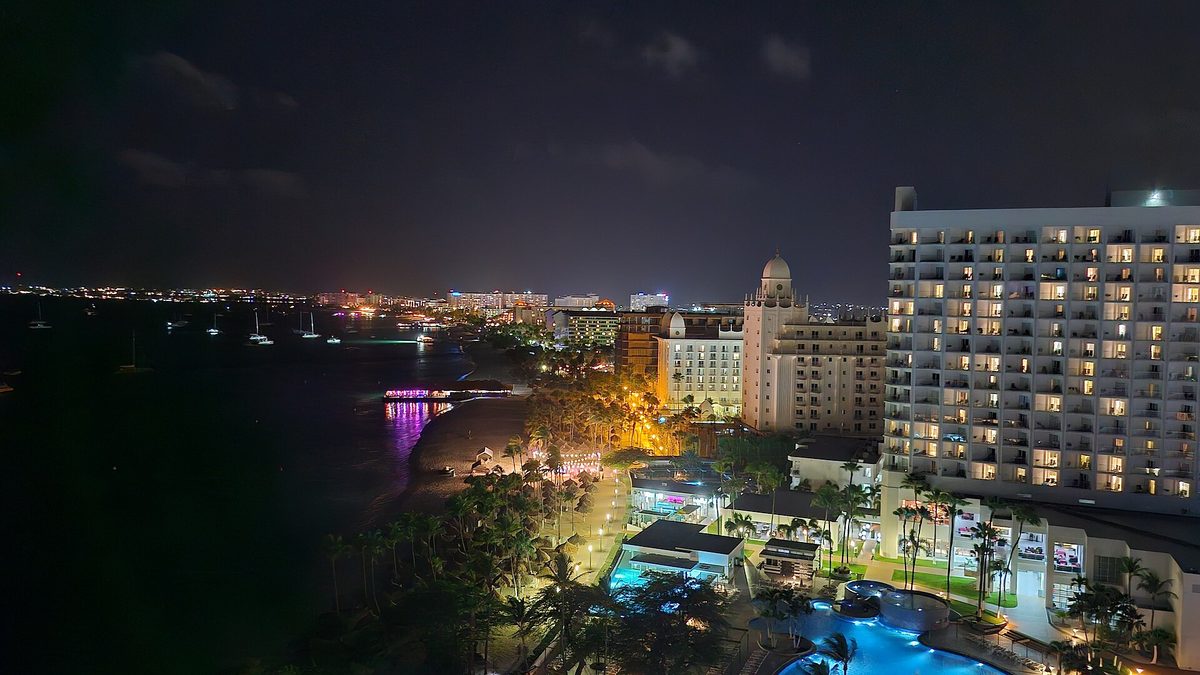
This is the postcard strip: the Marriott, Hyatt Regency, Hilton, Ritz-Carlton, and Riu all line up shoulder to shoulder along a wide, lively beach with watersports kiosks, a casino in nearly every lobby, and a walkable row of restaurants and bars across the road. Rooms run from around $250 a night for a garden-view in shoulder season up to $700 and well beyond for ocean-view suites in peak winter. You are paying for energy, amenities, and the ability to walk out of your lobby straight onto a sun-lounger. If you want that resort buzz, this is where you book; our rundown of where to stay in Aruba breaks down each property.
Eagle Beach low-rises ($180–450/night)
Just south, Eagle Beach is the one that tops “best beach in the Caribbean” lists, and its low-rise resorts (Amsterdam Manor, Manchebo, Bucuti & Tara, the Mill) trade height for space and calm. The beach is wider and quieter, the buildings cap out at a few stories, and the vibe is couples and repeat visitors rather than spring-break crowds. Mid-range here is roughly $180 to $350 a night; the adults-only boutique properties climb past $450 in season. This is my personal pick for a honeymoon or a quiet reset. You can read why the sand itself is special in our Aruba beaches guide.
Oranjestad, Noord and Airbnbs ($70–160/night)
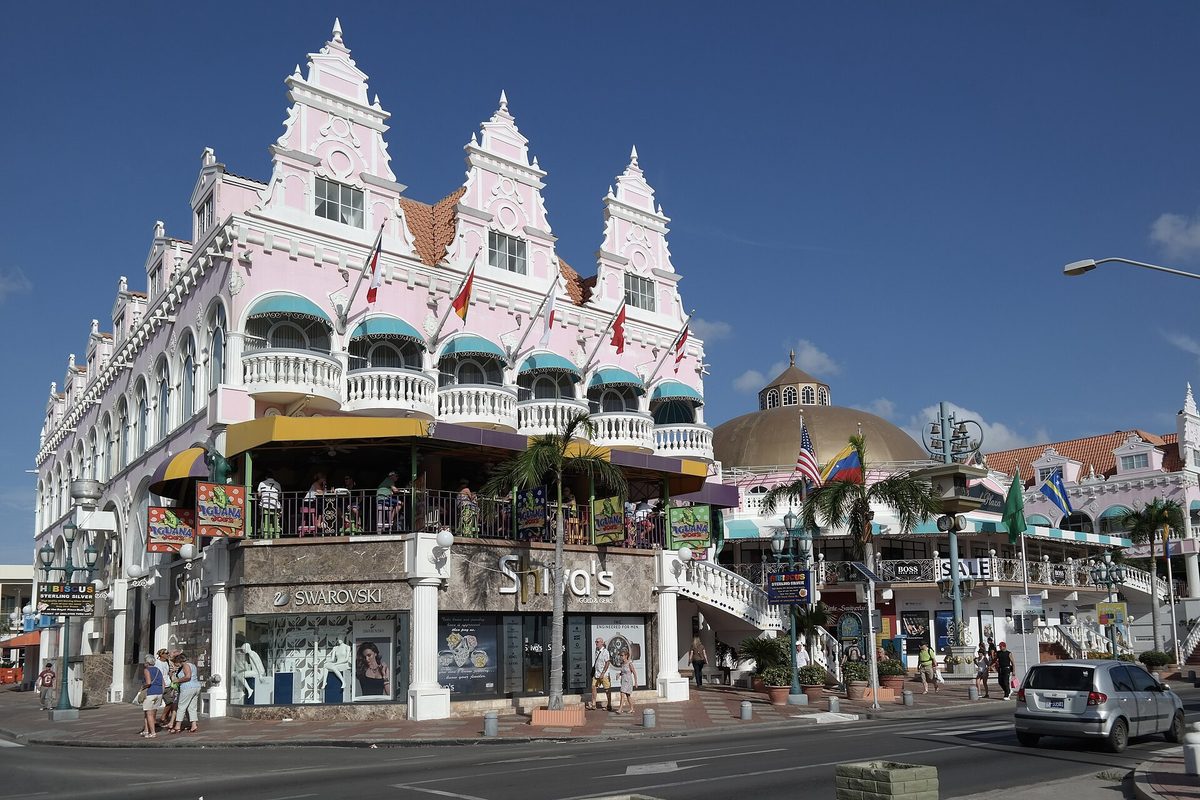
This is where the budget lives. Guesthouses, apartments, and condos in Oranjestad, Noord, and Paradera run from about $70 to $160 a night, and you are rarely more than a 10-minute drive from Palm or Eagle Beach. You give up the toes-in-the-sand convenience and you will almost certainly want a rental car, but the savings are real: a couple can knock $600 to $1,000 off a week versus a beachfront resort. The trade-off is groceries and a short commute instead of a swim-up bar. For self-caterers, the apartment-plus-supermarket combo is the cheapest comfortable way to do Aruba.
All-inclusive vs. room-only: the math people get wrong
Aruba is not primarily an all-inclusive island the way the Dominican Republic is, but the options exist (Riu, Barcelo, Divi properties). All-inclusive rates run roughly $300 to $550 per person, per night in 2026. That sounds steep until you remember it bundles every meal, drink, and most non-motorized watersports. The honest comparison: a room-only (“European Plan”) hotel at $250 a night plus a realistic $150 to $200 per day for two people’s food and drinks lands in a similar place, but with total freedom to eat your way around the island. My rule of thumb: if you will genuinely drink cocktails by the pool all day and never want to leave the resort, all-inclusive can win; if you want to try Zeerovers, the food trucks, and a fancy dinner or two, go room-only and keep the flexibility. Either way, our guide to Aruba all-inclusive resorts lays out which properties are actually worth the premium.
One more lever on lodging, and it is the biggest one: season. Peak season (mid-December through April) runs 30 to 50 percent higher than the May–June shoulder or the September–November low season. Booking the exact same room in May instead of January routinely saves $80 to $200 a night. On a seven-night stay, that one decision can be worth more than every money-saving tip below combined.
Food and drink: from $2 pastechi to a $150 dinner
Food on Aruba can be as cheap or as extravagant as you want, and the spread is wider than most visitors expect. The trick is knowing the spectrum so you can mix high and low across the week instead of defaulting to hotel restaurants for every meal (the fastest way to blow a food budget).
Breakfast and lunch
Local bakeries sell pastechi, the island’s beloved stuffed-and-fried pastry, for $1 to $2 each; two or three with a coffee is a real breakfast for under $8. For lunch, the move every local will tell you about is Zeerovers in Savaneta, a no-frills dockside spot where a heaping plate of fresh-caught fried fish or shrimp with funchi and pan bati runs about $10 to $15. Food trucks around Oranjestad and Paradera turn out filling meals in the $7 to $12 range. Sit-down lunch at a mid-range restaurant is more like $25 to $45 a head once you add a drink.
Dinner
This is where it spreads out. A casual dinner at a local restaurant in Noord or Oranjestad runs $20 to $35 per person. The mid-range Palm Beach and Eagle Beach restaurants land around $45 to $80 with a drink or two. And the famous fine-dining names, the kind of meal you book for an anniversary, run $100 to $200 per person: think Flying Fishbone with your feet in the sand, the wine-cave tasting at the Marriott, or a beachfront table at one of the Eagle Beach resorts. Our Aruba restaurants guide names the tables worth the splurge and the local spots worth the drive.
Drinks and groceries
A beer at a beach bar is around $4 to $6; a cocktail is $10 to $15, and the better sunset spots charge for the view. Buy your beer, water, and snacks at a supermarket (Ling & Sons or Super Food are the big ones) and the same drinks cost a fraction of the bar price. If you have a kitchenette, a couple of grocery runs can easily halve a week’s drink budget. Aruba’s tap water, by the way, comes from desalination and is among the cleanest in the world, so skip the bottled water entirely and refill, your wallet and the island both win.
Two food-budget realities to plan for. First, tipping and service charges: many restaurants add a 10 to 15 percent service charge automatically, so check the bill before you tip again (a little extra for great service is appreciated, never required). Second, imported goods carry a premium, so a hotel-minibar Coke or a resort-pool piña colada will always cost more than the same thing in town. None of this is a dealbreaker; it is just the difference between a $60 food day and a $120 one.
Getting around: rental car vs. taxi vs. the Arubus
Because the island is so small, transport is rarely a big line item unless you choose to make it one. You have three realistic options, and most visitors end up mixing them.
Rental car ($45–80/day)
A rental car is the freedom play, and it is the only practical way to reach the wilder corners, Arikok National Park, the Natural Pool, the north-coast viewpoints, and the offbeat beaches. Compact cars run about $45 to $80 a day depending on season and how far ahead you book; an SUV or 4×4 (needed for some of Arikok’s rough tracks) costs more. Gas is around $6 a gallon, which sounds alarming until you realize you will burn very little fuel on a 20-mile island. For a couple who wants to explore beyond the beach, I would rent for three or four of seven days rather than the whole week, and use taxis or the bus the rest. Our things to do in Aruba guide maps out which sights actually require wheels.
Taxis (minimum around $7)
Aruba’s taxis are safe, reliable, and run on government-set flat rates rather than meters, so you always know the fare before you get in. The minimum is around $7, and a typical hop from the airport to the Palm Beach hotels runs roughly $30 to $35 for up to a few passengers. Fares tick up after midnight and on Sundays and holidays. For a quick dinner out or an airport transfer, taxis are perfectly economical; for daily exploring, they add up faster than a rental.
The Arubus and the free downtown tram ($3–10)
The public bus, the Arubus, is the budget traveler’s best friend. It runs the coastal route connecting Oranjestad with the Eagle Beach and Palm Beach resort strips roughly every 15 to 40 minutes during the day. A round-trip is about $5, an all-day pass around $10, and a Smart Card cuts the per-ride cost further. It is clean, easy, and genuinely useful if you are staying near the route. Oranjestad also has a free hop-on, hop-off streetcar that loops the main shopping and cruise-port area at no charge. Lean on these and you can keep a week’s transport under $50 a person.
Activities and excursions: free beaches to $300 jeep days
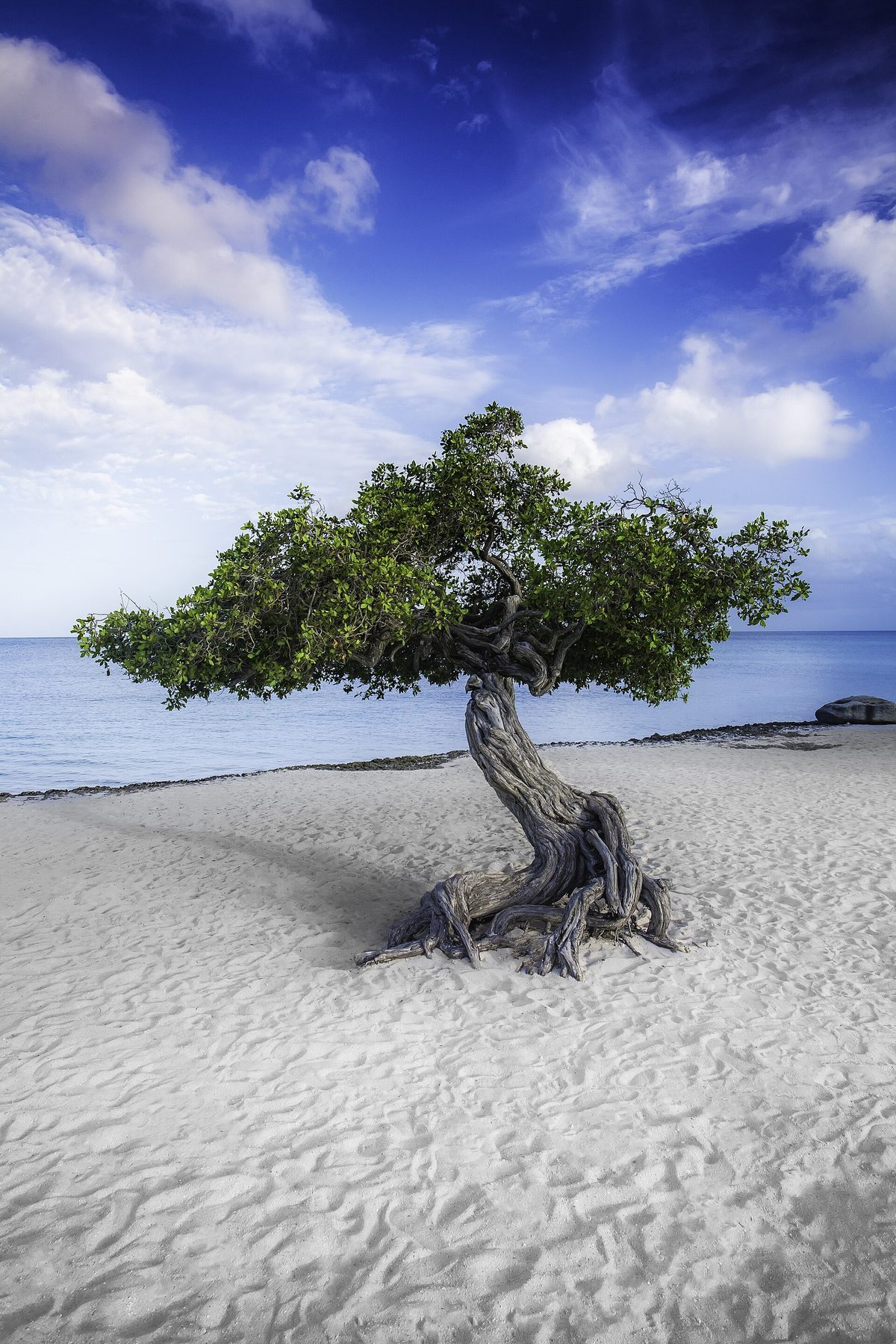
Here is the happiest budgeting fact about Aruba: the headline attraction, those impossibly blue beaches, is completely free. Every beach on the island is public. You can spend an entire week swimming, snorkeling from shore at Boca Catalina or Malmok, walking Eagle Beach at sunset, and watching the famous fofoti trees lean in the trade winds without paying a cent. If you are watching your budget, you can have a spectacular trip on free activities alone. For ideas, our roundup of free things to do on the island is a good place to start, and the broader Aruba activities guide covers the paid experiences worth booking.
When you do want to splurge on excursions, here is what the popular ones cost per person in 2026:
| Activity | Cost per person |
|---|---|
| Public beaches & shore snorkeling | Free |
| Arikok National Park entry | ~$11 |
| Shared sunset catamaran cruise | $75–95 |
| Half-day ATV / UTV tour | $75–100 |
| Full-day jeep / 4×4 island tour | $100–150 |
| Parasailing | $70–90 |
| Horseback riding (1.5 hrs) | $75–100 |
| Antilla shipwreck dive | $65–85 |
| Atlantis submarine tour | ~$109 |
| Private catamaran (per person, group of 4–6) | $100–150 |
My honest advice: pick one or two signature experiences rather than booking something every day. A sunset catamaran sail and a jeep day into Arikok and the Natural Pool will give most people their best memories of the trip, and together they run about $175 to $245 a head. The water-based stuff, from snorkeling trips to scuba, is covered in detail in our Aruba water sports guide if you want to go deeper on the diving and sailing options.
Taxes and fees: the costs every other guide forgets
This is where I can genuinely save you a surprise at checkout, because almost no cost guide explains Aruba’s layered taxes and fees, and they add up to real money. As of 2026, here is exactly what gets added to your trip on top of the advertised room rate.
- Tourist Levy (room tax): 12.5%. Aruba charges 12.5 percent on your nightly room rate. This is the big one, and it is almost never included in the headline price you see on a booking site.
- Environmental Levy: about $3 per person, per night. A small per-night, per-guest charge that funds the island’s sustainability efforts. On a couple’s seven-night stay that is roughly $42.
- Service charge: 10–15%. Many hotels add a service charge to the room, and most restaurants add one to the bill. Always read the fine print so you do not accidentally double-tip.
- Sustainability Fee: $20 per person. Since mid-2024, every visitor arriving by air pays a one-time $20 Sustainability Fee. You pay it online through the Embarkation/Disembarkation (ED) card before you fly; you cannot pay it on arrival, and you will not be cleared to board without it. Children under 8 and same-year repeat visitors are exempt.
Let me make that concrete. Say you book a mid-range room advertised at $250 a night for seven nights, two adults. The room subtotal is $1,750. Add 12.5 percent Tourist Levy ($219), roughly $42 in Environmental Levy, and a typical 12 percent hotel service charge ($210), and your lodging actually costs about $2,220, not $1,750. Then add two $20 Sustainability Fees ($40) at the ED-card stage. That is roughly $260 in taxes and fees on one mid-range week, money that never showed up in the price you first saw. Build it into your budget from the start and there are no nasty surprises at the front desk.
So, how much does a trip to Aruba cost? Four real sample budgets
Enough ranges, let us put it all together. Here are four complete, realistic budgets for a seven-night trip, each including flights, lodging, food, getting around, a sensible number of activities, and those taxes and fees. Adjust for your departure city and season, but these are the all-in totals I would actually quote a friend.
| Trip style (7 nights) | Flights | Lodging + taxes | Food | Transport | Activities | All-in total |
|---|---|---|---|---|---|---|
| Budget couple (guesthouse, bus, local food) | $700 (2 pax) | $950 | $550 | $120 | $150 | ~$2,470 |
| Mid-range couple (beach hotel, rental 3 days) | $1,000 (2 pax) | $2,200 | $900 | $350 | $450 | ~$4,900 |
| Family of four (condo, rental car all week) | $1,600 (4 pax) | $2,400 | $1,200 | $450 | $600 | ~$6,250 |
| Luxury couple (high-rise suite, fine dining) | $1,400 (2 pax) | $5,200 | $1,800 | $500 | $900 | ~$9,800 |
A few notes on reading that table. The budget couple is eating at Zeerovers and the bakeries, riding the Arubus, and leaning on free beaches, that is a genuinely great trip for under $2,500. The mid-range couple is the “typical” Aruba vacation, and you will notice it lands right around that $4,000 to $5,000 figure I opened with. The family of four spreads costs nicely because kids share a condo and the beach is free. And the luxury week shows how fast a high-rise suite plus nightly fine dining pushes you toward $10,000. If you want to map these onto an actual day-by-day plan, our Aruba itinerary guide pairs well with whichever budget fits you.
How to spend less without ruining the trip
You do not have to pick the cheapest version of Aruba to save real money. A handful of decisions move the needle far more than penny-pinching ever will.
- Travel in May, June, or September through November. Same sunshine, same warm water, 25 to 35 percent off peak-season hotel rates. This is the single biggest saving available, and Aruba sits outside the hurricane belt, so the “low” season is still reliably dry and gorgeous. See our best time to visit Aruba breakdown for the month-by-month details.
- Stay a 10-minute drive from the beach. A condo or guesthouse in Noord or Oranjestad can cost half what a beachfront resort does, and on an island this small you are never far from the sand.
- Eat like a local at least half the time. Zeerovers for lunch, bakeries for breakfast, food trucks for a quick dinner, and one or two special restaurant nights. Mixing high and low is how you eat well without a $120-a-day food bill.
- Snorkel from shore instead of booking every tour. Boca Catalina, Malmok, and Arashi are free and excellent. Save the paid excursions for the things you genuinely can’t do on your own, like a sunset sail or a jeep run to the Natural Pool.
- Buy drinks at the supermarket. Resort-pool and beach-bar prices are a tax on convenience. A grocery run for beer, water, and snacks can quietly save a couple hundred dollars over a week.
- Book flights early for peak, hunt last-minute for shoulder. Winter fares and hotels sell out, so book two to three months ahead; shoulder-season sometimes rewards flexibility with last-minute deals.
For more of these, our Aruba travel tips guide collects the practical stuff, currency, tipping, what to pack, that keeps a trip running smoothly and on budget.
When is Aruba cheapest to visit?
If your only goal is the lowest possible price, aim for September through early November, when hotel rates bottom out and crowds thin. The trade-off is that this overlaps the broader Caribbean hurricane season, but Aruba’s position well south of the storm track means it rarely sees more than passing rain. My personal sweet spot is May and June: prices have dropped 25 to 35 percent from the winter peak, the weather is essentially identical to high season, and restaurants and tours are easy to book without reservations weeks out. You get the high-season island at shoulder-season prices. Avoid mid-December through April if budget is your priority, and steer well clear of Christmas/New Year’s week, which is the single most expensive stretch of the year.
Frequently asked questions
How much does a trip to Aruba cost for a week?
A one-week trip for two costs around $3,500 to $4,500 all in on a mid-range budget, including U.S. East Coast flights, a beach hotel, mixed dining, a rental car for a few days, and taxes. Budget couples can do a week for under $2,500 per person; luxury weeks run $6,000 or more per person.
Is Aruba expensive compared to other Caribbean islands?
Aruba sits in the mid-to-upper range. It is pricier than Jamaica or the Dominican Republic, roughly comparable to St. Lucia, Barbados, and the Turks & Caicos, and far cheaper than Bora Bora or the Maldives. Costs are very manageable if you travel in shoulder season and mix local food with the occasional splurge.
How much spending money do I need for a week in Aruba?
Beyond flights and your hotel, budget roughly $800 to $1,200 per person for a week to cover mid-range dining, one or two major excursions, taxis or a partial rental, tips, and incidentals. Plan for more if you intend to do fine dining most evenings or book a daily activity.
What is the cheapest time to visit Aruba?
September through November has the lowest hotel rates of the year. May and June offer the best overall value: prices are 25 to 35 percent below the December–April peak with nearly identical weather. The most expensive period is mid-December through April, peaking over the Christmas and New Year holidays.
How much does food cost per day in Aruba?
It ranges widely by style. Budget travelers eating at Zeerovers, bakeries, and supermarkets can keep food to $20 to $35 a day. A mid-range day of café breakfast, casual lunch, and a sit-down dinner runs $60 to $120 per person. Fine dining alone is $100 to $200 per person per meal.
Are there extra taxes and fees in Aruba?
Yes, and they add up. Expect a 12.5 percent Tourist Levy on your room, an Environmental Levy of about $3 per person per night, a 10 to 15 percent service charge at many hotels and restaurants, and a one-time $20 per-person Sustainability Fee paid online before you fly. Budget roughly $250 in taxes and fees for a mid-range week.
Do I need a rental car in Aruba?
Not necessarily. If you are staying on the Palm or Eagle Beach strip and mostly want beach days, the Arubus and taxis are plenty. A rental car (around $45 to $80 a day) is worth it for two to four days if you want to explore Arikok National Park, the Natural Pool, and the rugged north coast, which buses and most taxis do not reach.
Final thoughts
Aruba is not the cheapest island in the Caribbean, but it is one of the most reliable: sunshine you can count on, water that genuinely looks like the brochure, beaches that cost nothing, and a price range wide enough to fit almost any budget if you make a few smart calls. Decide on your lodging tier first, since it drives everything else, travel in shoulder season if you can, build in the taxes and fees from the start, and mix local meals with a splurge or two. Do that, and whatever number you land on, from a $2,500 budget week to a $10,000 luxury one, you will feel like you got your money’s worth. For the full picture and every related guide, start at our Aruba vacation cost hub and plan from there.
By the ArubaTourism.org team — Last updated June 2026. Prices are 2026 estimates in U.S. dollars and move with season and demand; always confirm current rates and fees when you book. For official information on entry fees and the Sustainability Fee, see the Aruba Tourism Authority.
Photo credits
Photo: Jason Boldero / CC BY 2.0 via Wikimedia Commons; Photo: Rarends297 (CC0) via Wikimedia Commons; Photo: Choinowski / CC BY-SA 4.0 via Wikimedia Commons; Photo: Misty Johnson / CC BY 2.0 via Wikimedia Commons.