If this is your first trip to Aruba, here’s the good news: it’s one of the easiest Caribbean islands to get right. The water is calm and warm, the locals speak English, US dollars are accepted everywhere, hurricanes basically skip the island, and the whole place is only about 20 miles long — so you can taste the highlights without spending half your vacation in a car. Build a smart first time in Aruba itinerary and you get the best of both worlds: lazy beach mornings and just enough adventure to feel like you actually explored. This guide lays it all out for a nervous-but-excited newcomer, day by day, with real timings, costs, and the orientation you need to feel confident the second you step off the plane.
The short answer: A perfect first-time Aruba itinerary pairs the famous beaches (Eagle and Palm) with one catamaran snorkel, one Arikok or UTV outback adventure, a stroll through Oranjestad, the California Lighthouse, and a sunset. Go for five to seven days so nothing feels rushed.
By the ArubaTourism.org team — Last updated June 2026.
Below is the at-a-glance version. The rest of the article unpacks every day with stops, hours, prices, where to eat, and a “swap this if…” tip for when the plan doesn’t fit your trip. We also cover the boring-but-important stuff first-timers ask us about constantly: how to get around, money, language, safety, what to pack, and the airport. If you only have a long weekend, our complete Aruba itinerary hub has shorter plans too — this one assumes you’ve got a classic five-day-ish week.
Your first time in Aruba itinerary at a glance
Here’s a sensible five-day flow that front-loads the easy, low-effort days and saves the big adventure for when you’ve found your feet. Read it top to bottom, then dig into the day sections below.
| Day | Morning | Afternoon | Evening |
|---|---|---|---|
| Day 1 — Arrive & ease in | Land, clear immigration, pick up rental car or taxi to hotel | Settle in, walk Palm Beach or your resort sand, grocery run | Casual dinner on “The Strip,” early night |
| Day 2 — Eagle Beach | Sunrise-ish at Eagle Beach, divi-divi tree photos | Beach time, float rental, lunch at a beach bar | Sunset dinner on the sand (Passions or similar) |
| Day 3 — Catamaran & snorkel | Morning catamaran snorkel cruise (Antilla wreck, Boca Catalina) | Recover poolside; explore Palm Beach malls | Paseo Herencia water show, casual bites |
| Day 4 — Outback adventure | Arikok / Natural Pool UTV or jeep tour (half day) | Pool or beach recovery, late lunch | Oranjestad dinner at Renaissance Marketplace |
| Day 5 — Oranjestad & the north tip | Downtown Oranjestad: museum, shops, snacks | Drive to California Lighthouse & north coast | Sunset cruise or a lighthouse-view dinner |
Got six or seven days? Add a slow beach day, a trip down to Baby Beach and the San Nicolas murals in the southeast, and a spa afternoon. Got only three or four? Drop the slowest day and keep the catamaran and the outback tour — those are the two that turn a beach trip into an Aruba trip.
First, get oriented: Aruba for total newcomers
Before the day-by-day, spend two minutes here. Knowing how the island is laid out — and how money, language, and getting around actually work — is the difference between a confident first trip and a flustered one. None of this is hard. That’s sort of the whole point of Aruba.
The island regions, decoded
Aruba is small, but the vibe changes a lot depending on where you are. Here’s the mental map I give every first-timer:
- Palm Beach (the high-rise zone): The big-name resorts, casinos, water sports, “The Strip,” and most of the nightlife. Busiest, most energetic, walkable. If you want action and convenience steps from your room, stay here.
- Eagle Beach (the low-rise zone): Just south of Palm Beach. Wider, quieter, lower buildings, the iconic fofoti (divi-divi) trees, and arguably the prettier sand. More relaxed, a little more space between you and your neighbor’s umbrella.
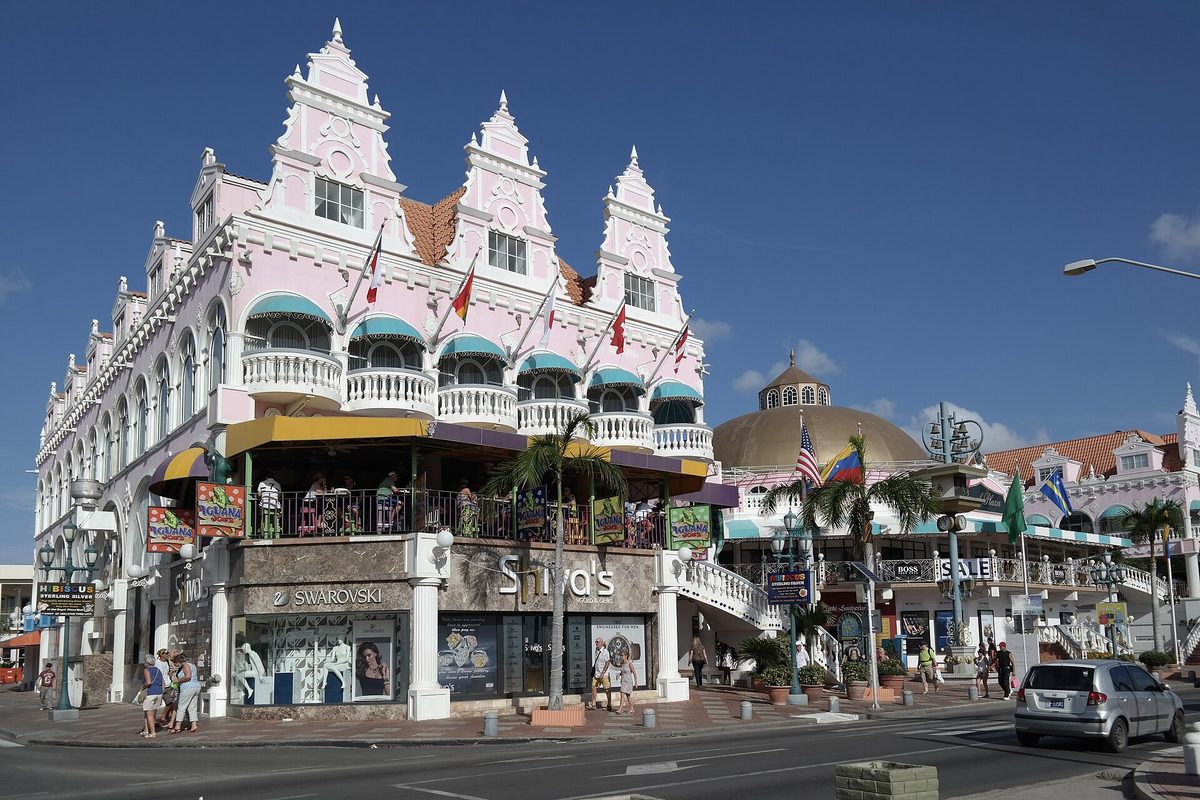
- Oranjestad (the capital): A few miles south — pastel Dutch-colonial buildings, the cruise terminal, museums, duty-free shopping, and the Renaissance Marketplace. This is your culture-and-dinner stop, not really a beach base.
- The outback (Arikok & the north/east coast): The wild, cactus-studded, windswept side. Arikok National Park covers nearly 20% of the island. Rugged coastline, the Natural Pool, caves, and the California Lighthouse at the northern tip. You visit; you don’t stay.
- The southeast (San Nicolas, Savaneta, Baby Beach): The far end — colorful street murals, old-school local seafood, and the calm shallow lagoon of Baby Beach. A great half-day excursion for trip number one if you have the days.
For a deeper breakdown of neighborhoods and resort zones, our where to stay in Aruba guide walks through each area and who it suits.
Getting around: rental car vs. taxi vs. Arubus
This is the question first-timers agonize over, so let me be direct. You have three realistic options:
- Rental car (my pick for most first-timers): Around $45–75 a day for a small SUV, more in peak season. Aruba drives on the right, signs are clear, and the island is tiny, so you genuinely cannot get badly lost. A car makes the outback, the lighthouse, and the southeast easy and turns “tour days” into “do-it-yourself days.” Book ahead December–April.
- Taxis: Reliable and safe, but rates are fixed by zone, not metered, and they add up — figure roughly $10–15 for short resort-to-Oranjestad hops and more for the outback. Many drivers prefer cash. Great if you’re staying put on Palm Beach and only venturing out occasionally.
- Arubus (public bus): The cheapest option by far — around $2.60 one-way or about $5 for an all-day pass — running between the hotel zones and downtown Oranjestad. Clean and easy for that specific route; not useful for reaching the outback.
Honestly? Most first-timers do great with a car for two or three “explore” days and taxis or walking the rest. Our getting to and around Aruba guide has the full rundown on rentals, bus routes, and airport transfers.
Money, language, safety, and the little stuff
- Money: The local currency is the Aruban florin, but US dollars are accepted absolutely everywhere — you do not need to exchange anything. Cards work at resorts, restaurants, and shops; carry some cash for taxis, tips, and small kiosks. Tipping runs about 15–18%, and many restaurants add a service charge, so check the bill.
- Language: The local tongue is Papiamento, but Aruba is genuinely multilingual — English is spoken fluently nearly everywhere, alongside Dutch and Spanish. A cheerful “Bon dia” (good morning) goes a long way and locals love it.
- Safety: Aruba is consistently rated one of the safest islands in the Caribbean. Palm Beach is safe to walk day or night. Normal common sense applies — lock the car, use the beach lockers for valuables, don’t leave phones on towels — but violent crime against tourists is rare.
- Weather & hurricanes: Aruba sits below the hurricane belt, so it’s a reliable year-round bet. Expect sun, low humidity for the tropics, and a constant trade-wind breeze that makes the heat very pleasant — but also sneaks up on you for sunburn. Reef-safe sunscreen is required by law in some protected areas, so just buy it.
- What to pack: Swimwear (bring two suits), reef-safe sunscreen, a hat, sunglasses, water shoes for rocky snorkel spots, a light layer for breezy evenings and over-air-conditioned restaurants, and any reservations or tour confirmations printed or saved offline.
The airport & US pre-clearance (don’t skip this)
One thing that surprises first-timers: Queen Beatrix International Airport (AUA) has US Customs and Border Protection pre-clearance. That means on the way home you clear US immigration and customs in Aruba, before you board — so you land in the States as a domestic arrival and walk straight out. It’s wonderful, but it means the departure process has several luggage steps and lines, so give yourself extra time: arrive about three hours before a US-bound flight. Also, before you even fly down, every visitor must complete the Aruba ED Card / embarkation form online (it includes a sustainability fee of around $20 per person) within a few days of arrival. Do it at the official site; skipping it causes airport headaches.
That’s the orientation. Take a breath — you’re more prepared than 90% of first-timers already. Now the fun part.
Day 1: Land, ease in, and don’t overschedule
Resist the urge to cram. Most flights from the US land midday to mid-afternoon, and after the airport shuffle you’ll be ready to do approximately nothing. That’s correct. Day one is for landing softly.
Getting from the airport: A taxi from AUA to the Palm Beach resorts runs around $30–35 and takes about 15 minutes; to Eagle Beach it’s a touch less. If you booked a rental car, the desks are right at the airport — grab it now if you want freedom from day one, or pick it up on Day 3 to save a couple of days of parking fees.
Afternoon: Check in, change into a swimsuit, and just walk your stretch of sand barefoot. If you’re on Palm Beach, stroll the beachfront path to get your bearings. Do a quick supermarket run too — there’s a large grocery near the high-rise zone — for water, sunscreen, snacks, and a bottle of something for the balcony. It saves real money over the week.
Where to eat: Keep it easy. “The Strip” (Palm Beach’s main drag) is wall-to-wall casual, no-reservation spots — burgers, pizza, Caribbean plates, and beach bars. Around $15–30 a head. Watch the sunset, then get an early night; jet lag plus sun is a real thing.
Swap this if… you land in the morning with energy to burn, jump your Eagle Beach day forward to this afternoon and use a relaxed beach morning later in the week instead.
Day 2: Eagle Beach — the one everyone photographs
Your first full day belongs on the sand, and Eagle Beach is the place to start. It regularly lands on “world’s best beaches” lists for good reason: a wide, soft, blindingly white ribbon with calm turquoise water and those two wind-bent fofoti trees that are basically Aruba’s logo.
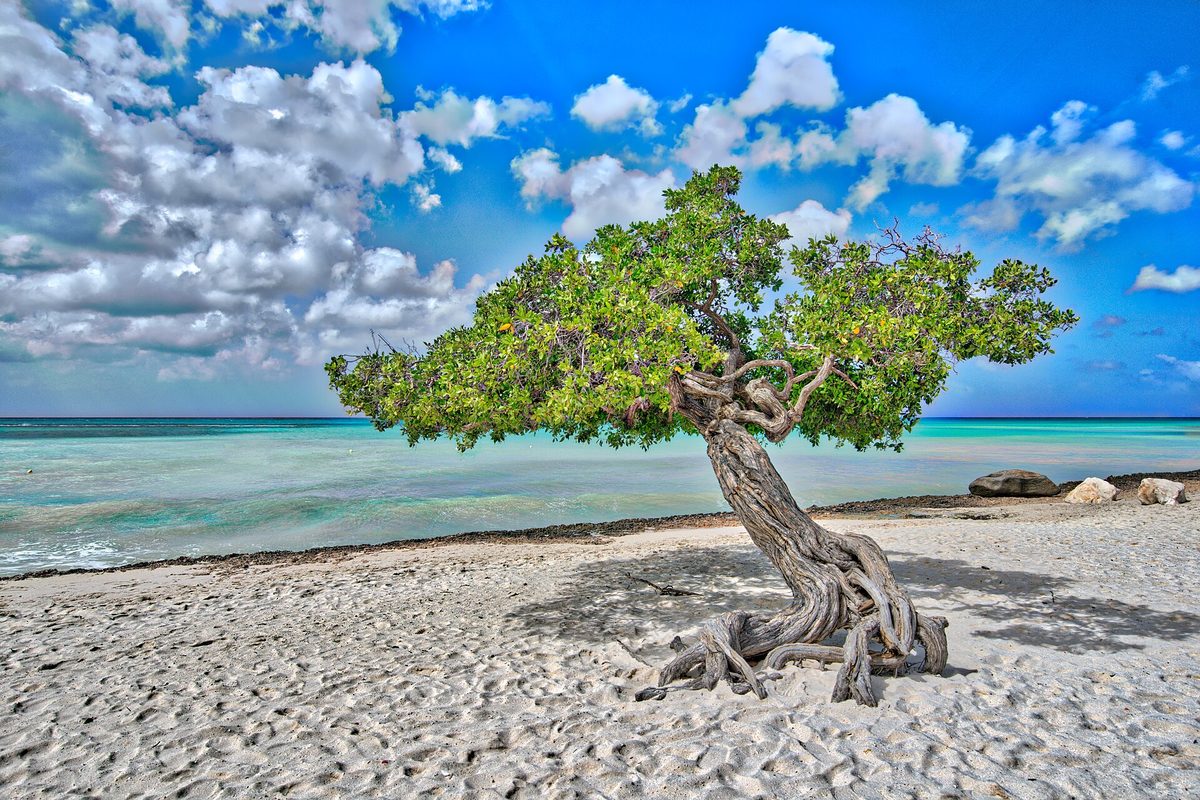
Morning: Go earlyish — by 9 a.m. you’ll have gentler sun, cooler sand, and first pick of palapa shade. Eagle Beach is a low-rise public beach, so unlike the resort-lined Palm Beach you can spread out. Snap your divi-divi tree photos near the Amsterdam Manor / Manchebo end before the crowds. The water is shallow and gentle here — ideal for a first ocean swim if you’re rusty.
Afternoon: Rent a float or paddleboard from a beach kiosk (around $20–40), or just rotate between water and shade with a book. There are casual lunch spots right behind the beach — think fresh fish, salads, and frozen drinks for roughly $15–25. This is the day to do nothing ambitious and feel zero guilt about it.
Where to eat (evening): Eagle Beach does sunset dinners better than almost anywhere. Passions on the Beach sets tables right on the sand with the sky going pink — reserve ahead, expect around $40–70 per person for a special first-night-out feel. Want our full shortlist? See the Aruba restaurants guide.
Swap this if… you’re traveling with little kids who melt in the midday heat — do Eagle Beach as a morning, retreat to the pool for the hot hours, and come back for sunset. Our Aruba with kids guide has the family-friendly version of this whole plan.
Day 3: A catamaran snorkel cruise — the unmissable one
If you do one organized activity on your first Aruba trip, make it a morning catamaran snorkel cruise. It’s the quintessential Aruba experience: sails up, music on, rum punch flowing, and two or three snorkel stops at genuinely good sites — all without you having to drive, anchor, or plan a thing.
Morning: Most cruises depart between roughly 9 and 10 a.m. from the Palm Beach piers and run two to four hours. The classic route hits Boca Catalina (a calm, fish-filled cove perfect for beginners), Malmok, and the star attraction — the Antilla shipwreck, a 400-foot WWII German freighter and one of the largest wrecks in the Caribbean, sitting shallow enough to snorkel right over. Expect to pay around $80–95 per person for a half-day trip with gear, drinks, and usually light food included. Boats provide flotation vests, so nervous swimmers are well looked after.
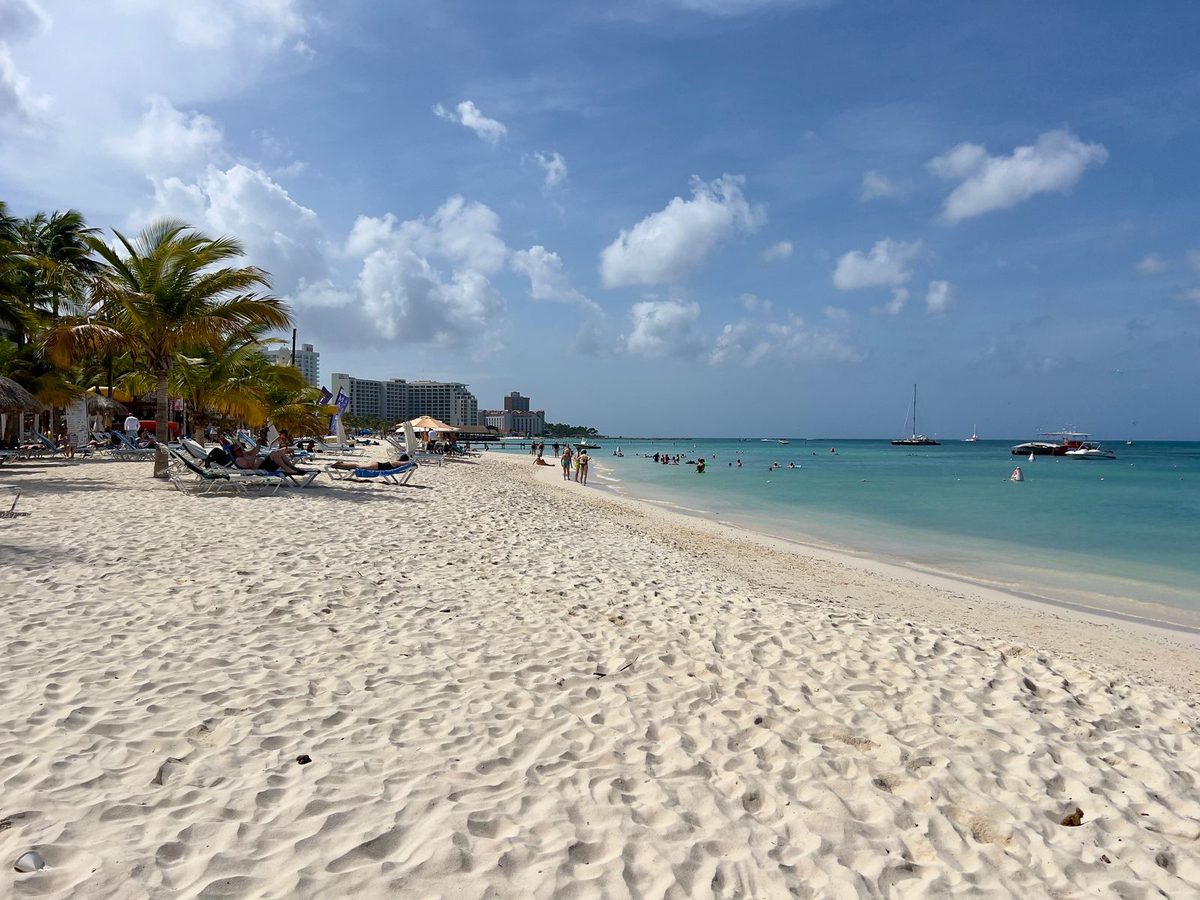
Afternoon: You’ll come back happily salty and sun-drunk, so plan a low-key afternoon — pool time, or wander the Palm Beach malls (Paseo Herencia, The Cove, Palm Beach Plaza) for air-conditioned browsing. For more ways to get on or in the water, our Aruba water sports guide covers diving, parasailing, jet skis, and more.
Where to eat (evening): Stay in the Palm Beach buzz. Catch the free nightly water-light show at Paseo Herencia, then graze the casual spots along The Strip, or splurge at one of the high-rise steak-and-seafood rooms ($40–80). Casinos are right there if you fancy a flutter.
Swap this if… you get seasick easily — book a shorter two-hour sail-and-snorkel rather than a full-day cruise, or snorkel straight off the beach at Boca Catalina (you can wade in) and use the saved time for a longer lunch.
Day 4: Go wild — Arikok, the Natural Pool, or a UTV tour
Now that you’ve found your feet, it’s adventure day. The “other Aruba” — the rugged, cactus-covered, wave-battered outback — is a total contrast to the resort strip, and seeing it is what separates a real Aruba trip from a beach-only one. The crown jewel is the Natural Pool (Conchi), a volcanic rock-ringed swimming hole where the surf crashes over the edges while you float, calm, on the inside.
The honest logistics: The Natural Pool sits inside Arikok National Park down rough 4×4-only tracks. As a first-timer, do not try to drive there in a regular rental — book a guided UTV, ATV, or jeep safari instead. Operators like De Palm Tours and others run half-day trips (around four hours) that include hotel pickup, a guide, and stops at the Natural Pool plus highlights like the Bushiribana gold mill ruins, the Natural Bridge area, and caves with ancient Arawak rock drawings. Reckon on roughly $90–130 per person for a shared jeep safari, or about $160 and up per UTV/buggy (often shared between two people) if you want to drive yourself over the rough stuff. Park admission (around $11 per adult) is usually included in tours.
Morning: Most tours leave early (think 8–9 a.m.) to beat the heat, so grab a quick hotel breakfast. Wear closed shoes, bring a swimsuit under your clothes, a buff or bandana for dust, and reef-safe sunscreen. The ride is bumpy and dusty and completely part of the fun. For everything the park holds, see our Arikok National Park guide.
Afternoon: You’ll roll back tired, dusty, and grinning around lunchtime. Shower, eat, and take it easy — pool or a short beach stint. You earned the downtime.
Where to eat (evening): Head into Oranjestad for dinner at the Renaissance Marketplace — waterfront tables, live music some nights, and a mix of seafood, steaks, and casual fare ($25–60). It’s a gentle introduction to downtown ahead of tomorrow.
Swap this if… a jolting UTV ride isn’t your thing — book an air-conditioned jeep or a half-day catamaran-to-the-Natural-Pool boat tour instead, which reaches a calmer swim spot by sea. Prefer to skip the outback entirely? Trade this for a relaxed second beach day at one of Aruba’s quieter beaches and a sunset sail.
Day 5: Oranjestad downtown and the northern tip
Your last full day mixes culture, shopping, and one final scenic drive to the island’s iconic lighthouse — a satisfying way to close the loop.
Morning — downtown Oranjestad: Spend the morning in the capital. Wander the pastel Dutch-colonial streets, ride the free electric streetcar, and pop into the National Archaeological Museum (free, air-conditioned, and genuinely interesting) behind the pink Royal Plaza. Browse the duty-free shops and the ArubaMade-style local craft stalls for aloe products, jewelry, and souvenirs. Grab local snacks and a coffee, and if you want context, a guided walking tour of downtown is a fun couple of hours. Parking is easy and the area is flat and walkable.
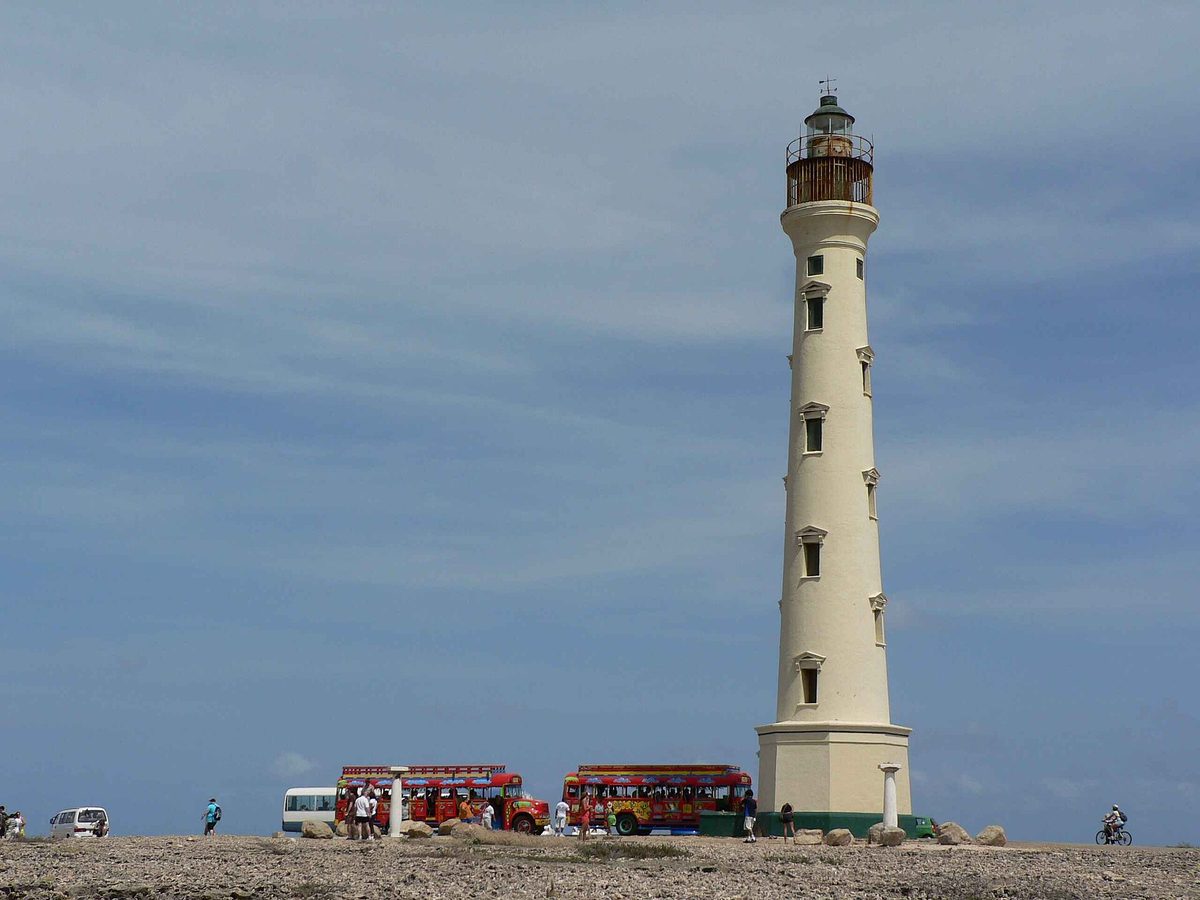
Afternoon — drive to the California Lighthouse: Head to the island’s northwestern tip for the California Lighthouse, perched on a rise with sweeping views over the dunes, the high-rise coast, and the wild north shore. It’s about a 15-minute drive from Palm Beach. You can climb it for a small fee (around $5–10) on open days, or just enjoy the panorama and the nearby Alto Vista Chapel and the wind-sculpted dunes. This stretch is one of the island’s best free photo ops — see more in our things to do in Aruba guide.
Where to eat / sunset: Cap your trip with a proper sunset. Either book a sunset catamaran cruise (around $75–95 with drinks) for your last evening, or dine at a restaurant near the lighthouse or back on Palm Beach with the sky doing its nightly show. This is the night for the slightly nicer dinner — you’ve done the island justice.
Swap this if… you’d rather end on the beach than in town — flip this day so you do the lighthouse and a final beach afternoon, saving Oranjestad’s shops for a quick stop on your way to or from the airport.
Days 6–7 (if you have them): the southeast and a slow day
Lucky enough to have a week? Two additions round out a first trip beautifully. First, a southeast day: drive down to San Nicolas for its world-class street murals (book an Aruba Murals tour), stop at the 80-year-old Charlie’s Bar, eat fresh fish at Zeerovers in Savaneta, and finish at Baby Beach — a shallow, calm, almost-enclosed lagoon that’s the gentlest snorkeling on the island and great for families. Second, a true do-nothing day: a spa treatment (try an aloe-based one), a long beach lounge, and a final unhurried dinner. Don’t underestimate how good an unplanned day feels after a week of moving.
Where to stay for your first trip
For a first-timer, location matters more than you’d think. Three easy calls:
- Palm Beach (high-rise): Best for first-timers who want everything on their doorstep — restaurants, water sports, casinos, nightlife, and big resorts with all the amenities. You’ll never be bored or stuck. Slightly pricier and busier.
- Eagle Beach / Manchebo (low-rise): Best for couples and calm-seekers. The beach is gorgeous and roomy, the resorts are smaller and more boutique, and it’s a short drive to the Palm Beach action when you want it.
- Self-catering condos & rentals: Great value for families and longer stays — a kitchen saves a fortune on breakfasts and snacks.
If you’d rather not think about meals at all, the island’s all-inclusive resorts are a low-stress first-trip option. Compare neighborhoods and properties in our where to stay guide.
Best time to go for a first visit
Here’s the freeing part: Aruba is a year-round destination. It sits below the hurricane belt, so there’s no real “danger season,” and the trade winds keep things comfortable even in summer. That said:
- December–April (high season): Driest, busiest, priciest. Perfect weather, but book flights and hotels three to six months out and expect crowds.
- May–August (shoulder/summer): Hot but breezy, fewer crowds, better rates, and still very little rain. A sweet spot for value — and the season this guide is being read in.
- September–November (low season): Quietest and cheapest, with a slightly higher (but still low) chance of a brief shower. Great deals if you don’t mind the odd cloud.
For month-by-month detail, see our best time to visit Aruba guide.
A sample first-timer budget (5 days)
Aruba isn’t a budget island, but it’s not impossible to control either. Here’s a rough per-person estimate for a five-day mid-range trip, excluding flights:
| Item | Estimated cost (per person) |
|---|---|
| Mid-range hotel (5 nights, double occupancy) | ~$900–1,500 |
| Catamaran snorkel cruise | ~$85 |
| Arikok / Natural Pool jeep or UTV tour | ~$110 |
| Rental car (3 days) or taxis | ~$150–200 |
| Food & drink (5 days, mix of casual + 1–2 splurges) | ~$350–550 |
| ED Card sustainability fee | ~$20 |
| Beach rentals, tips, souvenirs, misc. | ~$150 |
| Approx. total (excl. flights) | ~$1,700–2,600 |
You can shave a lot off with a self-catering condo, the Arubus instead of a car, and fewer restaurant splurges — or spend far more at the luxury end. For a full breakdown, see our Aruba vacation cost guide.
Rookie mistakes to avoid on your first trip
- Over-scheduling. The most common first-timer error. Aruba’s magic is partly its slow pace — leave whole afternoons unplanned. You do not need to “see everything.”
- Forgetting the ED Card. Complete the online embarkation form (and pay the sustainability fee) before you fly. People get caught out at the airport every day.
- Underestimating the sun. The constant breeze hides how strong the sun is. You will burn faster than you expect — reapply reef-safe sunscreen, and wear a hat.
- Not booking dinners. The popular beachfront and Savaneta restaurants fill up, especially in high season. Reserve a day or two ahead for the special ones.
- Driving to the Natural Pool in a regular car. The tracks are brutal and you can get stuck or fined. Take a tour or a real 4×4.
- Carrying no cash. Cards work widely, but taxis, beach kiosks, and tips often want cash. Keep small US bills on you.
- Spending it all on Palm Beach. Don’t skip the outback, the lighthouse, or a sunset cruise. The beach is the start of Aruba, not the whole of it.
For more insider pointers, our Aruba travel tips guide is the perfect companion to this itinerary.
First-timer FAQ: your questions, answered
What should a first timer do in Aruba?
A first timer should hit the highlights in a sensible order: relax on Eagle and Palm Beach, take a morning catamaran snorkel cruise to the Antilla shipwreck, do a guided Arikok or Natural Pool UTV/jeep tour, wander Oranjestad, drive to the California Lighthouse, and watch at least one Caribbean sunset. Leave plenty of unscheduled beach time too.
How many days do you need in Aruba for the first time?
Five to seven days is ideal for a first visit. Five days lets you cover the classic beaches, one snorkel cruise, one outback adventure, and downtown without rushing. A week adds the southeast (San Nicolas murals and Baby Beach) plus a true do-nothing day. Even three or four days works if you prioritize the catamaran and the Arikok tour.
Do I need a rental car in Aruba as a first-timer?
Not strictly, but it helps. If you only plan to lounge on Palm Beach, taxis and the Arubus cover you fine. If you want to reach the lighthouse, the southeast, or explore freely, rent a car for two or three days — it’s around $45–75 a day, driving is easy, and the island is tiny. Just don’t take a regular car onto Arikok’s rough 4×4 tracks.
Is Aruba safe for first-time travelers?
Yes — Aruba is consistently ranked among the safest islands in the Caribbean. Palm Beach is safe to walk day or night, violent crime against tourists is rare, and the island sits below the hurricane belt. Use normal common sense: lock your car, use beach lockers for valuables, and don’t leave phones unattended on the sand.
What currency and language are used in Aruba?
The official currency is the Aruban florin, but US dollars are accepted everywhere, so you don’t need to exchange money. The local language is Papiamento, yet English is spoken fluently nearly everywhere, alongside Dutch and Spanish. A friendly “Bon dia” (good morning) is appreciated and easy to use.
What is the best month for a first trip to Aruba?
Any month works since Aruba is dry, breezy, and below the hurricane belt year-round. December through April brings the best weather and biggest crowds and prices; May through August is hot but breezy with better value; September through November is quietest and cheapest with only a slightly higher chance of a brief shower.
Do I need to fill out anything before flying to Aruba?
Yes. Every visitor must complete the Aruba ED Card (embarkation/disembarkation form) online before arrival, which includes a sustainability fee of around $20 per person. Do it within a few days of your trip at the official government site. On the way home, build in extra airport time — Aruba has US pre-clearance, so you clear US customs before you board.
The bottom line for first-timers
Aruba rewards a light touch. Pair the famous beaches with one catamaran snorkel and one outback adventure, sprinkle in Oranjestad and the lighthouse, leave room to do nothing, and you’ll go home with the classic first-trip memories and an itch to return. Start with our full Aruba itinerary hub for more day-length plans, and check the best time to visit before you book. One Happy Island makes it genuinely easy to get your first trip right — now go enjoy it.
Photo credits
All images are sourced from Wikimedia Commons and Openverse under their respective Creative Commons / public-domain licenses. Specific photographer and license details for each image used in this article are listed below.
- Colorful Dutch colonial buildings in Oranjestad, a key stop on a first time in Aruba itinerary — Photo: Choinowski / CC BY-SA 4.0 via Wikimedia Commons
- Iconic wind-bent divi-divi tree on Eagle Beach in Aruba — Photo: sbmeaper1 (CC0) via Wikimedia Commons
- Palm Beach Aruba high-rise resort coastline and calm Caribbean sea — Photo: Kwihi / CC BY 4.0 via Wikimedia Commons
- California Lighthouse on the northern tip of Aruba above the dunes — Photo: David Stanley from Nanaimo, Canada / CC BY 2.0 via Wikimedia Commons