Here is a fact that makes a quick Caribbean escape feel a lot less far-fetched: nonstop flights to Aruba from several US East Coast cities run roughly four to four and a half hours, with New York’s JFK clocking in around 4 hours 40 minutes. Catch a morning departure and you can clear Queen Beatrix airport, drop your bag, and have your toes in the sand before lunch. A long weekend in Aruba is not a stretch goal or a someday trip. It is a Friday-to-Sunday plan that genuinely works, and this guide lays out exactly how to spend those two or three days without feeling like you spent the whole time in transit.
I have done the short-Aruba thing more than once, including one trip that was technically 56 hours on the ground, and I came home rested rather than frazzled. The trick is not cramming in everything. It is picking the right base, skipping the time-sucks, and leaning into the fact that Aruba is small, flat, sunny, and easy. Below is the candid version, with real drive times, ballpark prices, and the swaps I would make if your weekend is two days instead of three.
The short answer: how to spend a long weekend in Aruba
Spend a long weekend in Aruba by basing yourself on Eagle or Palm Beach, dedicating day one to the beach and a sunset catamaran, day two to a rented Jeep loop of the wild north coast and Arikok, and a half day three to Oranjestad before your flight. It suits beach lovers, couples, and anyone wanting an easy, low-logistics reset rather than a deep cultural dive.
If you only have this article’s attention for one more sentence: stay close to the water, rent a car for just one of your days, and do not try to drive the whole island in an afternoon. That is the entire philosophy. Everything that follows is detail. For more day-count planning across every trip length, the full Aruba itinerary planning hub breaks down 3-, 5-, and 7-day versions, but a weekend has its own rhythm, so let’s start there.
Your weekend in Aruba at a glance
Here is the whole plan on one screen. Treat it as a skeleton, not a schedule with a stopwatch. The 3-day column is the full long weekend; if you only have two days, the rightmost note tells you what to fold together or drop. Times are rough, and prices are per person in US dollars unless noted, because everything in Aruba is priced in USD anyway.
| Day | Morning | Afternoon | Evening | If you only have 2 days |
|---|---|---|---|---|
| Day 1 Arrive & unwind |
Land, taxi to hotel, drop bags, hit the nearest beach | Float at Eagle or Palm Beach; grab a casual lunch | Sunset catamaran cruise (~$60-75) or beachfront dinner | Same as Day 1 — this is your anchor day, do not skip it |
| Day 2 Explore the island |
Pick up a rental Jeep; California Lighthouse & Arashi Beach snorkel | Arikok National Park, Natural Bridge area, Baby Beach swim | Casual dinner in Oranjestad or San Nicolas; early night | Trim the Jeep loop to a half day: lighthouse, Arashi, then back |
| Day 3 Town & departure |
Oranjestad stroll, no-tax shopping, last beach swim | Lunch, return car, head to airport (arrive ~2.5 hrs early) | Fly home | Fold a quick Oranjestad walk into Day 2’s evening; fly out Day 2 |
The two-day version basically deletes the middle day’s slow pace and asks you to choose: do you want one full beach day plus a town morning, or one beach day plus a compressed island drive? Most people I know pick the beach-heavy version, and they are not wrong. A short trip is not the time to feel guilty about lying still.
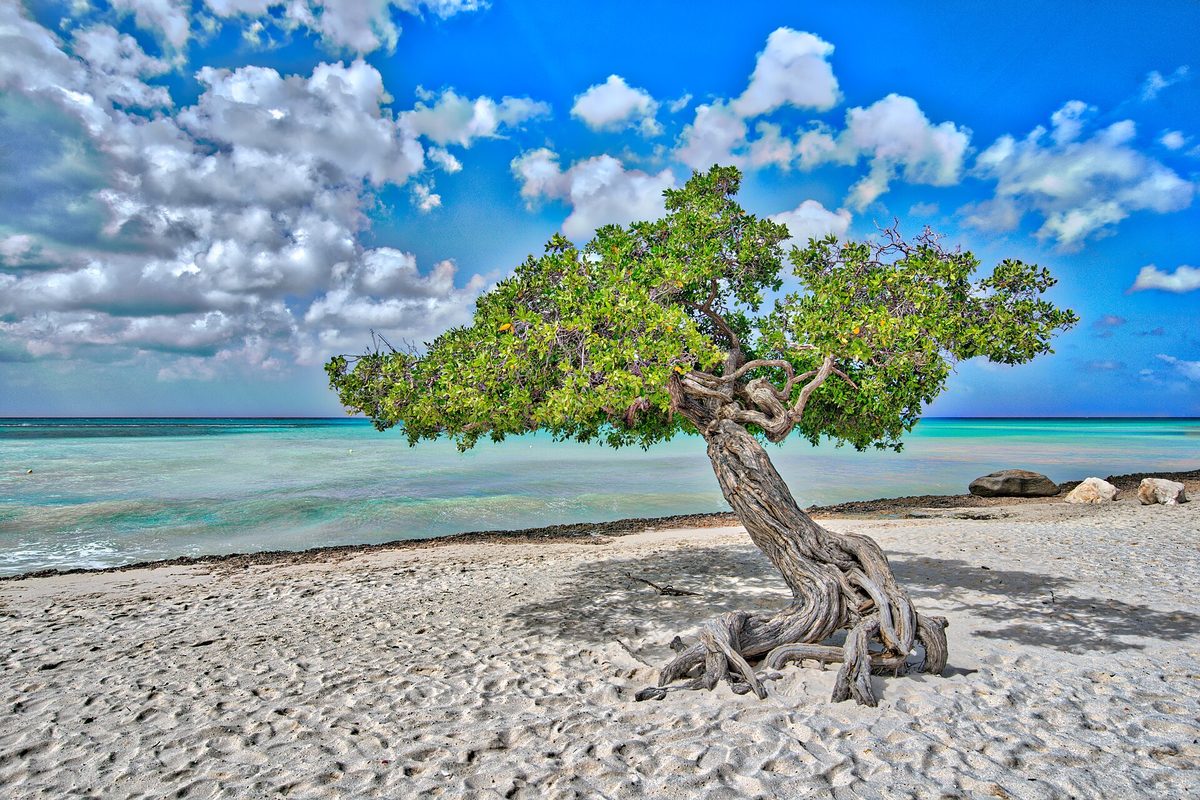
Day 1: Land, drop your bags, and get on the sand
The whole point of day one is to convert “I just got off a plane” into “I am in the Caribbean” as fast as possible. Because the flights are short and Queen Beatrix International Airport sits only about six miles from the main hotel strip, that conversion can happen in well under an hour.
Morning: arrival and the airport-to-beach shuffle
If you booked a morning nonstop, you will likely land somewhere between 11 a.m. and 1 p.m. Immigration in Aruba can be slow at peak, so budget 30-45 minutes there even though the drive that follows is short. A taxi from the airport to the Eagle Beach low-rise area runs around $22-28 by day, and to the Palm Beach high-rises around $37-41; fares are government-set and fixed by zone, so there is no meter and no haggling. There is no Uber on the island, so do not stand at arrivals refreshing an app.
Here is the move that saves your first afternoon: most resorts will hold your bags if your room is not ready, and many will let you change in a day-use area or simply walk you to the beach. So you do not lose the day to a 3 p.m. check-in. Drop everything, change, and go.
Afternoon: Eagle Beach (or whatever sand is closest)
Eagle Beach is the one with the wind-bent fofoti trees in every photo, and it earns the hype — wide, white, and rarely crowded at the south end. Palm Beach is busier and lined with high-rise resorts, water-sports kiosks, and beach bars, which some people love for the energy. For a first afternoon when you are tired and just want to float, I lean Eagle. Either way, you are 15-18 minutes from the airport, so the “near the airport beach” you are looking for on a tight trip is essentially the whole west coast.
Grab a casual lunch — a beach bar burger or fresh fish runs around $15-22 — and do nothing of consequence for a few hours. This is the day to let the trip downshift. If you want a primer on which stretch of sand fits your style, the rundown of Aruba’s best beaches compares Eagle, Palm, Arashi, and the quieter coves in one place.
Evening: sunset on the water
If you do one paid activity all weekend, make it a sunset sail. A two-to-three-hour catamaran cruise along the calm west coast runs around $60-75 per person, usually with an open bar and sometimes a snorkel stop at the Antilla shipwreck on the way. Boats leave from Palm Beach in the late afternoon and time the return for sundown, which means you toast your first evening with the island skyline glowing behind you. It is touristy. It is also genuinely lovely, and it knocks out “be on the water” and “watch a Caribbean sunset” in one go.
Not a boat person? A beachfront dinner with your feet near the sand does the same emotional job. Either way, keep it early — you have an island to drive tomorrow.
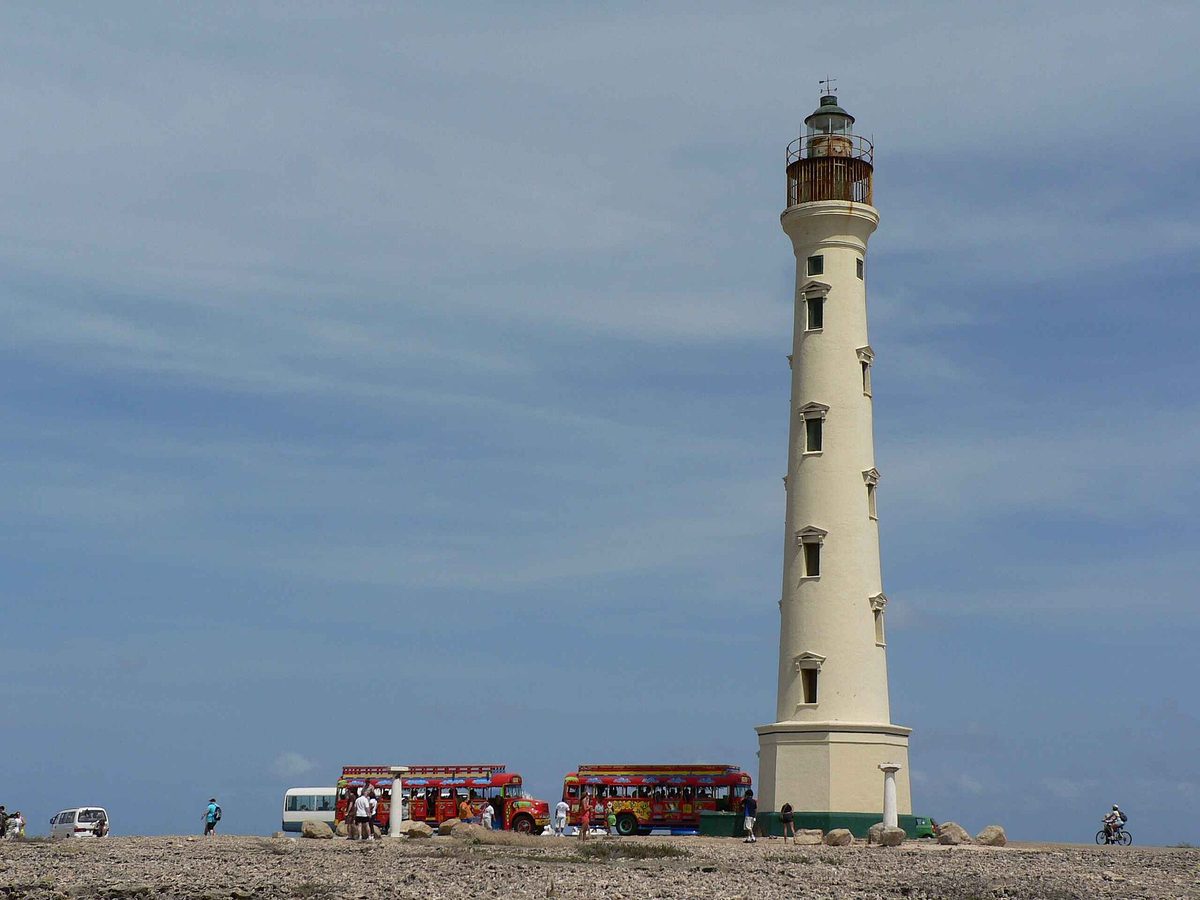
Day 2: Rent a Jeep and see the wild side of Aruba
Day two is where a weekend in Aruba stops feeling like a beach nap and starts feeling like a real trip. The west coast is calm and resort-lined; the north and east coasts are raw, windswept desert with crashing surf, cactus, and not much shade. You want a car for this, and you really only need it for one day.
Morning: pick up the car, then head north
Reserve a rental ahead of time and have it delivered to your hotel, or grab one at the airport. An economy car runs around $49-65 per day; a compact SUV around $75-95; a true Jeep Wrangler 4×4 around $110-160. For a weekend you do not strictly need 4×4 unless you plan to drive the rough interior of Arikok yourself, and most people do not. A regular car reaches every stop below except the unpaved Natural Pool track.
Drive up to the California Lighthouse at the island’s northwest tip (about 20-25 minutes from Palm Beach), then drop down to Arashi Beach just below it. Arashi is calm, sandy, and one of the better easy snorkel spots — you can sometimes see fish and the odd turtle straight off the beach. Boca Catalina, a small cove a few minutes south, is even better for snorkeling if the water is flat. Bring your own mask if you have one; rentals on the beach run around $10-15.
Afternoon: Arikok, the rugged coast, and Baby Beach
Point the car toward Arikok National Park, which covers nearly 20% of the island and protects the dramatic east coast. Park entry is around $11 per person. Inside and nearby you can see the Natural Bridge area (the original famous arch collapsed years ago, but a smaller “baby bridge” and the pounding surf are still worth the stop) and the Bushiribana gold mill ruins, a photogenic stone shell from Aruba’s 19th-century gold rush. The contrast with the calm west coast is the whole reason to do this loop — same island, totally different planet.
If you have the appetite for a longer drive, continue to the southern tip and Baby Beach, a shallow, protected lagoon that is about the calmest, clearest swimming water on the island and great if you have nervous swimmers along. It is roughly 45 minutes to an hour from the high-rise hotels, so it is a commitment, but on a 3-day trip it fits. On a 2-day trip, skip Baby Beach and keep your loop tight.
For a deeper breakdown of trails, the Natural Pool, and what is actually inside the park gates, see the guide to things to do in Aruba, which covers the adventure side in more depth than a weekend allows.
Evening: low-key dinner, early night
By now you are sun-tired and a little salty, which is the correct state. Have an easy dinner — San Nicolas in the south has a fun mural-covered street-art district if you ended up down that way, or head back toward Oranjestad. Keep it relaxed. Tomorrow is a half day and a flight, and you do not want a late, boozy night fighting your departure.
Swap this if you only have 2 days
Two-day travelers should treat day two as a half day, not a full island circumnavigation. Do the lighthouse and Arashi snorkel in the morning, skip the long southern run to Baby Beach, and be back at your hotel by early afternoon for one more west-coast swim and a sunset. You will see the highlights without spending your whole short trip behind the wheel.
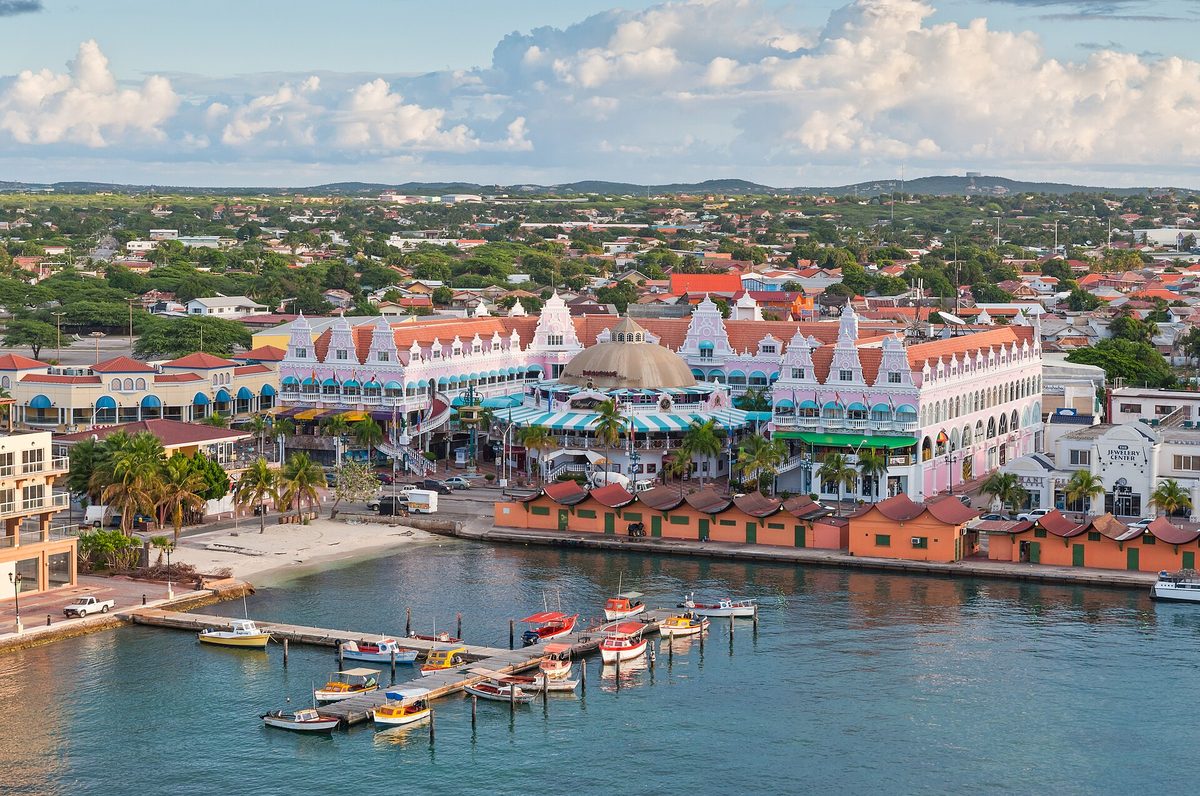
Day 3: Oranjestad, last swim, and a stress-free departure
Your third day is short by design — most weekend flights home leave in the afternoon or early evening, so you have a relaxed morning and then a gentle exit. Do not over-plan it. The goal is to squeeze in the one thing you have not done yet (town) and one last hit of beach before you trade the trade winds for a jet bridge.
Morning: wander Oranjestad
Aruba’s capital, Oranjestad, is a walkable grid of pastel Dutch colonial buildings, a free streetcar that loops the main drag, and shopping with no sales tax — which makes the duty-free liquor, perfume, and watch prices genuinely competitive. The Renaissance Marketplace and the harborfront are pleasant for a coffee and people-watching even if you buy nothing. Give it 90 minutes to two hours; it is charming but compact, and you can see the heart of it in a morning.
If you skipped a particular beach earlier in the weekend, this is your moment for a final quick swim. Eagle Beach is closest to town and the airport, which makes it the natural last-dip choice before you have to rinse off and go.
Afternoon: return the car and head to the airport
If you rented a car, returning it is easy — many companies collect it from your hotel, or you drop it at the airport. Aim to be at Queen Beatrix airport around two and a half hours before your flight. Here is the one quirk that surprises people: Aruba has US pre-clearance, meaning you clear US Customs and Immigration in Aruba before you board. That is fantastic on the far end (you land in the States as a domestic arrival and walk straight out), but it means the airport process here takes longer, so the early arrival genuinely matters. Build it in.
For the full picture on flights, transfers, driving rules, and the pre-clearance process, the getting to and around Aruba guide is the one to bookmark before you fly.
Swap this if you only have 2 days
On a 2-day trip you will not have a leisurely day three. Fold a 45-minute Oranjestad stroll into the end of day one or the start of day two, and treat your second afternoon as your departure runway: last swim, quick lunch, car back, airport. You lose the unhurried town morning, but you keep the essentials.

Maximizing a short trip: red-eyes, early flights, and the airport beach hack
The single biggest lever on a 2-3 day trip is your flight timing, because every hour you save in transit is an hour on the beach. A few things I have learned the hard way.
Book the earliest outbound you can stomach. A morning departure that lands midday gives you a near-full first day. An afternoon flight that lands at dinnertime effectively deletes day one — you arrive, eat, and sleep. On a 3-day trip that is survivable; on a 2-day trip it is a quarter of your vacation gone.
Fly home in the evening, not the morning. The reverse of the above. An evening flight out lets you keep most of your last day. A morning departure means waking up, packing, and leaving before you have had a proper final swim. Combine an early arrival with a late departure and a “weekend” stretches to feel like three real days even if it is technically two nights.
Use the whole west coast as your “airport beach.” Because Eagle and Palm Beach sit just 15-18 minutes from the terminal, you do not need a special close-to-the-airport beach. If you arrive early and your room is not ready, drop your bags, change, and you are floating within the hour. If you have a late checkout and an evening flight, do the same in reverse: swim, rinse at the resort, and you are at the gate 20 minutes later.
Pack carry-on only if you can. Skipping baggage claim on a short trip is worth more than the extra outfits you will not wear. Aruba is shorts, swimsuits, one nice-ish dinner option, and reef-safe sunscreen. That fits in a carry-on, and it gets you out of the airport faster on both ends.
Where to stay for a quick Aruba getaway
For a short trip, location beats everything. You want to be on or steps from the west-coast sand so that “go to the beach” is a 90-second walk, not a drive. Two zones dominate.
Palm Beach (high-rise area): the big-name resorts, casinos, beach bars, water-sports kiosks, and the most restaurants and nightlife within walking distance. Pick this if you want energy, convenience, and the ability to do everything on foot. It is also where most sunset cruises depart.
Eagle Beach and the low-rise area: lower-slung, calmer, and home to that iconic wide beach. Resorts here tend to feel more relaxed and a touch more boutique. Pick this if your idea of a weekend is quiet sand and an early night.
An all-inclusive can be a smart play on a tight trip because it removes a layer of decision-making — meals and drinks are handled, so you spend your limited hours doing rather than planning. If that appeals, compare options in the guide to Aruba all-inclusive resorts, and for a broader look at neighborhoods and price tiers see where to stay in Aruba. Whatever you choose, book the west coast — a cheaper place inland will cost you beach time you cannot spare on a weekend.
Getting around: taxi vs a quick rental car
On a weekend you do not have to commit to one mode of transport for the whole trip — and you probably should not. Here is the candid math.
Taxis are plentiful, government-priced by zone, and totally fine for short hops: airport to hotel, hotel to dinner, hotel to a Palm Beach cruise dock. Fares run roughly $22-28 to the low-rise area and $37-41 to the high-rises from the airport, with about $2 per extra bag. There is no Uber or rideshare anywhere on the island, so taxis (and your hotel’s front desk) are how you summon a ride. For a pure beach-and-resort weekend where you never leave the west coast, you can skip renting entirely and just taxi.
A rental car only earns its keep on your exploration day. The moment you want to drive to the lighthouse, snorkel Arashi, loop Arikok, and reach Baby Beach, a $49-65 economy car beats stacking up $30-40 taxi fares to each spot — and it gives you freedom to stop wherever the coast looks good. My recommended hybrid: taxi on arrival and departure days, rent a car for just the single middle day you explore. You get the convenience of door-to-door rides when you are tired and the freedom of your own wheels when you actually need them.
One note on driving: Aruba drives on the right, roads are decent, and the island is small, but roundabouts are constant and signage to the rough interior of Arikok is thin. A regular car handles all paved routes; only the unpaved Natural Pool track truly needs 4×4. Full details, including the local quirks, live in the getting around Aruba guide.
Best time for a weekend in Aruba
This is where Aruba quietly beats most of the Caribbean for a spur-of-the-moment escape: it sits south of the main hurricane belt, so direct hurricane hits are statistically rare. That is a big deal when you are booking a short, weather-sensitive trip — you are far less likely to have a long weekend wrecked by a storm than you would be on islands farther north. Aruba also averages only about 20 inches of rain a year, and what falls usually comes as brief overnight showers rather than washed-out days.
Practically, that means almost any weekend works. December through April is high season — driest, busiest, priciest. May, June, and the fall shoulder months bring lower rates and thinner crowds with weather that is still reliably sunny; the trade winds keep even the hot months comfortable. If you are chasing the best value for a quick getaway, the shoulder weekends are the sweet spot. For a month-by-month breakdown of crowds, prices, and conditions, see the best time to visit Aruba guide.
The bottom line: you rarely have to gamble on the weather here, which is exactly why a last-minute weekend in Aruba is such an easy yes.
A sample weekend budget for two people
Costs swing wildly with your hotel choice, but here is a realistic ballpark for a 3-day, 2-night long weekend for two travelers, mid-range, not counting airfare (which varies far too much to estimate). Treat these as “around” figures — Aruba is not a budget island, but a short trip keeps the total manageable because you simply have fewer days to spend.
| Item | Approx. cost (2 people, 3 days) |
|---|---|
| Mid-range west-coast hotel (2 nights) | $400-700 |
| Airport taxis (round trip) | $50-80 |
| Rental car (1 day, economy) | $55-75 |
| Fuel + Arikok park entry | $40-55 |
| Sunset catamaran cruise (2 people) | $120-150 |
| Meals & drinks (3 days) | $300-450 |
| Snorkel rental, tips, sundries | $50-80 |
| Estimated total (excl. flights) | ~$1,015-1,590 |
You can push the total down by choosing an all-inclusive (which folds meals, drinks, and often activities into one upfront number), skipping the rental and taxiing only, or traveling in shoulder season when room rates drop. You can push it up fast with high-rise resorts, fine-dining dinners, and add-on tours. For a full cost breakdown across trip lengths and travel styles, the Aruba vacation cost guide goes deeper than a single weekend snapshot.
What to skip on a 2-3 day trip
The hardest part of planning a short trip is accepting what you will not do. Aruba has more than a weekend can hold, and trying to cram it all in is the fastest way to come home needing a vacation from your vacation. Here is what I cut without regret.
- The full off-road Natural Pool (Conchi) expedition. It is a long, bone-rattling 4×4 journey to a small pool. The experience is the drive as much as the swim, and on a tight schedule it eats half a day you would rather spend on a real beach. Save it for a longer trip.
- A second island tour. One self-driven exploration day covers the highlights. Booking a separate guided UTV or Jeep safari on top of it is redundant on a weekend.
- Day trips to Curacao or Bonaire. Tempting on a map, but they consume an entire day of a trip that only has two or three. Do Aruba properly first.
- An over-packed dinner reservation calendar. One memorable dinner is plenty. Keep the other nights casual and early so you protect your energy and your flight.
- Trying to visit every famous beach. Pick two or three. Eagle for the wide sand, Arashi for snorkeling, Baby Beach if you have the third day — that is more than enough coastline for 48-72 hours.
If you want ideas for filling any leftover hours without overspending, the roundup of things to do in Aruba and a stop at one of the island’s many beaches will give you plenty of low-commitment options to slot in.
Frequently asked questions
Is a weekend in Aruba worth it?
Yes. With nonstop flights from the US East Coast running about four to four and a half hours, you lose little time in transit, and the island is small enough that two or three days covers the beaches, a sunset sail, and a Jeep loop of the wild coast. It is one of the easiest quick Caribbean escapes you can plan.
Is 2 days enough in Aruba?
Two days is enough for a focused taste — one full beach day plus a sunset cruise, and a half day exploring the lighthouse and a snorkel beach. You will not see everything, and you will probably wish for one more day, but a well-planned 48 hours absolutely delivers a real Aruba trip rather than a rushed one.
How many days do you really need in Aruba?
For a relaxed, see-the-highlights trip, three to five days is the sweet spot. A long weekend of two to three days works well if you base yourself on the west coast and do not try to do everything. Beach-and-relaxation travelers are happy with less; adventure and culture seekers will want more.
Do I need to rent a car for a weekend in Aruba?
Not for the whole trip. If you plan to leave the resort strip and see Arikok, the lighthouse, and the north coast, rent a car for just that one exploration day — an economy car runs around $49-65. For a pure beach-and-resort weekend, taxis are fine and there is no Uber on the island.
Is Aruba safe from hurricanes for a last-minute trip?
Largely, yes. Aruba sits south of the main hurricane belt, so direct hits are statistically rare compared with islands farther north. Combined with only about 20 inches of rain a year, mostly in brief overnight showers, that makes a spur-of-the-moment weekend far less of a weather gamble than most Caribbean destinations.
What is the best area to stay for a short trip?
Stay on the west coast so the beach is steps away. Palm Beach offers high-rise resorts, restaurants, and nightlife within walking distance; Eagle Beach and the low-rise area are calmer with the iconic wide sand. Both sit just 15-18 minutes from the airport, which is ideal when every hour counts.
Plan the rest of your trip
A weekend is the gateway drug to Aruba — most people who do one start plotting a longer return before they have even flown home. When you are ready to extend the stay, the master Aruba itinerary guide lays out 3-, 5-, and 7-day plans, and the broader rundown of things to do in Aruba will keep you busy well beyond a single weekend. However long you have, the island makes it easy.
By the ArubaTourism.org team — Last updated June 2026.
Photo credits
All images are freely licensed via Wikimedia Commons. Specific photographer and license details for each photo are recorded in the image metadata and shown in the captions on this page. We are grateful to the photographers who share their work under open licenses.