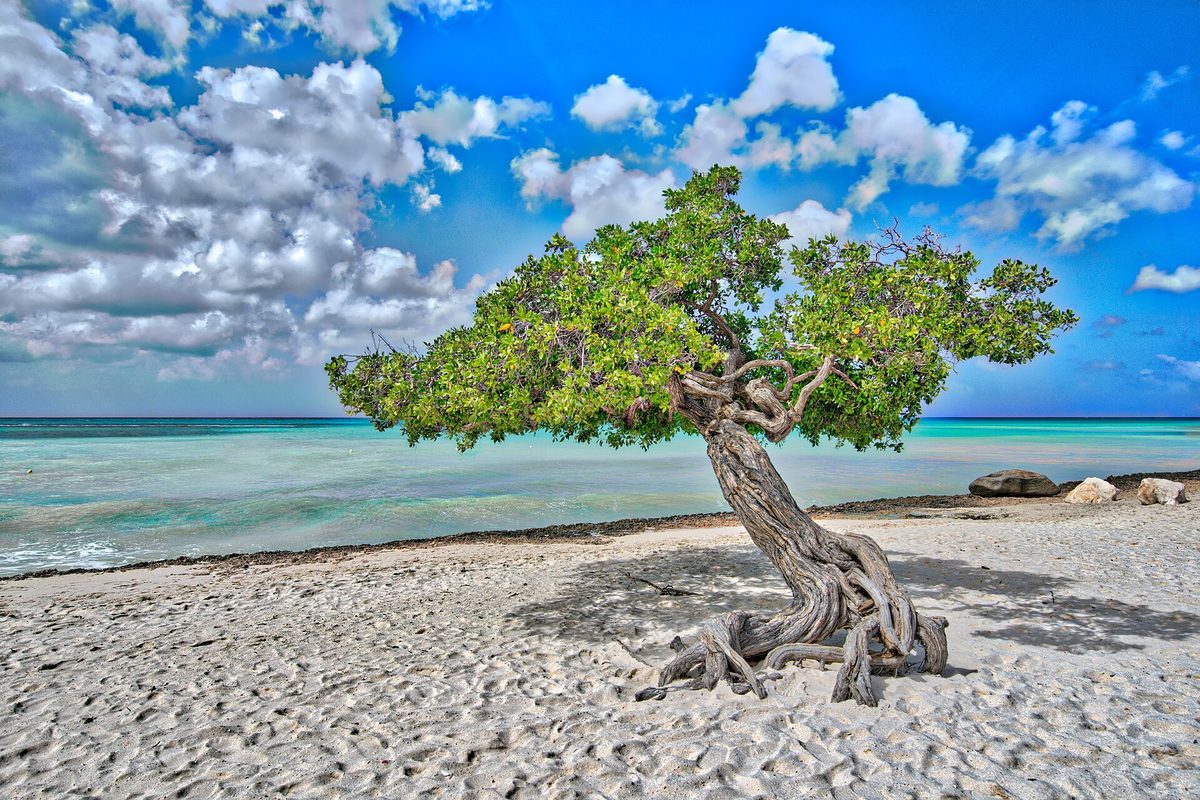
It’s a little after four on Eagle Beach, and the trade wind has finally cut the heat. The sand stays cool under bare feet even now, and the water runs through six shades of blue before it meets the sky. A divi-divi tree throws a long shadow toward the surf, a beach blender hums somewhere, and a catamaran glides back toward Palm Beach with its sails lit gold. With a rugged coast and a whole national park still ahead of me, this is exactly why a good 4 days in Aruba itinerary works so well.
That’s the sweet spot the whole plan is built around: long enough to do more than lie on one beach, short enough that you never feel rushed or run out of money. After several trips down here I’m convinced four nights is the most underrated length you can book on this island, and this guide walks you through it hour by hour.
The short version: a great 4-day Aruba plan mixes two relaxed beach days on the calm west coast with one big adventure day across the rugged windward side and Arikok National Park, plus a half day in colorful Oranjestad. It suits first-timers, couples, and active families who want beaches, a little culture, and one real outdoor day without the cost of a full week.
I’ll give you a clickable day-by-day plan, real costs in U.S. dollars, where to eat, where to stay, how to get around, and a “swap this if it’s not your style” tip for every single day. Prices and hours move around on a small island, so treat my numbers as a planning guide and confirm the current details before you book.
Your 4 days in Aruba at a glance
Here’s the whole trip on one screen. If you only read one thing, read this table, then dive into the day that interests you most.
| Day | Morning | Afternoon | Evening |
|---|---|---|---|
| Day 1 — Settle into the west coast | Arrive, check in, grab lunch near the hotel | Palm Beach or Eagle Beach; toes in the water, first swim | Sunset drinks, easy dinner walking distance from your room |
| Day 2 — Beach + Oranjestad | Slow beach morning, snorkel off Boca Catalina | Drive or tram into Oranjestad to shop and wander | Dinner downtown or back at the beach for sunset |
| Day 3 — Wild side + Arikok | Rent a 4×4 or join a Jeep tour; California Lighthouse, Alto Vista, Bushiribana | Arikok National Park, Natural Pool, Baby Beach swim | Casual San Nicolas or Savaneta seafood dinner |
| Day 4 — Water day + farewell | Catamaran snorkel cruise or one last beach | Pack, late checkout, souvenir run for aloe and hot sauce | Sunset dinner with your feet in the sand |
For the bigger picture on how this trip fits the rest of the island, our complete Aruba itinerary guide compares trip lengths from a weekend up to a full week so you can sanity-check whether four nights is right for you.
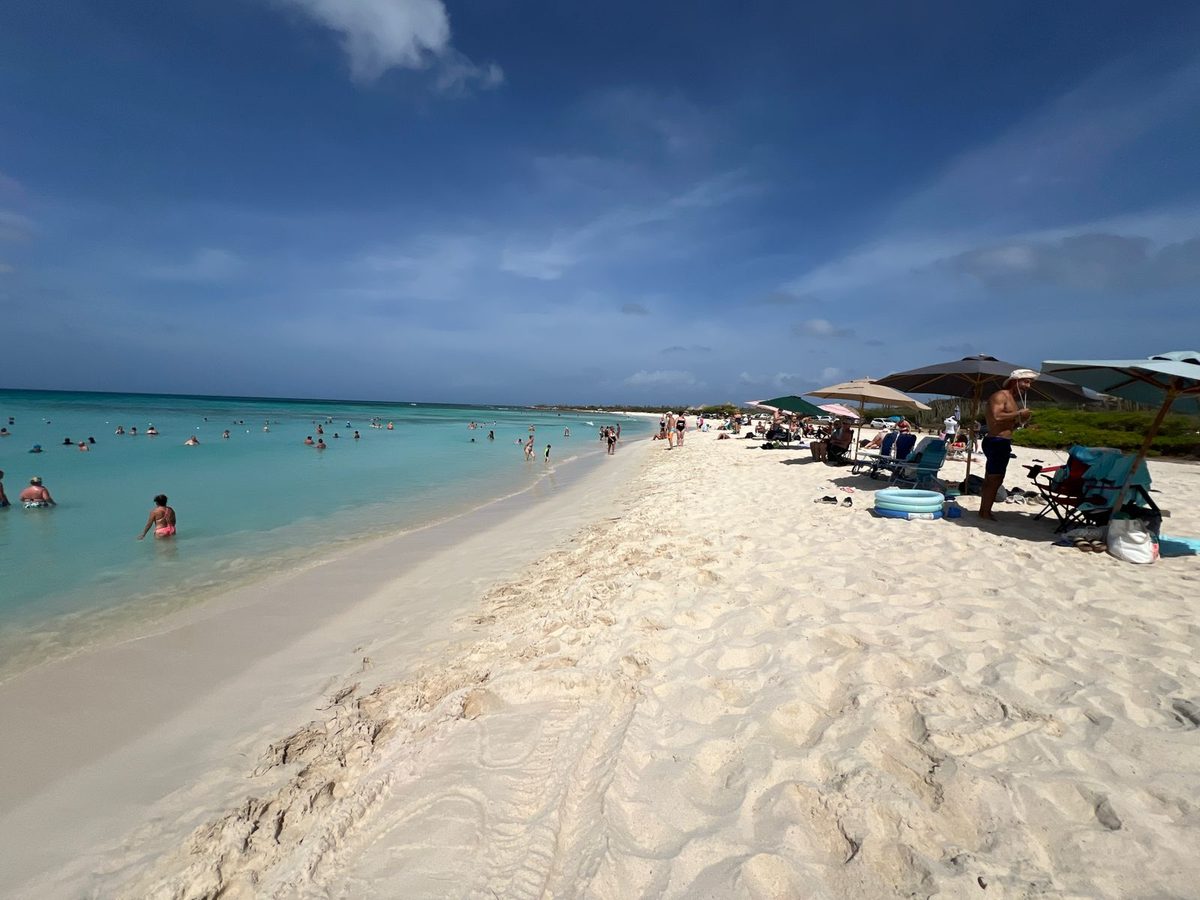
Day 1: Land softly on the calm west coast
Most flights from the U.S. land at Queen Beatrix International Airport (AUA) late morning or early afternoon, so I treat Day 1 as a “land softly” day. Don’t over-schedule it. You’ll clear customs, pick up a car or grab a taxi, and by mid-afternoon you can have sand between your toes.
Morning to midday: arrive and get to your base
From the airport it’s roughly a 15-minute drive to the Eagle Beach and Palm Beach hotel strip where most first-timers stay. Government-set taxi fares run around $25–$35 from the airport to the high-rise area for up to a few passengers, with a small surcharge for extra bags and after 11 p.m. If you’ve pre-booked a rental car (more on that below), the counters are right at the airport.
Check-in usually isn’t until mid-afternoon, but nearly every hotel will hold your bags so you can start your day early. Grab a quick lunch — a pastechi (a flaky fried turnover) from a local snack truck runs about $2–$4 and is the move if you want to eat like a local on day one.
Afternoon: first swim at Eagle or Palm Beach
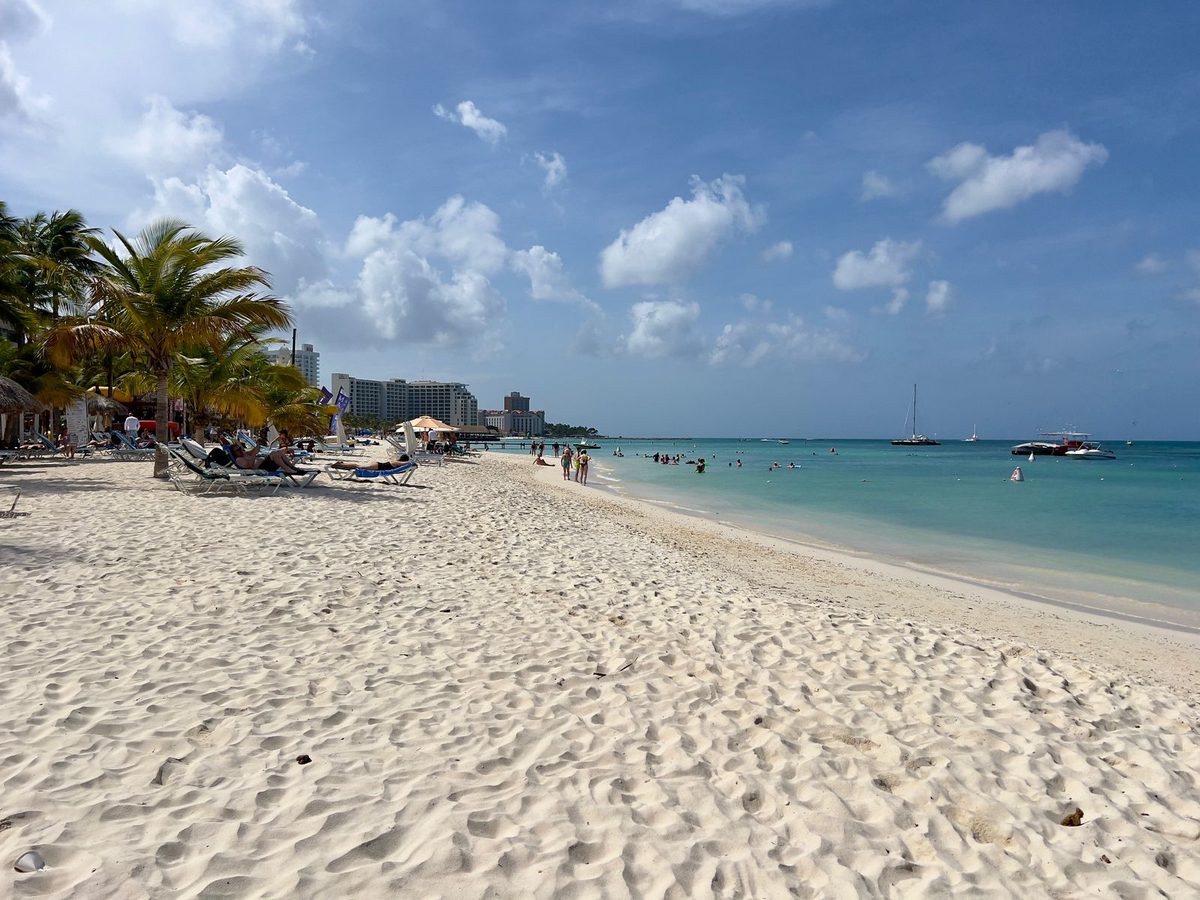
Now the reward. The two flagship beaches sit a couple of miles apart and have different personalities. Eagle Beach is wide, low-rise, and uncrowded, with the famous fofoti (divi-divi look-alike) trees and plenty of space to spread out. Palm Beach is the livelier high-rise strip, with watersports vendors, piers, and bars right on the sand. I like Eagle for a first afternoon because it’s the most “ahh, this is why I came” of the two.
Both are free and public — all beaches in Aruba are. Loungers and a shade palapa from a vendor run roughly $20–$40 for the day if your hotel doesn’t include them. Spend the afternoon doing exactly nothing, then rinse off for dinner. For a full rundown of which sand to pick on which day, our guide to the best beaches in Aruba breaks down all the contenders.
Evening: sunset and an easy first dinner
Aruba sunsets are a genuine event — people stop and watch. Stake out a west-facing spot around 6:30 p.m. (a touch earlier in winter), order a cold Balashi, the local beer, and settle in. For dinner on a travel-weary night, keep it walkable. Casual beachfront spots around Palm Beach do burgers, fresh fish, and pasta for roughly $18–$35 a main. If you want the toes-in-the-sand experience right away, reserve a beach-table restaurant in advance — these book out days ahead in high season.
Swap this if you land late: if your flight gets in after 4 p.m., skip the beach scramble entirely. Check in, order room service or grab something quick near the hotel, walk out to catch the sunset, and bank your energy for Day 2. There’s no prize for forcing a packed first day when you’re running on a 5 a.m. wake-up.
Day 2: A slow beach morning, then colorful Oranjestad
Day 2 is a “best of both” day: a relaxed morning by the water and an afternoon getting a feel for the island’s Dutch-Caribbean capital. It keeps the pace gentle while adding some culture, shopping, and a different kind of photo to your camera roll.
Morning: beach time and a snorkel stop
Sleep in a little, then head back to the sand. If you’re up for something more active, drive 10–15 minutes north to Boca Catalina or Arashi Beach near Malmok. These calmer, rockier coves are the island’s best shore-snorkeling, with reef fish right off the beach and the famous Antilla shipwreck nearby for boat trips. Bring your own mask and fins or rent a set for around $10–$15. Go in the morning when the water is glassiest and the light is best.
If snorkeling isn’t your thing, just claim a palapa on Palm Beach and alternate swims with cold drinks until lunch. There’s no wrong answer here.
Afternoon: shopping and strolling in Oranjestad
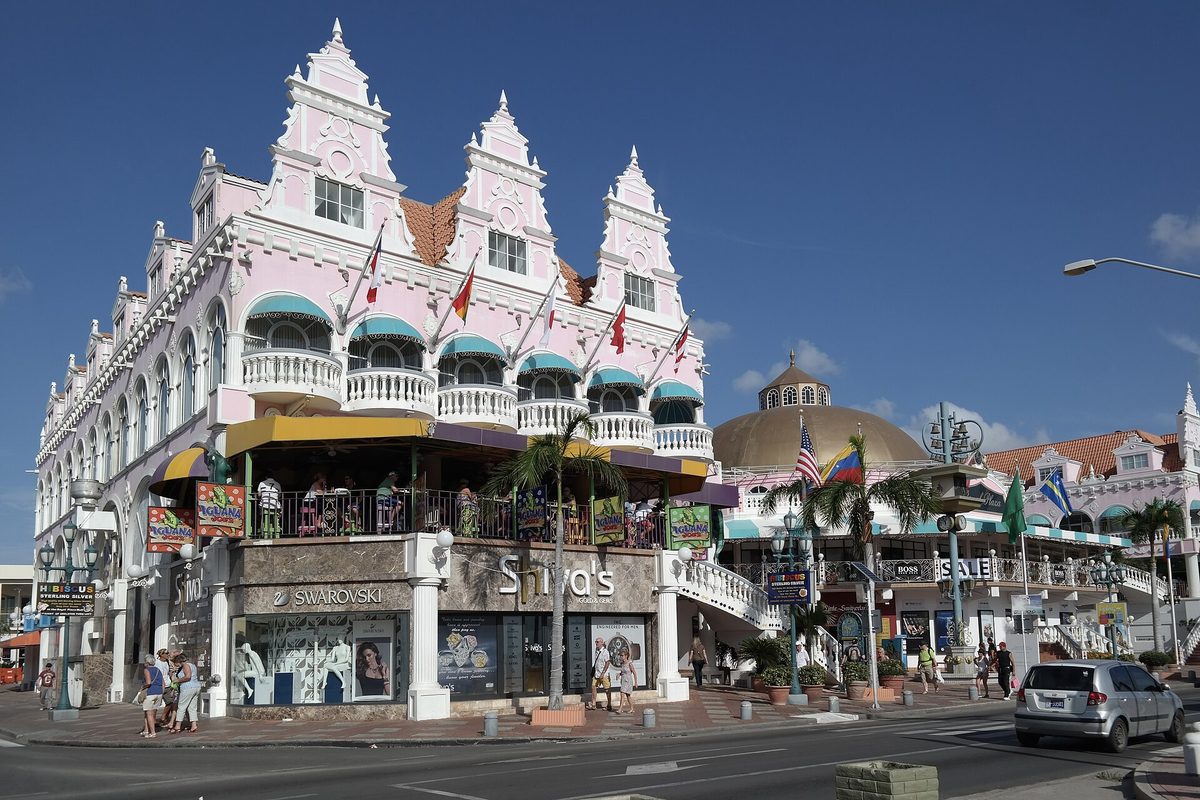
After lunch, point yourself toward Oranjestad, about a 10–15 minute drive south (or hop the free downtown streetcar/tram once you’re parked near the cruise terminal). The capital is a postcard of pastel Dutch colonial buildings, with Caya G. F. Betico Croes as the main shopping street. Browse for Aruba aloe products, local hot sauce, and Delft blue souvenirs, duck into a café for an iced coffee, and photograph the candy-colored facades around Wilhelminastraat.
Give yourself two or three unhurried hours. It’s walkable, flat, and safe, and you don’t need a guided tour — wandering is the whole point. If you’d rather make a half-day of it with museums and a longer list of stops, our roundup of the best things to do in Aruba has plenty to slot in here.
Evening: dinner downtown or back at the beach
Oranjestad has some of the island’s most interesting dinners, from Argentine steakhouses to Aruban seafood in a courtyard setting; expect roughly $30–$50 a main at the nicer spots. Or drive back to the coast and chase the sunset again — after one day you’ll already have a favorite stretch of sand. Either way, this is a good night to book ahead, because the best tables fill up fast in season.
Swap this if you’re traveling with kids: trade the shopping streets for the Butterfly Farm near Palm Beach or the Philip’s Animal Garden, both quick, shaded, and a hit with younger travelers. Our guide to Aruba with kids has more family-friendly swaps that work beautifully on a four-day trip.
Day 3: The wild side, Arikok National Park, and the Natural Pool
This is the day that turns a nice beach trip into a real Aruba trip. The eastern, windward side of the island is a different planet: cactus-studded desert, crashing surf, gold-mine ruins, and a national park covering nearly a fifth of the island. It’s the day people remember most, and it’s the single best reason to give Aruba four days instead of two.
How to do it: rent a 4×4 or join a Jeep tour
You have two good options. Rent a 4×4 (a regular car can’t reach the rough interior roads or the Natural Pool) for roughly $60–$90 for the day and go at your own pace. Or book a guided UTV, ATV, or Jeep safari, which typically runs about $90–$150 per person and handles the driving, the park fee, and the navigation for you. First-timers who don’t want to wrestle a 4×4 over washboard trails should book the tour; confident drivers who like flexibility should self-drive. Either way, start early — it gets hot, and the park’s Natural Pool access closes mid-afternoon.
Morning: lighthouse, chapel, and gold-mine ruins
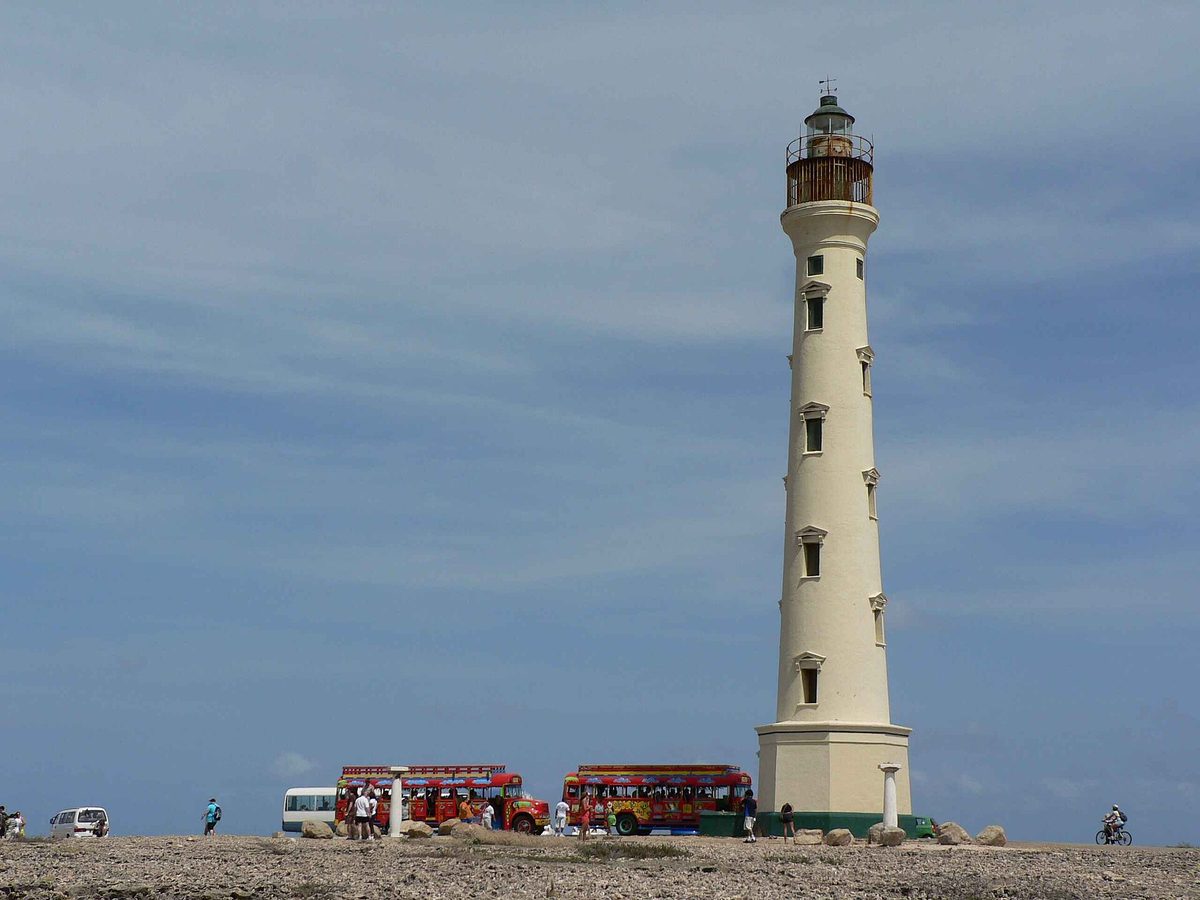
Begin at the island’s northwest tip and work your way around. The California Lighthouse (free to view from outside; small fee to climb when open) gives you a sweeping view of the whole coastline. From there, the tiny yellow Alto Vista Chapel sits alone on a hill above the sea, and the windswept Bushiribana gold mill ruins look like a sandcastle fortress against the surf. These three are easy, free, and photogenic, and they string together along the north coast in about two hours.
Midday: Arikok National Park and the Natural Pool
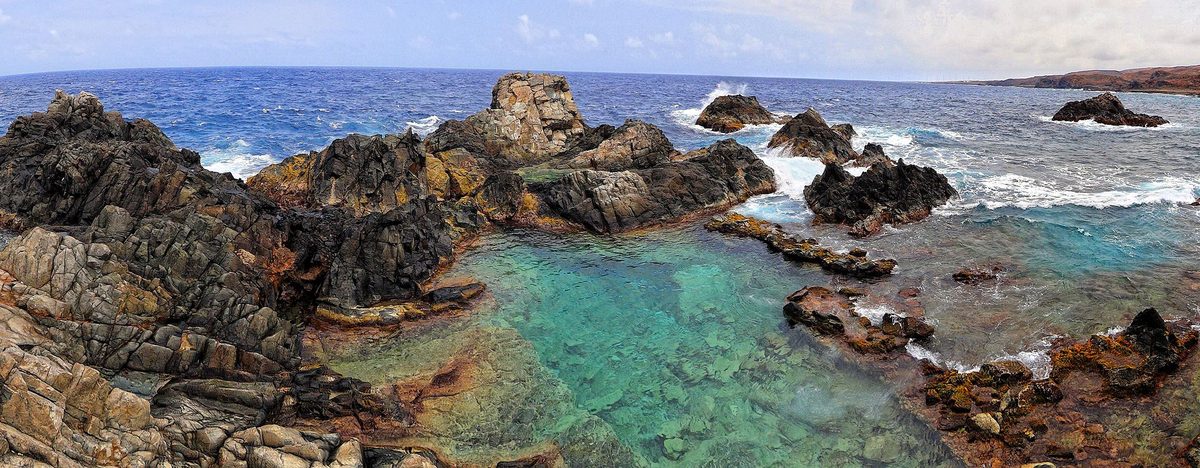
Arikok National Park protects the rugged interior and southeast coast. Admission is around $22 per adult (kids under 18 typically free) as of early 2026, so confirm the current rate; entrances at San Fuego and Vader Piet generally open at 8 a.m. and stop admitting visitors to the Natural Pool area by mid-afternoon, so don’t dawdle. Inside you’ll find caves with ancient rock drawings, sea-cliff lookouts, and the headline attraction: Conchi, the Natural Pool — a calm, rock-rimmed swimming hole carved into the volcanic coast where the open Atlantic smashes just over the rocks. Reaching it means a 4×4 ride and a short scramble, but floating in that protected blue circle while the surf explodes a few feet away is pure Aruba magic.
Pack water, reef-safe sunscreen, sturdy sandals, and a towel — there are no shops out here. Our deep dive on Arikok National Park covers trails, the cave art, and exactly how to reach the pool safely.
Afternoon: Baby Beach swim on the way back
Loop down to the island’s southern tip and reward yourself at Baby Beach near San Nicolas — a shallow, calm lagoon that’s the gentlest swim on the island and the perfect cool-down after a dusty morning. There’s a snack bar for a cold drink and a plate of fish. It’s a long but satisfying loop back to the hotels from here, roughly 45 minutes.
Evening: low-key seafood
You’ll be sandy, sun-tired, and happy, so keep dinner casual. The fishing village of Savaneta and the town of San Nicolas have unpretentious seafood spots where you order fresh fish by the pound for around $15–$25. It’s the most authentic meal of the trip.
Swap this if you don’t want to drive the wild side: book a half-day catamaran-and-snorkel cruise instead (about $50–$90 per person with drinks and lunch) and spend the back half of the day on the beach. You’ll trade the desert and the Natural Pool for the sea, which is a fair swap if rough roads aren’t your idea of a vacation. You can move the cruise I describe on Day 4 here and flip the order.
Day 4: One last swim, a catamaran cruise, and a sand-floor goodbye
Your last day depends on your flight, but most departures leave in the afternoon or evening, which gives you a relaxed final morning. The goal is to send yourself off on a high note, not to cram.
Morning: a catamaran snorkel cruise (or one more beach)
If you didn’t do the boat on Day 3, this is the morning for it. A catamaran snorkel cruise typically runs about $50–$90 per person and includes gear, an open bar, and a lunch or snacks. Most cruises stop at the Antilla shipwreck — a 400-foot WWII-era German freighter that’s one of the Caribbean’s best wreck snorkels — plus a calm reef stop like Boca Catalina. Morning departures mean calmer water and you’re back with time to pack. Prefer dry land? Spend the morning on your favorite beach and order one last round of whatever became your trip drink.
Midday: pack, check out, and a souvenir run
Most hotels will hold your bags after checkout, and some offer a late checkout for a fee — worth asking for if your flight is in the evening. Use the gap for a quick souvenir run: Aruba aloe skincare, a bottle of local hot sauce or the Aruba Ariba mix, and Dutch cheese all travel well. The airport recommends arriving about three hours early because U.S.-bound passengers clear American pre-clearance customs in Aruba, so build that in.
Evening: dinner with your feet in the sand
If your flight is the next morning, end with the quintessential Aruba dinner: a beachfront table where they set candles right in the sand and the sun melts into the sea while you eat. Reserve well ahead — these are the most popular tables on the island and run roughly $40–$70 a head. It’s the perfect last image to carry home.
Swap this if you have a red-eye or early flight: flip the cruise to Day 3, make Day 4 a pure slow beach morning, and have a relaxed lunch near the airport instead of a big dinner. Don’t book anything you’d have to rush back from.
Where to stay for a 4-day trip
For a short trip, location matters more than anything — you don’t want to lose an hour a day in transit. Three areas cover almost everyone:
- Palm Beach (high-rise): the liveliest base, with big resorts, casinos, restaurants, and watersports steps from your room. Best for first-timers and anyone who wants to walk to dinner and nightlife.
- Eagle Beach (low-rise): calmer, more boutique resorts and condos on the island’s most beautiful stretch of sand. Best for couples and anyone craving a quieter scene.
- Oranjestad / Savaneta: good for boutique stays, marina views, or a more local feel, though you’ll drive to the best beaches.
On four nights I’d splurge on location and a beachfront view rather than a giant suite — you’ll barely be in the room. If you want the food and drinks handled so you can switch your brain off, an all-inclusive can be great value on a short stay. Compare your options in our guides to where to stay in Aruba and the best Aruba all-inclusive resorts.
Getting around: rental car vs. taxi and Arubus
How you get around makes or breaks a four-day plan, and the honest answer is “it depends on your days.”
- Rental car: an economy car runs roughly $45–$65 a day, a 4×4 more like $60–$90. A car pays for itself the moment you want to explore the wild side or beach-hop on your own schedule. If you only rent for Day 3, you get the freedom without paying for four days of parking.
- Taxis: fares are government-set (no meters), around $25–$35 from the airport to the hotels and roughly $10–$15 for short hops along the strip. Convenient and stress-free, but two or three rides a day adds up fast.
- Arubus (public bus): the cheapest option at around $2.60 one-way or about $5 for a day pass, with a reliable line connecting the airport, Oranjestad, and the Palm/Eagle Beach hotels. Great for the coast; it won’t get you to Arikok, the Natural Pool, or Baby Beach.
My usual play on four days: taxi or bus from the airport, stay walkable on the beach days, and rent a 4×4 just for the adventure day. For the full breakdown, see our guide to getting to and around Aruba.
Best time to go for a 4-day trip
Aruba’s biggest weather flex is consistency: it sits outside the main hurricane belt, stays dry and breezy most of the year, and averages temperatures in the low-to-mid 80s°F. That means there’s no truly bad time to come for four days.
High season (mid-December through mid-April) brings the best weather and the biggest crowds and prices. The shoulder months — late April to June, and again November — are my favorite: warm water, thinner crowds, and softer rates. September and October are the quietest and cheapest, with a slightly higher (but still low) chance of a passing shower. Pick your window based on budget and how much you mind a crowd; our guide to the best time to visit Aruba goes month by month.
A sample 4-day Aruba budget
Costs swing wildly with your hotel and how you travel, but here’s a realistic mid-range estimate for one person on a four-night trip, excluding international flights. Treat it as a planning sketch, not a quote.
| Category | Estimated cost (per person, 4 nights) |
|---|---|
| Mid-range hotel (4 nights, double occupancy, per person) | $700–$1,200 |
| Food and drinks (mix of casual and nice dinners) | $280–$450 |
| One 4×4 rental day or Jeep tour | $80–$150 |
| Arikok park fee + snorkel cruise | $75–$110 |
| Taxis, bus, parking, tips, souvenirs | $120–$200 |
| Approximate total (excl. flights) | $1,255–$2,110 |
You can go lower with an all-inclusive, a budget condo, and the bus, or much higher at a luxury resort with fine dining. For a deeper breakdown of what an island trip really costs, see our Aruba vacation cost guide.
What to skip on a 4-day trip
Four days is generous, but it’s not a week. A few honest cuts keep the trip from feeling rushed:
- Don’t try to see every beach. Pick two or three and enjoy them. Beach-hopping all 12 turns a vacation into a logistics exercise.
- Skip the long day trip to Curaçao or Bonaire. Tempting, but a full day of flights and ferries eats a quarter of your trip. Save it for a longer stay.
- Don’t over-book tours. One big adventure day and one water activity is plenty. Leave room to do nothing on a beach — that’s the point of Aruba.
- Skip renting a car for all four days unless you genuinely plan to drive daily. Rent it for the wild-side day and save on parking and idle rental fees.
If you want even more ideas to weigh, our list of Aruba water sports and roundup of Aruba nightlife can help you decide what’s worth a slot and what to leave for next time.
4 days in Aruba itinerary: frequently asked questions
Is 4 days enough in Aruba?
Yes, four days is enough for a satisfying first trip. It’s the sweet spot where you can enjoy two relaxed beach days, one full adventure day across the wild side and Arikok National Park, and a half day in Oranjestad without feeling rushed. If you want to add scuba certification, multiple day trips, or total downtime, lean toward five to seven days instead.
What is the best 4-day Aruba itinerary?
The best Aruba 4 day itinerary balances rest and adventure: two beach days on the calm west coast (Eagle and Palm), one big day exploring the windward coast, Arikok National Park, and the Natural Pool, and a half day shopping and strolling in Oranjestad. Cap it with a catamaran snorkel cruise and a sunset beach dinner. Adjust the order around your flight times and the weather.
How many days do you need in Aruba?
Most first-timers are happy with four to five days, which covers the famous beaches plus one adventure day with room to relax. Three days works for a quick beach escape, while a full week suits travelers who want to dive, take day trips, or simply slow down. Four nights is the most popular length because it fits a long weekend or a short week off.
Do I need a car for 4 days in Aruba?
Not for the whole trip. If you’re staying on the Palm or Eagle Beach strip, you can walk to dinner and use taxis or the Arubus for the beach days. The one day you really benefit from wheels is the wild-side and Arikok day, when a 4×4 (around $60–$90) gives you the freedom to reach the Natural Pool and lighthouse. Renting just for that day is the most cost-effective approach.
What should I not miss in Aruba in 4 days?
Don’t miss Eagle Beach at sunset, the Natural Pool inside Arikok National Park, the California Lighthouse and north-coast ruins, a shore or boat snorkel over the Antilla shipwreck, and one toes-in-the-sand beachfront dinner. Those five experiences capture the island’s mix of world-class beaches and rugged desert coast, and they all fit comfortably into four days.
What is the best time to visit Aruba for a short trip?
Any time, honestly — Aruba is dry, breezy, and warm year-round and sits outside the main hurricane belt. For the best mix of good weather and lower prices, target the shoulder months of late April to June or November. High season (December to mid-April) has the most reliable sun but the highest rates and crowds. September and October are quietest and cheapest.
The takeaway: four days hits the sweet spot
Four days in Aruba is long enough to do the island justice and short enough to keep it easy and affordable. You’ll get the powder-white beaches, the rugged desert and the Natural Pool, a taste of Oranjestad, and at least one sunset dinner you’ll be talking about for months — without the cost or fatigue of a full week. Build the plan around your flight times, keep one day truly lazy, and confirm prices and hours before you go. One happy island, four happy days.
Ready to keep planning? Start with our master Aruba itinerary hub for other trip lengths, or browse more things to do in Aruba to fine-tune your days.
By the ArubaTourism.org team — Last updated June 2026.
Photo credits
- Arashi Beach, Aruba — Photo: Kwihi / CC BY 4.0 via Wikimedia Commons.
- Palm Beach, Aruba — Photo: Kwihi / CC BY 4.0 via Wikimedia Commons.
- California Lighthouse, Aruba — Photo: David Stanley / CC BY 2.0 via Wikimedia Commons.
- Natural Pool (Conchi), Arikok National Park — Photo: Bjørn Christian Tørrissen / CC BY-SA 3.0 via Wikimedia Commons.
- Divi-divi tree, Aruba — Photo: sbmeaper1 (CC0) via Wikimedia Commons.
- Oranjestad, Aruba — Photo: Choinowski / CC BY-SA 4.0 via Wikimedia Commons.