You have probably heard the line already, maybe from a seasoned cruiser at the next table or from a forum thread you stumbled onto while planning: “Don’t bother trying to actually see Aruba in a day, a cruise stop is too short.” I want to push back on that, hard. It is the kind of advice that sounds wise and is actually just lazy. One day in Aruba, planned well, is not a consolation prize. It is one of the most rewarding port days in the entire southern Caribbean, precisely because this island is small, the cruise terminal sits in the middle of the action, and the best stuff is genuinely close. Treat the clock as a design constraint instead of a tragedy and you will leave with a tan, a great lunch, and a real reason to come back.
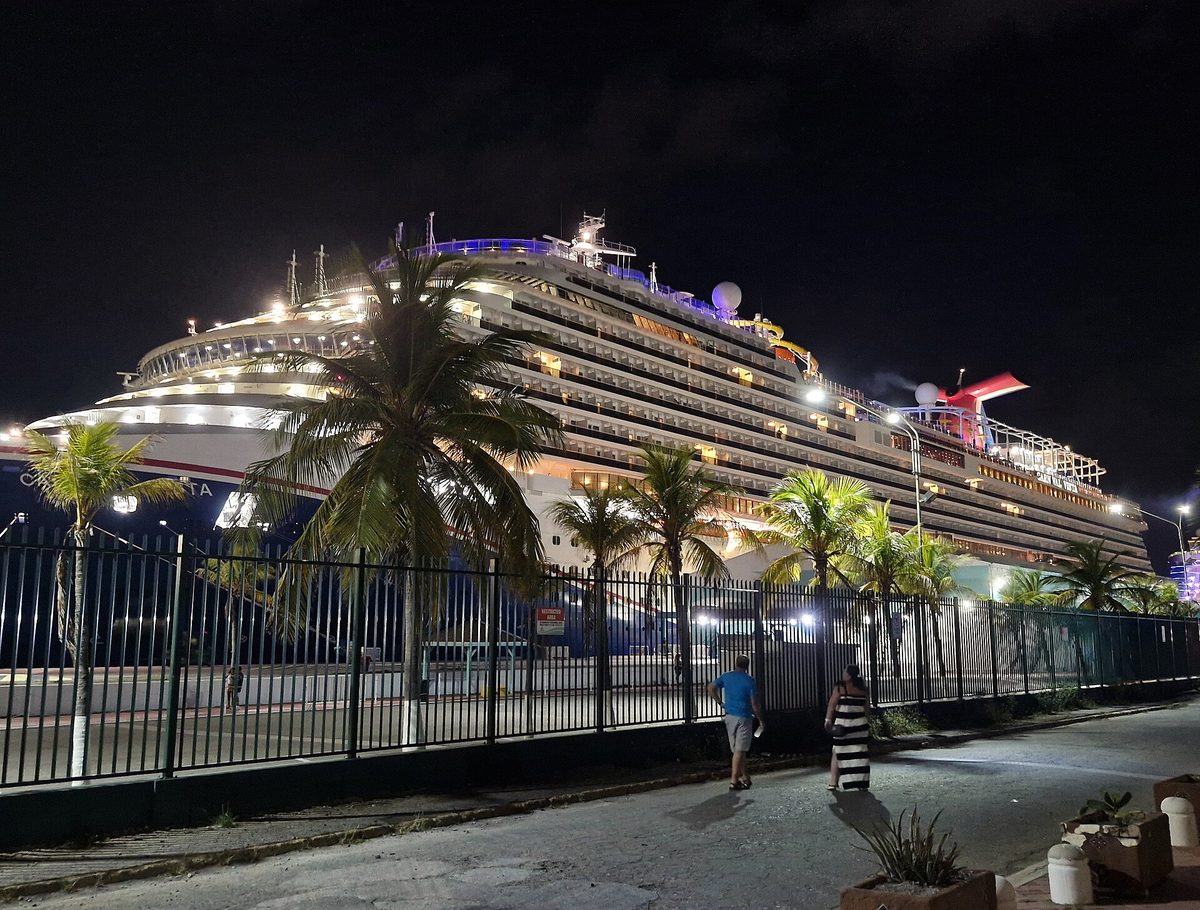
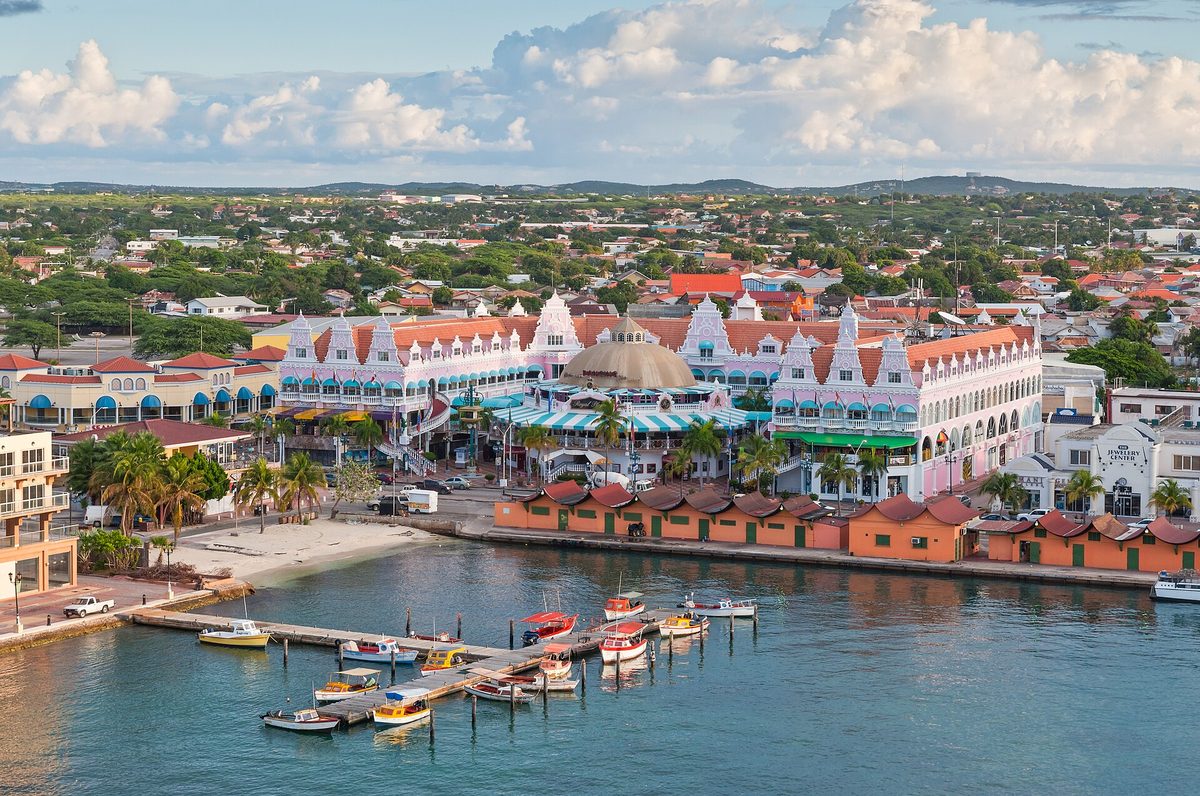
Here is the thing that makes Aruba different. At most Caribbean ports you step off the ship into an industrial dock miles from anything good, lose an hour to logistics, and spend the day fighting traffic. In Oranjestad you walk down the gangway and you are roughly 200 meters from the main shopping street and a short taxi from a world-ranked beach. So no, you will not see everything. You will see plenty, and the right plan makes the difference between a frantic blur and a day you actually remember.
The quick answer: with a typical 7 to 9-hour port stop, the best way to spend one day in Aruba is one beach, one good local meal, and a short downtown wander, all within a 20-minute taxi of the ship. Pick the beach-focused plan if you want to relax, the explorer plan if you have cruised before and crave adventure, and the walkable-from-port plan if you would rather not coordinate a single taxi. Each suits a different traveler, and all of them get you back before all-aboard.
Below you will find an hour-by-hour template, several full day plans, the real numbers on taxis and time, and a candid list of what to skip. I have hedged every price and hour as “around” because Aruba runs on island time and rates drift, but the shape of the day holds. Let us get into it.
One day in Aruba at a glance: an hour-by-hour cruise-day template
This is the skeleton I hand friends who message me the night before their ship docks. It assumes an arrival around 8am and an all-aboard around 5pm, which is the most common Aruba schedule. Shift the blocks earlier or later to match your own ship, but keep the proportions: most of the day on a beach, a real meal off the ship, and a buffer at the end so you are never sprinting up the gangway.
| Time block | What to do | Notes |
|---|---|---|
| 8:00 – 8:45am | Clear the ship, walk through the terminal, grab a quick coffee or pastry downtown | Lines thin out if you wait 20 minutes after docking |
| 8:45 – 9:15am | Taxi from the official stand to Eagle Beach (around $12-15, ~15 min) | Confirm the flat fare before you get in |
| 9:15am – 12:30pm | Beach time: swim, float, walk to the divi-divi trees, optional snorkel hop | Every Aruba beach is public, including in front of resorts |
| 12:30 – 1:00pm | Taxi to a local lunch spot (downtown, Savaneta, or a beach shack) | Budget the drive into your all-aboard math |
| 1:00 – 2:15pm | Long, unhurried lunch: fresh fish, keshi yena, a cold Balashi | This is the meal you will remember, not the buffet |
| 2:15 – 3:30pm | Downtown Oranjestad: Fort Zoutman, the free trolley, duty-free and craft shopping | The terminal is a 5-minute walk from central downtown |
| 3:30 – 4:15pm | Last souvenir run, cold drink at the Renaissance Marketplace, slow walk back | Aim to be aboard by ~4:15 for a 5:00 all-aboard |
| 4:15pm onward | Back on the ship, sail-away from the top deck | Buffer time is non-negotiable; the ship will not wait |
That template is deliberately conservative. If your ship stays late, which the very largest ships occasionally do until 10 or 11pm, you can bolt a sunset dinner onto the end. If you only have six hours, drop the downtown block and just do beach plus lunch. The point is that even the short version is a genuinely full, satisfying day, not a watered-down sampler.
How much time you really have before all-aboard
The single biggest mistake I see on a port day is treating the posted departure time as the time you can be having fun until. It is not. Cruise lines publish an “all-aboard” that is typically 30 to 60 minutes before the ship actually casts off, and you want your own buffer on top of that. So if your ship lists a 5:00pm departure, all-aboard is likely 4:30pm, and you should plan to walk back aboard around 4:15pm. Work backward from there and your real “play” window on a 7-hour stop is closer to five and a half usable hours once you subtract disembarkation at the start and your safety margin at the end.
That math is exactly why Aruba punches above its weight for a cruise day. Because the terminal is downtown and the headline beaches are a 15-minute taxi away, you lose very little time to transit. Compare that to ports where the good beach is 45 minutes each way and you have burned 90 minutes before you even spread a towel. Here, your five and a half hours can be almost all beach, food, and wandering. For a fuller breakdown of distances and transport options island-wide, our guide to getting to and around Aruba is the companion piece to this section.
One more timing note specific to cruisers: Aruba is on Atlantic Standard Time and does not observe daylight saving, so depending on the season your phone may or may not match ship time. Always run your day on ship time, not local time, and set a loud alarm for your turnaround. Missing the ship in Aruba means an expensive flight to the next port at your own cost. It is the one genuinely high-stakes part of an otherwise low-stress day.
Getting around Oranjestad on a port day
You have five realistic ways to move around on a cruise day, and the right one depends entirely on which plan you choose. Here is the honest rundown.
Walking (free, and better than it sounds)
This is the secret weapon of the Aruba cruise port. Step off the ship and you are about a five-minute walk from the heart of downtown Oranjestad: Fort Zoutman, the Renaissance Marketplace, the main shopping drag, and the L.G. Smith Boulevard waterfront. If your idea of a great day is colorful Dutch-colonial streets, duty-free browsing, a harbor-side lunch, and people-watching, you may never need a taxi at all. The walkable-from-port plan below leans entirely on this.
The free downtown trolley
Aruba runs a free streetcar (the trolley, or “tram”) that loops from near the cruise terminal up the main shopping street and back. It is slow, charming, and genuinely useful for saving your feet in the midday heat. It will not get you to a beach, but for hopping between downtown stops it is a pleasant, no-cost ride. Catch it near the terminal entrance.
Taxis (fixed fares, no apps)
There is no Uber or Lyft on Aruba. Taxis are the workhorse of a port day, and they run on government-set flat rates rather than meters, so you confirm the price before you climb in and there is nothing to negotiate. As a rough guide for one to four passengers from the cruise terminal: Eagle Beach is around $12-15, Palm Beach around $15-18, the airport area around $12, and a longer haul down to Savaneta or Baby Beach in the south runs more like $35-50 each way. Always arrange your return pickup or get the driver’s card, because taxis do not idle at quieter beaches waiting for you.
Arubus (the public bus, a few dollars)
Aruba’s public bus, Arubus, runs from the downtown terminal (a short walk from the ship) up the hotel strip to Eagle and Palm Beach for just a couple of US dollars each way. It is by far the cheapest way to reach the resort beaches, and the buses are clean and frequent on the main north route. The trade-off is that it sticks to fixed routes and timetables, so it is best for the simple terminal-to-beach-and-back trip, not for chaining together far-flung stops. Bring small bills.
Rent a car or Jeep for the day
If you want total freedom and the explorer plan appeals to you, renting a car or 4×4 for the day is the move. Several agencies will deliver a vehicle to or near the cruise port, and rates run roughly $60-90 for a regular car or around $150-175 for a newer Jeep or UTV-style 4×4, fuel extra. Driving in Aruba is easy and on the right, with the main quirk being roundabouts. A rental only makes sense if you genuinely plan to cover ground, because for a single beach-and-lunch day a couple of taxis are cheaper and far less hassle. Compare the day-rate math against taxis in our Aruba vacation cost breakdown before you commit.
Organized shore excursions
Booking a tour through the cruise line or a local operator removes all the decision-making and, crucially, guarantees the ship will wait if a cruise-line excursion runs late. That peace of mind is worth a lot to first-timers. The catch is that tours lock you to a schedule and a group pace. The most popular Aruba cruise excursion by a mile is the catamaran sail-and-snorkel that visits the Antilla shipwreck and Boca Catalina with open bar and lunch, usually around $90-110 per person. It is a strong, low-risk default if logistics stress you out.
Plan A: the beach-focused day (best for most cruisers)
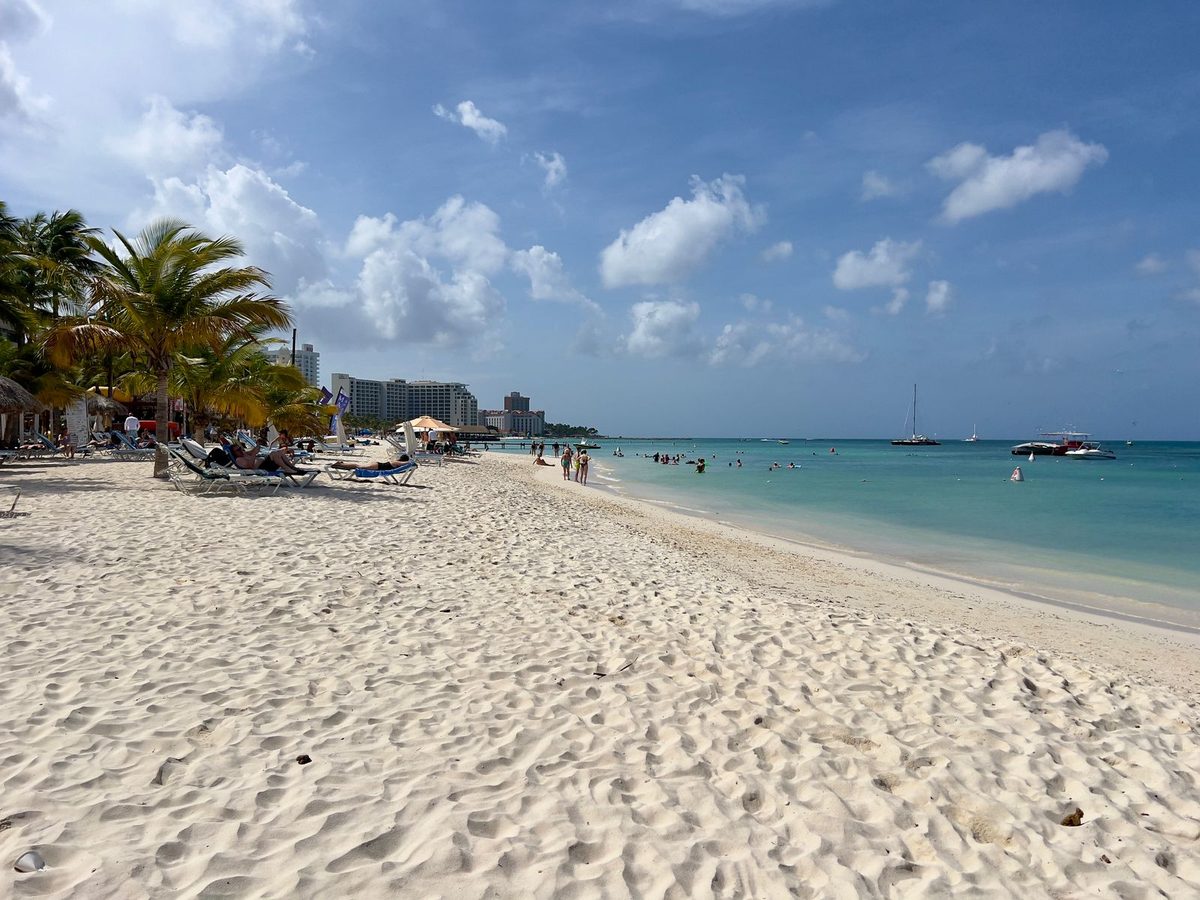
If this is your first time in Aruba and you want the classic, this is the plan. It is also the one I recommend to the most people, because the beaches are genuinely why the island lands on every “world’s best” list, and you can do this with a couple of cheap taxis and zero advance planning.
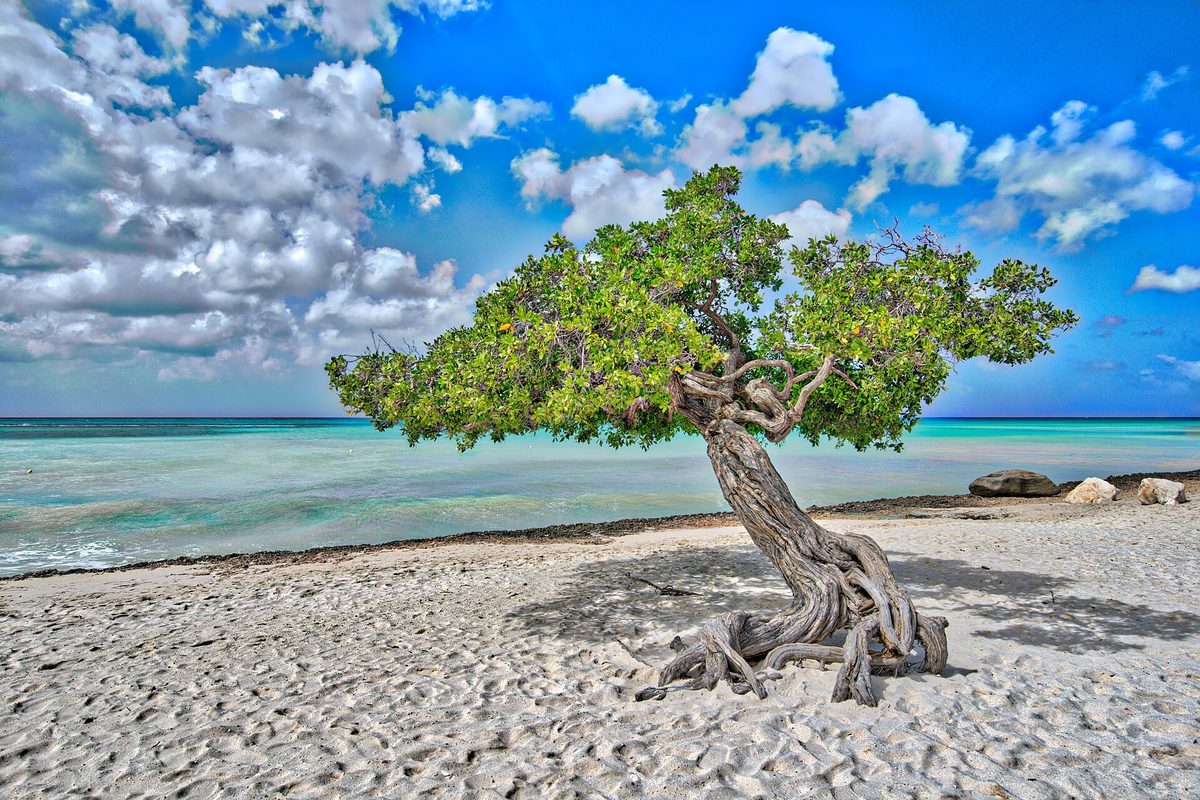
Off the ship by about 8:45am, grab a taxi from the official stand, and say “Eagle Beach.” I steer cruisers toward Eagle over Palm Beach for a port day on purpose. Eagle is wider, calmer, fronted by the low-rise hotels rather than the towering high-rises, and it is home to the two famous wind-bent divi-divi trees that are basically the island’s logo. Palm Beach is livelier and has more bars right on the sand, but on a cruise day it can feel like the crowded ship you just left. Spread your towel on any open stretch (it is all public), float in some of the calmest, clearest water in the Caribbean, and walk the shoreline to the divi-divi trees for the photo.
Around noon, if you want to add snorkeling, have a taxi run you a little farther north to Boca Catalina or Arashi Beach, both of which have far better shore snorkeling than Eagle, with fish and the occasional sea turtle right off the sand. Bring a mask from the ship if you can. Then break for a late lunch (options below), leave a couple of hours to wander downtown, and you are back aboard with sand still in your shoes. For a deeper look at every stretch of sand on the island, our Aruba beaches guide ranks them all, and if you want to get on the water, the Aruba water sports guide covers snorkel, jet-ski and parasail options you can book on the spot.
Roughly what it costs: two taxis (around $30 round trip), an optional chair-and-umbrella rental (around $20-30), lunch (around $20-30), and you are done for well under $100 a person, with most of that being food you would have paid for anyway.
Plan B: the explorer / island-tour day (best for repeat visitors)
Done the beach thing on a previous cruise? Want windswept cliffs, a lighthouse, and a 4×4 instead of a beach towel? This is your plan, and it is where Aruba surprises people. Ten minutes inland from the resort strip, the island turns into an arid, cactus-studded, almost Martian landscape of rocky coast and crashing surf that looks nothing like the postcards.
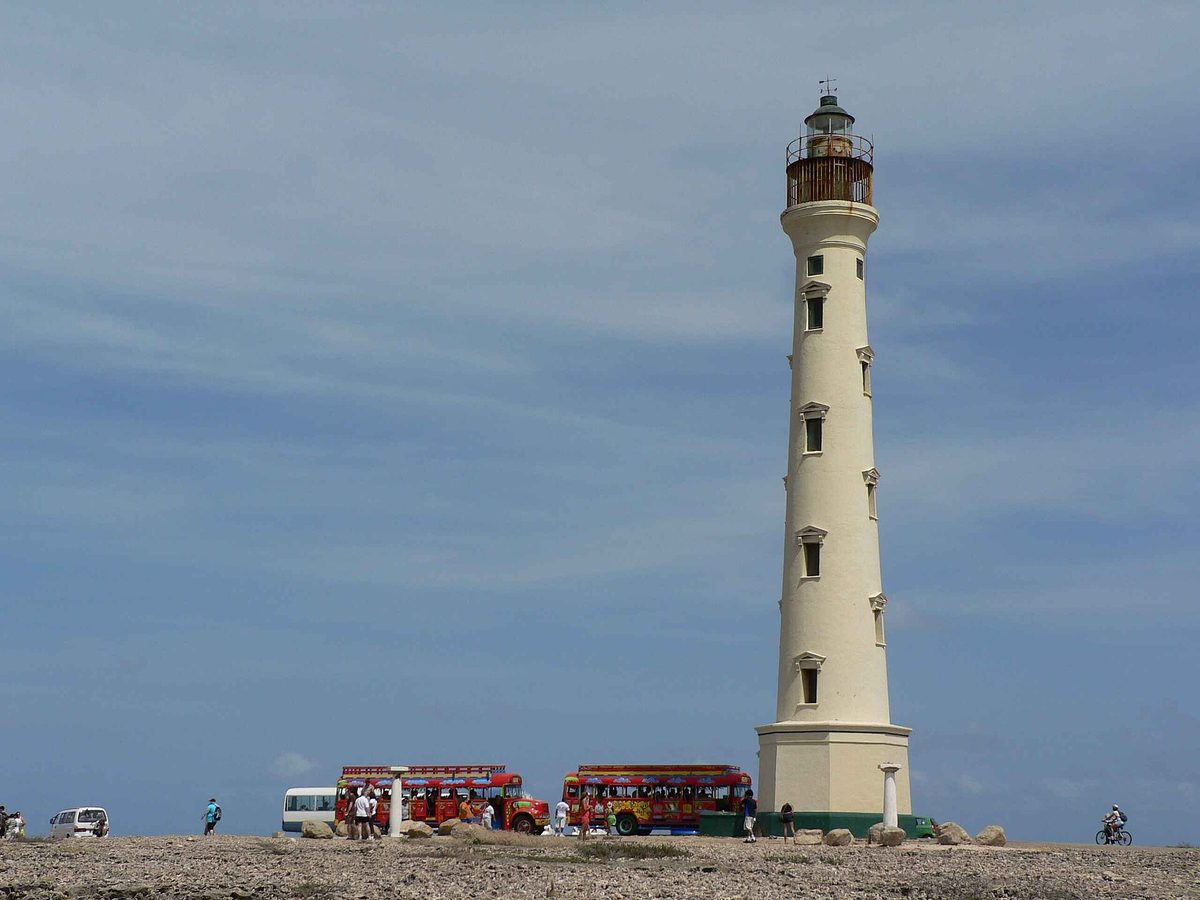
You have two ways to do it. The easy version is to book a half-day UTV or Jeep safari, around four hours start to finish, that runs the rugged north coast: the California Lighthouse (the tallest structure on the island and a fine photo stop), the lonely Alto Vista Chapel, the Bushiribana gold-mill ruins, and a natural bridge or two. Guided is genuinely smart here because the back-country roads are rough, dusty, and easy to get lost on. The do-it-yourself version is to rent a 4×4 at the port and drive it yourself, which gives you total freedom but eats into your time budget if you are not confident on unpaved roads.
A word of caution that the brochures skip: the Conchi Natural Pool inside Arikok National Park is the island’s signature adventure photo, but on a tight cruise day it is realistically only reachable via an organized 4×4 tour, and even then conditions decide whether you can swim or just look. Do not try to free-lance your way to the Natural Pool in a regular rental car on a port day. You will run out of time. If raw landscape and a sense of having “seen the real Aruba” matters more to you than beach time, the explorer day delivers it. Browse the full menu of land and sea options in our things to do in Aruba guide.
Plan C: the walkable-from-port day (zero taxis, zero stress)
This is the plan for anyone who would rather not coordinate a single ride, who has mobility considerations, or who simply loves a good walkable port town. The beauty of Oranjestad is that you can have a full, lovely day on foot and never get more than a kilometer from the ship.
Start with breakfast or a strong coffee at a downtown cafe a few minutes from the terminal. Then wander: Fort Zoutman and the Willem III Tower (the oldest structure on the island) for a dose of history, the pastel Dutch-colonial facades along the main street for photos, and the free trolley to save your legs between stops. Browse the Renaissance Marketplace and Royal Plaza for duty-free watches, jewelry and liquor, and the open-air craft stalls for cheaper souvenirs. Have a relaxed harbor-side lunch on the waterfront, then, if you want a flourish, see whether the Renaissance resort has a day pass available to take the little water taxi over to its private island and the famous flamingos (passes are limited and not guaranteed, so treat it as a bonus, not a plan).
It sounds low-key, and it is, but a slow downtown day in a genuinely pretty, walkable Caribbean capital is a real pleasure, and you will be the least stressed person coming back up the gangway. For more no-cost ideas to fill the gaps, our free things to do in Aruba guide is full of walk-up options.
Plan D: the family-friendly day (best with kids in tow)
Cruising with children changes the math. You want shallow water, short transit, shade, snacks, and a bathroom never too far away. The good news is that a port day in Aruba is very kid-friendly if you keep it simple.
For little ones, Palm Beach actually edges out Eagle here despite my earlier vote: the water is calm and shallow, there are bathrooms, beach bars and rentals right there, and shade is easier to find. Take the cheap Arubus or a short taxi up, claim a patch of sand, and let the kids splash. If your crew is older and up for a thrill, the half-day UTV safari (check the operator’s minimum age) is a hit, or a short catamaran snorkel sail keeps everyone entertained on the water. Downtown, the Renaissance flamingos and the trolley are easy wins with small children, weather and day passes permitting.
Keep the day loose, build in more buffer than you think you need (kids slow everything down), pack sunscreen and water, and do not try to cram in a far-flung southern beach with a 45-minute drive each way. For a fuller playbook on traveling here with little ones, see our guide to Aruba with kids.
Where to eat: skip the buffet, eat like a local
This is the part of a port day most cruisers get wrong, and it is the easiest fix. You are floating on a ship with an endless buffet, so the temptation is to go back aboard for a “free” lunch. Do not. The best meal of your entire cruise is probably waiting a 15-minute taxi away, and Aruba’s food scene genuinely rewards getting off the ship.
The legendary cheap option is Zeerovers, a no-frills fish shack on the harbor down in Savaneta where the local fishermen land their catch and the kitchen fries it to order. You pay by the pound, you eat at picnic tables over the water, and you walk away stuffed for around $15-20 a person. It is cash only and closed a couple of days a week (often Monday and Tuesday), so check before you build your day around it. It is a longer taxi ride south, so factor the drive into your all-aboard math. Closer to the action, Eduardo’s Beach Shack on the Palm Beach boardwalk does excellent acai bowls, smoothies and fish tacos if you want something lighter and beach-adjacent.
Right downtown, a five-minute walk from the ship, the waterfront spots around the Renaissance Marketplace and L.G. Smith Boulevard let you eat well without arranging transport, and you can be back aboard in minutes. If you want to try the island’s quirky national dishes, look for keshi yena (a spiced, cheese-wrapped meat bake) or fresh red snapper. For a full rundown of where locals actually eat, our Aruba restaurants guide breaks it down by neighborhood and budget.
What to skip on a one-day cruise stop
Saying no is how you protect a port day. Here is what I would cut, and why.
- The all-day attractions. The Atlantis Submarine and a full De Palm Island day pass are perfectly fine experiences, but each one swallows four-plus hours and a rigid schedule. On a single port day they crowd out the things that actually feel like Aruba. Save them for a full vacation.
- Trying to do everything. A beach plus a UTV plus shopping plus a far-flung lunch is a recipe for rushing through all of it and remembering none of it. Pick one anchor activity and let the day breathe.
- A self-drive run at the Natural Pool. As covered above, the Conchi Natural Pool is realistically a guided-4×4-only outing on a tight cruise day. Do not attempt it in a sedan.
- The far south, unless that is your whole plan. Baby Beach and San Nicolas are wonderful, but they are 45-plus minutes each way. They are a great full-day-tour anchor, a risky add-on to an otherwise downtown day.
- Currency exchange. US dollars are accepted absolutely everywhere on the island. Do not waste a minute (or the exchange spread) swapping money for a one-day stop.
What a port day in Aruba actually costs
One of the quiet joys of an Aruba cruise day is that the headline experience, the beach, is free. Everything else is modest. Here is a realistic per-person budget for the common plans, all hedged as “around.”
| Plan | Rough per-person cost | What it covers |
|---|---|---|
| Walkable downtown day | $30-60 | Coffee, lunch, a souvenir or two, free trolley and beach optional |
| Beach-focused day | $60-100 | Round-trip taxi or bus, chair/umbrella, lunch, a drink |
| Catamaran snorkel excursion | $90-110 | Half-day sail, snorkel gear, open bar and lunch included |
| UTV / Jeep safari | $100-150 | Guided half-day north-coast adventure, gear and guide |
| Self-drive Jeep for the day | $150-175 (split among the group) | Full flexibility, fuel extra; cheaper per head with 3-4 people |
Tipping is appreciated but not aggressive here, US-style 10-15% at restaurants and a couple of dollars to a taxi driver is plenty. For the bigger picture on what a full Aruba trip runs, our Aruba vacation cost guide has the season-by-season numbers.
Practical tips so you do not miss the ship
- Run your whole day on ship time. Set a loud alarm for your turnaround and double-check whether local time matches the ship.
- Build a real buffer. Plan to be back aboard around 45 minutes before all-aboard, more if you went south or did a self-drive.
- Arrange your taxi return. Get the driver’s card or set a pickup time, especially at quieter beaches where cabs do not wait.
- Bring sun protection and water. The trade winds hide how strong the sun is; reef-safe sunscreen, a hat and a refillable bottle save the day.
- Carry small US bills. Buses, craft vendors and Zeerovers are cash-friendly, and exact change speeds everything up.
- Cruise-line excursions buy insurance. If a ship-sponsored tour runs late, the ship waits. An independent plan that runs late is on you.
- Pack a dry bag and your ship card. You will need your card and ID/passport per your line’s rules to re-board; keep them dry and on you.
For a broader set of do’s and don’ts that apply to any visit, skim our Aruba travel tips before you sail.
Plan more than a day? Start with the bigger itinerary
If your port day does its job, you will leave plotting a return trip, and that is the whole point. When you come back with real time on the island, the calculus changes completely: you can chase sunsets, dive the reefs properly, drive the full north coast, and settle into the rhythm that a single day only hints at. Our master Aruba itinerary planning guide is the place to start mapping a longer stay, and from there you can branch into where to stay in Aruba and the best time to visit Aruba to lock in your dates.
One day in Aruba FAQ
Is one day in Aruba enough?
For a cruise stop, yes, one day is genuinely enough to enjoy Aruba, even if it is not enough to see all of it. Because the terminal sits downtown and the best beaches are a 15-minute taxi away, you can fit a world-class beach, a great local lunch and a downtown wander into a single port day. It will leave you wanting a longer trip, which is the right kind of “not enough.”
What can you do in Aruba on a cruise day?
Plenty. Within a short hop of the ship you can relax on Eagle or Palm Beach, snorkel at Boca Catalina, take a half-day UTV safari along the north coast, sail a catamaran to the Antilla shipwreck, or simply walk Oranjestad’s colorful streets for shopping and a harbor-side lunch. Most cruisers pick one beach, one good meal and one short activity rather than trying to cram everything in.
How far is the beach from the Aruba cruise port?
Very close. Eagle Beach is roughly five kilometers north of the cruise terminal, about a 15-minute taxi ride costing around $12-15 for up to four people, and Palm Beach is a few kilometers farther. The cheap Arubus public bus also runs from the downtown terminal up to both beaches for a couple of US dollars. You can realistically be on the sand within 20-30 minutes of stepping off the ship.
How long do cruise ships stay in Aruba?
Most cruise ships dock in Oranjestad in the morning, often around 7 to 9am, and depart in the late afternoon between 4 and 6pm, giving you roughly 7 to 9 hours on the island. A few of the very largest ships occasionally stay into the evening, which opens up a sunset dinner. Always plan to your ship’s posted all-aboard time, not its departure time.
Do I need a tour, or can I explore Aruba on my own?
You can absolutely explore on your own, and most independent travelers do. Taxis run on fixed government rates, the public bus is cheap and easy, and downtown is walkable. Book an organized shore excursion if you want zero logistics or you are headed somewhere far like the Natural Pool, because a cruise-line tour also guarantees the ship will wait if it runs late.
Is the Aruba cruise port walkable?
Yes, and it is one of the most walkable ports in the Caribbean. You step off the ship roughly 200 meters from the main shopping street and about a five-minute walk from central Oranjestad, including Fort Zoutman, the Renaissance Marketplace and the free downtown trolley. If shopping, history and a waterfront lunch are your priorities, you may never need a taxi at all.
What should I not miss on a one-day Aruba stop?
Do not miss getting off the ship for a real local lunch, that is the meal cruisers most regret skipping. Beyond that, the divi-divi trees at Eagle Beach, the turquoise water for a swim or snorkel, and a quick wander through colorful Oranjestad are the trio that make the day feel like Aruba. Whatever you do, leave a buffer so you never miss the ship.
The takeaway
So the next time someone tells you not to bother seeing Aruba in a day, smile and ignore them. One thoughtfully planned day in Aruba, built around a single beach, one unhurried local meal, and a slow lap of downtown, is one of the easiest and most rewarding port days in the Caribbean. Keep it simple, mind the clock, and let One Happy Island do the rest. You will be back, and you will be planning a longer stay before your ship has even cleared the harbor.
By the ArubaTourism.org team — Last updated June 2026.
Photo credits
All images are freely licensed via Wikimedia Commons. Specific photographer and license details for each image are listed below.
- Photo: Ginelly.Q (CC0) via Wikimedia Commons — source.
- Photo: Kwihi / CC BY 4.0 via Wikimedia Commons — source.
- Photo: sbmeaper1 (CC0) via Wikimedia Commons — source.
- Photo: David Stanley from Nanaimo, Canada / CC BY 2.0 via Wikimedia Commons — source.
- Photo: Navigator334 / CC BY-SA 4.0 via Wikimedia Commons — source.