Here is the number that quietly answers the whole question: the average visitor stays right around seven nights on Aruba, and the island’s own tourism figures have hovered near that mark for years. That is not an accident. People arrive thinking “we’ll just do a quick beach reset,” then realize there are 40-plus beaches, a 7,900-acre national park covering nearly a fifth of the island, three or four genuinely great restaurant districts, and a turquoise coastline you can drive end to end in about 90 minutes. So when you ask how many days in Aruba you actually need, the honest answer is “more than you think, but fewer than you fear.” This island is small enough to feel manageable and rich enough to fill a week without trying.
By the ArubaTourism.org team — Last updated June 2026.
I have watched friends do Aruba in three days and leave glowing, and I have watched others stretch a week into the kind of slow, sun-soaked rhythm that ruins you for normal vacations. Both were right for who they were. Below I break down exactly what each trip length unlocks, with real place names, rough prices, and drive times, so you can match the calendar to the trip you actually want. For the bigger picture, our full Aruba itinerary planning guide maps out day-by-day routes once you’ve settled on a length.
How many days in Aruba do you need? The short answer
For most travelers, five to seven days is the sweet spot for Aruba. Five days lets you mix beach time with the national park, a boat trip, and the island’s best dinners without rushing. Three to four days works for a focused beach-and-eat reset. A week suits couples, families, and anyone who wants the full island — beaches, Arikok, Oranjestad, and a slow day or two. Less than three days is doable only on a cruise stop or quick getaway.
Aruba trip length at a glance
Before we go deep, here is the cheat sheet. Use it to find your row, then read the matching section below for the detail.
| Trip length | Best for | What you can realistically see |
|---|---|---|
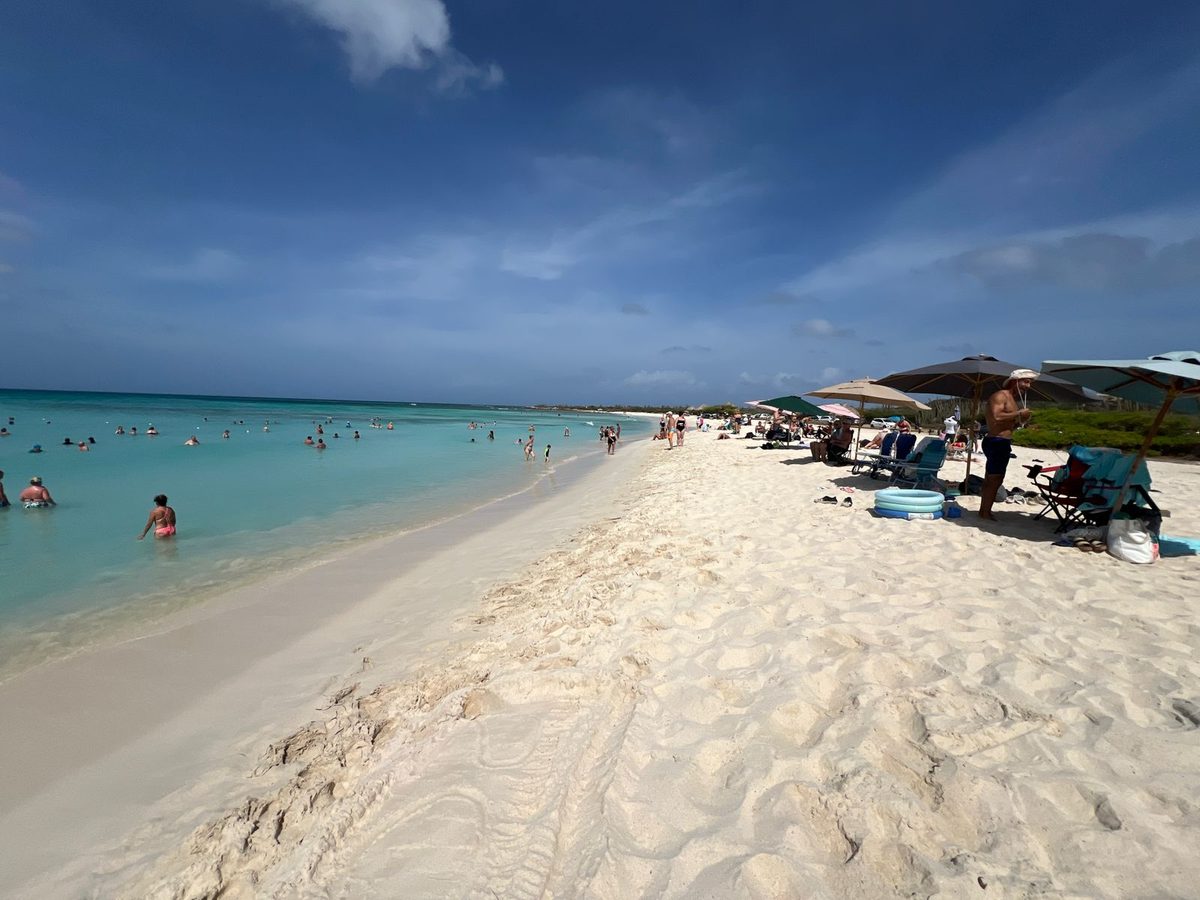
| 1 day (cruise / layover) | Cruise passengers, ultra-short stops | One beach (Eagle or Palm) plus Oranjestad, or a single half-day tour. Pick one lane. |
| 3 days | Quick getaway, long-weekenders, beach-first travelers | Two or three top beaches, one sunset sail or snorkel trip, a couple of standout dinners. |
| 4 days | First-timers who want beach plus a taste of adventure | The above plus a half-day in Arikok or the rock formations, and time to not feel rushed. |
| 5 days | The balanced “see most of it” trip | Beaches, a full Arikok day, a boat day, San Nicolas or Oranjestad, and real downtime. |
| 7+ days | Couples, families, repeat visitors, slow travelers | Everything above plus beach-hopping, a second tour, day trips, and lazy pool mornings. |
How long is enough in Aruba?
“Enough” depends entirely on your travel style, and Aruba is unusual in that it rewards both the relaxer and the explorer. The whole island is only about 19.6 miles long and 6 miles wide, so you are never more than roughly a 40-minute drive from anything. That compactness is the secret weapon: you can pack a surprising amount into a short stay because you are not burning hours in transit.
That said, two things eat into any trip and people consistently underestimate them. The first is arrival and departure logistics — your first and last days are rarely full days (more on that below). The second is the gravitational pull of the beach. You will plan an ambitious day, sink into a lounger on one of Aruba’s beaches, and look up to find three hours gone. Build that in rather than fighting it.
As a rule of thumb: if you want pure rest, three to four days delivers. If you want rest and a real sense of the island — the desert interior, a boat trip, a couple of neighborhoods — give yourself five. If you want all of that plus the freedom to do nothing on a whim, book seven. I’ll make the case for each length now.
What each trip length unlocks
1 day in Aruba: the cruise-stop or layover
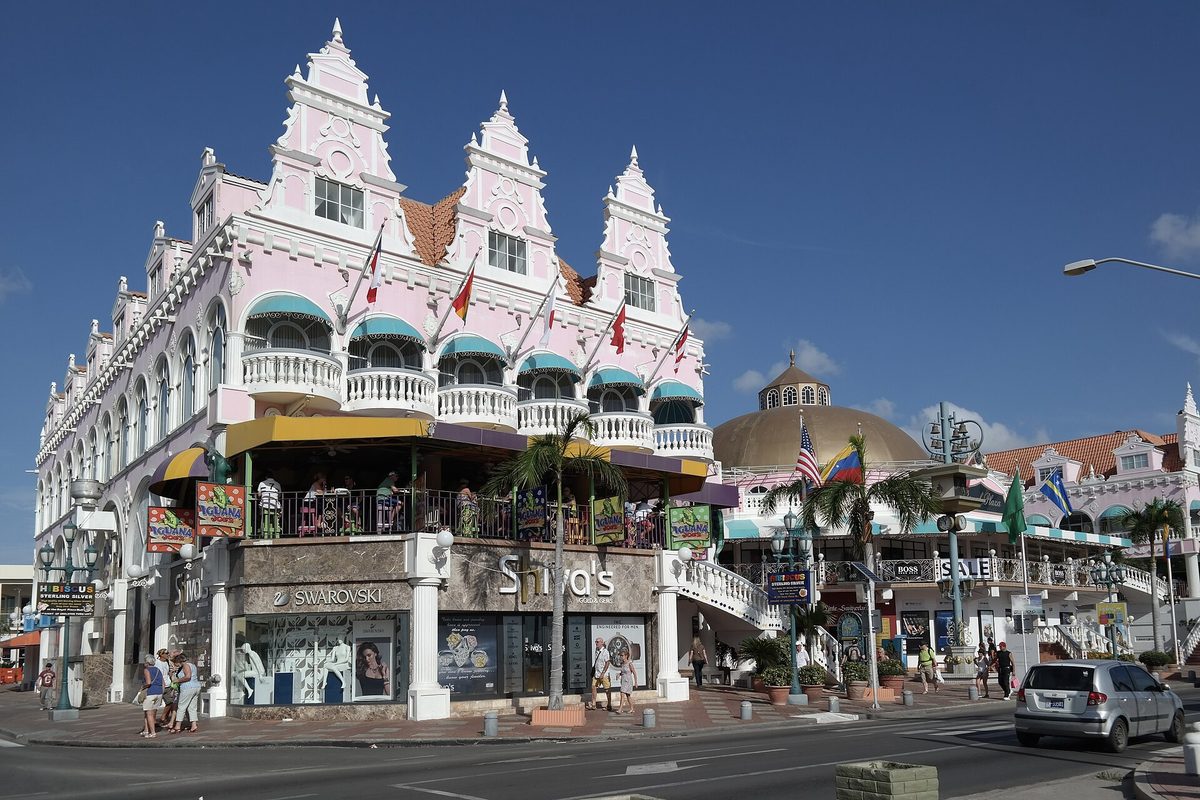
If Aruba is a single cruise day or a long layover, accept the constraint and pick one lane. Trying to “see the island” in eight hours is how you end up seeing the inside of a rental car. Two formats work. Lane one: taxi straight to Eagle Beach or Palm Beach (about 15-20 minutes from the cruise terminal, roughly $11-$15 per taxi), rent a chair, swim, eat lunch with your feet near the water, and stroll back through Oranjestad for the colorful Dutch facades and a little shopping. Lane two: book one half-day tour in advance — a snorkel-and-sail catamaran or a UTV run to the rock formations — and skip the beach. One cruise day is honestly not “enough,” but it is a genuine taster that tells you whether to come back for a real stay (you will).
3 days in Aruba: the quick getaway
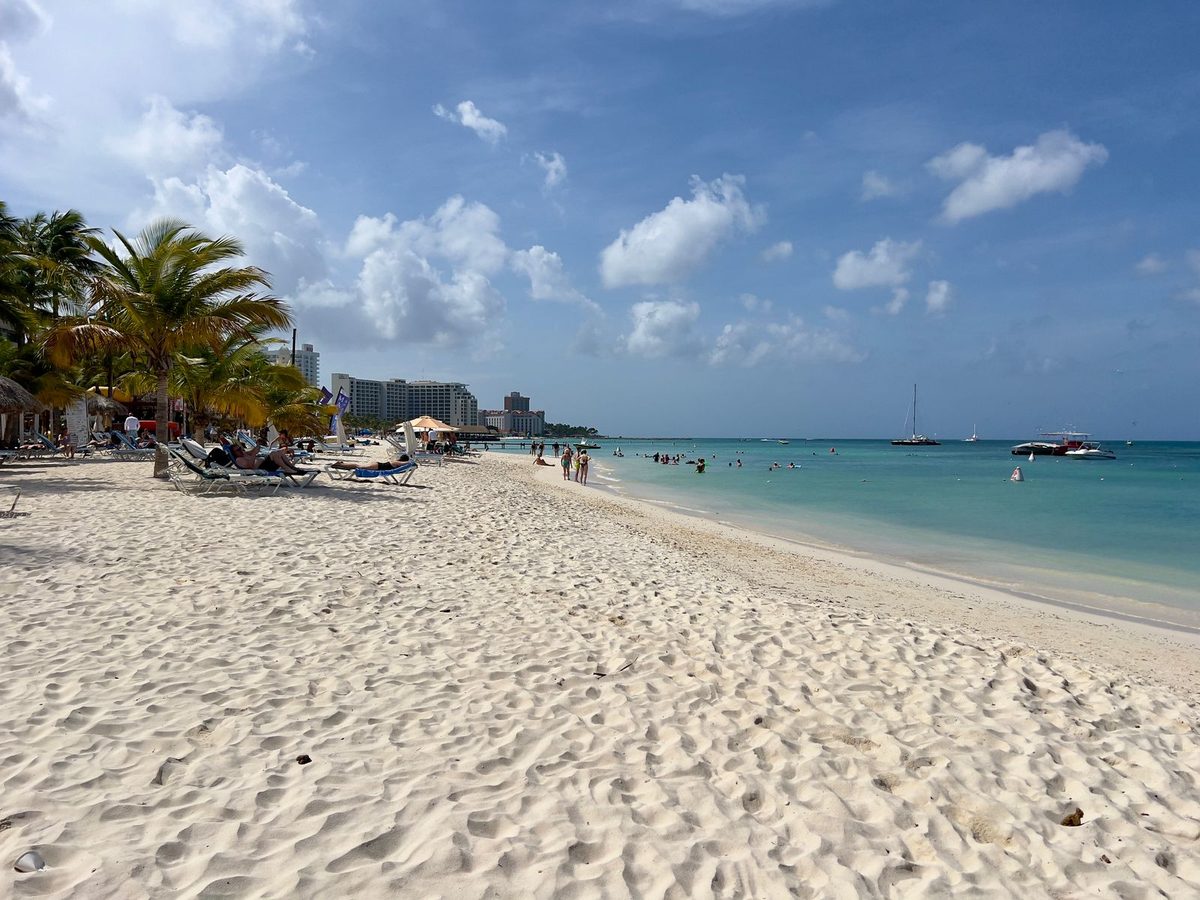
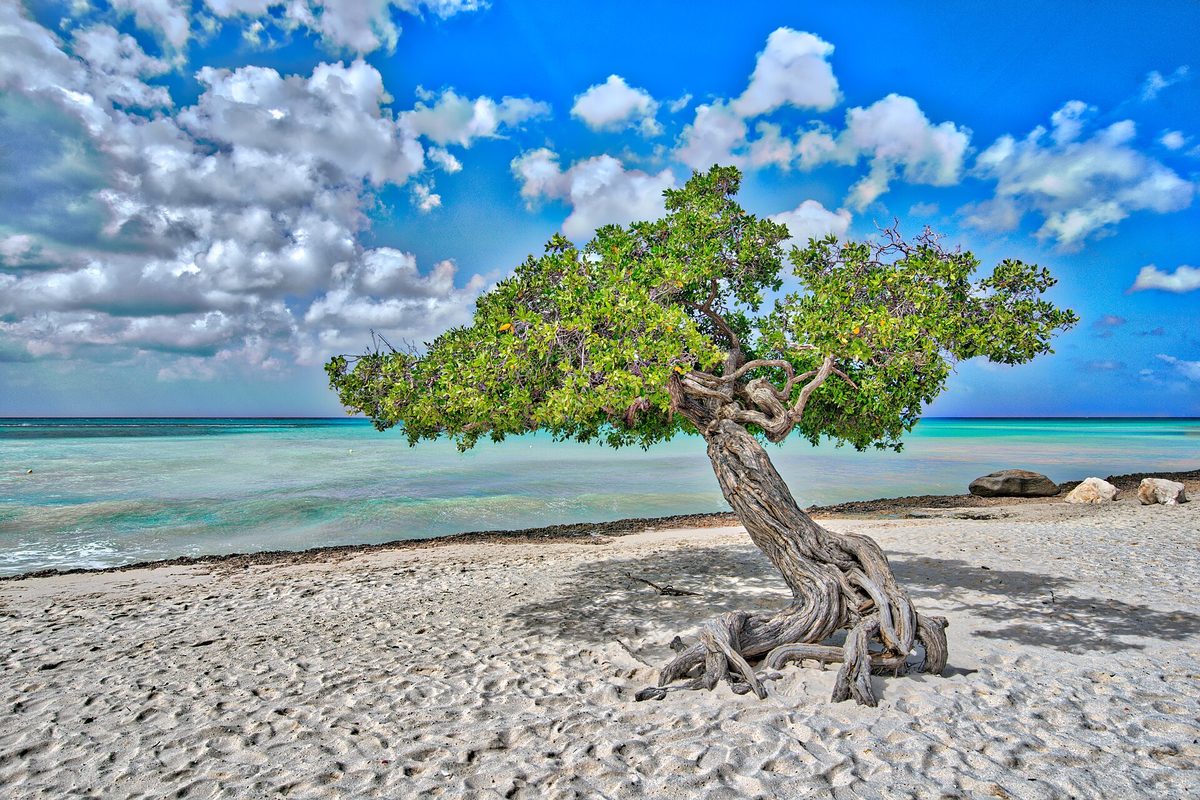
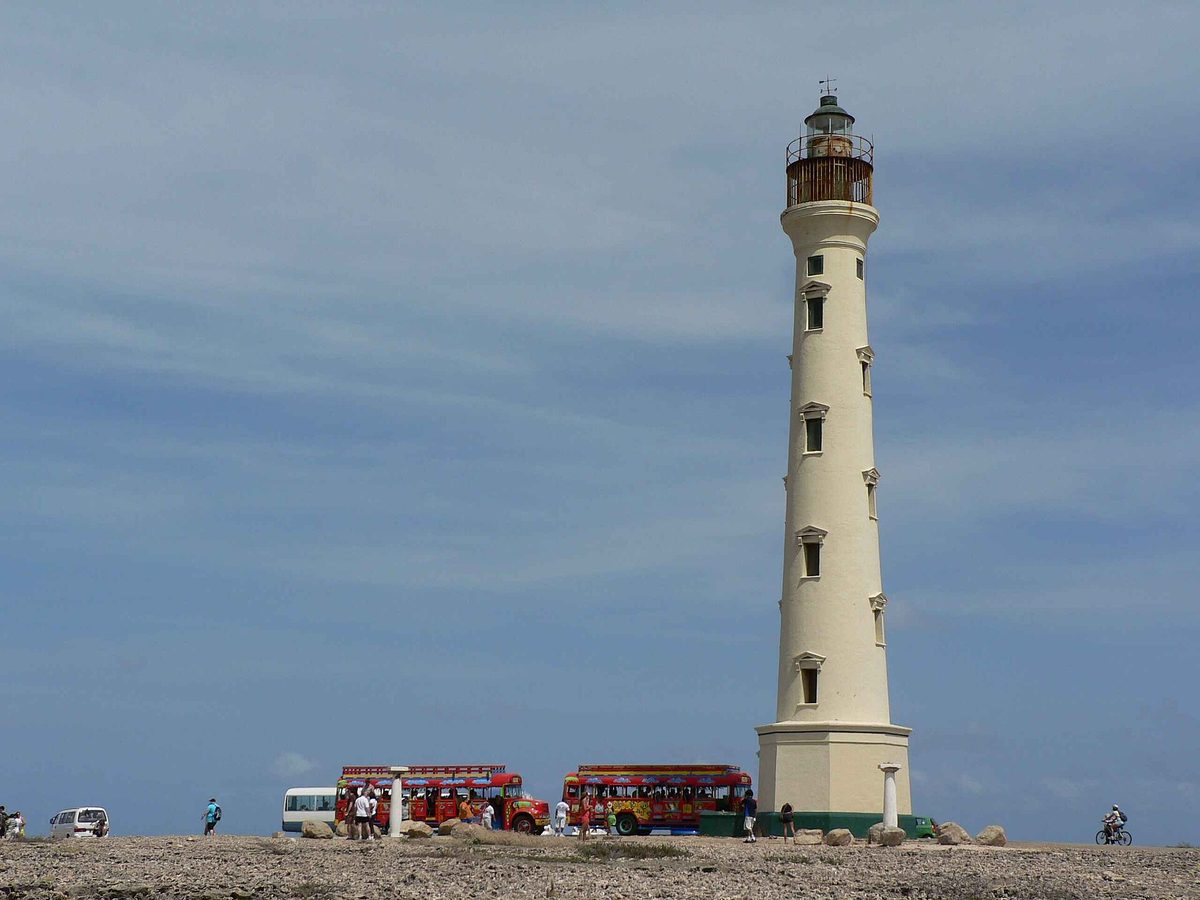
Three days is the most popular short-stay length, and for a beach-first trip it is genuinely enough. With two full days plus arrival/departure, here’s a clean shape: Day one, settle in and claim a stretch of Eagle Beach (the wide one, with the famous twisted fofoti trees) or buzzy Palm Beach if you want bars and watersports on tap. Day two, do one signature experience — a snorkel trip to the Antilla shipwreck (a 400-foot WWII-era German wreck that sits shallow enough for snorkelers) or a sunset catamaran sail, both commonly around $50-$90 per person. Day three, a slow morning, maybe a quick spin to the California Lighthouse (about $5 to climb, sweeping island views) before the airport. Is three days enough? For sun, sea, and a couple of great meals, yes. You will skip the deep interior, but you will leave relaxed. Our guide to the island’s best experiences helps you choose that one signature day.
4 days in Aruba: beach plus a taste of adventure
Adding a fourth day is the single best upgrade to a short trip, because it buys you a half-day of exploring without sacrificing beach time. Keep the three-day beach-and-boat rhythm, then dedicate one morning to the desert side: the Casibari and Ayo rock formations (free, an easy scramble through giant boulders with petroglyphs and burrowing owls), a quick climb up Mount Hooiberg (about 600 steps to a 360-degree view — under 30 minutes if you’re fit), or a guided UTV/Jeep run that strings several sights together. Four days is the length where Aruba stops feeling like “just a beach” and starts feeling like an island with a personality. It’s my default recommendation for nervous first-timers: low-stress, but you come home with stories beyond the sun lounger.
5 days in Aruba: the balanced trip
Five days is, for my money, the best all-round answer to how many days in Aruba you should book. You finally have room for a full day in Arikok National Park — the protected wilderness that covers nearly 20% of the island — without it crowding out everything else. A typical five-day flow: two beach days (mix calm Baby Beach or snorkel-friendly Mangel Halto with the headliners), one Arikok day to swim at the Conchi Natural Pool and explore the Fontein and Quadirikiri caves, one boat day, and one day for San Nicolas street art or downtown Oranjestad with a long dinner. Crucially, five days also leaves slack — a built-in lazy morning so the trip feels like a vacation, not a checklist. If you only read one of these sections, this is the length I’d point most people to.

7+ days in Aruba: the full island, slowly
A week is where Aruba goes from “great trip” to “we live here now” energy. With seven days you can beach-hop properly (there really are 40-plus to sample), do a second tour — say, kitesurfing lessons at Boca Grandi or a sunset horseback ride — take a day trip mindset to opposite ends of the island, and still have two or three mornings where the only plan is coffee by the pool. Is a week too long in Aruba? Almost never, if you like the beach; the island’s calm pace is the point, and longer stays unlock the slow, repeat-visitor rhythm — the same beach bar twice, a favorite restaurant you book again, a snorkel spot you return to because you saw a turtle there. Families especially benefit, since kids set the tempo and a week absorbs a rain shower or an off day without derailing the trip. If you’re weighing it, our notes on the best time to visit Aruba pair well with a longer stay, since shoulder-season weeks often cost far less.
First-timer vs. returning visitor
How long to stay in Aruba shifts depending on whether it’s your first rodeo. First-timers should lean toward five days minimum. There’s a learning curve to any island — where the good snorkeling is, which beach matches your mood, how long the airport really takes — and a slightly longer first trip absorbs the trial and error. You also want to hit the icons (Eagle Beach, the lighthouse, Arikok, a boat trip) without sprinting, and five to seven days lets you do that.
Returning visitors can flex shorter or longer with confidence. If you already know you love Palm Beach and your favorite catamaran outfit, a tight three- or four-day reset is deeply satisfying — you skip the orientation and go straight to the good stuff. Conversely, repeat visitors are exactly the people who book ten-day stays and rent an apartment, because they’ve stopped trying to “do” Aruba and started just living in it for a while.
Beach-only vs. explorer: how your style changes the math
Two travelers can need wildly different numbers of days for the same island. If you’re a beach-only person — your idea of a perfect day is a lounger, a book, a frozen drink, and a swim — you genuinely need fewer days, and three to four will leave you content. You don’t need to “get your money’s worth” by cramming; the whole point is to do less.
If you’re an explorer who gets restless on sand, you need more time, because Aruba’s adventure side is bigger than people expect: a national park to off-road through, shipwrecks to dive, rock formations to climb, caves, a desert interior, kitesurfing, horseback riding, and the colorful murals of San Nicolas. Explorers should budget five to seven days so the active stuff and the inevitable beach days both fit. A good middle path for mixed couples (one of each) is five days — enough for the explorer to roam and the beach-lover to root. Browse our roundup of things to do in Aruba and Aruba water sports to gauge how full your explorer days could get.
Factoring in flights, jet lag, and arrival logistics
This is the part people forget, and it quietly steals a day from short trips. Aruba’s Queen Beatrix International Airport (AUA) is well connected to the U.S. East Coast — flights from Miami run about 2.5-3 hours, from New York around 4.5 hours — so jet lag is mild for most North American visitors (Aruba is on Atlantic Standard Time, roughly aligned with U.S. Eastern in summer). That’s good news: you won’t lose days to a time-zone hangover the way you would in Europe or Asia.
The real tax is at the edges. Your arrival day is usually a half-day once you factor a mid-day flight, immigration, picking up a car or taxi, and check-in — you’ll likely get an afternoon swim and dinner, not a full day. Your departure day is even tighter: AUA houses U.S. Customs pre-clearance, which is fantastic (you land back home as a domestic arrival) but it means long lines, and the standard advice is to arrive about three hours before your flight. Most flights leave in a similar window, so the lines back up. Practically, a “4-day trip” often means two full days plus two half days. If those full days matter to you, that’s the argument for adding one more night. For the nuts and bolts, see our guide to getting to and around Aruba.
Best time to go (and how it interacts with trip length)
Aruba’s headline weather fact does real work here: it sits outside the hurricane belt, so it’s a reliable year-round destination with average highs in the low-to-mid 80s°F and constant cooling trade winds. There’s no season you have to avoid for safety, which is rare in the Caribbean.
What changes is crowds and price. Mid-December through April is high season — best weather, biggest crowds, top prices; book beaches, tours, and dinners ahead. May through November is quieter and cheaper, with September-October the wettest (still mostly short showers, not washouts) and November a sweet spot of low rain and low prices. Trip length interacts with this: in peak season, a shorter, well-booked trip can be the smart play to control cost; in shoulder season, the savings make a longer week much easier to justify. Our full breakdown of the best time to visit Aruba goes month by month.
What a trip costs by length
Aruba is not a budget Caribbean island — imported goods are pricey and resort prices reflect demand — so the number of days you book has a big effect on the bottom line. Treat these as rough, confirm current rates, and note that flights are a fixed cost regardless of length (so longer trips often spread that airfare across more “vacation per dollar”).
- 3 days: the cheapest way to taste Aruba. A mid-range couple might spend roughly $1,200-$2,000 all-in beyond flights (two-to-three nights, a few restaurant meals, one tour). Great value if your flight deal is good.
- 4-5 days: the popularity peak. Expect roughly $2,000-$3,500 for a couple beyond flights at a mid-range hotel, including a couple of tours and daily dining. This is where most people land.
- 7 days: the comfortable full week. Budget roughly $3,500-$6,000+ for a couple beyond flights mid-range, more at the high-rise resorts. The per-day cost often drops because you cook a meal or two and have free beach days.
Want to model your own numbers? Our detailed Aruba vacation cost guide breaks down lodging, food, car rental, and activities so you can right-size the trip to your budget. Honestly, if money is tight, a sharp three-day trip in shoulder season beats a stretched week you can’t relax on.
Where to base yourself for the days you have
Where you stay should match your trip length and style. The two main resort beaches sit side by side on the west coast:
- Palm Beach (the high-rise strip): big resorts, casinos, watersports, restaurants, and nightlife within walking distance. Best for shorter trips where you want everything on tap and don’t plan to drive much.
- Eagle Beach (the low-rise strip): quieter, lower-density, famous wide sand. Better for couples and anyone after a calmer base, still minutes from the action.
- Noord and inland: boutique stays and apartments, often better value, ideal for longer trips and travelers with a rental car.
- Oranjestad / Eagle area condos: good for explorers and repeat visitors who want a kitchen and a car and plan to roam.
For a deeper comparison see how Aruba’s neighborhoods stack up, and if you want everything bundled, our Aruba all-inclusive resorts guide is the place to start — all-inclusives can simplify budgeting on a longer stay.
Getting around: why the island feels bigger or smaller
Your mobility shapes how much you can do per day. A rental car (or even a 4×4 for one day) transforms a short trip, because the island is so compact that having wheels means a beach in the morning and a rock formation in the afternoon with no fuss. Taxis are convenient but add up fast (airport to the resort strip is roughly $30 for some routes), so on a beach-only three-day trip you might skip the car; on a four-day-plus explorer trip, rent one. Note that reaching the Conchi Natural Pool and much of Arikok National Park requires a genuine 4×4 or a guided tour — a regular car won’t make the rough interior tracks. The reliable public bus (Arubus) runs the resort corridor cheaply if you’re staying put. More detail lives in our Aruba travel tips.
What to skip if you’re short on time
If your trip is three days or fewer, ruthless editing makes it better. Here’s where I’d cut, candidly:
- Skip the Natural Bridge area if pressed — the original, dramatic bridge collapsed in 2005, and what remains is a nice-but-not-essential ocean stop reached by a bumpy road. Save it for a longer trip.
- Skip trying to do both ends of the island in one day. San Nicolas (far south) and the lighthouse (far north) bookend the island; pick one per day or you’ll spend the day driving.
- Skip the rental car on a pure beach reset and taxi instead — fewer logistics, more lounger time.
- Don’t over-tour. One great boat or Arikok experience beats three rushed ones. Quality over quantity is the whole ethos of a short Aruba trip.
The flip side: the things I’d never skip even on a tight trip are a real swim at Eagle or Palm Beach, one on-the-water experience, and one proper Aruban dinner — fresh fish at a local spot like Zeerover, or a long sunset meal. Those three are the heart of the island.
Frequently asked questions
Is 3 days enough in Aruba?
Yes, three days is enough if your priority is relaxing — you can enjoy two or three top beaches, do one snorkel trip or sunset sail, and have a couple of great dinners. What you’ll skip is the deep interior, like a full day in Arikok National Park, and you’ll feel the arrival and departure days bite. For a focused beach reset, three days delivers; for a full island experience, aim higher.
How many days do you need in Aruba?
For most travelers the answer is five to seven days. Five days balances beach time with a national park day, a boat trip, and the island’s best food without rushing. Seven gives you that plus beach-hopping, a second tour, and lazy mornings. Three to four days works for a quick getaway, while a single cruise day only scratches the surface of what Aruba offers.
Is a week too long in Aruba?
Rarely, if you enjoy the beach. A week is the classic Aruba stay and matches the island’s relaxed pace perfectly — it gives you room to sample its 40-plus beaches, do multiple tours, and still have do-nothing days. Families and repeat visitors especially benefit. Only restless travelers who dislike beach downtime might find seven days long; for them, five days plus more active touring is the better fit.
Is 4 days enough for Aruba?
Four days is a sweet spot for first-timers. It keeps a relaxed beach-and-boat rhythm while adding one half-day of exploring — the rock formations, a quick Hooiberg climb, or a guided UTV run. You won’t see everything, but you’ll get the beaches, one signature adventure, and enough downtime that the trip doesn’t feel rushed. If you can add a fifth night, do; if not, four works well.
Is Aruba worth visiting?
Absolutely. Aruba pairs reliable year-round sunshine (it sits outside the hurricane belt) with white-sand beaches, calm clear water, a rugged desert interior, and famously friendly locals. It’s safe, easy to navigate, and offers something for relaxers and adventurers alike. The beaches alone justify the trip, but the national park, boat trips, and food culture turn a good beach holiday into a memorable island vacation.
What is the cheapest time to visit Aruba?
The off-season from May through November brings the lowest prices, with November often singled out as a sweet spot — low rainfall, thin crowds, and discounted hotels and flights. September and October are the wettest months (still mostly brief showers). Avoid mid-December through April if budget is your priority, since that high season carries the year’s top prices and biggest crowds.
How big is Aruba and how long does it take to drive across?
Aruba is small — about 19.6 miles long and 6 miles wide. You can drive roughly end to end in around 90 minutes, and you’re never more than about a 40-minute drive from anything. That compactness is why even a short trip feels productive: minimal transit time means more of your day is spent at beaches, sights, and restaurants rather than in the car.
So, how many days in Aruba? Final verdict
If you want one number, book five days — it’s the length that satisfies the most people, balancing beach, adventure, food, and rest on an island compact enough to make it all reachable. Drop to three or four for a quick, beach-led getaway, or stretch to seven-plus if you’re traveling with family, returning to a place you love, or you simply want permission to do nothing for a morning. There’s no wrong answer here, only a length that matches your trip. Whichever you choose, start mapping the days with our Aruba itinerary guides, and you’ll land on One Happy Island ready to make every day count.
Photo credits
- Arashi Beach — Photo: Kwihi / CC BY 4.0 via Wikimedia Commons
- Palm Beach — Photo: Kwihi / CC BY 4.0 via Wikimedia Commons
- California Lighthouse — Photo: David Stanley from Nanaimo, Canada / CC BY 2.0 via Wikimedia Commons
- Conchi Natural Pool, Arikok National Park — Photo: Bjorn Christian Torrissen / CC BY-SA 3.0 via Wikimedia Commons
- Oranjestad — Photo: Choinowski / CC BY-SA 4.0 via Wikimedia Commons
- Divi-divi tree — Photo: sbmeaper1 (CC0) via Wikimedia Commons