Are Aruba’s caves actually worth the bumpy drive out to the wild side of the island, when a perfectly good beach chair is waiting back at your resort? I asked myself that the morning I pointed a rental Jeep toward the windward coast. The star of the trio is the Fontein Cave Aruba visitors rave about for its ancient ceiling drawings, alongside the sun-pierced chambers of Quadirikiri and the heart-shaped (and currently closed) Huliba “Tunnel of Love.” What I found inside was worth every rut in the road.
I’ll walk you through what each cave is, how to get there, the park fee and hours, why you shouldn’t shine a flashlight at the bats, and how to fold the caves into a full day in Arikok National Park. Expect ceilings painted by people who lived here thousands of years ago, chambers lit by natural skylights, and a colony of harmless bats wheeling overhead in the cool dark. Consider this your honest, been-there briefing — the trade-offs included.
The quick answer: which Aruba caves can you visit, and are they worth it?
Aruba has three main caves, all in or beside Arikok National Park on the windward coast. Two are open to visitors: Fontein Cave, famous for its Amerindian ceiling pictographs, and Quadirikiri Cave, whose twin chambers glow with light from natural ceiling skylights. The third, Huliba (the “Tunnel of Love”), has been closed for years to protect its bats. Both open caves are short, easy visits and well worth a couple of hours of your trip.
Here’s the at-a-glance version before we get into the detail. Treat fees and hours as approximate and confirm current access at the park visitor center, since closures and prices change.
| Cave | Why you go | Open to visitors? | Difficulty |
|---|---|---|---|
| Fontein Cave | Brown-red Arawak/Amerindian drawings on the ceiling; stalactites and stalagmites; freshwater pond nearby | Yes (inside Arikok) | Easy; low ceilings, a few steps, uneven floor |
| Quadirikiri Cave | Two big dome chambers lit by natural skylights; the legend of the chieftain’s daughter; bats | Yes (inside Arikok) | Easy; a staircase up to the entrance, then mostly level |
| Huliba (Tunnel of Love) | Heart-shaped entrance, narrow stairway, Virgin Mary carving | No — closed to protect bats (verify status) | N/A while closed |
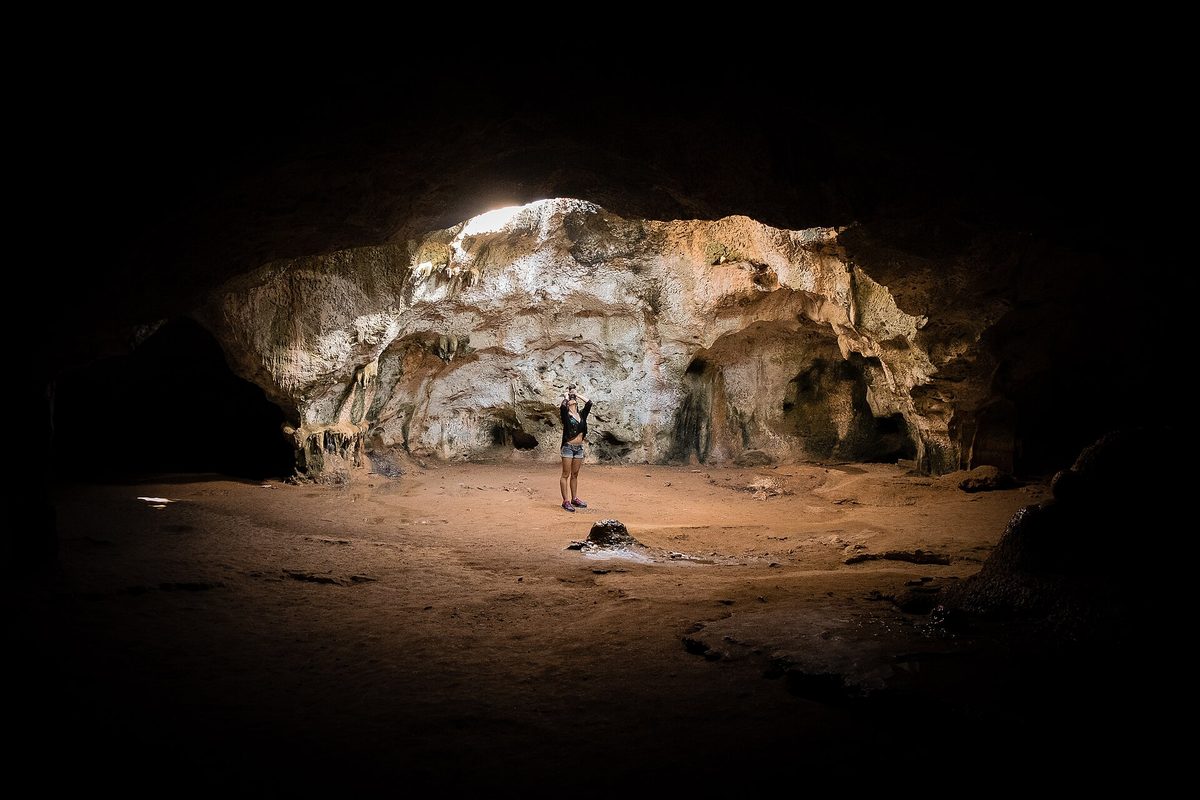
Fontein Cave Aruba: ancient drawings on a limestone ceiling
Of the three, Fontein is the one I’d never skip. It sits inland from Boca Prins on the northeastern coast, tucked into a terrace of coral limestone, and it’s the only cave on the island where you can stand under genuine Amerindian rock art. The drawings are etched and painted in a brownish-red, almost rust color across the flatter parts of the ceiling and the walls. Archaeologists connect them to the Caquetio people (an Arawak group), and the broader rock-art tradition here spans roughly 2,000 to 4,000 years.
The cave itself is shallow and low. The entrance hall that’s open to visitors runs about 50 meters deep, with a width of only a few meters and a ceiling that drops to around two meters in places, so you’ll duck and weave a bit. A man-made pathway keeps you off the fragile formations and leads you past stalactites hanging from above and stalagmites pushing up from the floor, some twisted into shapes locals have nicknamed over the years. Long-tongued bats roost in the pockets of the rock; they feed on nectar and pollen at night and pose no threat to you at all.
What the Arawak drawings on the cave walls actually mean
Honestly, nobody can give you a definitive caption for each symbol — and be suspicious of any guide who claims to. What experts do agree on is that the figures were almost certainly ceremonial rather than decorative. The caves were ritual spaces, and the rock art is one of the rare records of Amerindian heritage still sitting in its original context, not behind museum glass. Aruba’s full collection runs to several hundred individual images across more than 20 sites; the limestone caves of the northeast hold some of the most striking. Standing there, you’re looking at the same ceiling someone looked up at a few thousand years ago, which is a strange and humbling thing.
The freshwater pond and Fontein Hill
Just outside the cave is one of Aruba’s quirks: a small natural freshwater pond, a rarity on this dry, cactus-studded island. The surrounding Fontein area was historically one of the few spots with reliable groundwater, which is exactly why people settled and farmed here. It’s worth a few minutes to wander the area and picture how different this green pocket would have felt to early inhabitants compared with the arid scrub all around. If you’re building a route through the park, this corner pairs naturally with a stop at the coast.
Quadirikiri Cave: skylights, a love legend, and bats
Quadirikiri (you’ll also see it spelled Quadiriki or Guadirikiri) is the most photographed cave on the island, and it earns it. You climb a short staircase up the limestone face, step into the dark, let your eyes adjust — and then the magic: two large dome-shaped chambers where shafts of Caribbean sun pour straight down through natural holes in the ceiling. The beams light the cave from above like spotlights, and on a bright day it’s genuinely beautiful. The main cave runs roughly 150 meters; a smaller cave to the east, around 30 meters long, is especially rich in petroglyphs, though access is sometimes restricted.
Deeper in, past the lit chambers, the air gets damp and the floor is layered with bat guano. Hundreds of small nocturnal bats nest in the dark recesses. They are harmless, and they matter: as insect-eaters and pollinators they’re a working part of Aruba’s ecosystem, which is why one section is barred off so the colony can breed undisturbed. Watching them shift and chitter overhead is part of the experience, not a reason to stay away.
The legend of the chieftain’s daughter
Every guide tells a version of this, and it’s a good one. As the story goes, a Caquetio chief’s daughter — some tellings name her Wadirikiri — fell in love with a man her father forbade, a foreigner sometimes called White Feather. Furious, the chief imprisoned her in this cave and locked her lover away in nearby Huliba. The two are said to have met in secret underground and ultimately died there, their spirits escaping skyward through the very openings that now flood the chambers with light. Stand under one of those skylights and you’ll see why the tale stuck.
Huliba Cave, the “Tunnel of Love” (and why it’s closed)
You’ll see Huliba on a lot of older blog posts and Instagram reels, usually framed around its heart-shaped entrance — hence the romantic nickname. Locally it’s called Baranca Sunu, “bare rock.” It’s the longest of the three at roughly 90 meters, pitch dark inside, with five entrances, a steep narrow stairway plunging in, and a Virgin Mary figure carved into the natural rock. There’s even an old, unproven legend about pirates stashing treasure here.
Here’s the candid part: Huliba has been closed to visitors for several years, specifically to protect the bat population that lives inside. I’m flagging this clearly because plenty of guides still list it as if you can walk in. You can’t, at least not as of this writing. Don’t build your day around it, and definitely confirm at the visitor center before you get your hopes up. The closure is a good thing — the bats here are part of why the whole park is protected.
Getting to the caves: do you need a 4×4?
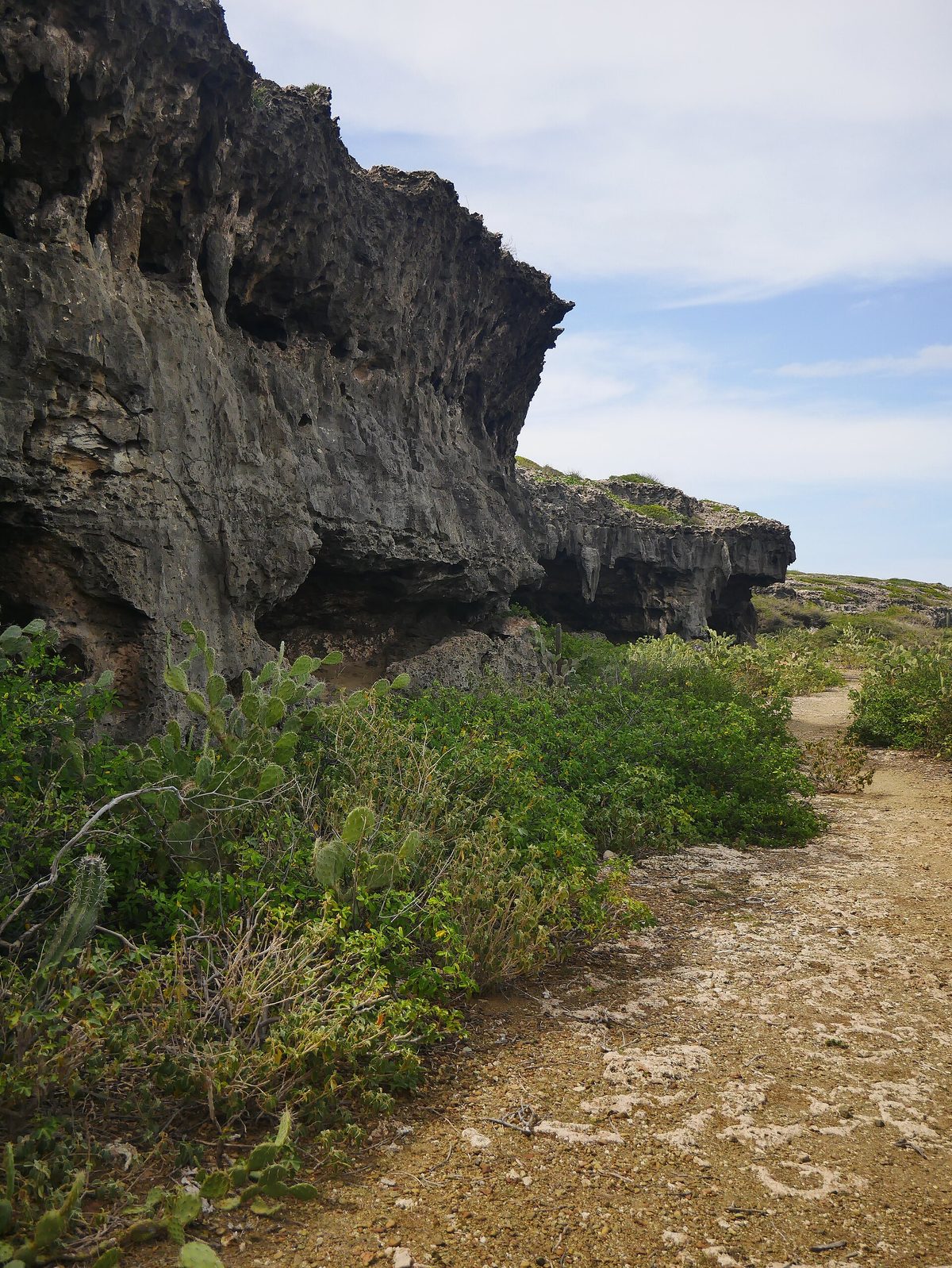
This is the question I get most, so let’s settle it. The caves sit on the windward (eastern) side of Arikok, and the road network inside the park is rough, unpaved, and rutted in many stretches. That said, the route to the cave area near Fontein and Quadirikiri is among the more manageable parts of the park, and plenty of visitors reach the cave parking lots in a standard car if they drive slowly and carefully.
My honest advice: if you only want the caves and you’re a confident driver, a regular rental can usually make it on a dry day. But if you also want the Natural Pool (Conchi), the back beaches, and the freedom to explore, rent a proper 4×4 — the deeper park tracks genuinely require it, and the Natural Pool road is no place for a sedan. For the full rundown on rentals, roads, and driving on the left-versus-right, see our guide to getting to and around Aruba. If you’d rather not drive the rough stuff at all, a guided UTV, Jeep, or organized Aruba excursion will handle the terrain and the navigation for you.
From the main entrance and visitor center, the caves are signed; allow time to drive across to the windward side, since the park is large and the inland roads are slow going. Once you park, Fontein is a short walk in, and Quadirikiri is up a staircase from its lot. There’s no food or fuel out here, so top up the tank and pack snacks before you leave the resort strip.
Park fee, hours, and tickets
The caves are inside Arikok National Park, so you pay the park entrance fee, not a separate cave ticket. Expect the park to be open roughly 8:00 a.m. to 4:00 p.m. daily, and budget around US$11–25 per adult for entry — published figures vary and the price has risen over the years, so check the official rate when you buy. Kids are often discounted or free. Buy your ticket at the visitor center on arrival; on busy cruise days it’s smart to go early, which also means cooler temperatures and emptier caves. Planning your budget? Our Aruba vacation cost breakdown puts the park fee in context with everything else.
Bats, flashlights, and cave etiquette
The single most important rule: don’t disturb the bats. At Quadirikiri in particular, flashlights and headlamps are discouraged or banned because the light stresses the colony — rangers may hand one out for the drawings at Fontein, but follow their lead rather than waving your own beam around. Keep your voice down, don’t touch the pictographs or the formations (oils from your skin damage them), stay on the marked paths, and pack out everything you bring in. These caves survived thousands of years; a little restraint keeps them that way.
What to bring and how accessible the caves are
Wear closed, sturdy shoes — the cave floors are uneven, rocky, and sometimes slick, and there are steps at both Fontein and Quadirikiri. Bring water (Arikok is hot and shadeless between caves), sun protection, and maybe a light layer, since the chambers are noticeably cooler than the desert outside. A small flashlight can help you read the formations where it’s permitted, but ask first. Be realistic about accessibility: with staircases, low ceilings, and rough ground, neither cave is wheelchair- or stroller-friendly, and the low sections at Fontein mean stooping. If you’re traveling with little ones, our Aruba with kids guide has more on which natural sights work best for families.
Combine the caves with Arikok’s coast and pools
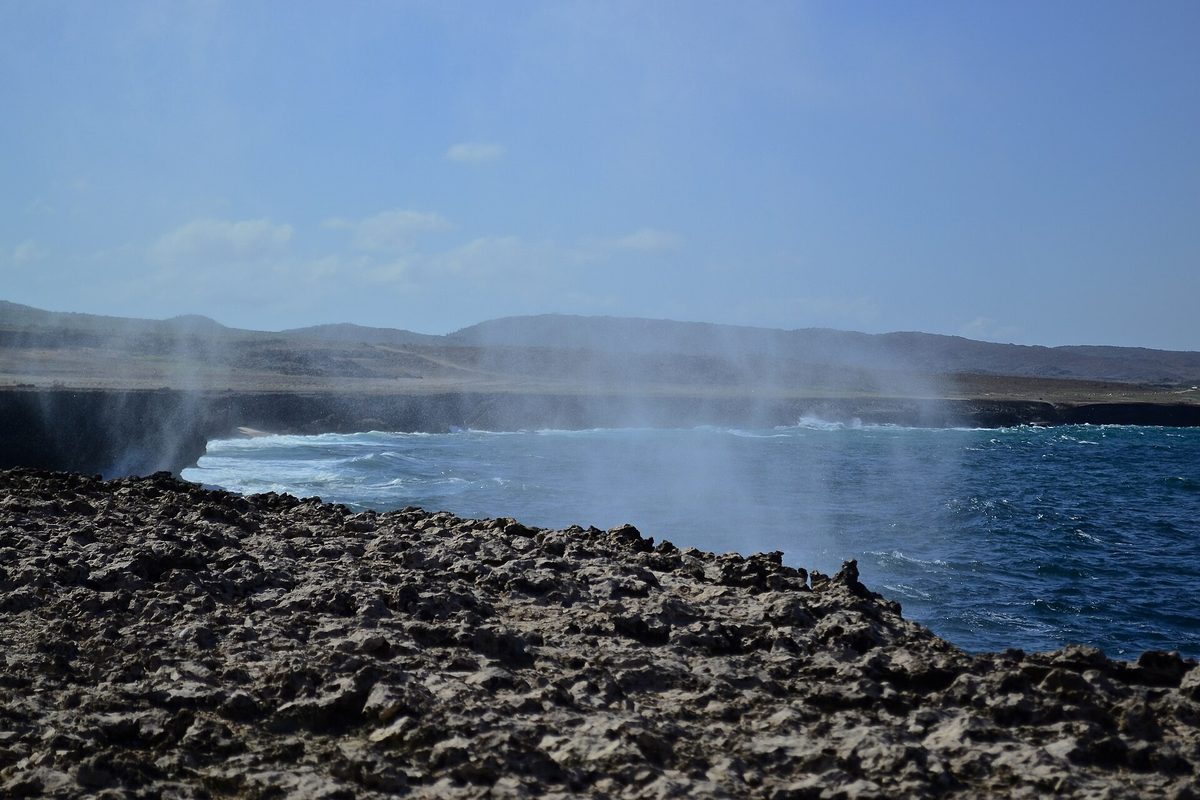
The caves are best enjoyed as part of a bigger windward-side day, not a quick in-and-out. They sit within easy reach of some of Aruba’s most dramatic natural scenery, so map a loop. A few favorites to string together:
- Natural Pool (Conchi) — a sheltered, rock-rimmed swimming hole protected from the open Atlantic. It’s the park’s headline attraction and needs a 4×4 or a tour to reach, but floating in it after a hot cave walk is unbeatable.
- Boca Prins — golden dunes and a wild, surf-pounded beach near Fontein. Beautiful to look at; the water here is rough and not for casual swimming.
- Dos Playa — a rugged twin-cove beach loved by local surfers, framed by cliffs. Again, scenery and waves rather than calm swimming.
- The desert interior — cactus, divi-divi trees, lizards, and the occasional wild donkey or goat on the drive between stops.
For calm, swimmable sand, you’ll want the leeward west coast rather than this side — our roundup of Aruba’s best beaches sorts the swimming beaches from the scenic ones. And if caves and pools have you in an exploring mood, the park connects naturally to other landmarks like the Natural Bridge on the north coast and the California Lighthouse at the island’s tip.
How to fit the caves into your trip
I’d give the windward side of Arikok — caves plus a pool or beach stop — the better part of a half to full day, depending on how much you swim and explore. Start early to beat the heat and the cruise crowds. The caves slot neatly into a wider plan; our sample Aruba itinerary shows where a nature day fits between beach days, and if you’re weighing when to come, the best time to visit Aruba covers the dry, breezy stretch that’s ideal for inland exploring.
The caves are also a strong pick for a couple of specific traveler types. They’re one of the more unique things to do in Aruba if you’ve done the beaches to death, they belong on any list of the best things to do in Aruba, and since entry is bundled into the modest park fee, they’re close to one of the cheaper things to do in Aruba once you’re inside. For broader inspiration, our things to do in Aruba hub ties it all together, and a few practical tips for visiting Aruba will smooth out the logistics.
A note on history and conservation
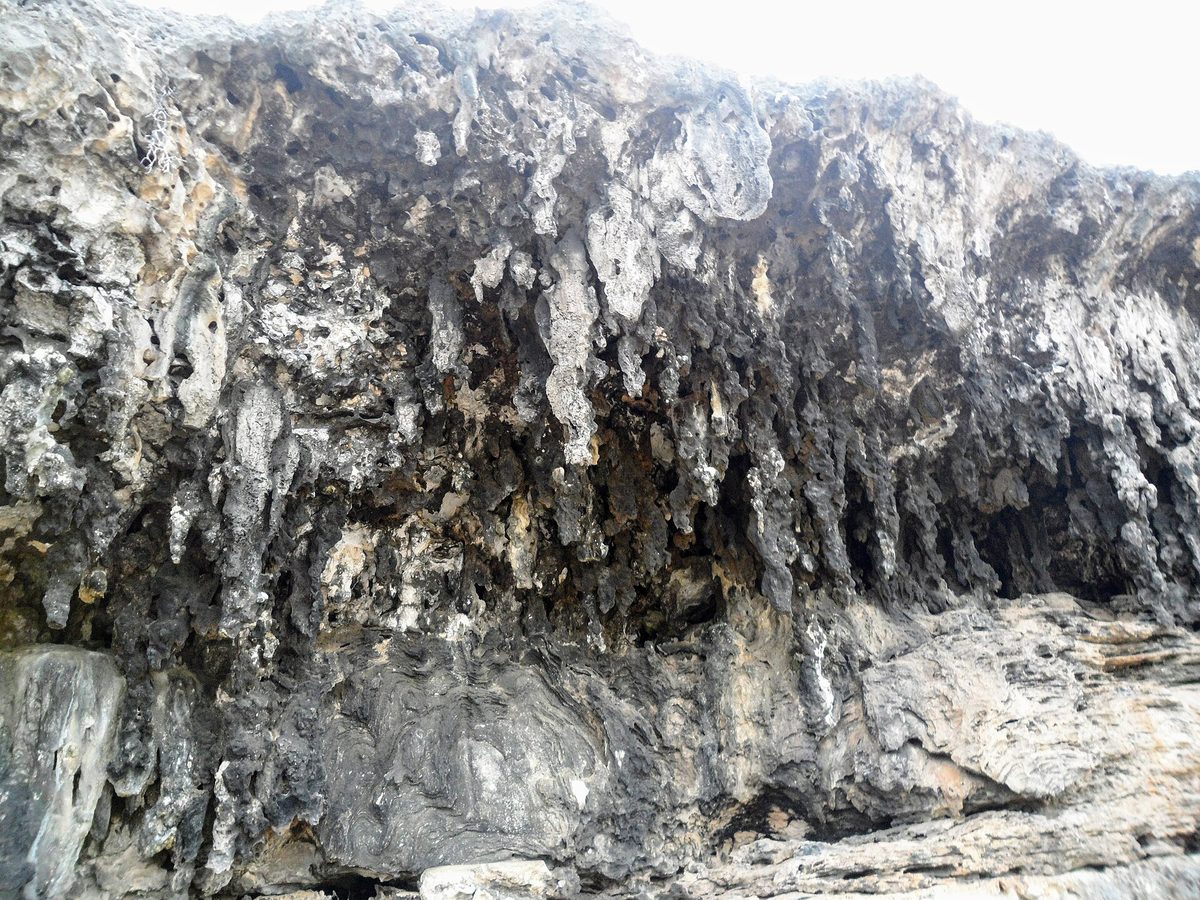
It’s worth understanding what you’re actually walking into. Aruba’s caves are limestone, slowly dissolved and decorated by seeping water over enormous spans of time. The human story layered on top — the Caquetio/Arawak rock art, the ritual use, the later legends — is part of why the caves were honored on Aruban postage stamps and why they sit inside a protected national park today. The bat colonies are protected for ecological reasons, the rock art for cultural ones. Visiting responsibly — lights down, hands off, voices low — is the price of admission to something genuinely irreplaceable. The park rangers and the national park foundation actively monitor the bat colonies, and access rules can tighten from one season to the next based on that work. Treat the caves like the privilege they are, follow the posted rules, and confirm current access and any closures with the park before you go.
Frequently asked questions about Aruba’s caves
How many caves are there in Aruba?
There are three main caves, all on the windward coast in or beside Arikok National Park: Fontein Cave, known for its Amerindian ceiling drawings; Quadirikiri Cave, with sunlit dome chambers; and Huliba, the “Tunnel of Love.” Fontein and Quadirikiri are open to visitors, while Huliba is currently closed to protect its resident bats.
Can you drive to the caves, or do you need a 4×4?
You can reach the Fontein and Quadirikiri parking areas in a regular car on a dry day if you drive slowly, since this part of Arikok is among the more manageable. A 4×4 is genuinely needed for the deeper park tracks and the Natural Pool road, so rent one if you want to combine the caves with those harder-to-reach spots.
How much does it cost to visit the caves in Aruba?
The caves are inside Arikok National Park, so you pay the park entrance fee rather than a separate ticket. Budget roughly US$11 to US$25 per adult; published prices vary and have risen over time, so confirm the current rate at the visitor center. Children are often discounted or free. The fee covers all open caves and the rest of the park.
Is Fontein Cave worth visiting?
Yes. Fontein is the only cave on the island where you can see genuine Amerindian rock art, painted in brown-red on the ceiling thousands of years ago, alongside stalactites, stalagmites, and a rare freshwater pond just outside. It’s a short, easy visit that adds real history to a beach-heavy Aruba trip, which is why so many travelers rate it a highlight.
Are there bats in the caves, and are they dangerous?
Yes, both Fontein and Quadirikiri shelter colonies of small nocturnal bats, and no, they’re harmless. They feed on insects, nectar, and pollen at night and help keep Aruba’s ecosystem in balance. Just don’t disturb them: keep flashlights down or off where rangers ask, stay quiet, and never reach toward the roosting areas. Protecting the bats is exactly why Huliba is closed.
What should I wear and bring to the caves?
Wear closed, sturdy shoes for the uneven, sometimes slick floors and the steps. Bring water, sun protection, and possibly a light layer, since the chambers run cooler than the desert outside. A small flashlight helps you read the formations where it’s allowed — but ask a ranger first, especially at Quadirikiri, where lights can disturb the bats.
Final thoughts
So, back to the question I started with: worth the bumpy drive? Completely. Aruba sells itself on flawless beaches, and they deserve the hype — but the caves are where the island shows you a different face, older and stranger and quieter. An afternoon underground at Fontein and Quadirikiri, bookended by a swim at the Natural Pool, was one of my favorite days on the island. Go early, go gently, confirm what’s open, and let the bats be. You’ll come back up into the sunshine glad you made the trip. For more ways to round out your visit, browse where to stay and what to do across our Arikok National Park guide and the wider site.
By the ArubaTourism.org team — Last updated June 2026