Everyone books Aruba for the beaches. Eagle Beach, Palm Beach, that postcard water — that is the brochure, and the brochure is honest. But after a dozen trips I will let you in on what the brochure leaves out: the most memorable thing I have ever photographed here was not the sea. It was a lizard the color of a swimming pool, sunning on hot coral rock, looking back at me like I was the strange one. The aruba animals turned out to be the trip’s quiet surprise — the part nobody warns you about and everybody ends up talking about on the flight home.
So before you spend every hour horizontal on a lounge chair, let me make the case for looking up, looking down, and looking into the scrub. The cast is genuinely odd for the Caribbean: a tiny owl that lives in a hole in the ground and works the day shift, parakeets that scream through the divi-divi trees at dawn, wild donkeys with opinions, and one of the rarest rattlesnakes on Earth that you will almost certainly never see. This is your field guide to the aruba animals worth crossing the island for, where to find them, and how not to be a jerk about it.
Aruba animals at a glance: what actually lives here
Short answer: Aruba is an arid island, more cactus than jungle, so its wildlife skews reptile, bird, and marine rather than big mammal. The icons are the blue Aruban whiptail lizard, the endangered burrowing owl (shoco), the green parakeet (prikichi), wild donkeys and goats, four species of nesting sea turtle, and a critically endangered island rattlesnake. There are no monkeys and no large predators — it is a safe place to wander.
That last line matters, so I will repeat it plainly: nothing here is hunting you. The “dangerous” list is short, shy, and easily avoided. What you actually get is an unusually approachable cast of desert and reef creatures, most of which you can find on foot, on a snorkel, or on a short drive. Here is the shortlist I hand to first-timers.
| Signature species | Where you’ll see it | Notes |
|---|---|---|
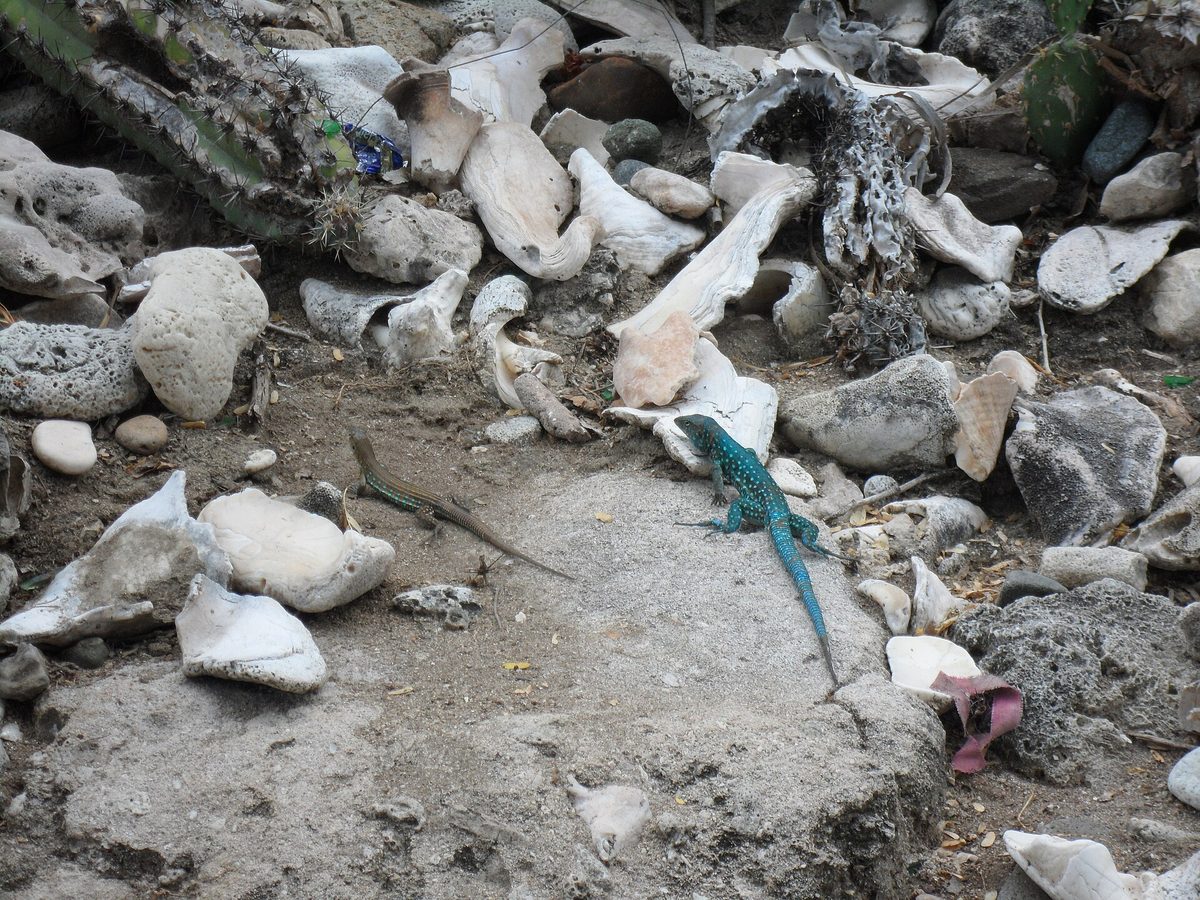
| Aruban whiptail lizard (cododo / kododo) | Arikok trails, hotel gardens, any sunny rock | Electric-blue males; endemic — found nowhere else on Earth |
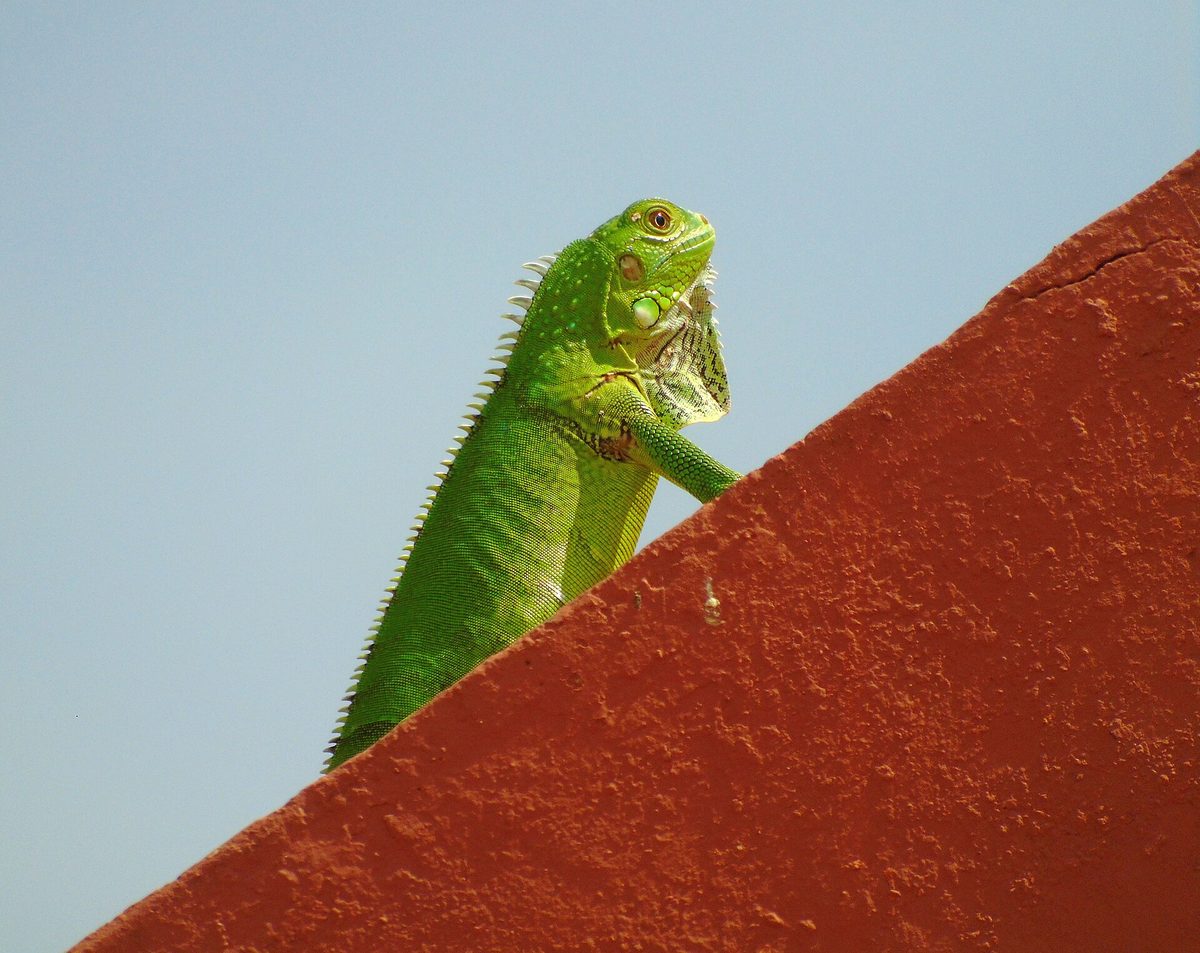
| Green iguana | Trees, walls, rooftops, resort grounds | Big, common, harmless; locals call it “yuwana” |
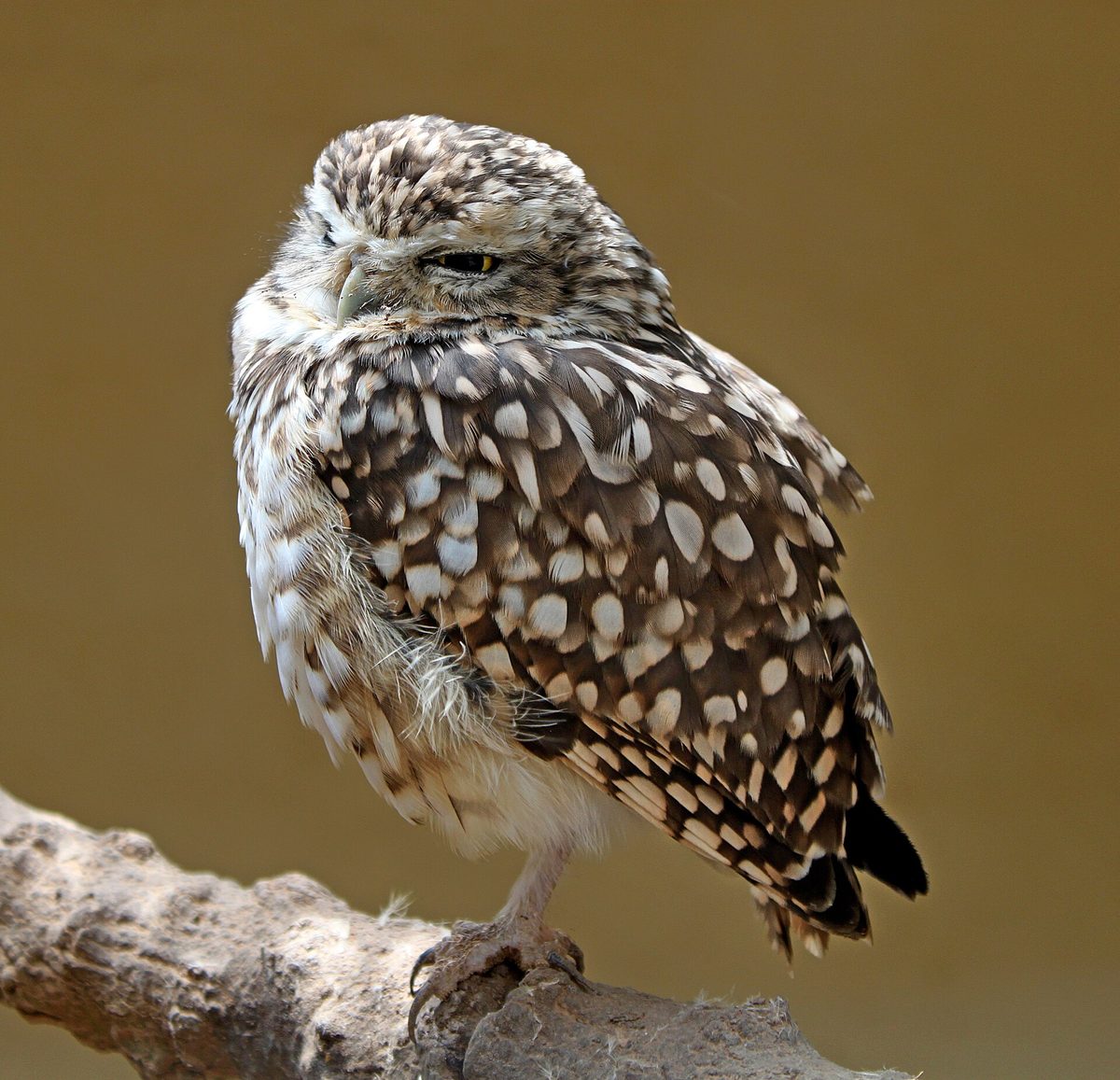
| Burrowing owl (shoco) | Open scrub, Tierra del Sol, Arikok fringes | National symbol; active by day; nests in the ground; endangered |
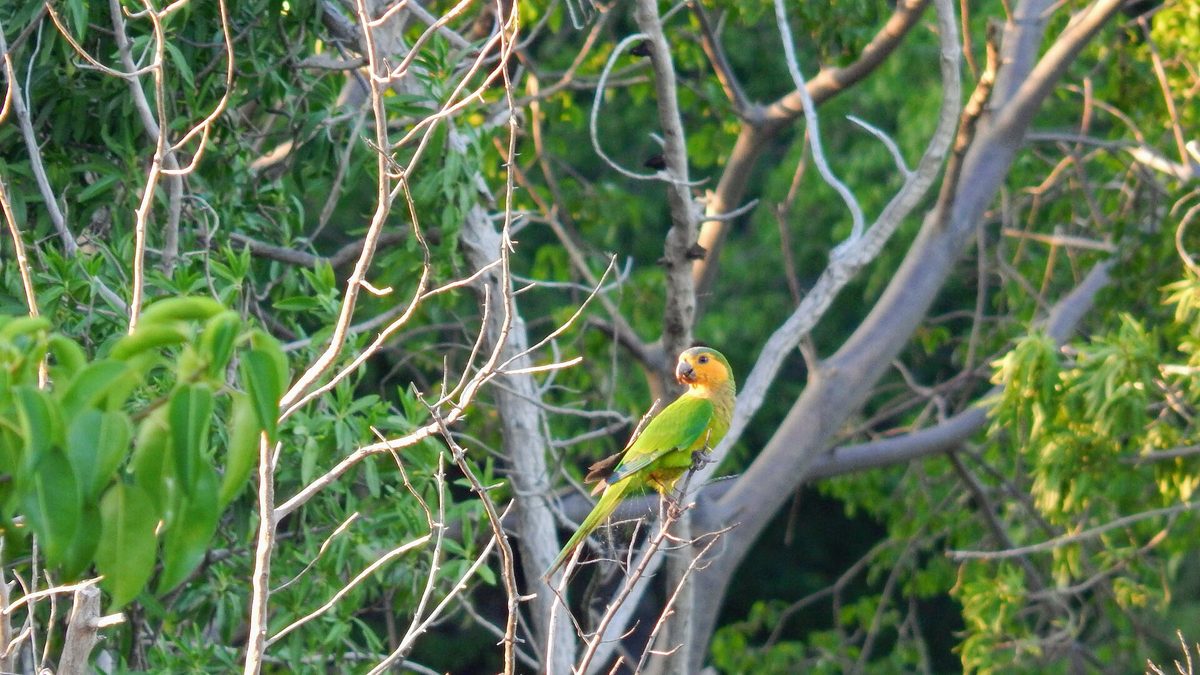
| Brown-throated parakeet (prikichi) | Everywhere — gardens, mangroves, towns | Aruba’s national bird; loud, green, in chattering flocks |
| Wild donkeys & goats | Arikok, the rugged east coast, roadsides | Feral, free-roaming; the sanctuary is the kind place to meet them |
| Sea turtles (green, hawksbill, loggerhead, leatherback) | Eagle Beach, Manchebo, Arashi; reefs offshore | Nest Mar–Nov; protected — never touch a nest or hatchling |
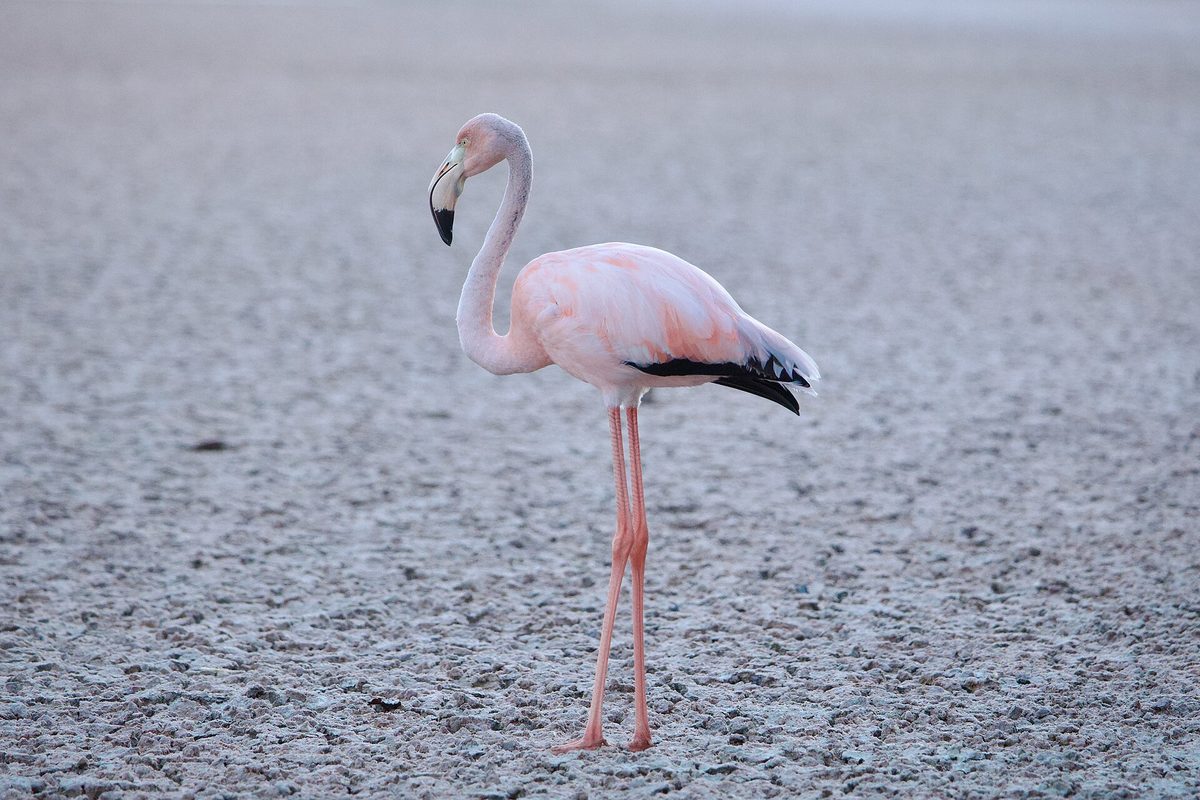
| Caribbean flamingo | Renaissance private island | Famous but not wild-native — a managed flock on a resort island |
| Aruba island rattlesnake (cascabel) | Arikok interior only | Critically endangered, endemic, shy — you almost certainly won’t see one |
The thread running through that table is endemism. For a speck of an island — about 70 square miles — Aruba carries a startling number of species and subspecies that exist nowhere else, which is exactly why Arikok National Park, the protected heart of the island’s wild side, covers nearly a fifth of the land. If you only do one nature thing here, make it Arikok. Everything below is, in one way or another, a reason why.
Reptiles: the real headliners
If Aruba ran a wildlife marketing department, it would put a reptile on the poster. The island’s heat and rock suit cold-blooded life perfectly, and the lizards here are not the drab brown afterthoughts you ignore elsewhere. They are the show.
The Aruban whiptail lizard (cododo) — the blue one
Meet the animal that converted me. The Aruban whiptail, called cododo or kododo in Papiamento, is endemic to Aruba — it lives on this island and absolutely nowhere else. The adult males are the stunners: throat, chest, and flanks washed in a turquoise-to-cobalt blue so saturated it looks unreal against the tan dirt. Females and youngsters are browner, striped, and easy to overlook, which is part of the fun once you learn to tell them apart. They are diurnal and shameless, scattering across hot trails and basking on coral rubble, and around Arikok they will trot right up if you sit still, hoping you dropped something. You did not need to drive anywhere special for this; you needed to stop walking and watch the ground.
Iguanas: the gentle giants on the wall
The green iguana — yuwana locally — is the reptile you cannot miss, because it is the size of a cat and likes to drape itself over walls, branches, and the occasional rooftop. They are vegetarian, slow, and completely uninterested in you; the worst thing a big male will do is give you a long, unimpressed stare before carrying on with his sunbathing. You will see them on resort grounds, in the mangroves, and all over Arikok. Younger ones are the brightest green; older animals fade to grey-green with hints of orange in breeding season. They are also, historically, part of local cuisine (iguana soup is a real, traditional dish), though as a visitor your only job is to admire and leave them be.
The Aruba island rattlesnake (cascabel) — the one you won’t see
Here is the island’s most precious and least-glimpsed resident. The Aruba island rattlesnake, or cascabel, is a pit viper found only on Aruba and is considered critically endangered, with a wild population estimated in the low hundreds, hanging on in the rocky interior of Arikok and the surrounding hills. It is a smallish, sandy gray-to-brown snake — roughly 70 cm on average — with faint diamond markings, and it is famously reclusive. In all my hiking I have never seen one, and most residents never do either. It is venomous, yes, but bites are vanishingly rare precisely because the snake wants nothing to do with you. The practical takeaway: on Arikok’s rocky trails, watch where you put your hands and feet, don’t go reaching into crevices, and treat any snake as a privilege to observe from a distance rather than a threat to manage.
The other snakes (and why you can relax)
Beyond the cascabel, Aruba has a modest cast of mostly harmless snakes — the slender, nocturnal Aruban cat-eyed snake (santanero), the boa constrictor (an introduced species that has established itself), and the whip-thin, fast “kodó” racer types. None of these are out to get you, and the cat-eyed snake’s mild venom is no real danger to humans. The honest summary a guide once gave me sticks: Aruba’s snakes practice live-and-let-live. Give them room and they will return the favor.
Birds: louder and stranger than you expect
Aruba has logged well over 200 bird species across residents and migrants, which is absurd for an island this dry and this small. You do not need to be a birder to enjoy them — the good ones announce themselves — but if you do bring binoculars, the payoff is real. Two birds in particular have become national identity, and you should learn both before you land.
The burrowing owl (shoco) — Aruba’s strangest celebrity
If the cododo converted me, the shoco is the one that stays with people. The Aruban burrowing owl, shoco, is a small, long-legged owl that breaks every owl rule you think you know: it is active in daylight, and it nests in a burrow in the ground rather than a tree. Picture a fist-sized bird with piercing yellow eyes standing at the mouth of a hole in the open scrub, swiveling its head to track you. It is the island’s national symbol and it is genuinely endangered — estimates put the population at well under a few hundred breeding pairs, squeezed by development eating into the open ground it needs. You can find them in undeveloped scrub, around the Tierra del Sol and Bubali areas, and along the fringes of Arikok, usually near dawn or late afternoon. If you spot one, keep your distance and keep it quiet; a nesting shoco disturbed off its burrow is a real cost to a fragile population.
The prikichi (brown-throated parakeet) — the sound of the island
The prikichi is the bird you will hear before you have unpacked. Aruba’s national bird is a small, bright-green parakeet with a yellow-orange face and a flash of blue, and it travels in loud, fast, gossipy flocks that rip through the divi-divi trees and resort gardens at first light and again before dusk. Unlike the shoco, this one is thriving and everywhere — gardens, mangroves, town squares, the cactus scrub. They are endemic at the subspecies level (the local race exists only here), which makes the most common bird on the island also one of its most special. Just sit on a balcony with a coffee at 7 a.m. and they will find you.
The supporting cast: troupials, bananaquits, herons and more
Once your eye is in, the rest of the lineup appears. The troupial is unmissable — a bold orange-and-black bird with a blue eye-ring, technically Venezuela’s national bird but very much at home here. The tiny yellow-bellied bananaquit (barica geel) will try to steal sugar off your breakfast table. Along the coast you will see brown pelicans folding into the water like thrown stones, plus herons, egrets, frigatebirds, terns, and the bare-eyed pigeon. Hummingbirds buzz the flowering shrubs. For concentrated, easy birding, the wetlands behind Palm Beach are the move — a green pocket of an island that is otherwise desert. Birding here pairs perfectly with a relaxed morning before the heat, and it is one of the best free things to do in Aruba if you bring your own binoculars.
Mammals: donkeys, goats, and a sky full of bats
Here is the twist that surprises people most: Aruba has no native land mammals to speak of beyond bats. Everything four-legged and furry you see grazing the scrub got here with humans. That does not make them less fun to meet — it just changes the story.
Wild donkeys: the island’s free-roaming mascots
Donkeys arrived centuries ago as working animals, and when cars took over, many were simply let loose. Their descendants now roam free, especially across the rugged east and the back roads near Arikok, and rounding a corner to find a donkey standing placidly in the middle of the road is a very Aruba moment. They are gentle and curious but genuinely wild, and traffic and dehydration are hard on them. The humane way to meet one up close is the island’s donkey sanctuary near Santa Cruz, a free-to-enter (donations welcome) refuge that cares for well over a hundred rescued animals you can feed and brush. It is a brilliant, low-key stop — easy with kids and a nice change of pace from the beach, and it slots neatly into a list of things to do in Aruba with kids.
Goats: the other thing in the road
Long-haired, surefooted goats are everywhere in the cunucu (countryside), clambering over rock and browsing the thorny scrub. Many are semi-feral, some belong to families who let them range, and they are a working part of local life as much as wildlife — goat stew (stoba) is a national comfort food. On Arikok’s trails they will watch you from improbable ledges. Drive the interior and east-coast roads slowly: between goats and donkeys, the livestock has the right of way and does not know it.
Bats: the only natives, and they earn their keep
The genuinely native mammals here fly. Several bat species — fruit bats and insect-eaters — roost in Aruba’s caves, and they are quiet ecological heroes, pollinating cacti and the iconic kadushi and dispersing seeds that keep the desert alive. The most famous roosts are in the caves of Arikok, where colonies are protected and you may see them at dusk pouring out to feed. You generally won’t interact with them, and that is by design — the caves are managed to keep the colonies undisturbed — but knowing they are the island’s only true native mammal adds a little awe to a cave visit.
Marine life: the wildlife you’ll actually swim with
For all the desert drama on land, plenty of visitors have their best animal encounter with a mask on. Aruba’s reefs and shipwrecks are busy, and the water clarity makes it easy. You do not need to be a certified diver — a lot of this is visible on a casual snorkel.
Reef fish, rays, and the occasional showstopper
Drop into the water off the right spot and the color starts immediately: psychedelic parrotfish crunching coral, electric-blue tangs, angelfish, sergeant majors, trumpetfish, and the sneaky little blennies tucked into the reef. Spotted eagle rays and southern stingrays cruise the sandy patches, barracuda hang in the blue, and around the wrecks — the Antilla being the famous one — the fish life is thick. Seahorses cling to mangrove roots and seagrass if you have a patient eye. If your trip is built around getting in the water, our guide to water sports and snorkeling in Aruba covers the best operators and sites; for the why-bother case, the marine life alone is reason enough to book one boat day.
Sea turtles: the encounter worth protecting
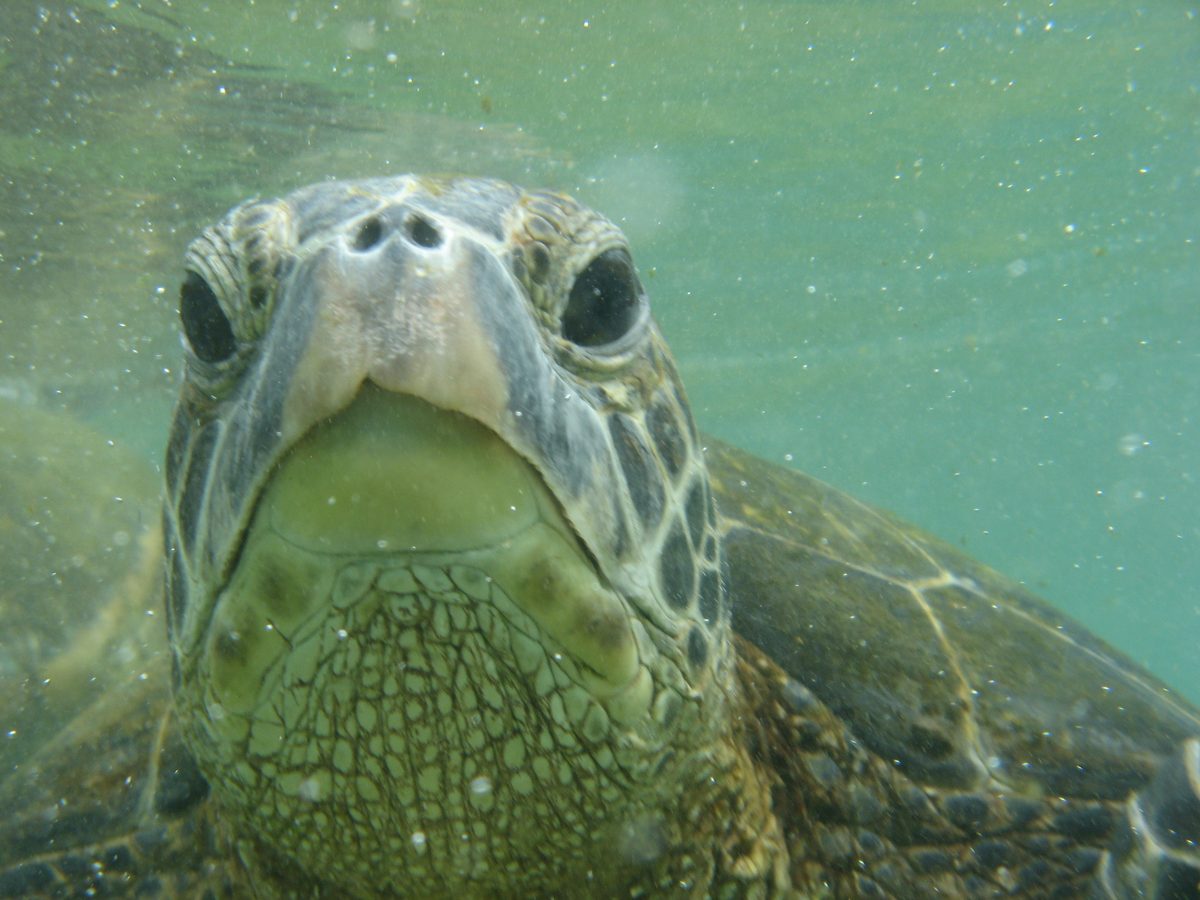
Four species of sea turtle use Aruba’s waters and beaches: green, hawksbill, loggerhead, and the giant leatherback. You can run into greens and hawksbills year-round while snorkeling — they graze seagrass and reef and are wonderfully unbothered if you keep your distance. The bigger deal is nesting season, roughly March through November, when females haul out at night to lay on Aruba’s beaches including Eagle Beach, Manchebo, Arashi, and others, and hatchlings later boil out of the sand and scramble for the sea. The local conservation group TurtugAruba monitors and cordons off nests; if you see a marked-off nest or a roped section of beach, that is why. The rules are simple and non-negotiable: never touch a turtle, a nest, or a hatchling, fill in any holes you dig, and kill outdoor lights near nesting beaches at night so hatchlings aren’t lured the wrong way.
Dolphins, and a word on what’s “wild”
Pods of dolphins turn up offshore and are a lucky-day sighting from boats, not a guaranteed stop. I want to flag one honest distinction here, because the island’s most Instagrammed “wildlife” is not actually wild. The famous pink flamingos belong to a managed flock on the Renaissance resort’s private island and are reachable only by hotel guests or a paid day pass — beautiful, photogenic, and entirely a curated experience rather than native Aruban wildlife. Same goes, in a friendlier-to-visit way, for the island’s animal attractions: the ostrich farm, the butterfly farm, and the various animal gardens are lovely, especially with kids, but file them under “animal experiences” rather than “Aruban wild animals.” Both are great. They are just different things.
Where to see aruba animals: a quick field plan
You can stumble into wildlife anywhere here, but if you want to be deliberate about it, this is how I would spend the time. None of it requires more than a half-day, and most of it is cheap or free.
- Arikok National Park — the single best move for native, wild species: whiptails, iguanas, goats, birds, bats in the caves, and the (unlikely) chance of the cascabel. Go early. Full logistics live in our Arikok National Park guide.
- The wetlands behind Palm Beach — Aruba’s best easy birding: herons, egrets, cormorants, parakeets, the works. Free, shady-ish, and quick.
- The donkey sanctuary (Santa Cruz) — the kind, hands-on way to meet the island’s wild donkeys. Free entry, donations welcome.
- Eagle Beach, Manchebo and Arashi at the right season — sea turtle nesting (Mar–Nov). Look for roped-off nests; respect them.
- Any reef or the Antilla wreck — fish, rays, turtles, the full reel. A boat snorkel trip is the highest-yield animal hour on the island; compare options in our guide to Aruba excursions.
- Renaissance private island — the flamingos, if that photo is on your list (guests or day pass only).
Wildlife slots beautifully into a wider trip, and most people see the best of it on the way to something else. If you are still mapping your days, our roundup of the best things to do in Aruba and our sample Aruba itinerary both fold the nature stops into the beaches-and-town rhythm, and the best time to visit Aruba guide is worth a look if turtle season or bird migration is driving your dates.
Conservation and etiquette: don’t be that tourist
Aruba protects more than a quarter of its territory, and the Aruba Conservation Foundation and groups like TurtugAruba do the unglamorous work that keeps the cododo, the shoco, and the turtles hanging on. As a visitor you have an outsized impact for good or ill, and the rules are easy.
- Don’t feed wildlife. Fed iguanas, donkeys, and birds get aggressive, sick, and dependent. A photo is a better souvenir than a fed animal.
- Never touch turtles, nests, or hatchlings, and keep beach lights off during nesting season. Fill in holes and knock down sandcastles at dusk so hatchlings have a clear run.
- Give the shoco and its burrows a wide berth. Nesting owls flushed off the ground is exactly the pressure pushing them toward the edge.
- Watch your hands and feet on Arikok’s rocks. Not because the cascabel is aggressive — it isn’t — but because it is rare and deserves to be left undisturbed, and you deserve to keep your hike boring.
- Take nothing. No shells, no coral, no “just one” anything. Leave the island the way the cododo handed it to you.
- Stay on marked trails and skip single-use plastic. Standard stuff, real impact on a small island.
For more on hiking responsibly and getting around the wilder parts of the island, our Aruba travel tips and getting around Aruba guides have the practical details on car rental, the kind of vehicle you want for Arikok’s roads, and staying safe and hydrated out there.
Frequently asked questions about aruba animals
Are there dangerous animals in Aruba?
Very few, and none that hunt people. The only venomous snake is the shy, critically endangered Aruba rattlesnake (cascabel), which you are extremely unlikely to encounter. In the water, watch for jellyfish, the occasional Portuguese man o’ war, and spiny lionfish or stonefish. Stay on trails, don’t touch what you don’t know, and Aruba is one of the safer islands to roam.
Are there snakes in Aruba?
Yes, around a dozen-plus species, but only the endemic Aruba rattlesnake is meaningfully venomous, and it lives almost entirely in Arikok’s rocky interior and avoids people. The others — the boa constrictor, cat-eyed snake, and various racers — are essentially harmless to humans. Snake encounters are rare; bites are rarer still. Watch where you step on rocky trails and you’ll be fine.
What is Aruba’s national animal?
Aruba leans on a few national symbols rather than one “national animal.” The prikichi (brown-throated parakeet) is the official national bird, declared in 2017, and the shoco (burrowing owl) is a beloved national symbol of the island’s natural heritage. The endemic blue cododo (Aruban whiptail lizard) is the unofficial face of the island’s reptiles. All three are found only here.
Can you see flamingos in Aruba?
Yes, but with an asterisk. The famous pink flamingos live on the Renaissance resort’s private island and are a managed flock, not wild native birds. Access is limited to Renaissance hotel guests or a paid day pass, which can run well over a hundred dollars per person. Wild flamingos occasionally drift over from nearby Bonaire, but the reliable flamingo photo is the Renaissance one.
Are there monkeys in Aruba?
No. Aruba has no wild monkeys and no native large land mammals at all — its only native mammals are bats. The four-legged animals you’ll see, like donkeys and goats, were introduced by people over the centuries and now roam semi-wild. If you want primates in the southern Caribbean you’re thinking of other islands; Aruba’s draw is reptiles, birds, and reef life.
What animals are unique to Aruba?
Several species and subspecies are endemic — found nowhere else on Earth. The headliners are the Aruban whiptail lizard (cododo), the Aruba island rattlesnake (cascabel), and the local subspecies of the burrowing owl (shoco) and brown-throated parakeet (prikichi). For an island of about 70 square miles, that concentration of unique wildlife is remarkable, and it’s why protecting Arikok matters so much.
Where is the best place to see wildlife in Aruba?
Arikok National Park, hands down, for native land species — lizards, iguanas, birds, goats, and cave bats across nearly 20% of the island. For birds specifically, add the wetlands behind Palm Beach. For marine life, any reef snorkel or the Antilla wreck. For a gentle, kid-friendly animal stop, the donkey sanctuary near Santa Cruz is free and genuinely lovely.
Is it safe to hike in Aruba with the wildlife?
Yes. There are no large predators, and the one venomous snake is reclusive and rare. The real hazards in Arikok are heat, sun, and rough terrain, not animals. Carry far more water than you think you need, wear real shoes, watch your hands and feet on the rocks, and don’t hike the exposed interior in the midday heat. Treat the animals as sights, not threats.
Final thoughts: come for the beaches, stay for the lizards
I am not going to pretend the wildlife will replace the beaches — you will still spend most of your trip in or beside that ridiculous blue water, as you should. But the thing I have learned over a dozen visits is that the animals are what make Aruba feel like a place and not just a postcard. The blue cododo on a hot rock, the little ground owl staring you down at dawn, a turtle materializing under your fins, a donkey blocking a back road with total confidence — those are the moments people actually retell. Give the desert an hour or two of your attention. Drive into Arikok early, put your binoculars in your beach bag, get on one boat with a snorkel, and let the quiet surprise of Aruba’s wildlife find you. It will.
By the ArubaTourism.org team — Last updated June 2026. We hedge prices, hours, and seasonal timing because they change; confirm current details (especially turtle-nesting dates, Renaissance day-pass access, and park hours) with official sources like the Aruba Conservation Foundation, TurtugAruba, and Arikok National Park before you go. Always observe wildlife from a respectful distance.
Photo credits
- Green iguana in Aruba — Photo: Ginelly.Q (CC0) via Wikimedia Commons.
- Aruban whiptail lizard (cododo), Noord, Aruba — Photo: EgorovaSvetlana / CC BY-SA 4.0 via Wikimedia Commons.
- Burrowing owl (shoco) — Photo: H. Zell / CC BY-SA 3.0 via Wikimedia Commons.
- Brown-throated parakeet (prikichi) — Photo: WillemVanA (CC0) via Wikimedia Commons.
- Green sea turtle — Photo: Wbuttrill / CC BY-SA 3.0 via Wikimedia Commons.
- American (Caribbean) flamingo — Photo: E bailey (CC0) via Wikimedia Commons.