Here is a fact that reorders how you picture this island: in the early 1900s, around 1920, roughly two-thirds of Aruba’s entire surface was planted with aloe. Not resorts, not beaches — aloe fields, stretching across the dry interior, worked by farmers and donkeys. For decades the island was one of the world’s largest exporters of aloe, and locals had a nickname for the place that had nothing to do with sand: “The Island of Aloes.”
That history is exactly why a visit to Aruba Aloe — the company, factory and museum in Hato just outside Oranjestad — is one of the more genuinely surprising stops on the island. Royal Aruba Aloe was founded in 1890, which makes it one of the oldest aloe companies anywhere in the world, and it still grows, harvests and processes its plants on the same plot of land. I went in expecting a quick gift-shop detour and walked out with a small obsession about a spiky desert plant.
This guide covers the factory and museum tour, the deep (and slightly bizarre) history of aloe here, and then the wider star of the show: the desert landscape itself — the wind-bent divi-divi tree, the towering kadushi cactus, the prickly pear, and all the drought-hardy plants that make Aruba look more like Arizona than the Caribbean postcard you expected.
The short version: The Aruba Aloe Factory & Museum in Hato runs a free guided tour (around 25 minutes) showing how aloe is grown, hand-filleted and turned into skincare, plus a small museum and shop. It’s typically open Monday–Friday and Saturday mornings, entry is free, and it pairs naturally with exploring Aruba’s cactus-studded desert and Arikok National Park.
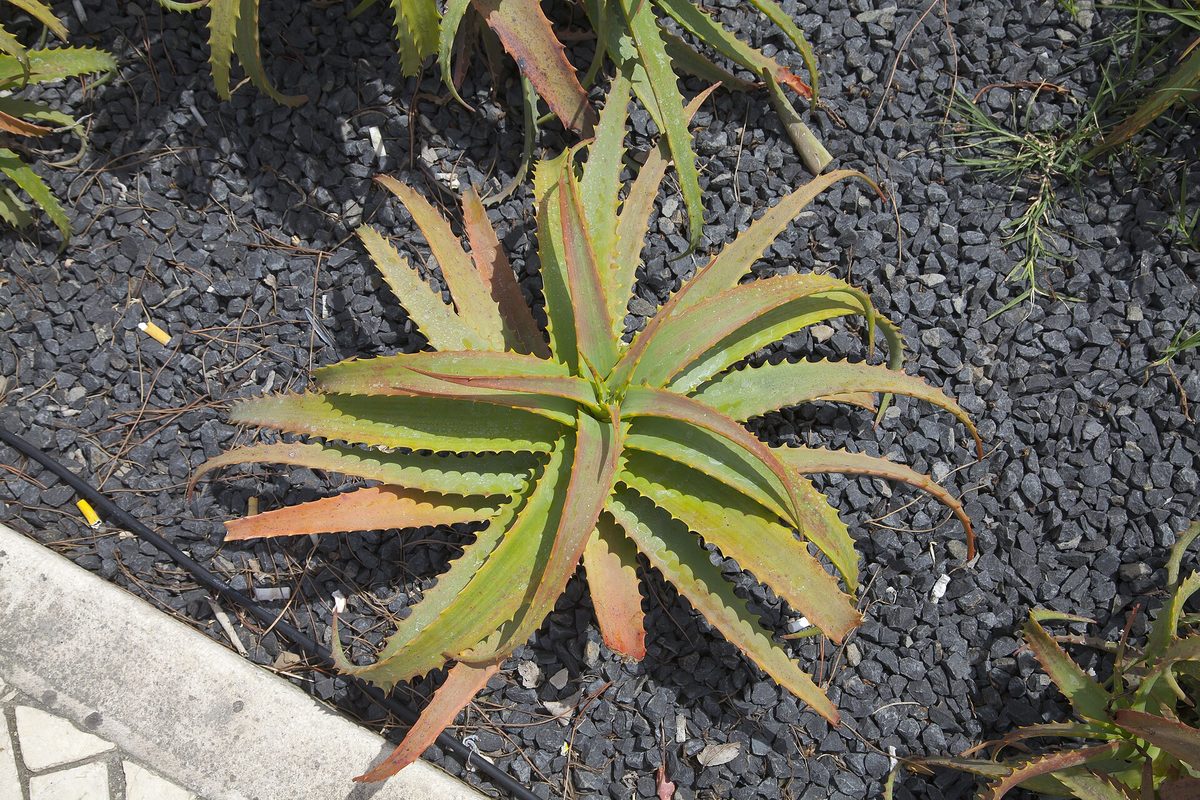
Aruba Aloe factory & museum: quick facts
Hours and details change, so treat this as a planning snapshot and confirm current times with Aruba Aloe before you drive out — especially on Saturdays and around holidays.
| Detail | What to expect |
|---|---|
| Where | Pitastraat 115, Hato — just northeast of Oranjestad (about a 5–10 minute drive) |
| Founded | 1890 (Royal Aruba Aloe) — one of the oldest aloe companies in the world |
| Cost | Free guided tour and museum; you only pay if you buy from the shop |
| Tour length | Around 25 minutes; budget 45–60 minutes with the museum and shop |
| Hours (verify) | Roughly Mon–Fri ~8:30am–4:00pm; Sat ~9:00am–12:00 noon |
| Languages | English, Dutch, Spanish and Papiamento; tours run frequently |
| Good for | Families, rainy or too-hot afternoons, cruise days, souvenir shopping, history buffs |
| Pair it with | Arikok National Park, the north coast, a cactus-and-divi-divi drive |
Touring the Aruba Aloe factory and museum
The site in Hato is refreshingly low-key — no flashy ticket booth, no upsell at the door. You walk in, and a local guide takes you through the story in about 25 minutes. Tours run frequently (roughly every 15 minutes when it’s busy) and are offered in English, Dutch, Spanish and Papiamento, Aruba’s own language. No reservation is needed unless you’re rolling in with a big group.
What I liked is that this isn’t a staged “tourist factory.” Royal Aruba Aloe genuinely grows, harvests and processes everything on one property — one of the very few aloe companies in the world that does all three in the same place. The museum starts with a short audiovisual on the company’s history (in retro packaging glory), then you move through to see the real production line.
What you’ll actually see on the tour
- The fields: rows of Aloe vera barbadensis growing right outside, in the same dry soil that made Aruban aloe famous.
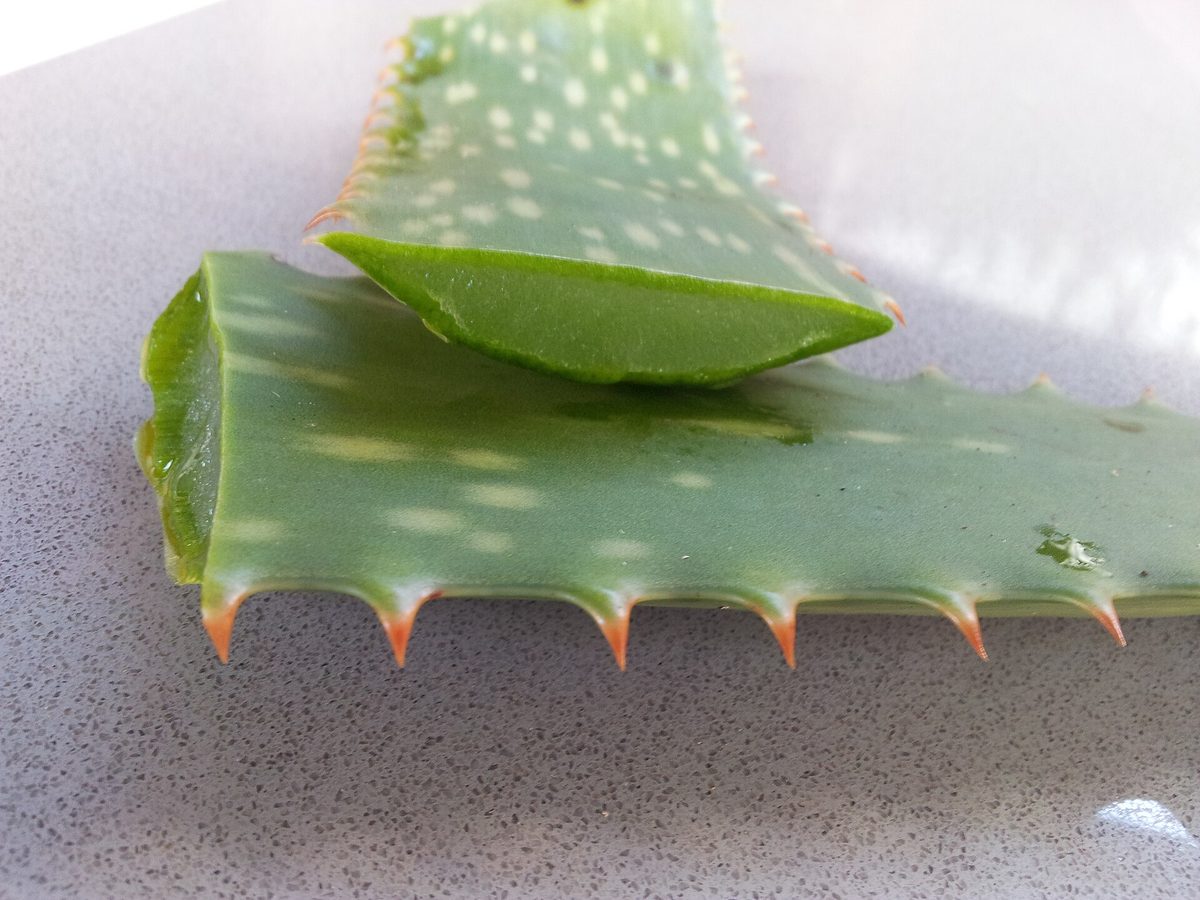
- Hand filleting: the part everyone remembers — watching a worker slice a thick leaf and lift out the clear inner gel by hand, fast and clean. The yellow latex just under the skin (the bitter aloin) is separated out.
- The lab and line: testing, then filling, packing and storing the lotions, gels and soaps. It’s a working facility, so weekdays are best if you want to see staff actually working.
- The shop: the payoff. After sunburn, the after-sun gel is the souvenir you’ll actually use; the sunscreen, hand cream and soaps make easy gifts.
Honest take: it’s short, and it’s partly a path to the gift shop — but it’s free, genuinely interesting, air-conditioned, and a great call on a blazing afternoon or a cruise day. Kids tend to like the filleting demo, and you leave understanding why this plant is stitched into Aruba’s identity. For more low-cost ideas in the same spirit, see our roundup of free things to do in Aruba and the wider list of best things to do in Aruba.
The history of aruba aloe: from “Island of Aloes” to the coat of arms
The aruba aloe story starts around 1840, when the Dutch governor van Raders introduced the plant to the island. The climate and soil turned out to be ideal. There was a commercial reason, too: the aloin extracted from Aruban hard gum ran to 22% or more, well above the roughly 15% other suppliers managed, which made Aruban aloe especially valuable on the world market.
Production was brutal, low-tech work. Cut leaves were stacked cut-side down in inclined troughs (a cabishi) so the latex drained into barrels (halifats), which donkeys hauled to cooking stations. There the latex was boiled in big copper kettles — a single 200-liter drum could take up to 12 hours of constant stirring — then poured into molds where it hardened into dark blocks of aloe resin for export.
By around 1920 the fields had spread until roughly two-thirds of Aruba was aloe, and the island became one of the world’s biggest exporters of the hard gum. The plant became a point of pride: it appeared on stamps, in household decorations, and in 1955 it was added to Aruba’s coat of arms as a symbol of the island’s first real source of prosperity. In 2021, Royal Aruba Aloe became the first company outside the Netherlands to receive a Royal predicate (“Koninklijk”) — recognition of more than a century in business. It’s still owned by the Eman family, employs around 150 people, and exports to dozens of countries.
What aloe vera is actually good for
Aloe’s reputation is ancient — it shows up with the Egyptians, with Alexander the Great, with Columbus. On a practical Aruba trip, the gel inside the leaf is the bit that matters: it’s mostly water and soothing compounds, which is why after-sun and sunburn relief is the classic use. People also use it on dry skin and minor irritation, and aloe turns up in everything from moisturizers to soaps. The day after I underestimated the Caribbean sun, a bottle of Aruba Aloe’s after-sun earned its place in my bag. (None of this is medical advice — it’s a plant, not a pharmacy.)
From leaf to bottle: how Aruba Aloe works today
Modern Aruba Aloe is a long way from the donkey-and-copper-kettle era, even though it sits on the same ground. The plants grown today are the gel-rich Aloe vera barbadensis Miller, prized for the thick inner fillet rather than the bitter latex the old industry boiled down for laxatives. That shift — from exporting hard gum for medicine to producing skincare from fresh gel — is really the story of how the company survived into the present.
On the tour you follow that journey in order. Leaves are cut by hand in the field and brought in quickly, because aloe gel oxidizes fast once the leaf is opened. A worker trims the spiny edges, slices the leaf and lifts out the translucent fillet, separating the yellow aloin layer just beneath the rind. From there the gel is stabilized, tested in the lab, blended into lotions, after-sun, soaps and sunscreens, and then filled, labeled, packed and stored — all on site. Seeing the whole chain in one building is genuinely unusual; most “aloe” brands buy processed gel from elsewhere.
A practical heads-up: because it’s a real working factory, the production lines run on weekdays. If watching staff actually filleting and bottling is the part you care about, go Monday through Friday rather than Saturday morning, when the museum and shop are open but the line is usually quiet.
The gift shop: what’s actually worth buying
You don’t have to buy anything, but a few products are genuinely useful on an Aruba trip rather than just souvenirs. After-sun gel is the obvious hero — the Caribbean sun is stronger than it feels with a sea breeze, and a cooling aloe gel back at the room is a small mercy. Reef-conscious sunscreen, hand and body lotion, lip balm and the soaps travel well and make easy gifts. Prices are reasonable, and buying here means you’re not tempted to pick wild aloe out in the park (which you shouldn’t).
Getting to the Aruba Aloe factory and planning your visit
The factory and museum sit at Pitastraat 115 in Hato, on the edge of Oranjestad. From the main hotel strips at Palm Beach and Eagle Beach it’s a short drive — figure 10 to 20 minutes depending on traffic — and from a cruise ship in Oranjestad it’s only about five to ten minutes by taxi. A rental car makes it effortless and lets you continue straight on to the desert and the north coast afterward; if you’d rather not drive, plenty of island tours fold the aloe stop into a wider loop.
- When to go: mornings are cooler and the production line is liveliest on weekdays. It’s also a smart rainy-day or midday-heat backup when the beach is brutal.
- How long to budget: the tour runs about 25 minutes, but 45 to 60 minutes is realistic once you add the museum, the audiovisual and a browse of the shop.
- What to bring: not much — it’s indoors and easy. If you’re carrying on to Arikok afterward, pack water, sun protection and closed shoes for the rocky trails.
- Accessibility: the museum and shop are easy to walk; the broader desert and park terrain is rougher, so plan that part to your comfort level.
Aruba’s cacti and desert landscape: the real star
Spend an hour driving away from the high-rise beaches and Aruba quietly changes character. The interior and the rugged north coast are dry, rocky and wind-scoured — a Caribbean island that looks like the American Southwest. This is the landscape aloe came from, and it’s full of plants that have spent centuries learning to live on almost no rain. Most of them are easiest to see in Arikok National Park, which protects nearly a fifth of the island and is the single best place to understand Aruba’s desert ecology up close.
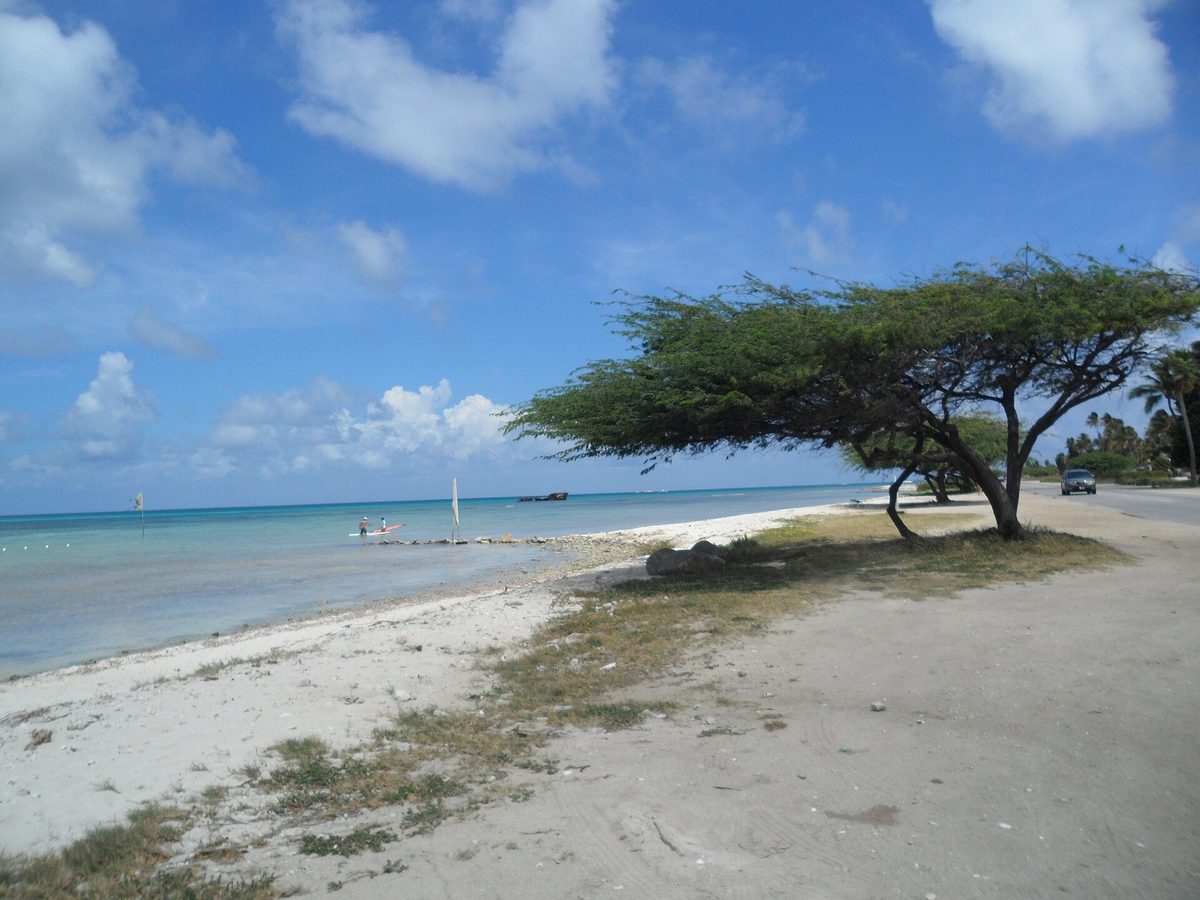
The divi-divi (watapana) tree
If Aruba has a mascot, it’s the divi-divi — watapana in Papiamento, Libidibia coriaria to a botanist. The constant trade winds blow it into a permanent southwest lean, so the whole tree looks frozen mid-gust. Locals will tell you it works as a natural compass: the canopy points southwest almost every time. You’ll spot them inland and along the coast, and a lone divi-divi against turquoise water is the photo you’ll take without meaning to.
Kadushi and cadushi: the cactus fences
The tall, candelabra-shaped columnar cactus you see everywhere is the kadushi. It stores water in thick, fleshy stems to ride out the dry months, and it’s woven into Aruban country life in a way that surprises visitors. Old cunucu (countryside) homes were ringed with living cactus — kadushi planted close together to grow into a dense, spiny natural fence that kept goats out long before chain-link existed. You’ll still see these living cactus fences around traditional homes. Kadushi is even cooked into a traditional local soup; the spines, obviously, come off first.
Prickly pear, agave and the rest
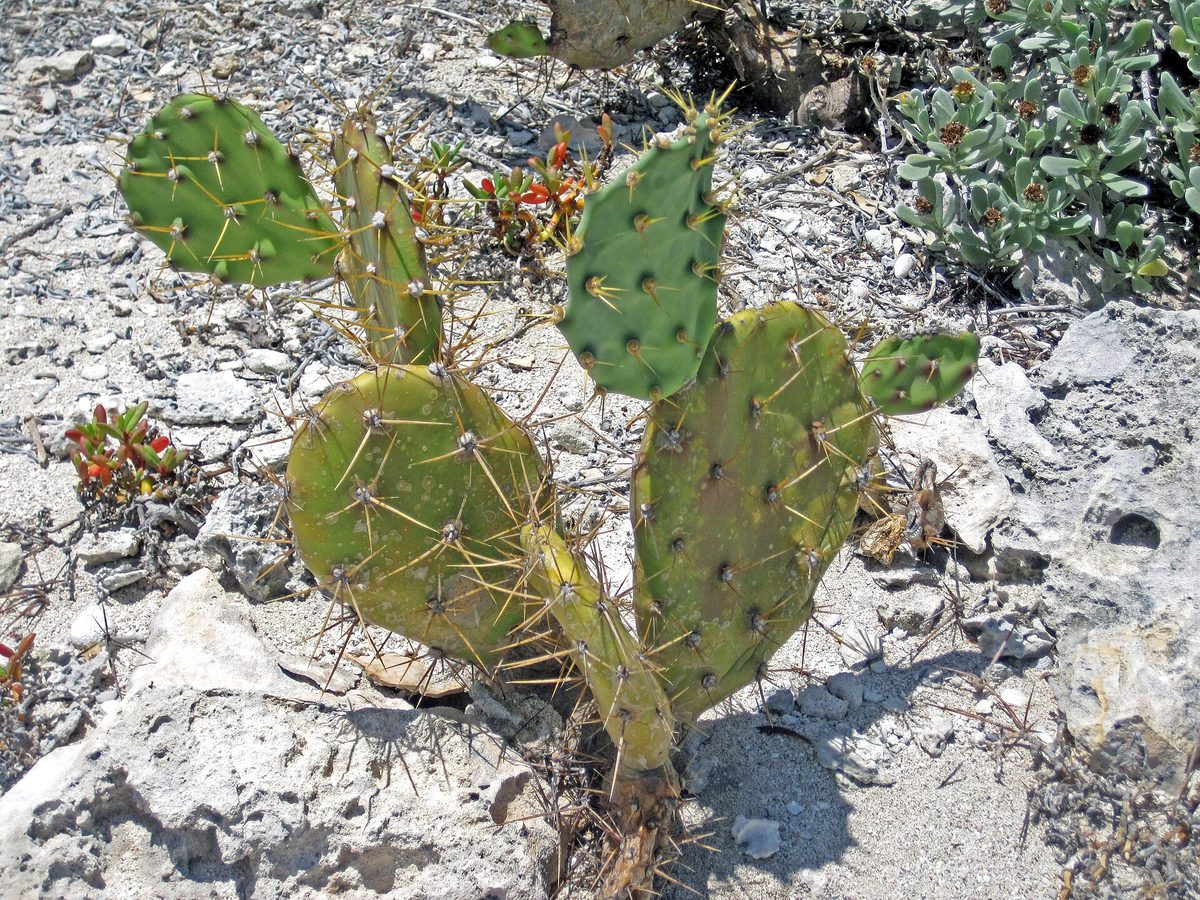
Aruba’s dry ground is generous with cacti. The prickly pear (Opuntia) spreads in flat, paddle-shaped segments and throws out bright yellow-orange flowers and edible fruit in season. The agave sends up dramatic flower stalks that can tower overhead. Add thorny shrubs, the national Wanglo flower along the coast, and, of course, wild aloe, and you’ve got a whole drought-adapted community thriving where you’d swear nothing could.
The fofoti tree (the one everyone mistakes for the divi-divi)
Here’s the mix-up locals love to correct. The famous leaning trees right on the white-sand beaches — the ones in a thousand sunset photos near Eagle Beach — are often fofoti trees (Conocarpus erectus), not divi-divis. The quick rule: fofotis tend to grow on the coastline by the beaches, while divi-divis turn up all over the island, including well inland. Both lean with the wind; both are gorgeous. Now you can be the person who knows the difference.
Where to see Aruba’s desert plants
- Arikok National Park: the headline spot — cactus, divi-divi, dramatic terrain and trails. Bring water; there’s little shade.
- The north coast: wild, windswept and cactus-covered, around landmarks like the natural bridge and the California Lighthouse.
- The cunucu interior: back roads near places like Alto Vista Chapel, where cactus fences and divi-divis line the route.
- Beachside: the leaning trees by the sand (often fofotis) near Eagle Beach and Manchebo — easy photos with no hiking required.
One rule that matters: look, don’t harvest. Inside Arikok National Park it’s not okay to cut or remove plants, including wild aloe — it’s a protected area, and the desert recovers slowly. Admire it, photograph it, and buy your aloe at the factory shop instead.
Aruba’s desert plants at a glance
A quick field guide to what you’re looking at out there, so you can name things as you drive:
| Plant | Local / other name | How to recognize it | Where you’ll see it |
|---|---|---|---|
| Divi-divi tree | Watapana | Small tree bent into a permanent southwest lean by the wind | All over the island, inland and coastal |
| Fofoti tree | (often confused with divi-divi) | Leaning tree, but typically right on the white-sand beaches | Coastline, e.g. near Eagle Beach |
| Kadushi | Cadushi (candle cactus) | Tall, columnar, candelabra-shaped cactus; used as living fences | Cunucu countryside, Arikok |
| Prickly pear | Opuntia | Flat paddle-shaped pads with spines; yellow-orange flowers and fruit | Dry, rocky ground island-wide |
| Agave | Century plant | Spiky rosette with a tall dramatic flower stalk | Arikok and dry hillsides |
| Aloe vera | Aruba aloe | Fleshy, toothed-edge succulent leaves in a low rosette | Cultivated at the factory; wild in dry areas |
How to spot wild aloe (and why to leave it alone)
Wild aloe is easy to recognize once you’ve seen it at the factory: low clusters of thick, fleshy leaves with soft “teeth” along the edges, often tinged reddish in full sun and drought. You’ll notice it on dry slopes and roadsides around the island. Tempting as it is to snap off a leaf for a sunburn, don’t do it inside Arikok National Park — harvesting is not allowed in the protected area, and even outside it, cutting plants on private cunucu land isn’t yours to do. The kindest move is to photograph the wild stuff and buy your gel at the shop. It’s cheap, it’s stabilized so it keeps, and it leaves the desert intact for the next traveler.
It’s worth remembering why these plants look the way they do. Aruba sits in the dry, southern Caribbean, outside the main hurricane belt, with low rainfall and relentless trade winds. Everything that thrives here has a water strategy: cacti store it in swollen stems, aloe banks it in fat leaves, the divi-divi sends roots deep and keeps its leaves tiny to cut water loss. That’s the quiet genius of the landscape — it’s not barren, it’s brilliantly adapted, and once you see that, the “ugly” interior becomes one of the most interesting parts of the island.
Making a half-day of it: aloe + desert
The easy itinerary: start with the air-conditioned Aruba Aloe tour in the cooler morning, then drive out to Arikok or the north coast for cactus, divi-divis and big views. You’ll want a rental car or a tour — see our notes on getting to and around Aruba — and it slots neatly into a day of Aruba excursions. It’s a great rainy-day or too-hot-for-the-beach backup, and an easy win with kids; for more family ideas, see Aruba with kids. If you’re mapping a full trip, our Aruba itinerary and the guide to the best time to visit Aruba help you slot it in, while the things to do in Aruba hub and our unique things to do in Aruba list round out the rest of the day. Watching your spend? It barely moves the needle on an Aruba vacation cost plan, and a few smart Aruba travel tips stretch it further.
Aruba Aloe: frequently asked questions
Is the Aruba Aloe factory tour worth it?
For most visitors, yes — with realistic expectations. It’s short (around 25 minutes), free, air-conditioned, and a genuinely interesting look at a craft tied to Aruba’s history. Kids enjoy the hand-filleting demo, and it’s a perfect blazing-afternoon or cruise-day stop. It does end at the gift shop, but nobody pressures you to buy.
How much does the Aruba Aloe factory and museum cost?
The guided factory tour and the museum are free — one of the better no-cost activities on the island. You only spend money if you buy from the shop, where after-sun gel, sunscreen, lotions and soaps run roughly from a few dollars up. It’s an easy, low-cost addition to almost any Aruba day.
What are the Aruba Aloe factory hours?
As a planning guide, the factory and museum are typically open Monday through Friday from about 8:30am to 4:00pm, and Saturday from around 9:00am to noon, with the shop generally open longer. Hours shift seasonally and around holidays, so confirm current times with Aruba Aloe directly before driving out, especially for a Saturday visit.
Where is the Aruba Aloe factory located?
It’s at Pitastraat 115 in Hato, just northeast of Oranjestad — only about a 5–10 minute drive from the capital and easy to reach from the main hotel areas. It pairs well with a wider day exploring Aruba’s desert interior, the north coast, or Arikok National Park.
What is the bent tree in Aruba called?
The famous wind-bent tree is the divi-divi, known locally as watapana. Constant trade winds force it into a permanent southwest lean, so it doubles as a natural compass. Note that the leaning trees right on the beaches are often a look-alike, the fofoti — divi-divis grow all over the island, while fofotis cluster along the coast.
Can you see aloe and cactus in Arikok National Park?
Yes — Arikok is the best place on Aruba to see the desert in full: columnar kadushi cactus, prickly pear, divi-divi trees, agave and wild aloe across dramatic, rocky terrain. Just don’t pick or remove anything; the park is protected and the dry landscape regrows slowly. Bring plenty of water, as shade is scarce.
Final thoughts
Aruba sells itself on beaches, but the thing I didn’t expect to love was its dry, stubborn, beautiful desert — and the spiky plant that once covered two-thirds of it. The Aruba Aloe factory is a quick, free, surprisingly rich window into that story, and the cactus-and-divi-divi landscape around Arikok is where it all comes alive. Do both in a half-day, keep some after-sun gel in your bag, and you’ll see the island a little differently. For the full picture of the wild side, start with our guide to Arikok National Park and Aruba’s natural wonders.
By the ArubaTourism.org team — Last updated June 2026. Tour hours, prices and access can change; please confirm current details with Aruba Aloe and the park authority before you go.
Photo credits
Images via Wikimedia Commons:
Aloe plants outdoors — Diego Delso (CC BY-SA 3.0);
cut aloe vera leaf — Rae Allen (CC BY 2.0);
windswept divi-divi (watapana) tree, Aruba — EgorovaSvetlana (CC BY-SA 4.0);
prickly-pear (Opuntia) cactus — James St. John (CC BY 2.0).