Here is the worry I hear most about booking a full week on a 19-by-6-mile island: that you will run out of things to do by Wednesday and spend the back half of the trip re-reading the same beach novel under the same palm tree. “Seven days is too much island,” the thinking goes. I want to knock that down right now, because it is simply not true. A well-built 7 day Aruba itinerary fills every single morning and most afternoons without ever feeling like a forced march, and you will still wish you had one more day. Aruba is small, yes, but it packs a desert national park, more than a dozen genuinely distinct beaches, world-class snorkeling, a mural-covered art town, a Dutch-colonial capital, and the kind of sunset sailing that makes people cry a little. The problem is never too few things to do. The problem is choosing.
So here is the plan I give friends. Spread across seven days, you get classic beach time on Eagle and Palm, a rugged 4×4 adventure into Arikok National Park and the Natural Pool, a catamaran snorkel over the Antilla shipwreck, a slow culture day in Oranjestad and San Nicolas, a quieter southern coast escape, and a final morning to revisit whichever beach stole your heart. Slow enough to feel like vacation, full enough that nobody gets bored.
The short version: A perfect one-week Aruba itinerary mixes three or four “do something” days (Arikok, a boat trip, snorkel coves, San Nicolas street art) with three or four “do nothing” beach days on the calm west coast, plus a rental car for at least part of the week. It suits first-timers, couples, and active families who want highlights and rest in one trip.
Your 7-day Aruba itinerary at a glance
Here is the whole week on one screen. Each day is themed and grouped geographically so you are not zig-zagging across the island in the midday heat. Times are loose on purpose; the Aruba sun runs the schedule, not the clock.
| Day | Theme | Key highlight |
|---|---|---|
| Day 1 | Arrive & ease in | Sunset toes-in-the-sand on Eagle Beach |
| Day 2 | Snorkel & northwest beaches | Turtles at Tres Trapi, clear water at Boca Catalina |
| Day 3 | Arikok & the Natural Pool | 4×4 to Conchi, the wave-protected natural pool |
| Day 4 | Catamaran snorkel sail | Floating over the Antilla shipwreck |
| Day 5 | Oranjestad culture day | Pastel capital, Aloe factory, free trolley |
| Day 6 | San Nicolas & the calm south | Street-art murals, Baby Beach lagoon |
| Day 7 | Northern views & farewell | California Lighthouse, one last favorite beach |
If you only have a little less time, my complete Aruba itinerary hub has shorter 3-, 4-, and 5-day versions you can mix and match. But seven nights is the sweet spot, and below is how I would spend every one of them.
Day 1: Arrive and ease into island mode
Most flights from the US East Coast land at Queen Beatrix Airport (AUA) by early to mid-afternoon; from Miami it is about a 3-hour hop, from the Northeast around 4.5 hours plus any layover. Do not over-plan day one. The smartest thing you can do is grab your rental car, drop your bags, and get to the water before sunset.
Afternoon: check in, then straight to the sand
If you are staying around Palm Beach or Eagle Beach (where most first-timers land), you can be on the sand 20 minutes after leaving the airport. Resist the urge to do anything ambitious. Change into something light, slather on sunscreen (the Aruba sun is genuinely intense, even at 4 p.m.), and walk the shoreline to shake off the travel grime.
Evening: your first Aruba sunset
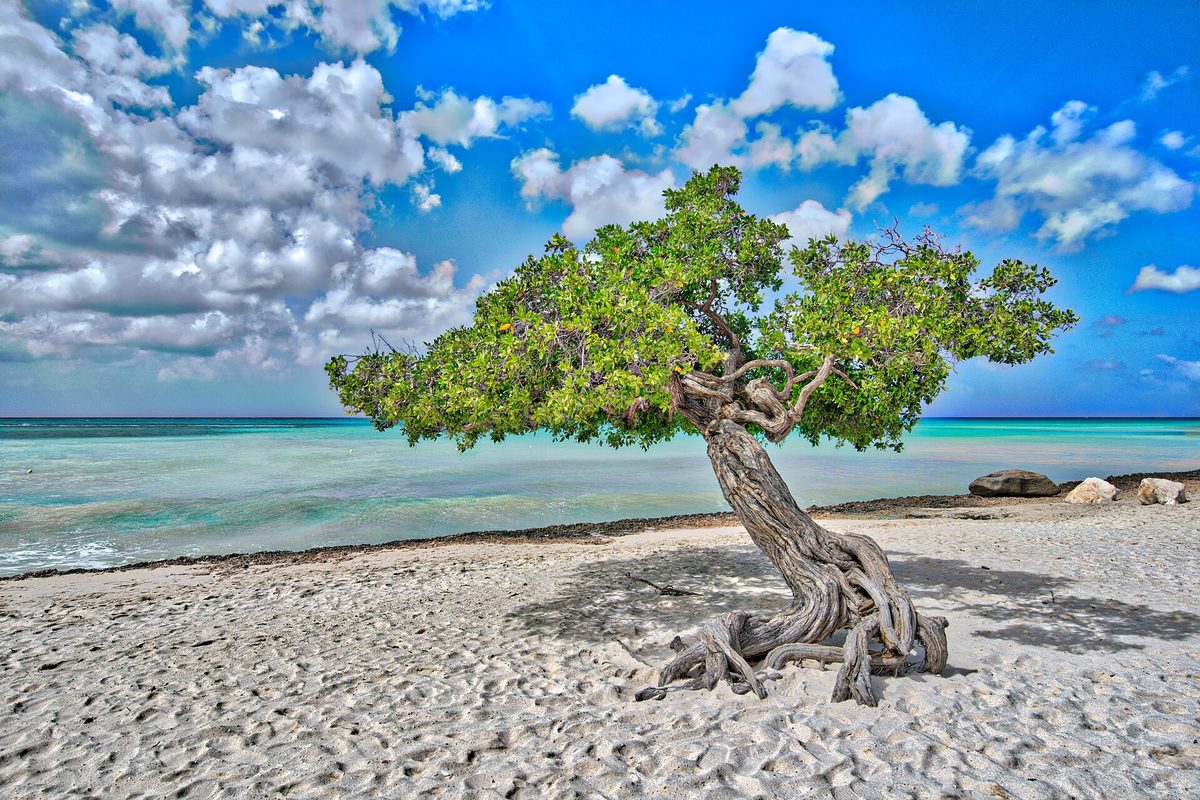
Aruba’s west coast faces the sunset, and the first one always lands hardest. Head to Eagle Beach, find the two famous fofoti (divi-divi) trees, and watch the sky go pink and gold around 6:45 p.m. For dinner, keep it simple and close: a beachfront spot like Passions on the Beach (tables in the sand, mains roughly $35-55) or a casual burger-and-wings night at a Palm Beach bar for half that. You have six full days ahead. Tonight is just about arriving.
Approx cost today: rental car around $45-65/day, dinner $25-55 per person.
Swap this if you land late: if your flight gets in after 5 p.m., skip the beach entirely and have a relaxed welcome dinner near your hotel. Save the sunset ritual for tomorrow; you will get six more chances.
Day 2: Snorkel and the calm northwest beaches
Start a little early today, not because you are rushing but because Aruba’s best snorkeling is in the morning, when the wind is light and the water is clearest. The whole northwest tip is a string of calm, easy-entry coves within a few minutes of each other.
Morning: Tres Trapi and Boca Catalina
Drive to Tres Trapi (“three steps”), a tiny stair-access entry near Malmok where green sea turtles graze on the seagrass. Slip in quietly, keep your distance, and you may share the water with several of them. Five minutes up the road, Boca Catalina is a sheltered horseshoe cove with crystal water and easy shore entry; expect blue tang, parrotfish, and French angelfish. Both are beginner-friendly and free. Bring your own mask if you have one, or rent a set for around $10-15.
Midday: Arashi Beach
Just past the coves, Arashi Beach is a wider stretch of soft sand with gentle water and palapa shade, the most family-friendly of the northwest beaches. There is a casual beach shack for cold drinks and light bites, so you can settle in for a few hours without leaving the sand.
Evening: Palm Beach buzz
Drift back toward Palm Beach for a livelier night: beach bars, live music, and an easy waterfront dinner. The Old Dutch Windmill area near the south end is a fun stroll.
Approx cost today: snorkel rental $10-15, lunch $15-25, dinner $25-45.
Swap this if it is too windy: Aruba’s trade winds can churn up even the calm coves. If the water looks choppy, pivot to Eagle Beach for swimming and people-watching, and save serious snorkeling for the calmer Day 4 catamaran trip.
Day 3: Arikok National Park and the Natural Pool
Today you meet the other Aruba, the one most people miss. Nearly 20% of the island is protected inside Arikok National Park: cactus forest, desert hills, dramatic cliffs, ancient caves, and an Atlantic coast that crashes instead of laps. It feels like a different planet from the resort strip, and it is my favorite day of the week.
How to do it: tour vs your own 4×4
The interior roads are rough, rutted, and genuinely 4×4-only. You have two good options. Book a guided Jeep or UTV safari (typically a half-day, around $120-220 per person, with hotel pickup) and let someone else handle the driving and the route. Or rent a proper 4×4 and go independently; the park entrance fee is around $15 per adult, free for under-18s. A regular rental car will not make it to the Natural Pool, so do not try. Start early to beat both the heat and the tour-bus crowds.
The Natural Pool (Conchi)
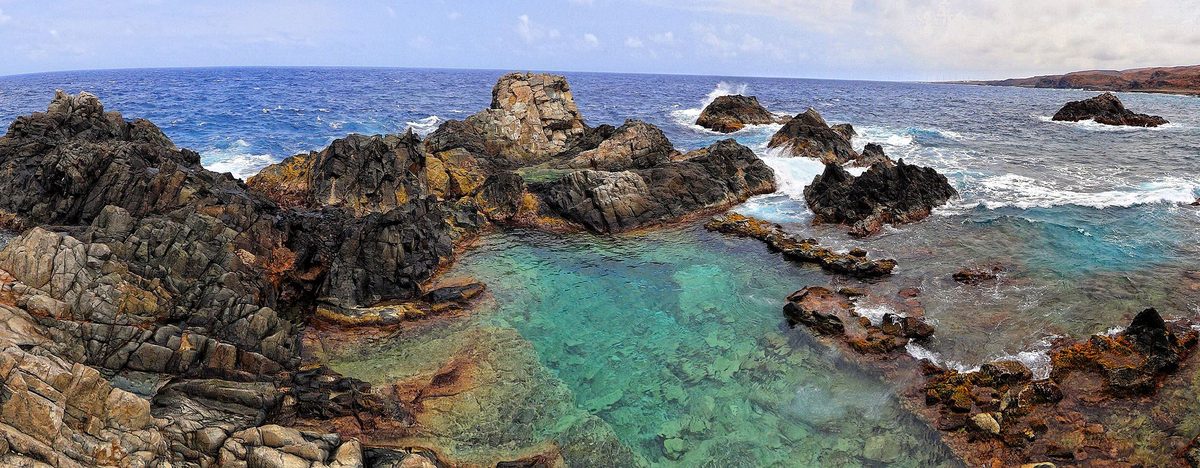
The headline stop is Conchi, the Natural Pool, a circle of calm water carved into the volcanic rock and shielded from the open Atlantic by a ring of stone. Swimming here feels wild and slightly adventurous, with waves exploding just beyond the barrier while you float in the protected center. It is only reachable by 4×4, ATV, horseback, or a hike, which is exactly why it stays special.
Caves, cliffs, and the south coast
Round out the day with the park’s caves: Quadirikiri Cave has dramatic openings in the ceiling where sunlight pours through, and Fontein Cave holds faint Arawak drawings on the walls. Stop at the cliffs above Boca Prins and the sand dunes, and keep an eye out for wild goats, donkeys, iguanas, and (rarely) the harmless Aruban whiptail. This is your most physically demanding day, so reward yourself with a long shower and an unhurried dinner back near the hotel.
Approx cost today: guided safari $120-220, or DIY 4×4 rental plus the ~$15 park fee.
Swap this if you are not into rough roads: not everyone loves a bouncing 4×4. If that is you, take a smoother guided land tour that focuses on the Ayo and Casibari rock formations, the California Lighthouse area, and the Alto Vista Chapel instead, all reachable on paved roads.
Day 4: Catamaran snorkel sail and the Antilla shipwreck
After yesterday’s dust and adventure, today is pure Caribbean postcard: a half-day catamaran cruise along the calm west coast with snorkel stops, an open bar, and music. Even if you are not a strong swimmer, the boat day is worth it for the sun, the nets at the bow, and the coastline drifting by.
Morning or afternoon on the water
Most sails run morning or early afternoon and cost around $90-130 per person including drinks and often a light lunch. Choose a tour that stops at the Antilla, a 400-foot German freighter scuttled in WWII and now the largest shipwreck in the Caribbean. Floating above it as fish weave through the coral-covered steel is genuinely surreal. Many trips also stop at Boca Catalina and Arashi reef, so you get a couple of snorkel sites in one outing.
Afternoon: keep it light
You will be back on shore pleasantly sun-kissed by early-to-mid afternoon. Lean into the afterglow: a nap, a late lunch, a poolside cocktail. Tonight is a good night for a slightly nicer dinner since you have a relaxed afternoon to get ready.
Approx cost today: catamaran $90-130, dinner $35-60.
Swap this if you prefer flamingos to sailing: trade the boat for a day on Renaissance Island, home to the famous Flamingo Beach. Day passes run around $130 (free for Renaissance hotel guests) and sell out, so book ahead. It is calmer and more Instagram than adventure, and just as memorable.
Day 5: Oranjestad culture day
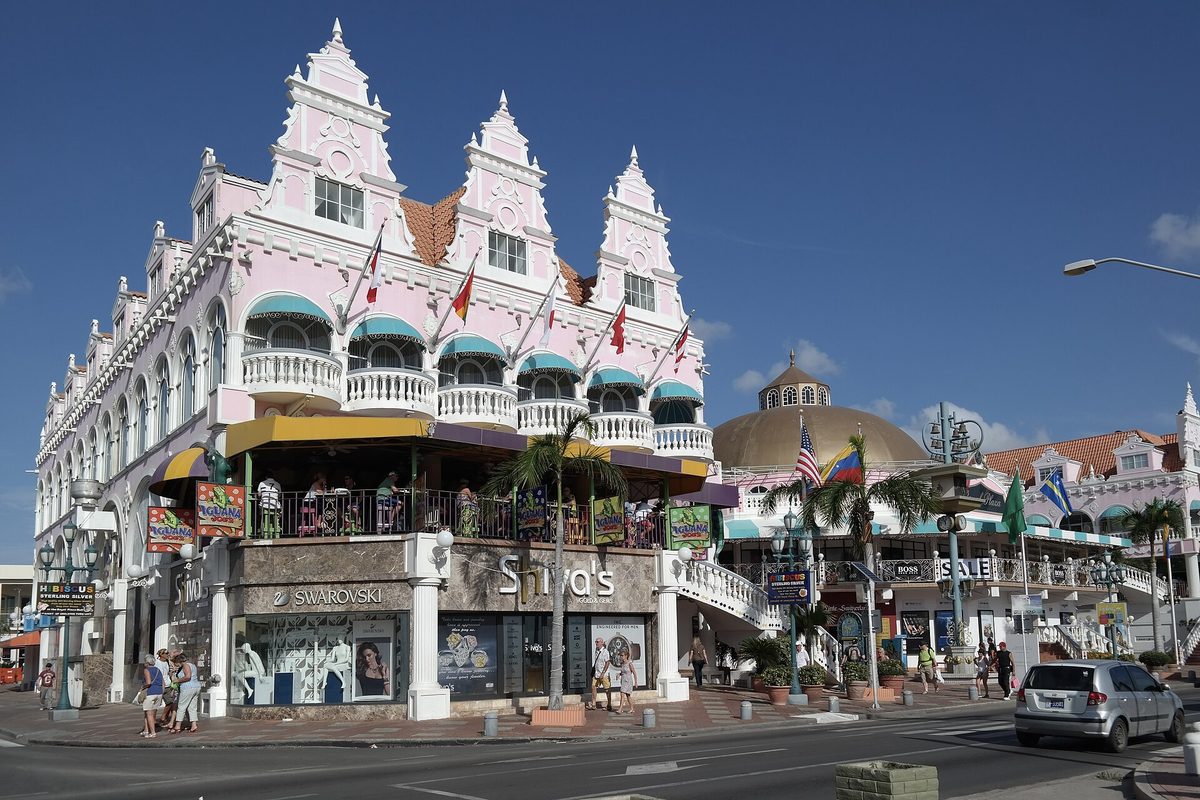
Slow the pace and spend a day in Aruba’s capital. Oranjestad is compact, walkable, and ridiculously photogenic: Dutch-Caribbean architecture in pastel pinks, yellows, and blues, with decorative trim everywhere you look. This is the easy, low-mileage day your week needs after two big adventures.
Morning: the free trolley and the old town
Park near the cruise terminal and hop the free streetcar (trolley) that loops through downtown roughly every 25 minutes from mid-morning. It passes Fort Zoutman (the island’s oldest building, from 1796), the parliament, and the main shopping streets, with hop-on hop-off stops along the way. Grab the obligatory photo at the “I Love Aruba” sign, browse the boutiques, and stop for coffee in the shade.
Midday: Aruba Aloe Factory
A short drive away, the Aruba Aloe Factory & Museum runs free guided tours of its 160-year-old aloe operation, where you can see the cutting room and labs and buy genuinely good (and useful, given that sun) aloe products. Tours run roughly every 15 minutes on weekdays. It is one of the better budget activities on the island.
Evening: dinner and optional Bon Bini Festival
If today is a Tuesday, head back to Fort Zoutman in the early evening for the Bon Bini Festival, a small weekly celebration of Aruban music, dance, food, and crafts (around 6:30-8:30 p.m.). For dinner, the Renaissance Marketplace has a cluster of lively restaurants, or book a special table at one of Oranjestad’s well-known spots.
Approx cost today: trolley free, Aloe tour free, lunch $15-25, dinner $30-55.
Swap this if you would rather shop or spa: if museums and history are not your thing, swap the Aloe tour for the luxury Renaissance Mall and a long lunch, or book a spa afternoon. The free trolley and pastel streets are worth doing either way.
Day 6: San Nicolas street art and the calm south coast
Today you drive south, and it genuinely feels like a different island, fewer resorts, more local life, and the island’s most surprising art scene. Group the murals and the beaches together so the driving stays efficient.
Morning: San Nicolas murals
San Nicolas, Aruba’s second city, has transformed its quiet streets into an open-air gallery. A five-block stretch around Main Street is covered in huge, vivid murals left from the annual Aruba Art Fair: two-story flamingos, a 3-D iguana clinging to a wall, carnival faces, and seashell angel-wing sculptures perfect for photos. Give it 45 minutes to an hour of wandering, and rest on the colorful mosaic benches when the heat builds.
Midday: Baby Beach and a legendary fish lunch
A few minutes from San Nicolas, Baby Beach sits at the island’s southern tip: a shallow, lagoon-like bay where the water stays waist-deep for a long stretch, ideal for relaxed floating and families. Nearby Rodgers Beach is usually quieter if you want more space. For lunch, make the short detour to Zeerovers in Savaneta, a no-frills dock where you order fresh fish and shrimp by weight, eat with your fingers at picnic tables, and watch the day’s catch come in (cash only, closed Mondays).
Evening: golden hour back west
Drive back up the coast in the late afternoon and catch one more sunset on your favorite west-coast beach.
Approx cost today: murals free, Baby Beach free (chair/umbrella rentals extra), lunch at Zeerovers $15-25.
Swap this if you are a serious snorkeler: trade Baby Beach for Mangel Halto on the southeast coast, one of Aruba’s best reef snorkels, with deeper water and more rugged entry that rewards confident swimmers. It pairs nicely with the San Nicolas murals on the way down.
Day 7: Northern viewpoints and a gentle farewell
Your last day is not about cramming in big sights. It is about saying goodbye to an island that now feels familiar. Keep it loose, scenic, and slow.
Morning: California Lighthouse and Alto Vista Chapel
Drive to the island’s windswept northwestern tip and the white California Lighthouse, the highest structure on Aruba, with 360-degree views of the calm turquoise west coast on one side and the rugged, wave-battered shore on the other. On the way back, stop at the tiny yellow Alto Vista Chapel, set among cactus and desert hills, a quiet, peaceful pause built by Spanish missionaries in 1750. If you have time, the nearby Bushiribana Gold Mill ruins and the natural bridges along the north shore are an easy add-on.
Afternoon: your favorite beach, one more time
Then return to whichever beach you loved most this week, not the one you think you should revisit, the one that actually stole your heart. Maybe it is Eagle Beach for its wide-open calm, maybe Boca Catalina for the clear water, maybe Palm Beach because the energy suits you. Swim, float, walk the shoreline, and have a long lunch with an ocean view. Watch your final sunset right where you are. The best Aruba goodbye is not dramatic; it is quietly full.
Swap this if you have a late flight: if you do not fly out until evening, add a final snorkel at Tres Trapi or a last sail. If you have an early flight, flip Day 7’s lighthouse run to an earlier day and use this morning purely to pack and lounge.
Where to stay for a week in Aruba
For a first one-week trip, base yourself on the calm west coast. The two main zones are Palm Beach (high-rise, lively, lots of restaurants and water sports) and Eagle Beach / Manchebo (low-rise, wider, quieter, more space). Both put you 15-20 minutes from the airport and central for the whole island.
- Luxury: beachfront resorts on Palm Beach and Eagle Beach, with full spas, multiple restaurants, and direct beach access. Expect roughly $400-700+ per night in high season.
- Mid-range: larger resort hotels and condos slightly back from the sand, often with kitchenettes; roughly $200-350 per night.
- Boutique & budget: adults-only boutique hotels and apartments in Noord, a short walk or drive from Palm Beach, often under $200 per night with a pool and kitchen.
For a full breakdown by neighborhood and traveler type, see our guide on which neighborhood to book, and if you would rather not think about meals, our roundup of Aruba all-inclusive resorts covers the best options.
Getting around: rental car vs taxi and Arubus
Here is the honest answer for a seven-day trip: rent a car for at least part of the week. You do not necessarily need it all seven days, but for the Arikok, San Nicolas, and northern-coast days, having your own wheels turns a logistics headache into a road trip.

- Rental car: roughly $45-65 per day for a standard car; budget a bit more for a true 4×4 if you plan to drive Arikok yourself. National and local agencies both operate at the airport, and local companies often beat the big chains on price. Gas is straightforward and the island is tiny, so you will not burn much.
- Arubus (public bus): excellent and cheap along the west coast. One-way fares run around $2.60, a round trip about $5, and a 1-day pass roughly $10. Buses connect the airport, Oranjestad, and the Palm/Eagle Beach hotels frequently during the day, less often at night and on Sundays. Great for the beach-and-town days, not practical for Arikok or the Natural Pool.
- Taxis: reliable but not cheap, and there is no Uber or Lyft on the island. Fares are fixed by zone; fine for the occasional airport run or night out, expensive if you lean on them daily.
My recommendation: use the bus or walk on your relaxed west-coast days, and rent a car (ideally a 4×4) for the two or three days you head into the park or down south. For the full rundown, see our guide to getting to and around Aruba.
Best time to visit Aruba
One of Aruba’s best features: there is no truly bad time to come. The island sits outside the main hurricane belt, temperatures hover in the mid-80s Fahrenheit year-round, and the constant trade winds keep it comfortable. A few things worth timing around:
- High season (mid-December to mid-April): driest, busiest, and priciest. Book flights and hotels well ahead.
- Shoulder and summer (May to August): great value, still gorgeous, slightly hotter and a touch more humid; your August week falls here, with warm seas perfect for snorkeling.
- Autumn (October to December): Aruba’s brief “rainy” season, though showers are usually short and the island stays sunny overall.
For month-by-month detail on weather, crowds, and prices, see our guide to the best time to visit Aruba.
A sample one-week Aruba budget
Costs swing wildly with your style, so here is a realistic per-person estimate for seven nights (excluding flights), based on current Aruba pricing. Flights from the US typically add $350-800. For a fully itemized week, every meal, tour and taxi included, see what a 7-day trip to Aruba costs.
| Travel style | Per day | 7-night total (per person) |
|---|---|---|
| Budget (boutique/condo, bus, local eats, free activities) | ~$125-200 | ~$1,250 and up |
| Mid-range (resort, rental car, mix of dining + a few tours) | ~$250-400 | ~$2,500-3,500 |
| Luxury (beachfront resort, fine dining, private tours) | ~$400-600+ | ~$5,000 and up |
Where the money goes: lodging is the biggest line, followed by dining and tours. You can shave hundreds by snorkeling and beach-hopping (free) instead of booking every excursion, and by cooking a few breakfasts if your room has a kitchen. For a deeper breakdown, see our full Aruba vacation cost guide.
What to skip on a one-week Aruba itinerary
With seven days you have time for almost everything that matters, but a few things are easy to over-prioritize. Save your energy for what actually delivers.
- Do not try to drive Arikok in a regular car. You will not reach the Natural Pool and you may damage the rental. Take a tour or rent a real 4×4.
- Do not pack two big adventures into one day. The heat is real; one major activity plus beach time is the sweet spot. Overscheduling is the fastest way to make a week feel exhausting instead of relaxing.
- Do not feel obligated to do every paid attraction. Aruba’s best moments (sunsets, snorkel coves, murals, the Natural Pool) are mostly free or cheap. For ideas, see our roundup of the island’s best free activities.
- Do not blow the whole week on one beach. The myth that Aruba gets boring usually comes from people who never left their resort lounger. Move around; that is the entire point of this plan. Our guide to the best Aruba beaches will help you pick.
More ways to fill your week
If your group skews active or you are traveling with kids, a couple more days of inspiration never hurts. For the full menu of options, browse the best things to do in Aruba, and if any day’s snorkeling or sailing left you wanting more, our Aruba water sports guide covers diving, kiteboarding, parasailing, and more. Traveling as a family? Our Aruba with kids guide flags the calmest beaches and easiest excursions.
Frequently asked questions
Is 7 days enough in Aruba?
Yes, seven days is widely considered the sweet spot for Aruba. It is long enough to mix beach days with Arikok National Park, a catamaran sail, and the San Nicolas murals without rushing, yet short enough to leave you wanting to return. First-timers get the full island; you simply will not be bored.
Is a week in Aruba too long?
No. The worry that a full week gets boring is the biggest myth about Aruba, and it falls apart the moment you leave your resort lounger. Between the national park, more than a dozen distinct beaches, snorkel coves, a sailing day, the capital, and the art town, there is easily enough to fill seven days, with rest built in.
How much does a week in Aruba cost?
Budget around $1,250 per person for seven nights at the low end, roughly $2,500-3,500 mid-range, and $5,000 or more for luxury, all excluding flights (add $350-800 for airfare from the US). Lodging is the biggest expense; snorkeling and beach-hopping are free, which keeps costs flexible.
Do I need a rental car for a 7 day Aruba itinerary?
Not for the whole week, but for at least part of it. The relaxed west-coast beach and town days work fine on the cheap Arubus or on foot. For Arikok, the Natural Pool, San Nicolas, and the northern coast, a car (ideally a 4×4) is well worth it, around $45-65 per day.
What is the best month for a one week trip to Aruba?
There is no bad month, since Aruba sits outside the hurricane belt with warm, breezy weather year-round. Mid-December to mid-April is driest but busiest and priciest; May through August offers great value and warm seas; October to December brings brief, scattered showers but still plenty of sun.
Can you see all of Aruba in 7 days?
You can see all the highlights in seven days: the famous beaches, Arikok and the Natural Pool, the Antilla shipwreck, Oranjestad, San Nicolas, and the northern viewpoints. A week will not cover every hidden cove and snorkel site, which is part of Aruba’s charm, but it delivers a complete, well-rounded first visit.
By the ArubaTourism.org team — Last updated June 2026.
Photo credits
All photographs are used under their respective Wikimedia Commons or Openverse licenses. Aruba imagery courtesy of Wikimedia Commons / Openverse contributors. See each image’s source page for full attribution and licensing details.