The nervous forum threads never quite say this out loud: you do not need a rugged Jeep, off-road nerves, or a Caribbean sense of adventure to get around this island under your own power. The truth is that driving in Aruba is one of the easiest road experiences a visitor will have anywhere in the region. You drive on the right, exactly as you do in the United States and on the European mainland. The distances are tiny. The main roads are smooth, well-marked, and short. If you can handle a supermarket run at home, you can handle the highway between the airport and your hotel.
That said, “easy” is not the same as “identical to home,” and a handful of small differences trip up first-time visitors every season — the goats that wander onto unlit back roads at dusk, the roundabouts that come thick and fast, the rough interior tracks that quietly void your rental insurance the moment you leave the pavement. This guide walks through every one of them in plain language, so you can rent the right car, follow the rules, and spend your energy on the beaches and lighthouses rather than on white-knuckling the wheel.
This is part of our wider guide to getting to and around Aruba, and it pairs naturally with how you plan the rest of your trip — from building an itinerary to working out your overall Aruba vacation cost.
The short answer: is driving in Aruba easy?
Driving in Aruba is genuinely easy for most visitors. Traffic keeps to the right (the same side as the US, Canada, and continental Europe), your home driver’s license is accepted, the island is barely 20 miles long, and the west-coast and highway roads are well paved and clearly signed. The only real learning curves are frequent roundabouts, free-roaming livestock, and rough unpaved tracks in the interior.
| Where you’re driving | Road surface | Typical speed limit | Vehicle you need |
|---|---|---|---|
| Oranjestad & town centers | Paved, with some one-way streets | ~40 km/h (25 mph) | Any car; compact is easiest to park |
| Secondary & residential roads | Paved, occasional potholes | ~60 km/h (37 mph) | Any car |
| Main highway (1A/1B) | Smooth, multi-lane in parts | up to ~80 km/h (50 mph) | Any car |
| Hotel strip & west-coast attractions | Paved, well maintained | ~40–60 km/h | Any car |
| Arikok National Park & interior | Rough dirt, rock, sand | Crawl; no posted limit | Genuine 4×4 (insurance often void off-road) |
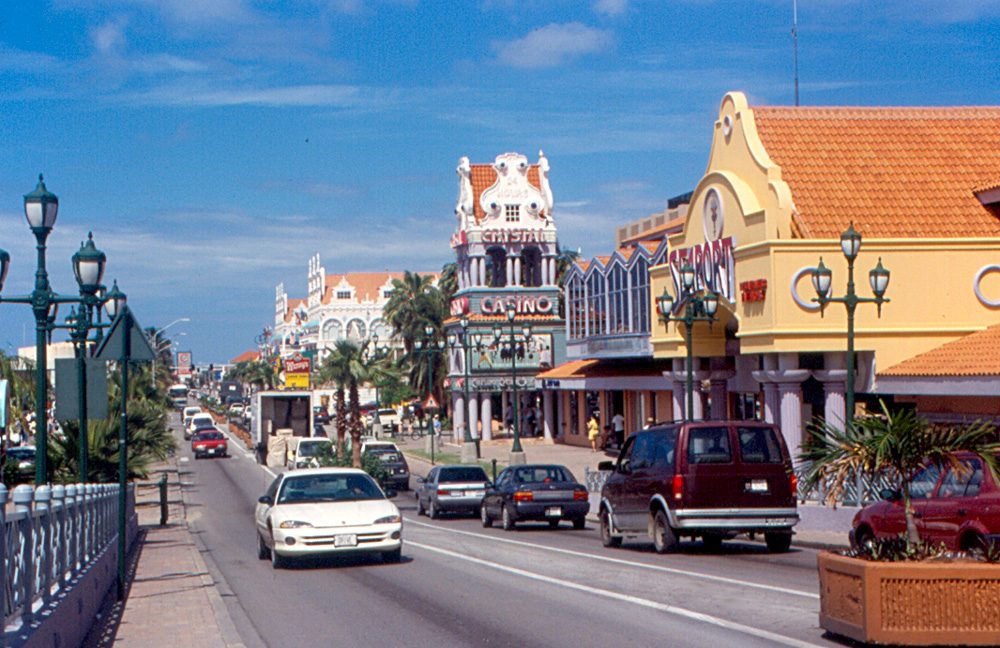
Which side of the road — and do you need an International Driving Permit?
Let’s clear up the two questions that generate the most pre-trip anxiety, because both answers are reassuringly simple.
You drive on the right
Aruba drives on the right-hand side of the road, with the steering wheel on the left — exactly like the US mainland, Canada, and most of Europe. Overtaking is done on the left. For the vast majority of our readers, that means there is no “wrong side of the road” adjustment to make at all. If you are arriving from the UK, Ireland, Australia, or anywhere else that drives on the left, you will need to concentrate a little harder at junctions and roundabouts for the first day, but the low speeds and light traffic make it a gentle place to adapt.
One small habit worth forming: because the island has so many roundabouts and right-turn priority rules, get comfortable glancing left for oncoming traffic before you pull out. It becomes second nature within an hour.
Your home license is enough
If you hold a valid driver’s license from the United States, Canada, the United Kingdom, or a European Union country, you do not need an International Driving Permit to drive or to rent a car in Aruba. Your regular home-country license is accepted. The one exception worth flagging: if your license is printed in a non-Latin script (Chinese, Arabic, Japanese, Cyrillic and so on), bring an International Driving Permit alongside it, since rental desks and police need to be able to read it.
Always carry the original license rather than a photocopy or a phone photo, keep the rental agreement in the glovebox, and have your passport accessible. Most rental companies require drivers to be at least 21, and many set the minimum at 25 or add a young-driver surcharge below that age — check the small print when you book. For everything else on choosing wheels, our Aruba car rental guide is a useful primer.
Road rules, speed limits, signs and those endless roundabouts
Aruba’s traffic laws will feel instantly familiar to anyone who has driven in Europe or the US, with the metric system being the main thing to recalibrate. These are the core Aruba driving tips that actually matter once you are behind the wheel.
Speed limits are in kilometres, and they are low
Everything is signed in kilometres per hour, and the numbers are modest. As a rough rule, expect around 40 km/h (about 25 mph) in town and built-up areas, around 60 km/h (about 37 mph) on secondary and rural roads, and up to roughly 80 km/h (about 50 mph) on the main highway — the 1A and 1B route that runs the length of the island linking Oranjestad, the airport, and San Nicolas. Posted signs always override these defaults, so watch for lower limits near schools, town squares, and the busy hotel strip. Speed cameras do exist on stretches of the main road, and fines for foreign-plated rental cars get passed straight back to you, so there is no upside to pushing it on an island where nothing is more than 45 minutes away.
Roundabouts: yield to the car already in the circle
If one feature defines driving here, it is the roundabout. Aruba loves them, and you will hit several on any cross-island trip, especially around Oranjestad and along the highway. The rule is the single most important one to memorise: traffic already in the roundabout has the right of way, and you wait for a gap before entering. Signal when you intend to exit. Helpfully, most roundabouts and many junctions have lane arrows painted directly on the asphalt to guide you into the correct lane, so even if a sign is ambiguous, the road itself usually tells you where to go. Take them slowly the first few times; locals flow through quickly, but no one expects a visitor to.
Other rules that catch visitors out
- Right-hand priority. At an unmarked crossroads with no signs or signals, traffic coming from your right has priority. When you turn left across traffic, oncoming vehicles go first.
- Seatbelts are mandatory for the driver and all passengers, and young children must be in an appropriate child seat — worth requesting when you book if you are travelling as a family. Our Aruba with kids guide covers car seats and family logistics in more detail.
- No handheld phones. Using a phone in your hand while driving is prohibited; hands-free is fine. Mount it or leave it alone.
- Drink-driving limits are strict. The blood-alcohol limit is 0.05% — lower than the 0.08% many US drivers are used to — and it is enforced with fines, license confiscation, and worse. With taxis cheap and rideshare-style transfers easy, the simplest plan is not to drink at all if you are driving. If a night out is on the cards, lean on a taxi instead and read up on Aruba nightlife options that keep you off the road.
- Signs are international symbols. Aruba uses the same pictogram-based signs you will recognise from Europe — red-bordered triangles for warnings, blue circles for instructions, the familiar stop and yield shapes. There is very little text to translate.
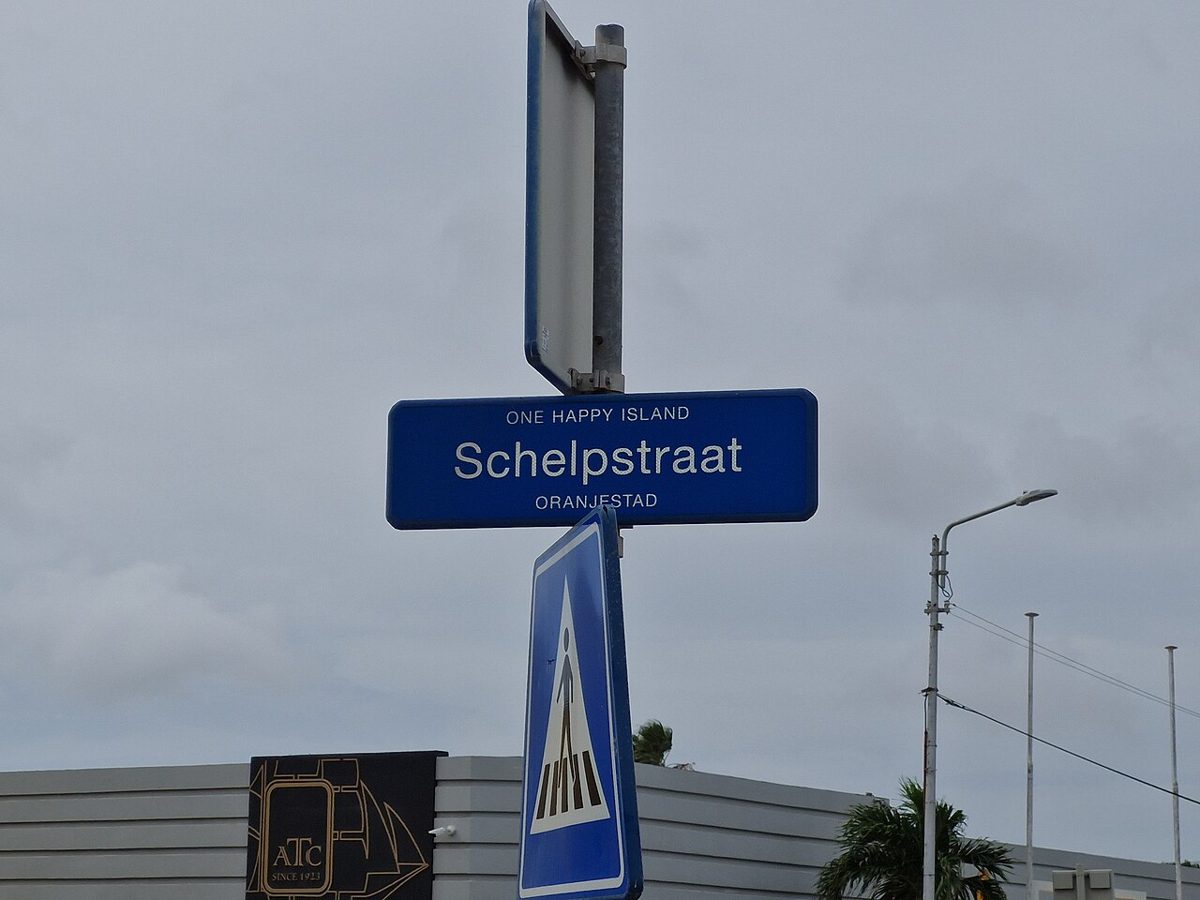
Road conditions: where an ordinary car is fine, and where you truly need a 4×4
This is the section that saves people money and stress, so I want to be blunt about it. Aruba effectively has two road networks, and confusing them is the most common — and most expensive — mistake visitors make.
The paved network: smooth, easy, and most of where you’ll go
The entire west and south coast — Oranjestad, the high-rise and low-rise hotel strips, Eagle Beach, Palm Beach, the airport, and the run down to San Nicolas — is served by good, paved roads. The main 1A/1B highway is genuinely smooth and, in places, multi-lane. Nearly everything a typical visitor wants to do, from the best beaches in Aruba to the restaurants and the bulk of the island’s attractions, is reachable in an ordinary economy car. You do not need to spend extra on an SUV for beach days and town hopping.
The unpaved interior: rough, beautiful, and 4×4 territory
Step off the pavement, though, and the island changes character completely. The rugged northeast (or “windward”) coast and the interior — including most tracks inside Arikok National Park — are unpaved: washboard dirt, loose rock, dry riverbeds, and stretches of soft sand. These routes range from jarring to genuinely impassable in anything but a high-clearance four-wheel drive. After rain they get worse. A regular sedan will bottom out, lose traction, or worse.
The financial sting is the part people miss: many standard rental agreements explicitly exclude off-road and unpaved driving, which means if you damage a two-wheel-drive car on a dirt track, the insurance you paid for may be void and you are liable for the full repair. If your plan includes the wild side of the island — the Natural Pool, the Conchi, the northern lighthouses’ rougher approaches — either rent a proper 4×4 from a company that permits off-road use, or join a guided UTV or Jeep tour and let someone else’s vehicle take the punishment. We cover the park itself in depth in our Arikok National Park guide.
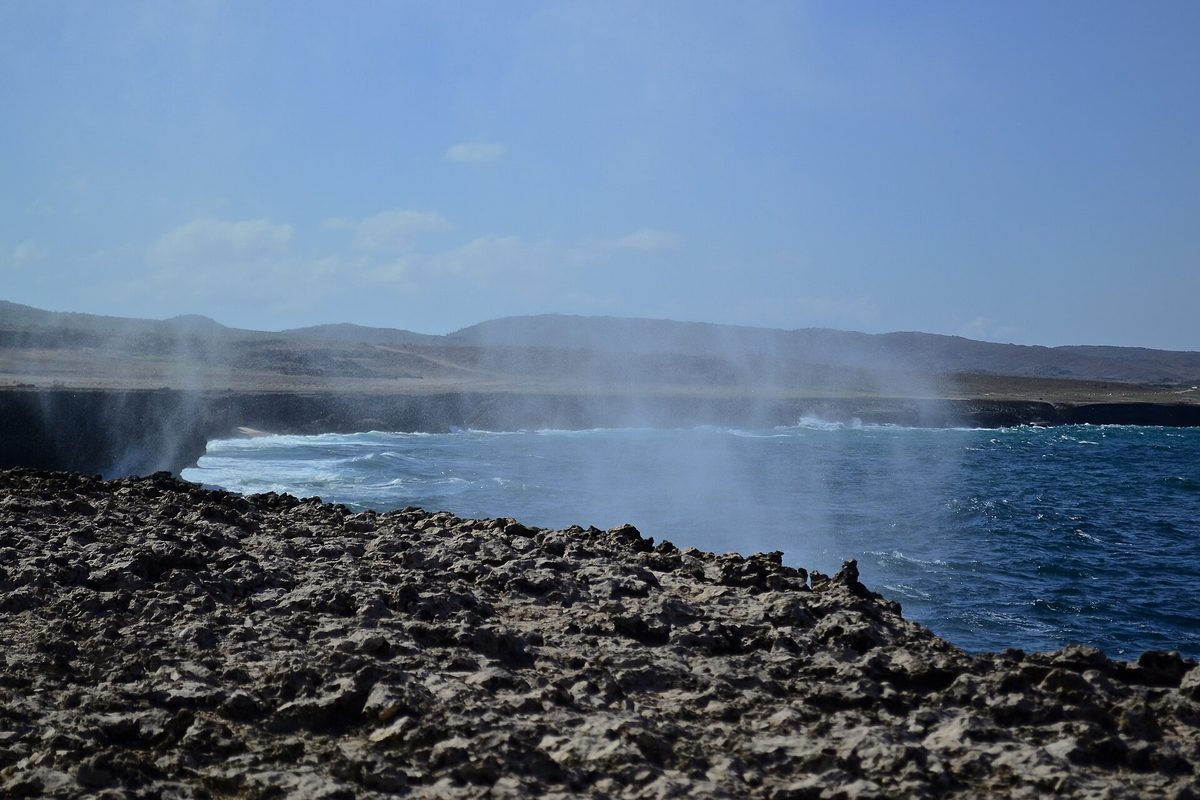
Hazards to watch for: goats, darkness, rain and assertive locals
None of these are dramatic, but each one is a genuine cause of minor incidents, and knowing about them ahead of time removes most of the risk.
Free-roaming goats, donkeys and the occasional dog
Aruba’s countryside is home to goats, and they have no respect for road markings. You will see them grazing along the verges of secondary and interior roads, and they wander across without warning — most often at dawn and dusk. Donkeys roam in the wilder areas too. Slow down whenever you see livestock near the road, give them a wide berth, and never assume an animal will stay put. Hitting one is bad for the animal, bad for your bumper, and very possibly not covered by your insurance.
Unlit roads after dark
Away from Oranjestad and the hotel strips, street lighting thins out fast, and many rural and interior roads have none at all. Combine that with dark-coated goats and the odd unmarked speed bump and you have a good reason to do your exploring in daylight. If you are driving back from dinner in San Nicolas or a remote beach, stick to the main paved highway, keep your speed down, and use full beams where it is safe to. First-timers are far better off saving the back-road adventures for the morning.
Sudden rain and sand drifts
Aruba is dry and sunny most of the year, which is exactly why the occasional downpour catches drivers out. When rain does come, often in short, heavy bursts, the road surface can turn slick because oil and dust have built up, and dirt tracks become slippery clay. Ease off and leave extra space. On exposed coastal stretches you will also meet drifts of windblown sand across the tarmac near the dunes — harmless at a sensible speed, but a reason not to take corners hard.
Confident local driving
Aruban drivers are friendly but efficient, and you may find people overtake assertively or sit closer behind you than you would like, especially if you are dawdling to sightsee. Do not take it personally and do not feel rushed into anything unsafe — simply keep to the right, signal clearly, and pull into a turnout to let faster traffic pass if a queue builds behind you. It is a small island where everyone is going somewhere familiar; you are the one taking in the view.
Fuel and parking: the small practicalities
Filling up
Fuel is sold in litres, and because prices are set by the government, you will pay the same rate at every station — no need to shop around. Stations cluster around Oranjestad, Santa Cruz in the centre of the island, and San Nicolas in the south, with fewer options once you head into quieter areas, so it is wise to keep the tank above half if you are exploring. At many stations an attendant pumps the fuel for you; where it is self-service, you typically pay first and then pump. Late-night hours are limited, so fill up before an early-morning airport run rather than counting on a station being open at dawn. Factor fuel into your broader budget with our Aruba vacation cost breakdown.
Parking
For the most part, parking in Aruba is refreshingly easy and free. Beaches, trailheads, and most attractions have open lots or roadside parking at no charge, which is part of what makes a rental car such a liberating way to see the island. The main exception is central Oranjestad, where paid and metered zones have been introduced — check the signs and the meter before you walk away. A few simple prohibitions apply everywhere: do not park alongside a yellow-painted kerb, on a bridge, or on any road with a solid centre line. Follow those and you will rarely have an issue.
So, honestly — is driving in Aruba easy? My candid take
After all the caveats, let me bring it back to a straight answer, because the caveats can make a simple thing sound harder than it is. For the overwhelming majority of visitors, renting a car and driving yourself around Aruba is the single best decision you can make for your trip, and it is not remotely intimidating.
The reasons are structural. You are on the right-hand side you already know. The island is so compact that a “long” drive is 45 minutes. The roads you will actually use — to the beaches, the resorts, the restaurants, the lighthouse — are smooth and well signed. Fuel is cheap-ish and standardised, parking is mostly free, and the police are not lying in wait to catch tourists; they simply expect you to drive sensibly, sober, and belted in.
The honest qualifiers are narrow. If you have never driven abroad and feel anxious, give yourself the first afternoon on the main highway and the hotel strip before tackling roundabouts in town. If you want the wild interior and Arikok’s tracks, pay for a real 4×4 or take a tour — do not gamble a sedan and your insurance on it. And do your adventurous, off-the-beaten-path driving in daylight. Respect those three things and “easy” is exactly the right word. A rental car turns Aruba from a resort you sit inside into an island you actually explore, and that freedom is worth far more than the daily rate. For travellers weighing whether to bother at all, it usually comes down to how much of the island you want to reach beyond your hotel or resort.
Three sample drives to build your confidence
The best way to learn the roads is to point the car at something worth seeing. Here are three drives, roughly in order of difficulty, that between them show off most of the island.
1. The west coast and California Lighthouse (easy, all paved)
Start at your hotel on Palm or Eagle Beach and head northwest along the coast toward the island’s tip. The road is fully paved the whole way to the California Lighthouse, the white tower standing over Aruba’s northwestern point, where the calm Caribbean side meets the wilder Atlantic. It is a gentle, scenic introduction with sweeping ocean views, somewhere to stretch your legs at the top, and a couple of restaurants nearby. Twenty minutes from the hotel strip, zero off-road drama. This is the drive to do on day one. From there it is easy to fold in other top things to do in Aruba.
2. The full length to San Nicolas (easy, highway driving)
To feel how small the island really is, drive the 1A/1B highway from Oranjestad south to San Nicolas, Aruba’s colourful second town, known for its street art murals and its laid-back bar scene. It is the longest “trip” you can take and still only around 45 minutes end to end. The road is good, the navigation is simple, and you will pass the airport, the cruise area, and the turnoffs for the southern beaches on the way. A great half-day that doubles as practice on Aruba’s fastest roads. Pair it with a few of the island’s more unusual things to do down south.
3. Arikok National Park (advanced, 4×4 only)
When you are ready for the wild side, Arikok National Park protects nearly a fifth of the island, with the Natural Pool (Conchi), caves, and the dramatic windward coast. The paved approach gets you to the entrance, but the tracks inside are rough, rocky, and sandy — firmly four-wheel-drive country, and a place where a two-wheel-drive rental can leave you stranded and uninsured. Either take a genuine 4×4 you are permitted to drive off-road, or book a guided UTV or Jeep tour. Go in the morning, carry water, and check the park’s current access rules before you set out. Many visitors fold this into a wider Aruba itinerary rather than treating it as a casual afternoon.
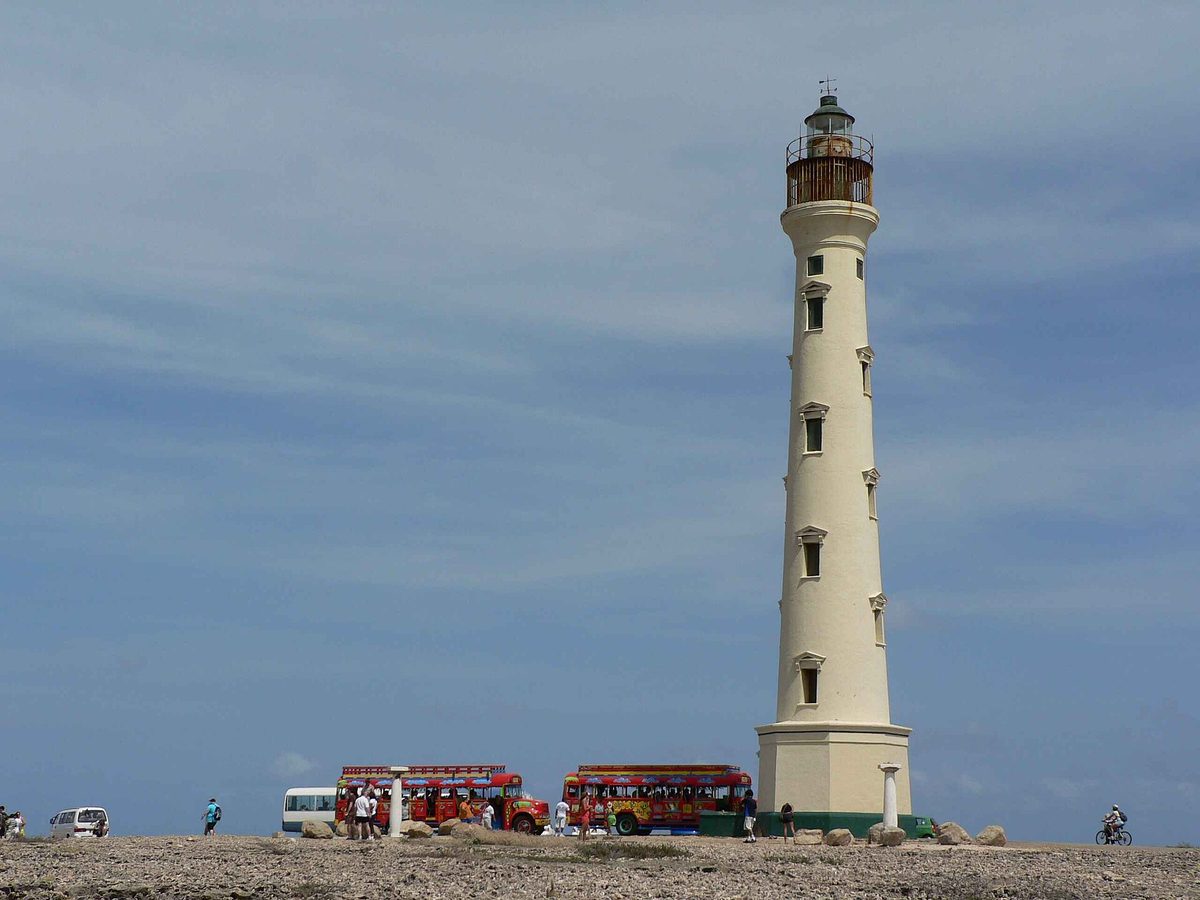
Safety and what to avoid
A short, practical checklist drawn from the points above — the things that keep a relaxed driving trip relaxed:
- Do not take a 2WD car off-road. It is the number-one way to end up with an uninsured repair bill. Match the vehicle to the terrain.
- Do not drink and drive. The 0.05% limit is strict and enforced; use a taxi for nights out.
- Do not speed. Limits are low, cameras exist, and the island is too small to make speeding worthwhile.
- Avoid unfamiliar back roads after dark — unlit roads plus wandering goats are a poor combination. Save them for daylight.
- Lock valuables out of sight. Aruba is one of the safer Caribbean islands, but as anywhere, do not leave bags, cameras, or phones visible in a parked car at a beach or trailhead.
- Buy or confirm proper insurance, and read exactly what it does and does not cover — especially the off-road clause.
- Keep your documents on you: original license, rental agreement, and ID. Police may run routine checks.
Do those things and the rest takes care of itself. For broader peace-of-mind planning — money, health, connectivity — our Aruba travel tips guide is the companion to this one, and timing your visit well (see the best time to visit Aruba) means drier roads and easier driving.
Frequently asked questions
Is driving in Aruba easy for tourists?
Yes. For most visitors driving in Aruba is easy: you drive on the right (as in the US and Europe), the island is barely 20 miles long so trips are short, and the main coastal and highway roads are smooth and well signed. The only adjustments are frequent roundabouts, low metric speed limits, and avoiding rough unpaved tracks in an ordinary car.
Do I need an International Driving Permit to drive in Aruba?
No, not if you hold a valid license from the US, Canada, the UK, or an EU country — your home license is accepted for driving and renting. The exception is a license printed in a non-Latin script (such as Chinese, Arabic, or Japanese), in which case you should carry an International Driving Permit alongside the original.
Which side of the road does Aruba drive on?
Aruba drives on the right-hand side of the road, with the steering wheel on the left, the same as the United States, Canada, and mainland Europe. You overtake on the left. Visitors from left-hand-drive countries like the UK or Australia adapt quickly thanks to the low speeds and light traffic.
Do I need a 4×4 or Jeep in Aruba?
Only if you plan to explore the rugged interior or the unpaved tracks of Arikok National Park, where a genuine four-wheel drive is essential and where many 2WD rental policies are void. For beaches, towns, resorts, restaurants, and the paved west coast, an ordinary compact or economy car is perfectly adequate and cheaper to rent.
What are the speed limits in Aruba?
Speed limits are posted in kilometres per hour and are low: roughly 40 km/h (25 mph) in towns, around 60 km/h (37 mph) on secondary roads, and up to about 80 km/h (50 mph) on the main 1A/1B highway. Posted signs override these defaults, and speed cameras operate on parts of the main road.
Is it safe to drive in Aruba at night?
Driving on the main paved roads and the hotel strip at night is fine. The caution is for rural and interior roads, which are often unlit and where goats and donkeys roam — combined with the odd unmarked speed bump, that makes back-road driving after dark riskier. Stick to main highways at night and save the adventurous routes for daylight.
Can I use my phone for navigation while driving?
Yes, as long as it is mounted hands-free. Handheld phone use while driving is prohibited and fined. Google Maps and Waze both work well on the island, but mobile signal can drop on remote tracks, so download an offline map of Aruba before you head into the interior.
Final thoughts
If you came to this page half-expecting to be told that you need nerves of steel and a battered Jeep to drive in Aruba, I hope it has done the opposite. The reality is an island built for easy, low-stress driving: the familiar right-hand side, distances measured in minutes, smooth coastal roads, free parking at the beach, and a single golden rule about not taking an ordinary car off the pavement. Get the vehicle right for what you actually want to do, stay sober and unhurried, and a rental car becomes the thing that turns a good Aruba holiday into a great one — the freedom to chase a sunset to the lighthouse or a quiet cove whenever the mood strikes. Plan the rest of the practicalities with our hub on getting to and around Aruba, and enjoy the open road.
Photo credits
- aruba-coastal-road.jpg — Photo: Roger W from Sarasota, Florida, U.S.A. / CC BY-SA 2.0 via Wikimedia Commons
- arikok-dirt-track.jpg — Photo: Misty Johnson / CC BY 2.0 via Wikimedia Commons
- oranjestad-street.jpg — Photo: Ginelly.Q (CC0) via Wikimedia Commons
- california-lighthouse-aruba.jpg — Photo: David Stanley from Nanaimo, Canada / CC BY 2.0 via Wikimedia Commons