Here is the take most travel sites will not give you straight: the cheapest jet ski rental on Palm Beach is almost never the one worth booking. The hand-painted sign promising “$40, 30 minutes!” usually means an older machine, a shorter run than the clock suggests, and a “boundary” so tight you spend half your time idling inside a roped-off box while a guy on a WaveRunner waves you back in. Renting an Aruba jet ski the smart way is less about the price on the board and more about which patch of water you are actually buying, how new the equipment is, and whether the operator gives you real open-water room or a glorified swimming-pool lap. Get that wrong and you have paid premium-thrill money for a putt-putt; get it right and a 30-minute blast across the turquoise off Palm Beach is one of the best-value hours of your whole trip.
I have rented here on three separate trips, parasailed twice, talked my way onto a flyboard once (badly), and watched countless families pile onto banana boats with varying degrees of screaming. This guide is the honest version: where to actually rent, what things really cost, which operators give you room to open the throttle, and the half-dozen rip-offs and upsells that catch first-timers on the sand.
The quick answer: where Aruba’s water toys are worth it
Aruba’s motorized water sports cluster on Palm Beach, where calm, protected water and a dozen operators between the high-rise resorts make it the island’s de facto playground. Expect roughly US$60-100 for a 30-minute jet ski, US$70-90 for solo parasailing (US$110-140 tandem), and US$25-40 for tubing or a banana boat. Book newer equipment over the cheapest sign, and ride in the morning when the water is glassiest.
This guide is for anyone weighing the splashy, adrenaline end of Aruba’s water sports and boat tours — whether you are a couple chasing one big thrill, a family looking for something the kids will talk about for months, or a cruise passenger with five hours to spend well. If you want the calmer, underwater side of the island instead, that pillar guide covers snorkeling, diving, and sailing too. Here, we are talking engines, altitude, and the kind of fun that gets you soaked.
At a glance: Aruba water toys, prices and who they’re for
| Activity | Typical price (USD) | Duration | Where | Best for |
|---|---|---|---|---|
| Jet ski / WaveRunner (single) | ~$60-90 / 30 min | 30-60 min | Palm Beach, Eagle Beach | Thrill-seekers, couples |
| Jet ski / WaveRunner (double) | ~$80-120 / 30 min | 30-60 min | Palm Beach | Couples, parent + teen |
| Parasailing (solo) | ~$70-90 | 8-15 min airborne | Palm Beach | All ages, photo-lovers |
| Parasailing (tandem) | ~$110-140 | 8-15 min airborne | Palm Beach | Couples, parent + child |
| Tubing | ~$25-40 | 15-20 min | Palm Beach | Families, groups |
| Banana boat | ~$25-40 | 15-20 min | Palm Beach | Families, big groups |
| Flyboard | ~$150+ / 30 min | 30 min | Palm Beach | Adventurous, fit riders |
| Seabob / underwater scooter | ~$90-150 | 30-60 min | Malmok, Boca Catalina | Snorkelers wanting speed |
Prices are walk-up ballparks for 2026 and move with season, operator, and fuel; treat them as a planning range and confirm on the beach. Nearly everything bills per session, and most operators take US dollars or a card on the spot.
Aruba jet ski rentals: where to rent and what it really costs
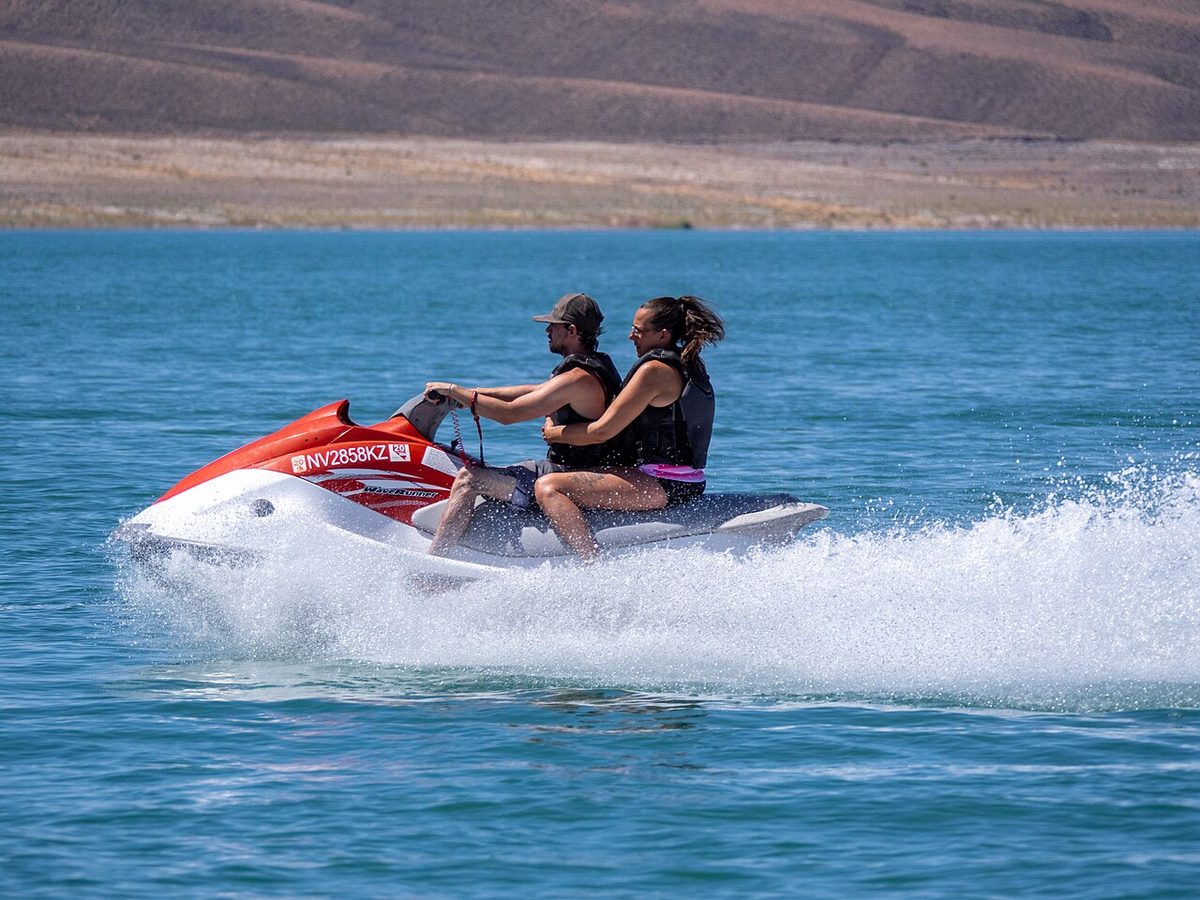
Jet skiing is the headline act, and Aruba’s flat, wind-protected leeward coast is genuinely well suited to it. The water off Palm Beach stays calm enough that you can open up without getting hammered by chop, which is exactly why the operators set up here and not on the wild north shore. Most of what you will ride is a modern sit-down WaveRunner or Sea-Doo — the terms “jet ski,” “WaveRunner,” and “Sea-Doo” get used interchangeably on the sand, but they are all the same basic point-and-go-fast machine.
Palm Beach: the obvious (and best) choice
If you only do this once, do it on Palm Beach. The concentration of operators between the RIU Palace, the Hilton, the Holiday Inn, and the Marriott means competition, newer fleets, and staff who run hundreds of rentals a week. Outfits like Frank’s Place Watersports (a fixture near the Holiday Inn for over three decades) and Fun 4 Every 1 (between the RIU Palace and the Hilton) are the names you will see again and again, and there is a reason they have lasted: equipment that actually works and a launch routine that is smooth rather than chaotic.
Expect to pay somewhere around US$60-90 for a single rider for 30 minutes, and US$80-120 for a double (two people on one machine). An hour usually lands in the US$120-180 range. The honest catch: the headline price is for the machine, and the “boundary” you are allowed to ride within varies wildly between operators. The good ones give you a generous run parallel to the beach; the bargain-bin ones keep you penned in a small box. Always ask, before you pay, exactly how far out and along the coast you are allowed to go.
Eagle Beach and elsewhere
You will occasionally find a jet ski operator down at Eagle Beach, and the water there is just as good. But the choice is thinner and you may have to hunt, so for sheer convenience Palm Beach wins. De Palm Island, the all-inclusive day-trip island off the southwest coast, also bundles motorized toys into its package — handy if you are already going there, but not worth a special trip just to ride.
The contrarian truth about price
Here is where I will save you money and frustration in the same breath. The cheapest sign is cheap for a reason. I once took the bargain option and spent my “30 minutes” doing slow loops in a box the size of two tennis courts because the operator did not trust the machine (or me) far from shore. The next trip I paid maybe twenty dollars more, got a newer WaveRunner and a long leash up the coast, and it was a different sport entirely — the difference between a fairground ride and actually skimming open water. Pay for the machine and the room, not the rock-bottom number on the board.
Parasailing in Aruba: heights, prices and what it actually feels like
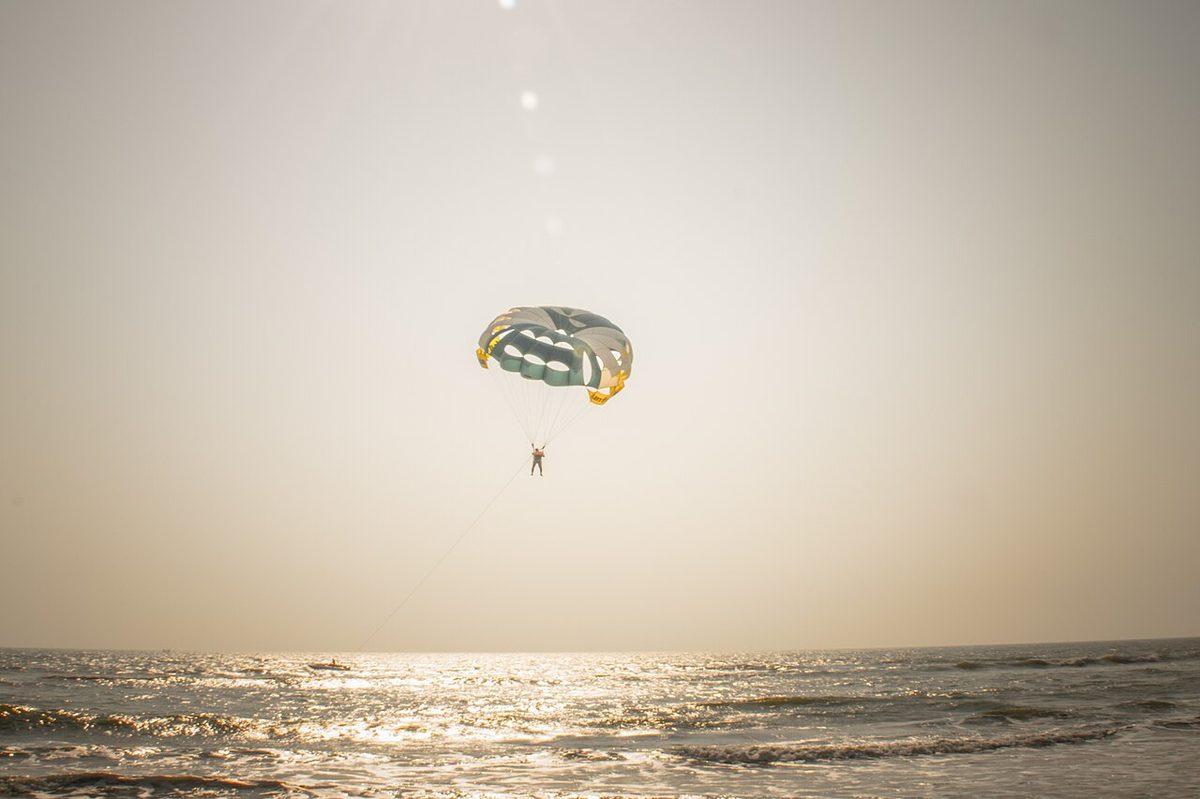
Parasailing Aruba is the most beginner-friendly thrill on the island, and honestly the best value for the memory you walk away with. You are strapped into a harness under a parachute, towed behind a speedboat off Palm Beach, and winched up to somewhere between 300 and 600 feet. From up there the whole high-rise strip lays out beneath you, Eagle Beach curves away to the south, and on a clear day you can pick out the smudge of the Venezuelan coast on the horizon.
What it costs and how high you go
Reckon on roughly US$70-90 for a solo flight and US$110-140 for a tandem (two people side by side under one canopy). Some operators run triples. Heights depend on rope length, your weight, and the wind — most flights settle in the 300-500 foot band, though at least one Palm Beach operator lets out around 700 feet of line for a higher ride. Time airborne is usually 8 to 15 minutes, and many operators will dip your toes in the water on the way down if you ask.
The thing nobody tells you about parasailing
Your flight is short, but your outing is not. Boats fly several groups per trip, so even though you are only in the air for ten or twelve minutes, you can easily be on the boat for an hour or more waiting your turn and watching others go up. That is fine if you know it — bring sunscreen, leave the phone in a dry bag, and enjoy the boat ride — but if you are squeezing this into a tight cruise-day schedule, ask how many people are on the boat before you commit, or you will be sweating the clock. It is one of the most candid pieces of advice I can give about Aruba’s activities on the water.
Solo, tandem, or with the kids?
Most operators set a minimum age around 5 to 8 years and a minimum solo weight near 100-120 pounds, with a combined cap (often around 350-450 pounds) for tandem and triple flights. That makes parasailing one of the few genuine thrill activities a younger child can share with a parent — you go up tandem and they will not stop talking about it for the rest of the trip. It needs no athleticism: you sit, the boat does the work, and the landing (either back on the boat deck or a gentle dip into the shallows) is the only part that gets your heart going. It is a natural fit for an Aruba family trip, and just as good for couples on an Aruba honeymoon.
Tubing and banana boats: the family crowd-pleasers
If the jet ski is for the thrill-seeker and parasailing is for the view, tubing and banana boats are for the group that wants to laugh together and get thoroughly soaked. These are the cheapest Aruba water toys going — usually US$25-40 a head — and they run constantly off Palm Beach all day.
Banana boats
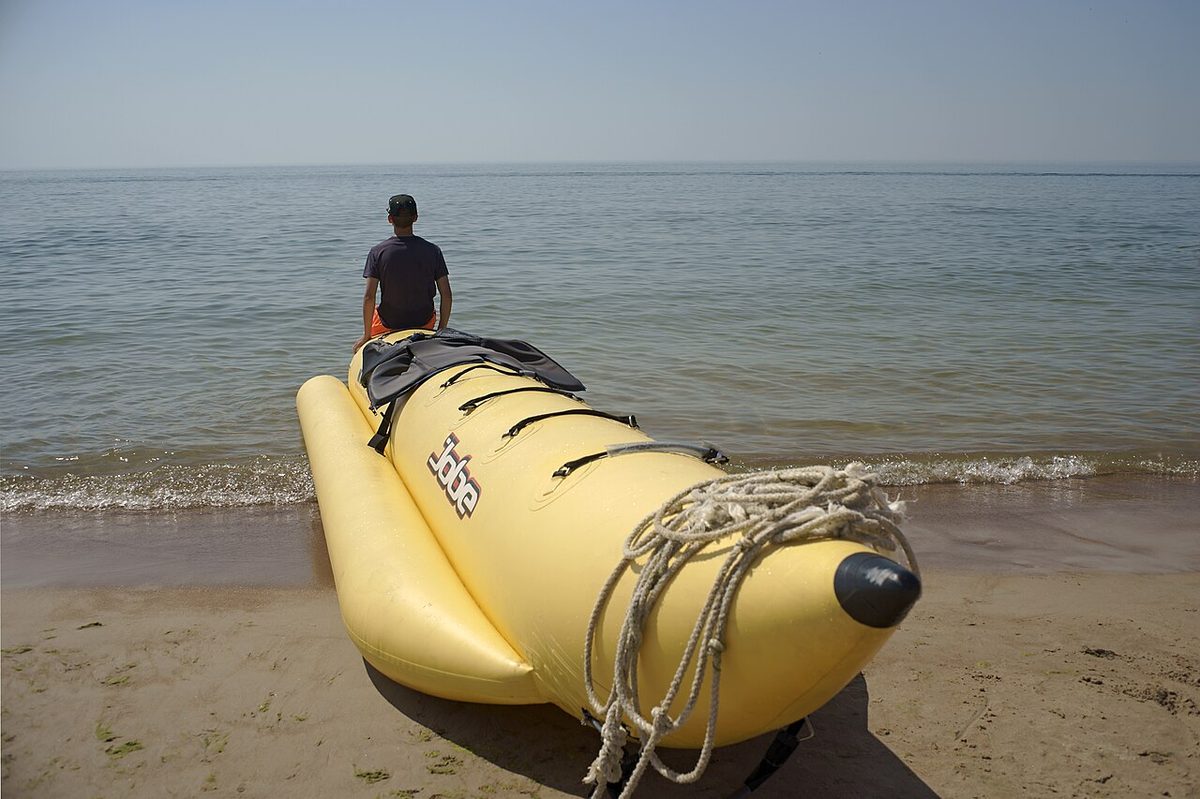
The classic: a long inflatable banana towed behind a speedboat, with everyone straddling it and hanging on. The driver will throw in a few sharp turns designed to tip you off into the warm water (that is the whole point), then circle back to scoop everyone up. It is brilliant for kids old enough to hold on confidently and for groups of friends who want a shared “we all fell off” story. Rides run roughly 15-20 minutes. Wear a swimsuit you do not mind getting yanked around in, and keep glasses and loose hats on the beach.
Tubing
Tubing is the dial-a-thrill option: you sit or lie in an inflatable tube (single or multi-person) and the boat tows you, going as gentle or as wild as you ask. Tell the driver you have nervous little ones aboard and you will get a smooth, giggly ride; tell them you want the works and you will be skipping across the wake hanging on for dear life. That flexibility makes it the most adaptable toy on the beach for mixed-age groups. It pairs naturally with a beach day — bookend it with sunbathing and a beach-bar lunch and you have an easy half-day.
Flyboard, Seabob and the newer toys
Beyond the classics, Aruba has quietly picked up the high-tech gadgets, and they are worth knowing about even if only a few travelers will spring for them.
Flyboard
Flyboarding straps your feet to a board connected by a long hose to a WaveRunner; water is pumped through and jetted downward, and you “fly” a few feet above the surface like a slightly soggy superhero. It is exhilarating and genuinely hard — expect to spend your first session faceplanting repeatedly before you get the balance. Reckon on around US$150-plus for roughly 30 minutes including instruction. My honest take: budget the money expecting to be terrible and laugh about it, because almost nobody nails it the first time. If you are reasonably fit, athletic, and game to look foolish, it is a blast. If you bruise your ego easily, skip it.
Seabob and underwater scooters
The Seabob is a hand-held, torpedo-shaped underwater scooter that pulls you along at up to about 15 km/h, above or just below the surface. It is less about adrenaline and more about covering ground — ideal for zipping along the reefs off Malmok, Boca Catalina, and Arashi to spot fish without kicking. Think of it as the bridge between motorized fun and snorkeling. If your idea of a good time is exploring the underwater world but faster, this is your toy.
JetLev water jetpacks
A handful of operators have run JetLev-style water-propelled jetpacks that shoot you up to about 30 feet over the water. Availability comes and goes, so do not bank on it — but if you see it offered and you have already conquered the flyboard, it is the natural next step up.
By traveler type: which water toy is right for you?
Thrill-seekers
Go straight for a jet ski with a generous boundary, then graduate to the flyboard if you want a real challenge. Ride early before the day’s boat traffic churns the water. If you can only pick one, the jet ski delivers the most reliable adrenaline-per-dollar.
Couples
A tandem parasail is the obvious romantic win — quiet, scenic, and built for the photo. Pair it with a double jet ski (one of you drives, the other holds on and screams) for a half-day of contrasts. It slots neatly into a wider Aruba itinerary alongside a sunset sail.
Families with kids
Banana boats and tubing are the sweet spot for younger children, and a tandem parasail (subject to the operator’s minimum age and weight) is a magical splurge for one parent and one kid. Keep the jet ski for teens and adults. Aruba’s calm leeward water makes all of this far less intimidating for first-timers than rougher Caribbean coasts.
Cruise passengers
You have limited hours, so be ruthless. Palm Beach is a short, cheap taxi from the Oranjestad cruise terminal, and walk-up jet ski or tubing rentals are the fastest thrill you can buy. Skip parasailing unless you confirm a near-empty boat — the waiting time can eat your whole window. Watch the all-aboard clock religiously, and factor the taxi back into your plan; our guide to getting to and around Aruba covers the transfer logistics.
Safety, rules and what to know before you ride
Aruba’s water-sports scene is well established and the established operators take safety seriously, but a few things are worth knowing.
- Life jackets are non-negotiable. Reputable operators provide and require them for every motorized activity. If one does not, walk away.
- Licensing. You generally do not need a boating license to rent a jet ski here as a tourist — the operator gives a short safety briefing and you go. Expect a minimum driver age (often 16-18 to drive solo, younger to ride as a passenger) and to leave ID or a deposit.
- Damage deposits. Many jet ski rentals take a card imprint or cash deposit against damage. Photograph the machine before you set off so any pre-existing scuffs are on record.
- Health limits for parasailing. Operators advise against parasailing if you are pregnant, have back or heart problems, or recent injuries. It is not wheelchair accessible.
- Sun and conditions. The trade winds keep you cool and mask how hard the equatorial sun is hitting you. Reef-safe sunscreen, a rash guard, and a dry bag for valuables save a lot of regret. Morning is calmest; afternoon brings more wind and chop.
- Tipping. Not mandatory, but US$5-10 per person for a great experience is the local norm and well earned.
For broader planning — weather windows, what to pack, and seasonal crowds — our guide on the best time to visit Aruba is the companion read; the water sports run year-round thanks to Aruba’s position below the hurricane belt.
What’s worth it and what to skip
After enough trips, here is my blunt verdict:
- Worth it: A jet ski from a quality operator with real open-water room. A tandem parasail for the photo and the view. Tubing or a banana boat for any group with kids — cheap, fun, low-commitment.
- Worth it if it fits you: Flyboard for the fit and game; Seabob for snorkelers who want speed.
- Skip: The absolute cheapest jet ski sign with a tiny boundary. Parasailing crammed into a tight cruise window on a full boat. Any operator that is cagey about life jackets, boundaries, or how long you actually get on the water.
Budget-wise, these activities add up fast if you do several — worth penciling into your overall Aruba vacation cost so the beach-day extras do not blindside you. And when the sun goes down, Palm Beach pivots straight into bars and casinos; see our Aruba nightlife guide to round out the day. If you are still deciding where to base yourself for easy beach access, our where to stay in Aruba guide leans toward Palm Beach for exactly this reason.
Where to go: Palm Beach is the hub
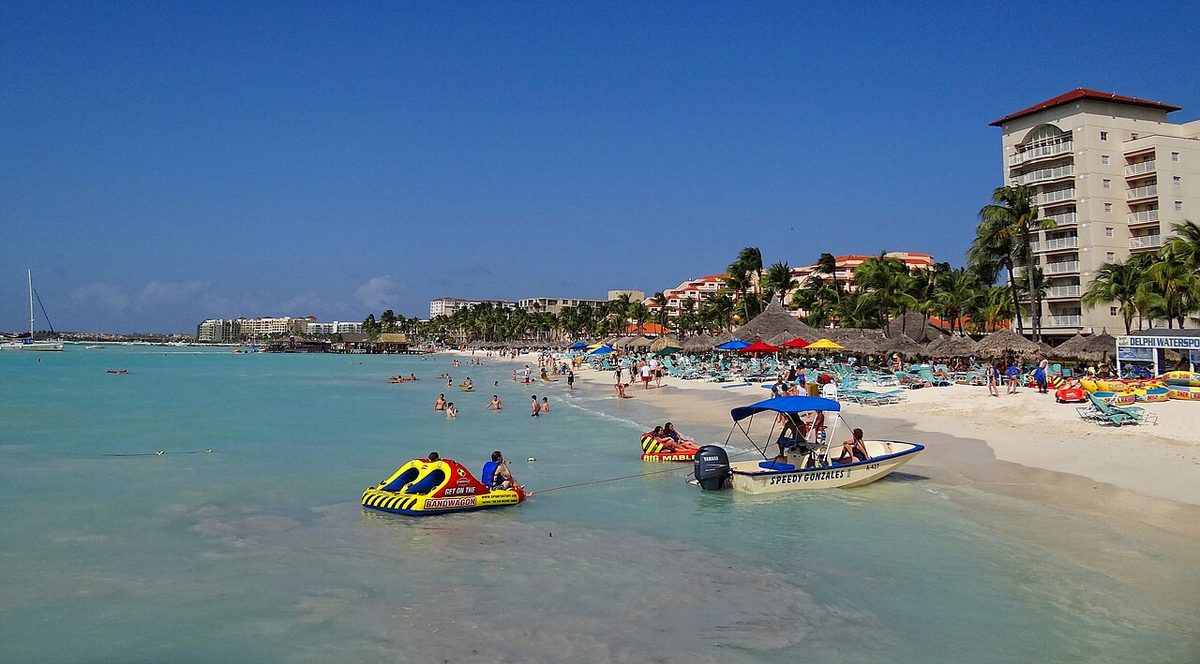
To put it all in one place: Palm Beach is where Aruba’s motorized water sports live. The strip of sand fronting the high-rise resorts — RIU Palace, Hilton, Holiday Inn, Marriott — hosts the densest cluster of operators, the newest equipment, and the calmest, most protected water. Eagle Beach is gorgeous and occasionally has an operator, but for selection and convenience, start at Palm Beach. De Palm Island folds toys into its all-inclusive day pass if you are headed there anyway. Wherever you ride, the leeward-coast calm is the secret ingredient that makes Aruba such a forgiving place to try this stuff for the first time.
Frequently asked questions
How much does it cost to rent a jet ski in Aruba?
Expect roughly US$60-90 for a single rider for 30 minutes, and US$80-120 for a double, with an hour landing around US$120-180. Prices vary by operator, season, and how new the equipment is. The cheapest signs often come with the smallest riding boundary, so always confirm how far you are allowed to go before paying.
How much is parasailing in Aruba?
Solo parasailing runs about US$70-90, and a tandem flight (two people together) about US$110-140; some operators offer triples. The price covers the boat ride and your 8-15 minutes airborne. Most operators are on Palm Beach, take walk-ups in low season, and recommend booking ahead from December through April when slots fill up.
How high do you go parasailing in Aruba?
Most flights reach 300-500 feet above the water, with at least one Palm Beach operator letting out around 700 feet of rope for a higher ride. Your exact height depends on your weight, the rope length, and wind conditions. From up there you get clear views of the whole Palm Beach hotel strip, Eagle Beach, and the open Caribbean.
Do you need a license to rent a jet ski in Aruba?
No boating license is required for tourists to rent a jet ski in Aruba. The operator gives a short safety briefing before you head out. Expect a minimum age to drive solo (often 16-18), to wear a provided life jacket at all times, and to leave ID or a damage deposit, sometimes as a card imprint.
Is parasailing in Aruba safe?
Yes — Aruba’s established operators use modern equipment, give safety briefings, and benefit from Palm Beach’s calm, protected water for smooth launches and landings. It requires no athleticism. It is not advised for those who are pregnant or have back or heart conditions, and it is not wheelchair accessible. Choosing a long-established operator is the simplest safeguard.
What’s the best water activity in Aruba for families with young kids?
Tubing and banana boat rides are the easiest family wins — cheap, short, and as gentle or wild as you ask the driver to make them. A tandem parasail is a magical splurge for one parent and one child, subject to the operator’s minimum age (often 5-8) and weight rules. Save solo jet skis for teens and adults.
When is the best time of day to ride?
Morning. Aruba’s leeward water is glassiest early, before the day’s boat traffic and afternoon trade winds churn it up. Early sessions also mean shorter lines, cooler sun, and better photos. If you are prone to seasickness on the parasail boat, morning’s calmer water helps there too.
Final thoughts
Aruba makes motorized water sports almost foolproof: the leeward coast is calm, the operators are seasoned, and everything launches from one walkable strip of Palm Beach. The only real way to get it wrong is to chase the lowest number on a sign and end up penned in a box, or to cram a full-boat parasail into a tight cruise window. Spend a little more for newer equipment and real room, ride in the morning, and pick the toy that matches your group — jet ski for the thrill, parasail for the view, banana boat for the laughs. Do that and you will walk off the beach grinning, salt in your hair, already plotting the next run.
By the ArubaTourism.org team — Last updated June 2026
Photo credits
Images are used under their respective licenses. See individual credits below.
- Photo: Andrew Cattoir (Lake Mead National Recreation Area) (Public domain) via Wikimedia Commons — source
- Photo: Fahad Faisal (CC BY-SA 4.0) via Wikimedia Commons — source
- Photo: Brian Toward from London, United Kingdom (CC0) via Wikimedia Commons — source
- Photo: Bjørn Christian Tørrissen (CC BY-SA 3.0) via Wikimedia Commons — source