Three miles off Aruba’s northeast coast, the seabed simply falls away. The shallow turquoise you wade into at the beach gives way to a deep, bruise-blue trench where the bottom drops past 1,000 feet, and it does it fast. On most sport-fishing destinations you burn an hour or two just steaming out to water deep enough to hold marlin and tuna. Here, you can be trolling over 500 feet of ocean within twenty minutes of casting off the dock. That single geographic quirk is why Aruba fishing charters punch so far above the island’s tiny size, and why a half-day trip here genuinely gives you a shot at a billfish rather than a long boat ride and a sunburn.
I’ve spent enough mornings on these boats to be a believer. The island is only 20 miles long and 6 miles wide, but the wall of deep water wrapped around it is a highway for migrating game fish. This guide walks you through everything: what you can catch and when, the difference between deep-sea and reef charters, shared versus private boats, half-day versus full-day costs, what’s included, where boats leave from, and how to pick the right trip whether you’re a hardened angler chasing a grander or a family who just wants the kids to feel a rod bend.
Aruba fishing charters at a glance
Aruba fishing charters take you offshore to troll for mahi-mahi, wahoo, tuna, and billfish in deep water that sits just minutes from the marina, or onto the reefs for snapper and grouper. Most run as private boat hires: roughly $400-$600 for a 4-hour half day and $700-$1,100 for an 8-hour full day, covering up to 4-6 anglers with gear, bait, ice, and drinks included. No fishing license is required for visitors.
This guide is written for first-timers and seasoned anglers alike. If you only read one section, make it the comparison table below, then jump to the trip type that fits your group. For where fishing fits into the rest of your trip, see our full guide to Aruba water sports and boat tours.
| Charter type | Typical duration | Rough price (whole boat) | Best for | What you might catch |
|---|---|---|---|---|
| Shared / split half-day | 4 hours | ~$150-$200 per person | Solo travelers, couples on a budget | Mahi-mahi, barracuda, bonito, kingfish |
| Private half-day | 4 hours | ~$400-$600 | First-timers, families, short trips | Mahi-mahi, wahoo, barracuda, tuna |
| Private three-quarter day | 6 hours | ~$650-$1,050 | Keen anglers wanting more shots | Wahoo, tuna, kingfish, sailfish |
| Private full day | 8 hours | ~$700-$1,400 | Serious sport fishers chasing billfish | Blue/white marlin, sailfish, big tuna, wahoo |
| Reef / bottom fishing | 3-4 hours | ~$350-$550 | Families, beginners, light tackle fun | Snapper, grouper, triggerfish, amberjack |
Prices are indicative for 2026 and vary by operator, boat, fuel, and season. Always confirm current rates and exactly how many anglers a quoted price covers when you book.
What you can catch in Aruba (and when)
Aruba’s waters are busy year-round, but the cast of characters changes month to month as migrating species move through. The short version: mahi-mahi, wahoo, and yellowfin tuna show up in some form almost any week of the year, while the billfish, the sharks, and the big barracuda run on a seasonal clock. Knowing the rough calendar lets you book a trip that’s actually pointed at the fish you care about.
Mahi-mahi (dorado)
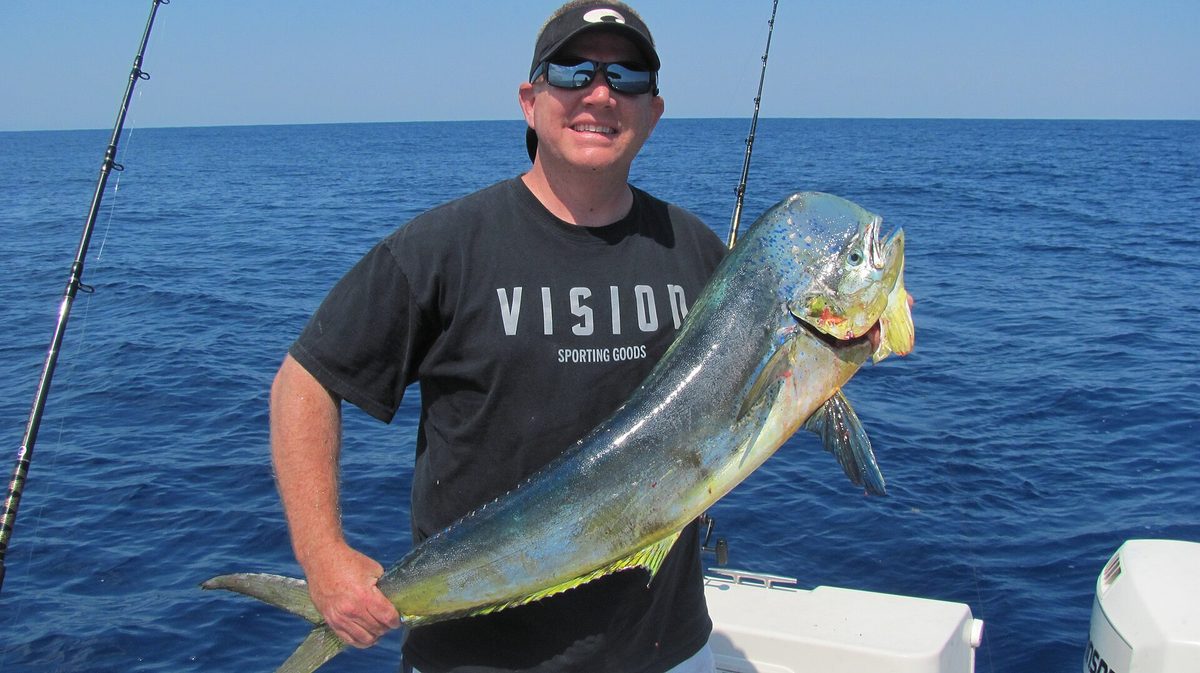
If Aruba has a signature catch, it’s mahi-mahi, the electric green-and-gold fish locals also call dorado. They’re the most reliably caught species on the island, they hit hard, they cartwheel out of the water when hooked, and they’re superb eating, which is why so many anglers bring their fillets straight to a restaurant that same night. Mahi are around all year, but spring through summer (roughly April to August) is the sweet spot. Fish in the 10-20 pound range are common; the island record sits near 80 pounds.
Wahoo
Wahoo are the connoisseur’s fish here, and Aruban crews will tell you it’s the most harvested species on the island. They’re built like silver torpedoes, hit a trolled lure at terrifying speed, and peel line off a reel in a way that makes first-timers laugh out loud. They feed around the reefs and in the bluewater beyond, run strongest in the cooler months (roughly October through March), and routinely top 50-60 pounds, with 100-pounders on the record books. They also happen to be one of the best-tasting fish in the ocean.
Tuna
Three tunas swim these waters: small, scrappy blackfin and albacore that fight far above their weight, and the prize, yellowfin, which can push past 200 pounds. Tuna season climbs through spring and stays red-hot until the end of July. A good tuna is the definition of a workout, diving straight down and forcing you to grind it back up, so if you book in early summer, be ready to earn your sushi.
Barracuda
Great barracuda are the island’s most dependable winter target, peaking from December through March, and they’re a brilliant first fish for kids and beginners. Sleek, toothy, and aggressive, they hammer a bait and put on a fast, flashy show. They get bigger the further offshore you go. A word of caution: those teeth are no joke, so let the crew handle the unhooking and the hero photo.
Sailfish and marlin (billfish)
These are the bucket-list fish, and they’re the reason serious anglers fly to Aruba specifically. Blue marlin, white marlin, and Atlantic sailfish all roam these waters, and the island’s record blue marlin weighed in at over 1,000 pounds. Fall is prime: September officially kicks off the marlin season and the bite stays excellent through November, while sailfish run strong from October into the new year. Because deep water is so close, you can realistically hunt both marlin off the north side and sailfish off the south in a single full day. One crucial rule, covered in detail below: all billfish are catch-and-release in Aruba.
Kingfish and the rest
King mackerel (kingfish) are excellent from midsummer through the end of the year and average a hefty 70 pounds. Add in Atlantic bonito, rainbow runner, amberjack, and the occasional bull shark, and you start to see why Aruba’s “what did you catch?” answers are rarely boring. Drop a line over the reefs and the list grows again with snapper, grouper, and triggerfish.
Month-by-month: what’s biting
| Month | Strongest bets |
|---|---|
| January-February | Wahoo, great barracuda, bull shark; sailfish and marlin still around |
| March | Wahoo, barracuda, yellowfin tuna ramping up |
| April-June | Mahi-mahi, yellowfin tuna, albacore, bonito (tuna season building) |
| July-August | Tuna, mahi-mahi, kingfish, rainbow runner |
| September | Marlin season opens; wahoo, kingfish, white/blue marlin, rainbow runner |
| October-November | Peak all-rounder: sailfish, blue/white marlin, wahoo, barracuda, kingfish |
| December | Sailfish, white marlin, wahoo, barracuda, bull shark |
If you’re still choosing your travel dates, our guide to the best time to visit Aruba lines up weather and crowds with these fishing seasons, and the fall billfish window happens to land in the island’s quieter, value-friendly shoulder season.
Deep-sea and offshore charters
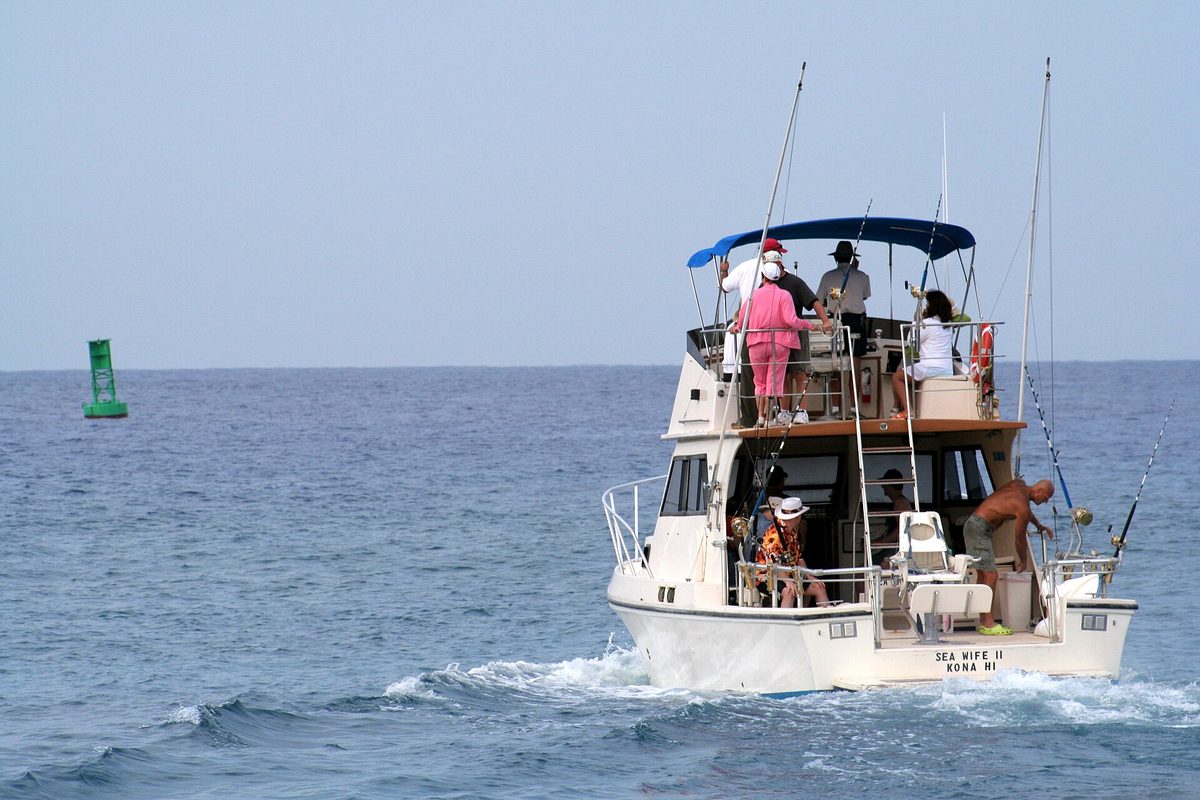
This is the headline act, the trip most people picture when they imagine fishing in Aruba. A deep-sea charter points you straight out from the marina, and thanks to that fast-dropping seabed you’re in productive bluewater almost immediately. The boats are purpose-built sport-fishers, typically 35-45 feet, with twin diesels, a fighting chair or stand-up gear, outriggers, and a tower the captain uses to spot birds and bait balls that betray feeding fish below.
Most of your day offshore is spent trolling: the boat drags a spread of rigged baits and lures behind it at speed, the reels sit in their holders loaded and waiting, and when a fish crashes the spread the whole cockpit comes alive. The mate clears the other lines, gets you strapped in or into the chair, and coaches you through the fight. It’s a wonderfully simple format for first-timers, you don’t need to know a thing about knots or casting, and it’s also how you target the glamour species: marlin, sailfish, wahoo, tuna, and mahi.
Serious crews will mix in other techniques when conditions call for it. Deep dropping sends heavy rigs and electric reels down to the bottom in serious depth for oversized grouper and the occasional swordfish. Live-baiting a slow-trolled bait can be deadly for tuna and billfish. And if you’re an experienced fly or light-tackle angler, some captains will happily put you on bonito or even bait-and-switch a sailfish onto the fly, which is about as thrilling as offshore fishing gets. The point is that “deep sea fishing Aruba” is not one rigid product; a good captain reads the day and adjusts.
Because the grounds are so close, even a 4-hour half day delivers real fishing time rather than a long commute. That said, the further offshore banks where the biggest marlin and tuna hold are best reached on a 6- or 8-hour trip, so match your ambition to your duration (more on that below).
Reef and bottom fishing
Not everyone wants to be strapped into a fighting chair wrestling a 60-pound wahoo, and that’s completely fine. Reef and bottom fishing is Aruba’s gentler, more constant-action alternative, and it’s my top pick for families, nervous first-timers, and anyone prone to seasickness who still wants to fish.
Bottom fishing happens over the reefs and structure in shallower water, often 100-300 feet deep, with the engine cut and the boat drifting over spots the captain knows hold fish. You drop a baited rig straight down, feel for the tap, and pull up snapper, grouper, triggerfish, squirrelfish, and amberjack. The bites come often, which keeps kids engaged, and several of these species are excellent eating. Triggerfish in particular are a local favorite, cheeky to hook and surprisingly strong for their size.
Many half-day trips blend the two worlds: a stint trolling the bluewater on the way out for the chance at a mahi or barracuda, then a drop onto the reefs for steady bottom action, sometimes with a snorkeling stop thrown in. If you’re traveling with people who aren’t sure fishing is for them, that combo format is the easiest sell, and it pairs naturally with a day exploring Aruba’s best beaches before or after.
Shared versus private charters
The first real decision is whether to book the whole boat or share it. Both work; they suit different travelers.
Private charters
The vast majority of Aruba fishing charters are private hires: you pay for the boat, and it’s yours for the trip with however many of your group come along (usually up to 4-6 anglers). You set the pace, the captain tailors the day to what you want to catch, and there’s no jostling for rod time. For families, couples, groups of friends, or anyone serious about a particular species, private is the way to go. It feels like a lot of money up front, but split across a group of four it’s often very reasonable per head.
Shared and split charters
Solo travelers and couples on a budget can sometimes join a shared trip, where the operator combines parties to fill a boat and you pay roughly $150-$200 per person for a half day. You’ll share rod time and the cockpit with strangers, and you don’t control the target or schedule, but it’s a friendly, low-commitment way to get offshore without hiring an entire sport-fisher. These slots are less consistently available than private charters, so book ahead and ask the operator directly whether they’re running a shared trip on your dates.
Half-day, three-quarter day, or full day, and what it costs
Aruba charters almost always come in three flavors: a 4-hour half day, a 6-hour three-quarter day, and an 8-hour full day. The longer you go, the further offshore you can push and the more shots you get, but also the more it costs and the more stamina it demands.
Half day (4 hours)
The most popular choice, and the right call for first-timers, families, and anyone who’d rather keep an afternoon free for the pool. You’ll fish the near-offshore grounds 5-15 miles out, which is plenty for mahi-mahi, wahoo, barracuda, and bonito. Expect roughly $400-$600 for a private boat; some premium operators run higher, around $750 for four hours.
Three-quarter day (6 hours)
The sweet spot if you’re keen but not committing to a full eight hours. The extra two hours let the captain run a little further and give you more time on the troll, which genuinely improves your odds on wahoo, kingfish, and tuna. Budget around $650-$1,050 depending on the boat.
Full day (8 hours)
The serious option, and the one to book if your heart is set on a marlin or a trophy tuna. A full day reaches the deeper offshore banks, gives you the run of both the north and south grounds, and maximizes your chances of multiple species, even a billfish “grand slam” on the right day in fall. Expect $700 to $1,400 for a private boat, with food and more drinks typically included. It’s a long, hot, rewarding day, so bring sun protection and snacks beyond what the boat provides.
A few real operator examples to anchor these numbers: long-running family outfits on the island have published rates around $750 for 4 hours, $1,050 for 6 hours, and $1,400 for 8 hours, while others start their 4-hour private trips closer to $445-$550. The spread comes down to boat size, age, and how much fuel a given run burns. To see where a charter sits within a typical trip budget, our Aruba vacation cost breakdown puts activity prices in context alongside hotels, food, and transport.
What’s included and what to bring
One of the nicest things about booking a charter in Aruba is how little you actually need to bring. Reputable operators include everything technical, and the price you’re quoted is genuinely close to the price you pay.
What the boat provides
- All fishing gear and tackle: rods, reels, terminal tackle, lures, and rigs suited to the day’s targets.
- Bait and ice for keeping your catch fresh on the way back in.
- An experienced captain and mate who bait up, set the spread, and coach you through every fight.
- Soft drinks and water, and on full-day trips usually sandwiches or a light lunch.
- Your fishing license, effectively, since visitors fishing from a charter don’t need one at all.
What to bring yourself
- Reef-safe sunscreen and a hat: the sun offshore is relentless and there’s little shade in the cockpit.
- Polarized sunglasses to cut the glare and actually see the fish.
- A light long-sleeve layer: spray and wind can take the edge off even an 85-degree day.
- Soft-soled shoes or boat-friendly sandals, never black-soled shoes that mark the deck.
- Seasickness tablets taken before you board if you’re at all prone (more below).
- Cash for the crew tip: 15-20% of the charter is customary for a good day, and these crews work hard for it.
- Any food beyond drinks on shorter trips, plus a dry bag for phones and cameras.
Where charters depart from
Because the island is small, no departure point is a bad one, the deep water is close from everywhere. But most boats leave from a handful of spots, and knowing them helps you book something near your hotel.
Oranjestad marinas
The capital is the hub. The Renaissance Marina and the nearby Seaport Marina host a large share of the island’s charter fleet, including several of the higher-end sport-fishers, and they’re an easy taxi from the cruise terminal and downtown hotels. If you’re staying in or near town, or visiting on a cruise day, this is your most convenient launch. Getting around is straightforward; our guide to getting to and around Aruba covers taxis and transfers if you’re not renting a car.
Hadicurari and the Palm Beach area
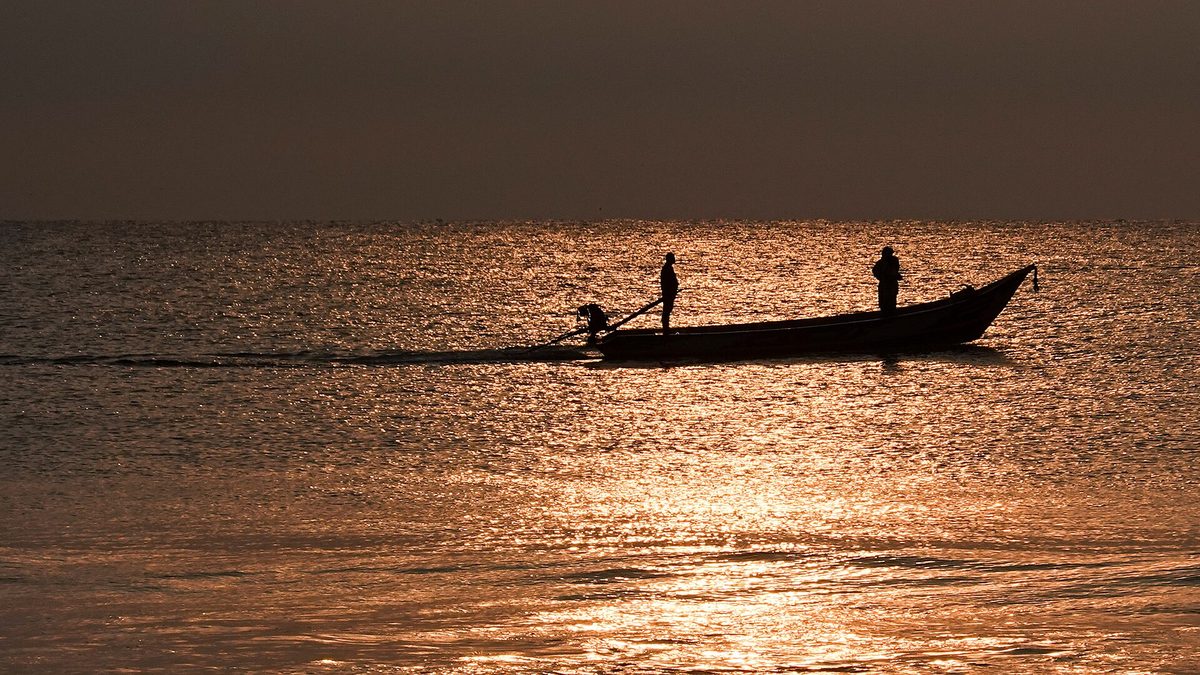
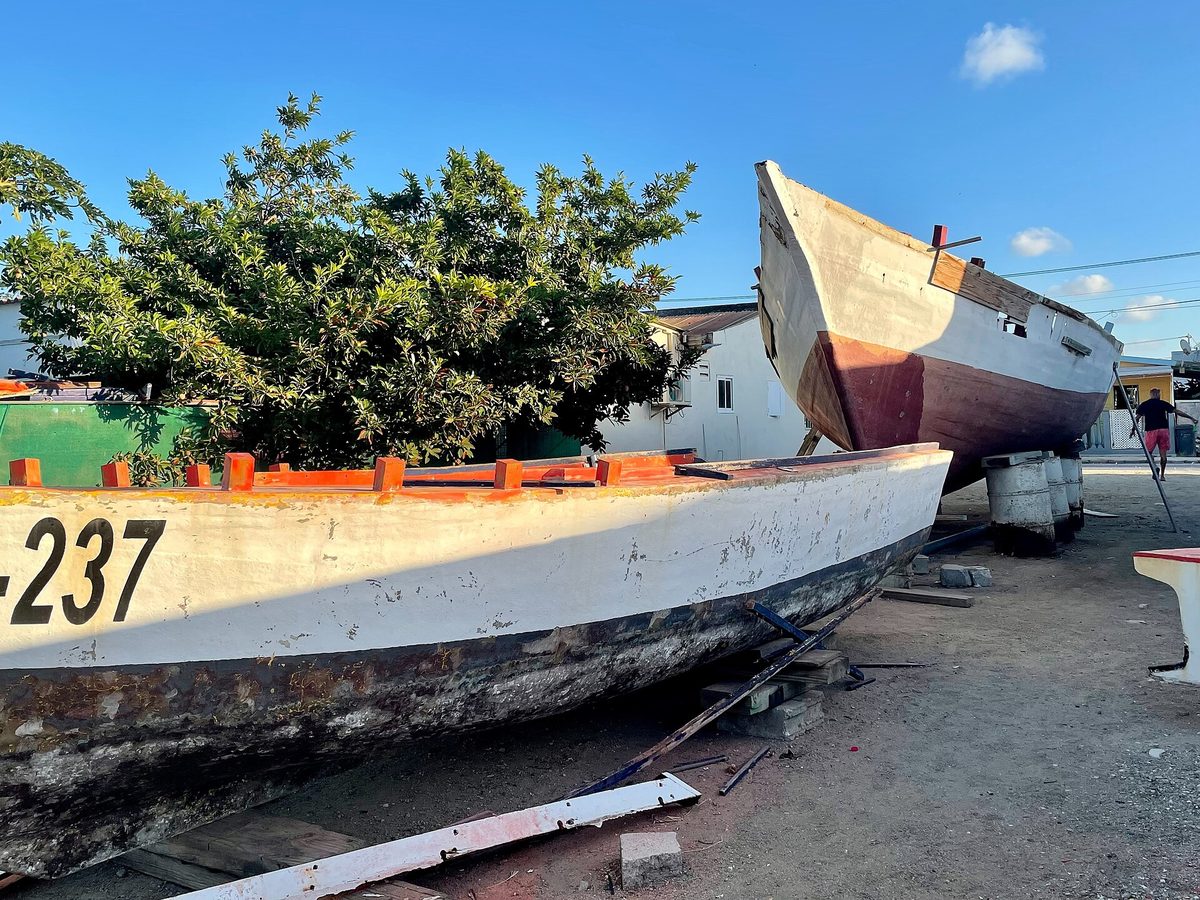
Up the coast by the high-rise resorts, Hadicurari (also known as Fisherman’s Huts, just past the Ritz-Carlton) is a working fishermen’s base and a launch point for charters serving the Palm Beach hotels. The Fundacion Centro di Pesca Hadicurari, tucked between MooMba Beach and the Marriott Surf Club, is the heart of the island’s fishing community, where you can meet local fishermen, grab a bite and a drink, and hear a few tall tales about the one that got away. If you’re based on Palm Beach, look for a charter leaving from here.
San Nicolas and the south
The southern end of the island around San Nicolas has ports too, and being closer to the sailfish grounds, it’s a natural launch for billfish trips. The rugged north coast is largely wilderness with few charters, but it’s well worth a visit on land for sights like the Natural Bridge and the California Lighthouse on a non-fishing day.
Choosing a charter by traveler type
Families and first-timers
Go for a private half-day or a reef-and-bottom-fishing trip. The steady action of bottom fishing keeps children engaged far better than hours of waiting for a marlin, and barracuda make a thrilling, kid-friendly first catch. Tell the captain when you book that you’ve got beginners aboard; a good one will scale the day to your crew and make sure everyone gets a fish on the line. For more ideas on keeping the kids happy, see Aruba with kids.
Couples
A private half-day or a sunset-leaning trip is a lovely way to spend a morning together without committing the whole day, and you’ll still have the afternoon for the beach. If you’re celebrating, it slots neatly into a romantic itinerary; pair it with the ideas in our Aruba honeymoon guide.
Serious anglers
Book a private full day, ideally in the fall billfish window, and talk to the captain in advance about your target species and preferred techniques. If a grand slam is the goal, you want the longest trip, the right month, and a crew with a strong billfish reputation. Bring your own fly or light tackle if that’s your game, as specialist gear can be scarce on a small island.
Cruise visitors
Stick to a 4-hour half day out of an Oranjestad marina so you’re never far from the ship, and confirm the return time with a generous buffer before all-aboard. The downtown marinas are close enough that a morning charter works comfortably on a port day. It’s one of the most rewarding ways to spend a few hours; see more in our roundup of Aruba excursions and broader things to do in Aruba.
Seasickness and comfort on the water
Offshore swells are real, and even confident travelers can feel queasy once the boat stops trolling and starts to roll. The good news is that prevention works. Take a motion-sickness tablet (or fit a patch) the night before and again an hour before departure, before you feel anything; once you’re green it’s too late. On the boat, stay out in the fresh air, fix your eyes on the horizon, eat a light non-greasy breakfast, and skip the alcohol until you’re back on land. If you’re genuinely worried, choose a shorter half-day reef trip in the calmer waters on the leeward side rather than a long offshore run. Aruba’s trade winds are steadiest in the afternoon, so an early-morning departure usually means a smoother sea.
Catch-and-release, keeping your fish, and the rules
Aruba keeps its fishing rules refreshingly simple, but a couple of them matter a lot.
You don’t need a license. Visitors fishing from a charter boat, or even casting from the shore, don’t have to buy any fishing permit. The charter fee effectively covers it. That’s one less piece of admin compared with many destinations.
All billfish are catch-and-release. Marlin and sailfish must be released, by law and by strong local ethic. These fish are about the fight and the spectacle, not the freezer, and releasing them keeps the fishery healthy for the next angler. Your crew will revive and release them carefully, and you’ll still get the photo. Spearfishing is illegal anywhere on or around the island, full stop.
Everything else, you can usually keep. Mahi-mahi, wahoo, tuna, kingfish, and reef fish are fair game for dinner. Most captains run a “keep or release” system and are glad to fillet and ice your catch for you. Here’s the best part: bring your fillets to one of the island’s seafood restaurants and many will cook your catch for you, often several ways with sides, for a modest per-person fee. There’s no better end to a fishing day than eating what you caught a few hours earlier; our guide to Aruba restaurants points you to the spots that do it well, several of them clustered around Oranjestad’s marinas.
Aruba’s fishing tradition runs deep, with around 120 active fishermen still working these waters and a community foundation at Hadicurari dedicated to preserving the craft. Booking a charter, tipping your crew well, and respecting the billfish rules all feed back into keeping that tradition alive.
Tips for a great Aruba fishing charter
- Book ahead, especially in fall. The October-November billfish peak and the winter high season fill the best boats fast. Reserve a week or two out, more for a full-day private charter.
- Go early. Morning departures get the calmest seas before the afternoon trade winds build, and the bite is often best at first light.
- Be specific when you book. Tell the operator your group’s experience level, target species, and any kids or queasy passengers so they can plan the right trip.
- Confirm what the price covers. Ask how many anglers are included, whether it’s private or shared, and what food and drink come with the trip.
- Tip the crew. 15-20% in cash for a hard-working captain and mate is the norm and genuinely appreciated.
- Manage expectations. It’s called fishing, not catching. Some days the ocean is generous and some days it isn’t; a good crew, a beautiful boat, and that deep-blue water make it a brilliant morning regardless.
- Plan the rest of your day. A half-day charter leaves plenty of time to fold into a wider Aruba itinerary, and if you’re still sorting logistics, our guide to where to stay in Aruba helps you base yourself near your preferred marina.
Frequently asked questions
Is deep sea fishing good in Aruba?
Yes, it’s genuinely excellent, and underrated. Aruba sits on the edge of deep water, so productive offshore grounds are just 20-30 minutes from the marina rather than the one-to-two-hour run many destinations require. Mahi-mahi, wahoo, yellowfin tuna, and barracuda are caught regularly, and blue marlin and sailfish are real possibilities in season. More fishing, less commuting.
What fish can you catch on Aruba fishing charters?
Year-round you’ll find mahi-mahi, wahoo, yellowfin tuna, and barracuda. Seasonal stars include blue and white marlin (best in fall), sailfish (October into the new year), and kingfish (summer through year-end). Drop a line over the reefs and you’ll add snapper, grouper, triggerfish, and amberjack to the list. The variety is a big part of the appeal.
How much does an Aruba fishing charter cost?
A private half-day (4 hours) runs roughly $400-$600 for the whole boat, covering up to 4-6 anglers. Three-quarter days (6 hours) run about $650-$1,050, and full days (8 hours) range from $700 to $1,400 depending on the boat. Shared trips, when available, cost around $150-$200 per person. Gear, bait, ice, and drinks are typically included.
Do you need a fishing license in Aruba?
No. Visitors don’t need a fishing license to fish from a charter boat or from shore in Aruba. The charter fee covers everything you need. The only firm restrictions are that all billfish (marlin and sailfish) must be released, and spearfishing is prohibited anywhere around the island.
What is the best time of year for fishing in Aruba?
There’s no bad time, but it depends on your target. Spring through July is prime tuna season; fall (September-November) is the standout window for billfish and a strong all-rounder for wahoo and kingfish; and December through March is best for big barracuda and sharks. Mahi-mahi and wahoo show up in some form all year.
Can I keep the fish I catch, and can a restaurant cook it?
You can keep most species, including mahi-mahi, wahoo, tuna, and reef fish; only billfish must be released. Your crew will fillet and ice your catch, and many Aruban seafood restaurants will cook it for you, often prepared several ways with side dishes for a small per-person charge. It’s the perfect end to a fishing day.
Do I need experience to go on a charter?
Not at all. Trolling, the main offshore method, requires no skill to start: the crew sets everything up and coaches you through each fight. Reef and bottom fishing is even more beginner-friendly, with frequent bites and simple drop-and-reel technique. Charters happily take complete first-timers, families, and children every day.
Will I get seasick?
You might, especially once the boat stops to bottom-fish and rolls in the swell. Prevention is key: take motion-sickness medication the night before and an hour before departure, watch the horizon, eat a light breakfast, and skip alcohol beforehand. If you’re prone, pick a shorter morning reef trip on the calmer leeward side rather than a long offshore run.
By the ArubaTourism.org team — Last updated June 2026. Seasonal fishing patterns draw on the Aruba Tourism Authority and local sport-fishing operators; prices are indicative for 2026, so confirm current rates and regulations directly with your charter when you book.