Usually no — with three clear exceptions. So, is all inclusive worth it in Aruba for the average visitor? For most travelers the answer comes down to one fact the brochures gloss over: this island has one of the best restaurant scenes in the Caribbean, and locking into a single resort means you eat past it. Aruba is small, walkable, exceptionally safe, and built around dining out — so the convenience that makes all-inclusive a no-brainer in Punta Cana or Jamaica matters far less here. That said, the model genuinely pays off for three groups: heavy drinkers, families who want fixed costs, and people who simply will not leave the pool. Below is the honest math, who should book it, and who should walk away.
Here is the short version, in plain numbers. A true all-inclusive in Aruba runs around $270 to $550 per person, per night depending on the resort and season. Two adults who drink moderately and eat at a mix of casual and mid-range restaurants can usually match or beat that on a room-only rate — while tasting a dozen different kitchens instead of one buffet line. If you drink three-plus cocktails a day, travel with kids, or value zero decisions over variety, the package flips in your favor. Confirm current rates before you book; Aruba pricing swings hard by season.
By the ArubaTourism.org team — Last updated June 2026
The honest verdict: is all inclusive worth it in Aruba?
For roughly two-thirds of visitors, no. Aruba breaks the usual Caribbean assumptions that make all-inclusive an automatic win. It is one of the safest islands in the region, you can walk the Palm Beach strip to dozens of restaurants and bars, public buses and rental cars make the whole island reachable in under an hour, and the food culture is genuinely world-class. When you pay one fixed price to eat at one property, you are buying convenience — and in Aruba, convenience is the cheap part. The expensive thing you give up is the island’s restaurant scene, which is the reason a lot of people fell in love with the place to begin with.
But “usually not worth it” is not the same as “never.” The package makes real financial and practical sense for specific travelers, and we will lay out exactly who they are. The goal of this guide is not to talk you out of an all-inclusive — it is to help you run your own numbers honestly so you do not overpay for food you will not eat or, just as bad, blow your budget eating out when a package would have saved you money. For the full landscape of properties, start with our pillar guide to Aruba all-inclusive resorts, then come back here for the cost-benefit call.
At a glance: worth it vs. skip it
Before the deep dive, here is the quick filter. Find yourself in the left column and all-inclusive likely earns its premium; recognize yourself on the right and you will almost certainly get more for your money on a room-only stay plus dining out.
| All-inclusive is likely WORTH IT if you… | SKIP all-inclusive if you… |
|---|---|
| Drink 3+ cocktails or several beers every day | Drink lightly, or skip alcohol altogether |
| Travel with kids and want predictable costs | Are a couple who loves trying new restaurants |
| Plan to stay on-property and barely leave | Want to explore the island and beach-hop |
| Want zero decisions and zero bills on vacation | Consider food a main reason you travel |
| Are staying 4 nights or fewer (less time to roam) | Are staying 7+ nights and will tire of one buffet |
| Booked Divi, Tamarijn, Riu, or Barceló (resorts that do AI well) | Are a light eater who skips big buffet breakfasts |

The real math: where all-inclusive breaks even
Let’s build a break-even instead of hand-waving. A true all-inclusive in Aruba costs around $270 to $550 per person per night. Mid-tier properties like Divi Aruba start around $270 to $300; Barceló on Palm Beach runs from roughly $300 in low season to $550-plus at peak. To judge whether that is “worth it,” you have to compare the package against what you would actually spend — not what you theoretically could.
The honest pay-as-you-go day for two adults in Aruba looks roughly like this. Confirm current prices before you travel; these are typical 2026 ranges, and they move with season and venue.
| Pay-as-you-go day (per couple) | Modest day | Indulgent day |
|---|---|---|
| Breakfast (casual or grocery/bakery) | around $15 | around $35 |
| Lunch (beach bar, food truck, casual) | around $30 | around $55 |
| Dinner (mid-range to nicer restaurant) | around $70 | around $150 |
| Drinks (cocktails ~$12-18, beer ~$4-7) | around $40 | around $90 |
| Daily total, two adults | around $155 | around $330 |
Now set that against the all-inclusive premium. The package does not just cover food and drink — it is bundled into a room rate that is itself higher than a comparable room-only night. The useful question is the marginal cost: how much extra are you paying for the “all-inclusive” label versus booking the same caliber of hotel room-only? In Aruba that premium typically lands somewhere around $80 to $160 per person, per day on top of the room — call it roughly $160 to $320 for a couple. Compare that to the table above and the pattern jumps out: if your real-world spending sits at the “modest” end (around $155/couple/day), all-inclusive is a slight loss; if you genuinely eat and drink at the “indulgent” end (around $330/couple/day), it is a slight win.
That is why the break-even in Aruba lands around day four or five of consumption habits, not nights. It is less about trip length and more about how you eat and drink. A couple that grazes — bakery breakfast, a casual lunch, one nice dinner, two drinks — almost never spends enough to justify the premium. A couple that does a sit-down breakfast, a long boozy lunch, a fine-dining dinner, and cocktails by the pool all afternoon? They were going to spend $300-plus a day anyway, so prepaying it removes the sticker shock. Want to sanity-check your own budget end to end? Our Aruba vacation cost guide breaks down lodging, food, activities, and transport so you can model the whole trip, not just the meals.
Drink math: the real value driver
If there is one number that decides whether all-inclusive is worth it in Aruba, it is your daily drink count. Resort and beach-bar cocktails run roughly $12 to $18 each, and on the Palm Beach strip the fancier signature drinks push toward $18 to $20. A local Balashi beer is gentler at around $4 to $7 depending on the venue. Do the arithmetic: two people having four cocktails a day between them is easily $50 to $70 daily in drinks alone — before a single plate of food. That is the line item that makes the package math work.
Here is the honest framing nobody at the resort will tell you: all-inclusive pricing is built around heavy consumption. The resort assumes the average guest under-drinks relative to the package, and the heavy drinkers are effectively subsidized by the light ones. So if you and your partner happily put away several rum punches, a few beers, and a couple of nightcaps every day, the package is genuinely a deal — you are on the winning side of that average. If you are a one-glass-of-wine-with-dinner couple, you are paying for an open bar you barely touch, and you would do better ordering a la carte and pocketing the difference.
| Your daily drinking | Verdict on all-inclusive |
|---|---|
| Non-drinker or 1 drink/day | Skip it — you subsidize everyone else |
| 2-3 drinks/day per person | Roughly a wash; decide on other factors |
| 4+ drinks/day per person | All-inclusive usually wins on cost |
One more wrinkle: read the fine print on what “drinks included” means. At some Aruba resorts the base package covers local beer, house spirits, and rum punch only — imported and premium liquor is charged extra or requires a higher-tier package. If you are particular about your tequila or single malt, the “unlimited” drinks may not include the ones you actually want. For more on the bar scene beyond your resort — happy hours, beach bars, and where locals drink — see our guide to Aruba nightlife.
What you give up: Aruba’s dining scene
This is the heart of the case against all-inclusive in Aruba, and it deserves more than a line. Aruba punches absurdly above its weight on food. The island’s mixed heritage — Dutch, South American, Caribbean, and a wave of global migration — produced a restaurant culture with genuine range: fresh-off-the-boat seafood shacks, white-tablecloth fine dining, Argentine grills, Italian trattorias, Asian fusion, and the local staples like keshi yena and fresh pan bati. When you commit to one resort buffet, you trade all of that for the same rotation of stations every night.
To make it concrete, here is a sample of what sits within easy reach of the resort strip — the kind of meals all-inclusive guests routinely miss:
- Zeerovers in Savaneta — a no-frills dockside fish fry where you order seafood by the pound. It is a local institution, and it is the antithesis of a buffet line.
- Madame Janette and Papiamento — long-running fine-dining favorites for a special-occasion dinner in a garden setting.
- The Old Man and the Sea, Pinchos Grill, and the cluster of pier and beachfront restaurants for sunset dinners over the water.
- Food trucks and roadside stands around Oranjestad and Palm Beach for pastechi, fresh fruit, and quick, cheap, genuinely local bites.
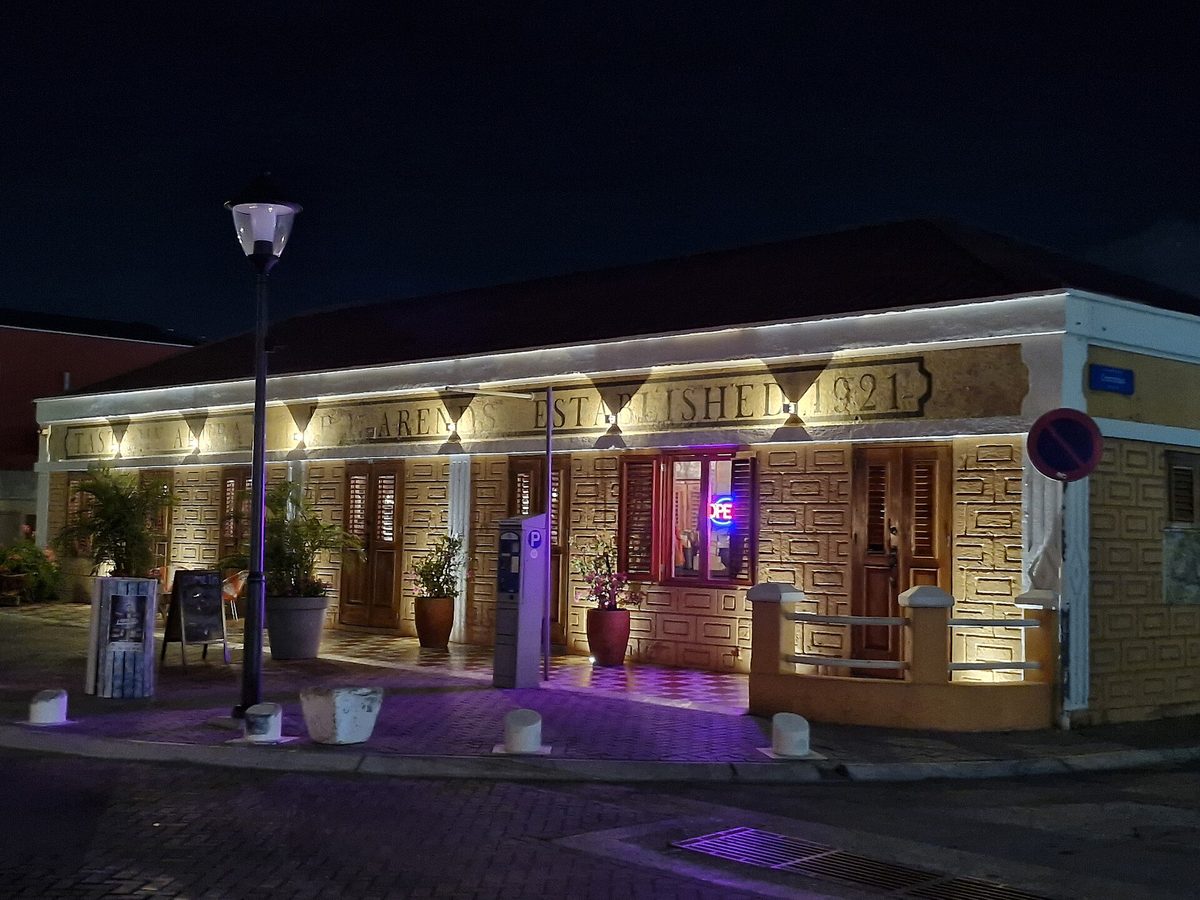
Beyond the food itself, eating out is how you actually experience the island. A long lunch at a beach bar, a walk to dinner along the Palm Beach strip, a drive to a fishing village for the day’s catch — these are the textures of an Aruba trip, and the all-inclusive model quietly discourages every one of them. Our full Aruba restaurants guide maps the scene by neighborhood and price, and it is the single best argument for keeping your evenings free. If your budget is tight, note that some of the best experiences cost nothing at all — our roundup of what you can do without spending a cent shows how much of the island opens up once you leave the resort gate.
When all-inclusive IS worth it in Aruba
Now the other side, honestly argued. There are real scenarios where the package is the smart, even obvious, choice — and pretending otherwise would be dishonest.
You are a genuine heavy drinker
Covered above, but it bears repeating because it is the strongest case. If your vacation includes steady all-day drinking, the open bar alone can justify the premium, and everything else becomes gravy.
You are traveling with kids
Families are where all-inclusive earns its keep in Aruba. Predictable costs matter when you are feeding children three times a day plus snacks; “where and what are we eating” is a solved problem; kids’ clubs, pools, and on-site entertainment keep everyone busy; and you avoid the nightly logistics of getting a tired, hungry child to and from a restaurant. The Divi/Tamarijn complex and the Riu properties are particularly family-friendly. If kids are in the picture, weigh this guide against our broader advice on visiting Aruba with kids, which covers the family-friendly side of the island in depth.
You are staying four nights or fewer
On a short trip, the calculus shifts toward convenience. You have less time to scout restaurants, less reason to rent a car, and more incentive to maximize beach and pool hours. Over three or four nights, the same buffet has not yet gotten old, and the simplicity of never thinking about a bill has real value when the clock is short.
You genuinely want to switch off
Some people travel to make zero decisions. No menus, no math, no “should we walk or drive,” just a wristband and a lounger. That is a completely legitimate way to vacation, and if it describes you, the premium buys something money should buy: a frictionless break. Just go in clear-eyed that you are paying for convenience, not for a culinary upgrade.
When to skip all-inclusive in Aruba
The flip side is just as clear. Skip the package if you recognize yourself here — you will get more vacation for the money on a room-only or bed-and-breakfast rate.
You are a foodie
If trying restaurants is one of the reasons you travel, all-inclusive in Aruba is close to self-sabotage. The island’s independent kitchens are the main event, and the resort buffet, however competent, is a consolation prize. Pay for the room, keep your evenings open, and treat dinner as the highlight it deserves to be.
You are a light eater or light drinker
Big buffet breakfasts you will skip, three full meals you do not want, an open bar you will barely use — if that is you, the package is money lit on fire. Light eaters and non-drinkers almost never reach the break-even, full stop.
You want to explore the island
Aruba rewards roaming. The desert interior of Arikok National Park, the quiet north-coast beaches, the shops and cafes of Oranjestad, the snorkeling and sailing — the best memories tend to happen off-property. An all-inclusive creates a gravitational pull back to the resort for the next “free” meal, and that pull quietly shrinks your trip. If your style is beach-hopping and day trips, build your days around our guides to things to do in Aruba and the island’s best beaches instead of a buffet schedule.
You are staying a week or longer
Buffet fatigue is real. Most travelers tire of the same resort food after four or five days, which is exactly when a 7-plus-night all-inclusive starts feeling like a trap rather than a treat. On longer stays, the variety of eating out is not just cheaper — it is what keeps the trip feeling fresh.
Families vs. couples: the split decision
The single best predictor of whether all-inclusive is worth it in Aruba is who you are traveling with. The two cases pull in opposite directions, so it is worth separating them cleanly.
Families lean toward yes. Predictable costs, no nightly restaurant logistics with tired kids, included entertainment, and the sanity of a wristband instead of a wallet all add up. The food-quality trade-off matters less when half your table orders chicken fingers regardless of the venue. For families, the convenience is the product, and Aruba’s family-oriented all-inclusives (Divi, Tamarijn, Riu) deliver it well.
Couples lean toward no — especially couples without a heavy-drinking habit. A romantic Aruba trip is practically designed around dinners out: sunset on a pier, a garden table at a fine-dining spot, a beach bar with your feet in the sand. Locking into resort dining trades exactly the experiences couples come for. If you are planning a romantic getaway, our Aruba honeymoon guide makes the case far better than any buffet can — and most honeymooners we hear from are glad they kept their evenings free. The exception, again, is the couple that drinks heavily or simply wants a do-nothing, decide-nothing escape; for them, an adults-only all-inclusive can be ideal.
Tips to decide before you book
- Count your real drinks, not your aspirational ones. Be honest about a normal day. Four-plus drinks each tips toward all-inclusive; one or two tips away from it.
- Model two days, not the whole trip. Price a “modest” day and an “indulgent” day from the tables above, see which is closer to your habits, then compare to the per-person premium.
- Read exactly what is included. Local vs. premium drinks, specialty restaurants, room service, motorized water sports, and tips are the usual fine-print traps. “All-inclusive” is not standardized.
- Factor the trip length. Short trip: convenience wins. Long trip: variety wins and buffet fatigue sets in.
- Consider a hybrid. Some properties sell all-inclusive as an optional add-on (Holiday Inn, Manchebo). You can also book room-only and simply plan a few splurge dinners — the best of both worlds for many travelers.
- Confirm current rates and seasons. Aruba pricing swings sharply; low season (roughly May to early December) is dramatically cheaper. Our best time to visit Aruba guide shows how the seasons move both prices and crowds.
The bottom line
So, is all-inclusive worth it in Aruba? For most travelers, no — the island’s safety, walkability, and exceptional restaurants mean a room-only stay plus dining out usually delivers more for the same money, with far more variety. The package earns its premium for three groups: heavy drinkers who win on the open bar, families who value predictable costs and zero logistics, and anyone who genuinely wants a decide-nothing escape. Run your own two-day budget, be honest about your drink count, and read the fine print. Whatever you choose, do not let a wristband keep you from the thing that makes Aruba special — the island beyond the resort gate. When you are ready to choose a property, our guide to Aruba’s all-inclusive resorts and our overview of Aruba’s neighborhoods will help you land in the right spot.
Frequently asked questions
Is all-inclusive cheaper than paying as you go in Aruba?
Not usually, unless you drink heavily or eat at fine-dining restaurants every night. The all-inclusive premium runs around $80 to $160 per person per day, while a moderate pay-as-you-go day for a couple lands near $155 total. If your real spending is modest, the package is a slight loss; if you genuinely indulge, it is a slight win. Confirm current rates before booking.
Are there many all-inclusive resorts in Aruba?
No — Aruba has far fewer true all-inclusives than Punta Cana, Jamaica, or Cancun. The established names include Divi Aruba, Tamarijn, Riu Palace Aruba, Riu Palace Antillas, and Barceló, plus a few properties (such as Holiday Inn and Manchebo) that offer all-inclusive as an optional add-on. The island’s strong independent restaurant scene is exactly why the model never took over here.
Are any Aruba all-inclusives adults-only?
Yes. Riu Palace Antillas on Palm Beach is the main adults-only all-inclusive on the island, with the same package structure as the family Riu but no children. Bucuti & Tara on Eagle Beach is also adults-only and highly regarded, but it runs on a room-only plan rather than all-inclusive, so you dine out or at its own restaurants a la carte.
Do Aruba all-inclusive packages include water sports and tours?
Most include non-motorized water sports at the resort beach — kayaks, paddleboards, and snorkel gear. Motorized activities like jet skis and parasailing, plus off-property excursions such as catamaran sails, are typically extra. You can still book any independent tour while staying all-inclusive; see our Aruba water sports guide for what is worth doing beyond the resort.
Is all-inclusive worth it for a short trip to Aruba?
It can be. On a stay of four nights or fewer, you have less time to scout restaurants and more reason to maximize beach and pool time, so the convenience of the package carries more weight and buffet fatigue has not set in. On a week-plus trip, the calculus flips toward room-only and eating out for variety and value. Either way, confirm current rates before you book.
Photo credits
Photo: Rarends297 (CC0) via Wikimedia Commons
Photo: Jason Boldero / CC BY 2.0 via Wikimedia Commons
Photo: Ginelly.Q / CC BY 4.0 via Wikimedia Commons
Photo: SIryn / CC BY-SA 4.0 via Wikimedia Commons
Photo: Navigator334 / CC BY-SA 4.0 via Wikimedia Commons