My all-inclusive bracelet was still on my wrist when the front desk slid a folio across the counter at checkout, and I genuinely thought it was a printing error. We had paid for everything up front, hadn’t we? Then I read the line items: two spa massages, a single-malt the pool bartender had poured “as a treat,” a jet-ski hour, and the island’s room tax. It taught me, fast, that “all-inclusive” is a marketing word, not a contract, and that knowing exactly what does all inclusive mean Aruba resorts advertise is the difference between a relaxing trip and a surprise invoice. The bill wasn’t enormous — a few hundred dollars I’d mentally filed under “already paid” — but it stung precisely because I’d assumed the wristband covered everything. So before you book, let me walk you through what these packages actually cover on this particular island, what they quietly leave out, and how to read the fine print so your folio at the end says zero.
The short version: In Aruba, “all-inclusive” means one upfront price covers your room, all meals and snacks, house-brand drinks (including beer, wine and cocktails), non-motorized watersports, daily activities and resort entertainment. It usually does not cover premium liquor, the spa, motorized watersports, off-property excursions, some specialty restaurants, or the government’s mandatory taxes and fees.
That gap between “almost everything” and “literally everything” is where the surprise bills live. Aruba only has a handful of true all-inclusive resorts, and each one draws the line in a slightly different place, so the smart move is to confirm your specific resort’s inclusions in writing before you pay. Below is the at-a-glance version, then we’ll get into the detail that the brochures gloss over. If you’re still deciding whether to book an AI resort at all, our pillar guide to Aruba’s all-inclusive resorts compares the properties and the trade-offs in depth.

What Does All Inclusive Mean Aruba Travelers Should Expect — The At-a-Glance Table
Here’s the quick reference I wish I’d had at checkout. Treat it as the typical pattern across Aruba’s all-inclusive resorts (Divi, Tamarijn, the Riu Palace properties, Barceló and others) rather than a guarantee for any one of them. Inclusions shift by resort and by package tier, so always verify against your own booking confirmation.
| Usually INCLUDED in the price | Usually an EXTRA charge |
|---|---|
| Your room and daily housekeeping | The Aruba room tax / Tourist Levy (around 12.5% of the room rate) |
| All meals: buffet, à la carte, poolside grills, snacks | Some specialty / signature restaurants or reservation surcharges |
| House-brand drinks: beer, wine, cocktails, soft drinks, coffee | Premium and top-shelf liquor, vintage wine, bottle service |
| Non-motorized watersports: kayaks, paddleboards, snorkel gear | Motorized watersports: jet skis, parasailing, banana boats |
| Pools, fitness center, beach loungers, daily activities | The spa: massages, facials, salon, hydrotherapy |
| Nightly entertainment, theme nights, live music | Off-property excursions: island tours, dives, sunset sails |
| Kids’ club and supervised children’s programming | The Aruba ED-card sustainability fee (around US$20 per person) |
| Wi-Fi (at most resorts) | Minibar restocks, room service, and private cabanas at some resorts |
| Tips / gratuities (at some resorts — confirm this one) | Airfare and airport transfers (almost always separate) |
If you read only one row, read the last two on the right: the ED-card sustainability fee and the nightly room tax surprise more first-time visitors than anything else, because they’re government charges that no resort can fold away. More on those below.
So What Does “All-Inclusive” Actually Mean in Aruba?
At its simplest, an all-inclusive package bundles your accommodation, food, drinks and a slice of your entertainment into one price you pay before you arrive. The appeal is decision fatigue relief: you wear a wristband, you stop reaching for your wallet, and you stop doing mental arithmetic every time a waiter appears. For a lot of travelers — honeymooners who want to switch off, families who don’t want to negotiate three kids’ dinners a day, groups who’d rather not split a check — that’s genuinely worth paying for.
But here’s the nuance that matters on this island specifically: Aruba is not a “trapped on the resort” destination. It’s one of the safest islands in the Caribbean, it’s small enough to drive end to end in under an hour, and it has a restaurant scene people fly in for. So Aruba’s all-inclusives are competing against a very easy, very pleasant outside world. That changes the math, and it’s a big part of why we devote a whole separate guide to whether the format is right for you. If you’re weighing the format itself, our deep dive on what an Aruba vacation really costs will help you see where an AI package saves money and where it doesn’t.
The other thing to internalize: “all-inclusive” is a spectrum, not a switch. A budget package might mean buffet meals and house rum. A premium tier at the same resort might add à la carte restaurants, top-shelf spirits, and a stocked minibar. Two guests at the same property can have very different “inclusions” depending on what they booked. Read your tier, not the headline.
What’s Actually Included (The Good Part)
Let’s give the format its due, because when it’s done well, an Aruba all-inclusive really does cover a lot. Here’s what you can reliably expect at a true all-inclusive resort on the island.
Food: more than you can eat
Dining is the core of the value. Expect multiple restaurants — typically a main buffet plus several à la carte or themed venues — along with poolside grills, beach snack spots, and pastry or coffee corners. At the Divi and Tamarijn properties on Druif Beach, your bracelet gets you into both resorts’ venues, which together add up to roughly ten restaurants and eight bars; that “two resorts, one package” setup is one of the better food deals on the island. Snacks between meals are included too, so the 3 p.m. nachos-and-fries craving is covered.
What to watch: a few resorts keep one or two “signature” or specialty restaurants slightly outside the standard package, or require reservations that book up days ahead. It’s not universal — the Riu Palace Aruba, for instance, advertises no reservations needed at any of its restaurants — but it’s common enough that you should ask. If you love to eat out, also browse our guide to the best restaurants in Aruba, because part of deciding on all-inclusive is deciding how much of Aruba’s food scene you’re willing to skip.
Drinks: house brands, poured generously
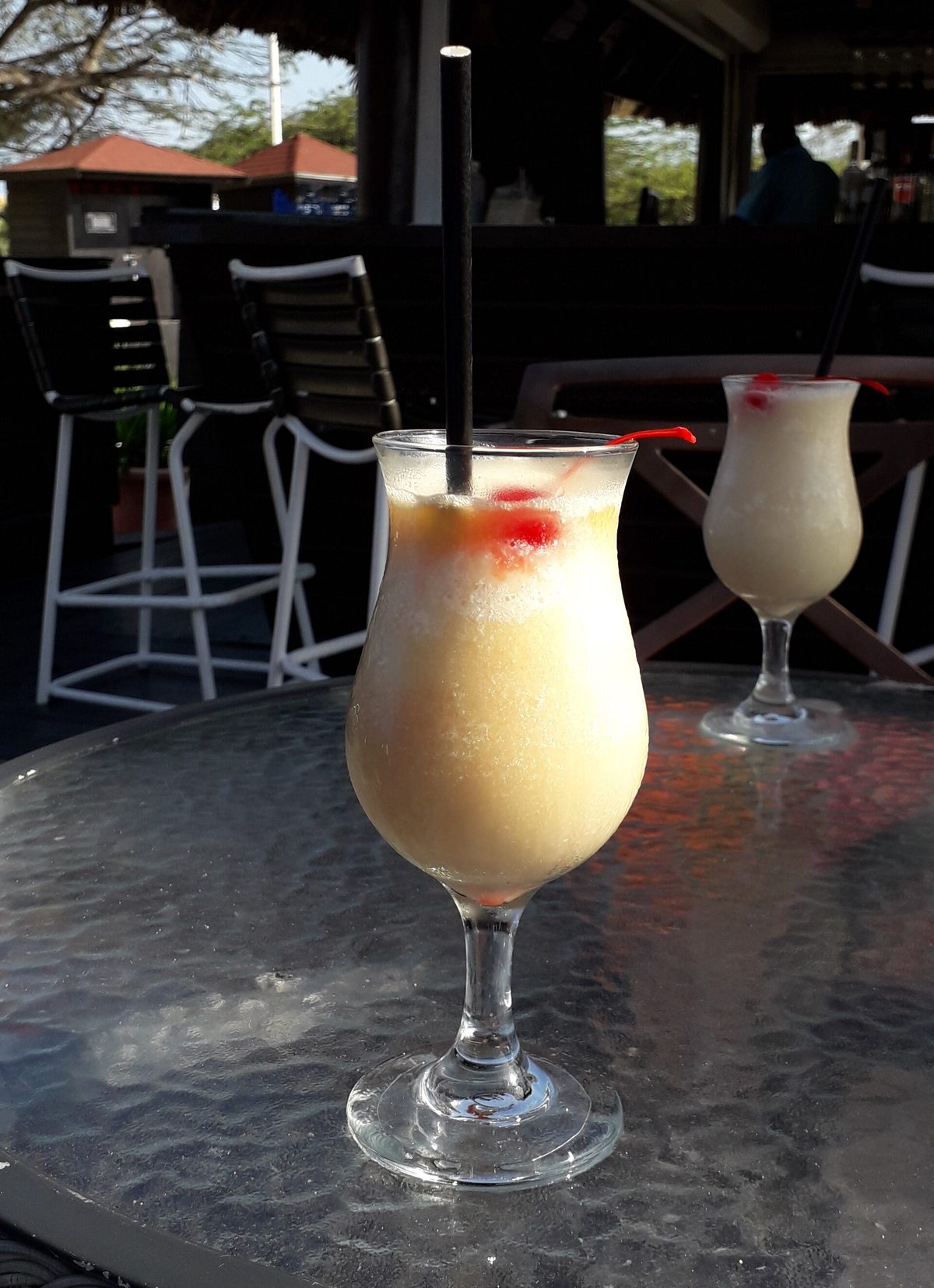
Unlimited drinks are the headline feature most people picture, and yes, that includes alcohol: beer, wine by the glass, and a full slate of cocktails, plus soft drinks, juices, coffee and bottled water. Many resorts pour from open bars across multiple locations — lobby, pool, beach, restaurants — and the better ones (the Riu Palace properties market a “24-hour all-inclusive”) keep at least some bars and snacks running around the clock.
The catch is the word “house.” Included drinks are house or call brands. Order a specific premium tequila, an aged single malt, French Champagne, or bottle service and you’re very likely into extra-charge territory — that’s exactly how four “treat” pours ended up on my folio. If a particular spirit matters to you, ask the bartender whether it’s in the package before they pour.
Activities and entertainment: the daytime program
Included activities skew toward the things the resort can run on its own beach and grounds: kayaks, stand-up paddleboards, snorkel gear, beach volleyball, aqua-gym, fitness classes, tennis or pickleball, pool games, and evening shows, theme nights and live music. Non-motorized watersports are the key phrase — if it doesn’t have an engine, it’s usually free to borrow.
This is real value if you’ll use it, and close to worthless if you won’t. If your idea of a perfect day is renting a paddleboard and reading on a lounger, an all-inclusive can be a steal. If you came to dive the wrecks, ride horses through the desert, or explore the island, most of that happens off-property and off-package. See our roundup of watersports in Aruba for what’s included on the sand versus what you’ll book (and pay for) separately.
What’s NOT Included — The Extras That Surprise People
This is the section I needed at that checkout counter. None of these items mean a resort is being sneaky; they’re standard exclusions across the industry. But they add up, and they’re the difference between the price you booked and the price you pay. Here’s what tends to land on the folio.
Premium liquor and special wine
As covered above, the open bar is house brands. Top-shelf spirits, premium tequila and whiskey, vintage or by-the-bottle wine, Champagne and bottle service are typically à la carte. The fix is simple: ask what’s “in the package” before ordering, and if you’re a particular drinker, factor a small premium-drinks budget in.
The spa, salon and wellness add-ons
Massages, facials, body treatments, hydrotherapy circuits and salon services are almost never included — they’re a profit center, not a perk. A couples’ massage can run well into three figures. Spa access is lovely; just don’t assume “all-inclusive” stretches to the treatment table. Watch, too, for “complimentary” spa-facility access (steam room, sauna) that’s separate from paid treatments.
Motorized watersports and adrenaline activities
Here’s a clean rule of thumb: no engine, included; engine, extra. Jet skis, parasailing, banana-boat rides, water-skiing, tubing, and powered tours are charged separately, and scuba diving (even a single dive) is its own line item. Snorkeling from the beach with borrowed gear is usually free; a guided snorkel boat trip is an excursion you’ll pay for.
Off-property excursions
The best of Aruba is off the resort, and so is the cost. Island Jeep safaris, Arikok National Park tours, the natural pool, sunset catamaran sails, snorkel-and-shipwreck cruises, horseback riding, and UTV adventures are booked and paid for separately — through the resort’s tour desk (convenient, often pricier) or directly with an operator (usually cheaper). Plan these into your budget from the start; browse things to do in Aruba and our list of the best things to do on the island to see what’s worth leaving the lounger for. Many of the island’s highlights are also genuinely free things to do in Aruba if you’ve got a rental car.
Room service, minibar and the little stuff
Some resorts include 24-hour room service and a stocked minibar; many treat one or both as extras or apply a delivery/service fee. Private cabanas, premium beachfront loungers, late checkout, and resort photography are common upsells. Wi-Fi is included at most modern resorts, but confirm it if you’ll be working.
The government taxes and fees (the ones nobody folds away)
These deserve their own section below because they catch almost everyone, and unlike premium rum, they’re not optional. The short version: Aruba levies a room tax and a per-night environmental fee on accommodation, and every air visitor pays a sustainability fee tied to the entry (ED) card. Resorts may or may not bundle the room taxes into your package — confirm it.
How It Varies by Resort
Aruba has only about seven true all-inclusive resorts, most clustered on Palm Beach and Eagle/Druif Beach, with one on the quiet south coast. Because the pool is small, it pays to know how the main players differ. (Confirm current details directly with each resort — inclusions and even which properties operate all-inclusive can change.)
Divi Aruba and Tamarijn Aruba (Druif/Eagle Beach)
These sister properties share facilities, so one all-inclusive bracelet works across both — roughly ten restaurants and eight bars between them, five pools, an activities center, and a kids’ club. Divi and Tamarijn are also known for folding taxes and service charges into the package, which is a genuine plus when you’re comparing headline rates. There are package tiers, so check whether yours includes the à la carte venues and any premium options.
The Riu Palace resorts (Palm Beach)
Riu Palace Aruba (family-friendly) and Riu Palace Antillas (adults-only) run the chain’s “24-hour all-inclusive” model: meals and snacks around the clock, local and imported drinks in all bars and restaurants, and — notably — no reservations required at the specialty restaurants. Riu’s drink list leans more generous on imported brands than a typical budget package, though true top-shelf bottles can still cost extra.
Barceló and the rest
Barceló Aruba on Palm Beach is another family-friendly all-inclusive, and the island also has Divi Dutch Village (linked to the Divi/Tamarijn complex) and the adults-only Secrets Baby Beach on the south coast. Each draws its own line on premium drinks, specialty dining and spa, so the comparison shopping is real. For the bigger picture of neighborhoods and property types, our guide to choosing your Aruba base maps out who each area suits.
Tipping: Is It Included, and Do You Still Tip?
This one genuinely varies, so don’t assume. Some Aruba all-inclusives build a service charge into the package and tell you gratuities are covered; a few operate a no-tipping policy where staff aren’t permitted to accept cash; and others leave tipping to your discretion. Divi and Tamarijn, for example, are known for including service charges in the all-inclusive price.
My practical advice: confirm your resort’s policy on the booking confirmation, then bring a stack of small US bills regardless. Even where gratuities are “included,” a dollar or two slipped to a bartender or your room attendant for great service is appreciated and tends to make the next round arrive faster. It’s optional when a service charge is already in the package — but it’s a small kindness that goes a long way. (US dollars are accepted everywhere on the island, which makes this easy.)
Taxes and Fees: the ED Card and the Room Tax
These are the charges that turned my “already paid” assumption into a surprise, so let me be specific. They are set by the government, not the resort, and most are not part of any all-inclusive package.
The ED card and sustainability fee
Every visitor flying into Aruba must complete an online Embarkation/Disembarkation (ED) card before arrival. The card itself is free, but it’s tied to a sustainability fee of around US$20 per person, payable on the same platform. It applies to air arrivals aged roughly 8 and up, and it’s charged once per calendar year — so a repeat visit in the same year is exempt. Budget it per traveler and complete the form before you fly; it’s not something your resort handles. For more pre-trip logistics, see our Aruba travel tips.
The room tax (Tourist Levy) and environmental levy
Aruba applies a Tourist Levy of around 12.5% on nightly room rates, plus a small environmental levy of around US$3 per person, per night, on overnight stays. Whether these appear on your final folio depends on the resort: some all-inclusive packages (Divi/Tamarijn among them) fold taxes into the quoted price, while other properties add them at checkout. This is the single most important thing to confirm in writing — “is the room tax included in my all-inclusive rate, or charged separately?” Rates and rules change, so verify the current figures when you book rather than relying on last year’s numbers.
For a fuller breakdown of every line item a trip here involves — flights, taxes, food, tours and tipping — our guide to the cost of an Aruba vacation puts the all-inclusive price in context against doing it à la carte.
How to Read the Fine Print Before You Book
You can avoid almost every all-inclusive surprise with about ten minutes of reading and one email. Here’s my pre-book checklist.
- Confirm your package tier, not just the resort. Ask explicitly which restaurants, drink brands and minibar options your specific tier includes.
- Ask “what’s included vs. extra” in writing. Get the resort to confirm premium liquor, specialty dining, room service and minibar policy by email.
- Settle the tax question. Ask directly whether the Tourist Levy and environmental levy are in your rate or added at checkout.
- Check the tipping policy. Included, discretionary, or no-tipping — know before you go.
- Map the watersports line. Confirm which activities are free (non-motorized) and which are paid (motorized, diving, boat trips).
- Look for reservation requirements. Some specialty restaurants book out days ahead; reserve on arrival.
- Separate airfare and transfers. These are almost always outside the package — see getting to and around Aruba for transfer options.
- Re-confirm at check-in. Have the front desk note your inclusions on arrival so there’s no debate at checkout.
Tips to Maximize Your All-Inclusive Value
Once you know where the lines are, you can get genuinely great value. A few things I now do every time.
- Drink the house pours and enjoy them. Aruba’s local rum and beer are good; you don’t need top-shelf to have a great time. Save premium orders for one special night.
- Use the non-motorized gear daily. Paddleboards, kayaks and snorkel sets are the included perks people forget to actually use. They’re where the value hides.
- Eat across all the venues. If your package includes à la carte restaurants, rotate through them so you’re getting the full spread you paid for.
- Book excursions with outside operators. The resort tour desk is convenient but often marked up. Book directly and you’ll usually pay less for the same boat.
- Step off-property at least once. Even on an all-inclusive, a single dinner out or a drive to Arikok National Park or one of Aruba’s famous beaches reminds you why you came to this island and not just any resort.
- Time your trip well. Rates swing hard by season; our guide to the best time to visit Aruba can save you more than any in-resort hack.
- Keep small bills handy. For tips where they’re welcome, and for the off-property snacks and drinks that no package covers.

The Honest Bottom Line
“All-inclusive” in Aruba means a lot is covered — room, meals, snacks, house drinks, non-motorized watersports and the daily program — but it is not “everything.” Premium liquor, the spa, motorized watersports, off-property excursions, some specialty dining, and the government’s taxes and fees typically sit outside the package. The resorts aren’t hiding this; the language just oversells. Read your tier, ask what’s extra in writing, settle the tax question before you book, and that end-of-trip folio can genuinely read zero. Do that, and an Aruba all-inclusive can be a wonderfully easy way to enjoy one of the Caribbean’s best all-inclusive resort scenes — with no surprise bill at checkout.
Frequently Asked Questions
What does all-inclusive include in Aruba?
A true all-inclusive in Aruba covers your room and housekeeping, all meals and snacks (buffet, à la carte and poolside), house-brand drinks including beer, wine and cocktails, non-motorized watersports, pools and fitness facilities, daily activities, nightly entertainment, a kids’ club and usually Wi-Fi. Premium liquor, spa, motorized watersports, excursions and government taxes generally cost extra, so confirm your specific package.
Does all-inclusive in Aruba include alcohol?
Yes — house and call-brand alcohol is included at Aruba’s all-inclusive resorts, covering beer, wine by the glass and a full range of cocktails, often from multiple open bars. What’s usually not included is premium or top-shelf liquor, aged spirits, vintage or bottled wine, Champagne and bottle service. If a specific brand matters, ask the bartender whether it’s in the package before ordering to avoid an extra charge.
Are taxes and fees included in Aruba all-inclusive packages?
Not always. Aruba charges a Tourist Levy of around 12.5% on room rates plus an environmental levy of about US$3 per person per night, and every air visitor pays an ED-card sustainability fee of around US$20 once per calendar year. Some resorts (like Divi and Tamarijn) fold room taxes into the package; others add them at checkout. Always confirm in writing whether taxes are included in your rate.
Do you tip at all-inclusive resorts in Aruba?
It depends on the resort. Some build a service charge into the package and consider gratuities covered, a few have a strict no-tipping policy, and others leave it to your discretion. Confirm your resort’s policy on your booking confirmation. Even where tips are included, many guests still bring small US bills to reward great service from bartenders and housekeeping — it’s optional but appreciated.
What is not included in an Aruba all-inclusive?
The common exclusions are premium and top-shelf drinks, spa and salon treatments, motorized watersports (jet skis, parasailing) and scuba diving, off-property excursions and tours, some specialty restaurants or reservation surcharges, minibar restocks and room service at some resorts, private cabanas, plus airfare, airport transfers and Aruba’s government taxes and fees. Inclusions vary by resort and tier, so verify before booking.
Is all-inclusive worth it in Aruba?
It can be, but Aruba is unusual: it’s very safe, easy to explore and has a fantastic food scene, so you’re “paying to stay in” on an island that rewards getting out. All-inclusive shines for travelers who want zero decisions, families, and heavy drinkers; lighter eaters and explorers often get better value à la carte. Compare both against our Aruba vacation cost guide before deciding.
How many all-inclusive resorts are in Aruba?
Aruba has only about seven true all-inclusive resorts, far fewer than islands like Jamaica or Punta Cana. They cluster mainly on Palm Beach and Eagle/Druif Beach — including Divi Aruba, Tamarijn Aruba, the Riu Palace properties and Barceló — with adults-only and south-coast options too. Because the pool is small, comparing inclusions between the handful of properties is well worth your time before you book.
By the ArubaTourism.org team — Last updated June 2026
Sources consulted include Aruba.com (the official Aruba Tourism Authority), individual resort information from Divi & Tamarijn Aruba and the Riu Palace Aruba properties, and Aruba’s published tourist tax and ED-card sustainability-fee guidance. Inclusions, taxes and fees change — please confirm current details directly with your resort and Aruba’s official entry portal before booking.
Photo Credits
File:High-rise hotels Aruba den oranan di anochi.jpg — Photo: Rarends297 (CC0) via Wikimedia Commons
File:Palm Beach Aruba.jpg — Photo: Kwihi / CC BY 4.0 via Wikimedia Commons
File:Pina Colada at Aruba.jpg — Photo: DDJJ / CC BY-SA 4.0 via Wikimedia Commons
File:Fofoti Tree, Eagle Beach, Aruba (28568601953).jpg — Photo: Jason Boldero / CC BY 2.0 via Wikimedia Commons