You are chest-deep in water so clear you can count the silver fish circling your knees, your back against a wall of black volcanic rock that someone, long ago, decided to call a bowl. Then the ground shudders. A swell out in the open Atlantic rears up, smacks the far side of the rock rim a few feet away, and bursts into a curtain of warm spray. Inside the basin you barely feel it; the pool stays glassy and calm. That contrast is the whole reason to trek out to the Aruba natural pool, the wild swimming hole locals call Conchi.
That name, Conchi, is Papiamento for “bowl”; you will also hear its prettier title, Cura di Tortuga, or Turtles Cove. It sits on the surf-battered northeast coast of the island inside Arikok National Park, a forty-minute jolt down a road that eats ordinary rental cars for breakfast. Getting here is genuinely half the adventure, and a big part of why a soak in this little pocket of calm feels so earned. In this guide I will walk you through every way to reach it, what it costs, when to go, what to pack, and whether it actually lives up to the hype (mostly yes, with caveats).
The short version: the Natural Pool is a sheltered swimming hole formed by volcanic rock on Aruba’s rugged east coast, reachable only by 4×4, UTV, guided tour, horseback, or on foot, never by a standard car. Expect to pay the Arikok park fee (around $22 per adult) plus a tour fee if you book one, and go in the morning for the calmest water and smallest crowds.
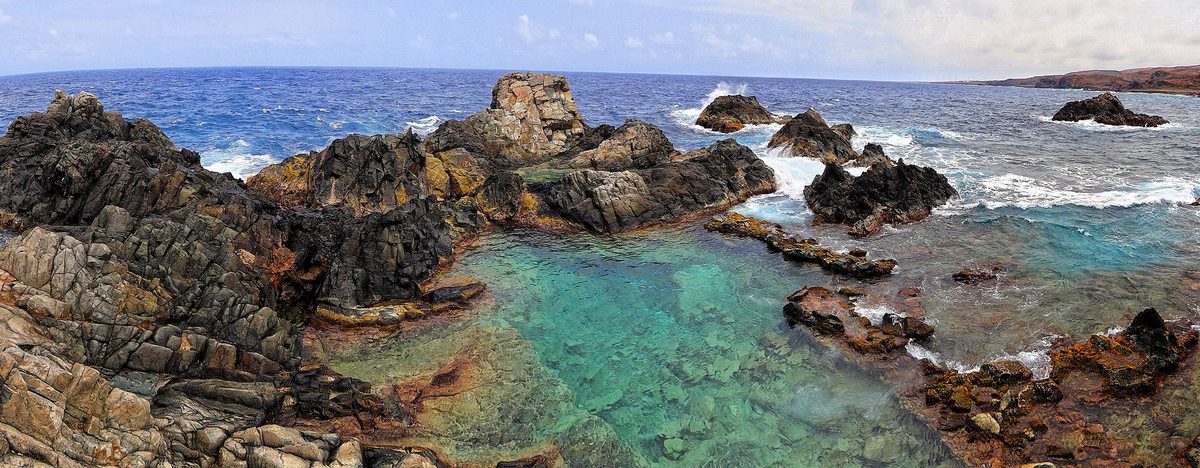
What is the Natural Pool, and where exactly is it?
Picture Aruba’s two faces. The southwest side is the one on the postcards: powder-white sand, palm shade, glassy turquoise shallows, high-rise resorts. Flip the island over and the northeast coast is a different planet altogether, an arid, cactus-spiked wilderness where the open ocean hammers a coastline of jagged volcanic and limestone rock. There are no resorts out here. There is barely a paved road. And tucked into that hostile shoreline, almost hidden until you are standing right above it, is the Natural Pool.
It is a roughly oval basin, maybe 20 feet long and 25 feet wide, carved and walled off by a cluster of volcanic rocks that take the brunt of the surf and leave the water inside calm enough to swim and snorkel. Depth runs to around 17 feet (5 meters) at the deepest point, though that fluctuates with the tide, and only a small corner is shallow enough to stand in. There are actually two pools here: the main lower basin everyone swims in, and a smaller, shallower upper pool big enough for a handful of people. A natural amphitheater of stone wraps around the whole scene, and a long staircase, somewhere in the neighborhood of 90 steps, brings you down from the clifftop to the water.
The pool lies within Arikok National Park, which protects almost 20% of Aruba’s landmass. The official map coordinates put it near Santa Cruz on the central-eastern coast. If you want the wider context on the park itself, its caves, trails, hours and conservation rules, read our full guide to Arikok National Park, the pillar this article belongs to. The Natural Pool is the park’s single most famous attraction, but it is one stop among many, and I will point you to the others further down.
The four ways to reach the Aruba natural pool, at a glance
There is no single “right” way to get to Conchi. The best choice depends on your appetite for adventure, your budget, and whether you want to be driven or do the work yourself. Here is the quick comparison, then I will break each one down.
| How to get there | Vehicle / effort | Rough cost (per person) | Best for |
|---|---|---|---|
| Guided 4×4 jeep or UTV/ATV tour | Driven (or you steer a UTV in convoy); easy | ~$85–$145 incl. some extras | Most visitors; no stress, no navigation |
| Self-drive 4×4 / UTV rental | You drive a high-clearance 4×4; moderate | ~$150–$280/day for the vehicle | Confident off-road drivers, groups splitting cost |
| On horseback | Guided ride from a ranch; easy–moderate | ~$100–$150 | Riders wanting something different and scenic |
| On foot (hiking) | ~1 mile each way from Daimari, or ~3.5 mi from the visitor center; moderate–hard | Just the park fee (~$22) | Hikers, budget travelers, crowd-avoiders |
One option you will not find on that list is a regular car or a tour bus. I cannot stress this enough: the final stretch is signed “4×4 Vehicles Only” for a reason, and I will explain why in a moment. Some people also reach the area by boat tour along the coast, but the pool itself is entered from land via those stairs, so even boat trips usually pair with a short scramble.
Option 1: A guided jeep, UTV or ATV tour (the easy choice)
For most visitors, a guided tour is the smart move, and it is by far the most popular way to do it. You get picked up (most operators offer resort pickup), you bounce out to the pool in a caravan of open-air vehicles built for the terrain, a guide who has driven this road a thousand times handles the white-knuckle bits, and you do not have to worry about getting stranded in the desert with a flat tire and no cell signal.
Tours come in a few flavors. A classic jeep safari seats you in a big 4×4 with a driver and often bundles in other Arikok stops like the caves, Dos Playa, or even Baby Beach on the far south end. A UTV or ATV adventure puts you behind the wheel of your own off-road buggy in a guided convoy, which is a blast if you want the driving thrill without the navigation risk. Rough pricing I have seen runs about $84 for an ATV tour, around $126 for a full-day “ultimate” jeep safari that includes the Natural Pool, and roughly $140–$145 for UTV cave-and-secret-beach combos. These almost always include the Arikok entrance fee, but confirm that when you book, and treat every price here as a ballpark, check current rates before you commit.
The one downside of a tour, and it is a real one, is time. Most groups give you a fixed window in the water, often 30 to 45 minutes, before herding everyone back to the vehicles. If you are the type who wants to linger for two hours, a tour will frustrate you. If you just want to see it, swim it, and tick it off, it is perfect. Browse the wider range of organized trips in our roundup of Aruba excursions.
Option 2: Self-driving a 4×4 or UTV
If you would rather set your own pace, renting a 4×4 or UTV and driving yourself is hugely satisfying, and it lets you stay at the pool as long as you like. But this is not a decision to make lightly, and there are two things you absolutely must sort out first.
First, the vehicle. You need genuine high clearance and, ideally, four-wheel drive. Honestly, clearance matters even more than 4×4 here, because the hazard is less mud and more the large loose rocks and deep ruts that will tear the underside off a low car. A proper Jeep Wrangler, a UTV, or an ATV is the right tool. A standard SUV crossover can sometimes make it (I have read first-hand accounts of a Kia Sportage doing it carefully), but I would not bet a damaged-rental bill on it. Second, and this trips people up, not every rental company allows their vehicles on this road. Some explicitly forbid it, and if you go anyway and something happens, your insurance may not cover the damage. Rent from a company that permits the Natural Pool route in writing, or rent a dedicated “extreme” Jeep for the day from an operator that specializes in it.
Expect to pay somewhere around $150 a day for a Jeep, more for a multi-seat UTV (one four-seater rental I saw ran about $280). Splitting that across a group makes it reasonable, and you can fold in other east-coast sights, Daimari Beach, the Baby Natural Bridge, the caves, into one big day of exploring. For the lay of the land on vehicles, rentals and island logistics generally, our guide to getting to and around Aruba is worth a read before you book anything.
Option 3: On horseback
Here is the option people forget about, and it might be the most memorable. Several ranches on the island, Rancho Daimari and Gold Mine Ranch among the best known, run guided horseback excursions out to the Natural Pool. You ride across the desert and down toward the coast, and there is something genuinely cinematic about approaching this rugged shoreline at a horse’s pace instead of a buggy’s roar.
Horseback tours typically run around $100 to $150 per person and usually fold the park entrance fee into the price. They suit confident-enough beginners as well as experienced riders, though if you have never been on a horse, say so when you book. It is a slower, quieter, more scenic way in, and a lovely change of gear from the engine-heavy alternatives. If your trip is more about romance than adrenaline, this one earns a spot on a couples’ itinerary, see our Aruba honeymoon guide for more ideas in that vein.
Option 4: Hiking to the Natural Pool on foot
You can absolutely walk to Conchi, and for hikers, budget travelers, and anyone who wants the pool to themselves, it is my favorite approach. There are two main routes.
The shorter, more popular one starts at Daimari Beach (near Rancho Daimari) on the north side. You drive the rough dirt road to a hilltop parking spot above the ranch, then walk in, roughly a mile each way, following the coastline south. The catch: even getting your car to that trailhead means driving a rugged road, so a higher-clearance vehicle still helps, and many people sensibly park at the top of the hill rather than risk the steep descent, adding a bit of walking. The payoff is spectacular: you cross a blinding white sand dune (people sandboard it), pass deserted beaches, and watch the landscape shift from sand to stark black volcanic rock in the space of a mile.
The second route runs from the Arikok visitor center and is longer, about 3.5 miles (5.5 km) one way, winding past the volcano, historic sites, and caves before reaching the coast. It is a proper hike, best done early to beat the heat, and not one to underestimate. Whichever route you pick, bring far more water than you think you need, wear real shoes, and start in the morning so you have daylight for the return. For more trails across the island, browse our list of free things to do in Aruba, since once you have paid the park fee, the hike itself costs nothing.
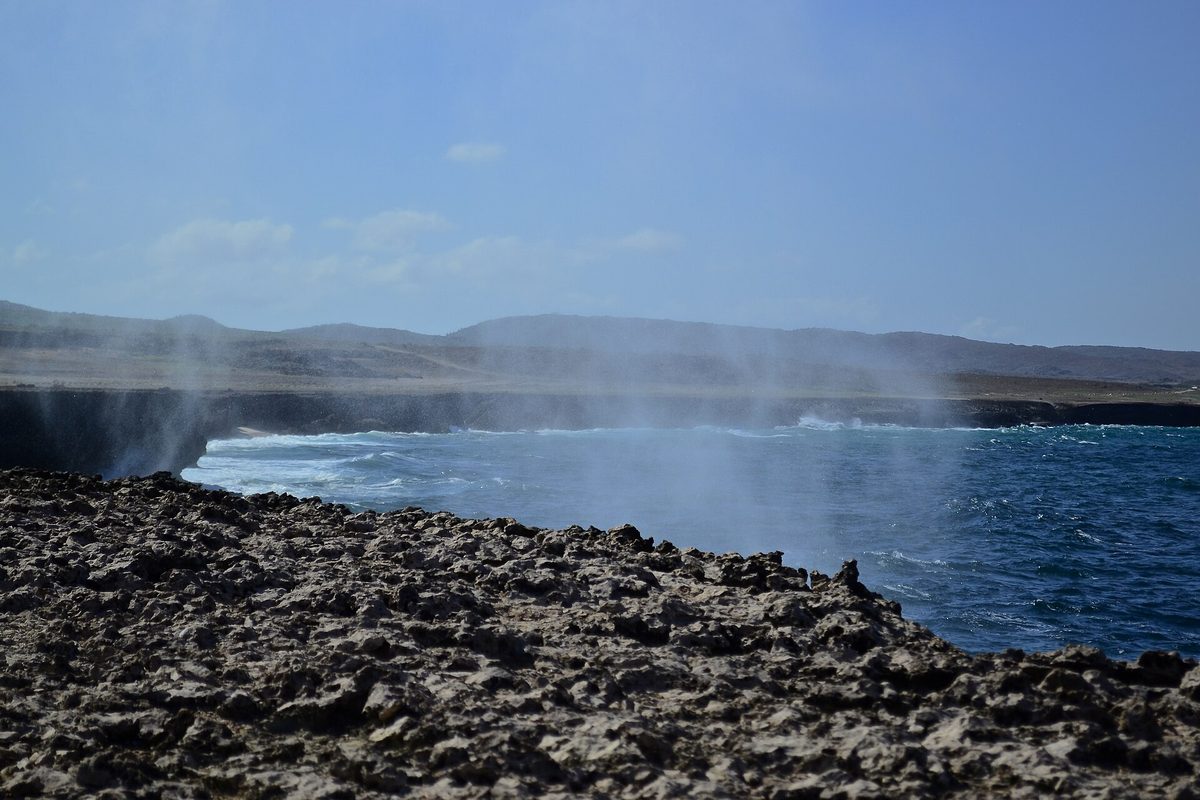
The road: why a regular rental car simply cannot make it
Let me paint the picture so you take this seriously. From the park’s San Fuego entrance, you pay your fee at the main visitor center, get a wristband, and head off toward Conchi. For the first stretch the road is paved, then reasonable gravel as it loops around the Sero Arikok volcano. And then you reach a sign that reads “4×4 Vehicles Only,” and the road turns into something else entirely: deeply rutted dirt, scattered with large rocks, washed out in places, climbing and dropping over steep little hills. The whole drive is around 45 minutes to an hour each way from the park gate.
People do not put up that sign to sell jeep tours. A standard sedan will bottom out on the rocks, scrape its undercarriage raw, and quite possibly strand you in a remote, blazing-hot corner of the island with no shade, no facilities, and patchy phone reception. Recovery out here is slow and expensive. That is the practical reason every reputable source, including the official tourism authority, says the same thing: the Natural Pool is inaccessible by regular car, full stop. If you do not have the right vehicle, take a tour or hike in. Do not try to muscle a compact rental down that track.
Arikok National Park: fees, hours, and the practical bits
Because the Natural Pool sits inside Arikok, you pay to enter the park, and that fee is your ticket to the pool. As of late 2025 the entrance fee was around $22 per adult, with children under 17 free, though I have seen lower figures quoted in earlier years (the price has crept up over time), so treat that as a guide and check the current rate before you go. Your fee funds the park’s conservation work, which keeps this coastline wild and protected.
A few practical notes that will save you grief:
- Pay at the visitor center first. Even if you are hiking in from Daimari Beach, where there is no ticket booth, you are expected to stop at the Arikok visitor center, pay, and get your wristband before heading out. Going in unpaid is not the move.
- Go early in the day. The park keeps daytime hours (roughly 8am to 4pm for the visitor center, but confirm current times), and you want to be well out before dark, especially if hiking. Tour groups tend to swarm the pool between about 10am and 3pm, so early birds get calmer water and fewer people.
- There is a small snack stand at the top of the stairs above the pool on busier days, selling drinks and light snacks, but do not count on it. Bring your own water.
- No facilities to speak of at the pool itself, no lifeguard, limited shade, no restrooms beyond the basic. This is raw nature, not a resort.
Pairing your visit with smart planning helps. Our best time to visit Aruba guide covers the seasons and sea conditions, and the broader Aruba travel advice page rounds up the practical island know-how, from driving to tipping, that makes a day like this run smoothly.
Safety: respect the surf, because the ocean here does not forgive
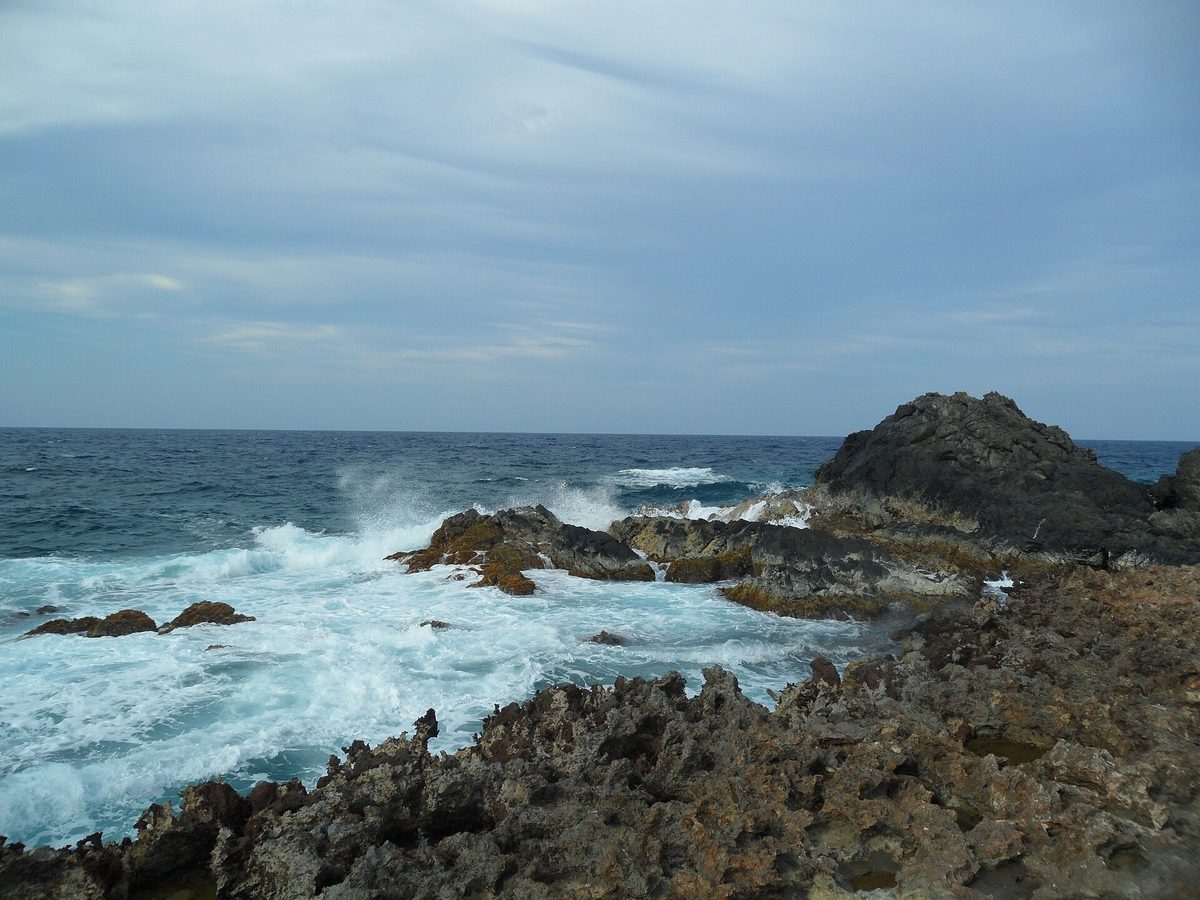
I want to be straight with you, because the pretty photos do not tell the whole story. The Natural Pool is generally safe to swim when conditions are calm, and thousands of people enjoy it every year without incident. But this is the open Atlantic coast, there is no lifeguard, and there have been deaths here over the years. Almost all of them were avoidable. A little respect goes a very long way.
The rules are simple and non-negotiable:
- Never swim outside the protected pool. The surf and currents beyond the rock rim are powerful enough to slam you into jagged rock. Stay inside the basin. Always.
- Do not clamber up onto the high rocks where the waves break. A rogue swell can knock you off your feet and sweep you out. People take that risk for a photo; it is not worth it.
- Mind the slippery rocks getting in and out. The wet volcanic rock at the water’s edge is treacherous. Water shoes make a real difference here.
- Keep an eye on kids the whole time. Children who can swim are fine inside the pool with close supervision, but most of the basin is too deep to stand, so non-swimmers need a buddy and floatation.
- Heed the rangers and the conditions. When the surf and wind are up, the water inside the pool gets churned and dangerous, and the site can effectively close. If signs or rangers say no, that is the answer. Do not improvise.
One important clarification, because it confuses people: in early 2026 authorities closed and removed the ladder at the small cave pool near the Bushiribana ruins, deeming it too dangerous. That is a different spot from the famous Conchi Natural Pool, which remains open. Just know that “natural pool” can refer to more than one place on the island, and always check the current status of the specific one you mean to visit. If swimming and snorkeling are a big part of your trip, our Aruba water sports guide covers the calmer, lifeguarded options too.
Best time to go, and what to bring
Timing matters on two levels. Across the year, Aruba sits below the hurricane belt and stays warm and dry, but the sea is calmest, and the pool safest and prettiest, when the trade winds and swell ease off; rougher spells churn it up. There is no perfect month, but it is always worth checking the marine forecast for the days around your visit. On the scale of a single day, go in the morning: the light is good, the water tends to be calmer, and you will beat the tour-group rush that peaks midday.
Pack like you are heading into a remote desert coast, because you are. My essentials:
- Water shoes — the single most useful item, for the slippery rocks and the rocky entry.
- Plenty of water — at least a liter per person; there is no reliable source out there and the heat is serious.
- Reef-safe sunscreen and a sun shirt — there is essentially no shade, and the trade winds hide how fast you are burning.
- A dry bag — waves splash over the rim and can soak anything you leave on the rocks; protect your phone and camera.
- Snorkel gear — the calm, clear basin is lovely for spotting small fish; bring your own, as nothing is rented on site.
- Sturdy footwear for the hike or scramble, a hat, and snacks if you plan to linger.
Is the Aruba natural pool worth it, or is it overrated?
You will find this debate all over the internet, so let me give you my honest take. Yes, it is worth it, for the right traveler. If you love a bit of adventure, the journey out, the desert, the dunes, the dramatic coast, is genuinely half the reward, and floating in that calm bowl while the ocean detonates a few feet away is a memory that sticks. Many visitors call it the highlight of their entire Aruba trip.
But I will be candid about who might be disappointed. The pool is small, and when three tour groups arrive at once it can feel crowded and a little chaotic, you are sharing a modest basin with a few dozen people. If the surf is up, the water can be murky rather than the glassy turquoise of the photos. And if you have mobility issues, the rugged terrain and steep stairs are a real barrier. The people who come away calling it “overrated” are usually the ones who arrived midday with a big group, on a rough-sea day, expecting a serene private lagoon. Set your expectations right, go early, and you will likely love it. For where it ranks among the island’s headline sights, see our roundup of the best things to do in Aruba and the broader list of things to do in Aruba.
Make a day of it: what to combine with the Natural Pool
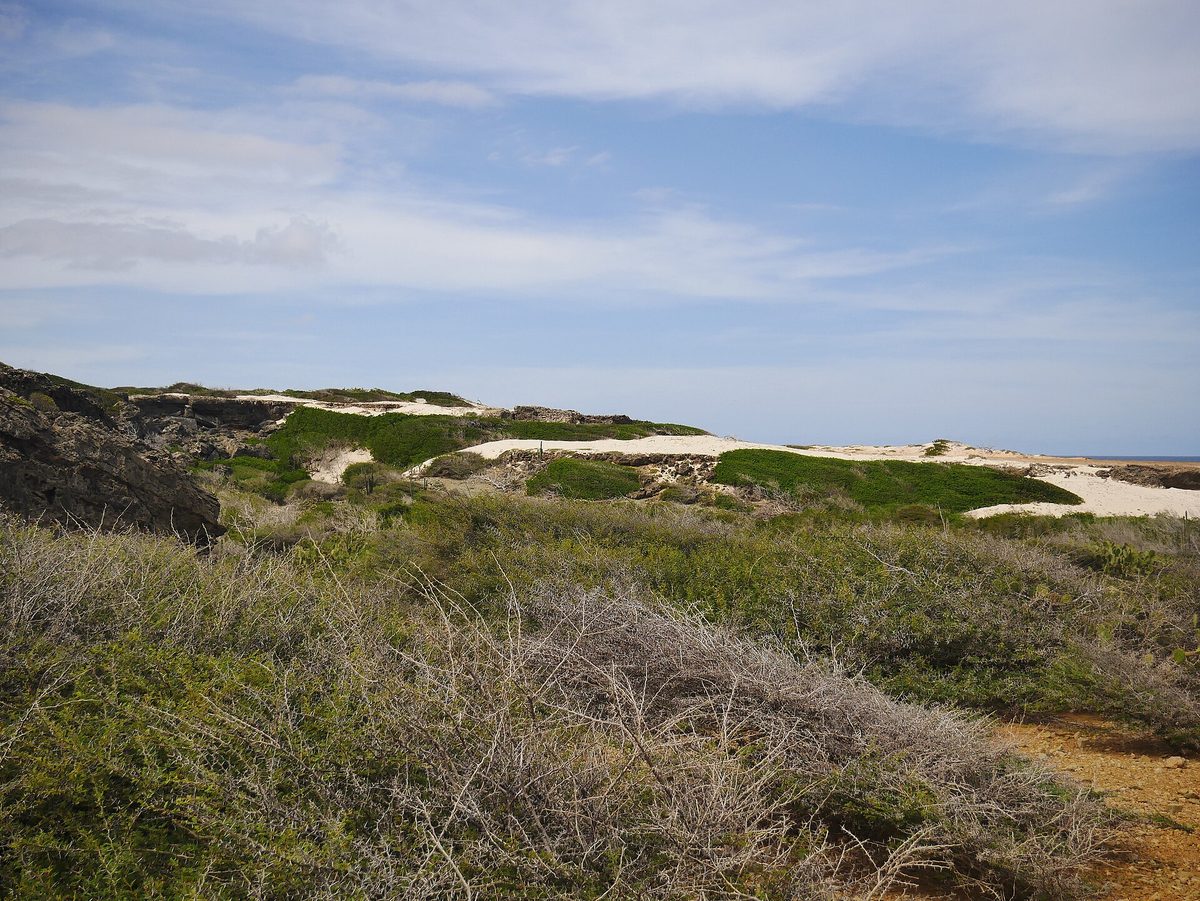
You have already done the hard part, getting out to Aruba’s wild side, so do not rush straight back. Arikok and the surrounding northeast coast are packed with sights that pair naturally with a Natural Pool visit, and most tours bundle a few of them anyway.
Dos Playa
A short distance from the pool, Dos Playa is a pair of dramatic beaches split by sea cliffs and rock formations. The water here is far too rough to swim, but it is a stunning spot for photos and for watching the Atlantic do its thing, exactly the kind of raw, scenic coastline that makes this side of the island special.
Boca Prins and the sand dunes
Boca Prins is a wild little cove backed by golden sand dunes, big enough that people sandboard down them. Like the other east-coast beaches, the sea is treacherous for swimming, but the dunes and the cove make a gorgeous, almost Saharan contrast to Aruba’s tame west-coast beaches. It is an easy add-on inside the park.
The caves: Fontein and Quadirikiri
Back on the main park road south of the pool sit Arikok’s famous caves. Fontein Cave is known for its Arawak rock drawings on the ceiling, and nearby Quadirikiri Cave has two large chambers with skylights where sunlight pours through and bats flit overhead. They are an easy, family-friendly counterpoint to the adventure of the pool, and our guide to Aruba’s caves covers both in detail, including how to reach them in a regular car.
Other nearby stops
A little further afield you can tie in the Natural Bridge and the smaller Baby Natural Bridge to the north, the historic Bushiribana gold mill ruins, and, if you are doing a full island loop, the California Lighthouse and Alto Vista Chapel on the northwest tip. For more offbeat sights like these, our guide to unique things to do in Aruba is a good next read.
Who is the Natural Pool right for?
Families: Older kids who can swim and handle a hike or a bumpy ride will love it, the dunes, the buggies, the cliff-edged pool feel like an expedition. It is less suited to toddlers or anyone who needs facilities; see our Aruba with kids guide to weigh it against gentler options.
Couples: Go early or hike in, and you can have a remarkably romantic, almost private swim. The horseback approach in particular is a winner for couples.
Adventure travelers and cruise-day visitors: This is squarely your kind of thing, just make sure a cruise-day tour leaves enough buffer to get back to the ship on time, since the drive is long and the coast is remote.
Whatever bracket you fall into, it slots neatly into a day of east-coast exploring. If you are still mapping out your trip, our sample Aruba itinerary shows how to fit Arikok and the Natural Pool around your beach and town days, and the Aruba vacation cost guide helps you budget the tour fees.
Frequently asked questions about the Natural Pool
Can you drive to the Conchi Natural Pool yourself?
Yes, but only in a high-clearance 4×4, UTV, or ATV, never a standard car. The final stretch is signed “4×4 Vehicles Only” and is a rough, rocky, rutted track that takes around 45 minutes to an hour each way. Crucially, confirm your rental company actually permits driving this route, as some forbid it and void your insurance if you go anyway.
How much does it cost to visit the Natural Pool in Aruba?
At minimum you pay the Arikok National Park entrance fee, around $22 per adult as of late 2025, with kids under 17 free. Guided tours add to that: roughly $84 for an ATV trip, about $100–$150 for horseback, and around $126–$145 for jeep or UTV safaris that often include the park fee. Always check current prices before booking.
Is it safe to swim in the Natural Pool?
Generally yes, when the sea is calm, and many people swim there daily. But there is no lifeguard and there have been deaths over the years, nearly all avoidable. Never swim outside the protected basin, stay off the high rocks where waves break, watch the slippery edges, and obey rangers. The pool can effectively close in high surf or wind.
How deep is the Aruba Natural Pool?
The main pool reaches around 17 feet (5 meters) at its deepest, though the depth shifts with the tides. Only a small corner is shallow enough to stand in, so the majority is too deep for the average person to touch bottom. There is also a smaller, shallower upper pool suitable for a few people at a time.
How long should I plan to spend at the Natural Pool?
Most people spend 30 minutes to a couple of hours at the pool itself. If you take a tour, your swim window is usually capped at 30–45 minutes. Factor in the long, slow journey each way: a hiking trip from Daimari runs about three to four hours all in, and a full jeep safari can fill most of a day.
Can you hike to the Natural Pool, and how far is it?
Yes. The popular route from Daimari Beach is roughly one mile each way along the coast, with a sand dune and deserted beaches en route. A longer route from the Arikok visitor center is about 3.5 miles (5.5 km) one way. Both are best done early with plenty of water, sturdy shoes, and sun protection, as there is no shade.
Final thoughts
The Natural Pool is not Aruba’s easiest attraction, and that is exactly the point. You earn it, with a rattling drive or a hot hike across a landscape that looks nothing like the brochure island, and the reward is a swim in a place that feels genuinely wild and a little bit secret. Go early, go on a calm-sea day, respect the ocean, and bring more water than you think you need. Do that, and floating in that volcanic bowl while the Atlantic crashes a few feet away may well be the moment from your trip you talk about for years. For everything else this corner of the island holds, start with our complete guide to Arikok National Park.
By the ArubaTourism.org team — Last updated June 2026.
Photo credits
- Conchi Natural Pool basin — Photo: Bjørn Christian Tørrissen / CC BY-SA 3.0 via Wikimedia Commons.
- Waves crashing on Aruba’s rocky northeast coast — Photo: EgorovaSvetlana / CC BY-SA 4.0 via Wikimedia Commons.
- Boca Prins sand dunes — Photo: Ginelly.Q / CC BY 4.0 via Wikimedia Commons.
- Arikok National Park limestone wave-cut terrace — Photo: Misty Johnson / CC BY 2.0 via Wikimedia Commons.