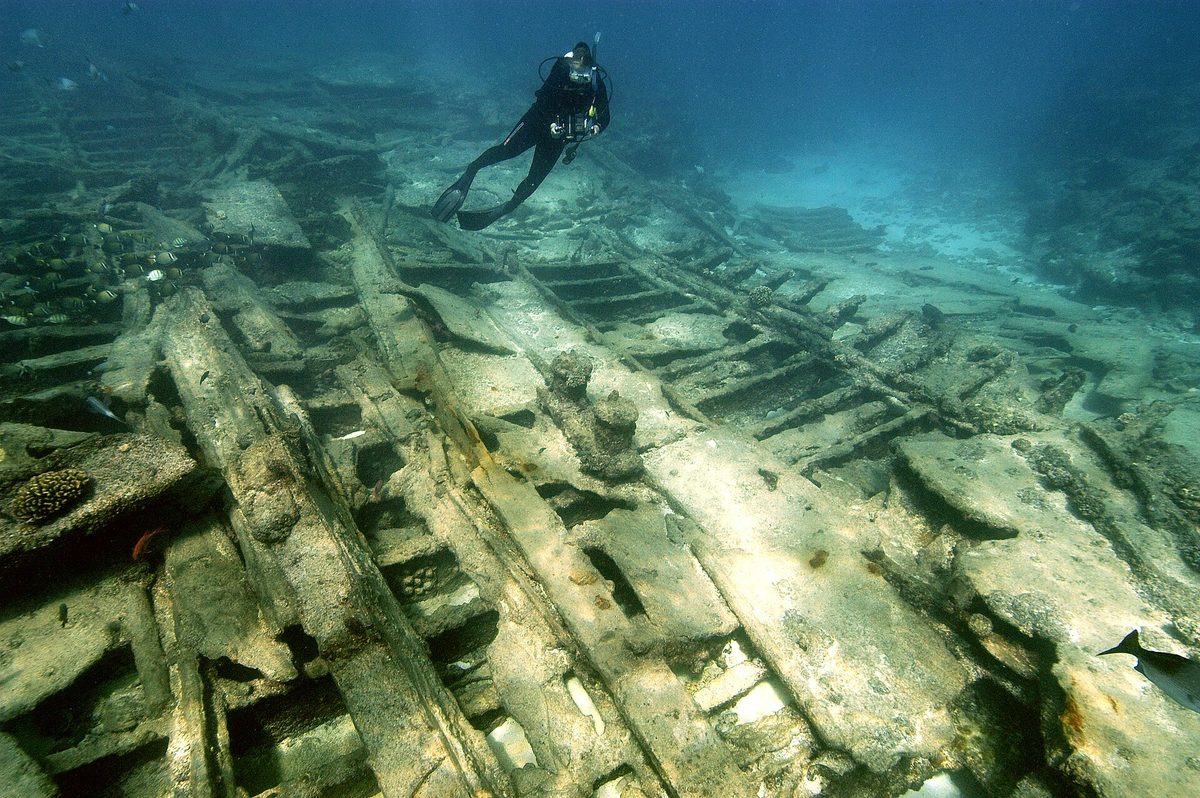
Why is a 400-foot German freighter lying on its side on the seabed just off Aruba’s northwest coast, slowly being swallowed by coral and sponges? The story is stranger than most divers expect, and it is why the Antilla shipwreck Aruba travelers flock to has become one of the most visited wrecks in the entire Caribbean. This is no quiet, forgotten hull. It is a World War II relic the size of a city block, sunk by its own crew in the early hours of a single dramatic morning in 1940, and today it sits in water shallow enough that snorkelers floating on the surface can look straight down at its masts.
I have circled this wreck on a catamaran, watched first-timers gasp through their snorkels at the sheer scale of it, and listened to dive guides recount the “Ghost Ship” legend with the kind of relish that only comes from telling a story a thousand times. It earns the attention. Below, I will walk you through the real history (including the myths worth ignoring), exactly what you will see underwater, how to visit whether you snorkel or scuba, realistic tour prices, and the conditions that make or break the experience.
The short answer: what the Antilla is and why you should go
The Antilla is the wreck of a 398-foot (121-metre) German cargo ship that was scuttled off Malmok, Aruba on 10 May 1940, the day Germany invaded the Netherlands. One of the Caribbean’s largest shipwrecks, it lies on its port side in up to about 60 feet (18 m) of water, with parts of the wreck rising to within roughly 5 to 15 feet of the surface, making it a rare site that both snorkelers and scuba divers can enjoy on the same tour.
Antilla shipwreck at a glance
If you only skim one thing, make it this. Here are the numbers and facts that matter before you book, drawn from historical records and the dive operators who visit daily.
| Detail | What to know |
|---|---|
| Ship type | German cargo ship (Hamburg America Line / HAPAG) |
| Length | About 400 feet (398.3 ft / 121.4 m) |
| Beam (width) | About 56 feet (17 m) |
| Year sunk | 10 May 1940 (scuttled by its own crew) |
| Depth | Seabed around 55-60 ft (17-18 m); top sections 5-15 ft from surface |
| Location | Malmok Bay, off Aruba’s northwest coast |
| How to visit | By boat only – snorkel tour or guided scuba dive |
| Skill level | Snorkel: confident swimmers. Dive: Open Water and up |
| Typical snorkel tour price | Roughly US$60-$90 per adult (3-hour catamaran trip) |
| Marine life | Tube sponges, coral, sergeant majors, blue tang, grunts, moray eels, lobsters, occasional turtles |
That mix of size, shallow access and history is exactly why the wreck is a cornerstone of Aruba’s water sports and boat tour scene. Almost every snorkel-and-sail operator on the island builds at least one trip around it, and the dive shops treat it as the signature site of the northwest coast.
The WWII backstory: how a German freighter ended up on Aruba’s seabed
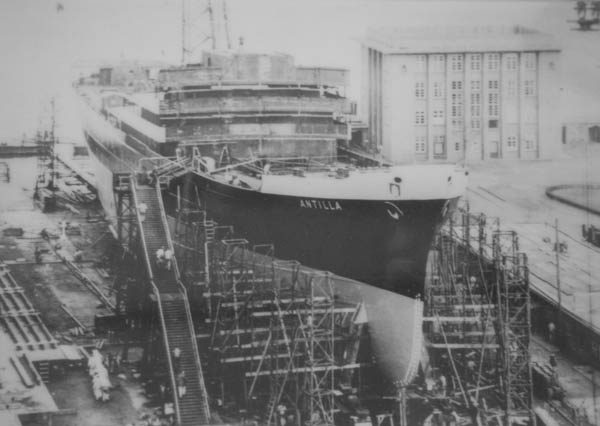
The Antilla was brand new when she died. Built by Deutsche Werft in Hamburg and launched on 21 March 1939, she was a turbo-electric cargo ship of about 4,363 gross tons, named after the town of Antilla in Cuba because she was designed for trade between Germany and the Caribbean. She completed her first and only commercial voyage in the summer of 1939, then the world changed under her keel.
In late August 1939, while loading sulphur in Galveston, Texas, her captain, Ferdinand Schmidt, received a coded radio signal ordering German merchant ships to leave the main shipping lanes and make for home or for neutral ports. When Germany invaded Poland on 1 September, Schmidt knew he could not run the Atlantic gauntlet of Allied warships. He sailed for the neutral Dutch territory of the Netherlands Antilles, found Curacao’s harbour already crammed with other German vessels, and diverted to Aruba instead. After unloading her cargo at San Nicolaas in the south, the Antilla anchored with three other German ships in Malmok Bay in the northwest, and there she waited.
For eight tense months she sat at anchor while a Dutch submarine watched from inside territorial waters and British and French warships blockaded the approaches outside. Dutch authorities boarded and searched her repeatedly. Then, at 3:10 on the morning of 10 May 1940, everything happened at once: Germany invaded the Netherlands, the Dutch government ordered the seizure of every German ship in its Caribbean territory, and a section of Dutch Marines rowed out to board the Antilla.
The morning she went down
Captain Schmidt refused to lower the gangway. The Dutch officer in command, expecting armed resistance, decided to wait for first light so a machine gun set up on shore could cover the boarding. That delay, less than two hours, was all the German crew needed. One sailor locked himself in the engine room, opened the ship’s seacocks to let the sea pour in, and escaped up through the funnel. Others set fires through the holds. By the time the Marines boarded at 5:00 a.m. and marched the crew ashore, the Antilla was already burning and beginning to list.
A Dutch coastguard vessel, fittingly named HM Aruba, even fired two rounds into the blazing hull. By late morning the ship was listing 30 degrees and going down. The 35 crew members were interned as enemy aliens and eventually shipped to Jamaica for the rest of the war. The Antilla settled onto her port side in Malmok Bay, where she has been ever since, a steel monument to a single chaotic morning at the start of the war in the Caribbean.
The “Ghost Ship” myths worth ignoring
Spend any time around the wreck and you will hear stories. Some are pure embellishment, and knowing the truth makes the dive more interesting, not less. Three popular tales simply are not true:
- “She was a secret U-boat tender.” No. The Dutch searched the Antilla again and again during her eight months at anchor and never found weapons. One version even claims she supplied a German submarine operation that did not begin until 1942, nearly two years after she sank.
- “Captain Schmidt negotiated a 24-hour delay before scuttling.” Also no. The gap between the Marines arriving and boarding was under two hours, and it came from Schmidt refusing the gangway, not from any gentleman’s agreement.
- “A boiler explosion broke the ship in half.” Tempting, but wrong. Dutch divers found the wreck intact in 1940. She did not break amidships until 1953, and the culprit was storm damage, not a dramatic blast.
The real story, a new ship caught in the wrong place at the wrong moment and sunk by her own crew, is dramatic enough without the embroidery. It is also a genuine piece of Caribbean wartime history hiding in plain sight, which is part of what makes a visit feel like more than just another snorkel stop. For more offbeat history and experiences like this, see our guide to unique things to do in Aruba.
The wreck today: what 85 years underwater looks like
Here is the thing that surprises people most: the Antilla is enormous. At nearly 400 feet she is one of the largest shipwrecks in the Caribbean, exceeded only by a couple of 600-foot cruise liners elsewhere in the region. Swimming her full length on a single breath-hold is not happening; even on scuba you cover her in sections. She lies tilted onto her port side, and the storm that snapped her in two amidships back in 1953 means you are really exploring two great masses of steel rather than one continuous hull.
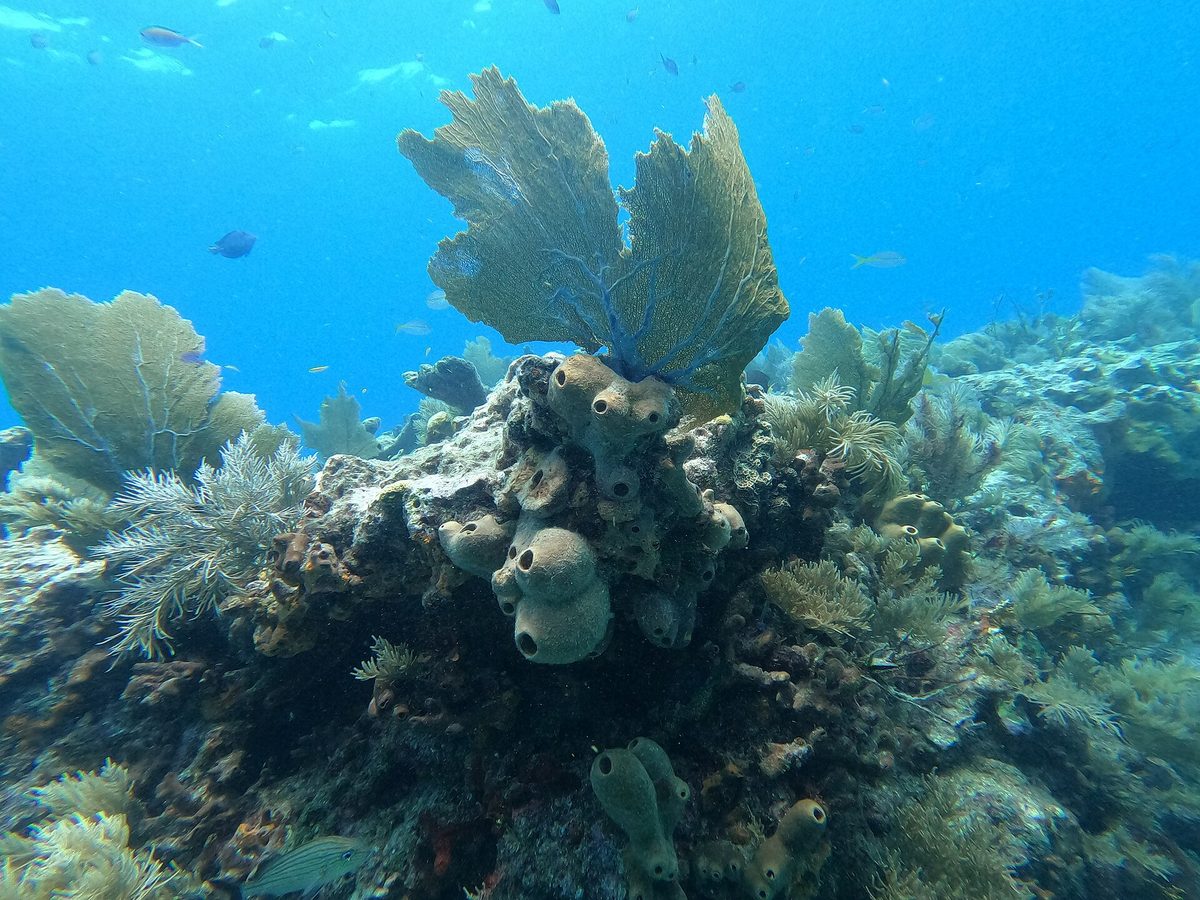
Decades of Caribbean water have transformed her. The hull is furred with hard and soft corals, and her flanks bristle with tube sponges in oranges, purples and yellows that look almost too vivid to be real. Ribs, beams, cargo holds, the old funnel area and twisted deck plating create an artificial reef riddled with swim-throughs and shadowed hollows. A small piece of her starboard side still breaks the surface, a rusted fin of metal that makes the wreck easy to spot from a boat and gives you a sense of just how much ship is hidden below.
The marine life you will actually see
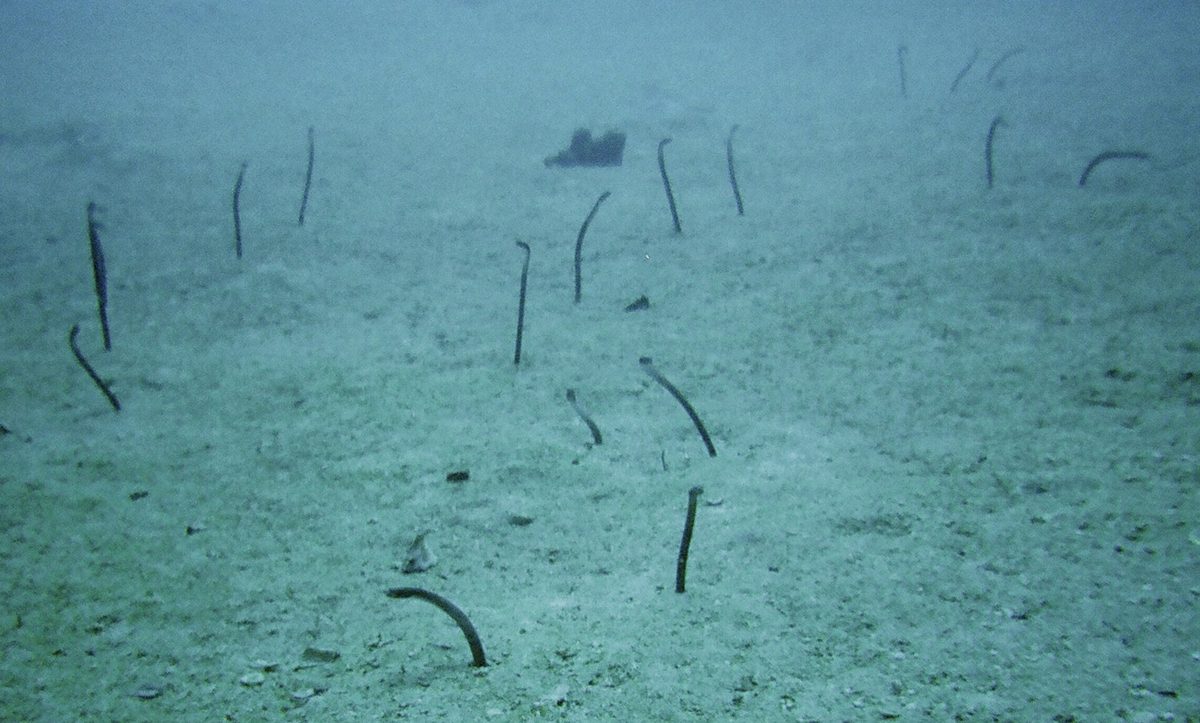
An 85-year-old steel reef is a magnet for life, and the Antilla delivers. On a typical visit you can expect dense schools of sergeant majors and brown chromis hanging over the structure, blue tang grazing the coral, and grunts and snappers tucked into the shadows. Look closer and the wreck rewards you: foureye butterflyfish, parrotfish chewing at the encrusting growth, the occasional Spanish hogfish, and big bar jacks cruising the open water above.
Inside the holds and crevices, moray eels coil in the dark and lobsters wedge themselves under steel plates. Christmas tree worms dot the coral in tiny bursts of colour, orange cup corals cling to shaded overhangs, and clouds of glassy silversides sometimes swirl through the structure thick enough to dim the light. Hawksbill turtles turn up from time to time, and for years a large goliath grouper was reported living in the forward section, the kind of resident that turns an ordinary dive into a story you retell at dinner.
If the marine life is what draws you, the Antilla pairs naturally with the rest of Aruba’s underwater scene. Plenty of visitors combine it with the calmer reef and shore snorkeling spots covered in our wider rundown of water sports and boat tours in Aruba, then add a beach day along the island’s famous west coast (our guide to Aruba’s beaches sorts the calm-water swimming beaches from the windswept ones).
Snorkeling the Antilla: can you really see a shipwreck from the surface?
Yes, and that is the magic of this site. Because the Antilla lies on her side in relatively shallow water, the highest parts of the wreck, including her masts and the forward section, reach to within roughly 5 to 15 feet of the surface. Float above her on a calm day and you look down on a ghostly, coral-crusted hull spreading out beneath you, with fish streaming around the structure. You do not need to dive to feel the scale of it.
That said, let me set honest expectations. The front third or so of the ship is shallow enough to enjoy as a snorkeler; the deeper stern and lower hull fade into the blue below you. Strong, confident swimmers who are comfortable free-diving down a few feet will get far more out of it, dipping toward the masts for a closer look before returning to the surface to breathe. You will not have the wreck’s interior or its deepest, most dramatic angles, but you will absolutely understand why it is famous.
What snorkeling the Antilla is honestly like
This is open water well offshore, not a sheltered cove, so conditions matter more here than at a typical beach snorkel. There is usually some current to swim against and the surface can be choppy when the trade winds pick up, which on Aruba is most afternoons. Tour boats clip onto fixed mooring lines at the wreck, and a good crew positions you so you start up-current and drift back toward the boat. First-timers do fine with a flotation vest and a few minutes of coaching, but nervous swimmers should be realistic: a flat, glassy session is the exception, not the rule.
One firm piece of advice: do not try to swim out to the Antilla from Malmok Beach. It looks deceptively close from shore, but the distance, the currents and the constant boat traffic make it genuinely dangerous. The wreck is a boat-access site, full stop. Booking a tour is not just easier; it is the safe and sensible way to do it.
Diving the Antilla: Aruba’s signature wreck dive
If you are certified, the Antilla is the dive that most defines Aruba, and one of the best beginner-to-intermediate wreck dives in the Caribbean. The maximum depth sits around 55 to 60 feet, comfortably within recreational limits, and the wreck is so large and so shallow that you can spend much of the dive in the 30-to-50-foot range with plenty of no-decompression time. Visibility commonly runs 50 to 80 feet, though it varies with swell and wind.
What makes it special as a dive is the texture: the broken-in-two hull creates dramatic walls of steel, the holds open into shafts of filtered light, and the marine life concentrates around every beam and bulkhead. Open Water divers can have a superb time touring the exterior and the shallower structure. The wreck has long been popular for penetration diving too, swimming inside the holds, but here I would urge caution: ongoing storm damage has continued to break the structure up over the years, and some divers now consider parts of the interior unsafe to enter. Penetration is for properly trained wreck divers with a guide who knows the wreck’s current condition, not something to improvise.
Snorkel or dive: which should you choose?
It comes down to certification and what you want from the day. Both are legitimately great here, which is rare.
| Snorkeling the Antilla | Diving the Antilla | |
|---|---|---|
| Who it suits | Confident swimmers, families, non-divers, cruise visitors | Open Water certified and up |
| What you see | Masts and upper hull from the surface; fish and silhouette | Full structure, holds, walls of steel, dense marine life |
| Depth reached | Surface; free-divers reach the shallow masts | 30-60 ft across the wreck |
| Typical format | Half-day catamaran sail with one or two stops | Single-tank guided boat dive (often two-tank trips) |
| Rough cost | About US$60-$90 | About US$70-$120 for a guided dive |
My honest take: if you are not a diver, the snorkel trip is genuinely worth it, the wreck reads clearly from above and the sail itself is a highlight. If you are certified, do not leave Aruba without diving it. And if your group is mixed, look for a combo boat that drops divers and snorkelers on the same mooring so nobody sits out.
How to get there: tours, prices and what’s included
The Antilla sits off Malmok, on Aruba’s northwest coast, a short sail north of the high-rise hotels at Palm Beach. There is no shore access, so essentially everyone reaches it the same way: by booking a boat. The good news is that you are spoiled for choice, because the wreck is the headline stop on most of the island’s snorkel-and-sail excursions.
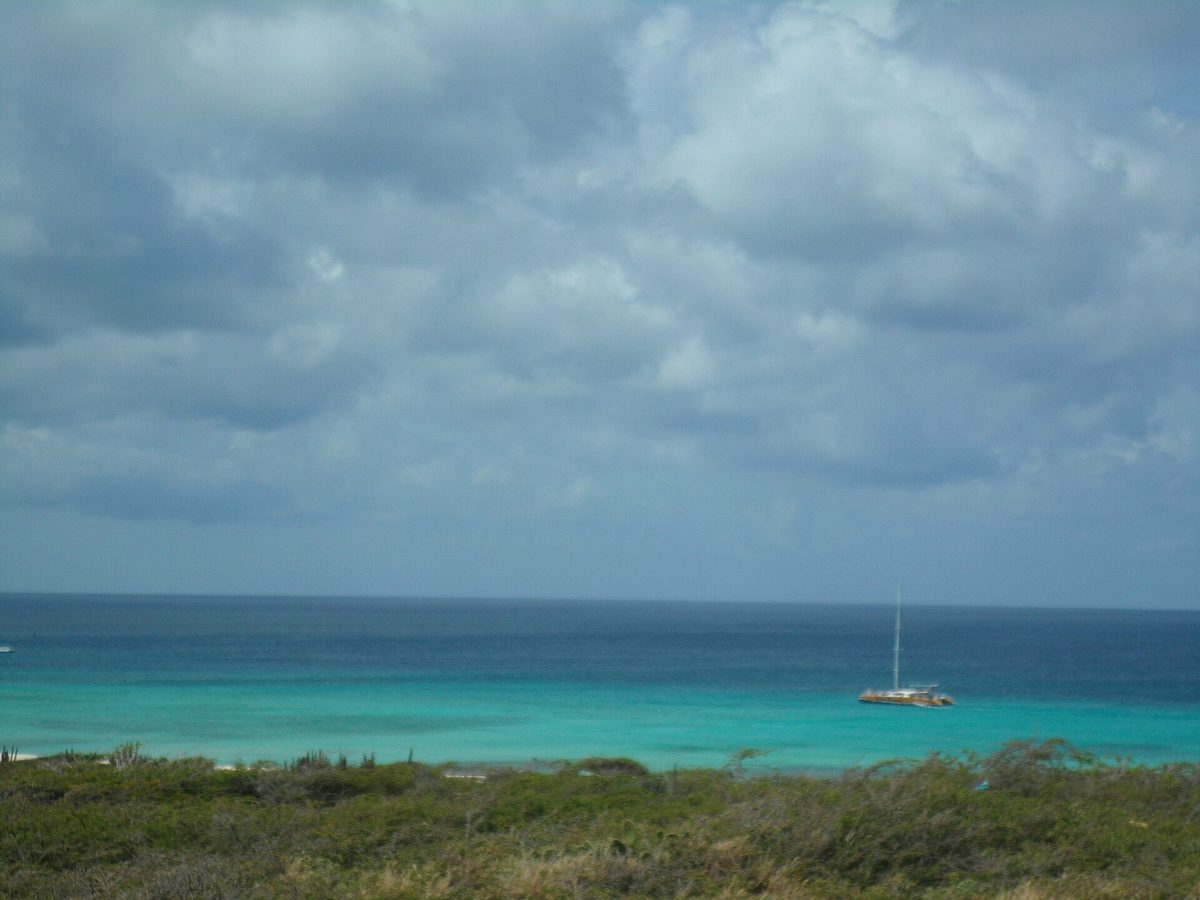
Snorkel tours
The classic outing is a half-day catamaran or schooner cruise that leaves from the Palm Beach area and combines the Antilla with one or two calmer reef stops, usually Boca Catalina or Malmok reef. Expect something like three hours on the water, around 45 minutes of snorkel time at the wreck, and an open bar plus a light lunch or snacks on the sail back. Snorkel gear and a quick lesson are almost always included. Prices generally land in the US$60-$90 per adult range, with party-oriented boats, premium catamarans and sunset sails sitting at the higher end. Children’s rates are common, which is part of why this trip works so well for families visiting Aruba with kids.
Scuba dives
Dive shops on the island run guided boat dives to the Antilla, often as one tank of a two-tank morning trip paired with another nearby wreck or reef. A single guided dive typically runs in the region of US$70-$120 depending on the operator and whether gear rental is included; multi-dive packages bring the per-dive cost down. If you are not yet certified but want to dive the wreck, some shops offer a Discover Scuba experience, though depth limits on intro dives mean you may see the shallower structure rather than the full wreck.
Booking tips that save money and hassle
- Book a morning slot. The sea is calmest and clearest before the afternoon trade winds build, which matters a lot at this exposed site.
- Match the boat to your vibe. Some catamarans are floating parties; others are mellow and family-friendly. Read recent reviews and ask before you pay.
- Combine it. The Antilla almost always comes packaged with a second, calmer snorkel stop, which is great if you have anxious swimmers or kids in the group.
- Mind your budget. A snorkel cruise is one of the better-value half-days on the island; see how it fits the bigger picture in our breakdown of Aruba vacation costs.
For getting to the marina or meeting point, most tours either include a hotel-area pickup or ask you to meet at Palm Beach; our guide to getting to and around Aruba covers taxis, rental cars and the bus if you are staying farther afield. And if you are still mapping your days, the wreck slots neatly into a classic west-coast itinerary, as you will see in our sample Aruba itinerary.
The Antilla by traveler type
Who you are travelling with changes how you should approach the wreck.
Families and cruise-day visitors
A combo snorkel sail is ideal. Kids love the pirate-style schooners and the rope swings some boats rig off the back, and the second, sheltered stop gives less confident swimmers a gentle option if the wreck feels too choppy. If you are in port for the day, a morning Antilla cruise is one of the most rewarding ways to spend limited time, just leave a comfortable buffer before your ship’s all-aboard.
Couples and honeymooners
Pick a smaller catamaran or a sunset sail for something more relaxed and romantic. Gliding over a WWII wreck and then sipping a drink as the sun drops into the Caribbean is a genuinely memorable afternoon, and it pairs well with the slower-paced ideas in our Aruba honeymoon guide.
Adventure seekers and divers
Certified divers should treat the Antilla as the centerpiece of a dive day and consider a two-tank trip to pair it with another of Aruba’s wrecks. Confident snorkelers can push themselves to free-dive toward the masts. Either way, it slots in alongside the island’s other active pursuits covered across our Aruba water sports hub and the wider list of best things to do in Aruba.
Conditions and the best time to visit
Aruba’s water is warm and inviting all year, hovering between roughly 78°F in winter and 84°F in summer, so a thin rash guard is usually all you need for sun protection, with a shorty wetsuit nice for longer dives. The bigger variable here is wind and swell, not temperature.
Because the wreck sits in open water off an exposed coast, the constant easterly trade winds can churn the surface and push a current of one to two knots across the site. Mornings are reliably calmer and clearer than afternoons, which is the single most useful piece of timing advice I can give you. Aruba sits below the main hurricane belt and enjoys dry, breezy weather most of the year; if you want to dig into seasonal trade-offs, our guide to the best time to visit Aruba goes deeper. The takeaway for the Antilla specifically: book a morning trip, and on a windy week, go on the calmest forecast day you can.
Practical tips for visiting the Antilla shipwreck Aruba snorkelers should know
- Reef-safe sunscreen only, and apply it before you board so it does not wash straight onto the coral. Aruba takes reef protection seriously.
- Bring or rent a wetsuit/rash guard. It protects against sun on long surface swims and adds warmth on dives.
- Use the boat’s mooring as your reference. Start up-current, explore, and let the current ease you back toward the boat rather than fighting it the whole time.
- Mind sharp metal and stinging coral. Look but do not grab; the wreck has plenty of jagged edges and fire coral.
- Leave penetration to trained wreck divers. The interior has been weakened by decades of storms.
- Bring an underwater camera. The sponges and silhouetted hull photograph beautifully, especially in morning light.
- Pack motion-sickness tablets if you are prone to it. The exposed site can be bouncy on the surface.
For more island-wide know-how, from tipping to tap water to packing, our Aruba travel essentials cover the practical details that make a first trip smoother. If you are still deciding where to base yourself for easy access to the northwest coast tours, see where to stay in Aruba. And if budget is your priority, the snorkel cruise is one paid splurge worth pairing with plenty of free things to do in Aruba.
Frequently asked questions about the Antilla shipwreck
Can you snorkel the Antilla shipwreck or do you have to dive?
You can absolutely snorkel it. Because the wreck lies on its side in shallow water, its masts and upper sections reach to within about 5 to 15 feet of the surface, so snorkelers can see the hull and the fish around it from above. Divers experience the full structure and the deeper holds, but non-divers still get a genuine sense of the wreck’s scale.
How deep is the Antilla wreck?
The seabed around the Antilla sits at roughly 55 to 60 feet (about 17 to 18 metres), while the highest parts of the wreck rise to within 5 to 15 feet of the surface. That shallow maximum depth keeps it comfortably within recreational dive limits and is exactly why it works for both snorkelers and scuba divers.
Why did the Antilla sink?
It was deliberately scuttled by its own German crew on 10 May 1940, the day Germany invaded the Netherlands. To stop the ship falling into Dutch hands, the crew opened the seacocks and set fires aboard. It was never torpedoed or sunk in battle, which is part of why it remains so large and intact today.
How do you get to the Antilla shipwreck?
By boat only. The wreck lies offshore from Malmok, north of Palm Beach, and most visitors reach it on a half-day catamaran or schooner snorkel cruise, or on a guided boat dive. Do not attempt to swim out from Malmok Beach; it is too far, with strong currents and heavy boat traffic.
How much does an Antilla snorkel tour cost?
Most three-hour catamaran snorkel cruises that include the Antilla run roughly US$60 to $90 per adult, typically with snorkel gear, an open bar and a light lunch included. Guided scuba dives usually cost about US$70 to $120. Prices vary by operator, season and whether it is a party boat or a premium sail.
Is the Antilla shipwreck good for beginners?
For snorkeling, it suits confident swimmers more than total beginners, mainly because of open-water chop and current, though a flotation vest and a calm morning make it manageable for many. For diving, its shallow depth makes it an excellent Open Water-level wreck. Nervous swimmers should choose a morning trip with a sheltered second stop.
What marine life will I see at the Antilla?
Expect schools of sergeant majors, blue tang, grunts and snappers, plus parrotfish, butterflyfish and big bar jacks. Coral and colourful tube sponges cover the hull, moray eels and lobsters hide in the crevices, and you may spot hawksbill turtles or, with luck, the large grouper that has been reported in the forward section.
Final thoughts
Few snorkel or dive sites give you a story like this one. The Antilla is not just a pretty reef; it is a 400-foot piece of World War II history that sank on a single dramatic morning and has spent the decades since turning into a living artificial reef. Whether you float over her masts on a catamaran sail or drop down to swim her steel canyons on scuba, you come away with the same feeling: that you have seen something genuinely rare. Book a calm morning, bring a camera, and let Aruba’s most famous wreck do the rest.
Photo credits
- Historic photo of the SS Antilla — CC BY 2.0 via Wikimedia Commons.
- Garden eels at the Antilla wreck, Aruba — Photo: Serge Melki from Indianapolis, USA / CC BY 2.0 via Wikimedia Commons.
- Diver over a sunken wreck — Photo: National Marine Sanctuaries (Public domain / CC0) via Wikimedia Commons.
- Tube sponges and coral reef — Photo: Jstuby (Public domain / CC0) via Wikimedia Commons.
- Catamaran in Aruba waters — Photo: EgorovaSvetlana / CC BY-SA 4.0 via Wikimedia Commons.
Sources consulted: Aruba Tourism Authority (aruba.com); Wikipedia, “SS Antilla (1939)”; PADI dive-site listing; field notes from local dive operators.