Yes — and I would argue it is one of the lowest-stress Caribbean islands you can bring kids to. After several family trips down to the southern Caribbean, Aruba is the one I recommend first to parents who want sun, calm water, and a vacation that does not feel like a logistical obstacle course. The beaches are gentle, the flights from the US are short, almost everyone speaks English, and the island is small enough that you are never more than 40 minutes from your hotel.
So when people ask me, is aruba good for families, my answer is an easy yes — but I am not here to sell you a postcard. Aruba has real trade-offs: it is pricey, the wind can be relentless, and if your kids are dreaming of roller coasters and theme parks, this is not that island. Below is the honest version — what makes Aruba genuinely great for families, where it falls short, and exactly who should book it (and who might be happier somewhere else).
The short answer: Aruba is an excellent family destination. It sits outside the main hurricane belt for reliable sun, it is one of the safer islands in the region, it has unusually calm and shallow beaches for young kids, and the logistics — short flights, English everywhere, US dollars, safe tap water — are genuinely easy. The main catch is cost: Aruba is one of the more expensive Caribbean islands for a family.
At a Glance: Is Aruba Family-Friendly?
If you only have 30 seconds, here is the balanced picture — what Aruba does brilliantly for families, and where you should set expectations.
| Great for families because… | Less ideal if… |
|---|---|
| Calm, shallow, swimmable beaches (Baby Beach, Palm Beach, Eagle Beach) | You are on a tight budget — Aruba is one of the priciest Caribbean islands |
| Outside the main hurricane belt — reliable, dry, sunny weather | Your kids want big theme parks or marquee attractions |
| One of the safer Caribbean islands, with very low violent crime | You dislike wind — the trade winds blow nearly every day |
| Easy logistics: short US flights, English spoken, US dollars, safe tap water | You want lush rainforest scenery — Aruba is dry and desert-like |
| Compact island — nothing is more than ~40 minutes away | You need rough windward surf to stay out of reach of toddlers |
| Family resorts with kids’ clubs, pools, and easy beach access | You are hoping for budget all-inclusive deals like Mexico or the Dominican Republic offer |
Safety: One of the Calmer Caribbean Islands for Kids
The first question most parents ask me is about safety, so let me put it plainly: Aruba is consistently ranked among the safest islands in the Caribbean, and that reputation matches my experience on the ground. Violent crime aimed at tourists is rare. The island’s economy runs almost entirely on tourism, and you can feel how much that shapes daily life — people are genuinely welcoming, and the vibe around the resort strips and Oranjestad is relaxed rather than hustly.
That does not mean you switch your brain off. The realistic risks are the same petty ones you would watch for anywhere: don’t leave phones and bags unattended on the sand while you swim, lock valuables in the in-room safe, and keep an eye out for the occasional opportunistic pickpocket in busy market areas. Rent a car and you will find driving calm and orderly — Arubans drive on the right, and signage is in a mix of Dutch and English. For the full rundown of practical do’s and don’ts, our Aruba travel tips guide covers everything from tipping to what to pack.
The bigger safety conversation for families is actually the water and the sun, not crime — and I will get to both below, because they are where small kids genuinely need supervision.
Weather: Reliable Sun, Outside the Hurricane Belt
This is one of Aruba’s quiet superpowers for family travel. The island sits in the far southern Caribbean, roughly 15 miles off the coast of Venezuela, which puts it well below the main hurricane corridor. Hurricanes are not impossible here, but direct hits are genuinely rare — far rarer than on islands further north. If you are booking a school-break trip months in advance and the idea of a storm wrecking your plans keeps you up at night, Aruba is about as low-risk as the Caribbean gets.
The climate is hot, dry, and remarkably consistent. Daytime highs sit in the mid-to-upper 80s Fahrenheit nearly year-round, the humidity is lower than most tropical destinations, and the island only gets about 20 inches of rain a year — usually in brief showers, mostly in the fall. What you will not get is the washed-out, rainy afternoons that plague greener islands. For families, that reliability is gold: you can plan a beach day and actually have a beach day.
The flip side is the wind. Aruba’s trade winds blow steadily almost every day, and while they make the heat feel pleasant, they can whip sand around and tip over umbrellas. For figuring out exactly when to come — balancing crowds, price, and weather around your kids’ school calendar — our guide to the best time to visit Aruba breaks down each season.
Easy Logistics: Why Aruba Just Works With Kids
Traveling with children is an exercise in friction management, and this is where Aruba quietly shines. A handful of things make it dramatically easier than other tropical options:
- Short flights. There are direct flights to Aruba from a long list of US East Coast and southern hubs, and most are around four to five hours — survivable even with a restless toddler. Getting there and getting around once you land is covered in our getting to and around Aruba guide.
- English everywhere. The official languages are Dutch and Papiamento, but English is spoken almost universally, especially in tourism. You will never struggle to ask for a high chair, a pharmacy, or directions.
- US dollars are accepted island-wide. The local currency is the Aruban florin, but dollars are taken everywhere, and you rarely need to fuss with currency exchange. Credit cards work nearly everywhere too.
- Tap water is safe to drink. Aruba’s tap water comes from one of the world’s largest desalination plants and is perfectly safe — one less thing to worry about when you are mixing bottles or filling water cups for kids.
- It is tiny. The whole island is about 20 miles long. You are never far from your hotel, a pharmacy, or a hospital, which takes a lot of the anxiety out of traveling with little ones.
Add it up and Aruba removes most of the small stresses that turn a family trip into a slog. That ease is a huge part of the answer to whether Aruba is good for families.
Calm, Swimmable Beaches Made for Little Kids
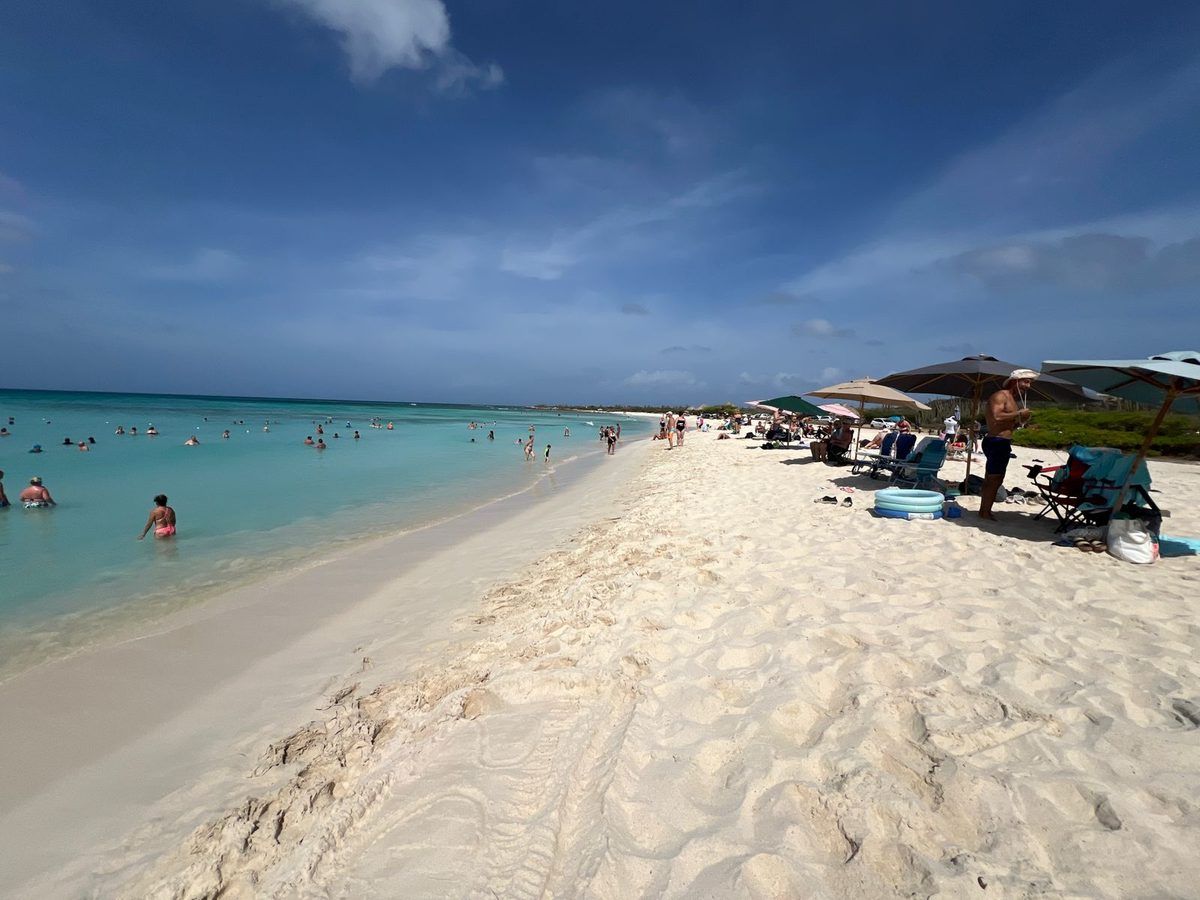
If there is one reason Aruba edges out its neighbors for young families, it is the beaches on the leeward (western and southern) coast. Sheltered from the open ocean swell, the water here is bath-calm, shallow for a long way out, and clear enough to see your toes. For a parent watching a five-year-old wade in, that gentle, gradual slope is everything. Our full guide to Aruba’s beaches ranks them all, but these are the ones I steer families toward:
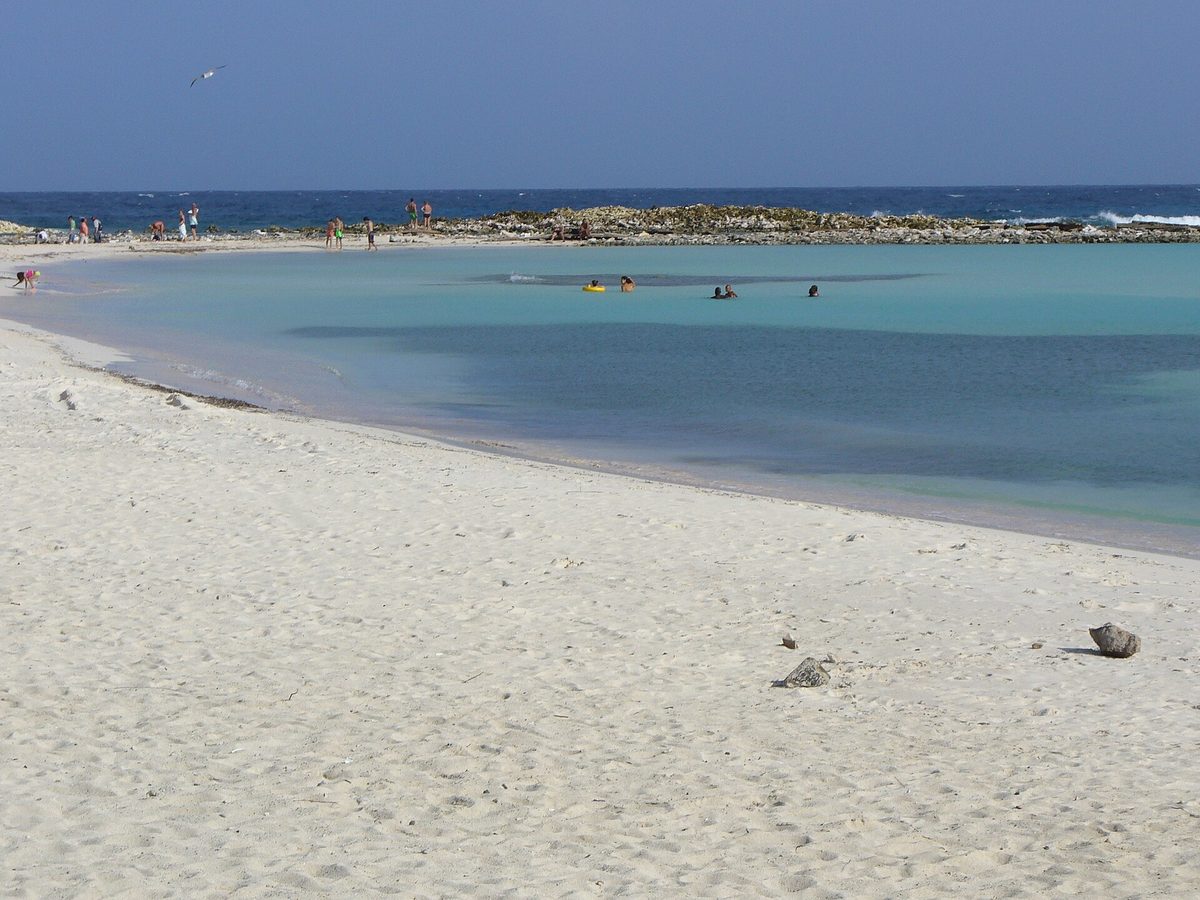
- Baby Beach — the gold standard for tiny kids. It is a shallow, crescent-shaped lagoon at the island’s southern tip where the water barely reaches a toddler’s waist for a long way out. Calm, warm, and protected, with easy snorkeling near the edges. Just keep kids inside the lagoon, as the current picks up beyond the reef.
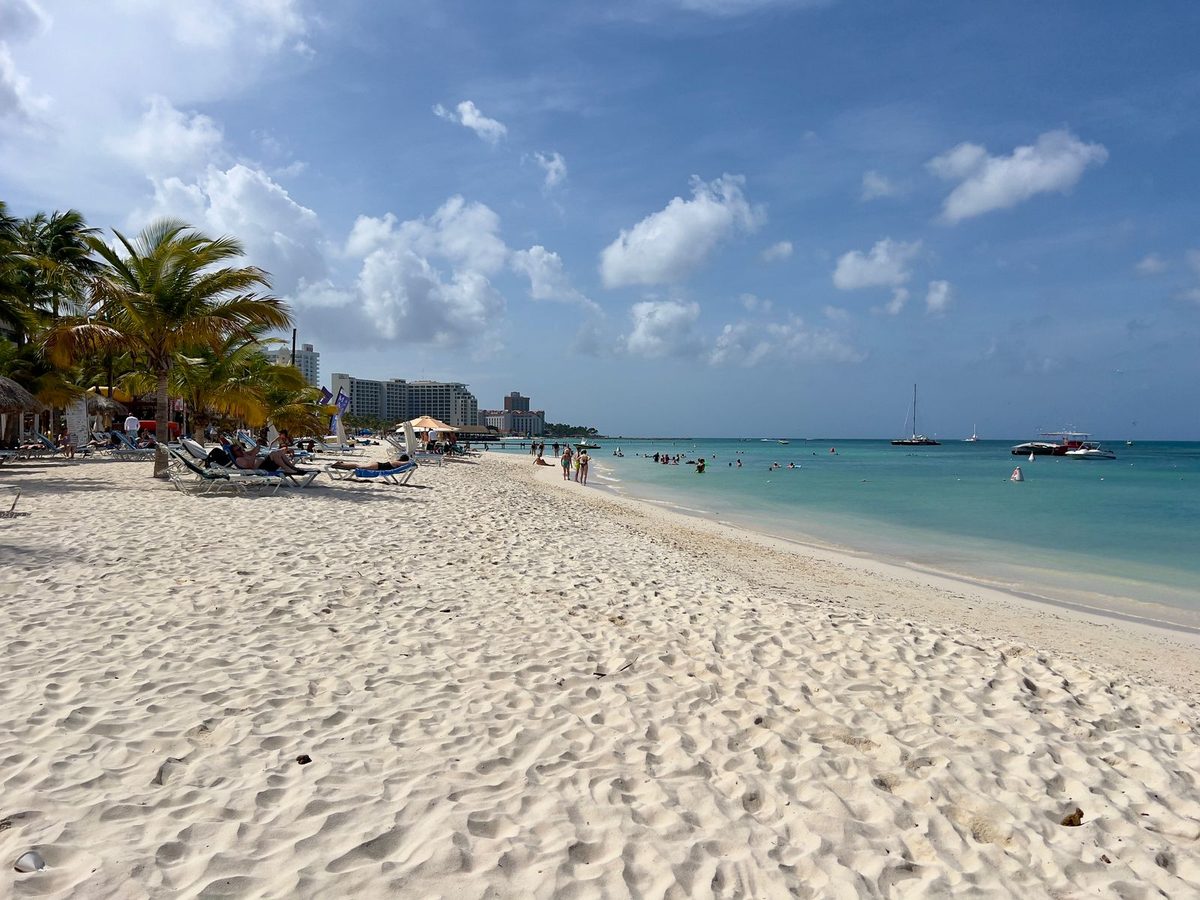
- Palm Beach — the lively high-rise strip, lined with family resorts, water-sports stands, restaurants, and palapas. The water is calm and the beach is wide; it is the most convenient choice if you want to walk out your hotel door and onto the sand.
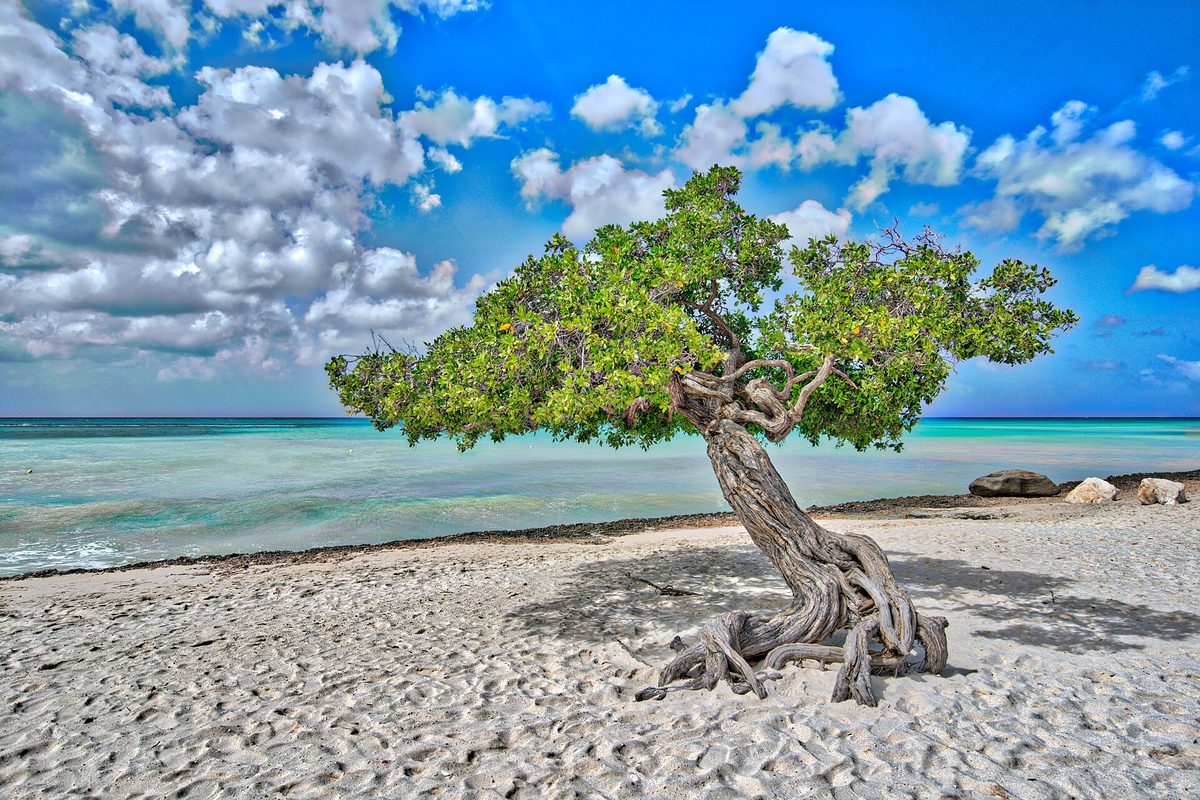
- Eagle Beach — consistently rated one of the best beaches in the world, and rightly so. Wider and more laid-back than Palm Beach, with soft white sand, the iconic divi-divi trees, and space to spread out without crowds. Gentle surf, great for sandcastles and wading.
- Arashi Beach — a quieter, locals-and-families favorite near the northwest tip, with calm water and good snorkeling close to shore.
- Mangel Halto — a sheltered, mangrove-lined spot that is calmer and shallower than it looks, popular for first-time snorkelers.
A real safety note from experience: not every Aruba beach is kid-calm. The windward (eastern) coast — places like Boca Grandi and the wild side near the national park — has rough surf, strong currents, and undertow. Those beaches are stunning to look at but genuinely dangerous for swimming, so they are for photos and exploring, not for letting kids splash. Stick to the leeward beaches and you are golden.
Family Resorts and Kid-Friendly Food
Aruba’s accommodation scene is built for families, particularly along Palm Beach and Eagle Beach. The big-name resorts come with the full kit: pools with slides, supervised kids’ clubs, beachfront access, and recreation teams running activities, which buys parents a little downtime. Many of the larger properties are all-inclusive, which can simplify life enormously with kids — meals, snacks, and drinks are handled, and you are not nickel-and-diming every ice cream. Our guide to Aruba all-inclusive resorts and our broader where to stay in Aruba overview help you match a neighborhood and property to your family’s age range and budget.
Where you stay matters more than usual when you have kids. Palm Beach puts you in the thick of it — restaurants, shops, and water sports within a stroll. Eagle Beach is calmer and more spread out. If you want a kitchen and more space (a real money-saver with a family), a vacation rental or condo in either area works well.
On food, Aruba is easy. The island’s dining scene is relaxed and used to families — kids’ menus are common, casual beachfront spots welcome sandy toddlers, and because nearly 90 nationalities call Aruba home, you will find everything from burgers and pizza to fresh-caught fish and Dutch pancakes. Picky eaters will not go hungry. Our Aruba restaurants guide has the full rundown, including the famous toes-in-the-sand dinner spots that, frankly, kids love as much as adults.
Things to Do Across Every Age
Beyond the beach, Aruba has a surprising depth of family activities — especially the animal encounters and gentle adventure that work for a range of ages. You will not run out of ideas before you run out of days. Our master list of things to do in Aruba and our roundup of the best things to do in Aruba go deeper, but here are the family winners:
- Animal experiences. The Donkey Sanctuary (free, donation-based) lets kids feed rescued donkeys; the Butterfly Farm is a magical walk-through; the Ostrich Farm and Philip’s Animal Garden round out the menagerie. These are the activities my kids talked about for weeks.
- Snorkeling and gentle water adventures. Shallow reefs make Aruba a fantastic place for a child’s first snorkel. Glass-bottom boats, the Atlantis submarine, and easygoing catamaran cruises (some with a “pirate ship” theme and a rope swing) suit kids who can’t swim confidently yet. Browse family-appropriate options in our Aruba excursions guide and water sports overview.
- Arikok National Park. Nearly 20% of the island is protected desert park — caves with light streaming through the ceiling, gold-mine ruins, and rugged trails. Older kids love the adventure; rent a 4×4 and make a half-day of it. Details in our Arikok National Park guide.
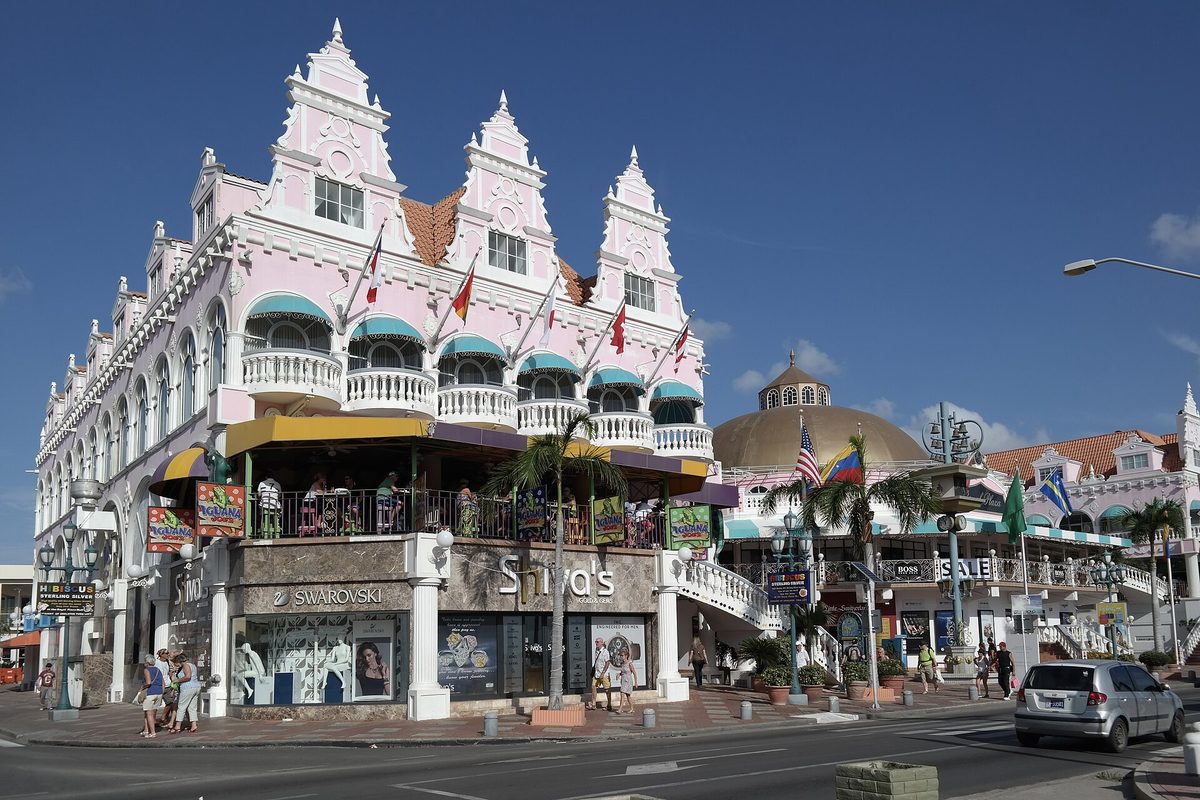
- Landmarks and free fun. Climb the California Lighthouse for panoramic views, explore Oranjestad’s pastel streets and the free trolley, or hike the 561 steps up the Hooiberg. Plenty of these cost nothing — see our free things to do in Aruba list.
- Indoor and rainy-day backups. Water parks, indoor playgrounds, and bowling give you an escape from the midday sun — useful for naps-and-energy management with younger kids.
For families who want it all mapped out, our day-by-day Aruba itinerary shows how to pace a week so you are not cramming activities into overheated, overtired afternoons.
Health, Sun, and Accessibility
Aruba is an easy place to keep a family healthy, with a few sensible precautions. The island has a modern hospital (Horacio Oduber Hospital) and well-stocked pharmacies, so if a kid spikes a fever or scrapes a knee, care is close and competent — a real comfort on the compact island. No special vaccinations are required for most travelers, and because Aruba is so dry, mosquitoes are less of a problem than on greener islands, though I would still pack repellent for evenings.
The genuine health watch-out here is the sun. Aruba sits close to the equator, the trade winds mask how hard you are burning, and the reflection off white sand and water is intense. I have seen more kids get scorched in Aruba than anywhere, simply because the breeze hides the heat. Pack and reapply high-SPF, reef-safe sunscreen, put little ones in rash guards and hats, build in shade breaks, and push water — sunburn and mild dehydration are by far the most likely things to derail a day.
On accessibility, Aruba is better than most Caribbean islands. The main resort areas, Oranjestad, and the larger beaches have paved paths, ramps, and reasonably stroller- and wheelchair-friendly access, and some beaches offer mobility mats and floating beach wheelchairs. The rugged interior and windward coast are another story — those are 4×4 territory, not stroller territory — but for day-to-day resort and beach life, families with strollers or grandparents with limited mobility will find it manageable.
The Honest Downsides (What Aruba Is Not)
Every guide will tell you Aruba is paradise. It mostly is — but a balanced answer means being straight about where it falls short, so you book with open eyes.
- It is expensive. This is the big one. Aruba is one of the pricier Caribbean islands — resorts, food, and activities all cost more than comparable trips to Mexico or the Dominican Republic. A family week adds up fast. You can manage it with a condo, a rental car, and some grocery-store meals, and our Aruba vacation cost breakdown shows realistic numbers so there are no surprises.
- Limited “big” attractions. There are no major theme parks, no marquee roller coasters, no giant aquariums. Aruba’s magic is beaches, nature, and animal encounters. Kids who need constant high-octane entertainment may get restless; kids who are happy with sand, snorkels, and donkeys will be in heaven.
- The wind. Those lovely cooling trade winds blow nearly every day, and on the windier stretches they fling sand and topple umbrellas. It is rarely a dealbreaker, but it surprises people who picture a still, glassy tropical beach.
- Rough surf on the windward side. The eastern coast is genuinely unsafe for swimming — strong currents and undertow. It is a non-issue if you stick to the calm leeward beaches, but it means roughly half the island’s coastline is look-don’t-swim with kids.
- It is dry and desert-like. If you are picturing lush jungle and waterfalls, Aruba is cactus, divi-divi trees, and scrubland. Beautiful in its own stark way, but not the green tropical fantasy some families expect.
- Sun intensity. Worth repeating — the sunburn risk is real and the most common thing that goes wrong on a family trip here.
None of these are reasons to skip Aruba. They are reasons to set expectations and budget honestly.
So, Is Aruba Good for Families?
Yes. Weighing the calm beaches, the reliable weather, the safety, and the genuinely easy logistics against the cost and the lack of big-ticket attractions, Aruba lands firmly on the “great” side for most families — and it is especially well-suited to families with young children, where the gentle water and short flights matter most. The question of whether Aruba is good for families really comes down to what you want out of a trip: if it is sunshine, beach time, low stress, and a feeling of safety, Aruba over-delivers. If it is theme-park thrills on a tight budget, you will get better value elsewhere.
Here is how I’d sort it out:
Aruba suits you best if: you have young kids and want calm, shallow water; you value safety and easy logistics; you are booking around a school break and want low hurricane risk; you want a relaxed beach-and-nature trip rather than a packed itinerary; and you have the budget for a slightly more premium Caribbean week. It is also a fantastic multi-generational choice — the ease and accessibility make it work for grandparents traveling alongside grandkids.
You might prefer elsewhere if: budget is the deciding factor (Mexico or the DR stretch further); your kids crave theme parks and major attractions; you want lush rainforest scenery; or you are after a party-forward trip rather than a family one. Aruba has great dining and nightlife, but it leans relaxed and family-oriented rather than wild.
For most families reading this — especially those with kids under about 12 — Aruba is one of the safest, easiest, most reliably sunny choices in the Caribbean. Start with our parent guide to visiting Aruba with kids to pull the whole plan together.
Frequently Asked Questions
Is Aruba a good place to visit with kids?
Yes. Aruba is one of the most kid-friendly Caribbean islands, thanks to calm, shallow beaches like Baby Beach, a strong safety record, easy logistics (short US flights, English, US dollars, safe tap water), and family resorts with kids’ clubs. The main trade-off is cost, since Aruba is pricier than many neighboring islands.
Can kids snorkel in Aruba?
Absolutely. Aruba’s shallow, calm leeward reefs make it one of the best places for a child’s first snorkel. Baby Beach, Mangel Halto, and Arashi have clear, gentle water close to shore. For nervous beginners, book a guided family snorkel tour with gear and a guide, and always keep a close eye on kids near the water.
Is it safe to swim in the ocean in Aruba?
On the leeward (western and southern) beaches, yes — the water is shallow, clear, and usually calm with little current. The windward (eastern) coast is a different story, with strong currents and undertow that make it unsafe for swimming. Stick to Palm, Eagle, Baby, and Arashi beaches with kids, and check conditions when you arrive.
What is the best time to visit Aruba with family?
Aruba is a year-round destination with reliable sun and low hurricane risk. For the best balance of weather, lower crowds, and better prices, the shoulder months (roughly April to early June, and September to mid-November) are ideal. Peak season runs mid-December through April. See our best-time-to-visit guide to plan around school breaks.
Is Aruba expensive for families?
Yes — Aruba is one of the more expensive Caribbean islands. Resorts, dining, and activities cost more than comparable trips to Mexico or the Dominican Republic. You can soften the hit with a condo or vacation rental, a rental car, grocery-store breakfasts, and an all-inclusive resort that bundles meals. Our Aruba vacation cost guide has realistic family numbers.
Can children visit the Aruba flamingos?
Yes, with a caveat. The famous flamingos live on Renaissance Island’s Flamingo Beach, which is adults-only for most of the day but opens to children for a window each morning. Families can also visit the island’s kid-friendly Iguana Beach side anytime, where you can still spot flamingos, iguanas, and calm, shallow water for little ones.
Do you need a car in Aruba with kids?
Not strictly, but it helps. If you are staying on Palm or Eagle Beach, you can walk to restaurants, shops, and the sand. A rental car becomes worthwhile if you want to explore beyond the resort strip — Baby Beach, Arikok National Park, and the lighthouse all reward a car, and an SUV is best for the island’s rougher interior roads.
By the ArubaTourism.org team — Last updated October 2026.
Photo credits:
- oranjestad-aruba-c6.jpg — Photo: Choinowski / CC BY-SA 4.0 via Wikimedia Commons
- baby-beach-aruba.jpg — Photo: Dje9537459 (Public domain) via Wikimedia Commons
- eagle-beach-divi-aruba.jpg — Photo: sbmeaper1 (CC0) via Wikimedia Commons
- palm-beach-aruba.jpg — Photo: Kwihi / CC BY 4.0 via Wikimedia Commons
- arashi-beach-aruba.jpg — Photo: Kwihi / CC BY 4.0 via Wikimedia Commons