What can you actually book when your group spans a five-year-old who melts down by 1 p.m., a cautious ten-year-old who hates surprises, and a grandparent who would rather not climb a ladder into a boat? That is the real question behind planning a family day out here, and the honest answer is: more than you would think, but not everything is right for everyone. After a dozen trips with kids of my own and a notebook full of what worked and what ended in tears, I have come to treat Aruba excursions for families less as a bucket list and more as a matching exercise — the right tour for the right ages, on the right day.
This island makes that easier than most. The water on the leeward (western) side is calm and clear, the distances are tiny, almost everyone speaks English, and the tour operators here are used to mixed-age groups. You can be snorkeling over a shipwreck by mid-morning and back at the pool before the afternoon heat peaks. Below, I have organized everything by theme and by age, with rough prices, durations, and the small print — age minimums, seasickness, sun — that nobody tells you until you are already on the dock.
What are the best family excursions in Aruba? The best family excursions in Aruba are a calm-water catamaran snorkel sail, a glass-bottom boat or Atlantis-style submarine for non-swimmers, a UTV or jeep safari to Arikok National Park and the Natural Pool for older kids, and a day pass to De Palm Island for mixed ages. Match the tour to your youngest child and your group’s tolerance for heat, water, and bumps.
At a glance: family excursions in Aruba
Here is the quick version — the tours I come back to, who they suit, and what to expect. Treat every price as “around” and check the current rate when you book; operators change them seasonally and most quote per person (pp).
| Excursion | Best ages / min age | Approx price pp | Duration | Thrill or calm |
|---|---|---|---|---|
| Catamaran snorkel sail | 6+ comfortable; toddlers OK to ride along | ~$55–$110 | 3–5 hrs | Calm, social |
| Rope-swing “pirate” sail | 5+ (swing is optional) | ~$50–$100 | ~3 hrs | Playful, lively |
| Glass-bottom boat | All ages, incl. babies | ~$30–$45 | ~1.5 hrs | Very calm |
| Atlantis submarine | All ages; min height ~36 in / 4 yrs | ~$110–$130 | ~2 hrs total | Calm, “wow” |
| Semi-submarine (Seaworld Explorer) | All ages | ~$50–$65 | ~1.5 hrs | Calm |
| Banana boat / tubing | ~6+ (varies) | ~$25–$45 | 15–30 min | Thrill |
| UTV / jeep Arikok & Natural Pool | Self-drive UTV often 16+ to drive; jeep tours 4–6+ to ride | ~$90–$170 | 4–6 hrs | Bumpy thrill |
| Horseback ride | ~6 or 8+ (operator-dependent) | ~$75–$110 | ~2 hrs | Gentle adventure |
| De Palm Island day pass | All ages; toddlers free/discounted | ~$110–$200 | Full day | Something for everyone |
| Animal farm / Aruba Aloe combo | All ages, great for little kids | ~$40–$60 | 2–4 hrs | Calm, educational |
If you only read this far: book one water tour, one land tour, and leave a slow beach day in between. That rhythm has saved more of my family vacations than any single “must-do.” For the bigger picture of traveling here with little ones, our guide to Aruba with kids is the parent hub this article sits under, and the broader Aruba excursions overview covers tours for all travelers, not just families.
On the water: boats, sails, and submarines
Most families spend their best hours offshore, and for good reason — the western coast is so sheltered that even nervous swimmers relax once they see the bottom through ten feet of clear water. The trick is matching the boat to your crew. A four-hour party catamaran is heaven for teens and exhausting for a toddler; a ninety-minute glass-bottom boat is perfect for a baby and underwhelming for a thrill-seeking twelve-year-old.
Catamaran snorkel sails
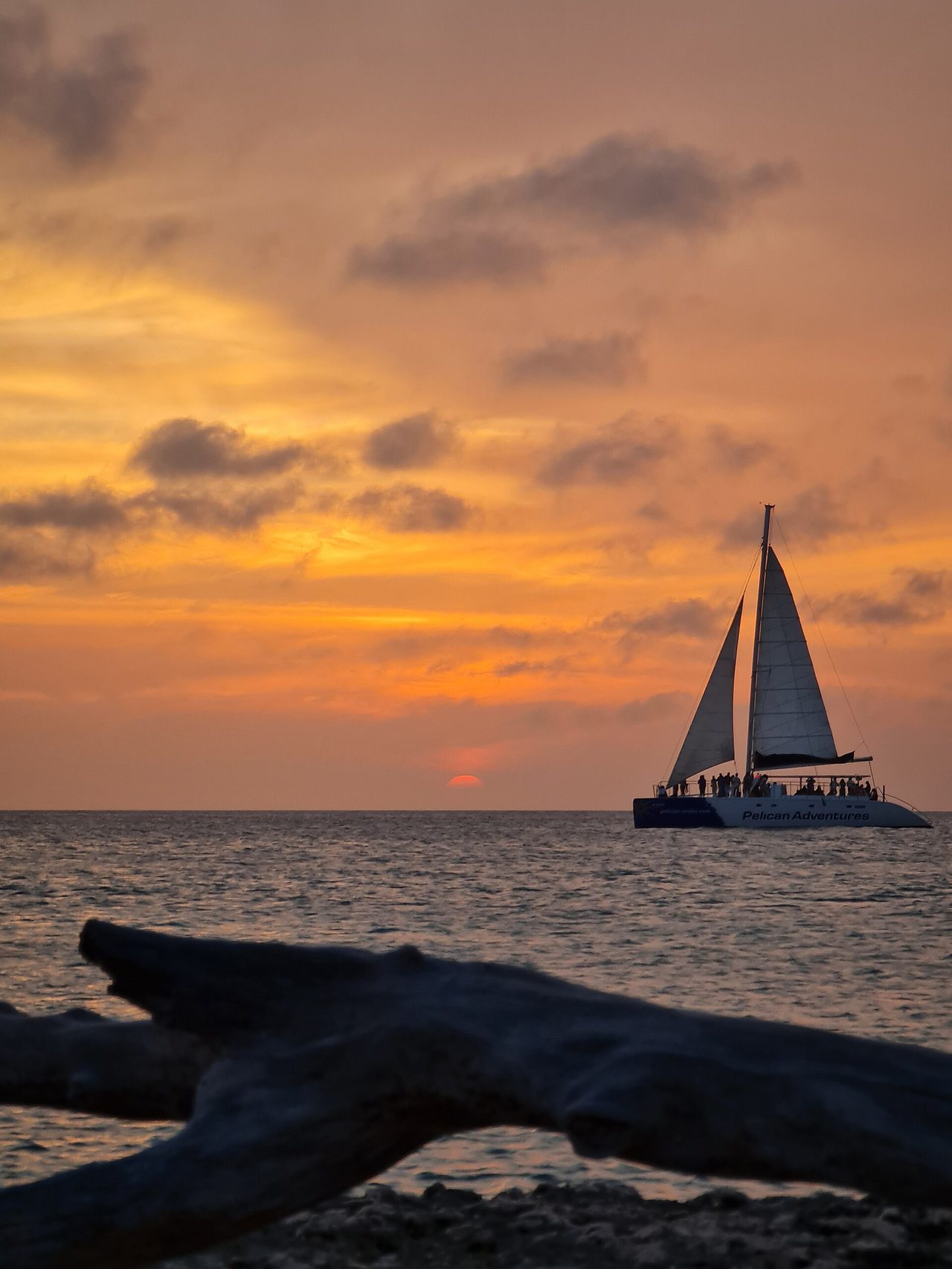
This is my default first booking. A big, stable catamaran (think Palm Pleasure, Red Sail, Tranquilo, De Palm) sails up the leeward coast, stops at two or three calm snorkel spots, and feeds everyone lunch or snacks with an open bar for the grown-ups. The deck is wide and flat, there is shade, and crews are genuinely good with kids — they will fit a snorkel vest on a six-year-old and keep a headcount in the water. Plan on three to five hours and around $55 to $110 per person depending on whether it is a morning snorkel sail or a longer day trip. Toddlers can usually ride along free or cheap and simply not snorkel; there is plenty to watch from the trampoline netting at the bow. If anyone in your group gets queasy, this is still the gentlest motion you will find under sail — more on seasickness below.
Rope-swing “pirate” sails
Several boats — the wooden “Jolly Pirates”-style ships are the famous ones — rig a rope swing off the side so kids (and brave adults) can launch themselves into the sea at a calm anchorage. My kids rank this as the single most fun thing they have done here, and the crew supervises every jump, so it feels adventurous without feeling reckless. The swing is always optional; a cautious child can skip it entirely and still love the sailing and the snorkeling. These run around three hours and roughly $50 to $100 per person. A five-year-old can come along, but the swing tends to suit confident swimmers of about eight and up.
Glass-bottom boats and submarines for non-swimmers
Not every child wants to put their face in the water, and some grandparents simply do not want to get wet. This is where Aruba quietly shines. A glass-bottom boat is the cheapest, calmest option — around $30 to $45 per person for about ninety minutes, with reef and sometimes a wreck visible through the floor. It suits absolutely everyone, including babies.
A step up is the Atlantis submarine, a real submarine that descends to coral and a sunken wreck while a guide narrates. It is pricey (around $110 to $130 per person) and there is usually a minimum height or age (roughly 36 inches / about four years), but for a kid who is fascinated by the ocean and refuses to snorkel, the look on their face is worth it. A cheaper middle path is the Seaworld Explorer semi-submarine: you stay up top in the open air while the viewing deck sits below the waterline, gliding over Arashi Reef and the Antilla wreck for around $50 to $65 per person. No swimming, no claustrophobia, all ages. These three are my go-to recommendations whenever a family tells me their youngest “doesn’t do” snorkeling.
Banana boats, tubing, and parasailing
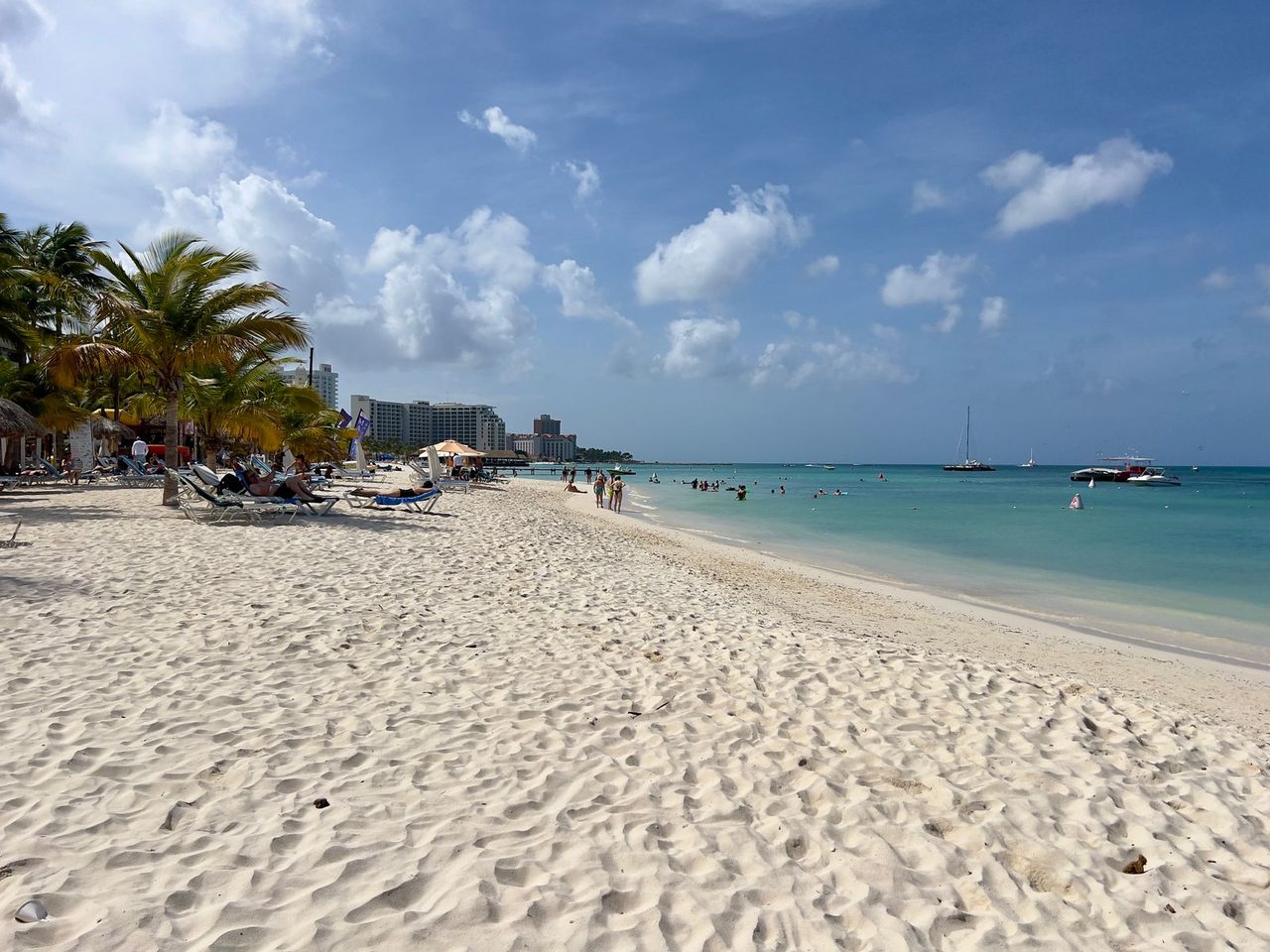
For pure adrenaline, the inflatable rides off Palm Beach deliver: a banana boat or a towable tube bounces a line of riders across the wake for fifteen to thirty minutes, usually around $25 to $45 per person. Age minimums vary — many operators want riders around six and up, and everyone wears a life vest. Parasailing is the teen-and-adult thrill (often a minimum weight or age, and a parent can ride tandem with a younger child at some outfits). None of this needs a full excursion slot; it is the kind of thing you book on the spot from a beach hut once you have read the conditions. If your family loves this stuff, our Aruba water sports guide goes deeper on operators, gear, and where the action is.
Under the sea: easy snorkel spots a tour can reach
You do not always need a boat. Some of Aruba’s best beginner snorkeling is a short drive or a quick tour stop away, in water shallow and calm enough that a first-timer can stand up and catch their breath. If your kids are new to a mask and snorkel, start here before committing to a half-day on the water.
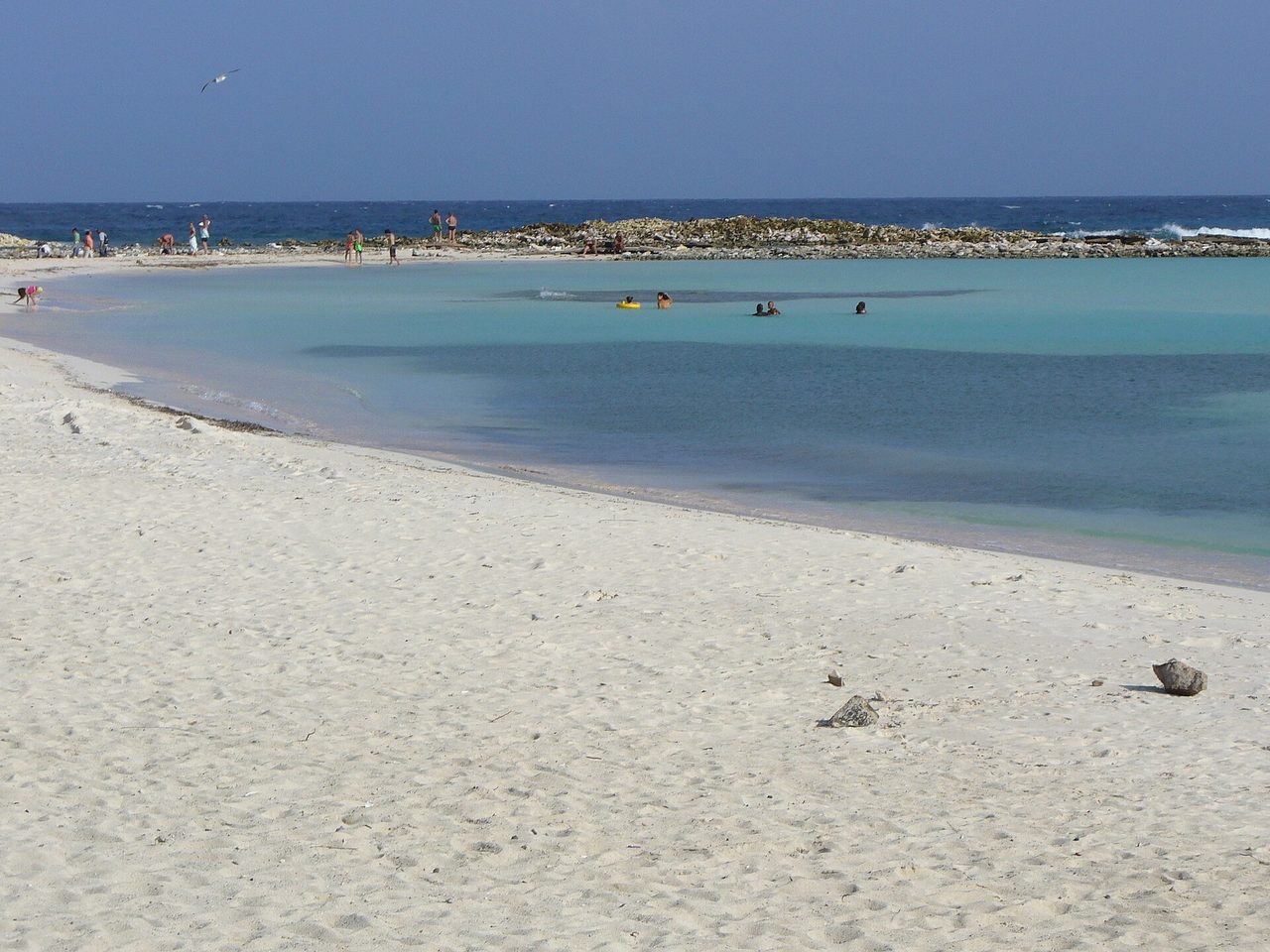
Boca Catalina, a small sheltered cove near Malmok on the calm northwest coast, is my favorite for cautious beginners — gentle entry, fish right off the sand, and no real current on a normal day. Mangel Halto, down south, has a protected lagoon ideal for little ones plus deeper reef just beyond for confident swimmers, so siblings of different abilities can share the same beach. Baby Beach at the island’s southern tip is a wide, shallow, bathtub-calm lagoon — the classic spot for a child’s very first time with a snorkel.
For older, stronger swimmers, the headline site is the Antilla shipwreck off Malmok — a 400-foot WWII-era German freighter resting in shallow-ish water, draped in coral and fish. Parts of it sit close enough to the surface that a strong ten-or-twelve-year-old snorkeler can see plenty without diving, and almost every catamaran snorkel sail includes it or nearby Arashi Reef. I would not take a nervous beginner there as their first swim, but for a kid who has found their confidence it is unforgettable. Whichever spot you choose, the safety rules are the same as anywhere: an adult in the water, vests for weak swimmers, reef-safe sunscreen, and a rash guard to spare everyone a burned back. Many of these coves double as lovely lounging spots, which is why they show up in our roundup of Aruba beaches as much as in any snorkeling guide.
Land tours: jeeps, the Natural Pool, horses, and farms
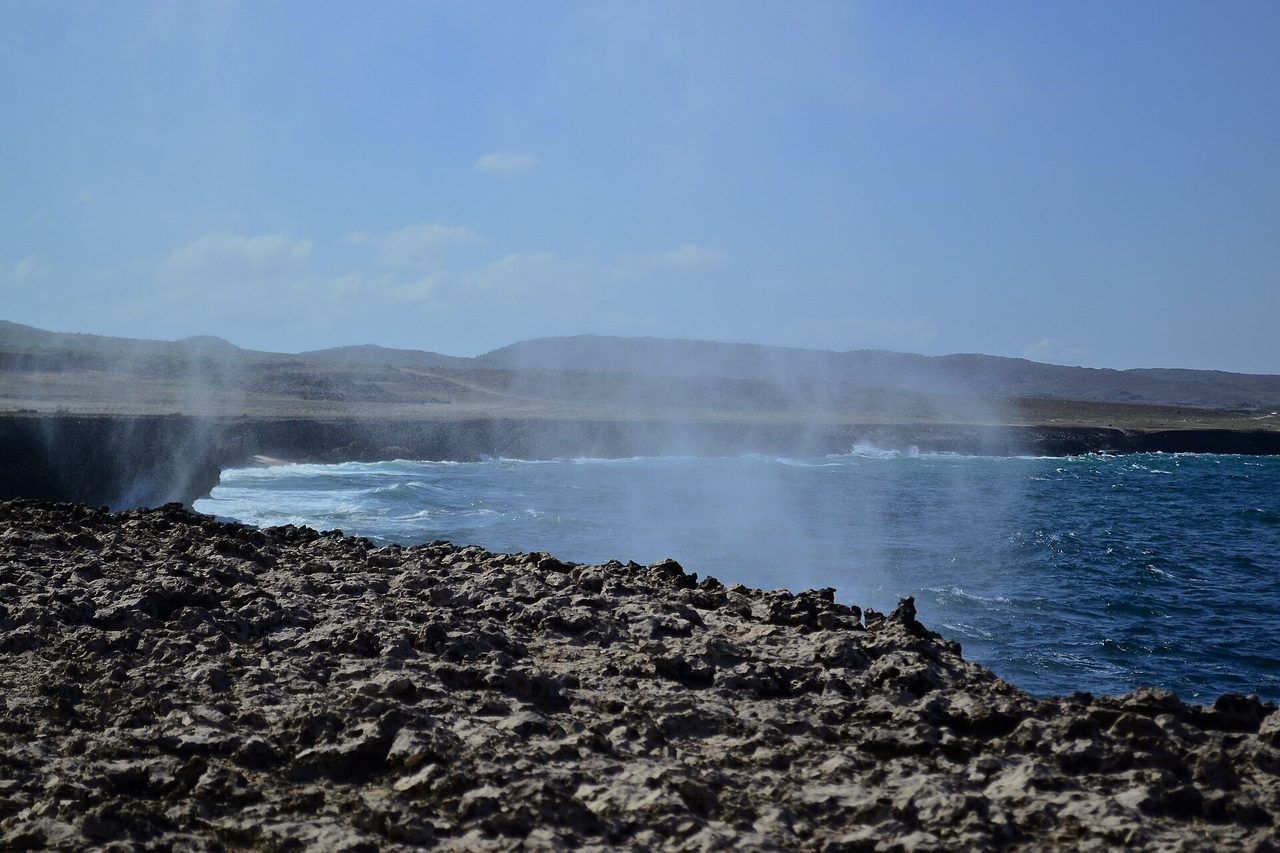
When everyone has had enough salt water, the interior of the island is a genuinely different world — cactus, boulders, wild surf on the windward coast, and the dramatic moonscape of Arikok National Park, which covers nearly a fifth of Aruba. The catch is that the good stuff is reached over rough, unpaved roads, so how you get there matters as much as where you go.
UTV and jeep safaris to Arikok and the Natural Pool
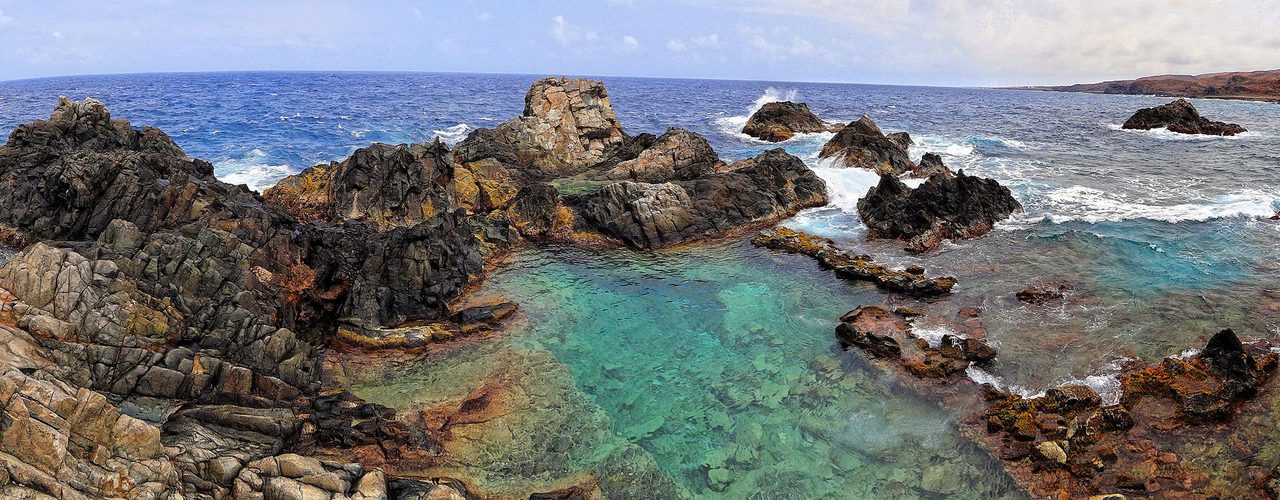
The marquee land adventure is a half-day safari to the Natural Pool (locals call it Conchi) — a volcanic rock basin where you can swim in calm water while the open sea crashes against the rim just feet away. You cannot drive a normal rental car there; you need a 4×4 or a UTV/side-by-side, and the road in is deliberately brutal. Two ways to do it: a guided jeep tour, where someone else drives a big open vehicle and your family rides along (most allow kids from about four to six, all belted in, and it is bumpy but manageable for grandparents who can handle jostling), or a self-drive UTV, which is a blast for families with teens but usually requires the driver to be at least sixteen or older with a license, and seats everyone in proper harnesses. Expect four to six hours and roughly $90 to $170 per person.
Two honest cautions. First, the ride is rough — if anyone has back or neck issues, choose a larger jeep over a UTV. Second, the Natural Pool itself has slippery rocks and surge; hold little hands on the way in and watch the swell. When conditions are big, guides sometimes skip the swim, so treat it as a bonus, not a guarantee.
Horseback riding
A guided horseback ride is a gentler way to see the rugged coast, and it is a hit with animal-loving kids who are old enough to sit a horse calmly — usually around six or eight depending on the stable. Most rides run about two hours, often to a quiet cove or along the countryside, for roughly $75 to $110 per person. The horses are used to beginners and the pace is slow; just go early or late to dodge the midday heat, which is hard on both riders and animals.
Animal farms, Aruba Aloe, and city tours
For the youngest kids — or anyone who needs a low-key day — the island’s animal attractions and easy combos are gold. The Donkey Sanctuary (free, donations welcome), the Aruba Ostrich Farm (feed the big birds on a guided tour), Philip’s Animal Garden (a rescue with parrots and reptiles you can meet), and the beloved Butterfly Farm near Palm Beach all reward small attention spans. Many tour operators bundle two or three of these with the Aruba Aloe factory and museum — a short, free, air-conditioned tour about the island’s aloe history that doubles as a souvenir stop. A hop-on trolley or city tour of Oranjestad rounds things out for a half day in town. These combos typically run around $40 to $60 per person and pair beautifully with the wider list in our guide to things to do in Aruba and the more offbeat picks in unique things to do in Aruba.
De Palm Island: the one-stop day pass
If decision fatigue is setting in, De Palm Island is the cheat code. A short shuttle and a two-minute ferry take you to a small private island that bundles a water park with slides, a calm snorkel bay full of friendly blue parrotfish, banana boats, a kids’ splash zone, beaches, flamingos to spot, and an all-day buffet with open bar — all in one ticket. Day passes run roughly $110 to $200 per person depending on season and what is included (SNUBA and a sea-trek helmet dive cost extra), with toddlers often free or discounted.
I am candid about the price because it is the most expensive single day on this list. But for a mixed group it can be the best value: the teen does the slides and SNUBA, the little one splashes in the shallow zone, and the grandparents claim a lounger near the buffet, all without anyone driving or rebooking. It is also a genuinely easy day — no transfers between activities, lifeguards on duty, food sorted. When my crew cannot agree on anything, this is where we go.
Aruba excursions for families, sorted by age group
Here is where the matching exercise pays off. The same island offers a wildly different day depending on who is in your group, so this is how I would steer you. Think of these as starting points, not rules — you know your own kids.
Toddlers and little kids (roughly 2–6)
Keep it short, shallow, and shaded. A glass-bottom boat, the calm lagoon at Baby Beach, the Butterfly Farm, the Donkey Sanctuary, and an hour at De Palm Island’s splash zone are the wins. Skip anything over about two hours on open water, skip the rough UTV roads, and build the day around a midday nap or pool break. Little kids do not need a big-ticket excursion to be thrilled — a bucket, a calm cove, and a few fish are plenty.
Tweens (roughly 7–12)
This is the sweet spot for almost everything: catamaran snorkel sails, the rope swing, easy reef snorkeling at Boca Catalina or Mangel Halto, a jeep safari to the Natural Pool, horseback riding, and the semi-submarine. Tweens are usually strong enough swimmers for a guided snorkel and brave enough to enjoy the bumps, but still happy with a slower pace than teens demand. A snorkel sail plus a Natural Pool safari on separate days is close to a perfect pairing for this age.
Teens (13+)
Lean into the thrills. Self-drive UTVs, parasailing, the Antilla wreck snorkel or an intro dive, SNUBA at De Palm, banana boats, and the longer party-style catamarans all land well. Teens also appreciate a little independence — give them the slides or the dive while the adults take it easy. If your teen is into the ocean, the wreck and reef sites turn an ordinary snorkel into the story they tell their friends back home.
Booking tips: what to reserve, seasickness, sun, and cancellations
A few practical habits make the difference between a smooth day and a scramble, especially in high season when the best boats fill up.
- Book the popular boats ahead. Catamaran snorkel sails, the rope-swing ships, the Atlantis submarine, and De Palm Island sell out in peak weeks (roughly December through April and over summer holidays). Reserve those a few days to a couple of weeks out. Beach-hut activities — banana boats, parasailing, a glass-bottom boat — you can usually grab same-day once you have seen the conditions.
- Take seasickness seriously. The leeward side is calm, but “calm” still moves. If anyone in your family is prone to motion sickness, give them a dose of the usual remedy (ask your pediatrician about kid-appropriate options) about an hour before boarding, choose a morning sail when the sea is flattest, and keep them looking at the horizon on the open deck rather than down in a cabin. Ginger chews help; a big greasy breakfast does not.
- Respect the sun. The UV here is fierce and the sea breeze hides it — kids burn on boats without feeling hot. Reef-safe sunscreen, rash guards, hats, and water for everyone are non-negotiable. Reapply after every swim. A burned five-year-old can wreck the rest of the week.
- Read the cancellation policy. Tours run rain or shine, but rough seas or wind can cancel a Natural Pool swim or a snorkel stop. Ask what happens if conditions change, whether you get a refund or a reschedule, and book early in your trip so you have a spare day to try again. Travel insurance is worth it if you have prepaid big-ticket excursions.
- Mind the money and the logistics. Excursions add up fast for a family of four or five; sketch a rough budget before you go — our Aruba vacation cost guide helps — and remember most tours include hotel pickup, so you may not need a rental car every day. For timing the trip itself, see the best time to visit Aruba, and for getting between your hotel and the docks, getting to and around Aruba covers taxis, shuttles, and car hire.
One last piece of planning advice: do not over-schedule. Two or three excursions across a week, with slow beach and pool days in between, beats cramming one big tour into every morning. If you want help threading it all together, our sample Aruba itinerary shows how a family week can flow, and Aruba travel tips covers the small stuff — tipping, water, what to pack — that keeps everyone happy.
Frequently asked questions
What are the best excursions in Aruba for young kids?
For toddlers and little kids, stick to short and calm: a glass-bottom boat, the shallow lagoon at Baby Beach, the Butterfly Farm, the Donkey Sanctuary, and the splash zone at De Palm Island. These keep water shallow, rides short, and shade close, which is exactly what small children and their nap schedules need.
Can kids snorkel on Aruba boat tours?
Yes. Catamaran crews routinely fit children with snorkel vests and watch them in the water at calm anchorages, and most stops are sheltered with little current. Start a nervous beginner at a shallow shore spot like Boca Catalina or Baby Beach first, then graduate confident swimmers to a guided boat snorkel over reef or the Antilla wreck.
Is the Natural Pool safe for children?
It can be, with supervision. The Natural Pool sits behind a rock rim that calms the water, but the rocks are slippery and the swell can surge. Choose a guided jeep tour over a rough self-drive UTV for young kids, hold hands on the climb in, and accept that guides may skip the swim when seas are big. Always keep an adult within arm’s reach.
How much do family excursions in Aruba cost?
Plan on roughly $30 to $45 per person for a glass-bottom boat, about $55 to $110 for a catamaran snorkel sail, $90 to $170 for a Natural Pool safari, and $110 to $200 for a De Palm Island day pass. Prices shift by season and operator, kids are often discounted, and many tours include hotel pickup, so always check the current rate.
Do toddlers need to pay for tours in Aruba?
Often not, or only a reduced fare. Many catamarans let infants and toddlers ride along free or cheaply since they will not snorkel, and De Palm Island and similar day passes usually discount or waive young children. Always confirm the exact age cutoff when you book, because it varies from one operator to the next.
What should we book ahead versus on the spot?
Reserve the popular catamarans, rope-swing sails, the Atlantis submarine, and De Palm Island in advance, especially in winter and over holidays. Beach activities like banana boats, parasailing, and glass-bottom boats can usually be arranged same-day once you have seen the weather, which lets you stay flexible around the kids’ moods and the sea conditions.
By the ArubaTourism.org team — Last updated October 2026.
Photo credits: Catamaran at sunset — Rarends297 (CC0) via Wikimedia Commons. Eagle Beach divi-divi tree — sbmeaper1 (CC0) via Wikimedia Commons. Baby Beach lagoon — Dje9537459 (public domain) via Wikimedia Commons. Arikok National Park coast — Misty Johnson (CC BY 2.0) via Wikimedia Commons. Natural Pool (Conchi) — Bjorn Christian Torrissen (CC BY-SA 3.0) via Wikimedia Commons. Palm Beach — Kwihi (CC BY 4.0) via Wikimedia Commons.